

On April 22nd the Taipower Co. held a party to celebrate the new world record of 418 days of continuous operation set by the second reactor at its number one nuclear-power plant. Just six days later news of the disaster at Chernobyl stunned the world. Must we have nuclear power? And if not, what are our options?
Not an energy-rich island by any means, Taiwan relies heavily on imports to satisfy its energy requirements. And with ever greater industrialization, the ROC's energy needs have been constantly growing.
During the 1950s and early 1960s, when industrialization was just getting underway, coal was the ROC's major source of power. But as industrialization increased, coal yielded primacy of place to petroleum, highly combustible and broad in its scope of applications. Then, just as petroleum usage was reaching a peak, the oil crises of the 1970s sent shock waves around the world. On Taiwan as elsewhere, people began reducing their reliance on oil by conserving consumption and by searching for alternative sources of energy.
Trusty old coal was back. But even brighter prospects were envisioned for a comparative newcomer--nuclear power.
It was under these circumstances that the ROC built its number one, two, and three nuclear-power plants, the first of which has now been in commercial operation for nine years, since 1977.
At present, most of the energy used on Taiwan is still in the form of petroleum. But if we consider electric generating fuels alone (electricity takes up one-third of total energy consumption), then nuclear power is tops. Fifty-two percent of all the electricity generated in the ROC last year was produced by atomic reactors.
Because of its ability to supply cheap, clean electricity, nuclear power was welcomed as a "savior" by resource-poor, industrialized nations like the ROC And unlike oil and natural gas, with their transportation and storage difficulties, nuclear power is comparatively inexhaustible in supply. Signing one contract may deliver a 20-years' supply.
Because of this, nuclear power makes up a relatively high proportion of the electricity generated in most nonpetroleum producing countries. The ROC's 52 percent was third in the world last year, topped by France, with 65 percent, and Belgium, with 60 percent.
Meanwhile, with the recovery of the world economy this year, the ROC's economy continues to grow, as do its energy needs. Taipower estimates that current generating equipment will be adequate until 1990, but unless additional capacity is put on line by then, shortfalls will begin to adversely affect economic growth.
To keep pace, Taipower proposes to build a fourth nuclear-power plant. They offer the following arguments: electricity generated by nuclear power will remain cheaper than that generated by oil or coal; in case of extraordinary circumstances, the threat of a cutoff in supply is less critical for uranium than for oil; and technological progress is making nuclear power safer and safer every day.
But Taipower's proposal, put forward last year, is still awaiting approval by the Legislative Yuan. The reasons the lawmakers not yet passed the project are safety and environmental concerns and the cost, which at NT$178 billion, or about US$4.5 billion, represents nearly one-half of the ROC's total 1985 budget.
Then at the end of April came news of the nuclear accident at Chernobyl. People are now thinking even more seriously about alternatives.
Those are not limited to oil and coal. Wind, water, the sun, natural gas, geothermal energy, methane produced from biomass (like manure)--all have been and can be put to use as power. The most appealing, on the surface at any rate, are wind, water, and the sun--so abundant that we meet them every day.
The world's best-known solar-powered generating plant is located in France, near the Spanish border. Although it generates 30 million kilowatts of electricity a year, the cost per kilowatt is some 20 times higher than that produced by nuclear power. As a result, French authorities are considering shutting it down.
At the current state of technology, solar power indeed has severe limitations. Sunlight is low in energy concentration and is affected by many variables, such as weather, seasonal changes, and the daily rotation of the earth.
Solar power has been used in the ROC, albeit in small quantities. An example is the solar water heaters which some people have installed on their roofs or balconies. But Taiwan's dense population and cloudy weather make solar power unfeasible for large-scale applications at current levels of technology.
Water power also has its drawbacks. "We've already developed our hydropower resources about as much as we can," a Taipower official says. Last year hydropower accounted for just 13 percent of the ROC's total electric requirements. Taiwan gets a lot of rain over the course of the year, but it varies widely from month to month. What's more, rivers are short, and places suitable for building reservoirs are few.
Wind power has been used to generate electricity too, most notably in California, Holland, and Denmark. But despite its famous typhoons, Taiwan's winds are unsteady, unpredictable, and blocked by mountains, and wind power is ill-suited for large-scale electric generation.
Geothermal energy, in the form of steam or hot springs, is a newcomer to the energy field. Besides heating and electric generation, geothermal power can be used for aquaculture, farming, and minerals extraction.
Preliminary investigations have been conducted on over 100 hot springs on Taiwan, and in 1981 the island's first geothermal station was completed at Ilan, in the Northeast. While authorities are looking at ways to exploit additional geothermal wells, the technology is still in its early stages.
Another infant technology that has been the focus of much recent attention is electric generation from methane, or biomass. How to dispose of animal wastes has long been an environmental problem. By using these wastes to produce electricity, the biomass alternative offers an attractive solution. ROC agricultural authorities have encouraged pig farmers to install biomass-powered electric generators since the early 1960s, but investments and generating costs are still too high to make methane a significant energy source in the foreseeable future.
If biomass, geothermal, solar, wind, and hydropower are not, at least for now, practical alternatives to nuclear power, we are left with coal, oil, and natural gas.
Coal is abundant (current reserves are estimated at 200 years), stable in price, and safer to use in electric generation than oil, natural gas, or nuclear power. But it has serious drawbacks, too. Transportation and storage costs are high. And pollution problems, like acid rain and particulates, abound.
Changes in the status of petroleum as an energy source have been the most dramatic of any fuel. Oil price ups and downs affect the entire world economy. And while prices are low at the present, experts say that reserves are limited and resources will be exhausted sooner or later.
The advantages of oil for electric generation are its easy storage and low investment requirements. But oil also has its drawbacks. It is highly inflammable and produces environmentally harmful sulfides. And the greatest problem remains supply--unpredictable price changes and uncertain political factors make petroleum an unreliable energy source.
Despite the danger of explosion, clear burning natural gas is considered to have the greatest potential, for the near future at least, of any electric power source. Natural gas has been used to generate electricity on Taiwan before, and the government plans to import more in 1990.
The fact remains, however, that energy-poor Taiwan must diversify its sources of energy if it is to continue to develop. And nuclear power will continue to play a role in Taiwan's energy mix.
To fully examine the pros and cons of building a fourth nuclear-power plant, the government has commissioned the Chung-Hua Institution for Economic Research to conduct a study of the safety, environmental, and economic aspects of the project, including a survey of public opinion. The institute is scheduled to report at the end of June. A possible recommendation might be to add generating capacity to the existing plants, which were designed with just that capability in mind.
What remains clear is that nuclear power is not the only road ahead. "Don't put all your eggs in one basket," one energy expert advises. Li Mo, minister of the Ministry of Economic Affairs, says that diversification of energy sources is a trend world-wide and is the ROC's policy as well.
Energy is a sticky business. But we do have options.
[Picture]
Comparison of Electricity Sources
[Picture Caption]
Fifty-two percent of the 54.8 TWH of electricity generated in the R.O.C last year came from nuclear-power plants. (photo courtesy of Government Information Office)
Traditional thermal-power plants are fired by oil or coal. Shown here is the Linkou power station. (photo by Chung Yung-ho)
The number three nuclear-power plant at Saddle Mountain was a source of some controversy because of its cost overruns. (photo courtesy of G.I.O.)
A tourist at Jentze Hot Springs on Taiping Mountain raises an umbrella on passing by a geyser. Geothermal energy like this can be used to generate electricity.
Drums of cement-solidified low-level waste are kept at the Orchid Island Storage Site. (photo courtesy of the ROC Atomic Energy Council)
Preliminary work at the site of the proposed fourth nuclear-power plant in Kungliao Township set off a flurry of public criticism. (photo by Hung Yu-cheng)
A researcher at National Tsing Hua University takes a sample of grass in order to test for radiation.
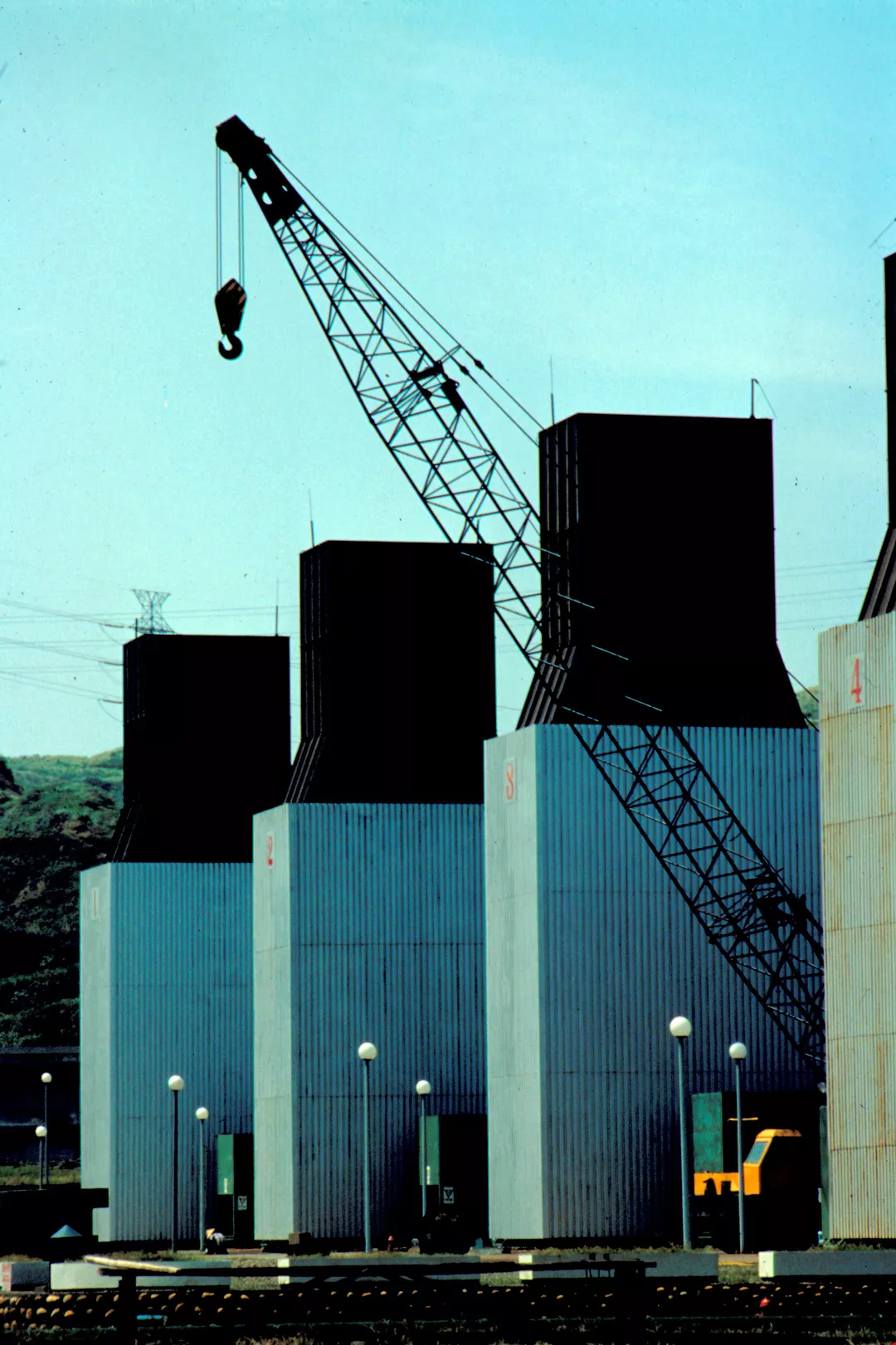
Traditional thermal-power plants are fired by oil or coal. Shown here is the Linkou power station. (photo by Chung Yung-ho)
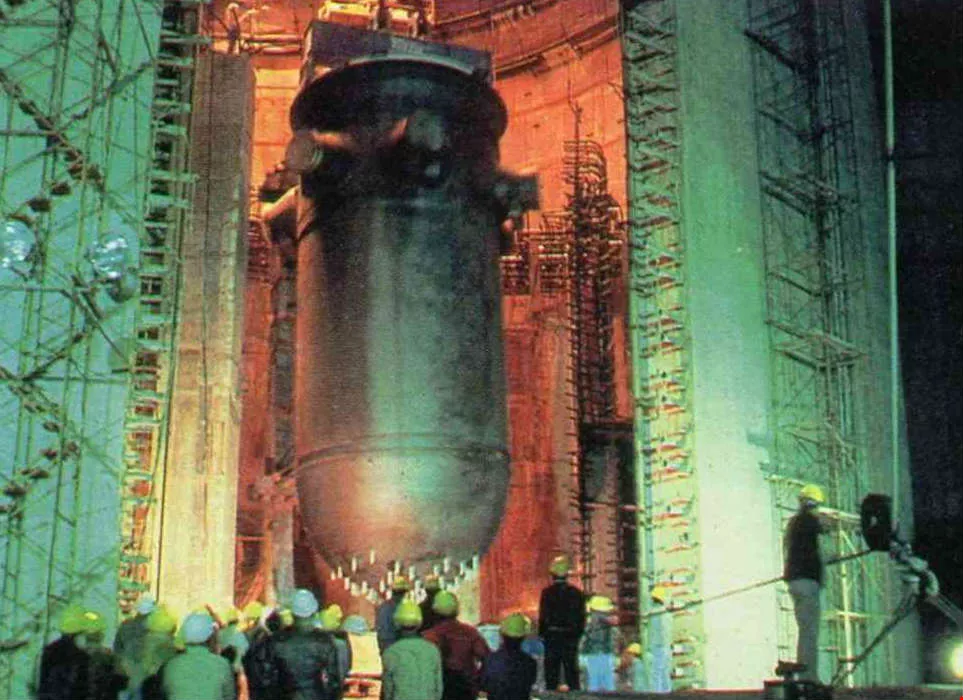
The number three nuclear-power plant at Saddle Mountain was a source of some controversy because of its cost overruns. (photo courtesy of G.I.O.)
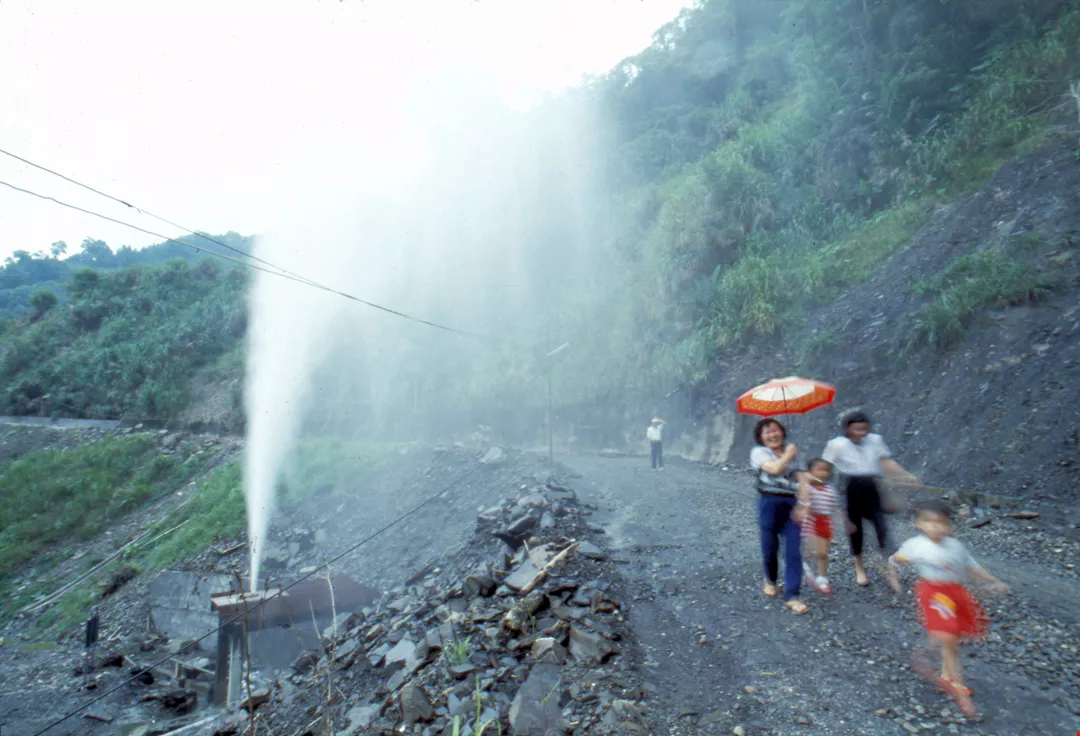
A tourist at Jentze Hot Springs on Taiping Mountain raises an umbrella on passing by a geyser. Geothermal energy like this can be used to generate electricity.
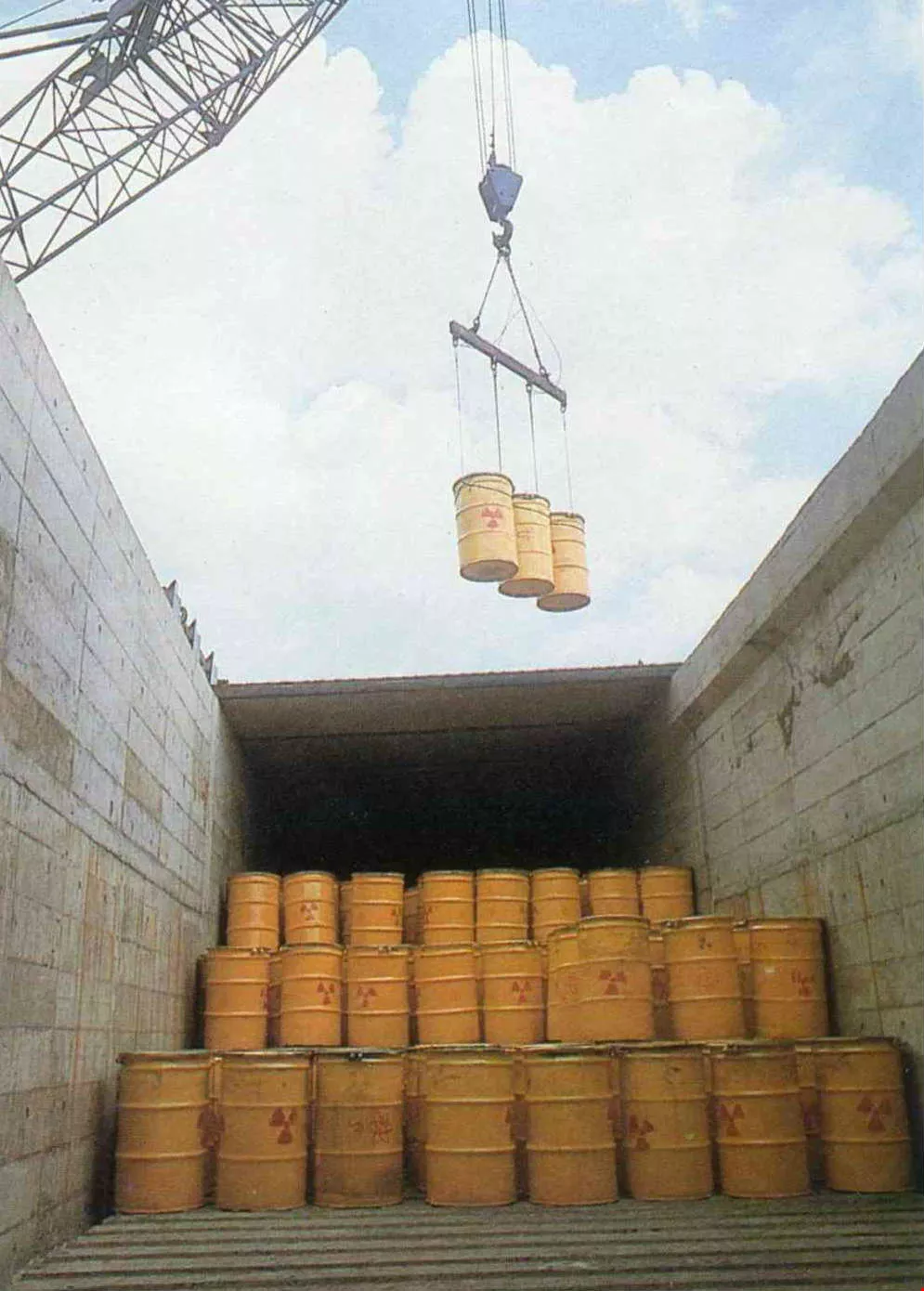
Drums of cement-solidified low-level waste are kept at the Orchid Island Storage Site. (photo courtesy of the ROC Atomic Energy Council)
@List.JPG?w=522&h=410&mode=crop&format=webp&quality=80)


