Taking a Student Back to Grandma’s
Cathy Teng / photos Tsai Hui-ting / tr. by Jonathan Barnard
March 2016
In Chinese class children turned from reciting texts aloud to a talk delivered by a student about her experiences visiting her grandmother in Vietnam. The teacher, Tsai Hui-ting, who also went on the trip, wore a Vietnamese ao dai tunic as she described Vietnamese cuisine and customs and screened some video clips showing performances of traditional water puppet theater. The trip to Vietnam, sponsored by the Grandmother’s Bridge program, had proven to be highly rewarding.
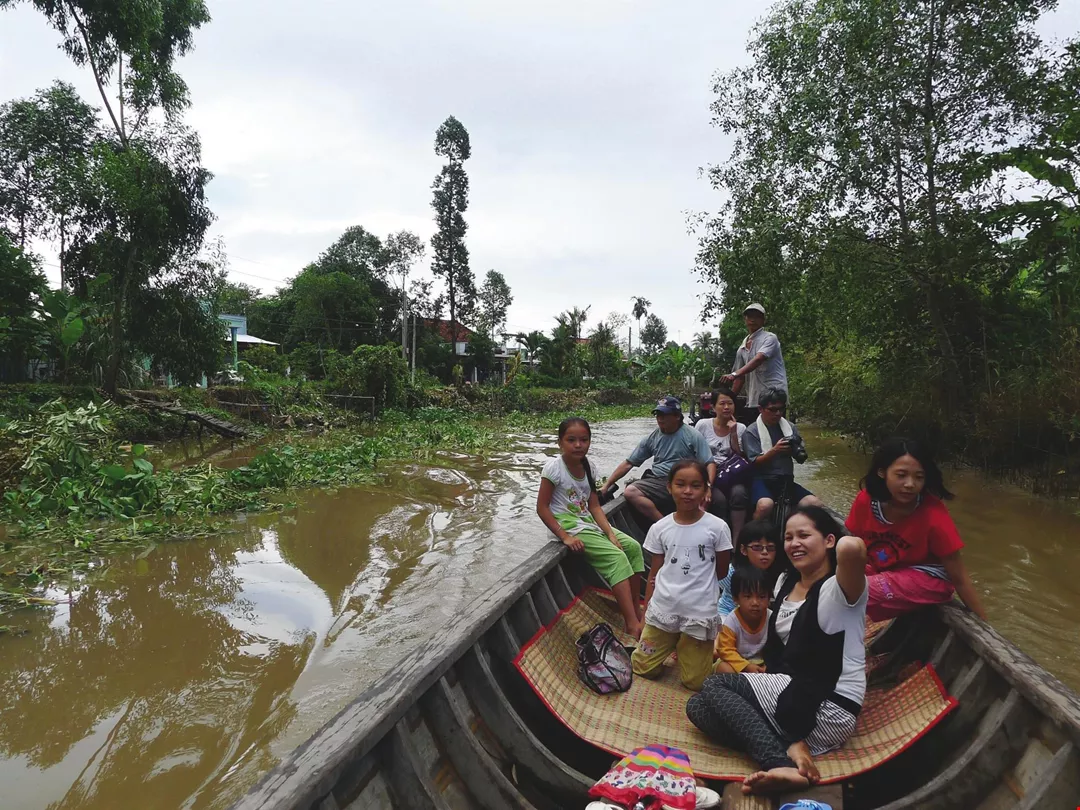
During summer vacation in 2013, Tsai Hui-ting, who teaches at Hsinchu City’s Sunshine Elementary, along with her student Chen Hsing-ju and Chen’s mother Ah-ran (Nguyen Thi Nhien), went on a trip to Vietnam to visit Ah-ran’s mother. Ah-ran was excited to see her mother after three years; Hsing-ju was eager to visit her maternal grandmother’s family; and Tsai was enthusiastic about making a home visit to a student’s family overseas.

Ah-ran’s family hails from the wetlands of Dong Thap Province. An actual river runs outside the family’s front door, so you can take a boat to grandma’s house.
The role of the teacher
Focused on bringing Ah-ran and her daughter to see their family in Vietnam for the first time in three years, Tsai didn’t realize all of the challenges involved until after she submitted the program application and was awarded the grant. It turned out that both Ah-ran’s employer and her husband weren’t pleased about their plans.
“Giving up would have been easy,” Tsai says. But she knew Ah-ran deeply missed her parents back in Vietnam, so she leveraged her status as a teacher to make a sentimental appeal to Ah-ran’s employer. Ah-ran’s husband was concerned that Ah-ran wouldn’t come back to Taiwan, but Tsai once again applied her powers of persuasion, calling on him at home several times before he finally consented.
One of the animating ideas behind the Grandmother’s Bridge program is leveraging these immigrants’ knowledge of their mother cultures so that they can serve as cultural ambassadors. But Ah-ran, who dropped out of school at a young age, wasn’t familiar with Vietnam’s geography and history. Consequently, Tsai did a lot of homework beforehand so she could provide information about Vietnamese geography and culture during the trip.
To make ends meet, Ah-ran’s mother had left their hometown in Dong Thap Province in the far south and gone to northern Vietnam to open a small business. So Tsai led a group from their hometown on a two-day, 2000-kilometer trek to Hanoi to visit Ah-ran’s mother. Tsai also arranged for everyone to go on sightseeing trips to Halong Bay and Hanoi. It was the first time Ah-ran had travelled with her family, and it provided many unforgettable experiences.
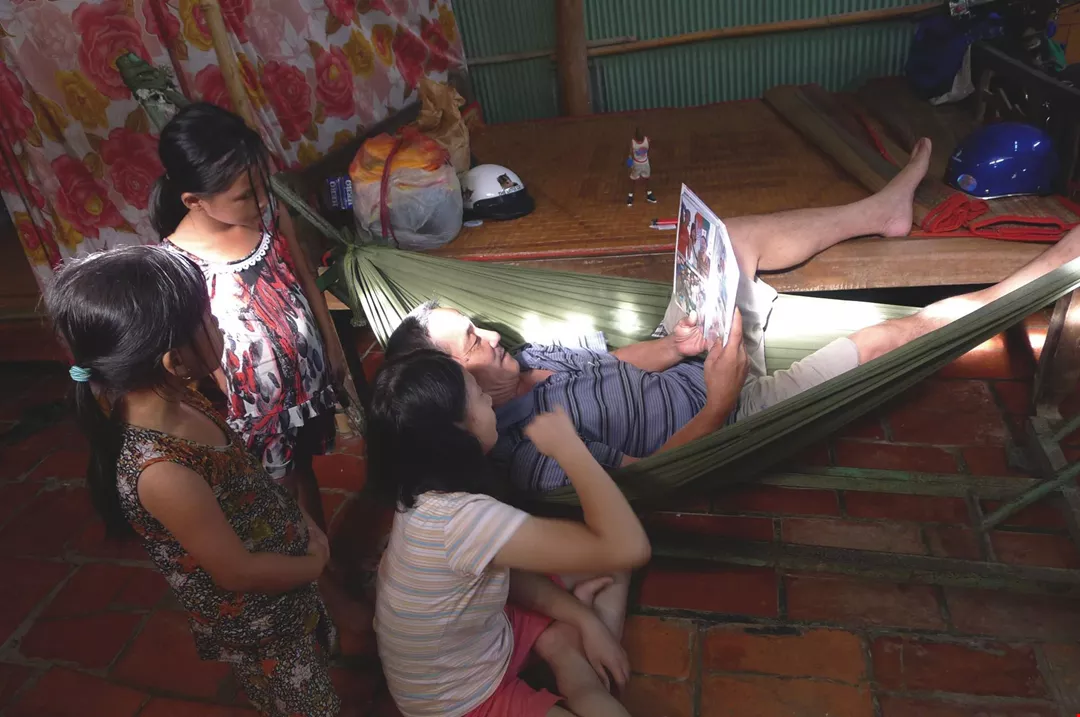
Before setting out, Tsai Hui-ting had photos of Ah-ran and her daughter printed. She then brought them to the child’s maternal grandfather in Vietnam. Long separated, the family happily gathered around the grandfather’s hammock to look at the photos.

Going local
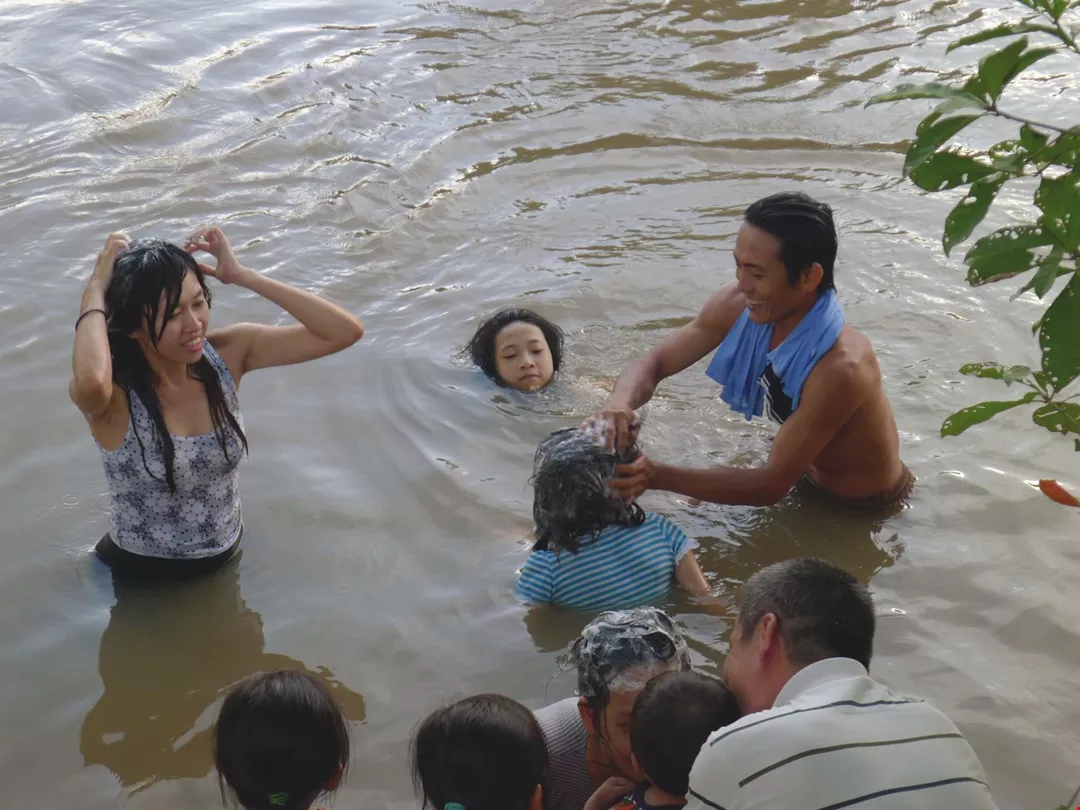
Ah-ran’s family’s home in Vietnam has a modern bathroom reserved for guests, and at first Tsai used it. Then one day she saw some tree litter in dirty water flowing from the tap. She thus discovered that the modern-looking bathroom was drawing water from the creek that ran in front of the house. At that point Tsai started bathing with everyone else—right in the creek—and Ah-ran’s family stopped treating her like an outsider. She cast aside her cultural baggage and truly experienced local life.
Tsai also enjoyed going with Ah-ran into the kitchen and boldly trying Vietnamese dishes such as balut (duck eggs with partly developed embryos) and rat meat. In a poor area where meat is a luxury, it’s no wonder that these items are used as supplementary sources of protein. These lessons about food led Tsai to a new understanding: “Cultures aren’t right or wrong, higher or lower. They’re just different.”

Tsai hesitated for several days before finally jumping into the river in front of Ah-ran’s home, bathing and enjoying the water together with Ah-ran’s family.
Back from Grandma’s…
She carried this new understanding back to the classroom. Chang Cheng, founder the Southeast-Asian-themed bookstore Brilliant Time, launched the “Providing Warmth Through Winter Clothing” campaign to help foreign laborers in Su’ao. Tsai wondered how she could foster interest about the project among her students.
She used seafood as a lead-in. To students in lower grades, she told stories of foreign laborers working as deckhands, prompting the children to think about the work environments on boats. At that point, one young child raised his hand and asked: “So what can we do for them?”
Tsai claps exultantly at the memory: The child had gotten to the heart of the matter. “Once you’ve sparked the children’s self-motivation, benevolence and empathy,” Tsai says, “then you know you’ve succeeded.” At that point the students started bouncing ideas off each other, before deciding to go home and look for jackets of their fathers or grandfathers to donate.
After collecting the donations, the children came up with the idea of decorating the cardboard boxes that were going to be used to ship them. They drew fishing boats and rainbows and wrote the Indonesian and Filipino words for thank you: “terima kasih” and “salamat.”

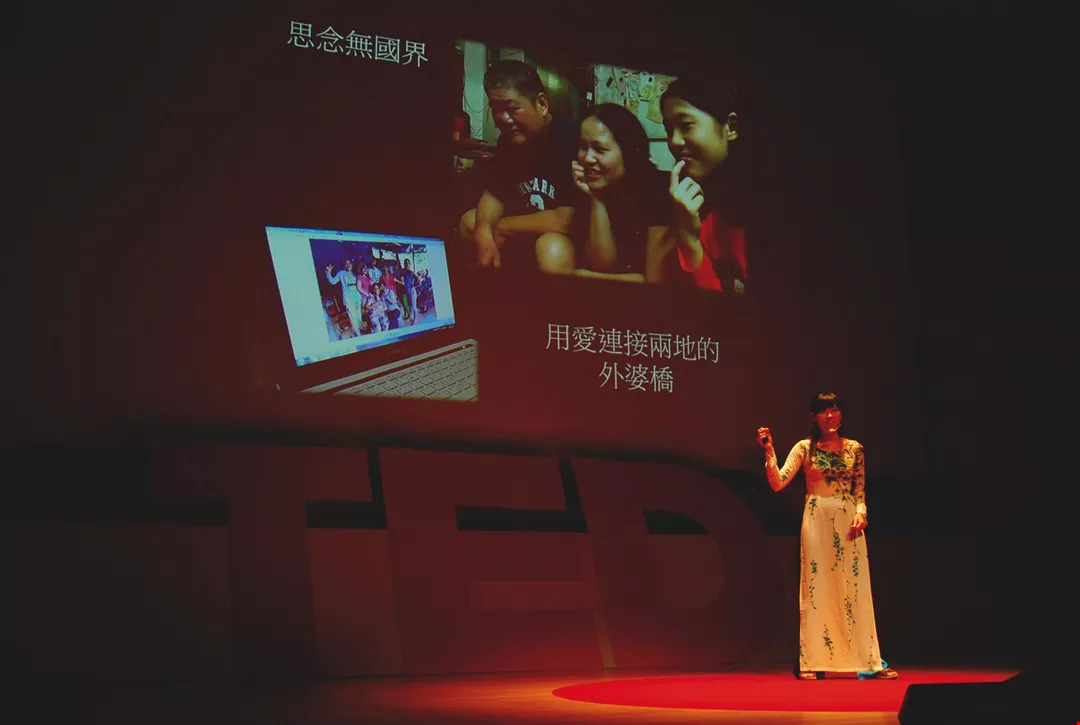
On the TEDxYouth@Taipei stage, Tsai tells of her experiences on the Grandmother’s Bridge trip.
Everything a learning experience
Parroting adults without fully understanding the true meaning of their words, children often say hurtful things on the playground. So how should teachers handle those situations when the victims are the children of immigrants? Tsai cites a much-used educational aphorism: “Everything presents a learning opportunity.” Teachers need to delicately clarify the background motivation behind casual remarks, so that children come to understand their own prejudices and learn from them, attaining clarity about their values and acquiring appropriate attitudes about speech. Tsai places particular importance on this educational process.
After returning from the Grandmother’s Bridge trip, Tsai was invited to give a talk for TEDxYouth@Taipei. She was happy to tell her story and give more people an understanding of her experiences in the hope of erasing more prejudice.
Tsai recommends that teachers make home visits to the families of new immigrants in Taiwan and through one-on-one conversations come to a better understanding of their students’ living situations and day-to-day experiences.
Studying a few phrases of a Southeast-Asian language is one way to build a bridge of exchange. Tsai sees how these activities have broadened children’s sense of compassion and planted seeds of multiculturalism in their hearts. The shoots are sprouting and growing into a force for change that is truly making Taiwan a better, more vibrant place.

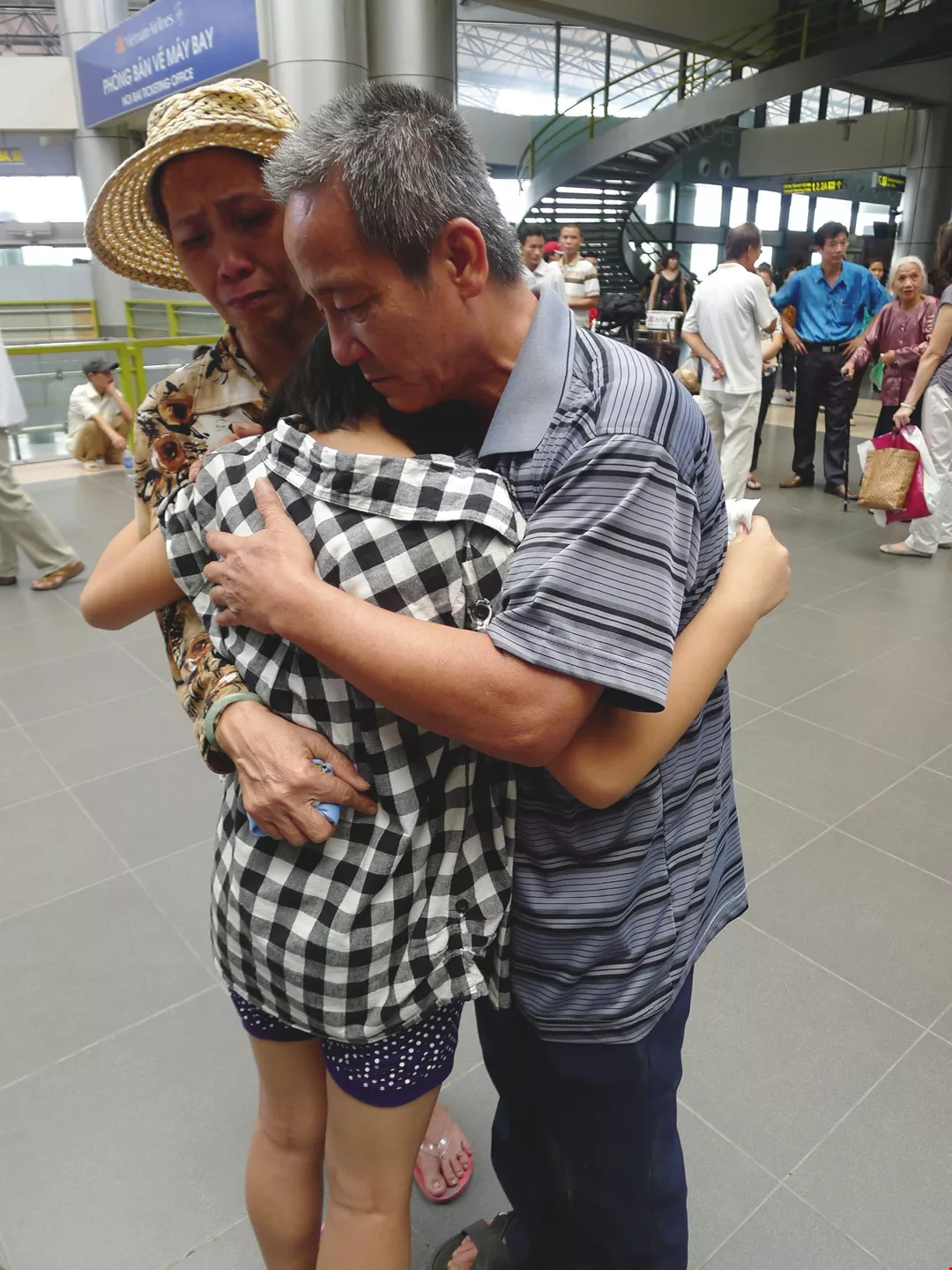
“When will you come back again?” That was the question on Hsing-ju’s grandparents’ minds that they never dared to ask.