

Although not as bad as the forest fire that devastated Yellowstone National Park recently, the six-day fire that broke out on January 6th and burned 115 hectares of forest land at Yushan National Park was the largest fire to strike the park in its history.
"Hsinchu! Hsinchu! This is Taipei No. 1. Come in please!"
"Taipei No. 1! Taipei No. 1! This is Hsinchu."
"Hsinchu! What's your current location?"
"Taipei No. 1! We're 500 meters above the forest road, opening a firebreak to cut off the fire and protect the Chinese juniper afforestation area."
"Hsinchu! Be sure to clear away the leaves and underbrush and keep the fire from spreading into the area. Do you read me?"
"Roger! Roger!"
This an exchange over the walkie-talkie between Huang I-fu, chief of the Forest Protection Section in the Taiwan Provincial Forestry Bureau, who is directing work from a field near the administration's Nan Creek work station, and a team of firefighters working on the front line. They've fought the blaze for four straight days now, remaining on the scene at night, in subzero temperatures, trying to keep the fire from spreading further.
At fire command headquarters at Tatachia Pass, above the fire, the director of the Forestry Administration, Ho Teh-hung, spreads open a topographical map, listens to reports from the scene of the fire and issues instructions over a walkie-talkie, his expression one of grave concentration.
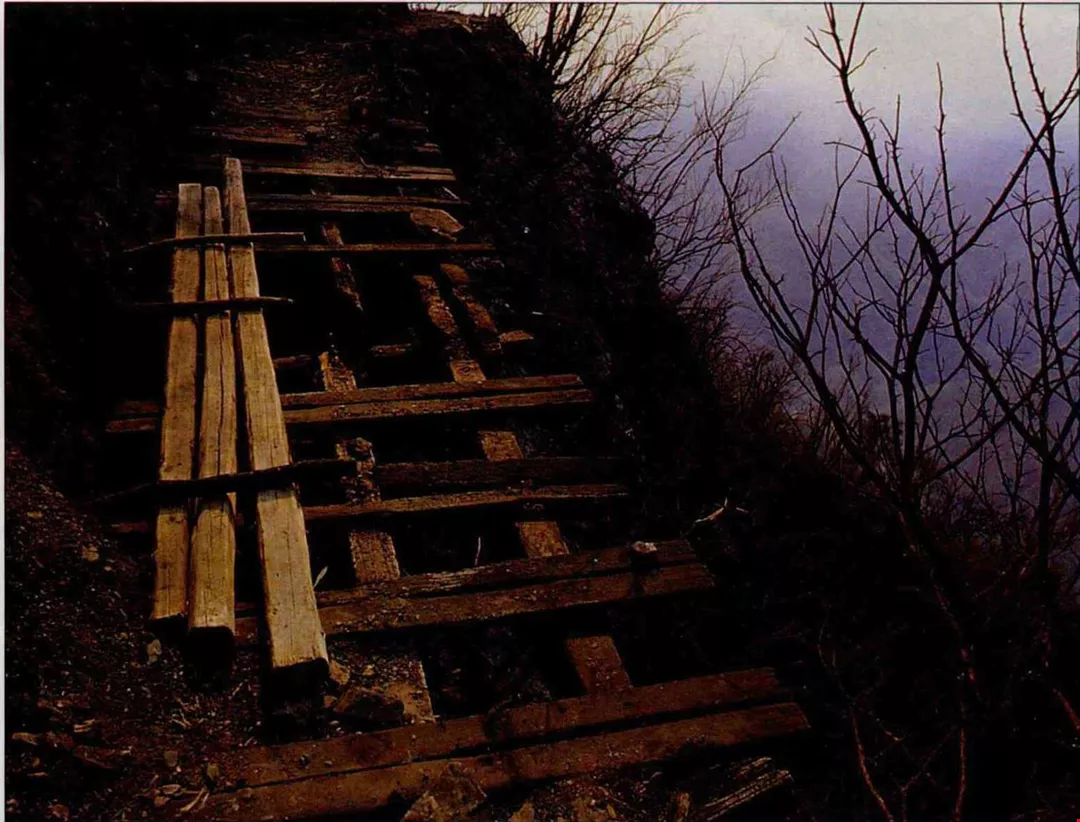
Many of the wooden footbridges going up Yushan were destroyed. Firefighters had to lay down beams to get by.
Cause unknown:
Tatachia Pass is a well-known starting point for mountain climbing in the area. Among the countless climbers that have set out from there to climb the main peak of Yushan, who would have thought it would one day become the command center for fighting a forest fire? Even more ironically, the fire started in a clump of trees about 30 meters to the right and below the station.
After notification, the first group of firefighters to arrive at the scene was the Alishan fire brigade. Kao I-shun, a volunteer who went along to help and carried in hoses, says that the fire had already spread to a large area at the time. They managed to put down part of it with spray from their fire trucks, but after they ran out of water and returned from refilling the tanks, the fire was out of control.
The fire trucks rushed back and forth below the forest road, until the flames unexpectedly cut off their retreat. They finally fought their way up to the pass.
According to brigade member Lai Ching-sen, there were a total of 25 fires in the Alishan area from late October to January 6, an unusually large number even for the season.
In many of these fires, what the fire brigade found after rushing to the scene was burned tree roots and the smell of gasoline in the air. "Tree stumps don't catch fire on their own, and there shouldn't be any gasoline smell," Lai says. "The possibility of someone setting the fires deliberately can't be ruled out."
No matter what the cause of the Yushan fire, when it failed to be extinguished right away, stopping it later became much more difficult.
After it began near Tatachia Pass, it spread south, east and west, aided by the wind and the steep terrain, which increased the difficulties.
The Provincial Forestry Bureau, Yushan National Park Headquarters and National Taiwan University's experimental forest management office were the main agencies responsible for fighting fire. A total of 150 personnel were involved, most of them belonging to the Forestry Administration.
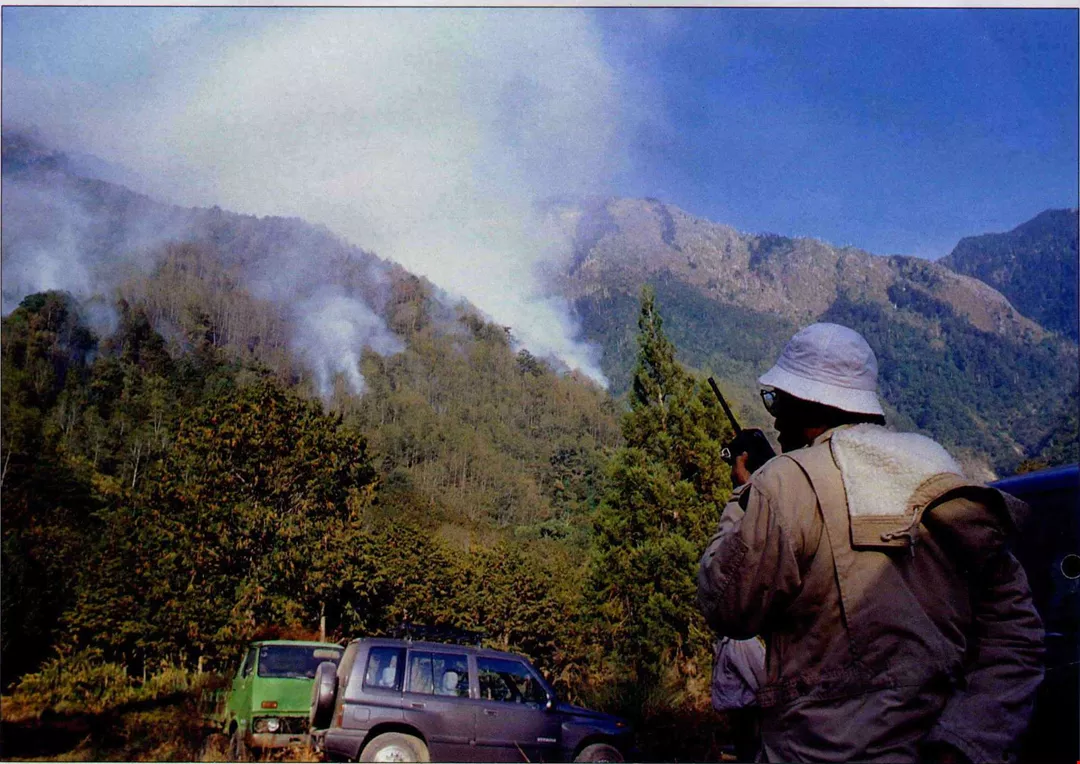
A firefighter on the scene near the Forestry Administration's Nan Creek work station, which affords a broad field of vision, issues instructions via walkie-talkie.
Creatures in flight:
With the aim of protecting tourist facilities and keeping open Highway 18 from Alishan to Tungpu, park headquarters opened firebreaks in Linchihshan and Lulinshan to keep the fire from spreading up the mountain. In four days that portion of the fire had been completely extinguished.
Early on the fifth day, the head of the park's tourism office, Lu Chih-kuang, set out with 15 workers, carrying lunch boxes and water bottles. At Tatachia Pass, they looked ahead and saw several billows of white smoke rising in the sky. The largest came from Nan Creek, where a team from the Forestry Bureau was battling the blaze. Park headquarters took over responsibility for controlling the fire in the forward mountain area.
Along the path, the forest had been burnt to ashes. A few pines and withered Chinese junipers were still standing. The hot flames had caused rocks to split and fall on the trail and had burned up the wooden footbridges, so the firefighters had to pick their way carefully.
As they went, they constantly heard the reverberation of what sounded like distant firecrackers. Lu explained that when resinous conifers burn, they crack open with an exploding sound.
Suddenly, a "caw caw" sound rent the air--a flock of crows that couldn't stand the smoke and flames were flying toward the main peak. Many more animals must also have been driven off.
After walking about three kilometers, they reached the scene of the fire and split up to fight it. There wasn't a lot of leaves and underbrush around, and the fire wasn't very big. Even so, there were a lot of flames. Sometimes they would put one flame down only to have it glow inside the embers and flare up later, forcing them to put it down all over again.
In lieu of anything better, a long-handled pruning knife and a branch became their main firefighting tools. They used the knives to cut out a firebreak and the branches to beat down flames on the ground. After hand-to-hand combat with the fire, ashes were everywhere and their bodies and faces were black with soot.
By the end of the day, the firebreak they had struggled to open proved effective. Nearby rocks and talus formed a good screen, and the spread of the fire had been stopped.
With the fire there under control, success was also reported in the Nan Creek area.
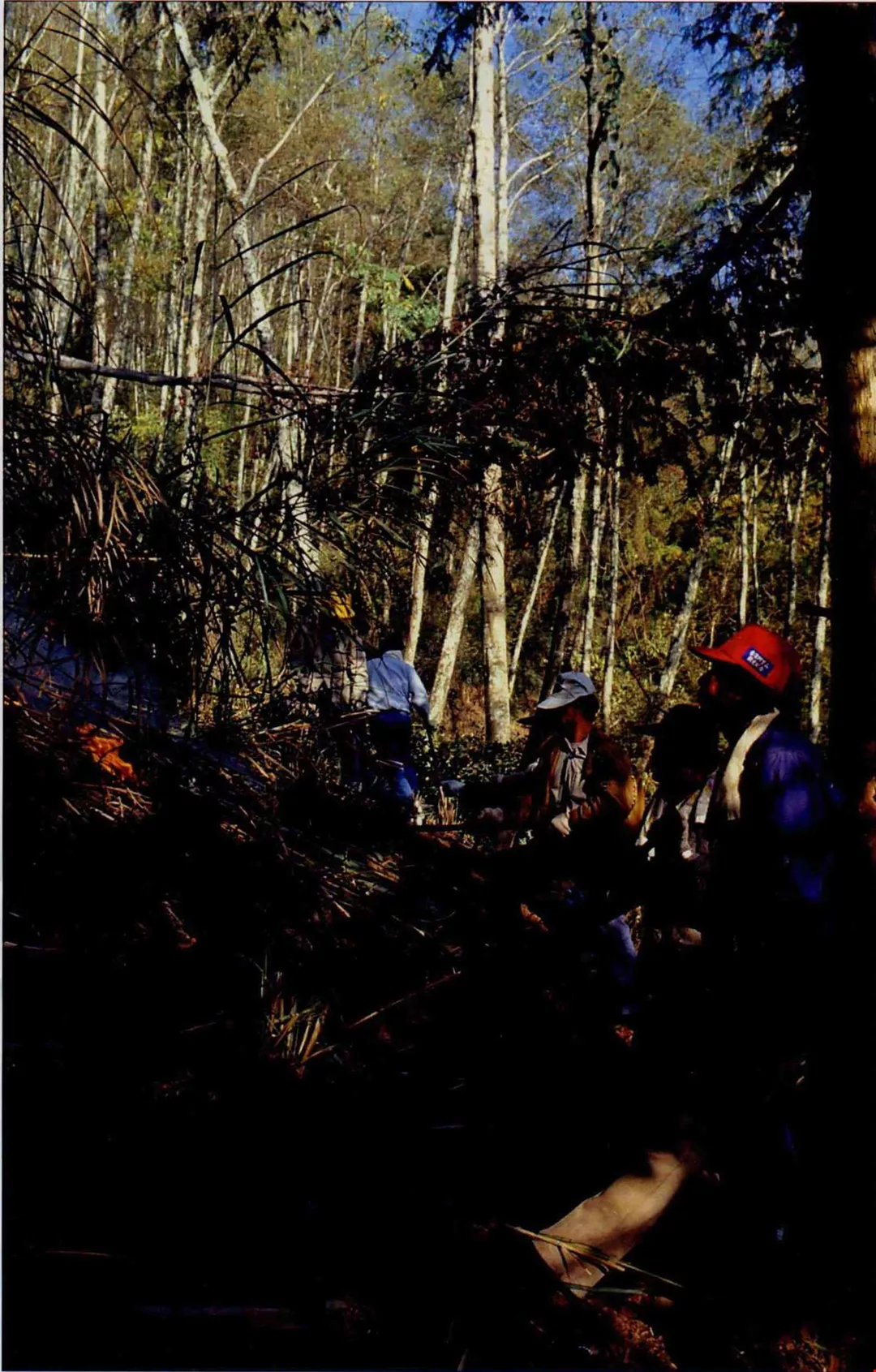
Forestry Administration personnel cut open a firebreak and then burn back the underbrush to prevent the fire from spreading to the valuable Chinese juniper afforestation area.
Fighting fire with fire:
The main scene of the fire in the Nan Creek area was about 50 minutes up the path from Tatachia Pass.
At the Nan Creek work station, white smoke was everywhere, covering half the sky. Looking higher, you could glimpse the famous Whitewood Forest on Yushan's west peak--it had become a white forest only after being seared itself by fire.
Operations here were directed by Lu Kuo-yen, second in charge of the Chiayi forest management office. After determining the direction the flames are rising, he notified Huang I-fu, who then told the team which way to advance.
Huang says that his office, which was responsible for this area of the battle, threw all its manpower into the effort. They were joined by personnel sent by forestry agencies at Hsinchu, Puli and Tungshih, for a total of 130. The tools they brought included power saws, pumps and long-handled pruning knives.
But the scope of the fire was really large, stretching one square kilometer, with nine separate fires raging inside. After they had split up, the firefighters could exert only limited effectiveness. In addition, wind direction in the valley was unpredictable, and the teams had to be careful not to become cut off by the fire and surrounded.
To prevent the fire from spreading to the precious Chinese juniper afforestation area, they cut open a firebreak 10 meters wide and several hundred meters long to lead the fire back on itself. When the fire reached the break, it ran out of fuel and halted. The method worked and saved the Chinese junipers.
Since they were near the creek, water was available to help them. They put their pumps to work and finally brought the fire under control.
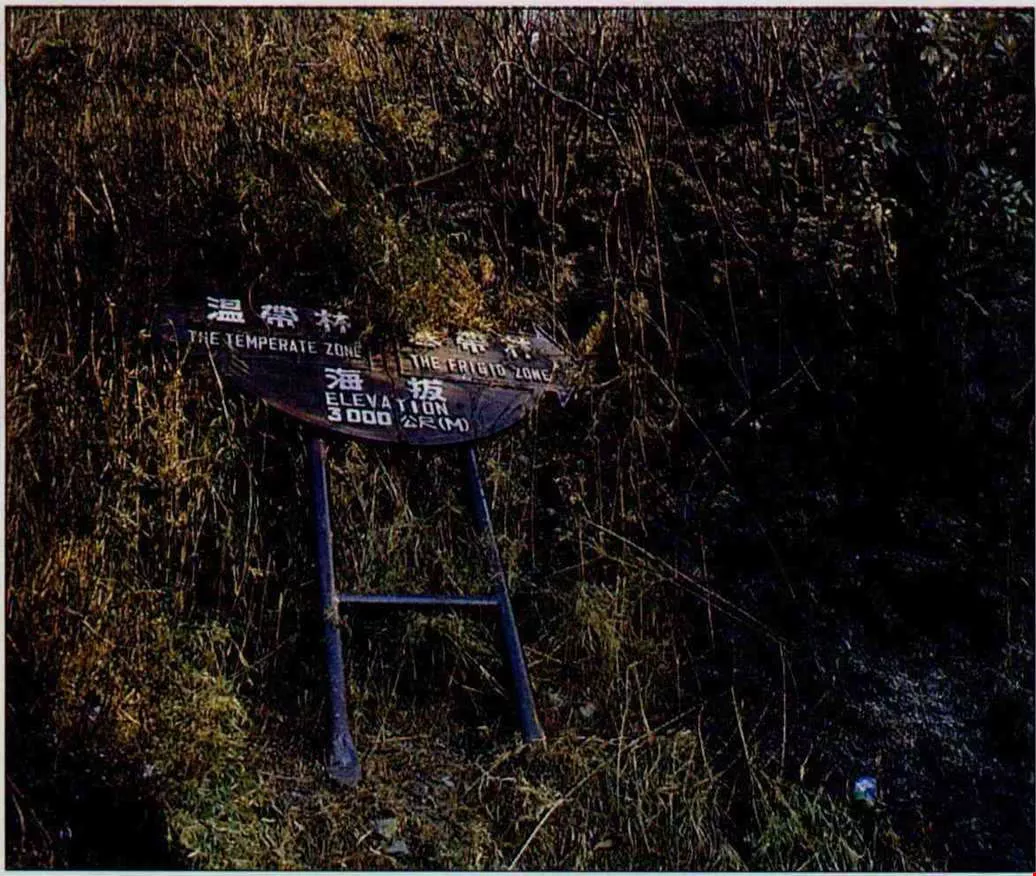
Forests store water and prevent erosion. Hikers and climbers must be careful not to cause a similar fire.
The aftermath:
On January 8--the 16th day of the twelfth lunar month, or wei-ya, when most us in the city were out celebrating the end of the lunar year at company dinners--the firefighters were up in the mountains with spartan boxed dinners fighting the flames.
On January 11th, after six days and nights of indefatigable effort, they finally extinguished the fire and restoration work could begin. The Forestry Bureau will handle reforesting, while park headquarters will be in charge of repairing mountain trails to ensure the safety of springtime visitors.
Fortunately, most of the afforestation areas that burned contained pulp trees, whose economic value is not very high. If the fire had reached the Chinese junipers, the loss would have been incalculable.
The view from Tatachia Pass used to be a sea of green. The fire has changed all that. What's left is ashes and soot.
[Picture Caption]
p.119
Many of the wooden footbridges going up Yushan were destroyed. Firefighters had to lay down beams to get by.
p.120
A firefighter on the scene near the Forestry Administration's Nan Creek work station, which affords a broad field of vision, issues instructions via walkie-talkie.
p.121
Forestry Administration personnel cut open a firebreak and then burn back the underbrush to prevent the fire from spreading to the valuable Chinese juniper afforestation area.
p.122
Forests store water and prevent erosion. Hikers and climbers must be careful not to cause a similar fire.
p.122
The area must be replanted at once to return it to its original condition.
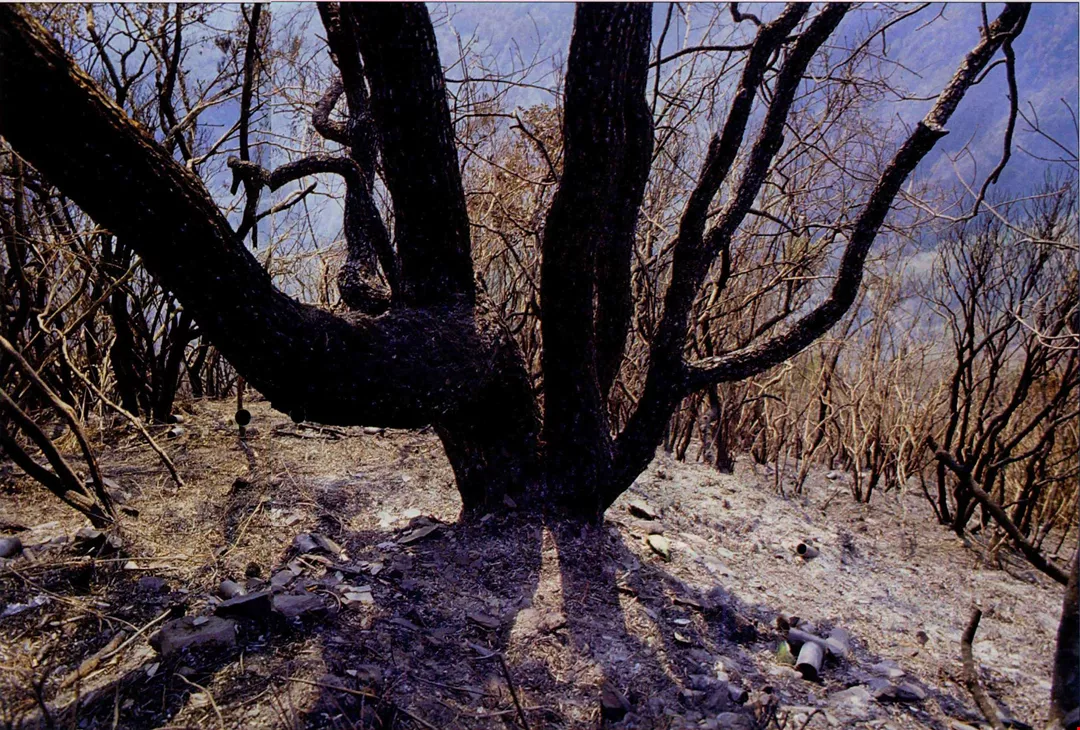
The area must be replanted at once to return it to its original condition.
@List.JPG?w=522&h=410&mode=crop&format=webp&quality=80)


