Kaohsiung County's Facelift
Vito Lee / photos courtesy of Kaohsiung County Government / tr. by Christopher J. Findler
October 2005


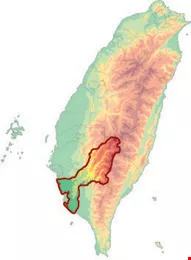
Kaohsiung County snuggles up to Yushan National Park's southwestern edge on the one side and stretches out to the ocean on the other. It is blessed with a wide variety of landscapes and the largest variety of fruit crops of any county in Taiwan. This major agricultural stronghold boasts the island's largest annual production of crops like guava, Indian jujubes, and litchis.
Despite its excellent harbor, outstanding produce, and panoramic views, Kaohsiung County has struggled with a chronically lackluster economy and moribund industries. Not only was its unemployment rate the worst in the nation, its annual per household disposable income ranked dead last.
The bleak economy forced young people to seek work elsewhere. Even County Magistrate Yang Chiu-Hsing confesses that almost all of those that lived in Kaohsiung but went north and studied with him at National Taiwan University remained in Taipei to work.
The situation, however, has changed over the past two years. Not only have investors from Kaohsiung City started buying real estate in Kaohsiung County, Kaohsiung County hopes one day to recruit people from Taipei's talent pool to live and work here.
Where do they get their confidence?
In July of this year, some guests visited the quiet Chiaotou Sugar Refinery.
Established in 1901, the Chiaotou Sugar Refinery was the largest sugar refinery in Kaohsiung County and Taiwan's first sugar refinery to employ automated production. Before it stopped refining sugar in the 1990s, the sugar refinery and the surrounding sugarcane fields powered the economies of Chiaotou and the surrounding communities. On weekends and holidays, the factory's charm drew large numbers of visitors from the Kaohsiung area.
When its doors closed, the crowds ceased coming and production came to a halt. Chiaotou felt the impact.
The area's economic prosperity seemed destined for the dustbin. Following his retirement, Chiang Yao-Hsien, nicknamed "President Chiang," decided to join the ranks of those working to develop the community. His friends and he leased office space in the sugar refinery from which to organize community activities and later collect and organize historical documents dealing with the sugar refinery and Chiaotou Township. Chiang launched the "International Art Village" in 2003 and a group of Japanese artists moved in during July of this year.
"When the sugar refinery closed up shop, it left behind a tremendous legacy, consisting of local culture and industry," explains Chiang. "Ingenuity is all that is needed to bring about economic benefits," such as converting the abandoned offices into a headquarters from which to direct community development and launching an international art village. The cool shade of the sugar refinery's rain trees is ideal for holding open-air performances. Chiang's creativity and investment have made Chiaotou's community reengineering project the standard for similar projects in Kaohsiung County.
One of his latest ideas has to do with abandoned honey tanks.
"In Germany's Ruhr Industrial Area, steel industrial waste pools of similar size to these are used for scuba training," he explains as he indicates steel tanks nearly ten meters in height. "By putting these vats to good use like the Germans did, we are preserving our industrial heritage. There are all kinds of development possibilities."
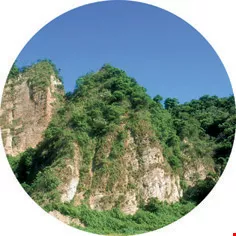
Creative reengineering
Introducing new ideas from elsewhere is the best way to obtain the quick breakthroughs that Kaohsiung County desires. On the other side of Kaohsiung County, another imported idea is making the night skies over Fengshan shine.
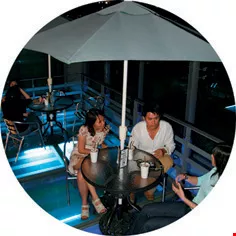
It's eight in the evening. The sounds of Ardor's hit song Not Just Friends resonates throughout Fengling Plaza. Mr. Wu and his family find themselves caught up in the tune's climax.
The Wu family has been coming to Fengling Plaza once a week since it opened in August of last year. The four of them first dine on a meal of soup with rice noodles in the nearby Sanmin Night Market before strolling down two blocks where they sit and listen to music and chat over a cup of "Gold Mine"--a very popular coffee in Kaohsiung. "You have to make it here early on weekends or you won't find any seats," confides Wu.
Non-natives congregate here with the blessing of the locals. "Whiling away the evening over a NT$40 cup of joe. What a bargain!" exclaims a Mr. Chen, who is in Fengshan on business from Taipei.
"The success of Fengling Plaza caught many people flat-footed," relates Chu Cheng-yu, head of the Kaohsiung County Bureau of Redevelopment. "In the past, Kaohsiung County called to mind manual labor and industry. Fengling Plaza has revealed Fengshan's gentler side and locals no longer have to go to Kaohsiung City to find the glow of nightlife.
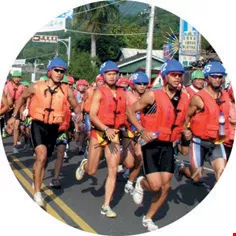
The leisure of Fengshan
With the emphasis on reengineering the environment, a mellower Fengshan is now both "a nice place to visit and live." Furthermore, scattered around Fengshan City in Kaohsiung County are aboriginal townships like Maolin, Taoyuan, and Sanmin, as well as the Hakka enclave Meinung. These communities have all embraced tourism and throughout the year, they offer a plethora of locally flavored activities aimed at tourists.
Renowned as a center of agriculture and traditional industry, Kaohsiung County set out on a journey to develop tourism, but ran into a brick wall that for years, they couldn't make budge.
Taipei is the traditional financial and administrative center for all of Taiwan, while southern Taiwan, led by the city of Kaohsiung, is the industrial center. As a satellite industrial zone and supplier of agricultural products for Kaohsiung City, Kaohsiung County played a peripheral role to the secondary center after Taiwan's economy shot out of the blocks in the 70s. For the last two decades, however, it has seen a mass exodus of manufacturers, and Taiwanese farmers have been battling tough foreign competition. Kaohsiung County found itself reeling from chronic high unemployment. Kaohsiung owned the unenviable position of first place in joblessness for years, reaching a new record in 2001 with 5.68%. Industry's stagnant performance has greatly impacted the living standards. Kaohsiung County was pulling up the rear in terms of per household disposable income and level of urbanization.
"Department stores, boutiques, and hotels set up shop in Kaohsiung City and the people of Fengshan became accustomed to spending their money there," points out Chen Chang-yi. "Only 15 minutes away by car, consumers naturally flocked to Kaohsiung. Not even one department store was able to open up in Fengshan."
But the situation has changed in recent years. Single-family, multistory attached houses have been popping up around Fengshan and Niaosung. Especially since the real estate market in Taiwan began rebounding two years ago, upscale homes promising quality living have been popular, pushing up Fengshan's real estate prices.
"The scheduled launching of the Greater Kaohsiung Mass Rapid Transit System and improvements in living standards around Fengshan have served to attract many people who work in Kaohsiung City," explains Hsu, a Fengshan real estate company manager.
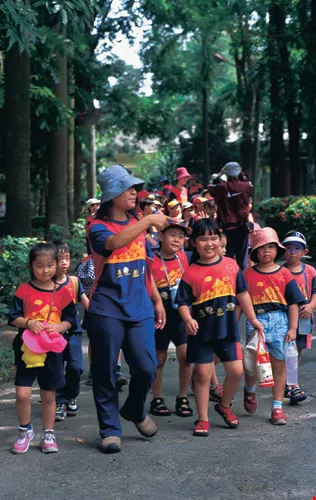
After it stopped producing sugar, the Chiaotou Sugar Refinery echoed with silence, with only the sound of visiting children swooping down on Sundays bringing the sleeping factory back to life once again. The elegant design of the tiled water tower reveals the aesthetic sense of craftsmen under Japanese rule.
Kangshan--Hi-Tech Hub
The atmosphere of Kangshan, the county's second-largest urban area, lies in stark contrast to the leisurely air of Fengshan. At noontime, the area around the butcher shop in the old market teems with customers sporting coats and ties. Both sides of Chienfeng Road are lined with vehicles owned by employees working in the nearby Benchou Industrial Zone out for a bite to eat. After lunchtime, the people and cars are gone and the roads once again empty.
In 2003, cities and counties in southern Taiwan competed to win a bid to host an environmental technology zone. Kaohsiung County's Benchou Industrial Zone beat out the competition. Almost 70% of the 208 hectares to be used in the project were sitting idle. After the 1997 ground breaking, the Benchou Industrial Zone found itself on a roller coaster ride. Its inauguration in 2000 coincided with the low point in Taiwan's economic downturn. Most industrial zones in Taiwan were depressed, and protests triggered by plant closures were all too common. In 2003, however, Kaohsiung County won the first environmental science and technology park supported by the central government. Benchou's luck was changing.
On a roll, the county government promoted its "006688 Scheme"--0 rent for the first two years, 60% for the second two, 80% for the fifth and sixth. The occupancy rate shot up from 30% to 70% with 125 firms currently hanging their shingles there. The NT$6 billion in rent concessions approved last year were put to use very quickly; now only NT$300 million remain. The park beat out the competition with its inauguration last year. 40 hectares of land were set apart within the Benchou Industrial Zone for use in environmental technology. In one year, 11 firms moved in. Four companies, including Leige, a battery recycler, and Chengjia Hsingye, a producer of soil testing instruments, have already begun mass production. This was the first of Taiwan's current three environmental science and technology parks to achieve any results.
"The 006688 Scheme and the environmental science and technology parks have definitely helped to bring about a marked improvement in regard to occupancy rates," observes Huang Ming-hui of Taiwan Development and Trust Corporation, which helps firms relocate. In view of the fast-dwindling lease concessions, the Kaohsiung County government announced recently that it would inject another NT$3 billion into the program. Furthermore, to facilitate the future growth of firms within the industrial zone, Benchou will be creating a logistics zone for the area by facilitating land and air traffic.
The Kaohsiung Environmental Science and Technology Park was established with rigorous standards. Consequently, the applications of a number of small firms engaged in recovering and recycling were rejected.
"For many years, Kaohsiung County suffered the effects of industrial pollution," explains Deputy Magistrate Wu Yu-wen. "Environmental technology represents Kaohsiung's hope for the future and is a springboard to upgrading industry."
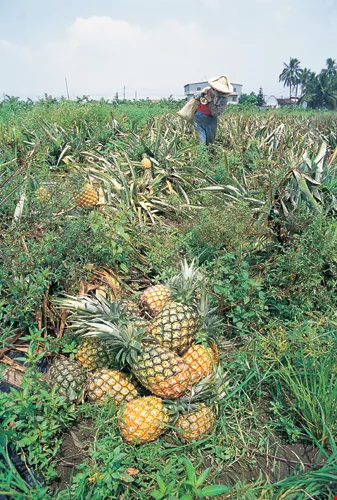
Although best known for its bananas, Chishan's pineapples aren't bad either. The photo shows Chishan farmers harvesting their fruit crops.
Chi Mei--a shot in arm
With reports of success coming out of the Benchou Industrial Zone on a regular basis, the Southern Taiwan Science Park's Kaohsiung base, Lujhu Science Park, hasn't been idle.
Compared with Tainan's science park, Kaohsiung's initially had a tough time recruiting businesses. Tainan won over large LCD panel manufacturers Chi Mei and Hanstar early on, thereby establishing its core industry. Upper and lower stream manufacturers congregated in the park on their coattails. Kaohsiung, however, couldn't seem to bring any leaders of industry into the fold.
But as the Tainan's park filled up, Chi Mei Optoelectronics announced that it would set up a 7.5-generation plant in Kaohsiung in 2006 as it prepared the way for the production of its latest generation of display panels. Because the manufacturing of display panels requires a large number of upper and lower stream industries, Chi Mei's new plant will inevitably lead to investments from peripheral industries in Lujhu, eliminating some of the uncertainty at the Kaohsiung Science Park.
Postsecondary schools in the area, such as the University of Kaohsiung and Sun Yat-sen University, are talent pools for the Kaohsiung Science Park. In contrast to its counterpart in Tainan, the Kaohsiung Science Park has the advantage of being only a 30-minute drive from Kaohsiung's harbor and international airport.
Fengshan is known for its culture of leisure. The Kangshan District is located at the epicenter of the area's high-tech parks. Led by Chishan, a major producer of bananas, calabash, and taro, Chimei's nine major towns are rich in Minnan, Hakka, and aboriginal culture and are wonderful places to enjoy mountain scenery and hot springs. Kaohsiung County's three-pronged approach for kick starting its economy is in place.
Spurred by a rallying economy and effective policies, Kaohsiung County's jobless rate for the first quarter of 2005 dropped to 4.4%--its first dip below the national average in recent years. Fluctuations in unemployment rates are complex, but the upturn in the overall economy has, without a doubt, given the people of Kaohsiung confidence.
A new lease on life
Fengshan, 10 pm. The baseball game at the Chengching Lake Kaohsiung County Stadium has just finished. Cars head every which way as spectators return home. In addition to those living nearby, lots of fans are driving back to Pingtung. "The stadium might be located here, but fans are scattered all over Kaohsiung and Pingtung," says Lu Ming-tze, who has just left a PR position for La New Bears.
To build up its fan base, Bears players spend a lot of their time off the diamond visiting schools around Kaohsiung and Pingtung. Elementary schools located in impoverished aboriginal mountain communities are favorite recipients of free baseball equipment.
"Businesses are always one step ahead of the government and La New's business tactics know no administrative boundaries," Chu Cheng-yu laments. "Regional integration is an inevitable trend. The traffic grid, composed of the subway, the Second North-South Freeway, and the High-Speed Rail, will only accelerate the process and will be key to the south's development."
In a show of support for its development, the National Day fireworks display will be held in Kaohsiung County.
Hsingta Port, once the Far East's largest deep-sea fishing harbor, is recreating itself into Lovers' Pier. The sight of couples in love can be seen nightly. This ingenious change represents yet another opportunity for Kaohsiung County.
Fireworks screaming into the night sky high above Lovers' Pier symbolize the rebirth of Taiwan's beautiful new south.
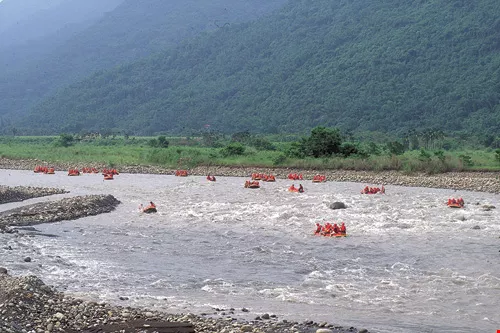
The whole nation is going all out for tourism. Kaohsiung County, which boasts its own beautiful panoramic views. Two major water attractions Laonung River and Hsingda's Lovers' Pier have received favorable reviews.
.jpg?w=1080&mode=crop&format=webp&quality=80)
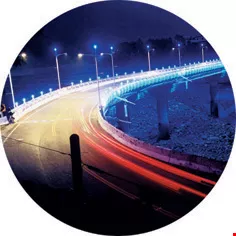
Spanning the Kaoping River, the Kaoping Steel Bridge, a nationally-recognized historic site, is a landmark in the region. Now, a cable-stayed bridge connects the counties of Kaohsiung and Pingtung. The two bridges are popular sites. After Typhoon Haitang washed out three of its piers, however, the old bridge remains in disrepair today.
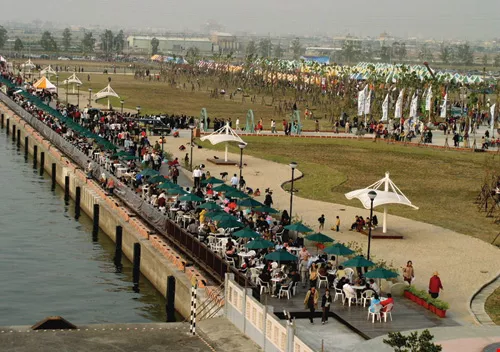
The whole nation is going all out for tourism. Kaohsiung County, which boasts its own beautiful panoramic views. Two major water attractions Laonung River and Hsingda's Lovers' Pier have received favorable reviews.
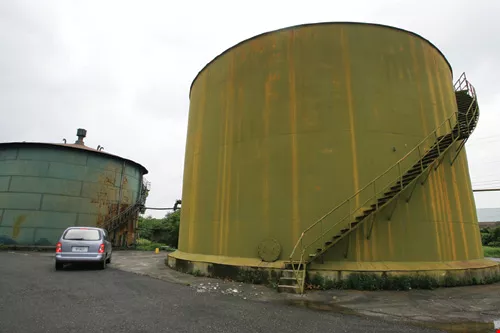
The Chiaotou Sugar Refinery's treacle storage vats wait among the abandoned cane fields and factory buildings for new life. Preserving its industrial culture is an important concern of Chiaotou inhabitants and is a link to past memories.
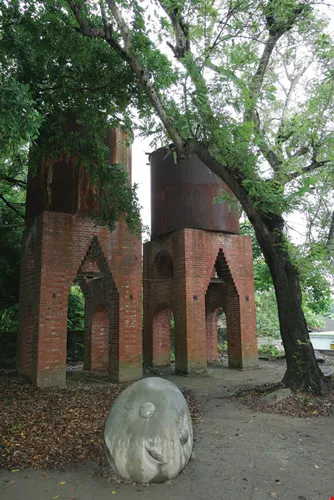
After it stopped producing sugar, the Chiaotou Sugar Refinery echoed with silence, with only the sound of visiting children swooping down on Sundays bringing the sleeping factory back to life once again. The elegant design of the tiled water tower reveals the aesthetic sense of craftsmen under Japanese rule.
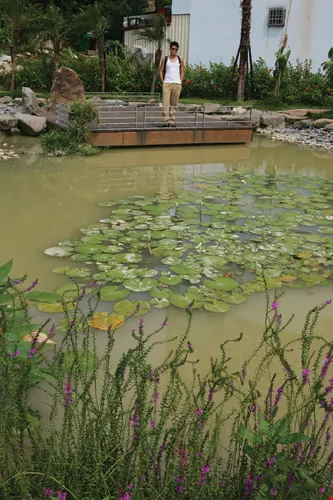
A series of landscape improvement projects were launched to improve the face of Fengshan. After the squat and shabby illegal structures were removed, Cheng Park, at the east entrance to Chengching Lake, became a much more pleasant sight.

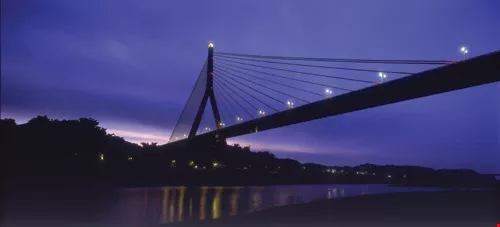
Spanning the Kaoping River, the Kaoping Steel Bridge, a nationally-recognized historic site, is a landmark in the region. Now, a cable-stayed bridge connects the counties of Kaohsiung and Pingtung. The two bridges are popular sites. After Typhoon Haitang washed out three of its piers, however, the old bridge remains in disrepair today.
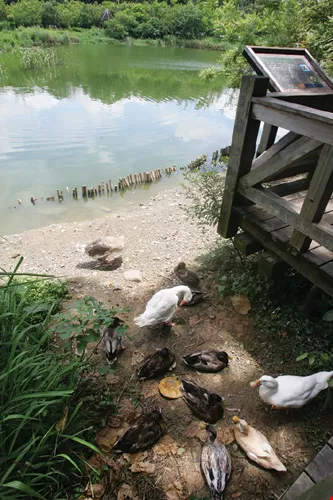
A series of landscape improvement projects were launched to improve the face of Fengshan. After the squat and shabby illegal structures were removed, we see birds congregating at the Niaosung wetlands park.
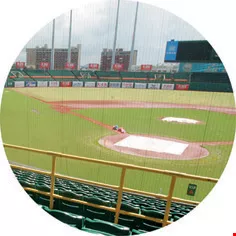
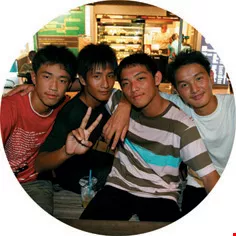
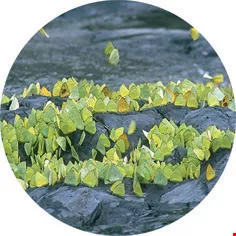
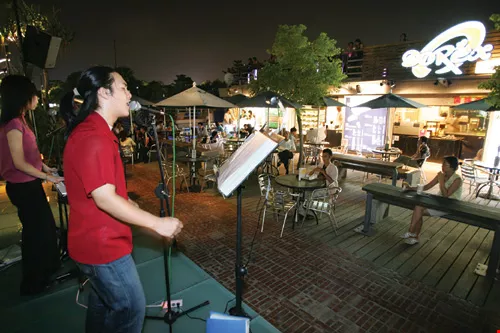
A music band, a cup of coffee, a night of leisure. One small step for leisure, one giant step toward the improvement of Fengshan's quality of life.
@List.JPG?w=522&h=410&mode=crop&format=webp&quality=80)

@List.jpg?w=522&h=410&mode=crop&format=webp&quality=80)


