Taiwan Centenary Boom in Marriages and Births
Chang Chiung-fang / tr. by Geoff Hegarty and Sophia Chen
October 2011


This year is the 100th year of the Republic of China, and because the number 100 symbolizes a long and happy marriage, something of a wedding boom is under way in Taiwan. On top of the centenary, next year will be the Year of the Dragon (the best year for a baby to be born), and there have been improvements in government assistance for new parents, so everyone is expecting significant increases in the birthrate this year and next.
This is indeed good news for Taiwan society, since many of its young people have tended to put off marriage and having children. So this predicted boom in marriages and births in the 100th year has brought new hope. Whether it is simply a rebound from the dip, or a temporary upturn because of the centenary euphoria, the boom in weddings and births is a definite cause for celebration.
The goals of having money, a house, a car, a spouse, and a son are key elements in living a happy life for most Chinese people. But as the global economic environment has changed, it has become increasingly difficult for young people to achieve the first three, and this in turn also creates an impact on the desire for the last two.
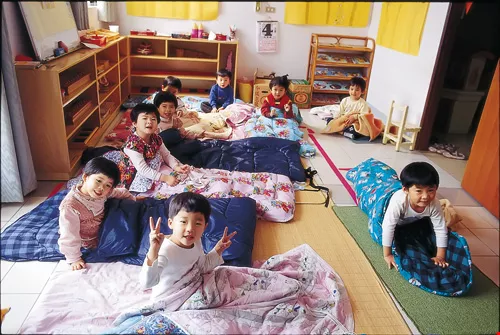
Children are the greatest treasure of any family, especially in Taiwanese society with its low birthrate. All local governments are doing their best to improve fertility rates.
Naturally, the fertility rate has also suffered. In 2010, Taiwan's total fertility rate (TFR)-the average number of births per woman-was only 0.89, far below the global average of 2.5, and in fact the lowest figure in the world.
But against all expectations, this year the situation has reversed. The number of marriages has risen, and the birthrate has also improved significantly.
According to the MOI, marriages between January and July 2011 are up 12.5% compared to the same period last year, and more exciting news is that the number of newborns has also grown 12.8% over 2010. Based on these figures, the number of births this year is expected to reach 188,000, creating hope that Taiwan's TFR will grow to over unity (1.0).
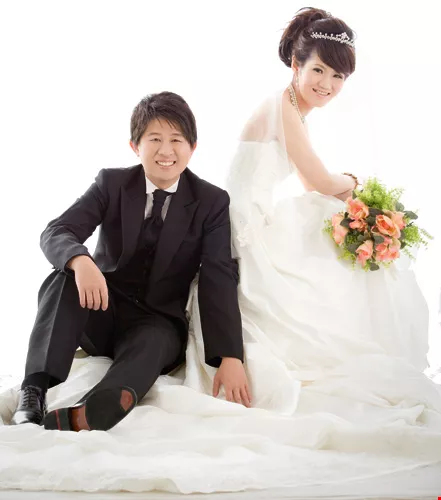
As the centennial marriage boom takes off, new couples are determined to make their marriage a happy one.
Since the beginning of 2011, a number of Taiwan's well-known entertainers have married, helping to fuel the wave of marriages in this centennial year. Celebrated Taiwanese actress Barbie Hsu married wealthy "second-generation" mainlander Wang Xiaofei in March this year in a romantic ceremony on Hainan Island, sparking a new fashion for tying the knot on an island. Other well-known entertainers including Patty Hou, Stefanie Sun, and Rene Liu have all married this year, and the wave of nuptials is not over yet. Karen Mok from Hong Kong and Selina Jen, a pop idol from Taiwan, are both expected to marry in the latter part of this year.
But getting married is not a move that can be organized overnight. Yang Wen-shan, a researcher at the Institute of Sociology, Academia Sinica, points out that the current wave of marriages and births is not because young people have become suddenly inspired to marry. It is rather the result of a group of women who have delayed marriage, and who now want to wed while they are still able to have children.
And 2010 was not a good year. Last year was not only the Year of the Tiger, which in general is not a good year to be born since it signals a stormy life full of danger, but also a "widow's year," a period in the lunar calendar appearing only once every 60 years which has two "Beginning of Spring" solar terms. According to legend, a widow's year is not a good time to marry or give birth, as it will result in misfortune. So many have waited to get married or have a baby this year.
Liu Shuyi and her husband, for example, had been in a relationship for 11 years before they got married in June 2011. After they bought a house this year, they decided to get married because they are both over 30, and now are ready to have a baby. "We got married because we have our house, but we didn't intentionally choose to wed in the centennial year, and we're not concerned about having a baby born in the Year of the Dragon. That's just the way it panned out!"
Wedding rushMany people are reluctant to admit that they are trying to take advantage of getting married in the nation's 100th year, which would traditionally symbolize their remaining a devoted couple to the ends of their lives. Some recently married couples believe that they have been quite unintentionally caught up in the wave of weddings, which has made wedding arrangements such as photos, banquets, and honeymoons all the more difficult to manage.
Wedding-related businesses have been booming this year. According to a survey, sales of essential appliances for newly married couples including washing machines, TVs, and refrigerators have increased more than 20% in the first half of 2011.
Liao Cuimian, who specializes in wedding photography, says that this year's business has doubled over that of previous years. "One of my contemporaries has had to catch high-speed trains to cover three events a day: an engagement ceremony in the morning, a wedding banquet at noon, and then another banquet in the evening."
The number of high-profile entertainers getting married has sparked an impulse for others who have delayed marriage to finally take the step, and has also evoked a desire for single people to actively seek future partners. Matchmaker businesses have taken advantage of the situation, promoting various kinds of dating services. A company named Yuelao Bank (Yuelao, the Old Man under the Moon, is the deity of matchmaking) is running a lovers' cruise for three days and two nights in early October, organizing matchmaking activities in a romantic environment. And it's attracting enormous attention. Wu Jialing, spokeswoman for Yuelao, says that although the company was established only at the end of 2010, it currently has over 200,000 members with revenue growth of 10% per month.
Declining fertilityWhile getting married is the first step towards establishing a family, it doesn't always mean increased fertility. Encouraging people to have more children is something that the government has been trying to achieve for a number of years.
In 1951, Taiwan's fertility rate was at a high of 7.04, but 30 years later when those born in the 1950s and 60s had grown up, it had dropped to 2.46. By 1985, it had fallen to 1.89 (below the replacement level of 2.1 for the first time), and has been declining ever since with no signs of improvement.
Sociologist Chan Hou-sheng has analyzed the major reasons for the decline in Taiwan's fertility rates: people's attitudes toward marriage and having children have changed, mainly because of changes in lifestyle; marriage is being postponed, and the typical age for childbearing has increased; it's difficult to find childcare and even if found, it's expensive; and finally, as the cost of raising a child increases, many prospective parents are often simply unable to afford a family.
In August 2011, a cross-generational survey on employment and attitudes to life was published by recruiting consultants 104 Job Bank and Wealth magazine. It confirms that the so-called "carefree" generation born around the 1980s has a very different outlook on life from that of previous generations: up to 63.6% of this group think that they make barely enough money to support themselves, certainly nowhere near enough to raise a child.
Yang Wen-shan notes that while the number of children Taiwanese women would ideally expect has fallen slightly from 2.12 to 1.95, there has been no significant change in this expectation. The key reason for the decline in fertility rates is that women tend to delay marriage and pregnancy, resulting in many actually either remaining single, or getting married and giving birth later in life.
Encouraging fertilityIn order to improve the fertility rate, national, county and city governments have introduced measures to encourage people to have more children. Chang Shiu-yuan, director of the Child Welfare Bureau of the Ministry of the Interior, points out that funding for maternity benefits is currently provided by local authorities, with no assistance from the central government, so residents in different counties and cities receive different benefits. Taipei City's program provides the most generous benefits: NT$20,000 birth allowance per baby and NT$2,500 per month childcare allowance for children under five years old. In Kaohsiung, the birth allowance is NT$6,000 per baby, and NT$3,000 per month for children under two.
Xiaolong became a father in June this year. He calculates that if they had been residents of Taipei City, in addition to the birth allowance of NT$20,000, his child would have received a total of NT$170,000 in monthly payments. It's a pity that they live in New Taipei City where there is only the NT$20,000 birth allowance, but, at the moment, there is no monthly childcare allowance.
In order to allow all families to be entitled to the same childcare benefits that Taipei City provides, the Executive Yuan has drawn up a plan with a budget of NT$3.2 billion. Starting in January 2012, the central government will subsidize childcare fees for families paying income tax at no more than the 12% band (an annual income below NT$1.13 million after deductions and allowances in the previous year).
Whether a child is looked after by a licensed nanny or parent (for children under two), all families will receive a subsidy ranging from NT$2,500 to NT$5,000 per month. It is estimated that at least 170,000 young children will benefit. Chang Shiu-yuan states that due to limited funding, the initial implementation in 2012 will include an income test, but the scheme will be expanded to include all families regardless of income by 2021.
The dragon effect?Although these benefits have yet to be fully implemented, this year has shown some increase in the number of babies. Some doctors have publicized the fact that women who conceive between April 30, 2011 and May 15, 2012 should give birth within the Year of the Dragon (which is calculated on the basis of the lunar calendar).
According to folk custom, the Year of the Dragon is the best year to marry, give birth, or establish a business. Parents like to have their children born under this zodiac sign because it symbolizes good fortune and success for their children. Because of modern birth-control methods, there has been a baby boom in recent dragon years: 1976, 1988 and 2000. (See the table on page 21.)
Despite all its disadvantages-post-natal care centers will be packed and in the future, children will face greater academic competition than those born in other zodiac years-Chinese people favor the Year of the Dragon to an enormous degree.
Yang estimates that this year's crop of newborns will increase around 20,000 from last year's 160,000, and the number will probably rise again next year. But current policies to encourage fertility haven't borne fruit yet. We may have to wait for up to two years to see any effects: if by that time the fertility rate remains at boom levels, then it can be said that the policies have been effective.
Yang points out that early demographic studies assumed that the decline in fertility rates was irreversible, and few if any countries would be able to undo the decline. However, after witnessing slight recoveries in fertility rates in some European countries such as France and Denmark due to policy changes, sociologists have become less pessimistic. But this occurs only if governments invest sufficient funds and resources.
TreasuresWhether this baby boom is an effect of the 100th anniversary year and the Year of the Dragon, or the success of policies designed to encourage more births, is still difficult to judge. But one thing is certain: although social benefits do not necessarily "lure" young people into getting married, they do provide security for women who become pregnant "accidentally."
Luo Guangxuan got married on New Year's Day 2011, and is due to give birth in mid-October. Although they had no plans to have a baby in the centennial year, she is reassured of the security of her child's future by the handbook issued by the Taipei City Government to new couples, which lists details of birth and childcare allowances.
Even though people don't give birth for the sake of maternity benefits, the presence of government assistance provides reassurance and reduces people's worries. Chien Tai-lang, deputy administrator at the MOI, admits that government funding of services and allowances will not in itself boost the fertility rate. But measures such as maternity leave, baby bonus payments, and childcare allowances can create a favorable environment for fertility, and help the public to realize that children are an important national asset.
Certainly, this year is witness to a unique boom in marriages and births. We sincerely wish every new couple a long and happy life together, and encourage them to have children-the greatest possible treasure of any family-as soon as possible.
@List.JPG?w=522&h=410&mode=crop&format=webp&quality=80)


