A cooling staple at everyday tables
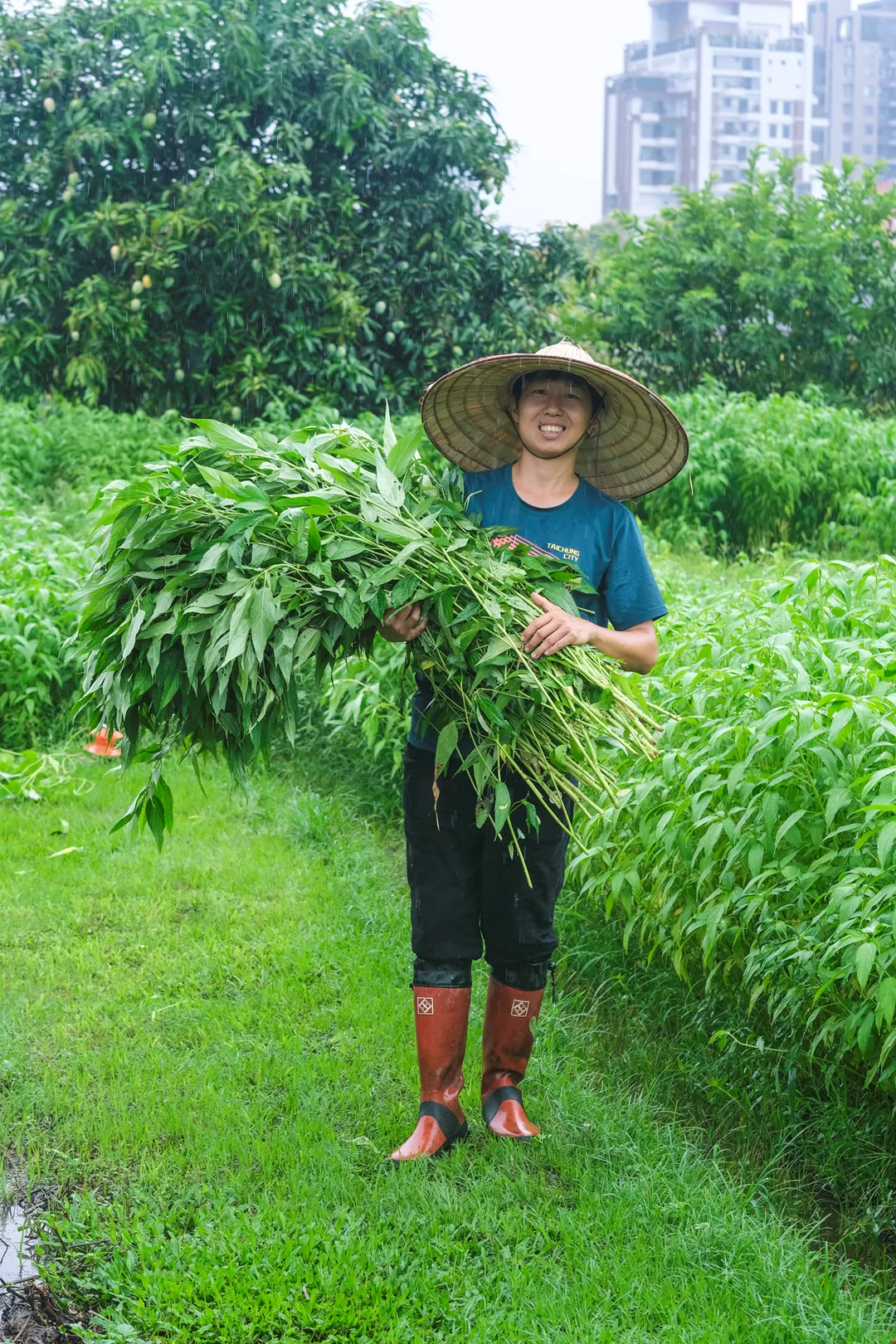
“Strictly speaking, there is no plant called muâ-ínn,” says young farmer Chen Junru of City Farmer Chicken Farm, explaining the origins of the name with a smile: In Taiwanese Hokkien, ínn refers to a plant’s tender new shoots; muâ-ínn means the tender leaves of the jute plant. During the Japanese colonial period, jute was widely grown in central Taiwan, its stem fibers used to make sacks and ropes for shipping exported sugar and rice. Resourceful Taiwanese cooks used the discarded tender leaves to make muâ-ínn soup. which, characterized by a grassy aroma, slight bitterness, and lingering sweet aftertaste, became a cooling dish found only in Taichung.
Jute is at its peak production from May to September each year, when muâ-ínn soup begins appearing in Taichung’s markets and snack stalls. Chen says that in the Taichung area, muâ-ínn soup is a household dish, one many people have eaten since childhood. “A bowl of soup represents a story, a family memory,” she says. In farming communities back in the days when everyone worked in the fields, people would always have a bowl of muâ-ínn soup during the midday break to cool off. Each household has its own way of preparing and eating it. Most add sweet potatoes and whitebait, while some include water spinach for extra texture. Interestingly, muâ-ínn soup can be served hot or cold: Some prefer it steaming, while others chill it in the refrigerator. It can be enjoyed on its own or poured over rice, depending on each family’s tastes.

Through food and agricultural education, students learn that jute was once grown for rope and cloth, while muâ-ínn soup developed from farm families’ ethic of making full use of what they had.
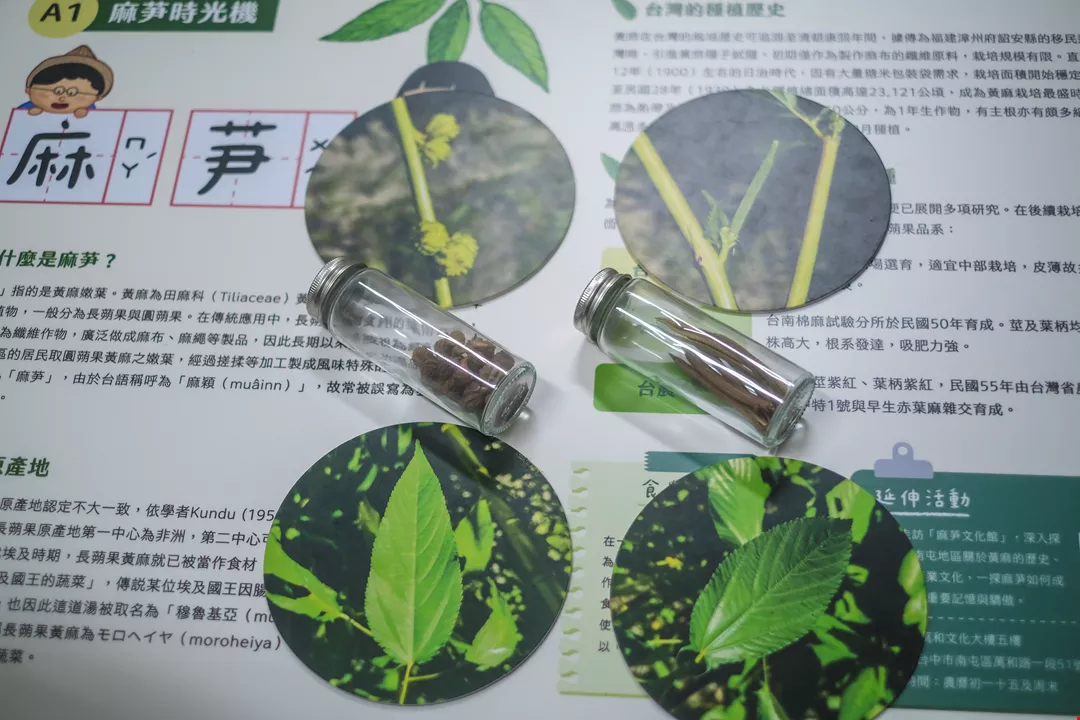
Jute leaves are also eaten in other parts of the world. The variety eaten in Taiwan is round-podded (left), with a bitter note that gives way to a sweet aftertaste. Elsewhere, the long-podded variety (right) is more common; it is less bitter and does not require rubbing before cooking, but it lacks the same lingering sweetness.