The Many Charms of Taiwan’s Hotels
Chen Hsin-yi / photos Chuang Kung-ju / tr. by Scott Williams
June 2013


Do you enjoy travel? Have you ever stayed in particularly memorable lodgings?
Some say that travel is a process of “drifting and mooring,” the former referring to the adventure and seeking after novelty that are central to travel, and the latter to the recovery period that necessarily follows a big outing.
Taiwan’s hotel industry has blossomed in recent years, with improved designs and services encouraging travelers to hit the road and create their own “moving” stories.
Food and travel writer Yeh Yilan may have a comfortable Taipei home, but she sometimes longs for a respite from work and stress. When the need arises, she recharges her batteries with an overnight hotel stay.
The Voluando Urai Spring Spa and Resort in Wulai is on her shortlist of “little hideaways.” She usually gets a room outfitted with a comfortable sofa and a hot-spring bath facing the mountains and the beautiful river valley. Ensconced inside, she can spend a whole day reading, soaking in the tub, and enjoying the view. A typhoon could rage outside without disturbing her serenity....
Yeh says that she didn’t begin developing her hideaway philosophy until she was nearly 40. It stands in stark contrast to the “all senses opened wide to new experiences” attitude she applied to researching and writing about hotels in her youth, when she stayed in every kind of hotel around the world. Nowadays, she gravitates towards towering mountains and lovely waters, and spends days “moored” in the same hotel for conversations with herself.
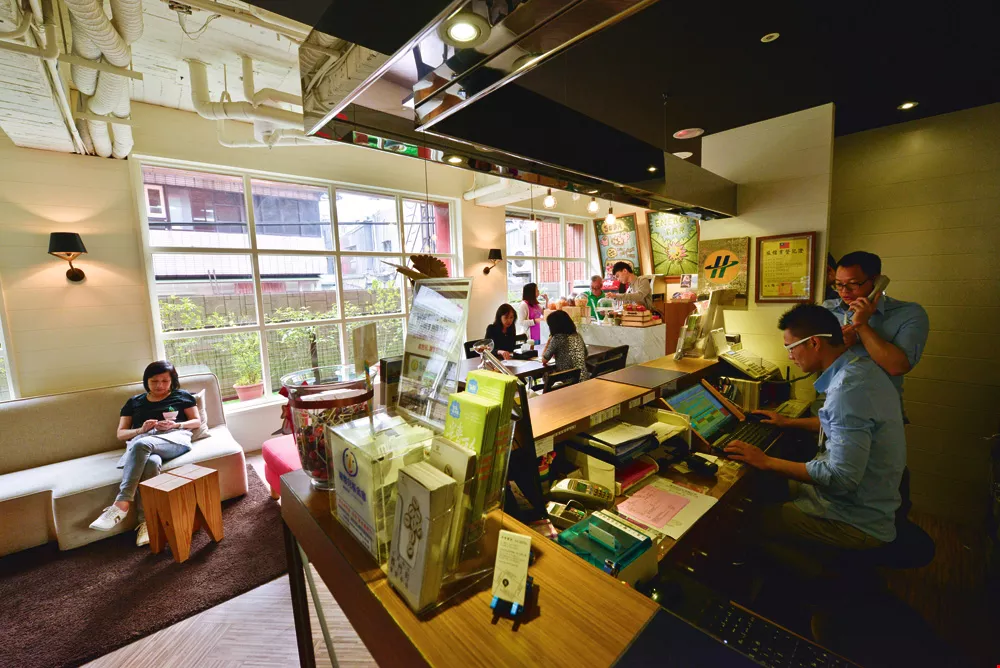
Inexpensive hotels may be small, but they usually have everything you need. The photo shows the Via Hotel in Taipei’s Ximending district. The hotel’s lobby, which contains a reception desk and a self-service snack bar, also provides guests with a space in which to relax and meet friends.
Yen Chung-hsien, an associate professor with the Department of Architecture at Shih Chien University, has his own “bad habit”: spending free weekends at design hotels to improve his mood and spark his creativity.
One of his favorite destinations is the Ambience Hotel located on Taipei’s Chang’an East Road. He is particularly fond of its upper-floor corner suites because the floor-to-ceiling windows in their bathrooms, located right at the corner of the building, create an almost dramatic space.
“Soaking in the beautiful white tub, which is practically a work of art itself, after dark, looking out the windows at the nightscape, at the cars flowing like fireflies along the nearby Xinsheng South Road elevated highway, and contrasting the view outside with the cold, white design of the interior gives you an otherwordly sense of being in a space capsule in a science-fiction film.”
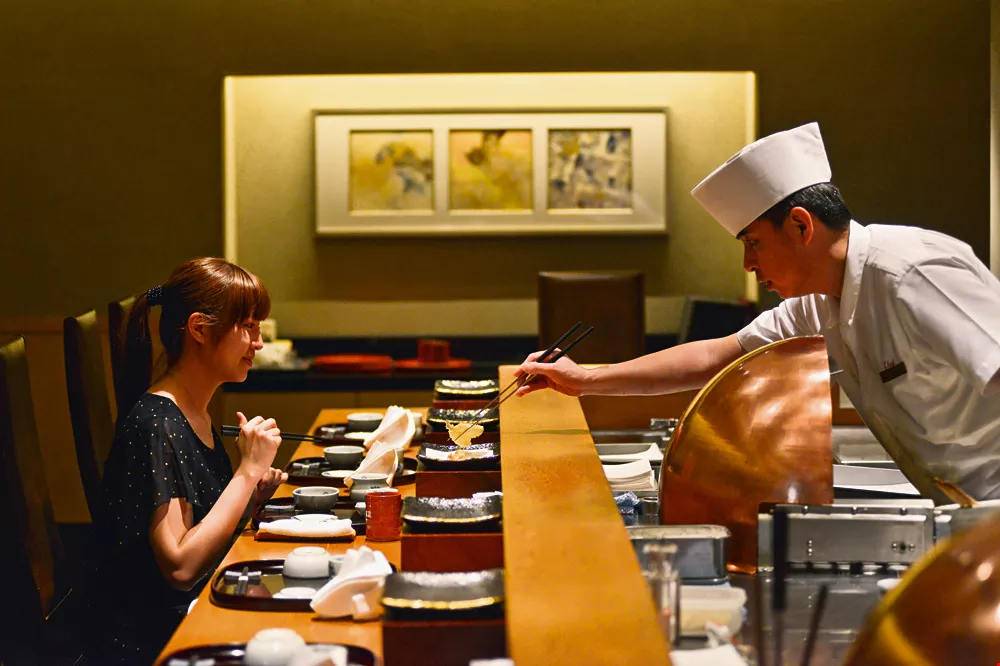
The fine points of a high-quality hotel—the design of the space, meticulous service, delicious food, and even the arrangement of little items—are all well worth your attention. The photo shows Okura Prestige Taipei.
Most people today regard hotels not just as places to sleep, but also as venues for holidays, entertainment, conferences and relaxation.
We haven’t arrived at that situation overnight. If we look back at the development of the hotel industry in Taiwan, we see that it has passed through four major stages, each of which has been closely linked to the development of our economy, our changing lifestyles, and the growth of international tourism.
The first stage followed the ROC government’s relocation to Taiwan, when large numbers of American military personnel, foreign aid groups, and international journalists poured into our island. The government built the Grand Hotel on Zhongshan North Road in 1952 to provide these visitors with more comfortable accommodations. Over time, the hotel’s red columns and gold roof tiles became a Taipei landmark.
The Taipei Hilton (now the Caesar Park Taipei), our first international hotel, began the internationalization of Taiwanese hotel operations and marketing when it opened in 1973. It also ended up training a large number of local industry personnel.
In the early 1980s, the rapid growth of the Japanese economy brought large numbers of Japanese tourists to our shores. This marked the start of the third wave of our local industry’s development, in which the government offered the private sector tax incentives and low-interest loans to build hotels.
Major international hotel chains, including Sheraton, Regent, Hyatt, Shangri-La, and Westin, arrived in the early 1990s. Attracted by Taiwan’s booming economy, they also spurred across-the-board improvements in the local industry.
But when the number of international travelers failed to meet expectations, the “invasion” stalled and even those chains with branches here lost the impetus to upgrade.
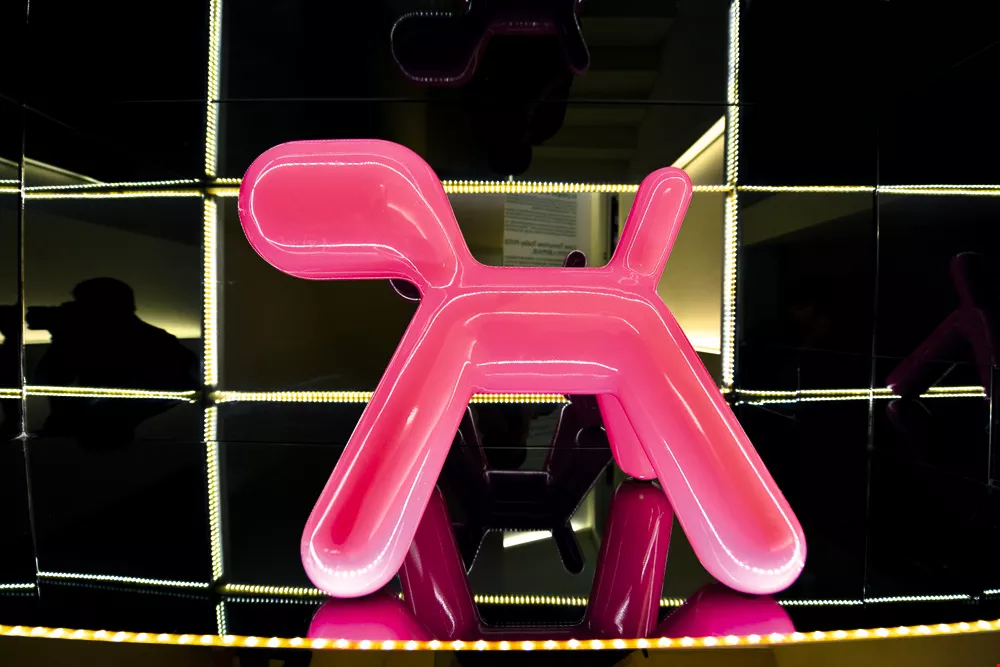
CityInn Hotels often offer cutting-edge local artists space in which to let their creativity run wild. The photos show the hotel’s Ximending branch.
The situation changed again in 2008. Since then, the number of international visitors to Taiwan has doubled, initiating the fourth stage of the local industry’s development. More international chains have arrived and are vying with local five-star hotels for business.
The international chains are backed by big money, and have top-notch design teams and international marketing muscle, which helps attract visits from international celebrities and VIPs. These visits provide opportunities to better train hotel personnel, and introduce the local industry to the global industry’s most cutting-edge ideas.
Lady Gaga, for example, stayed at W Taipei during her 2012 tour. A leading international brand that targets young, fashionable and outgoing guests, the hotel excels at appealing to all five senses and meeting its customers’ every need.
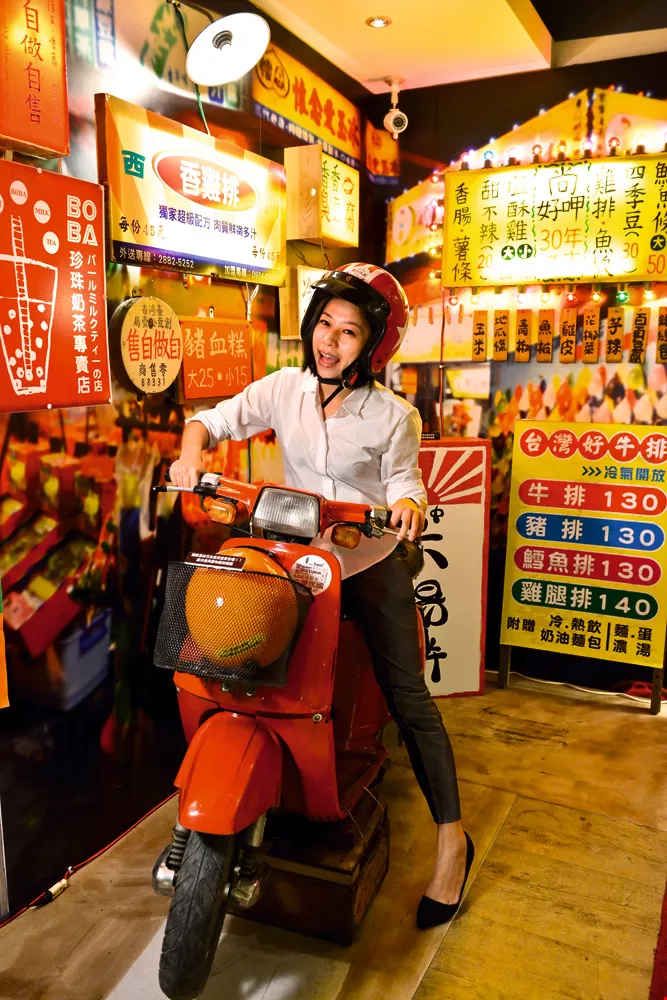
CityInn Hotels often offer cutting-edge local artists space in which to let their creativity run wild. The photos show the hotel’s Ximending branch.
Under pressure from international brands, local luxury chains are also reworking their image.
In late 2008, Nelson Chang, a cement-industry heavyweight, took over his family’s China Trust Hotels. He chose to treat the hotels as a new business and became very personally involved in their reorganization. Since its thorough makeover and rebranding as the l’Hôtel de Chine Group, the chain’s operation has expanded to 12 hotels.
The group’s all-new Palais de Chine opened in May 2010. Designed by Ray Chen and featuring a mix of Chinese and Parisian elements, the hotel’s outstanding detail work and aristocratic vibe earned it recognition as the Asia Continent Winner in the Luxury Business Hotel category at the 2012 World Luxury Hotel Awards.
Isabel Tang, director of public relations for the l’Hôtel de Chine Group, says that even though local brands lack the marketing muscle of the international chains, they do a better job of integrating local resources.
For example, the group’s Fleur de Chine at Sun Moon Lake features an extremely simple design that reflects the lake’s natural beauty and gives guests the sense that they are literati enjoying a fine landscape painting. The hotel’s “famous guides” series has even invited the Tsou singer Lea Kao to provide cultural background and nutrition expert Chen Yue-ching to lead guests on a trip to an organic farm.
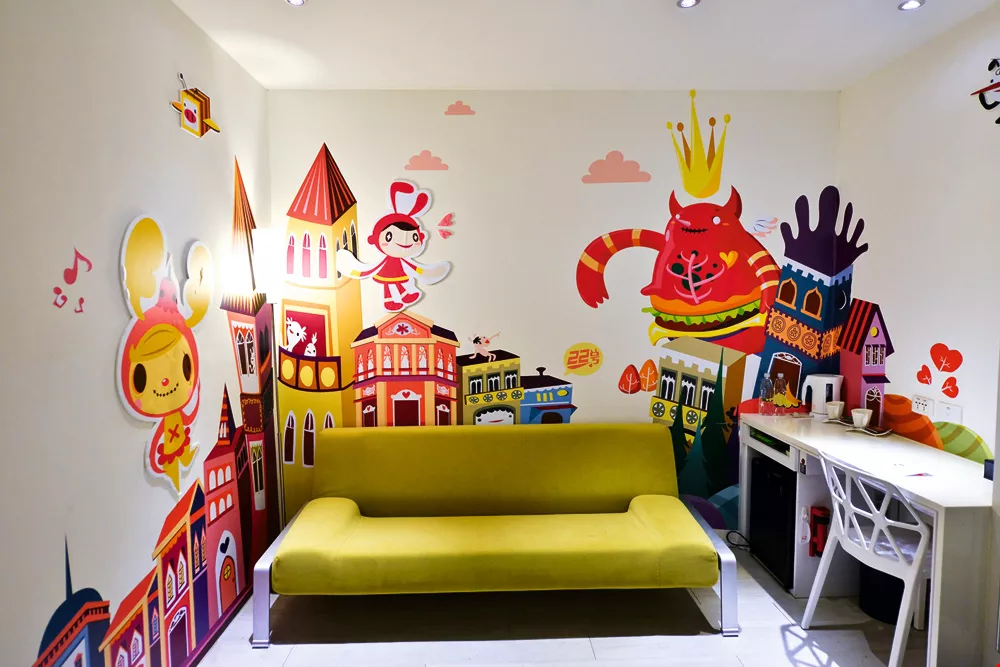
CityInn Hotels often offer cutting-edge local artists space in which to let their creativity run wild. The photos show the hotel’s Ximending branch.
Another industry trend is the rise of budget hotels. These hotels have shown that inexpensive does not necessarily mean “cheap” and have even served as showcases for the work of local artists.
Jimmy Dai, chairman of Taipei Inn Group, is an experienced hotelier who decided to embrace the masses after stumbling across a popular French-run youth hostel in Chengdu in 2006. By leasing properties on a long-term basis and cooperating with established hotels, he’s managed to open eight inexpensive inns in just five years at locations near the Taipei Railway Station and popular tourist destinations.
In 2013, TripAdvisor, the world’s biggest travel website, analyzed users’ opinions and reviews to select the 25 hotels in Taiwan offering the best service. The only budget accommodations to make the list, which was otherwise dominated by five-star hotels, were all eight of the Taipei Inn Group’s.
Fan Zhihao, manager of the Ximending branch of CityInn (a Taipei Inn brand), says that the hotel staffs its front desk with two people around the clock to provide guests with better service. In addition to offering warm greetings, they help guests with mail, booking plane and train tickets, arranging gifts, and looking up travel information.
The group’s hotels are visually interesting places as well, featuring art and installations by local designers in their lobbies, halls, stairwells and rooms.
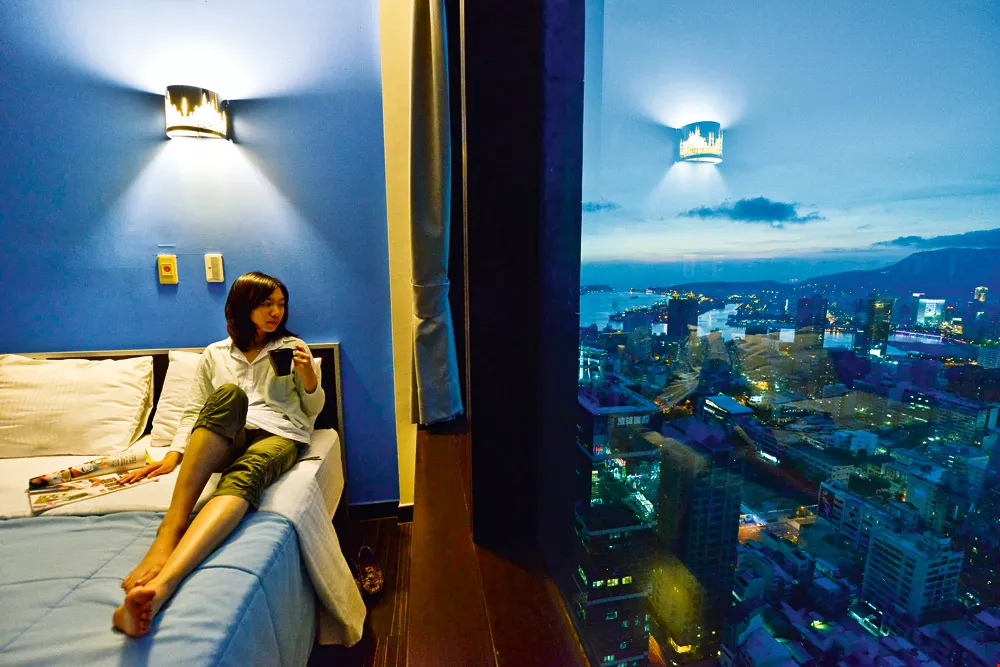
No matter how exciting your travels, your hotel should always be a safe haven. The photo shows 85 Sky City, with its expansive views over downtown Kaohsiung.
In recent years, Taiwan’s hotels have also diversified their looks with an eye to meeting the needs of the more casual and cash-strapped travelers of the current era.
Single Inn, a former sauna located near the Kaohsiung train station, is now a 64-room hotel that sends its male and female guests into separate areas at check-in. The hotel offers only one kind of room, a single with a single bed, enough space to open a large suitcase, and a lockable sliding door for privacy. It also provides Wi-Fi access and a flatscreen TV that requires the use of headphones.
Guests share a sauna-style bathing area, toilet facilities and dressing tables, but the hotel offers amenities, including a screening room, reading room, and restaurant, and the option to arrange massages. It also costs as little as NT$900 per night (including breakfast). Highly regarded by backpackers, it averages 40% occupancy on off-peak days.
Su Peng-chin, a 30-something who runs Single Inn, says that to the older generation, a sauna was a complete leisure facility that integrated bathing, massage, and dining. It was also a convenient place for businesspeople traveling between northern and southern Taiwan to spend the night back when Kaohsiung’s economy was first taking flight.
With the sauna business in decline, he talked his father, who was the original operator of the sauna, and his partners into converting their business into a hotel. Drawing ideas from Korea’s Jjimjilbang (a combination spa, gym, and snack bar popular with young people), foreign youth hostels, and Japanese “capsule” hotels, he developed a unique business model that he hoped would provide travelers “personal freedom without too much isolation.”
A home away from homeOne question worth considering is whether an ideal hotel should make guests feel it is their “home away from home,” or rather should offer them new experiences.
Renowned industrial designer Hsieh Jung-ya believes that the international hotel industry has developed a very fixed concept of the hotel as a “home away from home” over the last 100 years. The industry’s core values and its underlying design aesthetic are built around the expectation that a hotel will be as relaxing, comfortable, and reliable as home.
But the global proliferation of “design hotels” over the last 30 years has turned this concept of “hotel as home” on its head. “People go on vacation to experience an ambiance different from that of their homes,” explains Hsieh, “to enrich their lives.”
Yen Chung-hsien argues instead that the industry’s final frontier is “redefining every aspect of your home and your life.” For example, General Hotel Management, a leader in the design hotel segment, delivers a different cultural experience in every country, while also providing guests with the inspiration to create a more delightful, comfortable home.
Perhaps the hotel awaiting you at the end of a day of travel is more a metaphor for home. The very transiency of your relationship with a hotel makes it better suited to the drifting of travel, and ultimately better able to soothe your weary spirit.


@List.jpg?w=522&h=410&mode=crop&format=webp&quality=80)


