Chinshan's Halide Heaven--The Governor-General Hot Springs
Kuo Li-chuan / photos Chuang Kung-ju / tr. by Scott Gregory
September 2005


Taiwan is known for its world-class springs. It's got cold springs, hot springs, an oceanic hot spring, and springs in wild mountain streams. They're high-quality and they're numerous, with over 100 around Taiwan. With leisure travel on the rise, bathers are seeking out springs all over Taiwan for their therapeutic and cosmetic benefits.
In 1867, a great earthquake hit northern Taiwan. While it brought devastation to Taipei County's Chinshan Township, a fishing village situated between the mountains and the sea, it also caused the discovery of the local Chinshan hot springs.
The Chinshan hot springs were developed by the onsen-loving Japanese during their colonization of Taiwan. In 1911, the springs behind the local Matsu temple were converted into a rudimentary public bathhouse which came to be known as "The Old Onsen." In May of 1938, the Japanese governor-general of Taiwan decided that an onsen should be constructed at Chinshan's Shuiwei fishing port for use by public officials and VIPs. The Taipei local government put up ¥30,000 in funds, and a two-story Western-style brick building called "The New Onsen" was completed in September of the following year.
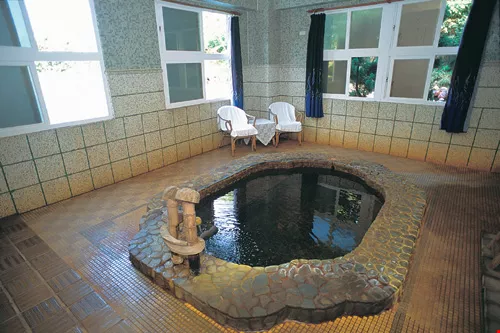
The "Governor's Bath" is a luxurious, stone-carved tub that dates from the Japanese era.
Official hotspot
During the Japanese era, governors-general who used this "VIP onsen" included Kobayashi Seizo, Hasegawa Kiyoshi, and Ando Rikichi. As these three were all from military backgrounds, their era--1936 to 1945--is known in Taiwanese history as the "Era of Martial Governors-General," and this onsen they frequented became known as the "Governor-General Onsen."
Though Peitou, on the outskirts of Taipei, had already gained renown for its hot springs, the quality of Chinshan's spring water kept officials flocking in. In those days there were two ways to get from Taipei to Chinshan--you could take an old road used by fishermen, or you could take the train to Keelung, then take a boat from there to Shuiwei, and walk a short distance from the port.
Camouflage bricks
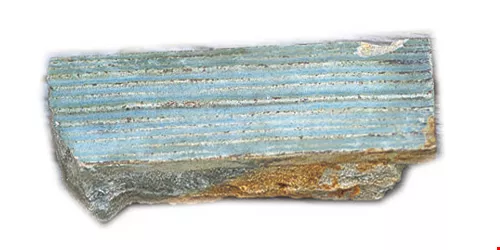
During the onsen's construction, Japan invaded China after the Marco Polo Bridge Incident of 1937. The Japanese authorities urged Taiwanese to use bricks in camouflage colors to hinder air raids. These colors--light green, beige, and brown--were often used from the late 1920s through the early 1940s. A kiln in Peitou specially produced bricks of these colors, known as "13-channel bricks" for their rippled surface, designed to reduce buildings' visibility to enemy aircraft by reducing the bricks' reflectiveness.
Representative buildings from that period include Taipei City Hall (now Zhongshan Hall), Taipei High School (now National Taiwan Normal University), and Taipei Imperial University (now National Taiwan University). Those buildings were all the work of Ide Kaoru, the influential chief architect of the Governor-General's Office who advocated "localization" of Taiwan's architecture. As the Governor-General Onsen was built with the same sort of green 13-channel bricks as the Taipei City Hall, which was completed in 1936 and was also a public building, it is assumed that Ide had a hand in its design.
With a building designed by a renowned architect, a beautiful setting, and high-quality spring water, the Governor-General Onsen became a favorite of high Japanese officials and the rich and famous. The luxury they enjoyed there was in stark contrast to the way the fishermen in the village lived--in the latter years of World War II, fishermen risked incarceration to take their wares by the old road to Taipei and sell them on the black market.
Romantic revival
The Japanese left Taiwan after their defeat in 1945, and then in 1949 the government of the Republic of China moved to Taipei. Many ROC soldiers had nowhere to live, and the township chief of the time, Hsu Hai-liang, requisitioned the Governor-General Onsen. He stopped up the springs, filled in the baths, and turned it into an army camp.
Years later, they abandoned it. Cypress fixtures such as floorboards, roofing, and window sills were all ripped out by local villagers. Even the ashtrays were pocketed, and only the concrete-block shell of the building was left. The site became grown over with weeds, and its ownership changed hands several times. Eventually it was used for common housing, and memories of the luxurious onsen of old faded, until most younger residents of Chinshan had no idea that once there was such a place.
Four years ago, Liu Hsin-hsiung, who's run a hardware export business for over 30 years, heard through friends that there were hot springs near the beach in Chinshan. Curious, he took his family to Chinshan on a day off. The onsen site was covered with reeds, but Liu found the beautiful surroundings peaceful and open. Half doubting its existence, Liu asked old-timers about the onsen, and they confirmed it had been there. He also learned from them that a once-popular television adaptation of a book by romance novelist Chiung Yao had once been filmed there, so he paid a visit to the TV studio and asked to see stills from it. "The people at the studio had probably never run into a 60-something Chiung Yao fan like me. They kept asking why I wanted to see them," he recalls shyly.
Liu put down NT$40 million to buy the onsen site, intending to use it as a meeting hall for employees and salespeople. As one who frequently travels abroad on business, Liu felt that Taiwan's architecture lacked its own characteristics, so he decided to pay homage to the site's history. He hired Cheng Hui-chi, whose background was in the leisure travel industry, to run it, and they began to reconstruct it with care. As soon as reconstruction began they were deluged with interest from locals and weekenders looking for a bathing spot. Liu decided to open it to the public. As there was already an "Old Chinshan Bath" nearby, he named it "The Old Chinshan Governor-General Hot Springs."
Camouflage bricks
Halide hot springs
Cheng Hui-chi, who oversaw the reconstruction, says that to recreate the original feel, cypress was used for doors, windowsills, and handrails in the building. The former guardhouse has been turned into a ticket booth, and a tub on the first floor has been turned into the "Governor's Bath." The large, private, stone bath is the most luxurious on the premises.
The first snag they hit in the project was finding bricks for the facade. "We got an estimate from a kiln. Camouflage-color bricks would cost NT$138 each, and we needed 1800 for the building. Then I remembered that a ceramicist friend had bought a load of surplus bricks from a disused kiln, and those were just the right kind." Cheng recalls that the bricks were weathered, and as they were formed by hand, they were uneven to begin with, so each had to be carefully scrubbed before it could be used. Workers complained that the boss was "too cheap to buy new bricks!"
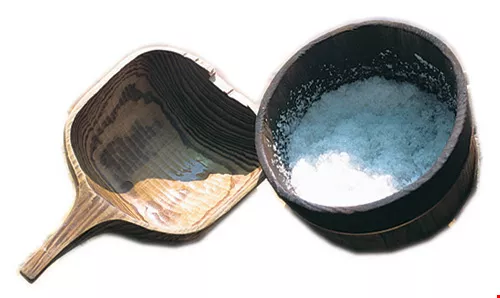
After more than a year of construction, Taiwan's only "seawater halide hot springs" was running again. National regulations stipulate that to be advertised as "hot springs," water temperature must be above 30°C, and the water must contain at least one type of the specified minerals. The Old Chinshan Governor-General Hot Springs' water is 53°C brine. It contains sodium, magnesium, and calcium, and the halogen elements fluorine and bromine, as well as chloride and sulfate ions, in concentrations of more than 20 times the standard minimum. The springs won certification from the authorities with ease, becoming one of 34 hot springs in Taiwan with such status.
According to Liu, no other hot springs in the nation is so rich in minerals. The water also contains iron, which oxidizes in the bath and turns it a yellow color, earning it the nickname "the Golden Springs."
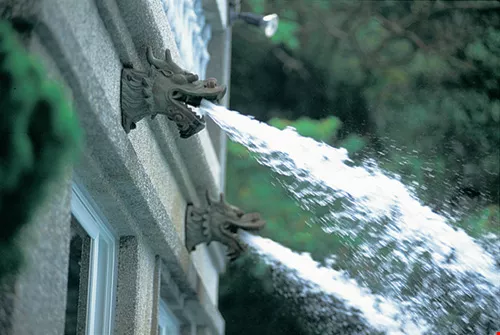
Outside the Old Chinshan Governor-General Hot Springs, there are two outdoor baths. One is in a garden and has a view of Chinshan's cape and the ocean. In the summer, it fills with cool mountain spring water. On the third floor, there are "VIP baths" with whirlpool jets and a view of the Yehliu cape. The women's tubs on the fourth floor provide a view of Yangmingshan National Park's scenic beauty and, at night, the lights of fishing boats in Shuiwei and Yehliu.
After a relaxing soak, guests are provided a satisfying meal of fresh fish and wild vegetables. With many of the more famous hot springs areas overcrowded, the invigorating waters and natural beauty of Chinshan are worth seeking out.
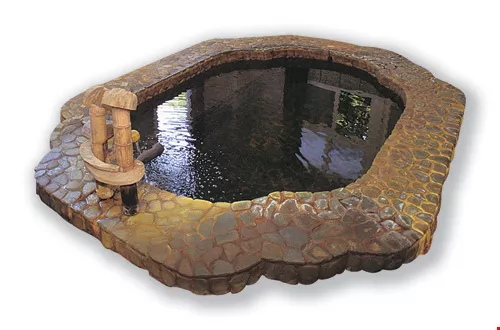
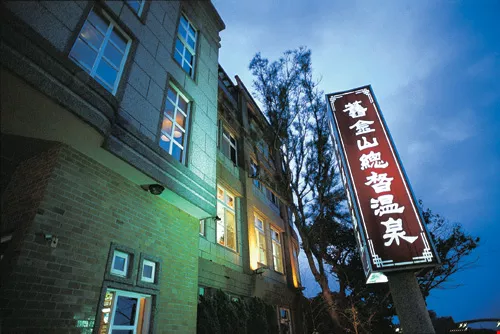
The Governor-General Hot Springs was known as "The New Onsen" in the Japanese colonial era. Its design by a renowned architect, its natural setting, and its high quality spring water made it a favorite haunt of VIPs, including three Japanese governors-general.
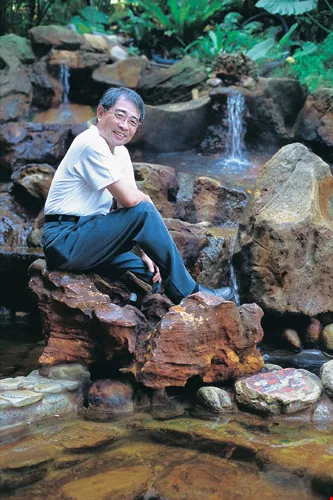
Liu Hsin-hsiung, who runs the Governor-General Hot Springs, purchased the land four years ago. After more than a year of renovations, Taiwan's only seawater halide hot springs--the "Golden Springs"--was open for business.

@List.jpg?w=522&h=410&mode=crop&format=webp&quality=80)


