Testament to a century of modernization
Behind the gate is a spring that supplies water to tens of thousands of people in Tianmu and other parts of the Shilin and Beitou Districts. It is known as the “Yang San” or “Yangmingshan No. 3” water source.
The story began in the early years of the era of Japanese rule in Taiwan (1895‡1945). The Japanese played an important role in developing water supply and sewerage systems for modern urban areas. In Taipei, they commissioned the Scottish engineer William Kinninmond Burton, known as the father of Taiwan’s modern water supply, to build the “Taipei Waterway water source area” (today’s Taipei Water Park). However, as the city’s population grew, the supply from this site proved inadequate for the increasing number of residents. That was when the next stage in the development of water facilities in Taipei got underway.
One of Burton’s disciples, Tojiro Sano, found four major water sources on Yangmingshan. One of these was the “Sapphire Spring” (a.k.a. Yangming Spring), located on the side of Mt. Shamao at 300 meters above sea level, which feeds the Caoshan Waterway System.
This three-way collaboration involving Taiwan, Japan, and the UK produced a site rich in historical significance. However, because it is critical for the daily life of citizens, access to it was restricted. It was only in 2020, when the Covid-19 pandemic closed international borders and drove a surge in domestic tourism, that the area was opened to the public, albeit on a strictly limited basis, with advance application required for entry.
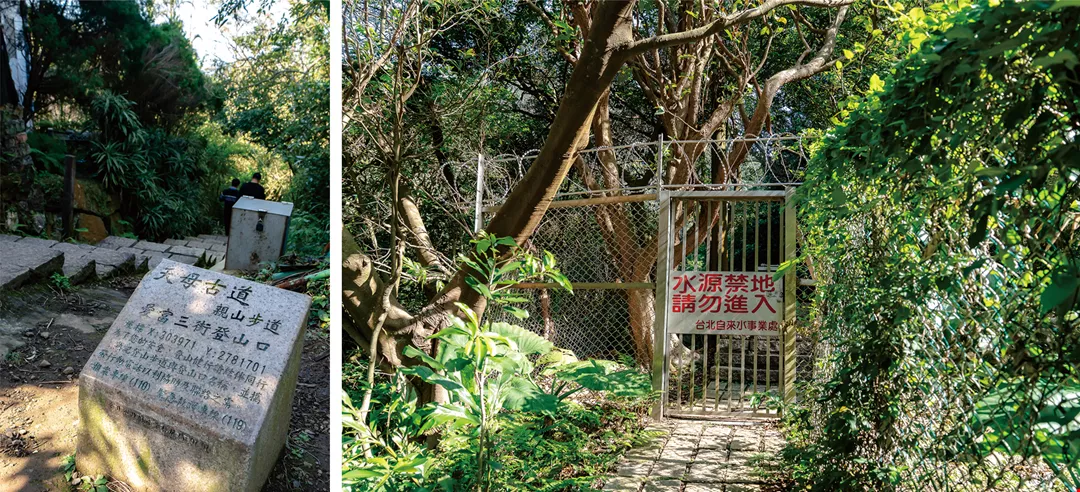
(left) The “Yang San” or “Yangmingshan No. 3” spring is located next to the entrance to the Tianmu Historic Trail.
(right) This closed gate protects the sources that supply water to tens of thousands of residents of Taipei’s Shilin and Beitou Districts.




@List.jpg?w=522&h=410&mode=crop&format=webp&quality=80)
@List.jpg?w=522&h=410&mode=crop&format=webp&quality=80)