The Irrepressible Charm of Taiwan’s Small Towns
Sam Ju / photos Chuang Kung-ju / tr. by Scott Wiliams
June 2014


“Taiwan fever” has been spreading like wildfire among international travel reporters. Media outlets ranging from The New York Times in the US and The Guardian in the UK to TV Tokyo in Japan and TLC’s Asia–Pacific “Travel and Living Channel” have all run reports in the last few years lauding Taiwan’s many charms for the traveler.
Interestingly, all have chosen to focus their attentions on Taiwan’s small towns. Working from a when-in-Rome, experience-oriented standpoint, the reports have introduced local ways of life and industries, and described the warmth of these communities at length.
What makes Taiwan’s small towns so attractive? What are the must-sees for visitors to Taiwan?
This year’s 20th anniversary of the Community Empowerment Project makes the questions particularly interesting. The project, which draws on public–private cooperation, has helped Taiwan’s more than 300 townships develop points of interest on a par with those of our major urban areas, not to mention giving them an appeal our cities can’t match.
Let’s strap on our backpacks and explore Taiwan’s small towns!
A January 2014 story in The New York Times, a paper with more than 2 million readers, ranked Taiwan 11th on its list of 52 must-see destinations.
In the article, food and travel writer Robyn Eckhard noted that Taiwan has a well-developed transportation system that can move travelers from Taipei in the north to Kenting, the island’s southernmost extremity, in just four hours; that Keelung’s Badouzi Fishing Harbor, northeast of Taipei, is readily accessible from the city; and that a trip to Taiwan allows visitors to explore coastal and alpine scenery, and enjoy rural and urban adventures, all on a single trip.
Also in January, the Guardian newspaper named Taiwan one of its top 40 holiday hotspots. The paper especially recommended Taiwan’s street food. Noting that enthusiasm for Taiwanese snacks had swept the UK in 2013, it suggested that travelers to Taiwan venture south to Tainan to experience the island’s “true capital of street food.”
The reports from The New York Times and The Guardian both went beyond recommending standard tourist destinations such as Taipei 101 and Din Tai Fung, and instead suggested that travelers make time to explore the charms of Taiwan’s small towns.
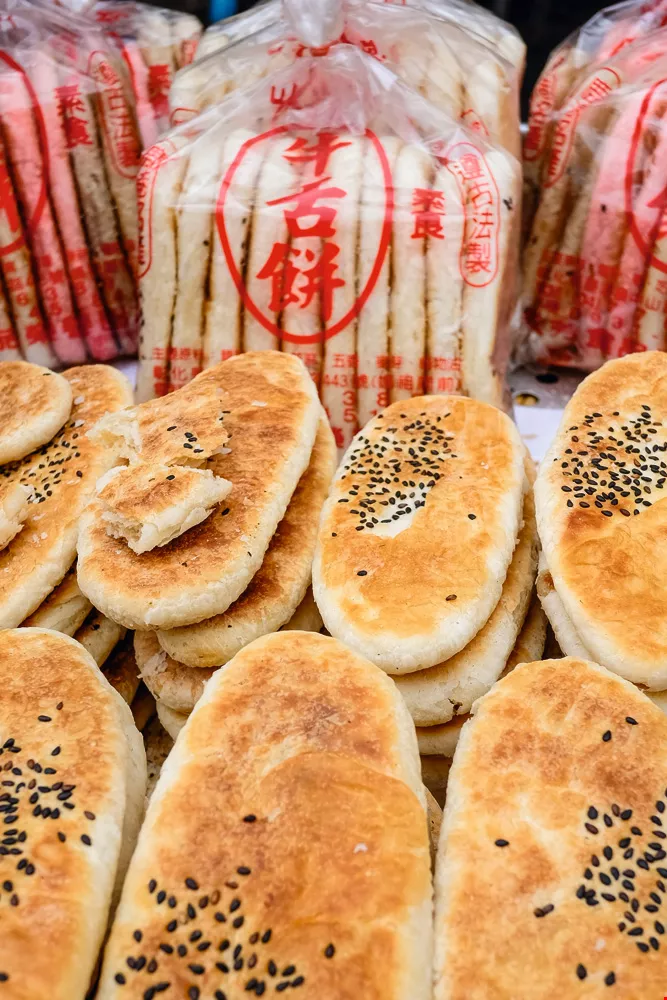
When visiting Taiwan’s small towns, be sure to sample the local culinary delights. The photo shows taro pastries, kongroufan (stewed pork belly served over rice), five flavors stew, and “ox tongue” cookies, all from Lukang.
The soft power of tourism
Television programs have shown many of these charms to great advantage.
Fun Taiwan host Janet Hsieh has been making the rounds of Taiwan’s townships since the Asia–Pacific “Travel and Living Channel” (TLC) launched the program in 2003. Using a mix of Mandarin, Taiwanese and English, Hsieh introduces local customs and injects a healthy dose of her own bubbly personality into the local scenery. The show’s consistently high ratings have made Hsieh a bona fide star.
TLC added Fun Taiwan Challenge to its programming roster in 2011. Competitors from around the world are invited to Taiwan. Host Janet Hsieh then leads them around the entire island, giving them a taste of Taiwan’s urban and rural charms. TLC introduced yet another Taiwan travel show in March 2014. Called Fun Taiwan All Stars, it explores every aspect of small-town life in Taiwan, from the natural environment to culture, the arts, everyday foods, and entertainment.
Taiwanese variety shows like Super Taste and The Big Taiwan Experience similarly trek through every corner of Taiwan. Their humorous styles and wide availability on the Internet have made them hits with Chinese communities around the world, and have even sparked a “Taiwanese Mandarin” fad in Hong Kong.
As Theresa Teng sang so beautifully some 30 years ago, “Small towns are rich in stories, filled with joy and happiness.” Taiwan’s small towns remain just as courteous and hospitable today as they were then. When you consider that small towns also offer visitors opportunities for “experiential travel” and “aesthetic consumption” via local produce, local delicacies, handicrafts, and eco-outings, it’s no surprise that tourists have been flocking to them.
Domestic and foreign writers have jumped on the bandwagon as well, turning the “small town treatise” into its own literary genre.
In recent years author Li Ang, herself a world traveler, has taken up residence in cities and towns around Taiwan for extended stays that she has used to thoroughly explore the surrounding areas. Last year, she published a food and travel book (Secrets of a Serious Eater) in which she shared local knowledge she had gleaned from her travels.
In Taitung County, she devoured a dawangong fan (literally “big bowl rice”), a hearty meal of mixed meats and vegetables over rice. The dish, created by women in a farming village in Chishang Township, is served in a large bowl wrapped in Hakka-style floral fabric. After a stop at a roadside café operated by an Aboriginal handicrafts master, she gushed: “The coffee shop looks out toward Yakou on the eastern side of the Central Mountain Range, letting you soak up the wonderful scenery, relax, and just let your mind wander. It’s a ‘must-see’ for visitors to Taitung.”
Japanese travel writer Mari Katakura expressed her appreciation for the warmth of Taiwan’s small town residents and for the natural bounty of their land in the straightforward prose of her Ultimate Impressions of Taiwan. The book details Katakura’s travels around Taiwan: experiencing traditional Aboriginal festivals in mountain villages; following a Mazu pilgrimage procession in Dajia, Taichung; and helping to protect the hatching green sea turtles in Wang’an, Penghu. She also talks about learning to pick and prepare tea from a tea farmer in Lugu, Nantou County, and sampling Irwin mangos in Yujing, Tainan, while hurriedly jotting information provided by local senior citizens on the mango’s history.
“The more you interact with Taiwan, the better it gets, like a bottle of wine that improves with age.” Katakura brings a Japanese perspective to her explorations of Taiwan, and a large part of what appeals to her is the warmth and friendliness of our small towns.
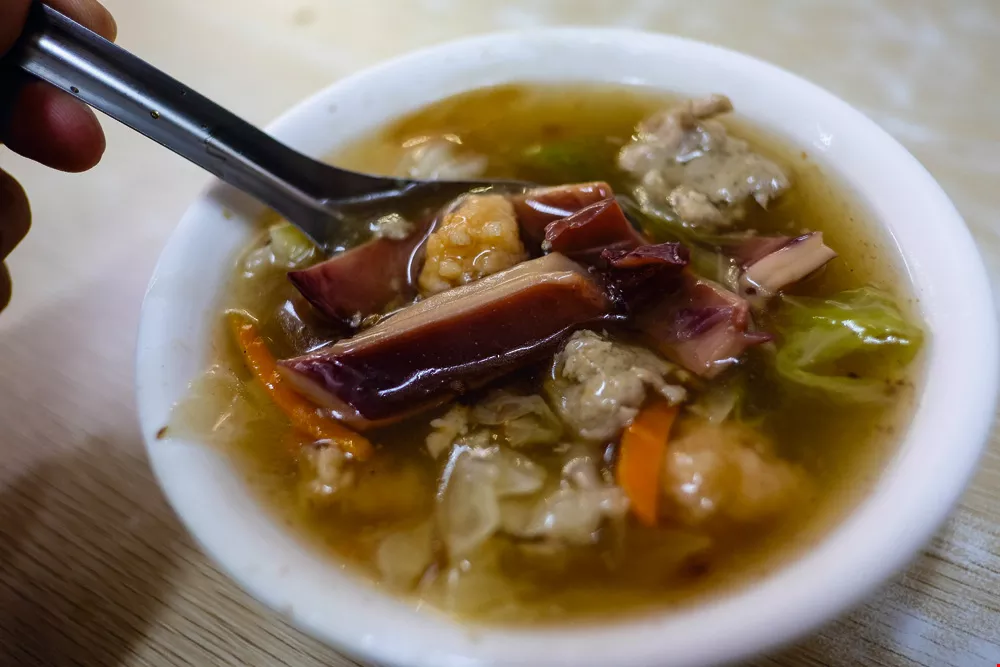
When visiting Taiwan’s small towns, be sure to sample the local culinary delights. The photo shows taro pastries, kongroufan (stewed pork belly served over rice), five flavors stew, and “ox tongue” cookies, all from Lukang.
A global trend
In fact, many nations have been promoting in-depth tours of their small towns, and their print media often encourage locals to give domestic travel a try.
For the last three years, Smithsonian magazine has made an annual list of the top 20 small towns to visit in the US. In 2014, its top-rated town was Chautauqua, New York, a renowned vacation destination that also pioneered adult education in the US. Forbes magazine has even referred to Chautauqua as “America’s utopia.”
This year, the Huffington Post website produced its own list of America’s 15 “coolest” small towns. Berlin, Maryland, where the movies Runaway Bride and Tuck Everlasting were shot, topped the list.
Taiwan has been joining in the fun. In March 2012, the Tourism Bureau held a vote for the top ten tourist towns in Taiwan. When the results were tallied, the winners were: Daxi, Taoyuan; Lukang, Changhua; Anping, Tainan; Dajia, Taichung; Jincheng, Kinmen; Meinong, Kaohsiung; Jiaoxi, Yilan; Jiji, Nantou; Ruifang, New Taipei City; and Beitou, Taipei. The towns’ distribution across northern, central, and southern Taiwan highlights the abundance of points of interest in virtually every corner of our island.
National Geographic magazine photographer Michael Yamashita exhibited photos of all ten of these towns in Washington, DC, in September 2012. Yamashita’s photos included both natural and cultural scenes, such as shots of Mazu worshippers prostrating themselves in Dajia and a young couple in Lukang’s narrow “breast brushing” alley, and were very well received by the hundreds of journalists and travel-industry representatives in attendance at the opening.
The towns also became a hot topic of discussion here in Taiwan, increasing public awareness of their world-class charms.
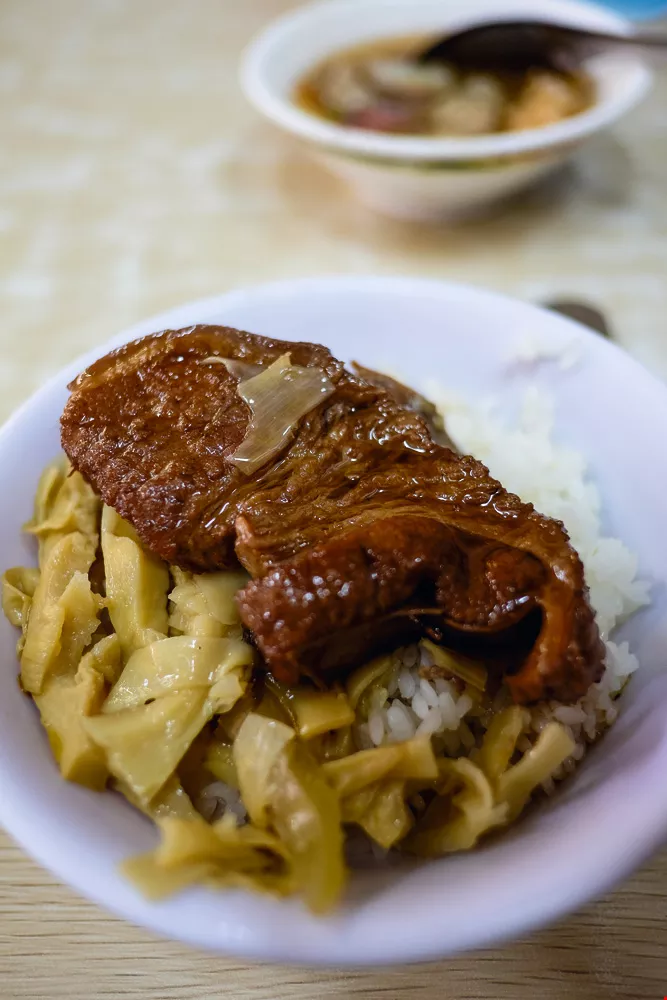
When visiting Taiwan’s small towns, be sure to sample the local culinary delights. The photo shows taro pastries, kongroufan (stewed pork belly served over rice), five flavors stew, and “ox tongue” cookies, all from Lukang.
Community revitalization
Community revitalization has played an important role in cultivating the charms of these small towns. Originally proposed by the Council for Cultural Affairs (now the Ministry of Culture) in 1994, the current community building movement has now been active for 20 years.
Revitalization is usually handled by non-governmental organizations (NGOs) such as resident and community associations, with the government playing the role of resource provider.
But outbursts of grassroots action require a trigger of some kind. The massive Jiji earthquake of September 1999 played that role here in Taiwan. Measuring 7.3 on the Richter scale, the quake badly damaged a dozen-odd townships in the immediate vicinity of its Nantou County epicenter and partially or totally destroyed some 60,000 buildings. But the devastation only fired residents’ determination to rebuild.
Lin Chun-nan, dean of the Department of Leisure and Recreation at National Formosa University, says that for all that the quake left township residents feeling devastated, it also engendered a sense of mission about their wrecked homes. “They viewed the crisis as an opportunity, and set about rescuing their communities themselves.”
Rather than just complaining about the inadequacy of government assistance, residents became active participants in inventorying their communities’ resources, taking stock of their strengths and seeking out directions for development and reconstruction.
Still more importantly, they offered input on the resources the government provided. “They established their own objectives rather than changing course to conform to government policy,” says Lin. “After all, only locals knew what they really needed.”
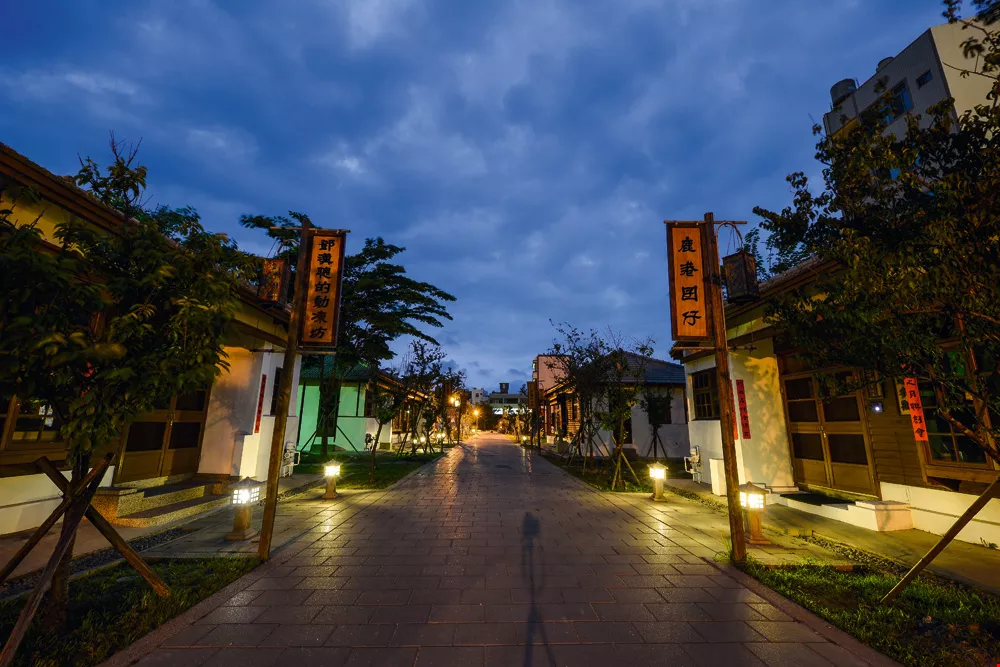
During the day, artists use the renovated Japanese-style dormitories in Lukang’s Guihua Alley Artists Village to work. At night, when the lamps are lit, the street’s Japanese character is all the more evident.
Innovating via social enterprises
Lin believes that much of the charm of Taiwan’s small towns derives from their “innovations.” Viewed from a marketing standpoint, what they’ve done is create things that differentiate them from their peers.
As this tide of revitalization has risen over the last 20 years, residents and NGOs have reacquainted themselves with these townships and their surroundings, looking for developable niches.
They have tapped into their local histories and cultures, letting their townships’ historical patterns tell their own stories.
Some have recovered handicraft techniques that hadn’t been passed on to younger generations and developed them further, turning them into something unique and inimitable. In other communities, residents with a particularly strong love of their land have adopted toxin-free farming methods and built eco-friendly townships.
But towns hoping to hold onto their newly found place in the sun need perseverance and a sustainable strategy.
Lin mentions the Beixi neighborhood in Huwei Township, Yunlin County, as an example. Lacking obvious tourism resources, the community found a way to leverage corn, its most important cash crop. By encouraging visitors to experience the corn harvest by joining in, the township has been able to generate genuine interest in visiting the area.
The harvest is quite a sight. Harvesters toss the freshly cut corn behind them as they work their way through the fields. At night, under lights, the ears of corn sailing through the air look like green flying fish, giving rise to a unique tourist attraction: “flying-fish watching.”
“‘Products’ can be more broadly defined than as simply the end results of manufacturing processes,” says Lin. “Small towns have the opportunity to turn interesting intermediate stages of production into selling points for their communities.”
Beixi’s residents have come to recognize that corn is more than just a commodity bought and sold in the market, that the members of the community, the visitors who come to pick the corn, and the people who ultimately eat it are all linked together in a community of interest. Local growers have therefore switched to growing organic or toxin-free corn as a means of building long-term trust with visiting “harvesters” and consumers.
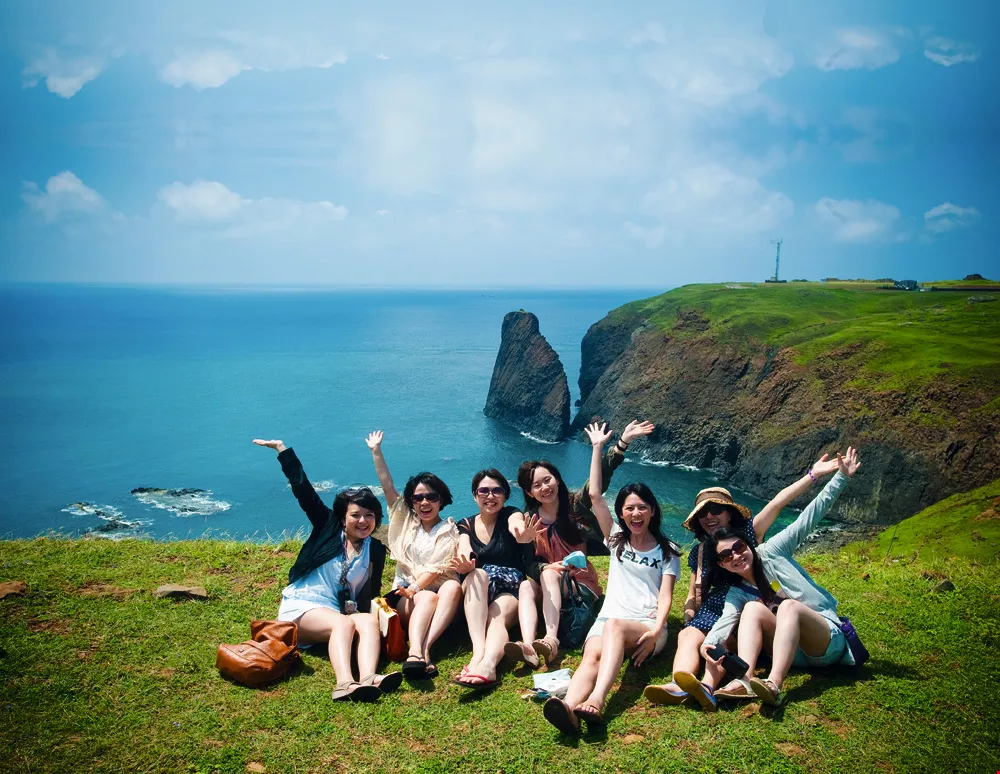
A mountainous island with diverse scenery, Taiwan is well suited to mini-tours that introduce or reintroduce visitors to its many charms. Pictured here, travelers enjoy a visit to Qimei Island, Penghu.
High-end small-town industries
But sustainable operations are subject to cost and revenue pressures, giving rise to calls for community NGOs to transform themselves into social enterprises. Among the advocates of this approach are Tsai Jiung-chiau, director of the Budai Cultural Association in Chiayi County’s Budai Township, and Yeh Wen-hui, director of the Shanjiao Community Development Association in Miaoli County’s Yuanli Township.
Idled in 2001, the salt pans in Budai remained out of commission until Tsai’s Budai Cultural Association succeeded in bringing them back online in 2008 and in sparking interest in revitalizing salt pans as tourism resources. In the years since, the salt pans have become Budai’s most popular cultural attraction.
Using the salt pans as a platform, Tsai next brought together a group of aquaculturalists and farmers interested in promoting small-scale eco-tourism oriented around toxin-free agriculture. The group has gone on to earn reasonable profits on its healthy produce by selling it online.
Yuanli Township was once a hub of rush weaving, but like most such traditional handicrafts, it faded away as Taiwan’s economy developed. The Shanjiao Community Development Association not only revived this local handicraft, but also worked with a university design department to promote the village as the “Louis Vuitton of rush weaving.” Profits from the sales of these products are funneled back into the community, empowering local artisans in ways that increase the village’s charm.
With Taiwan’s small towns now highlighting their diverse attributes, we can see the seeds planted over the last 20 years bursting into full bloom. Summer is nearly upon us. Why not pick a nice, sunny day to go exploring?
Make a small town your first stop. They’ve got everything you could possibly ask for: unique cultures, natural scenery, handicrafts, agricultural and aquacultural produce, religious buildings and festivals…. And the only way to really get a handle on their many stories and attractions is to experience them for yourself.
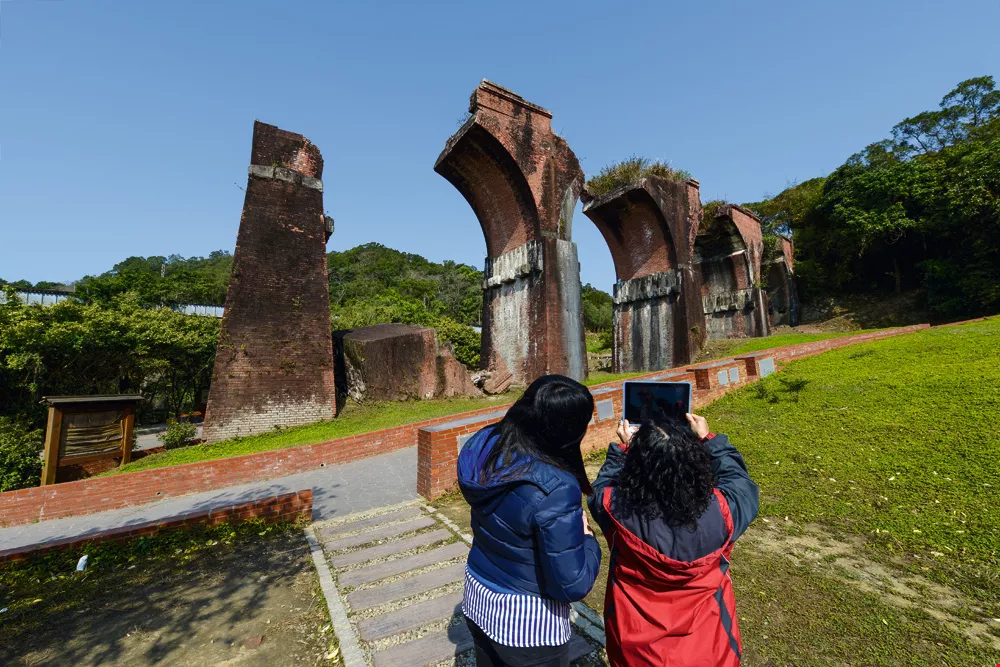
Ravaged by time, nature and human activities, small-town historic sites often elicit feelings of pathos. The photo shows the remains of the Longteng Bridge in Sanyi, Miaoli County, destroyed by an earthquake in 1935.
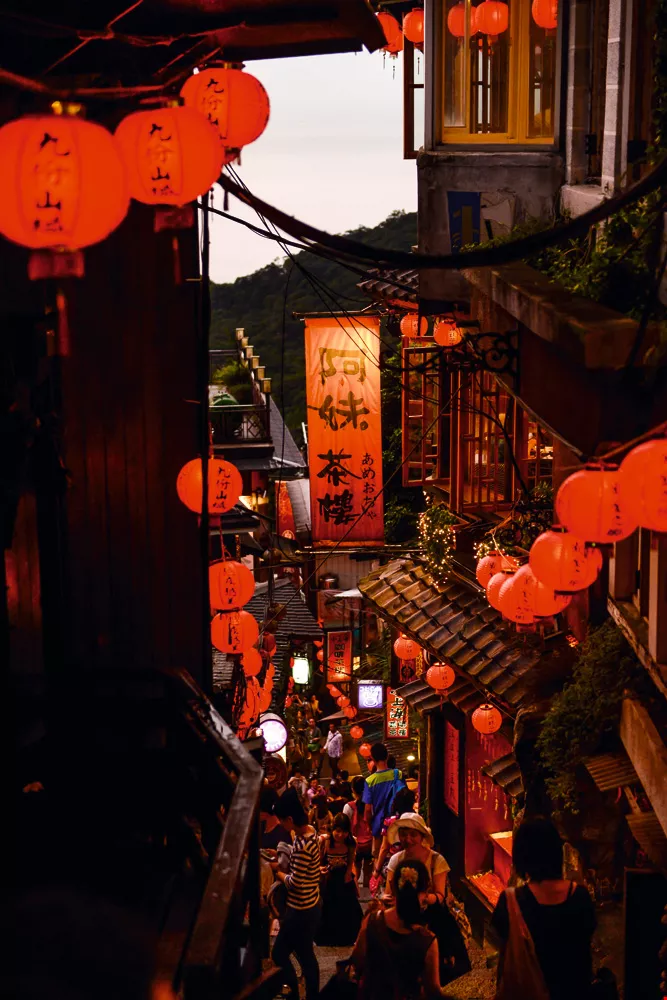
Jiufen, New Taipei City, preserves the streetscapes of a Japanese-era mining town and is enormously popular with visitors.
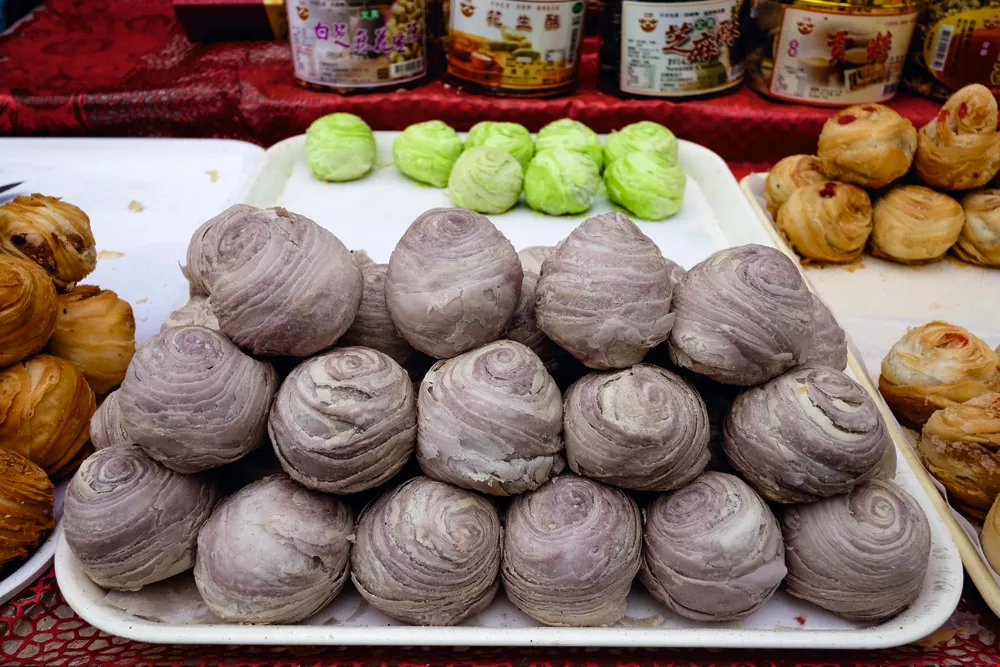
When visiting Taiwan’s small towns, be sure to sample the local culinary delights. The photo shows taro pastries, kongroufan (stewed pork belly served over rice), five flavors stew, and “ox tongue” cookies, all from Lukang.
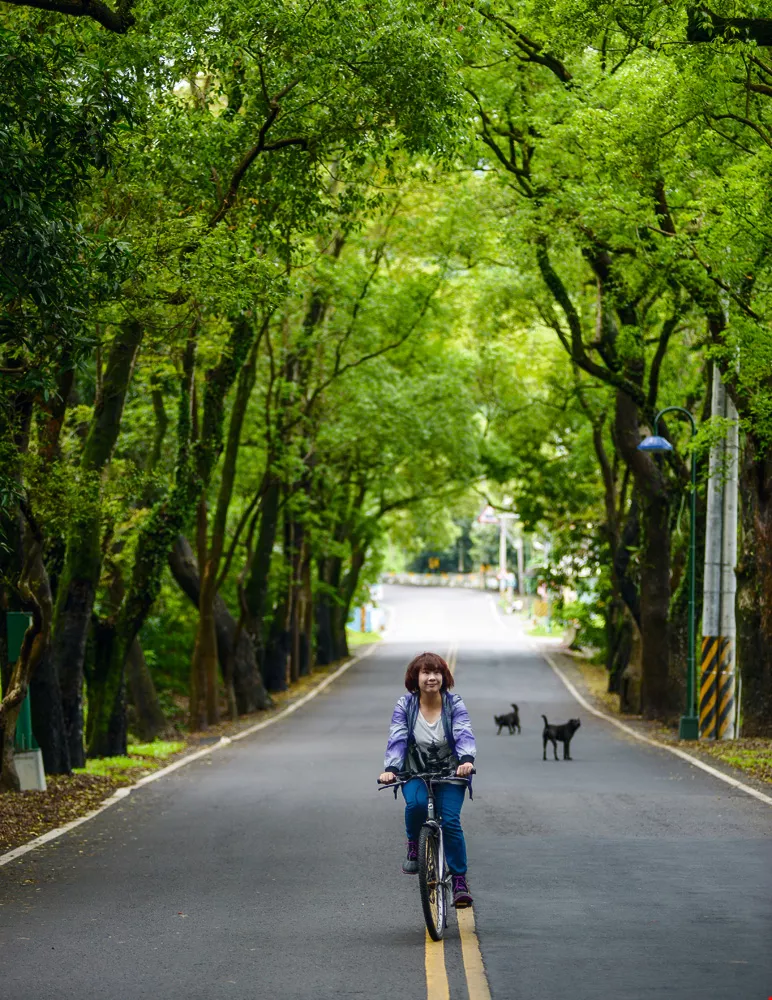
Small towns are well suited to explorations on foot or by bicycle. The photo shows a “green tunnel” in Jiji, Nantou County.

@List.jpg?w=522&h=410&mode=crop&format=webp&quality=80)


@List.jpg?w=522&h=410&mode=crop&format=webp&quality=80)
@List.jpg?w=522&h=410&mode=crop&format=webp&quality=80)
