A New Look for an Old Street
Teng Sue-feng / photos Cheng Yuan-ching / tr. by . Jonathan Barnard
November 1993

In Chinese society making major repairs to one's home is thought to bring honor on one's ancestors. The expression "a glorious lintel" describes the glory given one's ancestors by living in a beautiful house.
There are more than 80 households in the two old streets of Lukang in Changhua County. In 1986, the government paid for the repairs of their houses, which had been passed down in families for generations. This was the first time entire streets had been restored in Taiwan. Was the restoration a success or failure? what do the people who live in the old houses think?
When someone mentions Lukang, what comes to mind are snacks, handicrafts, paper lanterns, incense shops, nankuan music, temples. . . and there's also that narrow street with only a single, thin shaft of light above and with only enough space down below for one person to walk through. When passing someone going the other direction, who gives way to whom? This is "gentlemen's alley," better known as "breast rubbing alley" due to the forced proximity to others its narrowness engenders.
The combined elements of this scene are what going to Lukang is all about.
And no trip to the historical relics of Lukang would be complete without a visit to the 200-meterlong Putou and Yaolin streets.
"Ah, so this home is 300 years old? Why does it seem so new?" "Because it's just been restored!" On a weekend or holiday, the stretch of buildings in brand-new condition attracts quite a few visitors. Facing this traditional Taiwanese city street, those in the know peruse the architecture, while the uninitiated soak up the excitement all around them.
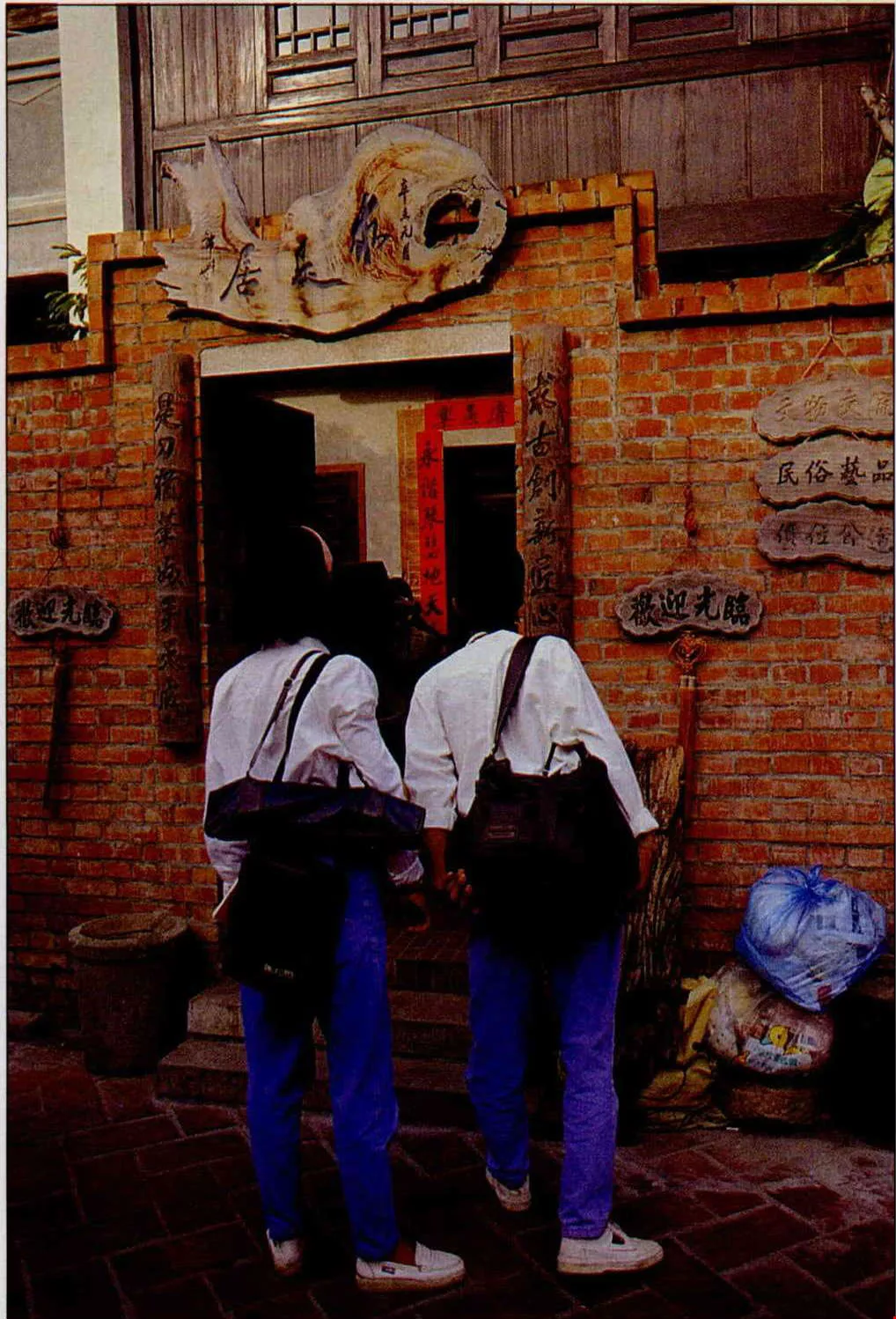
How should tourists behave? If you want to go in for a look, first get the owner's approval.
First protect them:
When tourists first arrive, they spend most of their time praising their surroundings. How these exquisite buildings foster recollections of days past!
True, sticklers for detail may say that the different styles of individual houses were given short shrift in the restoration of the old streets of Lukang, with the result being that all the houses now look more or less the same.
But others point out that such questions as whether to use large or small bricks for exterior walls are just side issues. Lukang is successful because early on there was a conception of overall preservation. Much more than individual buildings, city streets are able to show the relationship of people and space.
How much did repairing this row of houses cost, you wonder. About what you might expect: NT$100 million. Yet now that the houses have been repaired, the people who live there have their own stories of personal hardship? Why is that?
Speaking of how his roof leaks, Hung Yi-hsien, Who runs an arts and crafts store on one of the old streets, says calmly, "I don't know how many people I've seen about it, and it's been repaired countless times, but it still leaks. Many of those living in the houses along the street have the experience of putting out the pots and pans to catch the drips on rainy days, when a downpour outside will bring a drizzle in."
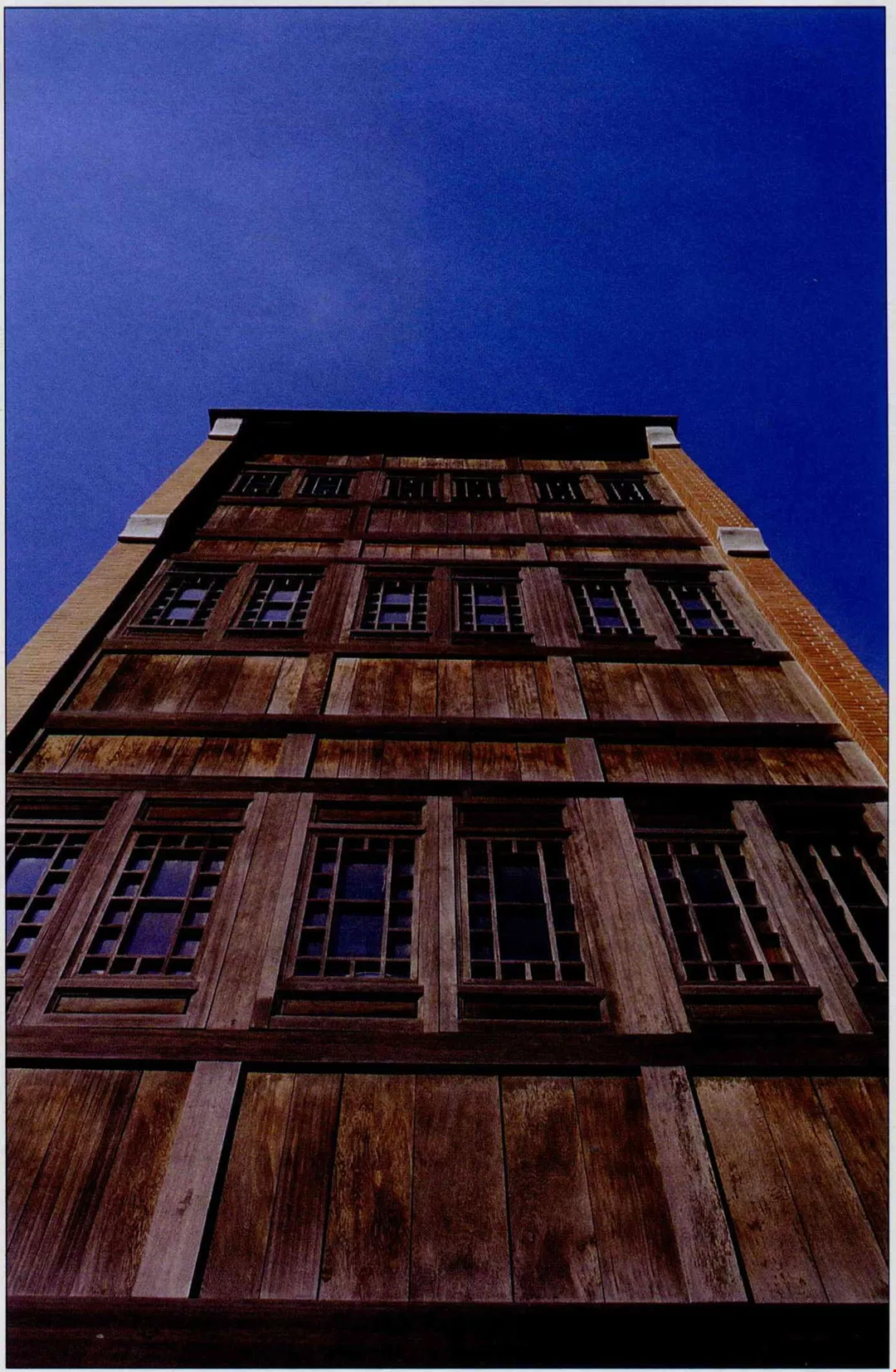
The old streets of Lukang exhibit the typical characteristics of Haklo style shops: wooden construction, common walls, narrow and deep layout.
A downpour outside, a drizzle in:
"Old houses don't meet the living needs of modern people," another resident reflects. "There are no screen windows, and the outside is lit only by dim paper lanterns. There are not even any street lights."
"The tourists all say it's so beautiful," says still another, "but you ought to try living here. Some people from Taipei come in without even knocking. If we don't let them in, they say that Lukang people aren't friendly. A tourist only comes here once, but we can have more than ten a day who want to come in. What should we do?"
During the four years when the old streets were being repaired, the residents would look at their ceilings and see the sky. Their rafters and beams were removed, and their everyday lives were disturbed. They even had complaints about the quality of the work. When they couldn't stand it any longer, they took their complaints to the county government.
While the people's criticisms may not have been without cause, the Changhua County government had its own difficulties. Nien Chen-yu, director of the department of customs and documents, points out that the "Cultural Resource Preservation Act" didn't go into effect until 1982 and work began restoring the old street in Lukang in 1986, making the project the first of its kind in Taiwan. "At first nobody knew what they were doing!"
There's nothing wrong with preservation in principle, but there are problems galore in practice.
The first steps to designate Lukang's old streets as a preservation district were taken way back in 1973. In order to repair Lukang's 200-year-old Lungshan Temple, its residents asked for help from Han Pao-te, then professor of architecture at Tunghai University, and they accepted the suggestion of preserving the old streets.
They did so both because architectural scholars forcefully expressed their support for the plan and because in the economic downturn of the early eighties prospects looked gloomy without the plan. The residents were willing to cooperate for the sake of better times ahead. Once the plan was finished, the Executive Yuan designated that the expenditures would be split between the central, provincial and county governments.
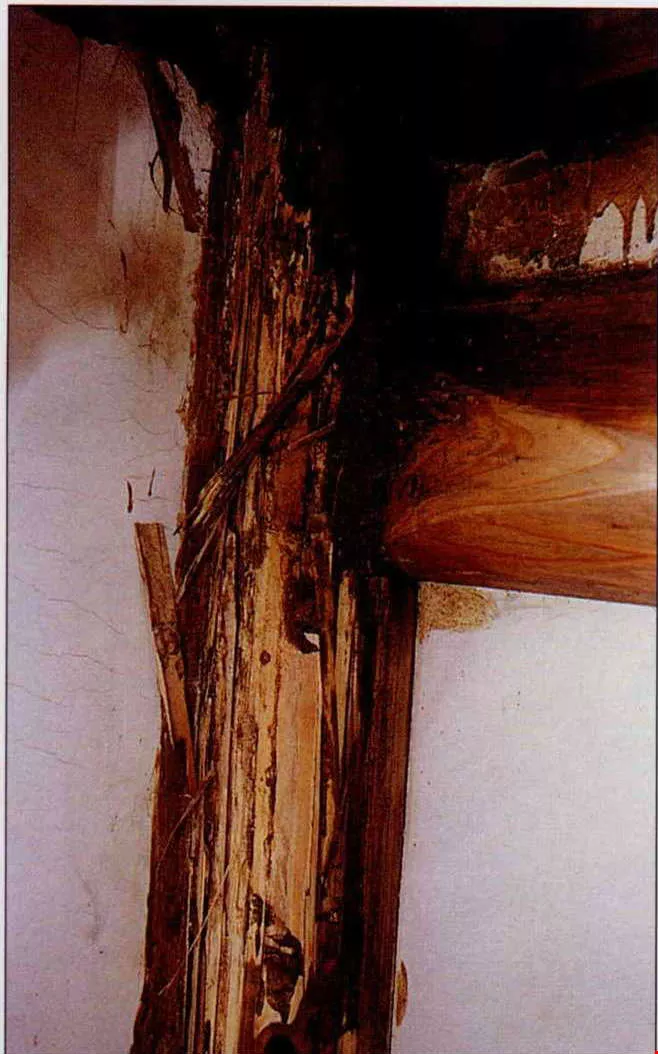
Eaten rotten by insects, the beams are further imperiled by the rains.
Don't make them like they used to:
It may be that money makes things easy in the case of a single building, but here was a whole street waiting to be restored, with dozens of owners. Even with the money problem resolved, there were still all those different requests the residents would make for their houses. And so the restoration and the resolving of their problems would have to be done at the same time, and this would delay completion.
"Traditional Chinese architecture has its mysterious points," says Huang Chih-nung, who runs The Left Goat Workshop and has rented house on one of the old streets for a year. "There's a moral contract between the craftsman and owner. When the craftsmen came to work, the owner of the house would have already prepared cigarettes and tea for them, and the craftsmen would know that they bear responsibility for the house." He says that the government's putting up funds for the restoration has put the residents in a difficult position. They don't know how much "autonomy" they have over their own houses.
Outsiders value this old street as a "treasure," but those who pass their days from inside must file an application just to put an air conditioner in their own home. Restrictions are placed everywhere on their access to the standard comforts of modern living. They can't see what good this "treasure" has brought them.
Hankuang, the architectural firm responsible for carrying out the restoration, was the first party pointed at to take responsibility for the results. Yen Ya-ning, the executive responsible, says they made a mistake in not allowing for more public participation. The experience in Lukang taught them a valuable lesson: "First you've got to open up channels of communication."
Afterwards, everyone realized that they should have organized a group of opinion leaders, including district chiefs, teachers and respected residents, who could have served as intermediaries.
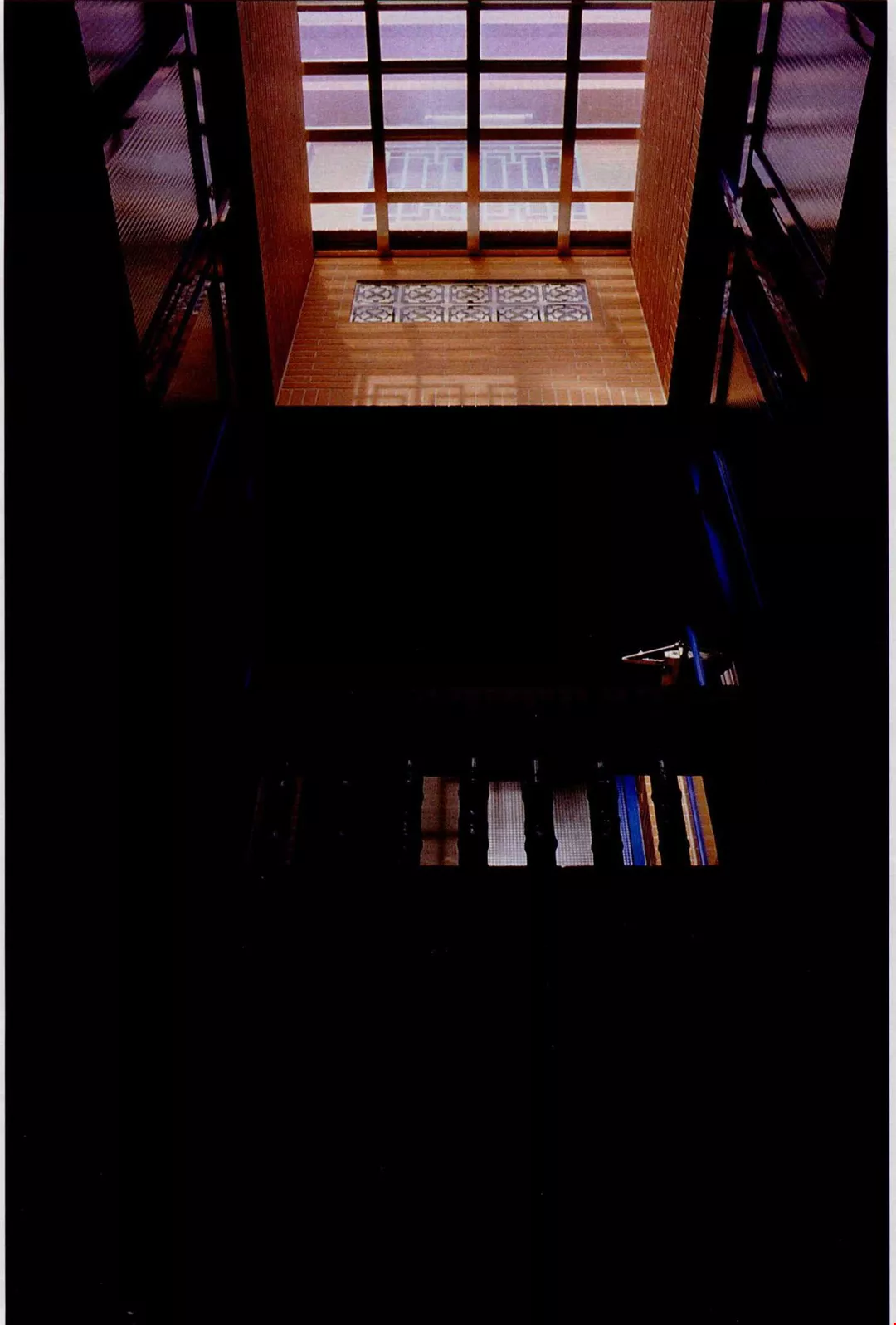
When people take a look inside the renovated houses.they are quick to praise.
Administration, not red tape:
Wang kang-shou, a resident of the preservation district who is also a teacher at Fuhsing Junior High in Lukang, says, "You can say that going slowly will make the job well done, but in reality most of the time was wasted on administrative procedures. The house next door had three roof beams that needed to be replaced and so they took the roof off; then they discovered that two more needed to be replaced. For the sake of these two beams work had to be stopped. Then they had to redo the design and recalculate the projected costs. The result was that the house Was open to the rain for half a year."
From the leaky roofs, termite-eaten beams and the flooding that was a result of the preservation district being too low, to the residents' demands for the comforts of modern living, tourists' interference in the lives of the residents, and the perfunctoriness of attempts to build in the traditional southern Fukienese style. . . all sorts of problems were the result of people not having enough experience. But these are lessons learned by doing, a treasure well worth its cost.
Besides these big problems, there are a few smaller points deserving attention. For example, households would request that they wanted all four legs of their table carved. Should such demands be met? "We had to consider the question of fairness, "recalls Yen Ya-ning. "If we did it for this household, would that one want it as well?" If there had been a group in the middle that could have directly talked with the residents, there would have been a reasonable resolution of the problems one after another.
"The residents' whining isn't always justified, but these people have to live in the preservation district and so problems big and small must all be resolved," says Hung Min-lin, a professor of history at Tunghai University, who was commissioned by the Department of Civil Affairs of the provincial government to assess the first period of restoration in the preservation district in Lukang. He suggested the supervisory authorities show a little more compassion for the residents, such as by allowing them to install air conditioners as long as they don't put them in windows or disturb the outward appearance of the building. It's still possible to let the residents enjoy the conveniences of modern living.
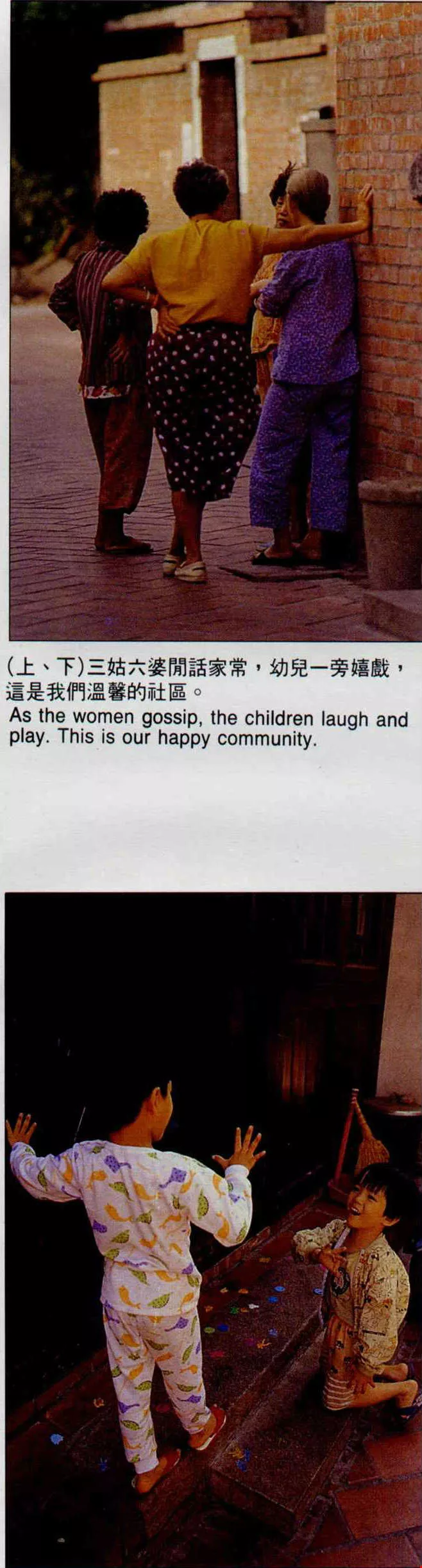
As the women gossip, the children laugh and play. This is our happy community.
First money, then results:
And if tourists are coming from afar, you have to give them what they've come for. Opening one home a month for them might be the way to go, Hung suggested. He pointed out that the stores along the old streets need to establish an association and try to specialize so as not to create detrimental competition. Now people sell what they see is selling next door, and as a result no one makes any money.
There's an expression in Lukang that goes like this: "The golden eggs are laid on Chungshan and the turds come out on Putou." Chungshan Street, a big thoroughfare running parallel with Putou Street, enjoys the benefits of the great tide of tourists visiting the old alleys nearby. The residents of the old street think that the community in which they live ought to be the goose that lays the golden eggs. This period of bickering will have to come to a close if restoration is to continue.
[Picture Caption]
p.16
How should tourists behave? If you want to go in for a look, first get the owner's approval.
p.17
The old streets of Lukang exhibit the typical characteristics of Haklo style shops: wooden construction, common walls, narrow and deep layout.
p.18
Eaten rotten by insects, the beams are further imperiled by the rains.
p.19
When people take a look inside the renovated houses.they are quick to praise.
p.20
As the women gossip, the children laugh and play. This is our happy community.
p.21
This is the Lukang of years past. In comparison to the Lukang of today, what feelings does it evoke?(photo courtesy of the Lukang Cultural Foundation)

@List.jpg?w=522&h=410&mode=crop&format=webp&quality=80)


@List.jpg?w=522&h=410&mode=crop&format=webp&quality=80)
@List.jpg?w=522&h=410&mode=crop&format=webp&quality=80)
