

Joining canoeing, cycling, long-distance running and surfing, another outdoor leisure craze has come to Taiwan. This one gets the whole household involved and turns the family car into a home on wheels. Where the car goes, the family sleeps.
Taiwan truly has what it takes for great camping: pristine mountain forests, a moderate climate, a low crime rate, and a growing number of people who want to get outside and enjoy the charms of a gypsy lifestyle. Camping Life 2.0 has arrived.
Guishan Island is in sight and getting larger, as the houses on Yilan’s Wai’ao Beach recede into the distance. Ah-gang and his wife are canoeing through the surf, heading for the uninhabited island, where five companions have already landed.
“Taiwan’s most beautiful spots are the places that other people can’t reach,” says the soft-spoken 38-year-old interior designer after he makes it to shore. Lovers of mountain forests, he and his wife drive a specially outfitted camper. For them, getting away from the crowds to camp in wilderness areas and breathe clean mountain air under the sun washes away all the cares and pressures of long-term urban living.
For 15 years, Ah-gang has been spending weekends camping. He started going with his wife, and for the last two years they have been taking their children, now three and one-and-a-half. Ah-gang explains that they have brought their kayaks and camping gear to spots across Taiwan—from Guishan and Keelung Island in the north, to Bihu Lake near Wushe in central Taiwan, to Liuqiu in the south.
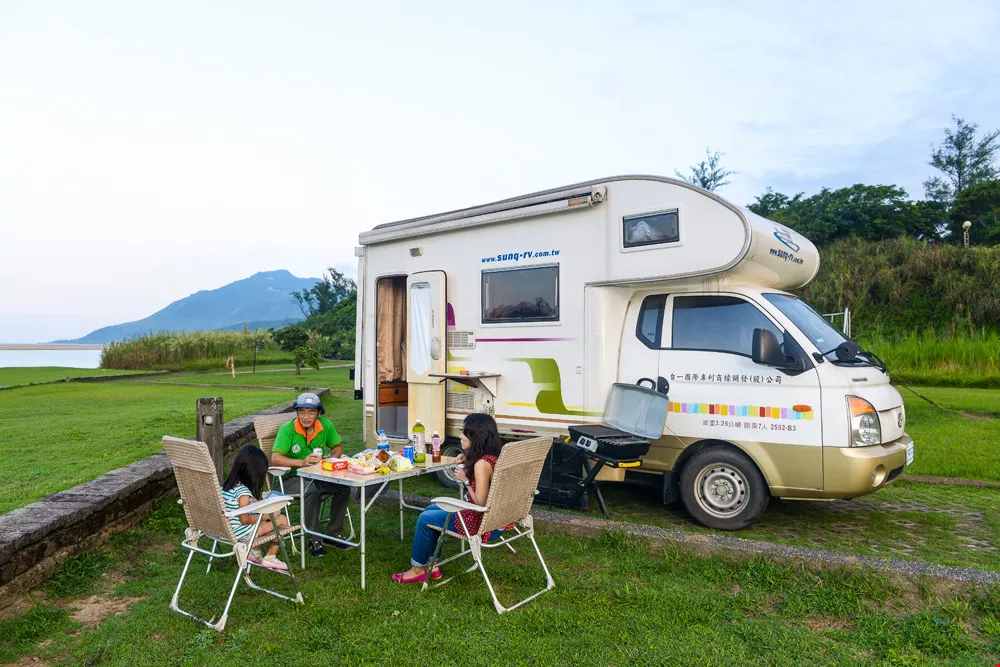
With “Camping Life 2.0,” campers are coming better and better equipped. With tables, chairs and beds, they’ve become small mobile homes.
Camping extends the realm of family and leisure life into mountain wildernesses. The allure of doing so is well understood by Chen Qinggui, a staffer at Taiwan’s Public Television Service and the president of the Taiwan Volkswagen T3 Club.
“These vehicles are more than 20 years old on average,” says Chen. In recent years, car camping has grown in popularity in Taiwan, and vehicles that have been altered to be more spacious inside and thus better suited for camping are all the rage. Nine-seater minivans are particularly sought after for conversions. The typical method is to take one row of seats and turn it into a sofa bed, so that the van becomes a home on wheels. “Anywhere there is a place to camp that can be reached by car is a place you can sleep,” says Chen. “It’s quite convenient.” Most standard campgrounds provide water and electric hookups, bathrooms, and cooking facilities. Some even sell food. With a vehicle that offers shelter from the elements, on the one hand, and access to the services and facilities provided by a campground, on the other, you cover all bases.
“If you feel that you’re camping sufficiently often, you can invest more: quite a few people install stoves, fridges, dining tables and even toilets,” says Lee Yung-tan, chair of the department of tourism at Aletheia University. “That way there are no restrictions on where you can camp. You quite simply can live wherever you can drive.”
Lee believes that Taiwanese are growing more and more active and fond of mountain wildernesses. In recent years the number of people enjoying outdoor exercise of all types has grown, and the popularity of camping, which is both a leisure activity and a form of tourism, has likewise increased. Amid this broader trend, camping has also experienced developments unique to it. One of these is the transition from tent camping to auto camping. Camping enthusiasts have altered and added to their original vehicles, or even bought campers, which were originally designed with the activity in mind. “Another unique feature is that camping is more and more an extension of outdoor living. When matched with bicycles, canoes and kayaks, and even surfboards, people can use camping to go to places beyond the realm of their regular lives and engage in a group leisure activity.
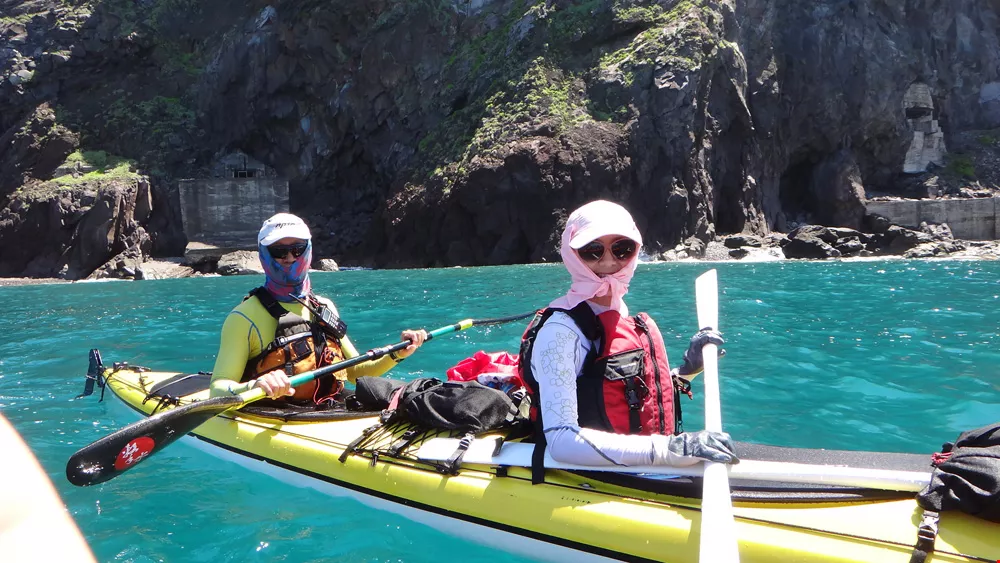
When you combine camping with kayaking, you can enjoy your leisure time far from the turmoil of urban life.
Morio Chen, an assistant professor in the Department of Civic Education and Leadership at National Taiwan Normal University (NTNU), notes that personal income, expenditures on education and leisure, work times, and rates of personal vehicle ownership are all factors that have played into the growth of leisure activities. Over the last several decades, “Every indicator has testified to the maturation of the industry.”
“In the period from 1949 to 1995, there were nine hiking organizations that supported the development of camping and rejected the idea that camping was only a way of finding shelter when none other was available,” says Chen. During the period of martial law, he explains, people wanted to promote camping, but there were many obstacles to doing so. In 1974 Jian Yongguang, Chen Bo’an and Morio Chen established a camping club, which attracted—much to the founders’ surprise and delight—nearly 3000 members in less than six months. But shortly thereafter, someone filed a complaint with the Taipei City Police Department’s Zhongshan Precinct, which disapproved of its activities. Taiwan’s first camping organization was thus stillborn.
Educational outings with scouting organizations or the China Youth Corps were how most Taiwanese were first introduced to camping. The latter in particular has always combined physical training with fellowship and exploration of scenic areas around Taiwan. For people in their forties and fifties, participation in the CYC programs is part of their collective memories of childhood.
In 1953 the CYC for the first time organized eight sessions of winter military camping for youths. Some 4,993 participated the first year. The organization would end up bringing more than 1 million on camping trips over the next few decades. CYC played an important role in the development of camping in Taiwan. Originally known as the China Youth Anti-Communist National Salvation Corps, the organization started with a focus on high-school students. It charged no fees and was supported by the Ministry of National Defense. In 1962 it added activities for junior-high students, and the number of camps, levels, and participants grew. From 4,993 in 1953, membership swelled to 323,781 in 1970—an increase of 60-fold in 17 years.
Chen believes that after society industrialized and the population become largely urban, office and factory workers began to want to get outside. That created a wave of “club camping.” With the increase in dual-earner families, parents lacked the time to look after their children. With prosperity, camps for children during summer and winter vacations became popular.
“In recent years, high economic growth has sparked the development of ‘family camping’ in which cars and homes are melded into one,” says Chen.
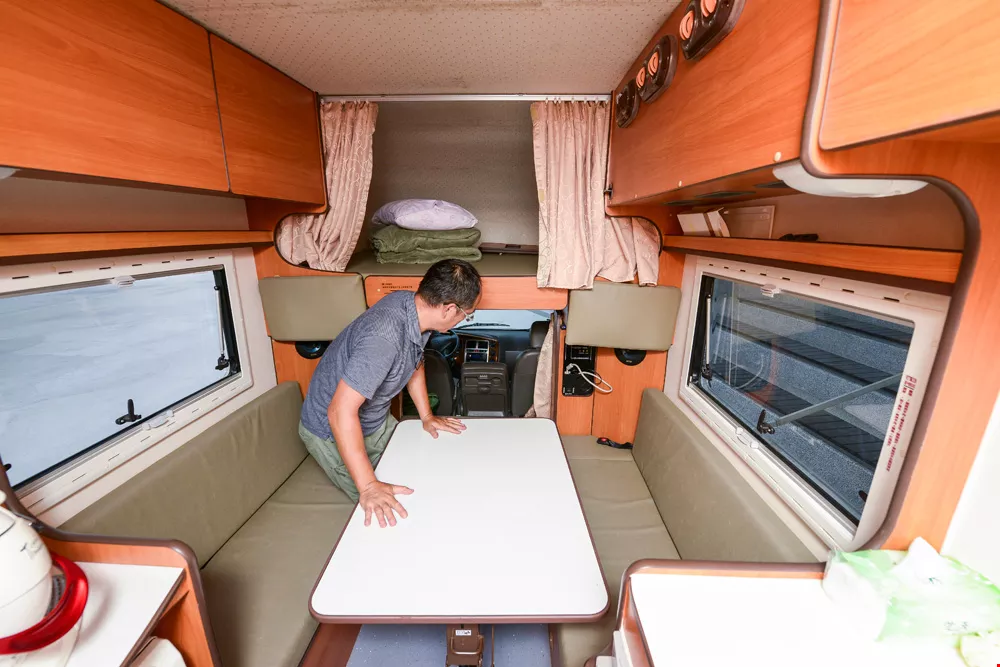
With “Camping Life 2.0,” campers are coming better and better equipped. With tables, chairs and beds, they’ve become small mobile homes.
Camping’s greatest charm lies in allowing people to expand their living space. Taiwan isn’t a large nation, but those who camp as they explore the mountains certainly don’t feel that Taiwan is small. Taiwan has high mountains, lakes, rich wildlife and scenery, and convenient transportation. All these conditions make it well suited to camping. There are many spots to camp in scenic areas. Nantou County, the island’s most mountainous, also has the highest number of campgrounds.
According to the Camping Association of the ROC, Taiwan’s number of frequent campers has already surpassed 2 million, making camping one of the nation’s most important leisure activities. “Over the past three years, the number of people camping has grown by 60–70%,” says Lin Chin-chang, the association’s former president. Meanwhile, sales of camping equipment grew 50% from 2013 to 2014.
Apart from the camping equipment industry, which was already well established, in recent years the auto industry has introduced one vehicle after another suited to camping. The makers of these campers, after years of lackluster sales, have seen their profits soar. And tour operators, seeing the potential in camp touring, have begun to organize camping trips. In particular, they offer itineraries for those new to camping.
Customization of vehicles for camping has likewise increased. “And in recent years camping fees have reflected the overall trend,” Lin says. Fees for vehicle spaces in campgrounds have continually risen. The average price was NT$700 in 2014 but is expected to jump to NT$800 in 2015. The best campsites are also harder to get into these days, with most booked far into the future.
The Taipei City Government works with the Camping Association to operate a campground by the Huajiang Bridge, which reopened in September after refurbishments. No campground in Taiwan is located in a more bustling area. It provides access to the bike paths in Huajiang Riverside Park, as well as fields and courts for all manner of sports. It is aimed at the family camping market, “especially newbies,” says Lin.
The campground was well planned. Apart from an area for traditional tent camping, there is an area for camping vehicles with water and electric hookups. It fully meets the standards of the International Federation of Camping and Caravanning (FICC). Especially notable is that the Camping Association has worked with businesses to offer campers for rent. From a distance, the campground resembles a gypsy camp at the edge of a European city.
The campers it has on offer are popular in Europe and America. They are luxuriously appointed inside with a spacious living area, a soft sprung double mattress, flat-screen televisions, and air-conditioning. Some of the vehicles come equipped with comfortably sized bathrooms and even Jacuzzis, so that this “urban gypsy lifestyle” is a cushy one, something akin to staying in luxury hotel.
“Apart from the camping public, on weekdays we open the campers as places to sleep, giving the public the opportunity to experience what it’s like to spend the night in a camper,” says Lin. “The package also includes a breakfast. Even people on business trips have chosen to spend the night here.”
In October the campground was an important site for the FICC’s 17th Annual Asia–Pacific Rally. It drew participants from 12 nations, including Portugal, Britain, Finland, Poland, Turkey, Sweden, Japan, Korea, Mongolia, Macao, Malaysia and Singapore, who created a festive air.
In 1991, the Camping Association of the ROC was hosting the FICC International Camping Rally, so it worked with the government to build the Longmen Riverside Camping Resort at Fulong on the east coast of Taipei County (now New Taipei City), which can accommodate 1000. The center was outfitted to meet international standards. It’s Taiwan’s best campground and it has also pushed domestic camping activities to move in a more family-friendly direction. “We hope that the Huajiang Bridge Campground, on which we cooperated with Taipei City, will become a model for the future, just like Longmen,” says Lin.
On weekends and holidays, call some friends together to go camping. Cook, eat and enjoy the beauty of the mountains together.
“Camping? That’s crazy! When you’ve got a bed in your house, why sleep outside? Going to the bathroom or bathing aren’t convenient. What’s more, your home has a television and snacks and no bugs. Isn’t it a lot more comfortable?”
Yet you just have to walk outside and go camping once to see how children and parents in the mountain wilderness quickly cast aside the pressures and melancholy of the urban jungle—whether playing hide and seek or dodgeball, flying a simple kite, or walking hand in hand to check out some plants or insects. It is not hard to see the attraction of camping for modern families.
Lin Ming-chang, a professor of leisure and recreation management at Asia University, has several times in recent years led students to conduct research about camping and parent–child interaction. Their research shows that people’s participation and motivation to participate in outdoor activities is strongly correlated with stronger families. “Through camping, family members can build better relationships and increase their sense of connectedness, and at the same time enjoy the out-of-doors.”
“As far as promoting camping is concerned, with the abundance of mountain forests and other natural areas in Taiwan, as well as the low crime rate and temperate climate, there are sure to be more and more people who bring their families to the mountains with campers and tents,” says Lee Yung-tan. “What we’re seeing today is just the beginning.”
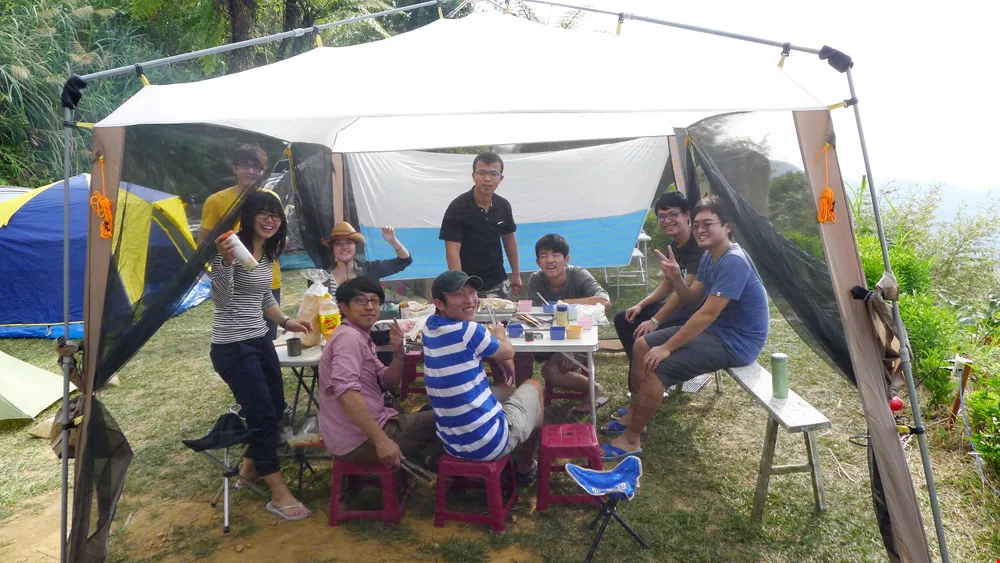
On weekends and holidays, call some friends together to go camping. Cook, eat and enjoy the beauty of the mountains together.
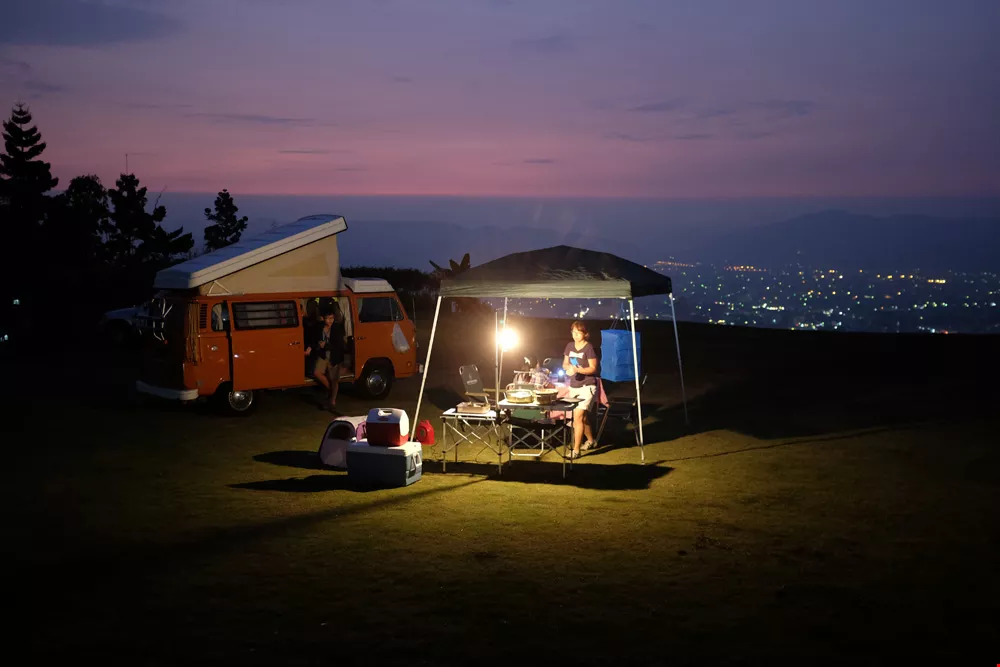
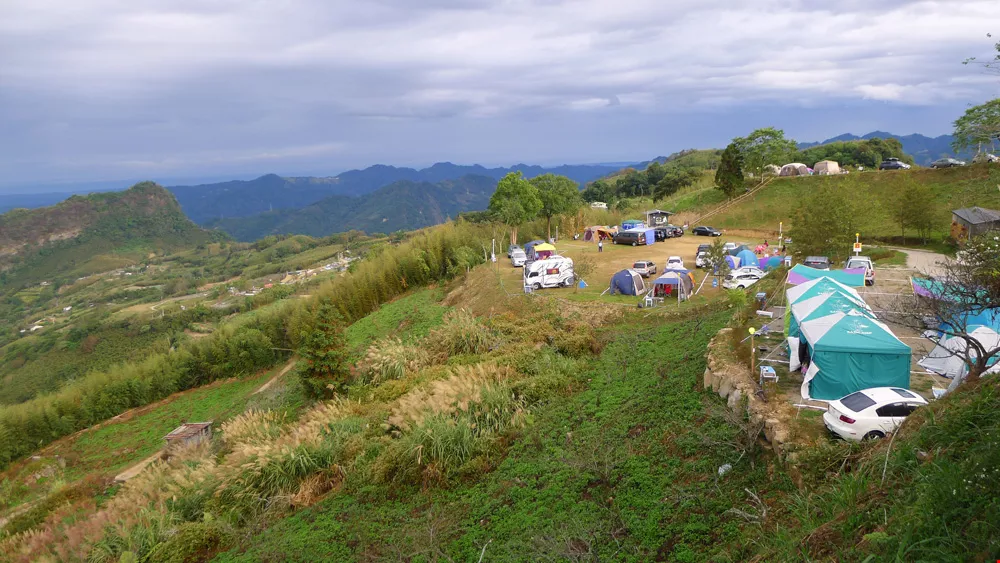
When you drive a camper, there are no limits to where you can take your family. The photo shows Huxiao Villa Campground in Nantou’s Puli.


@List.jpg?w=522&h=410&mode=crop&format=webp&quality=80)


