Hearkening to the Ancestors:The Nocturnal Sacrifices of Kamasua
Tsai Wen-ting / photos Chuang Kung-ju / tr. by Julius Tsai
December 2004


The lowland Aboriginal tribes were once among the most active ethnic groups in Taiwan. However, hundreds of years of ethnic assimilation with the Han Chinese have gradually blurred their identity. Each year, nevertheless, at dawn on the fifth day of the ninth lunar month, nocturnal sacrifices of the Sirayan tribe are held at Kamasua in Tungshan Township, Tainan County. Not only is this rite the most authentic of the sacrificial rites of the lowland Aborigines, it also provides a glimpse into the Sirayans' communication with their ancestral spirits and serves as an important marker of their self-identity.
"Kamasua" is a Sirayan word meaning "red silk-cotton tree settlement."
Each year at the intersection of the fourth and fifth days of the ninth lunar month, recurring strains of mournful songs can be heard from the young girls of Kamasua. Hand in hand, the Sirayans cry out to the spirits of their ancestors, singing out their own stories in the process...
Sirayans who have received protection from Alimu offer of an entire pig as a show of reverent thanks. Because people nowadays do not consume as much meat, the sacrificial pigs tend now to be rented out from swine vendors, and returned after the rites are completed.
Still and smokeless
About a ten-minute drive from the city of Hsinying lies the village of Tungho, called Kamasua in olden days. It is a lowland Aboriginal village that seems no different from other Taiwanese villages.
Dusk falls at the local shrine as residents begin to trickle in. The shrine, a most holy place, is the ritual locus for Sirayan sacrifices to the ancestral spirits. It is open on all sides and divided into three areas: one devoted to the worship of the ancestral spirit, known as the anzu. The others are devoted to two deities known as Alimu. An altar stands in each worship area, the surface of which is bedecked with eupatorium-filled aligan vessels brought by worshippers.
Ancestral spirits (ali) are the primary object of worship at Kamasua, as is the case in other lowland Aboriginal communities. These include the territorial anzu, the household Alimu, and other divinities summoned by the local shamaness, the wangyi.
The aligan vessels, which function like Chinese ancestral tablets, are the places where were offerings are made to the ancestral spirits. These vessels also have the power to protect the people.
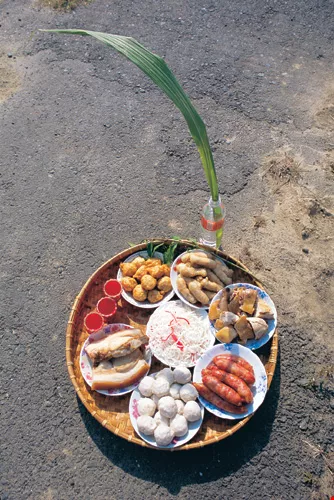
Aside from the bottle of rice wine into which a sugarcane leaf is inserted, the ritual of Wailing to the Sea is not that different from sacrificial offerings of the Han Chinese.
Gourd-worshippers?
Arriving worshippers place their sacrificial goods on the ground, take off their shoes and enter the local shrine to perform three obeisances. To do so, a worshipper grasps a betel nut in both hands, mouths a silent prayer, places the betel nut on the altar, and thrice pours a libation of rice wine over it. Taking the rice wine into the mouth, the worshipper then sprays that wine three times, front and back. These actions signify blessing, exorcism, and a greeting to the divinities. Since the Alimu do not enjoy incense smoke, no paper money or incense is burned. Further observation reveals significant differences from Han Chinese shrine structures and sacrificial layout.
Aside from the densely arrayed altartop aligan, other vessels, such as hu, guan, pin, and weng vessels, may be found. During the Japanese occupation, the Japanese scholar Naoichi Kokubu called this place Gourd-Offering Village after seeing many Tainan families using the same type of gourd-shaped hu or pin vessel.
Tuan Hung-kun, director of the Kamasua Cultural and Historical Workshop and longtime researcher in Sirayan culture, says that all types of vessels are used, even Yakult beverage bottles. What is prized is not the vessel itself, but the sacred water contained within. As the water has been consecrated by the shamanesses and priests, it becomes a medium for the sacred power of the ancestral spirits and an indispensable ritual element for the Sirayans.
On the fifth day of the ninth lunar month, which according to tradition is the birthday of Alimu, there is held the traditional rite of nocturnal sacrifices and "wailing to the sea."
As the night grows darker, the crowds throng into the square at the local shrine. After midnight the nocturnal rites take place, from the Swine Offering for the Repayment of Vows to the singing of kankei, ceremonial songs to the ancestral spirits.
Those blessed by Alimu in the past year with prosperity, safety during military service, or healing from longstanding illness come in turn to offer up a whole pig as an expression of reverence and thanks. The slaughtered swine are lined up in the square, adorned in front of each of their heads with a weng filled with betel nuts and eupatorium; a sprig of thatch consecrated by fire; a white cloth; a plate full of mochi balls and sticky rice; a collection of nails, coins, mung beans and rice (representing blessings of sons, wealth, and a plentiful harvest); as well as a plough blade (representing agricultural implements).
After midnight, Chang Ming-hai, the officiating priest, enters the shrine and offers up three obeisances to notify Alimu of the commencement of the rites. Chang then tilts his head upward and with a mouthful of rice wine sprays a sacred staff woven from reeds, known as the wangzu guai. He then inspects each of the swine carcasses to be offered, pouring rice wine into the snouts while the two assistant priests swiftly take up the white cloths and cover up the bodies of the pigs. This covering rite signifies not only a ritual purification but also fulfills hygienic purposes. Such meticulous devotional acts hush the crowds into a mood of solemnity and anticipation.
After the covering rite, every 15 minutes, families offering up the sacrificial pigs offer a libation and stop only after five libations are made. Chang then takes up a short sword, and with the back of the blade swiftly brushes the pigs' heads, legs, tails, and innards, representing Alimu's enumeration of the offerings. For those making the offerings, this concludes the ritual returning of the "head" of one's vow. At this time, the merchants who have hired out their pigs come and cut off the pig's head, leaving behind the head along with the innards for the families, who at dawn must perform the ritual returning of the "tail" of their vows to complete the sacrifices.
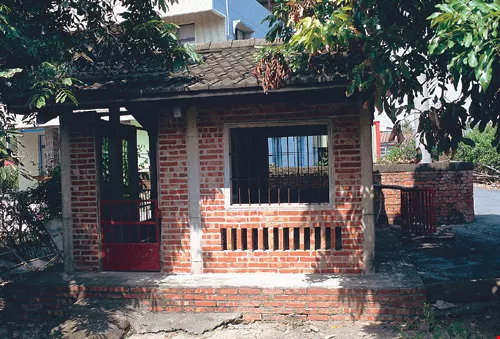
Aside from the local shrine, there are numerous other smaller, door-less shrines in Kamasua where clans and families worship.
Girls' pure songs
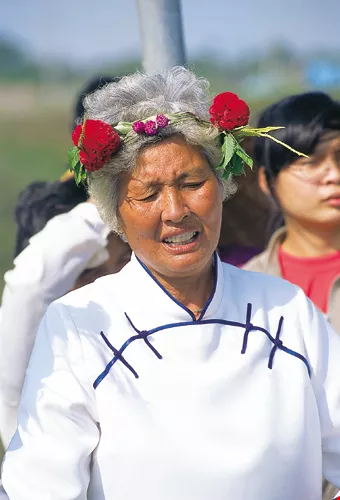
After the square has been cleared, a dozen or so girls in white tops and black skirts emerge, the purple cloths over their heads highlighted with brilliant garlands of cristata, amaranth, betel leaves, sugarcane leaves and eupatorium.
They pay three obeisances to Alimu. With their prior yawns shaken off, they enter the square with reverent expressions. Barefoot, they move together, synchronized in a U-shaped formation. Arms linked, they begin to dance, now enlarging and now shrinking their formation. Solemnity fills the air.
"Shunwuyi, manongma, shitamu, simu'ah..." The girls sing song after song, some passed down from the older generation, others from Sirayan compatriots from a neighboring village. The melodies are slow and mournful. However, neither the teachers who teach the songs nor the children who sing them understand the words anymore. What they do know is that the songs contain entreaties to invite and send off the gods, blessings, and admonitions for descendants to remember their ancestors.
Someone says, "In the past, we'd sometimes sing till four in the morning!" After the girls finish, the women sing next. The voices of the women are even more mournful and slow, accompanied by simple repetitive dance steps that embody the immediacy of the Sirayans' communion with their ancestors.
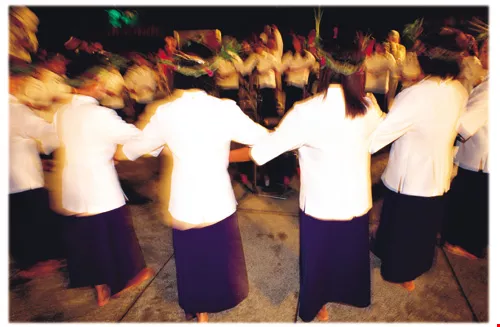
After midnight, the Sirayans of Kamasua emerge hand in hand, calling out to the ancestral spirits in the dark of the night, and in the process singing out their own stories, too.
Wailing to the sea
This year, the nocturnal offerings end sometime after three in the morning. Though exhausted from the night's ritual activities, worshippers arrive at nine or ten in the morning to repay the "tail" of their vows with the head, tail, and innards of the sacrificial swine. A stage is erected at the local shrine, and puppet shows begin, not unlike the Chinese custom of repaying the gods with entertainment. Such shows are meant as devotional acts to the gods but also serve as entertainment for the human community.
At one o'clock in the afternoon women carrying baskets of offerings over each shoulder arrive. They move towards the irrigation ditch southwest of the shrine. All along are arrayed plates of offerings. The priests have set up a banana leaf altar in the middle of the irrigation ditch. "Banana leaves represent boats on the ocean," says Chang. Aligan vessels are placed on betel nut leaves, having been brought from shrines large and small. Also laid out are buckets of sugarcane leaves in preparation for the climactic rite of Wailing to the Sea.
Wailing to the Sea is a sacrifice to the sea directed at distant ancestors who died in maritime calamities. It is a rite unique to Kamasua. "To me, 'being filial to the sea' would be an even more appropriate name for the sacrifice, since it better conveys our remembrance of our ancestors," says Tuan.
Facing the distant sea, the priests step barefoot onto the banana leaves. Chang raises up his sacred staff, sprays the sky with rice wine and suddenly goes into a trance. Swiftly and forcefully, he strikes at his legs with his staff as his head sways and he utters unintelligible speech.
At this time, the people of the tribe ask observers to open a path so that the priest can run back and forth along the ditch, inspecting the arrayed offerings. The priest takes off the sugarcane leaves placed over the rice wine containers and pours wine onto the betel nut leaves. This represents the arrival of the ancestors to the sacrificial feast. The girls and women then come out and sing the ceremonial songs of the kankei.
The Kamasua rites used to be presided over by the renowned shamaness Li Jen-chi. After each performance, Li would frequently fall to the ground and cry out, bemoaning the ancestors' sufferings but also chiding the people point by point for their in-fighting and lack of community spirit. Li passed away without a successor being appointed by Alimu, and so the villagers had no choice but to invite Chang to travel down from the north to officiate.
The shamaness and the priest not only officiate at the rites but also serve as the Sirayans' highly respected spiritual leaders. They emerge, however, only after being chosen by Alimu. Before and after the ancestral spirits descend on them, they exhibit peculiar behavior bespeaking possession. Women may suddenly stop having periods, be unable to eat, be only able to drink water, and converse with the ancestors in their dreams. After verification from village priests, conch shells are strung together with red thread and worn around the wrists of the new shamaness or priest. From then on, they are considered a shamaness or priest in waiting.
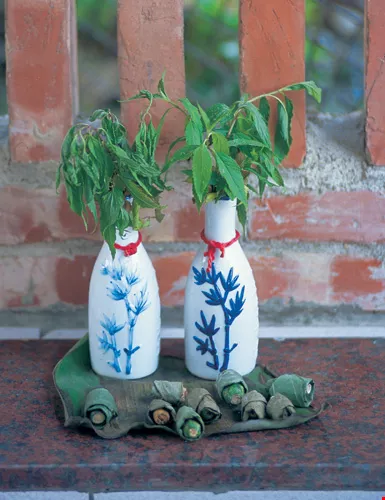
Aligan vessels filled with eupatorium and water, representing the presence of the ancestral spirits.
Sirayan marks of identity
In 1996, the young people of Kamasua organized a Cultural and Historical Workshop, putting on a historical slide show, exhibit, and cultural tour during the sacrifices. During the year, members of the working group volunteer to travel to elementary schools to engage in public education, and they have also organized trips to nearby Fantsaiwen and Peitouyang to seek traces of their ancestors. In these ways, they are attempting to hold on to their culture.
A hundred some years ago, according to Japanese scholars, the Sirayan people were already closely integrated into the Han Chinese people. Only in recent decades have they begun to identify themselves as lowland Aboriginal people of Kamasua. Less than 30 words remain of their mother tongue, and the rites are all that remain of their self-identity. This is why the people of Kamasua have gone back to recover the old melodies of the kankei and are trying to keep outside influences from changing their sacrificial rites. They have also encouraged lowland Aborigines from other tribes to express their own identities. Indeed, the ceremonial songs of the kankei can be seen as an expression of the cultural identity, and the revival, of Kamasua.
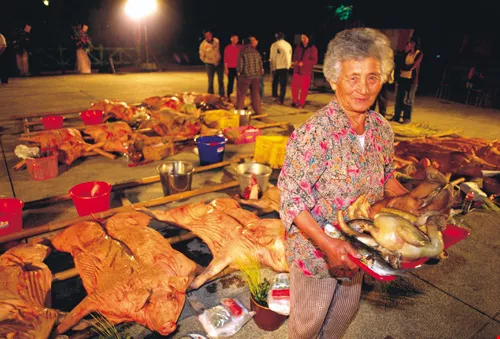
Sirayans who have received protection from Alimu offer of an entire pig as a show of reverent thanks. Because people nowadays do not consume as much meat, the sacrificial pigs tend now to be rented out from swine vendors, and returned after the rites are completed.
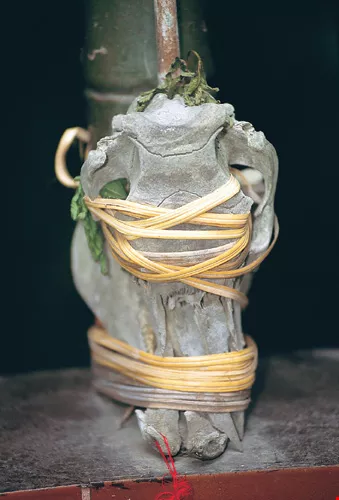
This pig's head strung up in the local shrine is not the typical Aboriginal hunting trophy. Whether it represents some kind of sacred object or sacrificial offering, however, remains a matter of debate.
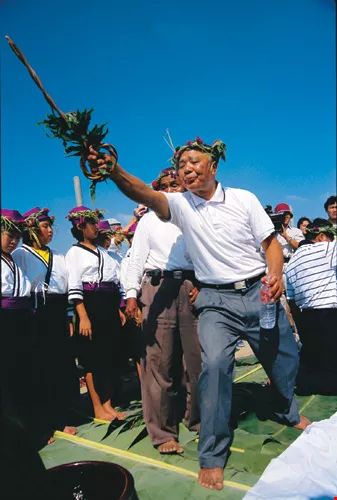
The priest Chang Ming-hai commences the ritual Wailing to the Sea by pointing his sacred staff heavenwards and spewing forth exorcistic rice wine.
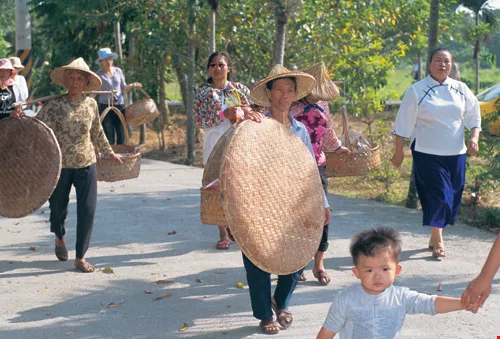
The ritual Wailing to the Sea is about to begin. Villagers bearing sacrificial offerings trickle towards the seaside location of the rites.
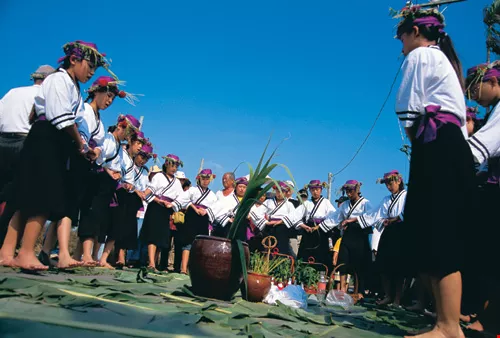
Garlanded girls step barefoot onto banana leaves, singing ceremonial songs known as kankei. Simple, repetitive dance steps accompanying mournful songs prove deeply moving.


@List.jpg?w=522&h=410&mode=crop&format=webp&quality=80)


