Guardians of Land and Sea
The Rangers of Kenting and South Penghu
Rina Liu / photos Kent Chuang / tr. by Scott Williams
December 2021

00:00

Kenting National Park, Taiwan’s first national park and its most visited, covers some 32,000 hectares equally split between land and sea. South Penghu Marine National Park is Taiwan’s newest national park. Covering an even larger 35,000 hectares, 99% of which is at sea, it features rare columnar basalt islets as well as rich, pristine coral reef ecosystems.
Taiwan occupies a unique geographic position: while our island accounts for only 0.3% of the world’s land area, our seas contain 10% of the world’s marine species. Just like terrestrial wildlife, these sea creatures need protection and conservation. Hsu Shu-kuo, deputy director of Kenting National Park Headquarters, says, “Taiwan’s waters are slowly being revitalized through hard work, helped by changing attitudes.”
Broad oversight
Chen Jung-hsiang has been working at Kenting National Park (KNP) for nearly 32 years. Born into a family that had been fishing for generations, he grew up in nearby Nanwan (South Bay) and joined the Kenting team in his early 20s, just after the park was established. He has been on the park’s front lines ever since, first as a marine ranger and nowadays as a park ranger.
Chen functions as a bridge for communication between the local fishing community and the park administration, and is doing his best to help the community transition to different work and to sustainable fishing methods. “Rangers like me who live by the ocean have pretty broad responsibilities.” He explains that as well as working with police to catch illegal loggers in the mountains and poachers on both land and sea, rangers also carry out search and rescue operations, clean up the mountains, beaches and seas, keep ecological records, rescue animals, restore corals, and talk with visitors.
The rangers at South Penghu Marine National Park (SPMNP) have similarly broad responsibilities.
“SPMNP was established seven years ago. Since it covers a vast expanse of sea, includes a number of islets, and has weather that changes from place to place, its rangers’ responsibilities differ from those at KNP,” says Chu Chiao-wen, who runs the park’s operations from the management station on Dongji Islet. “They have to be on the lookout for poaching and illegal activities by foreign and local fishing boats, and notify the Coast Guard or Park Police if they spot anything suspicious. They also have to ensure that tourism facilities are clean and in good order. When they discover a problem they can’t handle themselves, they have to notify administrators to bring in an outside contractor to fix it.”
SPMNP’s first three rangers are all locals who have sailed and fished this part of the ocean since childhood. When they learned that their stomping grounds were being made into a national park and that it would be seeking to hire rangers, two gave up careers elsewhere and the third left the fishing industry to take on the task of protecting the sea they loved.
“We soon learned that locals make ideal park rangers,” says Chu. “This is a rather isolated area, so it’s easier for locals to arrange their work shifts. Not to mention, rangers need to be really familiar with the islands, the sea around them, and the marine weather.” The park also relies on its local rangers to talk to fishermen and fellow islanders. “Being from the same area, they’re friendly with one another and have an easier time understanding their mutual concerns.”
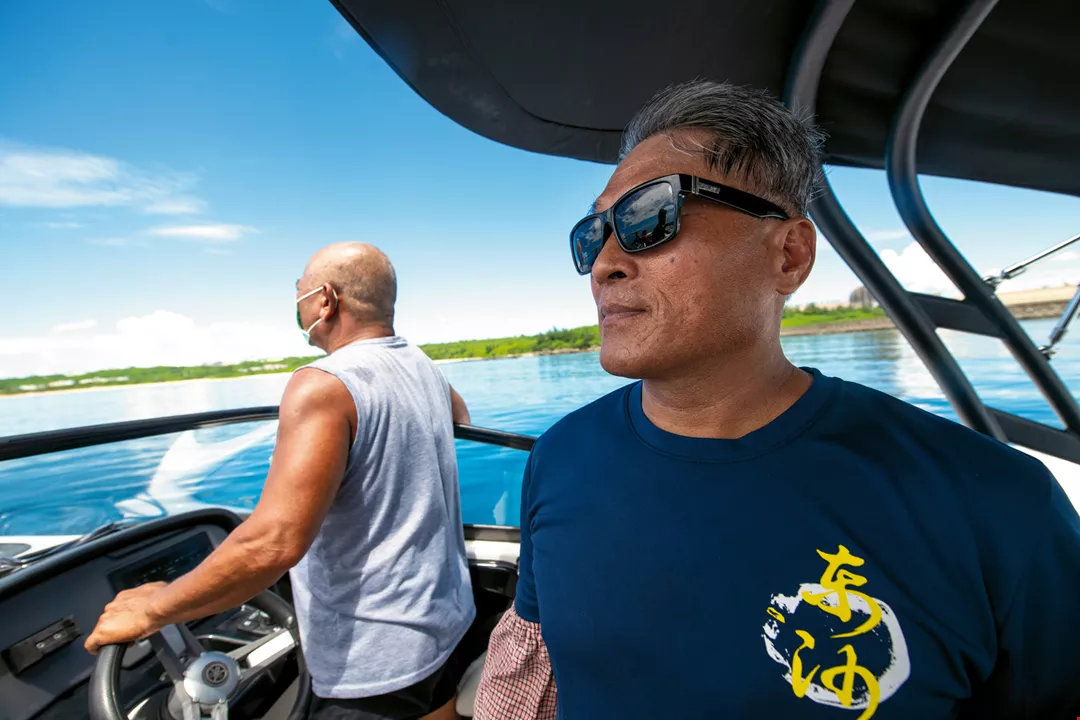
Having spent many years patrolling the sea together, KNP park ranger Chen Jung-hsiang (right) and boat captain Guo Zhihong (left) have developed a deep professional rapport.
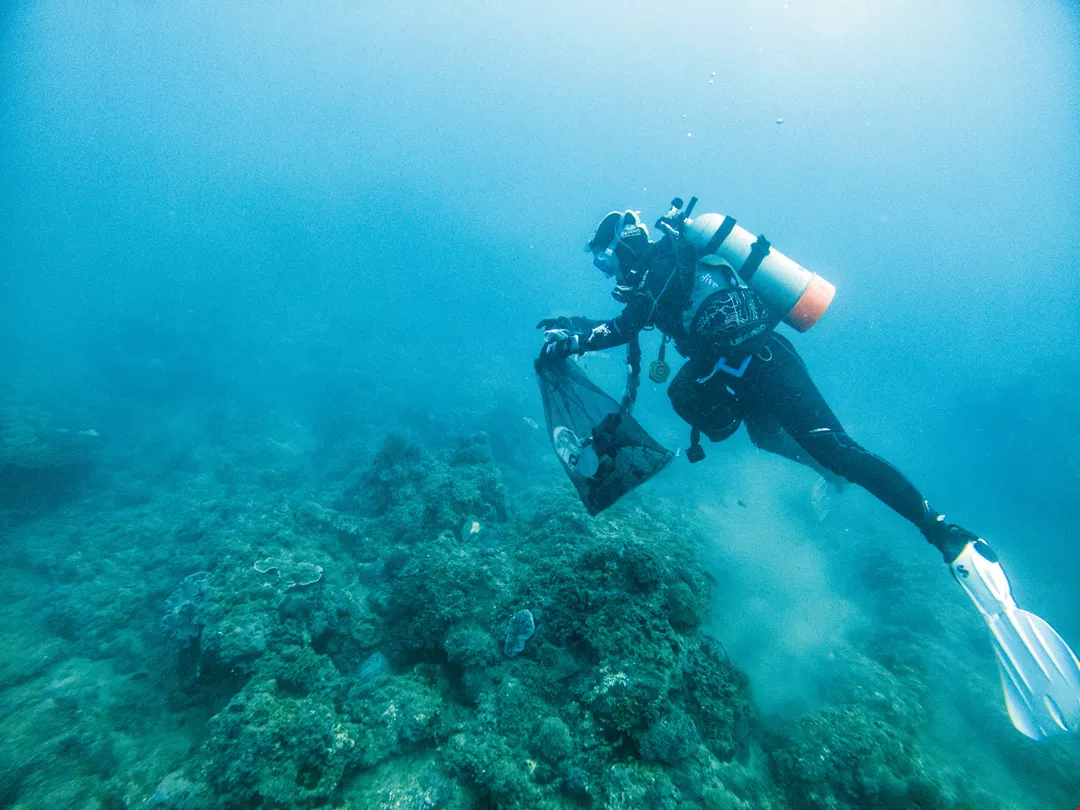
Divers carrying net bags remove ocean trash from reefs by hand. Debris too big for them to handle is tagged for later removal by boat.
From living on to living with
“It was tough at the beginning.” Chen Jung-hsiang and KNP’s administrators talked with fishing families daily, urging them to change from bottom trawling, which damages coral reefs, to more environmentally friendly fishing methods. They also helped them find other occupations. “In the end, the fishermen began to accept the idea of living in harmony with the sea.”
KNP has jurisdiction over 75 kilometers of tropical coastline with few river outlets to bring sediment into the seawater. The park’s water quality and water temperature have made it a veritable “marine tropical rainforest” for reef-forming corals. Coral reefs are an essential marine ecoregion: they occupy just 0.2% of the ocean’s floor, but nurture more than 25% of its life. Taiwan is home to around 300 of the world’s roughly 1000 reef-forming coral species, mostly concentrated around the Hengchun Peninsula. This coral ecosystem accounts for the incredible diversity of aquatic life off Kenting’s coast, an area home to some 1100 fish species, representing more than 40% of those found in Taiwan’s waters.
With tourism in Kenting booming, many fishing families have transitioned into operating bed-and-breakfasts and guiding eco-tours, or acquiring licenses to teach scuba diving and introduce tourists to Kenting’s fantastic ocean ecosystem. These locals are now among the guardians of this part of the sea. “They help clean up ocean trash, admonish tourists and divers who break the rules, and contact us if they see an animal in need of rescue or boats fishing illegally.” Chen says that working in partnership with locals to protect the ocean has brought Kenting closer together.
Because they live on outlying islands, Penghu’s residents are more reliant on fishing than Kenting’s. A two-year government-sponsored survey of the SPMNP area found that the local seabed topography creates upwellings of nutrient-rich water, feeding the coral reefs that give rise to the area’s great diversity of species. The three large ocean currents passing between the islands also bring in large numbers of fish species from north and south to reproduce here. These factors, together with the area’s mild temperatures, could help make SPMNP an “aquatic germplasm bank” for the seas around Taiwan, increasing the resilience of Taiwan’s marine ecosystems as a whole.
The Marine National Park Headquarters (MNPH) and Penghu County Government have held numerous talks about protecting this habitat, and have divided up responsibilities into functional regions that take seasons, currents, and fish species into consideration. The goal is to ensure the sustainable coexistence of the fishing industry with the ecosystem. Local fishermen who have begun transitioning from fishing into promoting tourism of the area’s black basalt islands and sea caves now take visitors to the shallows around Dongyuping and Dongji Islets, where they can explore the reef ecosystems using just snorkeling gear.
“The islanders really cherish their homeland.” Chu Chiao-wen says that even though fishing remains economically important, the fishermen’s strong feelings for the ocean and islands have encouraged them to embrace sustainability goals. After all, they see the islands and the sea as their home.
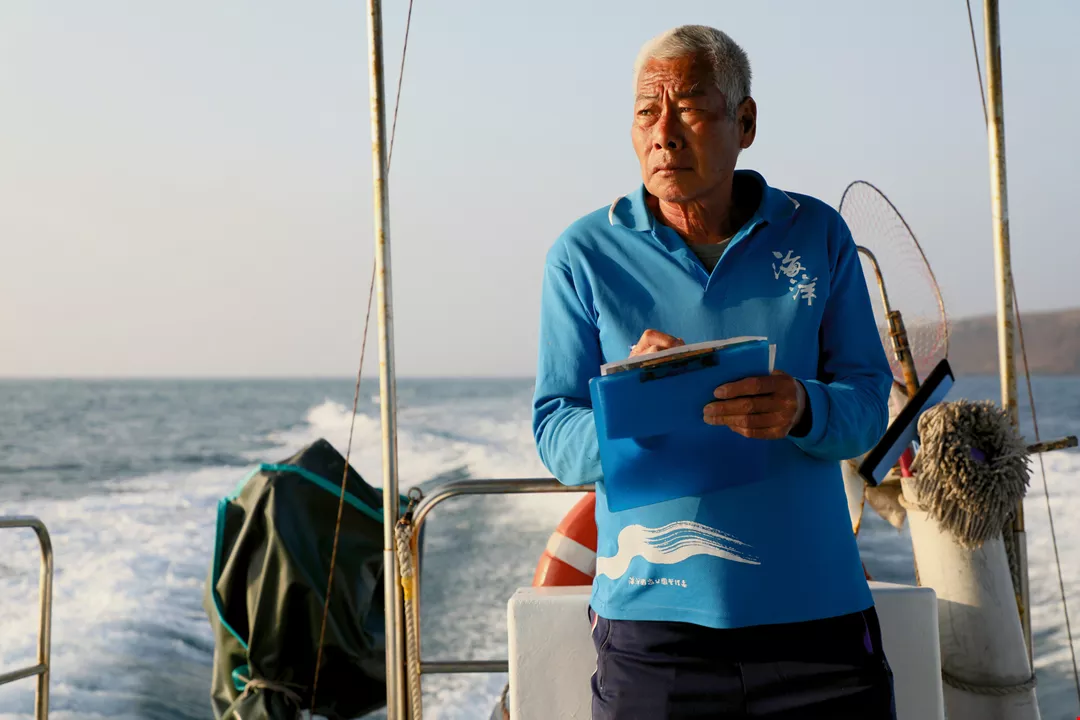
Lin Shuntai has spent more than 60 years on the water. A South Penghu fisherman before becoming a park ranger, he is devoted to protecting this bit of ocean. (photo by Wu Minghan, courtesy of MNPH)
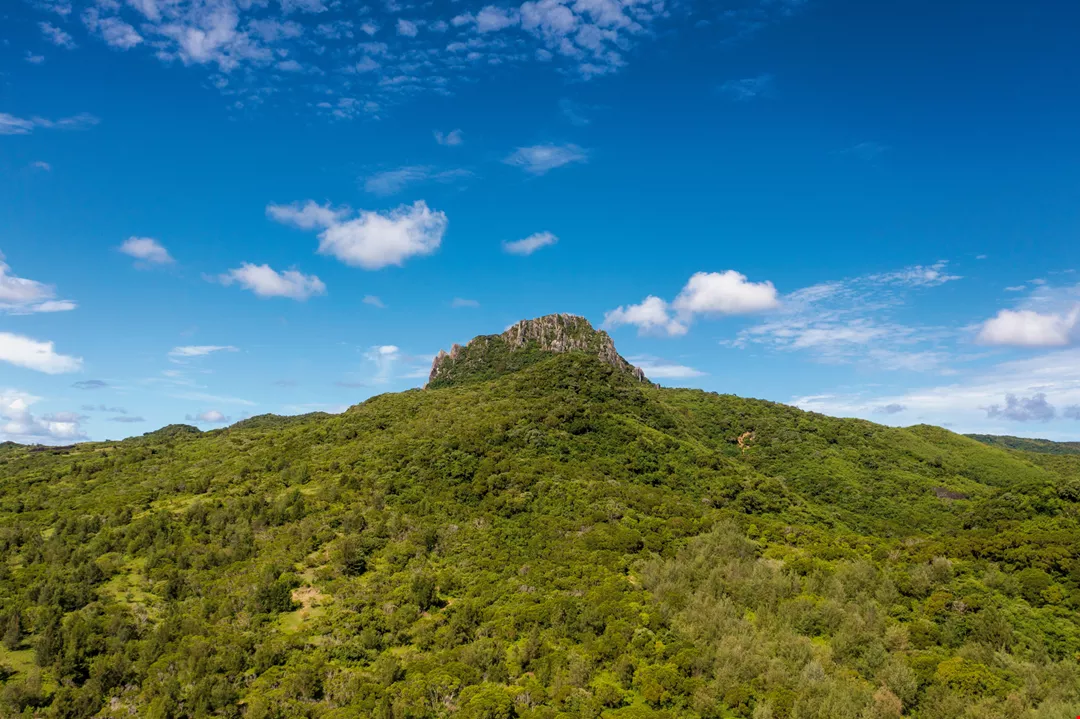
Rising above low hills, Dajianshan is one of the Kenting area’s most striking landmarks.
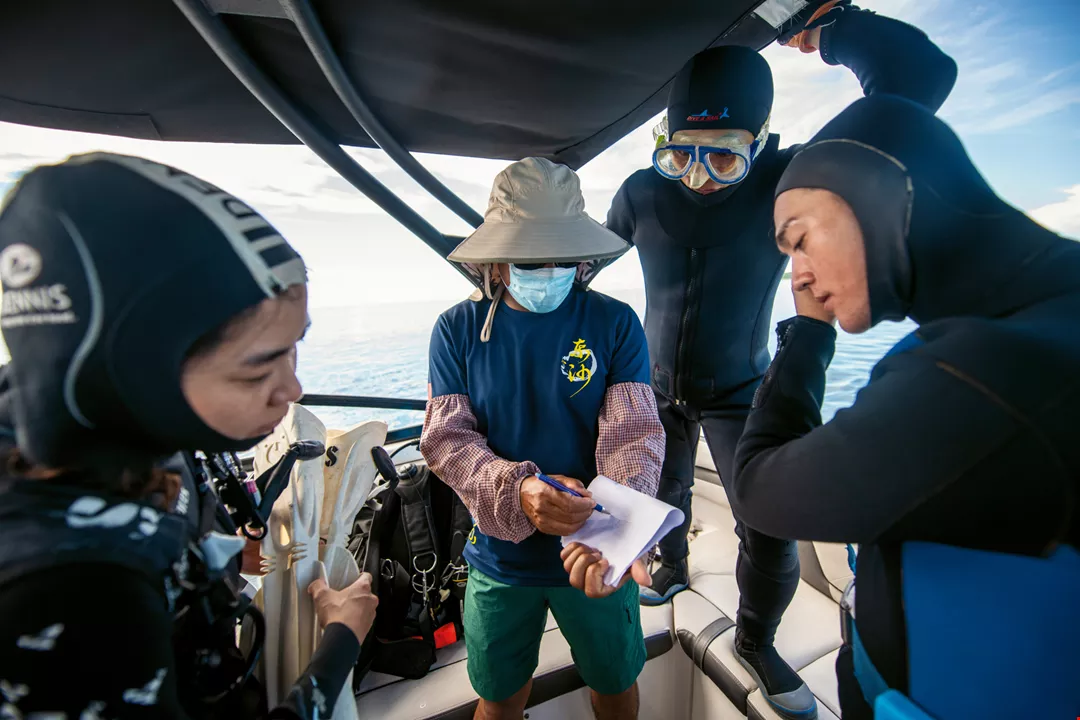
Chen Jung-hsiang (second from left) gives volunteer divers their assignments and lets them know of issues to be aware of.
The front lines
“Not long after I started the job, I led some people up Dajianshan on ropes to collect the trash that covered the mountain,” recalls Chen, who says that at the time the mountain was still open to climbing. “Once we finished with the mountain, we went and picked up trash on the beach and the rocks, and then we went into the water to collect litter from the ocean.”
Prior to the rise of environmental consciousness, waste was the biggest enemy of both land and sea ecosystems. “The situation is much better these days: most tourists have become proactive about taking away their trash. Nowadays, Kenting’s most vexing waste issue is ocean waste carried here from other places by wind or currents. For example, typhoons pick up trash from the seas south of us and dump it on our coast, or in the shallow waters near our shores. You could spend a week cleaning up the beaches and the water, and still not get it all,” says a frustrated Chen.
Working with a variety of organizations to protect marine life is another important part of the rangers’ job. Though conflicts inevitably arise between people and the natural world, these days most Taiwanese are respectful of wildlife. The recent efforts to ensure that land crabs are able to safely cross roads during their breeding season are a case in point.
Kenting is home to a wealth of land crabs, with its 65 recorded species ranking number one in the world. From July to November each year, these crabs cross Kenting’s roads on their way to the sea to spawn. Since Kenting launched its “make way for the crabs” program, traffic is stopped for short intervals during designated hours to allow thousands of crabs to cross. During these periods, travelers have the opportunity to witness this grand migration with their own eyes.
Since then, more than 90% of Kenting’s land crabs have made it across the roads to their spawning grounds. And new land-crab species are still being discovered. In 2020 Li Jheng-jhang, a crab expert at National Sun Yat-sen University, published a paper in an international journal describing five new crab species, and recording two others not previously identified in Taiwan. These improvements in the situation of Kenting’s land crabs have led Chen to believe that people really can change their thinking.
These days, even the sky above Kenting has changed. Hsu Shu-kuo explains, “Kenting is an important stopover for more than 200 migratory bird species. With people recognizing that cherishing wildlife means keeping your distance, you can now see tens of thousands of grey-faced buzzards, Chinese sparrowhawks and little egrets wheeling through the sky above Kenting as they prepare to head south for the winter.”
Chen tells us that the hardest part of the rangers’ job is rescuing divers and tourists. Water rescues are especially challenging. “Every few years, someone jumps into the sea from one of the rocks poking out of it, like people do in foreign films, and gets carried away by a rip current.” He also recalls the time that beachgoers ignored a warning announcement about a big wave coming, and 40 or 50 of them were swept out to sea. Chen led the subsequent search and rescue operation.
“KNP introduced a number of safety regulations in the aftermath, and we stringently enforce them to prevent that kind of tragedy from repeating.” Chen, who has lived with the sea for 57 years, says you can never let your guard down with it.
_web.jpg?w=1080&mode=crop&format=webp&quality=80)
Strong winds and ocean currents bring ocean trash to SPMNP’s waters and islands, so the park’s administrators hire contractors to conduct regular cleanups. (photo by Wu Minghan, courtesy of MNPH)
_web.jpg?w=1080&mode=crop&format=webp&quality=80)
As part of their duties, SPMNP rangers check on the park’s marine and terrestrial facilities. (photo by Wu Minghan, courtesy of MNPH)
A shared duty
With its mild climate, gently sloping seafloor, and hard volcanic stone, the Taiwan Strait is an ideal location for coral reefs. While efforts to conserve its marine environment got off to a late start, research shows that the SPMNP, which was established just five years ago, is already having a positive impact on local ocean restoration.
SPNMP’s Dongji Management Station works with other government agencies and private contractors to manage and protect all parts of the park. For example, the park’s main method for dealing with ocean trash is hiring private contractors to undertake regular patrols to collect it, but locals also help out by organizing their own ocean and island cleanup events.
“SPMNP’s frontline personnel include not just the locals who work as park rangers, but also the management station staff.” The park doesn’t have a lot of employees assigned to it from mainland Taiwan, but when incidents arise they all leap into action right alongside the rangers.
In one case where a boat struck a shoal and was leaking oil, the rangers who went to assist couldn’t get to it through the reef-filled shallow water. “So they had the captain of the rangers’ boat run the bow of his boat against a reef to hold it steady, while the other responders aboard debarked onto a coral islet. From there, they deployed an oil boom to contain the spill, and then used oil sorbents to soak up the oil.” Chu says it was an unforgettable experience.
Even with rangers and conservation departments working every day to protect our national parks’ shorelines, successfully conserving our ocean ecosystems will require the public to support these frontline workers through environmental awareness and informed action. Taiwan is surrounded by the ocean and dependent upon it for its survival. The sea gives us gifts beyond measure. Now that it needs us, it is our duty to help.
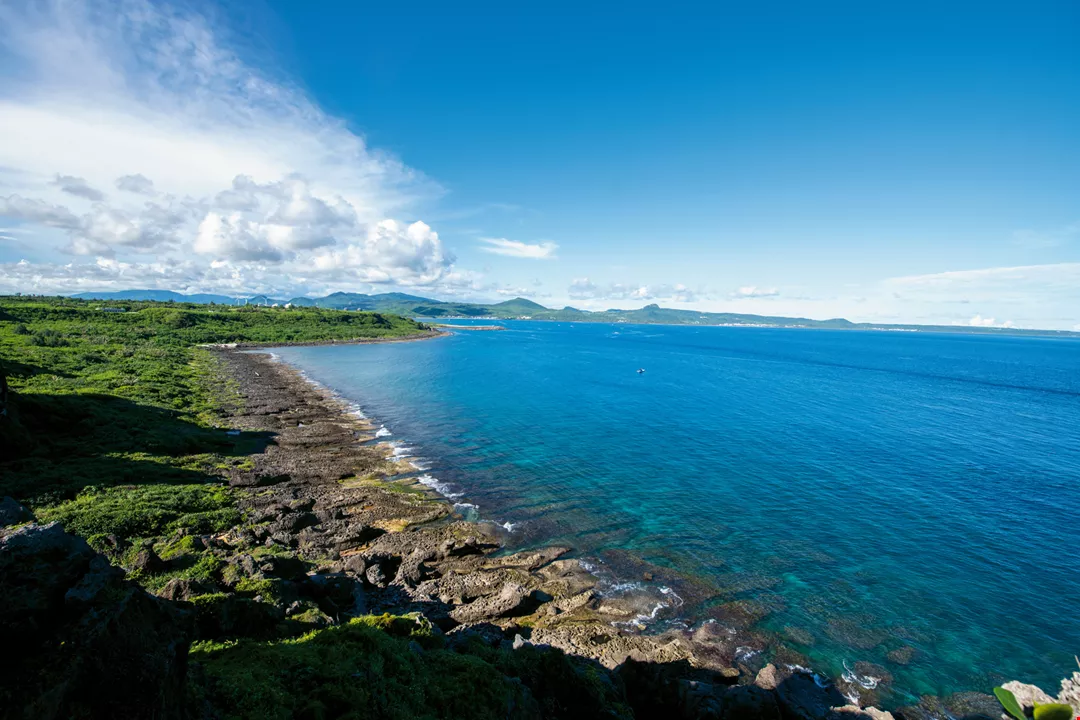
The oceans around KNP and SPMNP are fantastic coral habitats that nurture rich marine ecosystems.

@List.jpg?w=522&h=410&mode=crop&format=webp&quality=80)


@List.jpg?w=522&h=410&mode=crop&format=webp&quality=80)
@List.jpg?w=522&h=410&mode=crop&format=webp&quality=80)
