Taichung: A Fantasy Story of Renovation and Urban Revival
Kobe Chen / photos Chuang Kung-ju / tr. by Phil Newell
January 2016


The Taichung Calligraphy Greenway has in recent years become an enormously popular gathering place. It is best known for its big department stores and hotels, its spacious green spaces and plazas, and the numerous talented street performers who are there every evening and weekend. But if you get off the central strip and into the surrounding side streets and lanes, you will also find a huge number of small boutiques, restaurants, and coffee shops, each with a unique appeal and character. Whether you are looking for a meal, a new outfit, handcrafted accessories, objets d’art, or just useful products for daily life, this area has everything under the sun.
To call this a “commercial district” is accurate enough, but it would perhaps be even better to describe it as a “lifestyle community.” The diversity and creativity in this area attract a steady stream of visitors, and the “small-town feel” provides a breath of fresh air contrasting with the nearby canopy of high-rise buildings.
Taiwan Boulevard, the main artery running through central Taichung, is a typical big-city street, jammed with vehicles. But when you turn onto Zhongxing Street you enter a different world. The road follows a broad “Greenway” that cleaves a spacious valley between the neighboring high-rise buildings, so that there is a clear line of sight to the sky. And as you follow the Greenway straight on, down the side streets and alleys you can see intriguing cityscapes and street scenes that are a mélange of the contemporary and the nostalgic.
While towering hotels, apartment buildings and office buildings adjoin the Greenway with its plazas and public art, a large proportion of the surrounding area still consists of quite old houses and structures scattered in side streets and smaller lanes. Far from becoming debilitated with the passage of time, they are beacons of novelty bringing together design, creativity, and aesthetics.
In these lanes and alleys are indie bookstores, patisseries, artisans’ workshops, specialty stores for niche farm produce… and the area is a magnet for designers, illustrators, and professionals in the performing arts. They form a pluralistic “lifestyle community” that functions as an organic whole. Their places of business are virtually all renovated old houses, most over 40 years old. They bear the craggy character bestowed by the passage of time, but have been made over with fashionable design ideas and stylish embellishments. Businesses and residences are tossed together like a salad, which means that while inside the buildings there is energy and creativity, the neighborhoods themselves are tranquil.
“We want to bring vitality and energy to these old areas, but we don’t want to destroy their integrity and coherence. We have redesigned some structures that had been neglected or abandoned, using novel ‘green architecture’ concepts, to build the framework for a creative lifestyle community,” explains Fantasy Story Company general manager Alex Chung. Over the last four years, his firm has renovated more than 20 old buildings, mainly former private houses, and in turn has rented out space in them to 60 creative startups. They have also incorporated ideas of “community regeneration” and incubation of creative businesses, so that this old section of Taichung has become a new hub of vigor and energy.
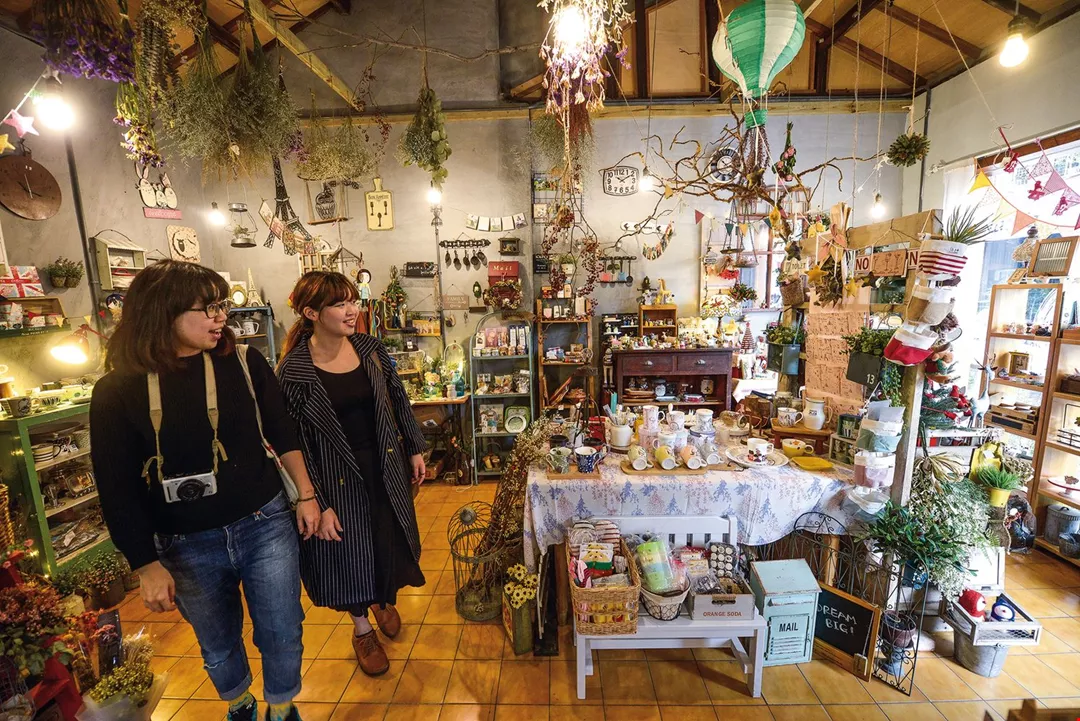
Shops that have opened in spaces renovated under the “Green Ray Project” carry a wide variety of unusual and niche products. Some also offer lectures or classes, so that both the businesses and local residents have the opportunity to continually grow. (courtesy of Fantasy Story)
Renewal without rancor
The day of our visit with Alex Chung, as we stroll together along the Greenway a guy covered with tattoos, looking a lot like a gangster, glides past us on a bicycle and, spotting Chung, calls out a hearty greeting as he heads away. Chung explains that this man lives in a lane that falls under the “Green Ray Project,” and when renovation work first began, a lot of the neighbors complained about the construction noise. Even before the workers on the site could apologize, Tattoo Guy preempted everybody: “What are you all whining about? When they are finished, you will want to thank them, but by then they won’t be here!” Because he has lived in the neighborhood from the time he was small, he has actually been very excited about the changes that Fantasy Story has brought in recent years.
In contrast to the urban renewal projects conducted by many other construction companies, which may completely level existing neighborhoods, Fantasy Story’s have not caused any serious legal disputes. On the contrary, they have proven popular with local residents.
Take for example the “Green Ray Project” of 2013. It focused on abandoned dormitories for employees of the Taiwan Water Corporation which had lain empty for over two decades. After renovation, there was no great change in the appearance of the street, and even more importantly there were no oppressive high-rise buildings or grating giant signboards for businesses or advertisers. On the other hand, the lanes, which had formerly had a desolate and sloppy look, became clean and teeming with life. The original Japanese-style “Nagaya” (literally “long building”) architecture, verdant long-lived trees, and the old mottled walls with their fissures and exposed brick, all have been preserved, and in fact are now considered the most appealing aspects of the Green Ray Project.
Commercial establishments that have moved in here include stores selling jewelry, socks and shoes, and umbrellas; a leather goods outfitter; beauty salons; coffee shops; and even an American-style “general store.” Altogether there are more than 20 businesses and gallery/performance spaces. From the point of view of local residents, not only has their living space not been disrupted, it has become even more comfortable. The developers and the stores, meanwhile, have been able to draw on the original residential, homey ambience of the lanes to create a zone that feels spacious and relaxed, devoid of naked capitalism and with a sense of warmth and neighborliness. The way that old houses are being renovated in older neighborhoods of Taichung is like a socially conscious city planner’s dream.
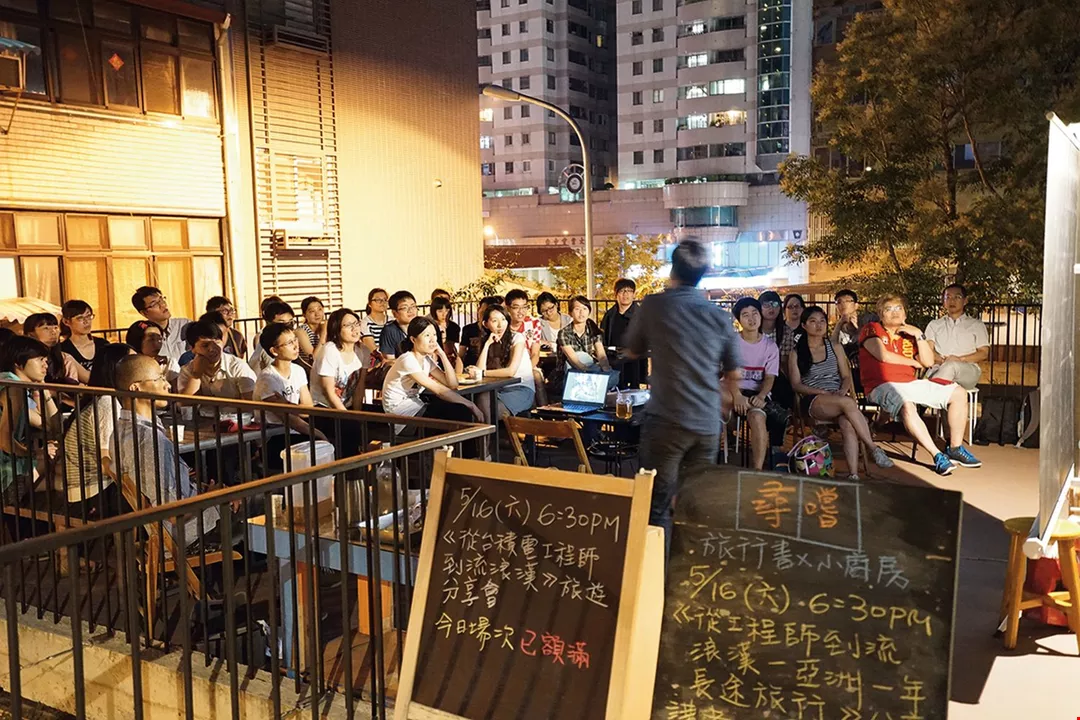
Shops that have opened in spaces renovated under the “Green Ray Project” carry a wide variety of unusual and niche products. Some also offer lectures or classes, so that both the businesses and local residents have the opportunity to continually grow. (courtesy of Fantasy Story)
Entrepreneurial opportunity
If you go back to the Greenway of 2009, no large department stores had yet opened, the Citizens’ Plaza (a large open grassy park) had just been completed, and there wasn’t a whole lot of commercial activity going on along the periphery. But some could see the potential for future development in the area. There were a lot of idle old houses in the lanes and alleys in this district, and even though the asking prices or rents were not high, there were still few people interested. It turns out that Chung’s elder sister was the landlady of one of these old houses.
“When I first started out on my career, I took a lot of cases of public infrastructure or large buildings, but I didn’t feel fulfilled. Then my sister asked me to help her renovate her old house.” Chung says that by the time he had overhauled the place, it was an open, spacious home with a real sense of aesthetics. He figured it would be easy to find someone to rent it, yet much to his surprise the months passed and it remained empty.
Perplexed, Chung gathered together his colleagues and they launched a market survey. They discovered that following the opening of the large-scale shopping centers, many young people wanted to start their own businesses in this district. But their budgets were limited, and most could afford only NT$10–20,000 per month for rent. Therefore large, spacious houses, despite being cheap per square meter, were still outside their range.
And yet the demand was there, so it was up to them to figure out how to meet it. So Chung renovated an old two-story house in such a way that it was divided up into seven separate storefronts. At rents of less than NT$20,000 per month, they were all snapped up in short order. This was Fantasy Story’s “Venue #1,” the result of a “beautiful accident” made possible when a number of conditions matured around the same time.
Chung officially founded Fantasy Story Company in 2011, and in the same lane as “Venue #1” he proceeded to renovate four other old houses. The next year, he transformed an old structure on Zhongxing Street into a project called “Sweets Woods” (also known as “Fantasy Story Venue #7”), which is a pastry and baking venue with multiple shops set in a green space shaded with old trees. He has since undertaken a whole series of projects, including a bookshop and handicrafts collective, and a diversified lifestyle community has taken on a definite form.
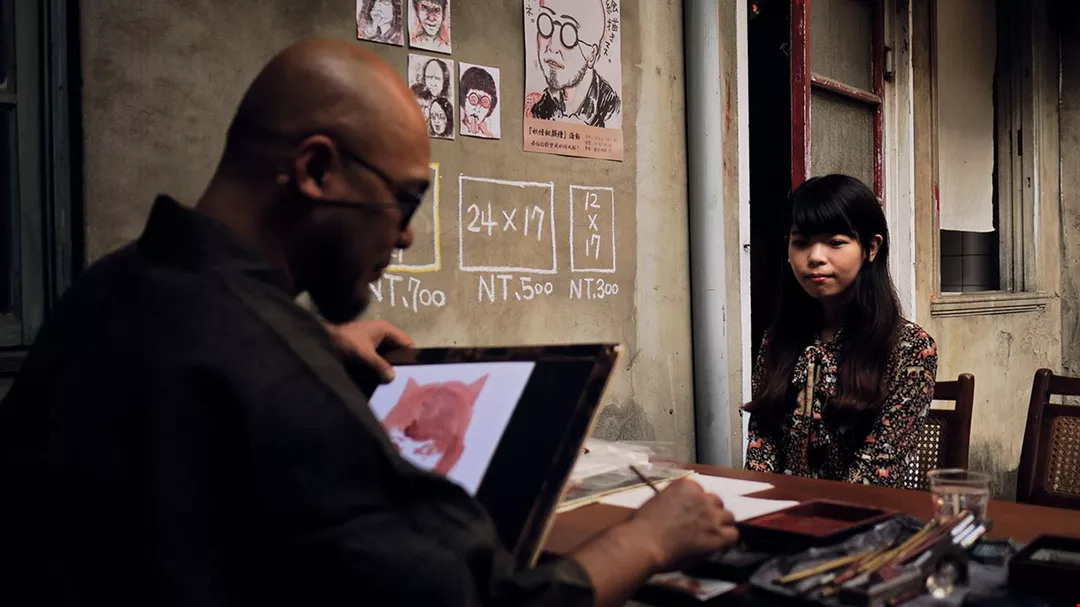
Shops that have opened in spaces renovated under the “Green Ray Project” carry a wide variety of unusual and niche products. Some also offer lectures or classes, so that both the businesses and local residents have the opportunity to continually grow. (courtesy of Fantasy Story)
Sow and ye shall reap
Fantasy Story now rents space to more than 60 startup or “pop-up” businesses and art spaces. Moreover, in addition to Fantasy Story, many landlords, construction firms, and designers have also spotted the opportunities that exist on the periphery of the Greenway, and there is an ongoing wave of old house renovations.
With people of different skill sets and motivations gathered together, sparks fly. Shop owners engage in cross-disciplinary cooperation or promotion, creating a trend toward mutually supportive collective marketing. Moreover, to help the shops operate sustainably, Fantasy Story has also imported the idea of incubation of creative enterprises. They bring in speakers with relevant expertise to offer courses and consulting services to shops.
This unusual model that combines mechanisms of urban renewal, community revitalization, and business incubation has attracted widespread interest. Fantasy Story has been commissioned to redevelop communities in Taichung’s Qingshui, Yilan’s Wushi, and Yunlin’s Douliu; sociology professors from Seoul National University in Korea have come here specifically to study the area; and the company is in discussions to cooperate with Peking University to combine the Fantasy Story model with Beijing’s “hutong” culture (old neighborhoods of single-family homes with a small-town feel and rabbit-warren lanes) and thereby revitalize areas that once defined the city’s character but are now fast disappearing.
There is a quote Alex Chung often uses: “Your life is my vision.” This is the driving concept behind Fantasy Story, and the neighborhoods they create—quiet and unpretentious on the outside, dynamic and filled with seriousness of purpose inside—are proving to be extremely attractive. In the highly stressful urban jungle, every old house that has been brought back to life gives off a warm glow, illuminating their old walls and the memories that they enclose.
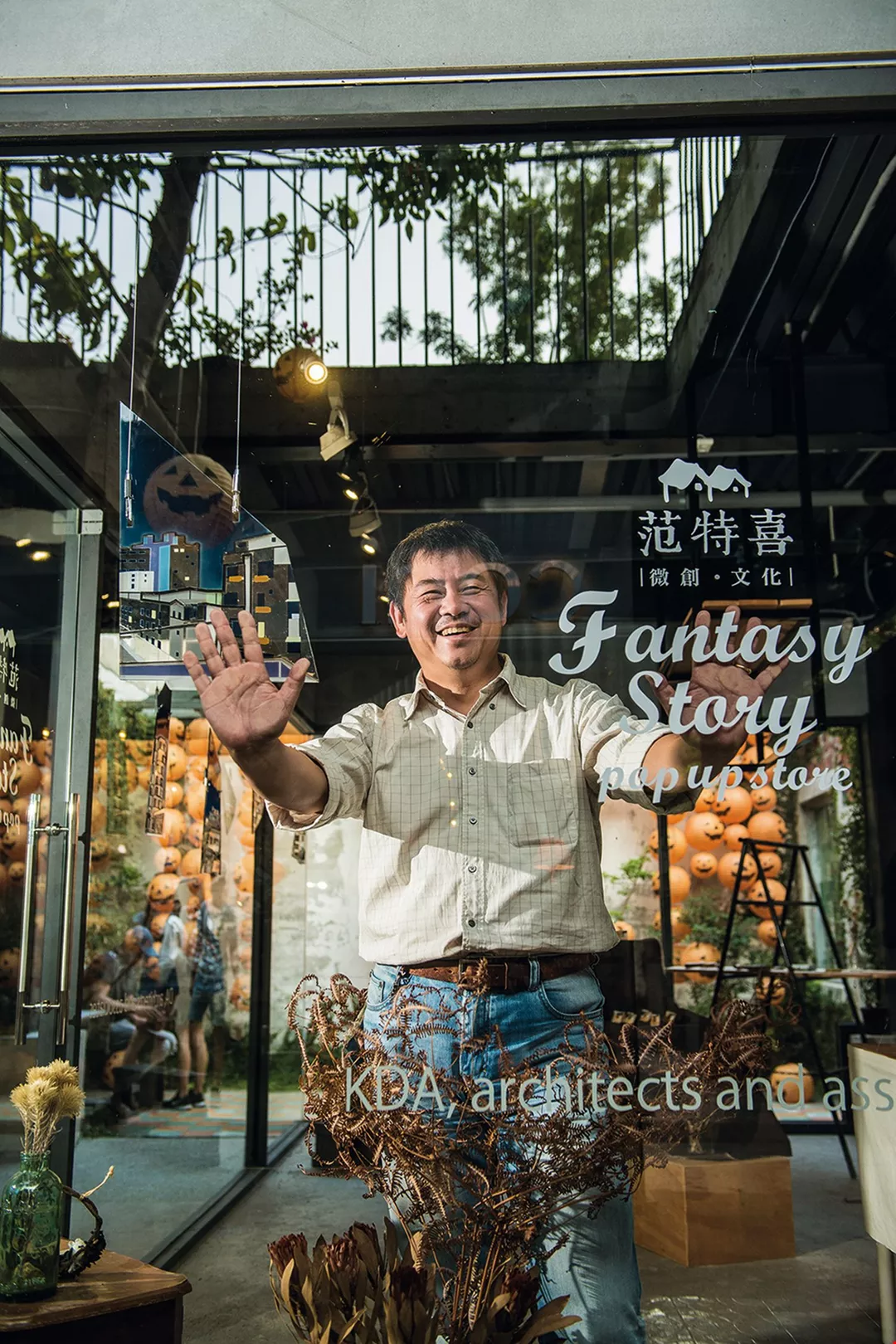
Property developer Alex Chung, the founder of the Fantasy Story Company, left his job at a big construction firm and pretty much singlehandedly launched the “preservation through renovation” movement in Taichung. He has pioneered a “lifestyle community” that is both cool and cultured.
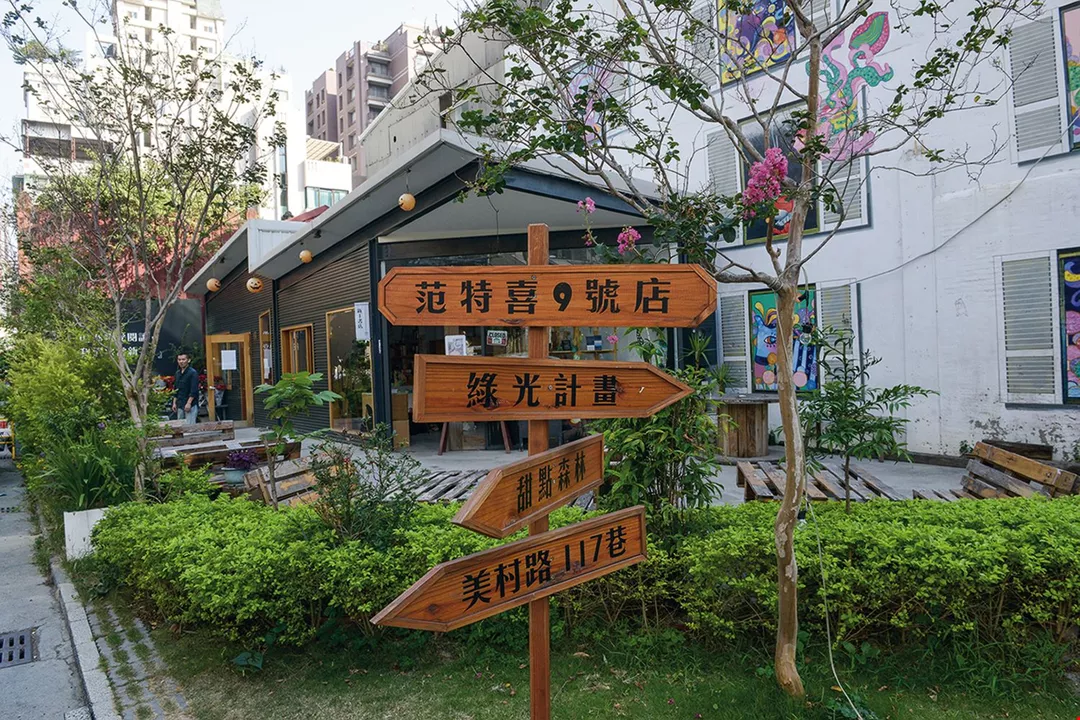
Fantasy Story is virtually a synonym now for the community that has developed on the periphery of the Taichung Calligraphy Greenway. A signpost just outside the entrance to the Xinshou Bookstore (“Bookstore for Beginners”) points the way to other noteworthy features of the community.
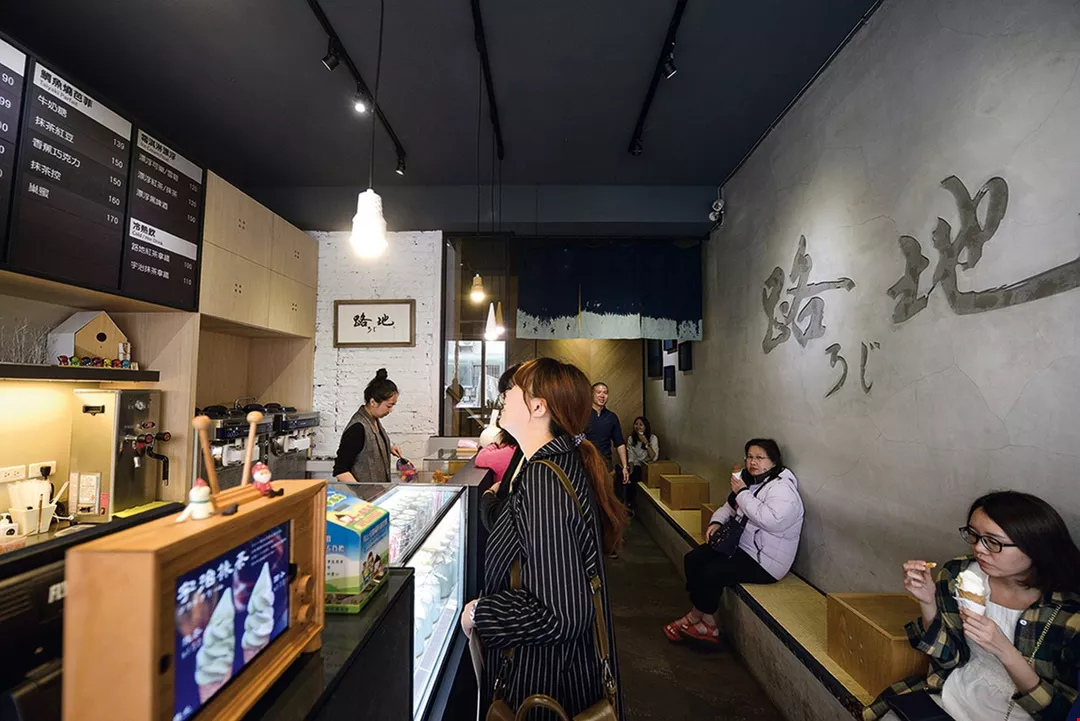
This super-trendy Japanese-style “shaved ice” shop decided not to open a branch in a big department store (the easy and obvious choice), but instead set up in a small lane, adding to and benefitting from the unique atmosphere that combines the hip with the nostalgic.
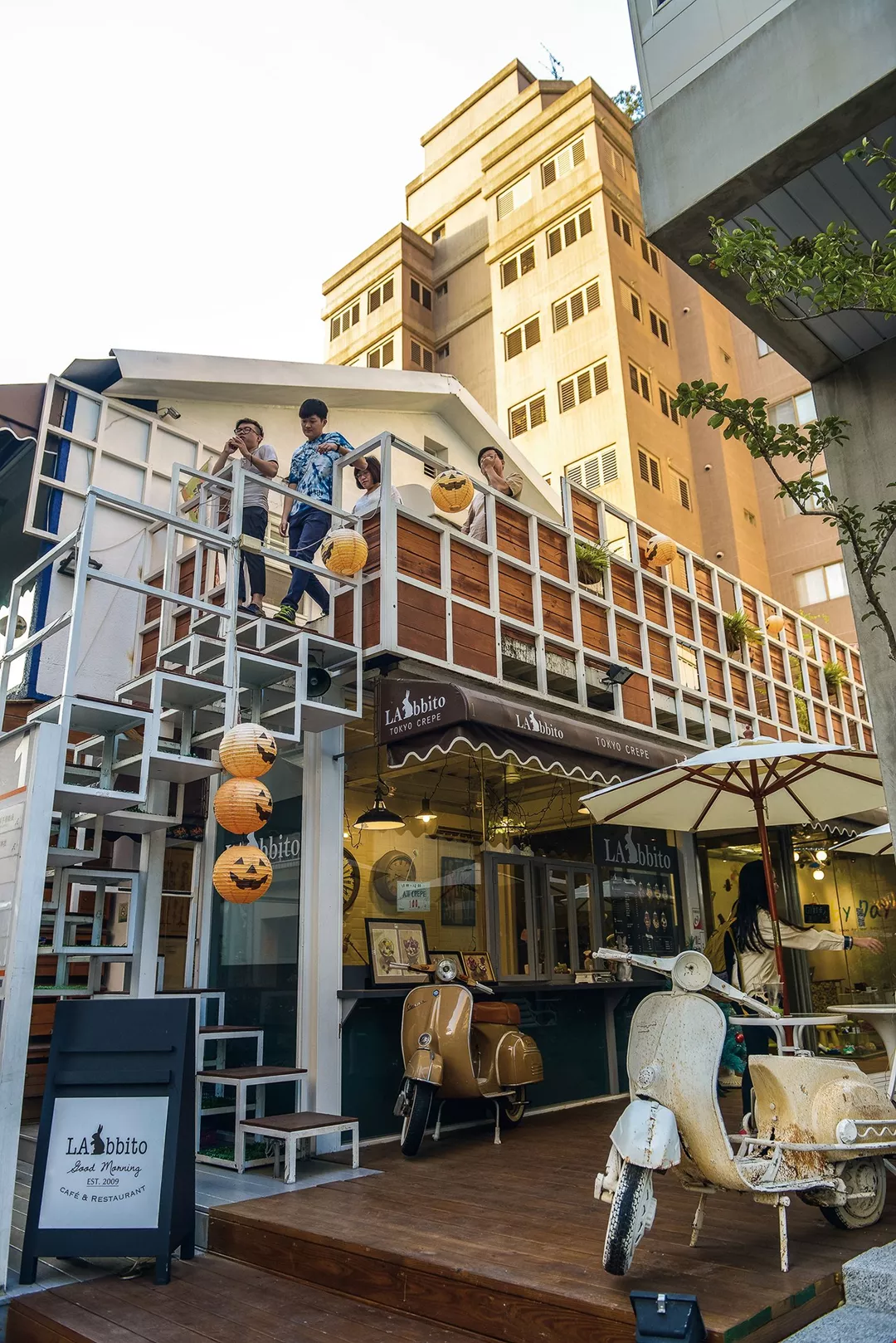
“Venue #1” came about as a result of the confluence of several fortuitous factors. There are shops selling traditional Japanese sweets and local agricultural specialty products, and even an illustrator and a clothing designer, all cheek by jowl!
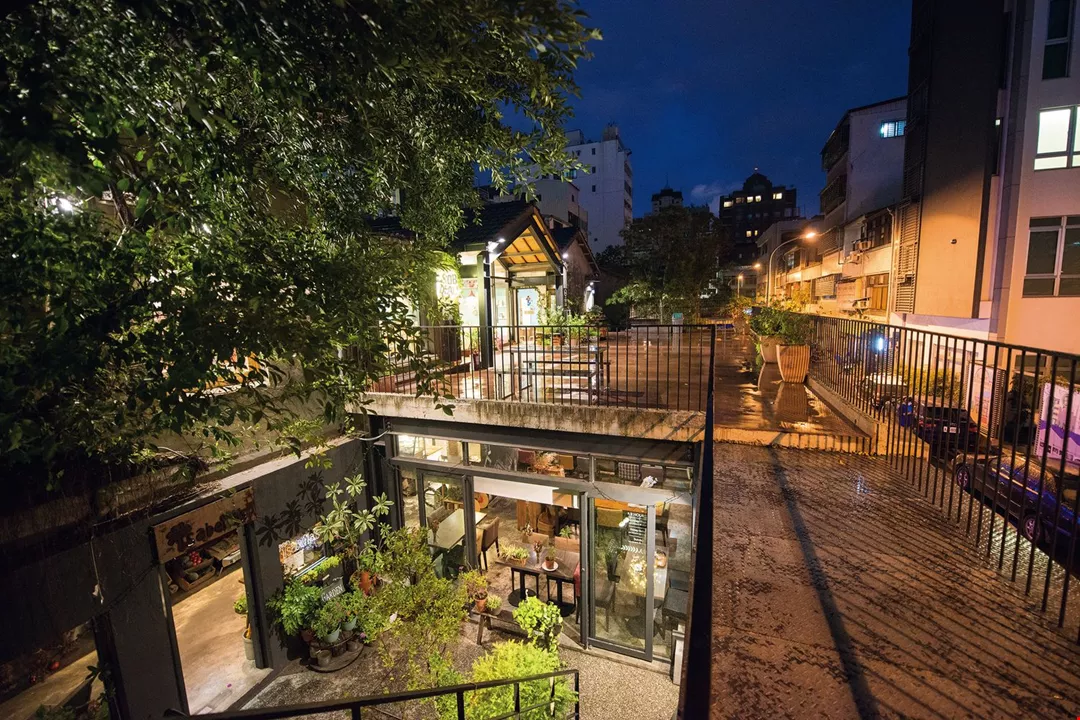
The Green Ray Project centered on renovating derelict dormitories of the Taiwan Water Corporation. Rather than trying to squeeze property value out of every square inch of this downtown district, Fantasy Story preserved the old trees and many of the open outdoor spaces, so that the overall feeling is one of coherence with the environment.
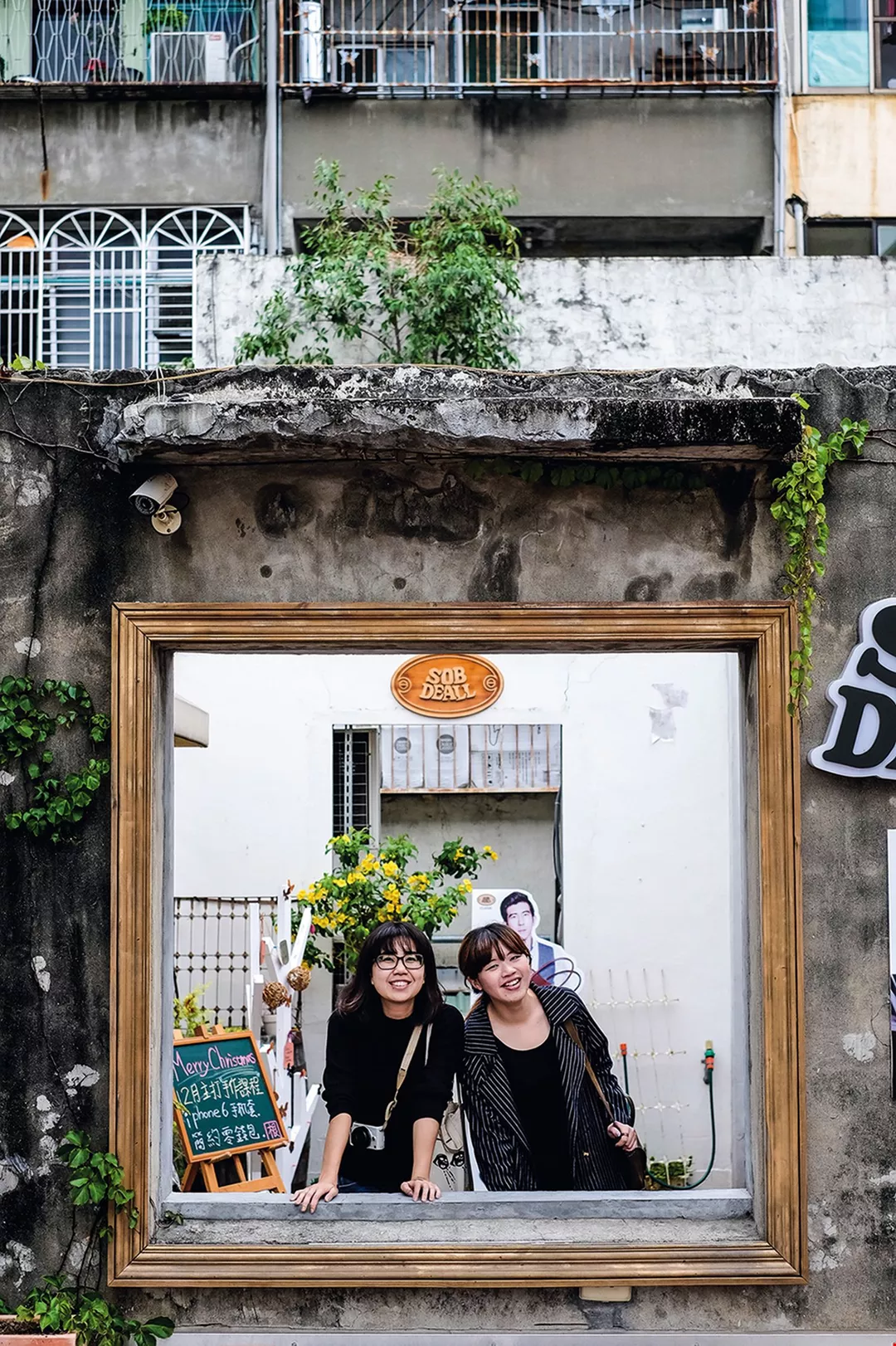
The ambience of the area around the Greenway is defined by a high quality of life, a more relaxed feel, a high level of culture, and openness to the novel and the creative. These are the things that keep visitors coming back again and again.
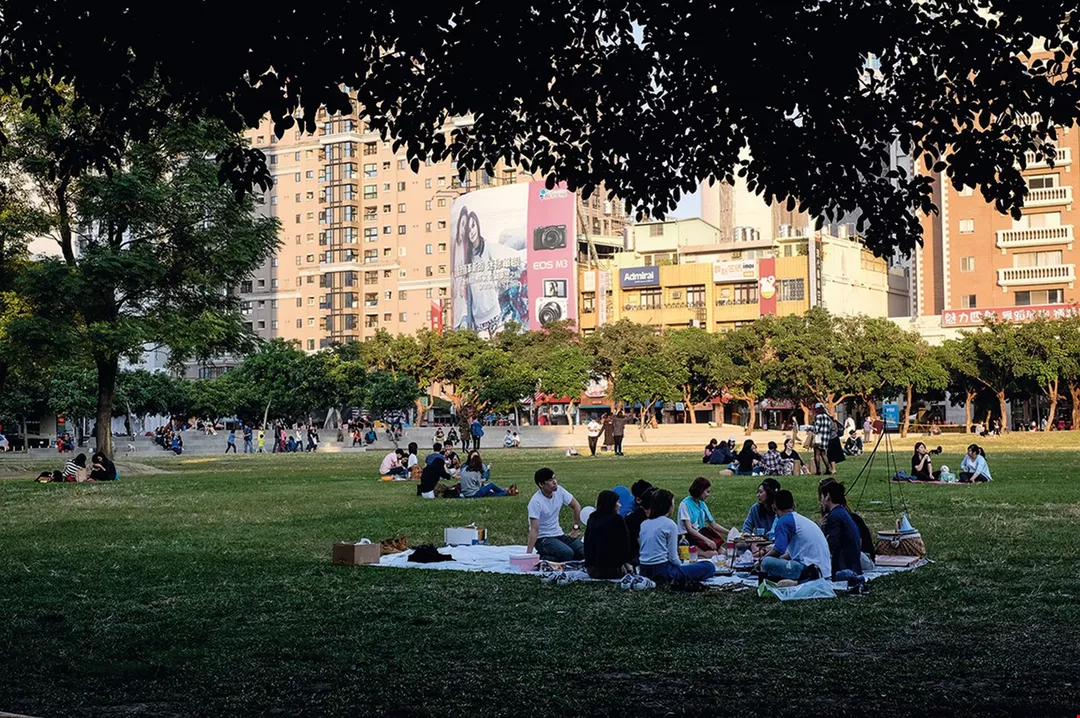
The ambience of the area around the Greenway is defined by a high quality of life, a more relaxed feel, a high level of culture, and openness to the novel and the creative. These are the things that keep visitors coming back again and again.


@List.jpg?w=522&h=410&mode=crop&format=webp&quality=80)


