Alternate Realities Make Gaming Fun
Liu Yingfeng / photos Chuang Kung-ju / tr. by Phil Newell
April 2015


You are in a locked room. All around you people are turning things upside down as they search. In the lamp by your side, under the bed… anywhere and everywhere there could be clues waiting to be discovered. “Alternate reality games,” which originated overseas, are hitting their stride in Taiwan. Now the exotic scenery and appealing stories that have characterized online gaming are appearing right before players’ eyes in actual, physical form!
On a Friday afternoon, in one of the alternate reality game venues belonging to the company RMT, a couple dozen players roll up their sleeves and get ready to go as they wait to challenge the “real room escape,” Scenario 4 of the game series Quests Through Time and Space. As the majestic music rises to a crescendo, the game master appears in a video, carefully explaining the rules. The players, divided into three teams, holding the very real game props in their hands, can hardly restrain themselves as they look forward expectantly to trying to solve the puzzle within the two-hour time limit.
Large-scale alternate reality games (ARGs), filled with a sense of immediacy and the thrill of being “at the scene of the action,” and always accompanied by powerful music and elaborate set design, test the problem-solving abilities of their aficionados. Leap-frogging over the Internet world, they have become the newest fad in gaming. In 2012, Zhang Jinwei and Yolanda Chiou, both graduates of the Department of Business Administration at National Taiwan University and still less than 30 years old, fired the starting gun on a craze for alternate reality games in Taiwan.
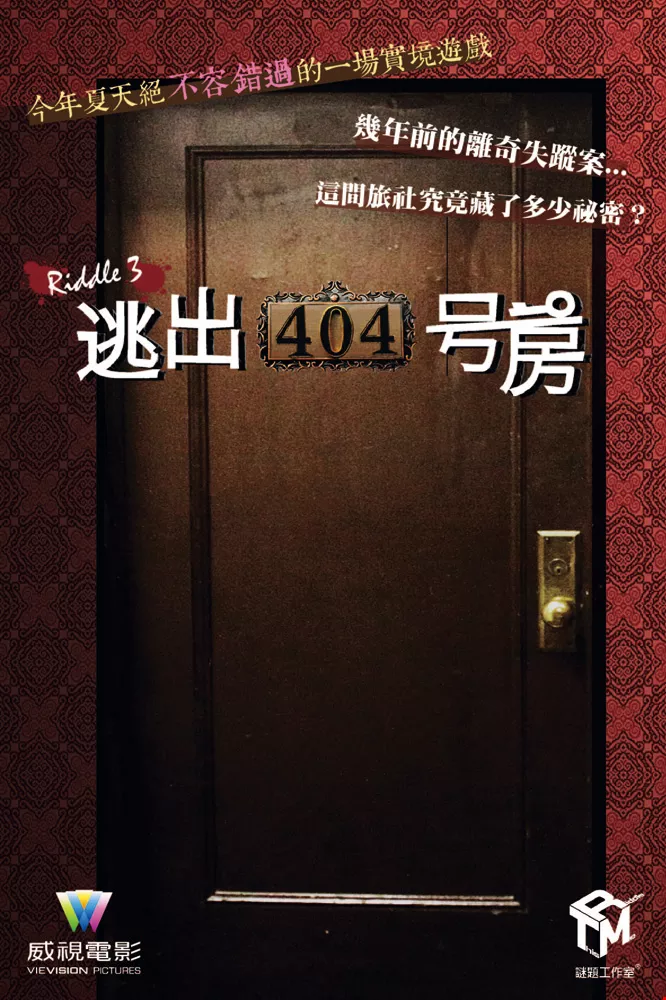
In 2013, RMT got together with the producers of a Japanese film to create a tie-in ARG called Escape from Room 404. It attracted over 3000 players and gave a tremendous boost to RMT’s name recognition. (courtesy of RMT)
In May 2012, a Japanese ARG known as Escape from the Werewolf Village came to Taiwan. Zhang Jinwei, who had loved playing games ever since he was a child, took part in the event and was left hankering for even more. He looked up Yolanda Chiou, similarly fanatical about alternate reality games, and they began to work together to create their own diversion. They adapted a mélange of European fairy tale episodes into a locked room escape game they called Happily Ever After?!, hoping to make their mark even before graduating.
After four or five trial runs, they decided to hold their event at the Huashan 1914 Creative Park in Taipei. Despite this being their maiden voyage, Zhang confidently estimated that with this entertaining game format they could attract a large enough crowd to achieve the 70–80% ticket sales that they needed to recover their costs of NT$800,000.
But things didn’t start off quite as he had anticipated. Throughout the first week that they staged Happily Ever After?! ticket sales stayed poor. It was only then that Zhang realized, “People in Taiwan simply are totally clueless about locked room games!” The team had no choice but to make some emergency adjustments, including offering discounts for checking in at the game venue on Facebook. Relying on interpersonal and online networks and word-of-mouth marketing, they finally began to draw crowds. During the subsequent three-week run, they attracted more than 1000 people to the venue, and in so doing added the “locked room escape” genre to the list of entertainment options available in Taiwan.
Despite their success, Zhang and Chiou discovered that their status as students had caused problems for them in the process of dealing with their business partners. Therefore, when Happily Ever After?! was over, Zhang decided to raise some capital to found an alternative reality game company that they christened RMT (for “Riddle Me This!”—the trademark taunt of Batman nemesis “The Riddler”). Since its founding, RMT has staged a wide variety of spectacles, including Hercules (based on Greek mythology, and combining physical skills with mental challenges) and Miko (a chilling and thrilling haunted house game drawing on the motifs of Japanese horror films). In July 2013, coordinating with the appearance in theaters of the Japanese detective feature film Galileo, RMT and the movie distributors produced a locked room game called Escape from Room 404, giving the company a huge additional boost in name recognition.
Thanks to the thriller-like plot and the star power of the film’s leading man Masuhara Fukuyama, Escape from Room 404 sold out every session, four sessions a day for two straight weeks. In fact, the response was so overwhelming that plans to call it a day at 8 p.m. were scrapped, and new runs were added well into the night. Over 3000 people played.
Following the success of 404, major companies started to show up at RMT’s door. Big names like Yahoo and Fubon Bank began commissioning RMT to design scenarios specifically for them, games designed to build a spirit of teamwork and camaraderie. Thus far, of the more than 40 games that RMT has designed, about 60% have been tailor made for corporate activities.
In April of 2014, RMT decided to challenge themselves to take their “game” to the next level, and came out with their largest scale ARG series yet: Quests Through Time and Space. It offers 12 different scenarios, including science fiction and medieval themes, transcending limitations of space and time, and each game permits three teams at once to play. Still running today, each month the venue attracts over 600 players.
Once RMT had successfully proven that there is a market out there for ARGs, like-minded businesses began popping up. Also, large amusement parks like Leofoo Village began staging their own ARGs. At present there are at least six enterprises in Taiwan—workshops or teams—putting on games on weekdays and weekends. The increasing density of the events on offer has even prompted the website books.com.tw to add a special ticketing header for “Real Escapes” to meet the demands of a burgeoning clientele.
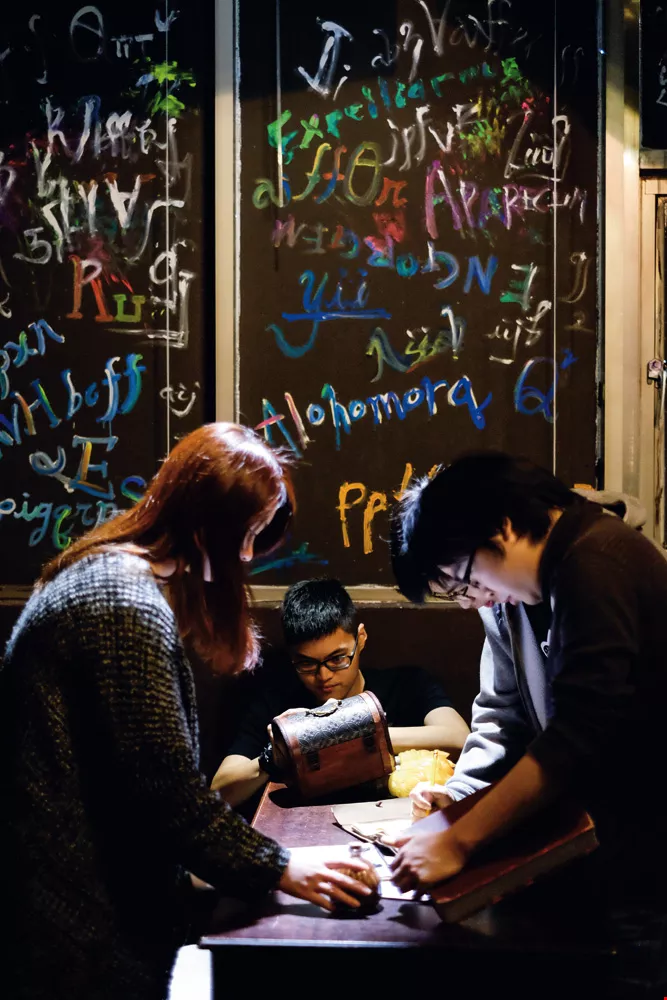
ARGs test teamwork and creativity, skills that corporations value. Many big firms send their personnel to play RMT’s games.
The key to RMT’s success in making original games with real substance has been in having a design team made up of people who, even in their student days, were already ardent gamers.
Zhang Jinwei, now aged 25, since childhood has loved watching reality game shows, whose challenging courses brim with tension and excitement. When in university he worked for a while as an assistant for a reality TV program, picking up much valuable experience. Yolanda Chiou, meanwhile, a huge fan of online detective/mystery games, had already organized ARGs within her university department even before joining the RMT team, learning a great deal in the process.
Before designing their first locked room game together, they were not all that familiar with each other, but made their connection purely out of a mutual love for ARGs. After the founding of RMT, they gathered around them a group of like-minded individuals, some of whom had previously been professional game designers, others who came from backgrounds in the physical and industrial sciences. “It’s just like that Japanese manga One Piece, in which the hero finds that the farther he goes along his dangerous journey, the more comrades join him along the way.”
Zhang says, “The preconditions for joining RMT are not related to age, so long as the person is young at heart, is filled with a sense of wonder and curiosity, and has strong creativity.” Having people like this around means that the work atmosphere is always relaxed and upbeat, and even the company’s fixed “brainstorming sessions” are run like games. In order to encourage team members to record every fleeting inspiration, RMT has set up a system they call “Parking Lot.” All creative notions, whether they are mature game proposals or just rough ideas, are gathered together here, and there are collective brainstorming sessions to develop them into fun game designs.
While keeping things around the office lighthearted, RMT does not fail to keep a sharp eye on the market. After the game Happily Ever After?!, Zhang’s first endeavor, very nearly was a box office bust (as described earlier in this article), he learned his lesson about the critical importance of understanding marketing and staying close to the pulse of the consumer market. Since the founding of RMT, every game is given trials at RMT’s original venue, the opinions of the test gamers are absorbed, and changes are made. Only then is the new product offered to the public.
While locked room escape games, with their thriller-like atmosphere that pushes players to their limits, have proven popular, RMT has no plans to stop there. Besides continuing to come out with new games in the escape genre, the company is also developing role-playing games (RPGs), live detective games, and extreme adventure games, hoping to further expand the menu of diversions available in Taiwan.
Are you still playing games by yourself on your phone or tablet computer? Is your idea of “gaming” pretty much limited to running your finger across a touch screen? Alternate reality games, played by real people in real spaces with actual physical props, are now available instead. Are you ready to take the challenge?
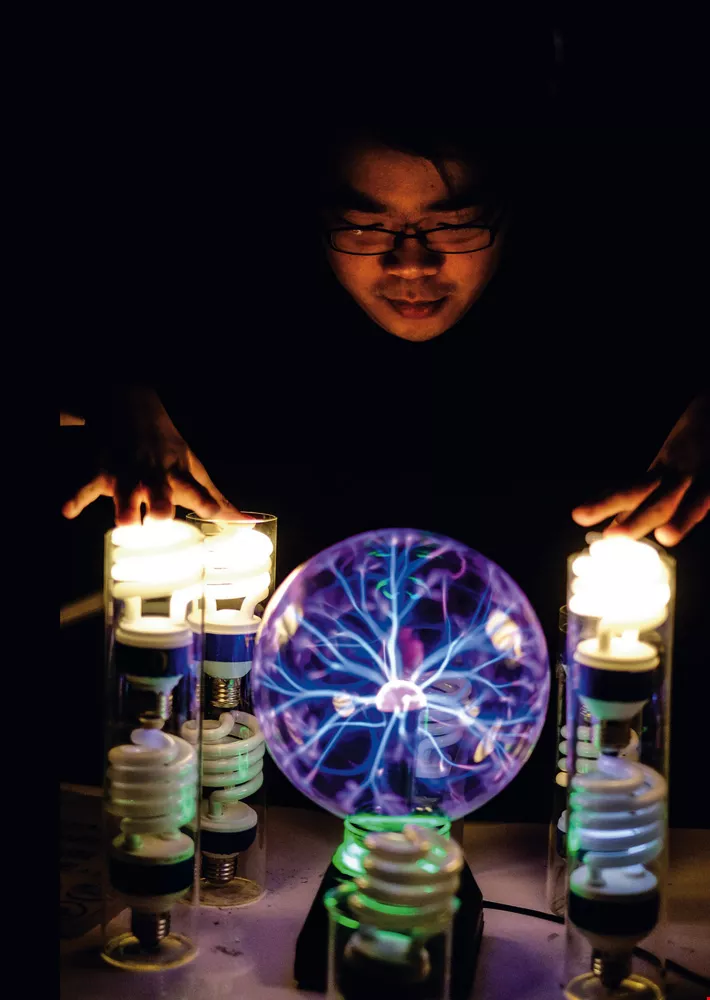
The imaginatively designed and evocative venues for alternate reality games, along with the powerful accompanying music, convincingly transport players smack into the middle of the adventurous and exciting puzzles that are their “alternate reality.”
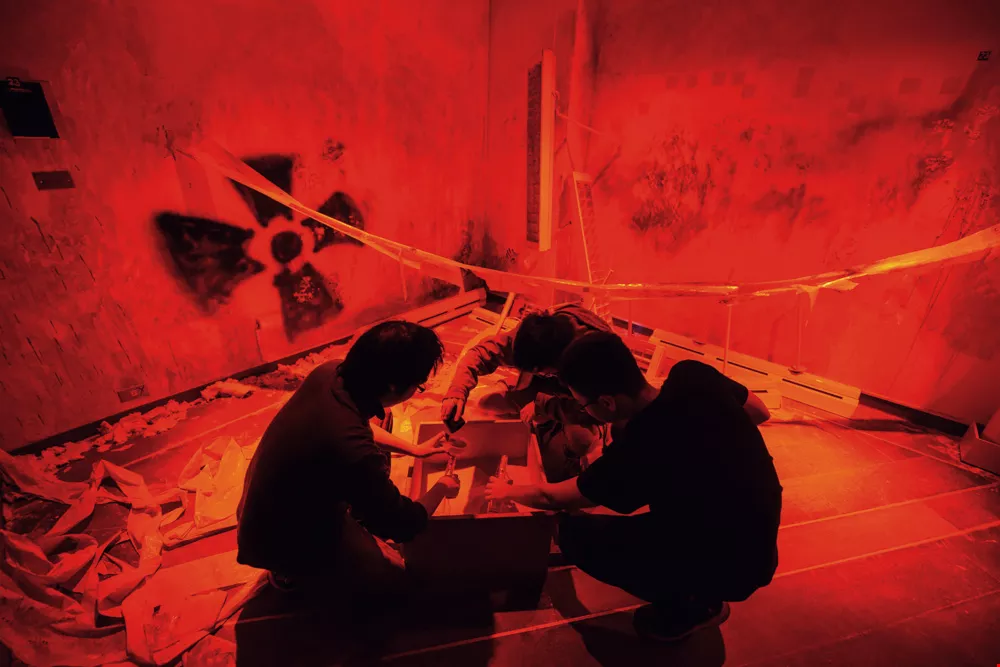
Tick tock, tick tock, the seconds slip away…. Where are the clues to getting out of this locked room?!

_DSC2938@List.jpg?w=522&h=410&mode=crop&format=webp&quality=80)


