Environmental Hormones--The Gender-Bending Chemicals All Around Us
Chang Ching-ju / photos Jimmy Lin / tr. by Robert Taylor
September 2002


Gender disruption in marine or-ganisms, falling sperm counts in men, and rising rates of endometriosis and breast cancer in women-a recent series of alarming reports suggest that something strange is going on.
Medical experts suspect close links between these unusual gender-related phenomena and "environmental hormones." Environmental hormones are synthetic chemical compounds that disrupt the human endocrine system. Like the myriad evils released from Pandora's box, environmental hormones pervade every part of modern life. They are released from all kinds of everyday items such as foodstuffs, tooth fillings, tableware, toys, nappies, water pipes and washing powders. The harm they can do to the reproductive systems of humans and animals alike is now coming to be regarded as a great threat to the survival of our own and other species on Earth. Having created this problem, how can humankind avert the dangers caused by environmental hormones?
In an age when breaking with gender stereotypes is hip, unisex fashions and sex-change operations are no longer a novelty. But news of "sex changes" in Taiwan's natural world in recent years has come as a shock.
In a long-term ecological monitoring project at Hsiangshan in Hsinchu County, Professor Hung Chu-chang of National Taiwan University's Institute of Oceanography discovered that 90% of the females of the oyster drill (dogwhelk) species Thais clavigera on the coast there had grown male sex organs in the space of one month. At a symposium on the control of environmental hormones held in April, Professor Liu Li-lian, director of the Institute of Marine Biology at National Sun Yat-sen University in Kaohsiung, described the results of a coastal survey in southern Taiwan. The natural ratio of males to females in oyster drills is about one to one, "so when I noticed that the Thais clavigera we were catching had all turned male, I knew something was wrong," said Liu with alarm. In both cases, the culprit behind the "gender confusion" of the shellfish was the synthetic organic compound tributyltin (TBT).

Chewing on toys, sucking on feeding bottles-plastic products bring the hidden danger of environmental hormones into children's lives. Many washing powders that are supposed to wash clothes super-white contain nonylphenols, which have a "feminizing" effect.
Gender benders
TBT is an additive that gives "antifouling" properties to the paint used on ships' hulls, to prevent them becoming encrusted with barnacles and other shellfish. Today, many other items that are left in the water for long periods, such as fishing nets, are also protected with TBT paint.
Shellfish are the first organisms to show the effects of marine pollution. Twenty years ago, researchers in Europe and America discovered that TBT disrupts marine organisms' sexual development, and is therefore a highly destructive environmental hormone. Hung Chu-chang has also found TBT in the bodies of oyster drills at Hsiangshan. Worryingly, environmental hormones are accumulated and amplified as they pass up the food chain, so it is likely that both the organisms the oyster drill feeds on, and those that feed on it, have also been polluted. Oyster drills are not widely eaten in Taiwan, but they share Taiwanese people's passion for another shellfish-the oyster-and high levels of TBT have been shown to be present in the oysters in the Hsiangshan aquaculture zone.
"If this is the situation with oyster drills, which have been subject to long-term monitoring, what about other marine organisms?" Professor Guo Yue-liang of the Graduate Institute of Environmental and Occupational Health at National Cheng Kung University's College of Medicine asks this ominous question. In fact, in a survey carried out two years ago by the Environmental Quality Protection Foundation and National Tsing Hua University, almost 40% of fish sampled from food markets contained excessive levels of "persistent organic pollutants," which are likely to act as environmental hormones. However, following angry protests from fishermen after the report was published, no action was taken. But what effects do environmental hormones from marine organisms have on human health? With the general lack of awareness in Taiwan of the issue of environmental hormones, very little research is being done locally.
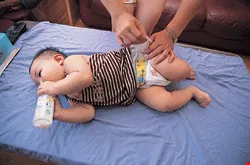
Chewing on toys, sucking on feeding bottles-plastic products bring the hidden danger of environmental hormones into children's lives. Many washing powders that are supposed to wash clothes super-white contain nonylphenols, which have a "feminizing" effect.
The feminization of nature
What exactly are environmental hormones? How do these mainly synthetic compounds disrupt animals' sexual characteristics? And how do they impact human health?
Hormones in the normal sense of the word are messenger substances secreted within the body by the endocrine system. Environmental hormones are external or artificial compounds that are able to mimic the effects of hormones within an organism. After entering the body via the air, water or food, or by other routes, they occupy the receptors for normal hormones, acting as bogus signals that disrupt or obstruct normal endocrine functions. "In biology, these substances are more properly called 'endocrine disruptors,'" writes Environmental Protection Administration secretary-general Chen Yeong-ren in his recently published book Control of Environmental Hormones. He explains that in 1988, the Japanese coined the more accessible term "environmental hormones" to describe the biological side effects of these chemicals.
Environmental hormones can harm organisms in two ways, states Wang Chen-hsung, deputy director of the EPA's National Institute of Environmental Analysis: "Some environmental hormones have chemical structures similar to estrogens [female sex hormones], and the commands they transmit can cause feminine traits to appear in male organisms. On the other hand, environmental hormones that are similar to androgens [male sex hormones] can cause masculinization in female organisms."

Chewing on toys, sucking on feeding bottles-plastic products bring the hidden danger of environmental hormones into children's lives. Many washing powders that are supposed to wash clothes super-white contain nonylphenols, which have a "feminizing" effect.
Sperm crisis
The most widespread effect of environmental hormones currently known about is that of estrogen-mimicking compounds. Around the world, abnormal gender ratios, with females outnumbering males, have appeared in many animals, and the global phenomenon of the "feminization of nature" has become a serious issue in ecology. For example, the recent appearance in North America of alligators with undersized penises has been found to be linked to environmental hormones.
As well as polluting so many other organisms, environmental hormones have also begun to affect humans. "There have been growing numbers of cases of prostate cancer, reduced sperm count and motility, hypospadias and underdevelopment of the penis in males, and breast cancer and endometriosis in females," says Dr. Guo Yue-liang of National Cheng Kung University Hospital, who reels off a list of diseases suspected in the international literature of being caused by environmental hormones. And this frightening list is still growing. Many doctors maintain that the early onset of puberty in children today, and rapidly rising rates of infertility, are also connected with environmental hormones.
Recent animal studies by the Endocrinology and Reproduction Research Group at King's College London have also confirmed that estrogen-like chemicals can damage the male reproductive system. This discovery has already been seen as helping to explain the causes of modern infertility. A 1992 British study of sperm quality in men worldwide has also revealed that the concentration of spermatozoa in the sperm of men today has fallen by half compared with 50 years ago, to 60 million per milliliter. And when spermatozoa lack competitors, their motility declines by half. At this rate of decline, in a hundred years time men's sperm count will have fallen below the minimum needed to fertilize eggs. No wonder then that some people worry that in the next century, the moribund state of men's sperm will seal the fate of the human race!
The continuous worldwide growth in the prevalence of diseases of the human reproductive system shows that the destructive impact of environmental hormones on the environment and on human reproduction can no longer be ignored. In recent years systematic studies have been launched in many countries, and a number of symposia have also been held.

Oysters and other seafoods are a mouthwatering treat, but they carry a high risk of pollution by environmental hormones.
Poisons of the century
Just how many environmental hormones are we exposed to in modern life? Incredibly, the number of chemical substances officially registered worldwide is over 10 million. To improve everyday living, each year laboratories around the world synthesize several hundred new chemical substances. It is no exaggeration to say that the food we eat, the clothes we wear, the buildings we live in, the means of transport we use and our leisure activities would be completely different without the use of man-made chemicals. According to US figures, there are over 87,000 chemical compounds on the market there. Taiwan lacks comparable statistics, but as Associate Professor Ding Wang-hsien of National Central University's chemistry department observes, people in Taiwan have an Americanized lifestyle, so naturally we also use a vast array of chemical substances in our daily lives.
Of course, not all chemicals have structures that mimic human hormones, and disruption of human reproduction is not the only concern that people have regarding chemicals.
For the past century, humans have been enjoying the convenience of synthetic chemicals, but since the mid-20th century the harm caused by the chemical industry has also caught people unprepared. In the 1970s, thousands of deaths were caused in Japan, India and Italy by the release of pollutants such as polychlorinated biphenyls, dioxins, and organic compounds of mercury due to chemical plant explosions and discharges. From then on, the warnings about pesticides and other chemicals in the environment given by American author Rachel Carson in her 1960s book Silent Spring could no longer be written off as sensationalism.
In addition to the acute harm caused by large quantities of poisonous chemicals, in the late 1980s people discovered that despite the increasing level of controls over the use of chemicals, even low levels of some compounds could still lead to chronic effects such as tumors, birth defects and genetic mutations. "It wasn't until nearly the 1990s that scientists gradually confirmed that some residual chemicals found at even lower concentrations in environmental media, and some chemicals that had been banned for many years, are 'bioaccumulated' in organisms, and are transferred from one organism to another and concentrated. Because these substances are highly stable and not easily broken down, they persist for long periods in the bodies of humans and animals, and go on to affect the intellect and the reproductive and immune systems of the second and third generations." Chen Yeong-ren says that in many countries, the issue of environmental hormones is still a new one.
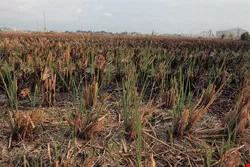
Factories with no pollution control equipment stand scattered among farmland. A side-effect of years of all-out pursuit of economic development is that even today there are frequent reports of rice crops being polluted with cadmium. (photo by Vincent Chang)
Finding the culprits
In 1996, the US Congress passed legislation requiring the Environmental Protection Agency to regulate environmental hormones. In 2000, the 80,000-plus chemical agents on the US market were divided into categories for screening, to test their ability to mimic three types of hormone: estrogens, androgens and thyroid hormones. Chemicals that might have similar effects to these hormones will be subjected to animal testing. Because only very small molecules can enter hormone receptors, the proportion of chemicals falling into this category is not high, and to date just 74 chemicals have been officially listed as suspected environmental hormones.
In 1997, Japan also announced controls on 70 suspected environmental hormones. Three years ago, the 120-plus member countries of the United Nations Environment Programme reached an agreement at a conference in Johannesburg, South Africa to completely ban or strictly limit the use of 12 "persistent organic pollutants" that disrupt hormonal activity. These super-poisons fall into three major categories: organochlorine pesticides (such as DDT and heptachlor); polychlorinated biphenyls (PCBs); and polychlorinated dibenzo-para-dioxins and dibenzofurans (dioxins and furans).
The days are numbered for these 12 poisons for which there is firm evidence of the havoc they can and have caused. But the concentrations of environmental hormones that can damage reproductive health are often only a millionth or a ten-millionth of those required to cause acute injury, with doses measured in nanograms (billionths of a gram) or even picograms (trillionths of a gram). Environmental hormones also have a strong affinity for fats, so that they are not easily eliminated from the body. For instance, when dioxins enter human cells they lock on to hormone receptors and stay put. If they accumulate in the body of a future mother, they may be transferred to her fetus. When the child reaches puberty, its normal hormones will be unable to activate the receptors that are already occupied by the dioxins, and the development of normal sexual characteristics will be inhibited. Only then does the problem become apparent.
"It takes miniscule amounts of environmental hormones to cause harm, and there are no obvious side-effects in the short term. More research is still needed to confirm the connection with human reproductive disorders. As a result, people are apt to treat this issue lightly." Wang Cheng-hsung worries that while guarding against more obvious risks, people will be complacent about these subtler dangers. "At present it appears that what we actually need to be most concerned about is products we use on a daily basis."
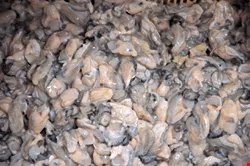
Oysters and other seafoods are a mouthwatering treat, but they carry a high risk of pollution by environmental hormones.
Dangerous toys
After calls from environmental groups, in 1999 the EPA first began investigating the use and prevalence of environmental hormones in Taiwan. Wang Cheng-hsung states that of the chemicals listed as environmental hormones in Japan, more than half are insecticides and fungicides. Because these substances are acutely toxic to the environment and to humans, they were long ago subjected to controls in Taiwan too, under legislation regulating agrochemicals, environmental agents and poisons.
But the 70 suspected environmental hormones also include nine plasticizers, used in making plastics. Because they do not pose a direct threat to human health they are not covered by the poisons regulations, or, at present, by any other legislation.
Although plastic products can last for years without breaking or wearing out, for many years well informed people have vigorously advocated following the example of Western European countries by banning or restricting them. But Taiwan is known as a petrochemicals kingdom, where plastic products are cheap to make and cheap to buy. The overuse of plastics in Taiwan is world famous, and the EPA estimates that plastics account for more than 30% of Taiwanese household waste. But most plasticizers of the family phthalates act as environmental hormones to some extent. European studies have shown that when children chew toys made of PVC containing phthalates, the chemicals may enter their saliva. Some European countries have banned the use of phthalates as additives in plastic toys. "Plastic tableware, medical syringes and toys all need to be thoroughly checked," says Wang Cheng-hsung, who notes that after experiments by scientists in Taiwan, at the beginning of this year the EPA for the first time announced a ban on the use of two plasticizers.
Nevertheless, a survey by Soochow University reveals that phthalates are widely distributed in the mud at the bottom of Taiwan's rivers.
Triple risk
Another environmental hormone that has environmentalists worried is the estrogen-like compound bisphenol A (BPA), which may leach out of the shatterproof, heat-resistant plastic melamine, and of the resin coatings used inside steel and aluminum drinks cans. US experiments in 1998 showed that BPA causes great reductions in sperm motility, and increased growth of breast cancer cells. In 1999, the Japanese physician H. Takada isolated BPA from the umbilical cords of women giving birth at a clinic. In a previous incident, most primary and secondary schools in Nara, Japan stopped using melamine tableware after intense protests from parents, even though the manufacturer had established that the plates and bowls would not release BPA if the children did not scratch them with their cutlery.
"BPA, plasticizers and nonylphenols are the three major types of environmental hormone that the EPA has expended the greatest effort on in recent times," says Chen Yeong-ren, who notes that due to lack of regulation, the levels of residues of these three groups of compounds in the environment are a cause for concern. In April, the chemistry department at National Central University announced that 40% of cleaning products sold in Taiwan contain surfactants that break down into alkylphenols, which are compounds very similar to human estrogens.
In response to environmental demands, in recent years most large factories have begun to treat their effluent, and many factories use the treated effluent to water flowers or raise fish. But when effluent containing alkylphenols undergoes microbiological secondary treatment, as if by magic it comes out containing the environmental hormones nonylphenols.
A survey by Associate Professor Ding Wang-hsien of NCU's chemistry department showed that over half of Taiwan's rivers, including the Tanshui, Touchien, Putsu and Tungkang Rivers, contain nonylphenols, with residual concentrations far higher than in Europe and North America.
Mythical purity
The National Institute of Environmental Analysis also confirms that nonylphenols are already disrupting the endocrine systems of male carp in Taiwan's rivers. People in Taiwan do not eat much river fish, but "according to overseas reports, nonylphenols can be absorbed into the human body through food, drink, contact or injection, and inadequate sewage treatment can allow drinking water to the polluted." In a report entitled "Survey of nonylphenol residues and their biological effects on male carp" the institute suggests that in view of the relatively low coverage of sewage systems in Taiwan, the mandatory water quality tests for drinking water and released effluents should be expanded to test not only for anionic surfactants as at present, but also for nonylphenols derived from non-ionic surfactants.
Because alkylphenols are not themselves toxic, at present they are used in large quantities for industrial cleansing processes. Also, says Ding Wang-hsien, "most household cleaning products that are touted as powerful cleansers, especially for jobs like washing socks or collars and cuffs, contain alkylphenols." The EPA has discussed the possibility of controls, but as Chen Yeong-ren points out, "It's not that simple to change the law to introduce controls on chemical substances." Because of the large number of chemicals we use in our daily lives, the impact on society of banning them would be so great that one cannot do so just on the strength of suspicions. Ample evidence is needed to convince both manufacturers and consumers.
Chen notes that it will take the participation of public health agencies, medical workers, and even the Ministry of Economic Affairs (which is responsible for the regulation of commercial products) and the National Science Council (which sponsors research) before it will be possible to establish a comprehensive network to monitor environmental hormones in Taiwan.
No turning back the clock
There is an urgent need to track and understand the status of environmental hormones that are not yet subject to controls, but the fact that compounds such as dioxins, tributyltin and PCBs are already listed and regulated under the Toxic Chemical Substances Control Act, does not mean that we no longer need to worry about them.
For example, dioxins can disrupt endocrine functions even at concentrations as low as one part in 10 billion. Unlike other environmental hormones, dioxins are not manufactured deliberately, but are mostly byproducts of processes such as waste incineration. Although the limits on dioxin emissions imposed by Taiwan's Air Pollution Control Act are the strictest anywhere in the world, we can never eliminate dioxins from incinerator emissions completely unless we can stop generating waste that contains chlorine. Waste separation has thus far never been properly implemented in Taiwan, and attempts to ban plastic bags made of chlorinated plastics have repeatedly failed. Hence despite continuous improvements in incinerator burn efficiency, residents near incinerators are still exposed to the nightmare of dioxins.
Although organochlorines such as PCBs and DDT have been banned, the residues left behind from the organochlorines used during decades of economic development are still silently eating away at the health of Taiwan's land and people.
For instance, with regard to PCBs, Professor Guo Yue-liang of NCKU has long been following up the aftereffects of the PCB-contaminated cooking oil incident that rocked Taiwanese society in 1979. In 2000 and 2002, articles co-authored by him were published in the leading British medical periodical The Lancet.
The victims of the incident, which occurred in Changhua, ate oil contaminated with PCBs, leading to symptoms such as neuritis, skin reactions, weakness of the limbs, and impaired liver function. PCBs have an affinity for fats, and are therefore not readily eliminated from the body. Women who were poisoned gave birth to babies with slow development, low body weight and congenital abnormalities.
In 1990, NCKU began following up these children who were poisoned in the womb and comparing them with children of the same age from the same neighborhoods. After allowing for other causes, they discovered that males who were below age 20 when poisoned have an abnormally high proportion of girl children. The normal ratio is 51% boys to 49% girls, but among these men's children only 45.8% are boys. This is consistent with PCBs' ability to "feminize" organisms.
Compared with the control group, the male children of the poisoning victims also showed an increase of around 50% in sperm abnormalities, their sperm motility was reduced by around 40%, and their sperm's ability to combine with eggs was reduced by 10%. Guo Yue-liang, who has taken part in the program for 12 years, says: "Environmental hormones represent a long-term hidden problem, the effects of which only become apparent in the second and third generations. If health care professionals do not take the initiative to investigate them, we have no chance of understanding the true level of disease."
Stolen future
In 1998, Associate Professor Hsu Kuang-hung of the health care management department at Chang Gung University also published a report on the epidemiology of endometriosis. Endometriosis is an often painful condition in which womb lining tissue grows outside the womb. Hsu discovered that among 300,000 women who sought medical help due to endometriosis during a six-month period, the numbers in the Chiayi, Taitung and Penghu areas were markedly higher than elsewhere. "These geographical differences in the incidence of disease may be connected with the contamination of agricultural land with heavy metals such as mercury and cadmium," wrote Hsu. Cadmium is one of three heavy metals listed as environmental hormones in the USA and Japan.
"Because there is no hospital reporting system, in fact nobody knows how serious the overall effects of environmental hormones on reproductive health are in Taiwan." Although over time a number of doctors have begun to get involved in environmental hormone research, Guo Yue-liang believes that the data exist in the hospitals, but there is a need for statistical analysis and better understanding of causation, and therefore the government should provide greater incentives for physicians and researchers to investigate the mechanisms by which environmental hormones affect human health.
In 1995, the US book Our Stolen Future for the first time described in detail the terrifying nature of environmental hormones. The book was regarded at the time as "presenting political and social issues that go far beyond its importance for health and scientific research." Today, only six or seven years later, the environmental changes happening around us, and the growth in human reproductive diseases, are forcing people to take the threat of environmental hormones seriously. Can we put the lid back on this chemical Pandora's box? How individuals can improve their knowledge of environmental hormones, remain alert to the dangers they pose and avoid them in their daily lives, will be a pressing challenge for humankind.
@List.JPG?w=522&h=410&mode=crop&format=webp&quality=80)


