Money for Old Memories--Franky Wu and Taiwan Storyland
Chang Shih-lun / photos Yang Wen-ching / tr. by Geof Aberhart
July 2006


Across from Taipei Railway Station on Chunghsiao West Rd., people and traffic shuttle to and fro. Inside the station, train after train chugs in and then out again, continuing the railway's work of bringing job hunters into the city from the countryside, and gradually changing the face of the countryside when it takes those same people home. Through the windows of Taiwan's trains, you can see the island's cities and towns modernizing before your eyes.
The railways have long been a driving force in Taiwan's development, and now passersby in this station-front shopping area are greeted by an old-fashioned train bell when they reach K-Mall. Following that sound, you will be led to the second basement floor of the building, where a unique scene awaits--an air raid shelter, banyan trees, and small houses all combining to form a replica 1960s street scene. It seems like stepping into another world, crossing the threshold from present to past.
This is Taiwan Storyland, bringing Taiwan's past back to life through a range of replicas, displays of old and antique items, and images that recreate everyday life in 1960s Taiwan. The privately run museum opened in December 2005 to rave reviews, and brings together exhibits, entertainment, and dining facilities in a unique homage to the old days that sets it apart from other museums in Taiwan.
In recent years Taiwan has been swept by a fever for nostalgia, with old toys, posters, signs, and even photographs becoming popular as collectibles. With their nostalgic flavor, these items can still show a slice of everyday life from days gone by, despite not having any inherent historical importance.
Collector Franky Wu decided to build on this idea, creating a "nostalgic space" that was like an amusement park, but designed like the underground remains of an old town. The result occupies nearly 50,000 square feet, composed of crisscrossing streets and lanes, with a grocery store, movie theater, hairdresser, Chinese medicine store, fruit ice shop, police station, and other facilities. Laid out in these are various items Wu has accumulated in his 20-plus years of collecting, and walking through all this visitors are enveloped in the atmosphere of Taiwan's past, as though they have stepped back in time. This has in turn given this motley assortment of collectibles a new lease on life.
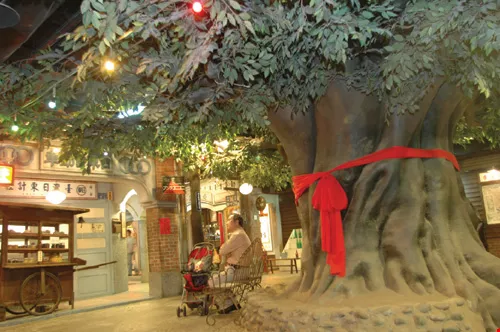
Banyan trees served as the focal points of traditional communities, and this tree is part of Taiwan Storyland's successful recreation of the leisurely atmosphere of such old towns.
The golden age
Stepping into Taiwan Storyland, visitors are welcomed to the sound of familiar old Taiwanese songs like "Twilight of my Hometown" and "Hsiu-lan's Getting Married" amongst dusky lighting evoking a twilight atmosphere. Walking through these streets, you can almost see old Taiwanese folk taking a break after a busy day, preparing to unwind on a leisurely summer's evening.
Vernal Dew Grocery, a small shop in the "town," is made up like an old-fashioned corner store, and sells all kinds of traditional snacks and die-cast toys, making it a nostalgic experience for many adults. In the town center stands a large banyan tree, beside which are wooden benches and a puppet theater, where regular puppet shows of chivalric tales are performed. Walking to the end of the lane, you come to the Happy Stage Theater, which shows a constant run of old Taiwanese films.
Strolling through Taiwan Storyland, you are constantly taken by surprise. Lizhen Studio sports a display of old cameras; in Sheng-sheng Shoes and Laifa Store sit a range of elementary school uniforms, shoes, and book bags from years past; and in Mandarin Classroom, visitors can tuck in their shirts, pull up their socks, and pretend they're back in school. Around the exhibition hall are amazing replicas of a teahouse, pharmacists', Chinese medicine shop, hairdressers', and even a hot-springs hotel, making the place look for all the world like a real small town.
On the poles and walls along the lanes are a variety of posters and slogans, including the rules of Chiang Kai-shek's New Life Movement, anti-China slogans, wanted posters, air-raid warning posters, and even hand-drawn typhoon warnings. On one street corner, there's a traditional congee vendor, an old-style cycle shop, and an old-fashioned red public rotary phone--a sight which has long since vanished from Taiwan.
There's also the House of the Chief of the Neighborhood, which is a replica of a home from the 1960s, from its sliding door, cane furniture, wooden stools, and black rotary phone through to its old black-and-white TV--which constantly screens old news broadcasts--and Tatung Baby figures.
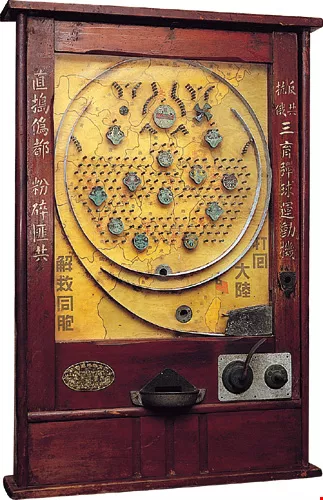
Taiwan Storyland is packed with invaluable items from Franky Wu's personal collection. This photo shows a pachinko machine from the early post-war period adorned with anti-communist slogans.
Just like the real thing
Looking closely at the trees in Taiwan Storyland, it soon becomes clear they, like the buildings and benches, are convincing fakes; all of them were newly built and artificially aged to give them a well-used, old feel. The walls are new too, but were built with red brick, unlike so many similar commercial efforts at nostalgia, which just paste red brick-patterned paper over plain cement.
This same pursuit of realism extends to the bills posted on the walls throughout the venue. From movie posters to green oil adverts, everything was hand-painted by experts in traditional art. The adverts for Hsiao-Mei Ice Cream and Coca-Cola that hang on the walls of New Paradise Ice Parlor, though, are genuine 30-year-old pieces, although the parlor's colorful floor tiles and vivid lightboxes on the walls were recreated by master craftsmen after careful study of old shop interiors.
As well as the ice parlor, Taiwan Storyland also has a stewed snack stall, sushi stand, Japanese restaurant, and Taiwanese snack stand, as well as the Black Cat Bar. All of these give visitors the chance to snack on genuine period meals in an old-fashioned setting.
This replica small town even has its own police station and health clinic; staff dressed in old police uniforms "patrol" the lanes, making sure nothing gets damaged, while the white-clad women who occupy the clinic are actual nurses, there to look after any visitors who might feel a bit unwell. But while they may be doing a real job, they're also part of the scene, and are available for photographs with visitors.
The staff aren't the only ones dressing up for the occasion. In the lanes and alleys of Taiwan Storyland, one can often find costumed young people coming here for photos; some wear elementary school uniforms, while some girls will don traditional qipao dresses and strike coquettish poses. The youthful faces of these visitors contrast with the old setting, creating a strangely surreal picture.
For young people, who never lived through the period represented in Taiwan Storyland, a trip here is full of surprise and curiosity. For older visitors, though, the nostalgic atmosphere is like a time warp taking them back to their childhoods. Throughout the place, you can find groups of older visitors excitedly talking about the scenes laid out before them, with many making return trips to indulge in the long-forgotten memories Taiwan Storyland stirs up.
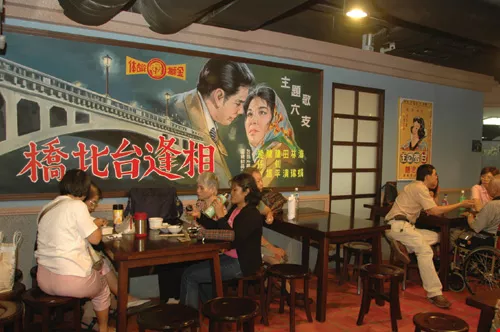
Stepping into Taiwan Storyland is like walking into a time warp as an everyday scene from Taiwan's past unfurls before your eyes.
Nostalgic dreams from a poor youth
Taiwan Storyland is designed to reflect Taiwan in 1965. Founder Franky Wu chose this time primarily because that was the year he was born, and so "the feelings and atmosphere of that time are the starting point of my life."
Talking about nostalgia, Wu says the 1960s have a unique attraction; in the 1950s, everyday life was still largely colored by the years of Japanese colonial rule, and in the 1970s concrete housing projects started popping up and the number of cars on the roads began to grow, quickly killing off any old-fashioned feeling. "1965 was a turning point for Taiwan," says Wu. "People were working to shake off the poverty of the war, but still hadn't fully embraced modernity, so that era had a spirit of simplicity and determination."
Wu, in his early 40s, has been a collector of antiques and nostalgia for over 20 years, earning quite a reputation amongst Taiwan's collectors. His attachment to these old things has a special connection to his youth.
Wu's father came to Taiwan from China after the war, and his mother was a local Hakka girl. The family was fairly poor, and lived in the mountains near Taichung, close to a military dependents' village and a Hakka village; this meant that as Wu grew up, he was exposed to a variety of different lifestyles and cultures. When he was young, his mother would often take him down the mountain with her, one end of her shoulder pole carrying bananas, the other end, Franky. He would swing back and forth from the pole as they wound up hill and down dale, each trip taking a good two or three hours. After he grew up, Wu named his company Banana Paradise in remembrance of those times.
During senior high, Wu studied art design at Taichung's Mingtao High School. Because his family couldn't afford expensive specialist design books, Franky had to make do with old newspapers and magazines, unleashing his imagination on them instead. This started his obsession with old objects, and he began collecting all kinds of things--adverts, signs, abandoned farm tools... they all became objects of his obsession.
In 1990, Wu started a small bubble tea store in Fengyuan. He had originally wanted to give the store a tropical feel, but after his wife started nagging him about the number of old odds and ends he had around the house, he decided to store a few of them temporarily in the store as decorations. This one, incidental decision led to the store becoming all the rage in the area, and Wu began to realize there were more people like him around, with a love for the old-fashioned--if someone genuine could tap into that feeling, surely there would be a market for it.
The idea fermented for a decade, until Wu started his first restaurant, Taiwan Banana Paradise, in Fengyuan in 2001. The restaurant was made up like a turn-of-the-century Taichung street, decorated with all kinds of old objects, and became an instant hit. Later, Wu went on to open other nostalgic restaurants, such as Shanghai New Paradise, setting the benchmark for nostalgia-themed restaurants.
In 2001 the National Palace Museum held a conference for regional museums, inviting Taiwan Banana Paradise and Wu along. Although it had started as simply a nostalgic place to dine, the restaurant had become widely acknowledged for its cultural value, boosting Wu's spirits immensely and making him more determined to make a business out of nostalgia.
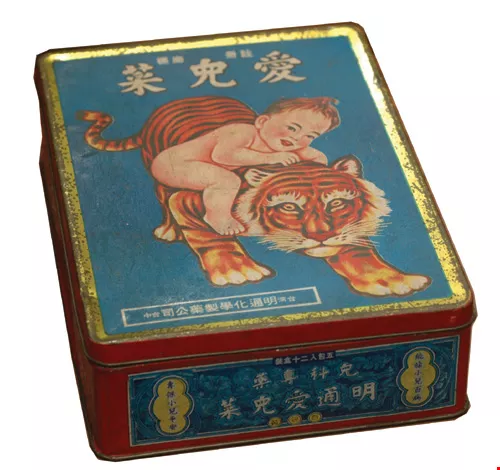
A tin that once contained an old children's medicine called "Ai Er Cai."
Gateway to Taiwan
Although Banana Paradise was a feast for the eyes, like its American kin TGI Friday's it was still at heart a place to eat, drink, and chat. What Wu really wanted to do was create a nostalgic atmosphere that would put his over 20 years' worth of collected objects back into a lifelike context, letting people experience for themselves what old Taiwan was like. "We're always telling the next generation how things were in the 'old days,' but we never had any way to let them really feel it. This is one of the main reasons behind my wanting to make something like Taiwan Storyland."
Wu hopes that Taiwan Storyland can bring together history, culture, art, and tourism; a place like this, with its focus on atmosphere and detail, providing audio guides and even a variety of restaurants and eateries, has no precedent, "but I've stuck to it. This kind of shared nostalgia is much better than just hoarding it privately at home."
To realize this dream and set up Taiwan Storyland, Wu has spent NT$130 million, including his own savings and taking out a bank loan. Although it's been open less than a year, already Taiwan Storyland sees 50-60,000 visitors a month, with four or five thousand coming in each day during the weekends. Foreign tourists are also coming in large numbers, with the Japanese particularly drawn to it. The lanes and alleys of this underground simulated village are almost always bustling with activity.
Many people don't expect Taiwan Storyland to have much of a future, because they believe that the once-bustling area in front of Taipei Railway Station has begun to drop off ever since the closure of the mall that used to occupy the location. But Wu, who has always been able to find new value in old goods, is optimistic.
He believes that once the High Speed Rail and the MRT track to Chiang Kai-shek International Airport are completed, the intersection of these two with the railway and subway lines that already cross through the station area will bring an enormous number of people to the station front area. Once the four are linked together here, not only will businesses in the area see a boost, but culturally the area will become the "gateway to Taiwan," giving foreign visitors their first introduction to Formosa, and becoming the first port of call for people from outside of Taipei. "Our ambition, commercially and culturally, is to tell the story of this area, and this location seems like the perfect place to do so."
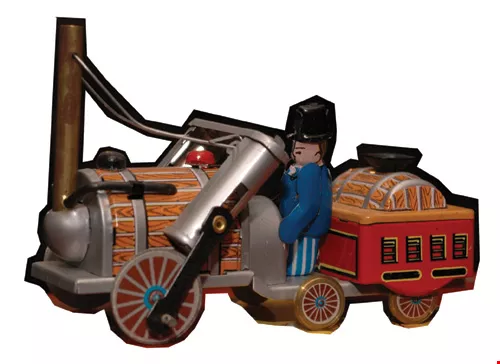
Seizing on the business opportunity nostalgia presents, Taiwan Storyland offers replica die-cast toys for sale, giving middle-aged visitors a chance to relive their childhood memories.
Time instead of money
Asked about his attitude toward collecting over the past two decades, Wu says he never tries to force the issue, and he doesn't like to spend huge amounts of cash to try and literally "buy time." On the contrary, he prefers to spend a few hours talking with the elderly about their lives, spending time rather than money. He frequently drives out to nearby small towns to chat with the locals; through this, he learns about the stories and histories behind various pieces in his collection, while also seeing for himself the local customs and traditions.
"It's the process that's important," says Wu, who can easily spend five or six hours chatting with elderly men from old communities. Through this, he gets access to a number of old collectibles that would've otherwise eluded him. "Some people, though, will not just bring stuff out for you to look over, but even outright give them to you. This is different from many collectors, who start hunting around for objects as soon as they walk in the door and try and negotiate prices. This just results in a frosty relationship between the two parties, with no real feeling behind it."
The various metal signs, bags from food supplies donated to Taiwan by the United States, old bicycles, and old-fashioned farming implements are all the results of gradual accumulation by Wu. The piece he considers most valuable is a pachinko machine from the early 1950s, just after the Kuomintang government relocated to Taiwan. The machine is adorned with various slogans from the period, such as "Fight the communists and resist the Soviets," "Attack the fake capital," and "Smash the communist bandits." The pachinko balls are fired out from the southern part of a map of Taiwan and bounce around the various provinces and cities of the mainland. Wu spent over NT$100,000 to acquire this rare item, which is not just entertaining, but highly historically noteworthy. Now it sits in the House of the Chief of the Neighborhood in Taiwan Storyland, one of the over 20,000 pieces in Wu's collection.
Asked about the Taiwanese public's attitude toward antiques, Wu can't help but voice his concerns with many of the students that come to Taiwan Storyland on field trips. Often, as soon as they walk in the hall, the kids start charging around, even climbing the trees around the place, while the teachers just abandon their duties and pay the kids no heed, letting them break a lot of the pieces in the collection. "Our basic respect for history has a long way to go!"
These problems might just be the price Taiwan Storyland has to pay at first for trying to bring together the functions of museums, entertainment, and restaurants. But regardless, Franky Wu has proven one thing with Taiwan Storyland: nostalgia is more than just a vague, emotional thing--it's also a worthwhile line of business.
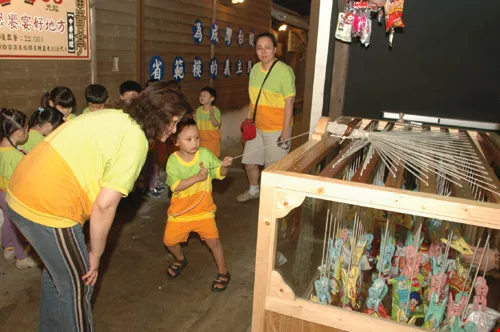
Stepping into Taiwan Storyland is like walking into a time warp as an everyday scene from Taiwan's past unfurls before your eyes.
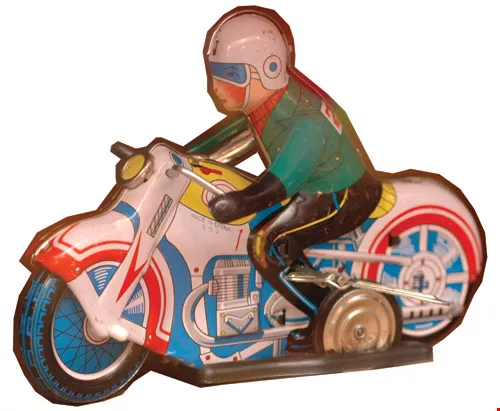
Seizing on the business opportunity nostalgia presents, Taiwan Storyland offers replica die-cast toys for sale, giving middle-aged visitors a chance to relive their childhood memories.
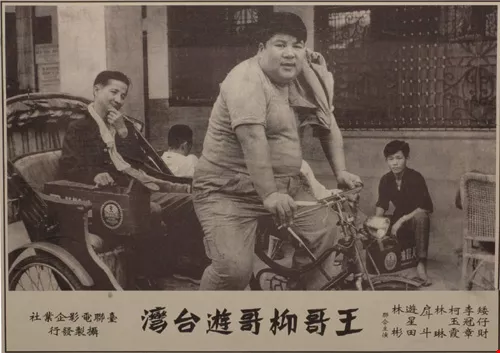
Hanging up in Taiwan Storyland is an old photo from the movie Wang and Liao Travel Taiwan. Unlike the two protagonists of this film, though, there's no need for you to rush around today if you want to visit old Taiwan.
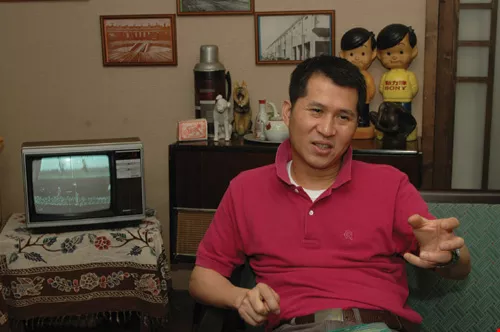
Antiques collector Franky Wu, in his early 40s, has used his collection to make a business of nostalgia.
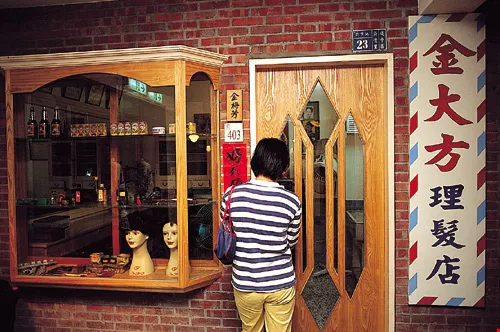
Stepping into Taiwan Storyland is like walking into a time warp as an everyday scene from Taiwan's past unfurls before your eyes.
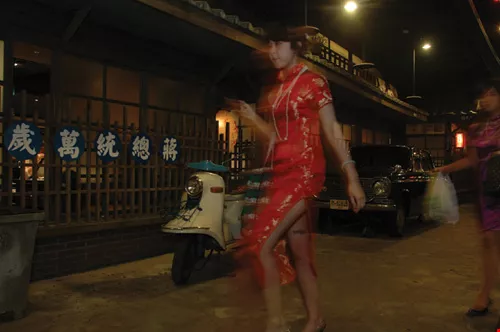
Stepping into Taiwan Storyland is like walking into a time warp as an everyday scene from Taiwan's past unfurls before your eyes.
@List.JPG?w=522&h=410&mode=crop&format=webp&quality=80)


