One is regarded as an up-and-coming star choreographer, the other is a rebellious rocker whose song “Moving Forward” became one of the most iconic Taiwanese-language songs of the 1990s. So how did Cloud Gate 2 artistic director Cheng Tsung-lung and musician Lim Giong come to be working together?
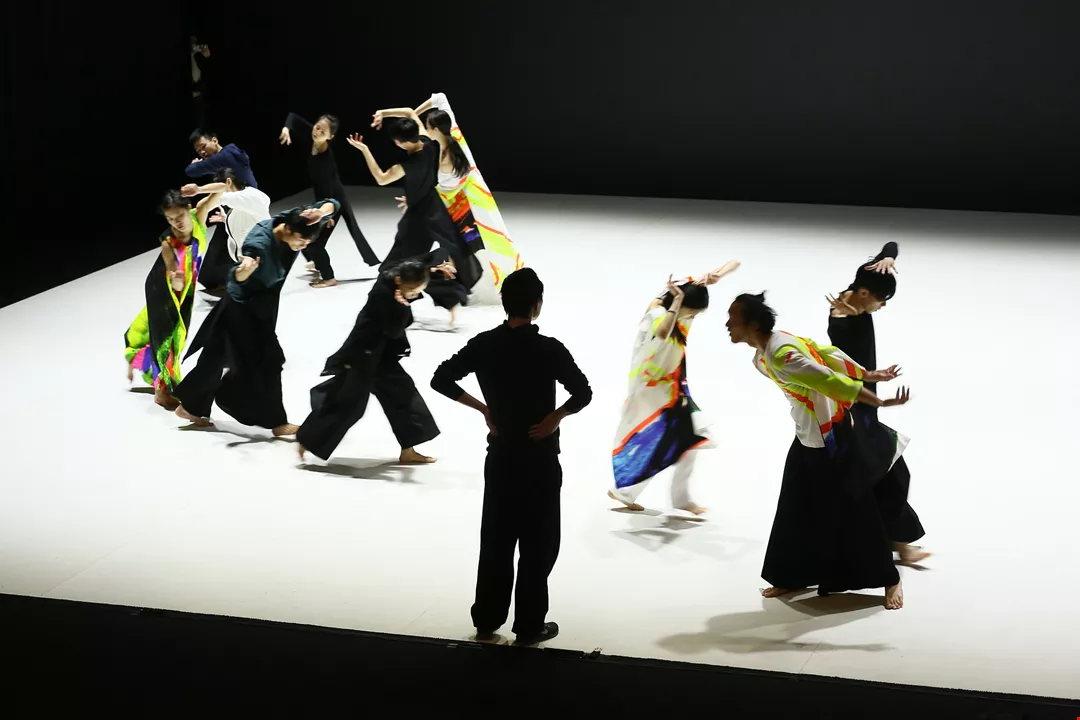
Inspired by a legendary street performer from Taipei City’s Wanhua District, 13 Tongues is a fusion of dance and music from star exponents of each that also brings promising new design artists to the table, bringing frenetic street scenes to life in a perfect union of the physical and the vocal.
Already part of more than a century of Taiwanese history, Wanhua District remains as vibrant and vivacious as ever. In the blink of an eye, one can go from bustling, noisy temple plazas to seeing the faithful deep in solemn prayer. Meanwhile, the nearby Huaxi Street echoes with the sounds of spatulas, woks, pots, and stoves as all manner of delicious local dishes are prepared, and on bustling Guangzhou Street and Kangding Road, street vendors spruik for all they’re worth. In the lanes and alleys, neighbors argue vigorously, while the Eight Generals and various other holy figures are taken on patrol by Qingshan, Qingshui, and Longshan Temples, accompanied by a barrage of firecrackers.
Such are the everyday sights and sounds of life for those born and raised in Wanhua.
Cheng Tsung-lung, the artistic director of Cloud Gate 2, has been a resident of Wanhua for 20-plus years, and has developed a keen ear for the “life soundtrack” of the area, a soundtrack that arises from the most quintessential elements of life. The cries, mumbles, and chants that invigorate Wanhua are all part of the cultural root system of Cheng’s latest piece, 13 Tongues.
“Walking down the streets, one encounters all manner of street vendors, each with their own attitude, look, and sound. It was this distinctive character of Wanhua that I wanted to incorporate into my work,” says Cheng.
The evocative, pulsating movements of the dancers in 13 Tongues are accompanied by a seven-part suite by musician Lim Giong, adding their screams, cries, chants, claps, and stomps to Lim’s avant-garde combination of electronic music, Hengchun folk music, and Taiwanese folk culture.
Thus, between the rising choreographer Cheng and the musician Lim, “vocal dance” has been created.

Gongs are struck and street vendors vigorously hawk their wares as a temple parade makes its rounds. Here we see not just a common scene from Taipei’s Wanhua District, but also one that encapsulates the spirit of Cloud Gate 2’s latest work, 13 Tongues.
Transforming down-home culture into dance
As the performance dates draw near, Lim and Cheng hold promotional seminars in Kaohsiung and Taipei to create more buzz. They begin by talking about their first meeting, in a Taipei cafe.
The choreographer and the musician huddled in a fashionable coffeehouse, talking about life, creative work, and everything. Despite being a generation apart, no topic of conversation was off the table. In over a year of such conversations, the two discovered that they shared a creative philosophy.
“Both of us want to try and blow open the doors on creative work, finding the parts of our culture that have traditionally been excluded or considered ‘unrefined’ or ‘inelegant’ and reappraise them, seeing them for what they are and admitting that we are the products of this environment. From that, we then aim to express these ideas through dance or music,” says Lim.
Twenty years ago, Lim’s song “Moving Forward” swept across Taiwan; in 2002, he decided to step out of the limelight, working behind the scenes and focusing his efforts on film scoring and collecting Taiwanese folk music.
From his past pioneering work in Western-influenced rock, Lim returned to his roots “in pursuit of cultural consciousness,” he says. With a similar sentiment having been on the rise in recent years, some have sought to satisfy this yearning for the grassroots by mashing together stereotypes like temples, mediums, and other such elements into a cultural collage. Creators have taken to using the culture for the sake of using it, rather from any sense of authentic love and appreciation. “If you want to enrich the local culture, there are plenty of things worth digging into beyond just the late 19th and early 20th centuries,” says Cheng.
Cheng Tsung-lung began dancing at age eight, taking dance classes all through elementary and junior high school, then going on to major in dance at Taipei National University of the Arts and finally becoming a dancer for Cloud Gate. Trained in the Western style, it wasn’t until he finally reached the world stage that Cheng realized he had virtually no understanding of his own hometown culture and decided to take “makeup classes” in it.
Through 2014’s Dorian Gray and 2015’s Beckoning, he learned elements of temple culture, including temple parades and traditional mediumship. Even as far back as his first pieces as a choreographer, Yao in 2005, and 2011’s On the Road, both sporting appearances of the “Eight Generals” formation, it was already apparent that Cheng hoped to use the collective memory of Taiwanese as the roots of his creative work. His latest piece, 13 Tongues, is based on the story of an eponymous street performer from Wanhua.
The prototype of the piece was a tale told to Cheng by his mother. One day, in the car after a performance of Beckoning, Cheng excitedly began sharing with her all he’d learned about temple culture. Having spent most of her life in Wanhua, nothing he was saying sounded particularly unusual to Cheng’s mother. Back in the 1960s, she said, there was an even more impressive street performer in the area known as “13 Tongues.”
A medicine peddler by trade, 13 Tongues would walk onto the temple plaza and begin putting on all manner of traditional Taiwanese performances, playing both male and female roles and showing skill in all aspects of performance. As his shows drew to a close, amid the rapturous applause 13 Tongues never forgot to promote his medicines. Every time he set foot on the plaza, people would excitedly rush around telling everyone “13 Tongues is here! 13 Tongues is here!”
Capable of switching from high-pitched voices to low ones in a moment, 13 Tongues could change characters at will—the very essence of theater. Overcome by excitement, Cheng Tsung-lung knew that he wanted to create a piece around this story. And thus 13 Tongues was born, seemingly opening a window on the world of a younger Cheng, bringing to life one scene after another from his childhood.

Cloud Gate 2’s artistic director Cheng Tsung-lung visited a local temple to ask for the gods’ oversight as he arranged the chants, dances, and songs of 13 Tongues. (courtesy of Cloud Gate)

The many faces of memory
“I was kind of raised on the streets,” says Cheng, never one to mince words when asked about his past.
Cheng grew up in an ordinary Wanhua family, with his father starting out selling cloth and shoes before going on to start his own flip-flop factory. His memories of home are of a place always filled with the smell of plastic and rubber.
An energetic child, Cheng was sent to a dance class by his mother when he was eight years old, and quickly proved to have a gift for it. His father, meanwhile, was a firm believer that the streets are the best business class, and would often drive Cheng to a spot on Guangzhou Street, dropping him off with a sack of flip-flops to sell.
And so the young Cheng was at once studying the art of dance and engaging in contests to see who could shout loudest against the old men and women hawking their wares on the streets of Wanhua. As time went on, Cheng learned the “rules of the street,” from how to pick the best spots and all manner of ways to draw in customers to familiarizing himself with the best routes for escaping the police. In those little alleys, as he hid himself away, another side of the area made its presence known.
“Sometimes older ladies would appear, faces made up, standing behind colorful curtains and beckoning you with a slight smile. On the corners, imposing men flanked by underlings in flowery silk shirts would strut around like this....” says Cheng, demonstrating the bandy-legged cowboy walk and fearsome appearance of the younger local triad members.
The hawkers, gangsters, and “aunties” of Huaxi Street were common sights to the young Cheng, and as he recalls them, the visions are as clear as reality still. And thus it was that Guangzhou Street, Cheng’s old haunt, would become the setting for the first act of 13 Tongues.

Cloud Gate 2’s artistic director Cheng Tsung-lung visited a local temple to ask for the gods’ oversight as he arranged the chants, dances, and songs of 13 Tongues. (courtesy of Cloud Gate)

Breaking the conventions of creation
Cheng and Lim were first brought together by the art designer for 13 Tongues, Ho Chia-hsing. Listening to Cheng’s tales of Wanhua, says Lim, struck more of a chord with him than the usual stories involved in dance pieces, in no small part due to their echoes of his own youth in Changhua.
In recent years, Lim has made a name for himself scoring Taiwanese, Hong Kong, and Chinese films like Hou Hsiao-hsien’s The Assassin and Jia Zhangke’s Still Life. From this experience, he has become accustomed to beginning work after the imagery and narrative are already in place. His first effort at writing music for dance proved “far from simple,” according to Lim, as all he had to go on was conversations with Cheng and a few scattered rehearsals, leaving him searching for clues to work with.
The project was similarly challenging for Cheng, who was used to choreographing for existing music. But by breaking free of their usual conventions, the two were able to work together surprisingly well. Making use of traditional Hengchun folk songs combined with avant-garde electronic music, Lim created a seven-part musical score that combines so well with Cheng’s choreography that Cheng says he “wouldn’t want to change a thing.”
Given the name “13 Tongues” and Lim’s unique music, one would think that sound and music would play an outsized role in the show. However, “the voice and the body are both parts of the same single entity,” says Cheng. “Look at a newborn child, for example—doesn’t the sound of crying always come paired with waving, flailing little hands?”
Like the many roles, faces, and voices of Taiwan herself, 13 Tongues presents ringing bells and striding dancers that call to mind a Taiwan familiar to all of us who call it home.

From the grassroots community of Wanhua to the international stage, rising choreographer Cheng Tsung-lung has used dance to illuminate Taiwanese culture.

From the grassroots community of Wanhua to the international stage, rising choreographer Cheng Tsung-lung has used dance to illuminate Taiwanese culture. (photo courtesy of Cloud Gate)

Costume designer Keith Lin took inspiration from the colors of Taiwanese temple culture, creating brilliant outfits for the dancers of 13 Tongues. (courtesy of Cloud Gate)

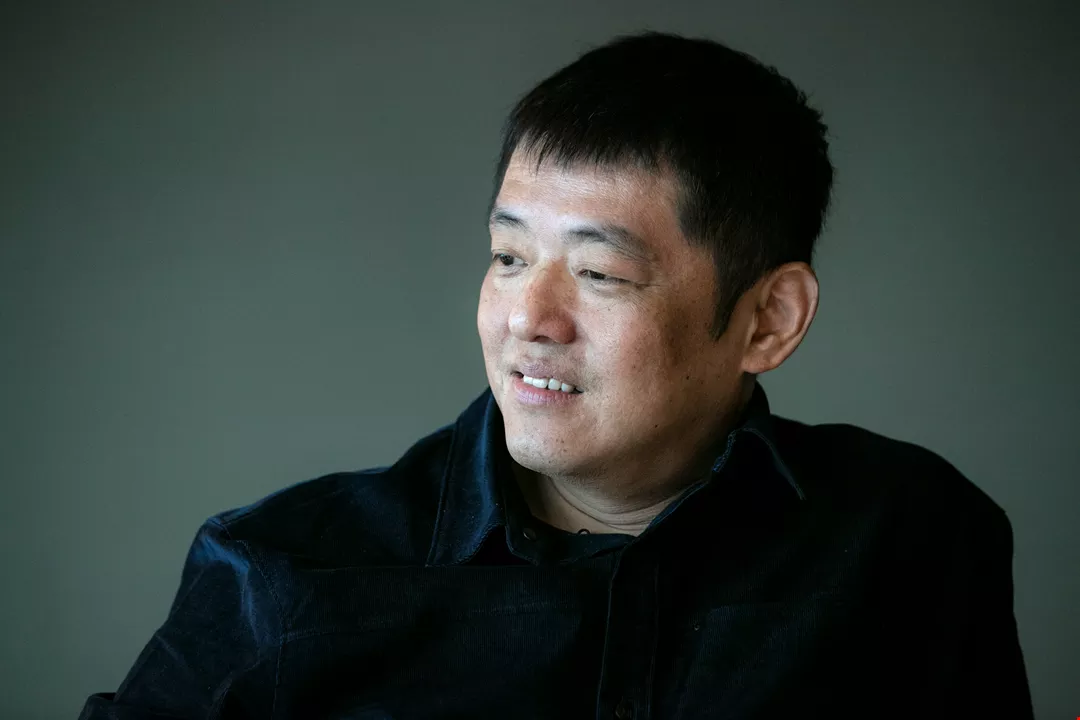
For 13 Tongues, musician Lim Giong combined suona, nakashi music, and traditional Hengchun folk songs with electronic music, creating a soundtrack that is truly Taiwanese. (photo by Liu Chen-hsiang)