

Professional baseball has its Eagles team, politics has its hawks; for air force pilots, the eagle epitomizes flight, while artists say eagles are actually lonely seekers; birds of prey provide our lives with many symbols - which appeals most to you?
Under the deep blue sky of southern Taiwan, the square, pure-white gate of the Chinese Air Force Academy at Kangshan in Kaohsiung County is adorned with a pair of mighty eagles, flying with outstretched wings.
The dream of heroically riding the wind like the eagle in the boundless heavens, lord of all one surveys, soaring high above the clouds, is what drives many people to go and study at the Academy. For doesn't the unofficial school song say: "Skipping effortlessly a thousand leagues over Kuanshan Mountain, in this triumphant moment, nothing can equal flying; I am a little swallow, you are a flying eagle."
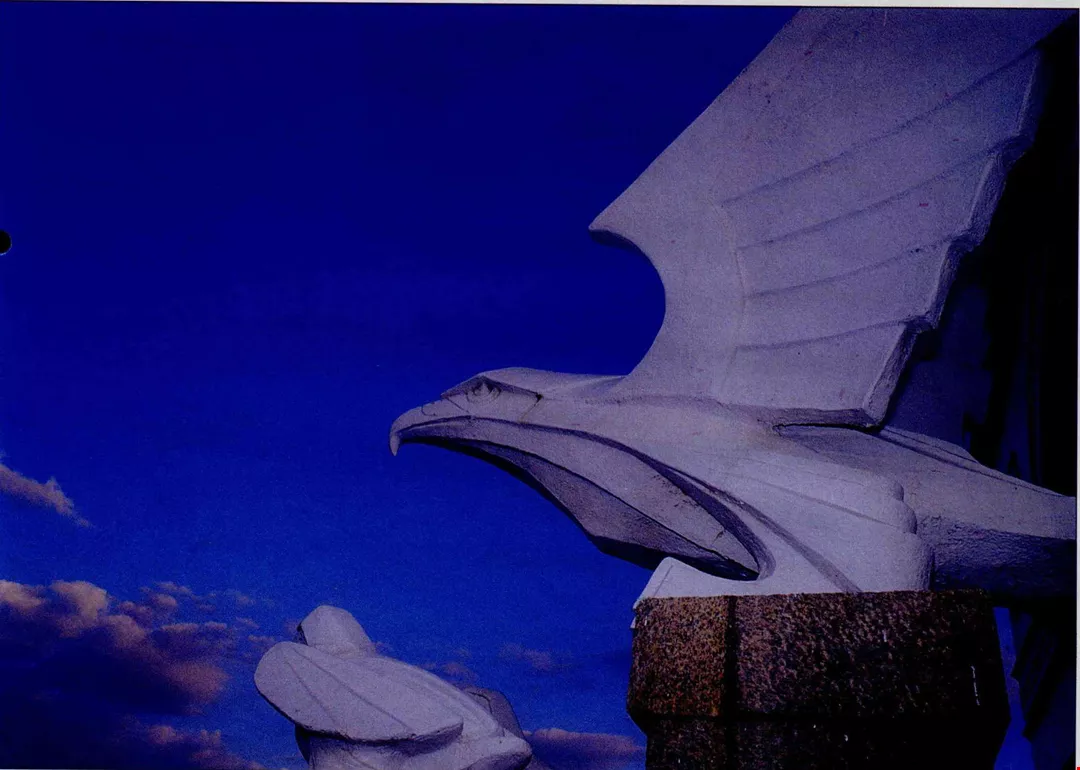
"Skipping effortlessly a thousand leagues over Kuanshan Mountain, nothing can equal flying." The pair of eagles flying with outstretched wings which adorn the main gate of the Chinese Air Force Academy symbolize the splendor of flight.
Eagle eyes:
What people call eagles actually include over 200 species of diurnal birds of prey around the world with a variety of shapes and characteristics, including hawks, falcons, buzzards, vultures and so on.
But whether one speaks of the smallest, such as the sparrowhawks, or the largest, such as the condors, they almost all share the same characteristics: "Of valiant bearing and ferocious character, they wheel through the skies, attacking swiftly and violently." Today they also symbolize flight--mankind's greatest technological accomplishment of the 20th Century.
Air forces of almost all countries use various kinds of birds of prey as their school crests and squadron insignia. Apart from their love of circling on air currents and the beauty of their flight, they inspire many reveries in people's minds. "Their sharp eyes can see 1000 miles!" Huang Nien-chun, a graduate of the Air Force Academy, says he loves birds of prey.
In his Watching a White Falcon Fly, a poem in four lines of five characters each, the Tang dynasty poet Li Pai (701-762 AD) wrote: "In the high desert wind of the eighth month, the falcon with its rich white plumage, wheeling like a lone snowflake, can discern a speck of down a hundred li distant." From high aloft he can see everything that moves on the ground, for an eagle relies on its vision to eat. According to research by naturalists, an eagle's vision is more than ten times more acute than a human being's. With only one-fiftieth of the light which human sight requires, it can unerringly snatch prey from six feet away . In the words of the Tang dynasty poet Kao Yueh: "His snowy talons and star-bright eyes are something rare in this world; he disdains to fly over the short grasses of the plains."
The encyclopedic Kewulun contains the following simple and vivid description: "The eagle: a raptor, golden eyes, hooked beak, steely claws, pointed wings, skilled at snatching prey." This is why the eagle has come to symbolize strength. In ancient times such peoples as the Romans, the Germans, the Poles, the Spaniards and the Incas all made the eagle a symbol of military might.
In ancient China, the flight of eagles and falcons was often used as a simile for the martial bearing of soldiers and for the power and vigor of political and judicial authority. In its description of how King Wu (founder of the Chou dynasty, 11th C. BC-256 BC) defeated Chou (last emperor of the Shang dynasty, 17th-11th C. BC), the Book of Songs says: "Supreme Commander Lu Wang was always like a soaring eagle." In the Shang dynasty, military and judicial power were seen as harsh and merciless, like hawks chasing sparrows, and so officers of justice were referred to as birds of prey, and called "Those fierce vultures, the law officers."
There are many countries in the world today with the eagle as their national bird or national emblem. Today's great superpower America, which has the bald eagle as its national bird, is one example. Birds of prey are probably depicted more frequently on coinage than any other birds. And there are many banks and countless commercial companies which use the eagle as their logo, to denote their financial strength, vigor, security, reliability and permanence.
Taiwan's professional baseball teams include the China Times newspaper's Eagles team, which regularly does battle with such teams as the Tigers, the Elephants, the Dragons and the Lions. If the team were called the Swallows or the Songthrushes, it would sound soft and weak, as if ready to be slaughtered by its opponents. Western political parties often divide into factions called hawks and doves on an issue. Hearing the name hawks one knows straight away that they are the faction which will be hard to deal with, combative and uncompromising.

(Above) Sculptor Fan Kang-lung Says: "Eagles are so often just a black speck in the sky. You can't get close to them." His work is filled with eagles' aloof solitude.
Veneration of birds of prey:
People in ancient times worshipped eagles even more than people today. In his paper On the Veneration of Eagles in Ancient China, the Mainland Chinese scholar Liu Dunyuan observes that humanity's respect for, fear of and veneration of birds of prey is an ancient and worldwide custom.
For example, relics unearthed in Mainland China reveal that in prehistoric times around 4000 years ago, from the days of the Longshan Culture until the late Shang dynasty, the worship of raptors was very widespread. The Yangshao Culture period had eagle-shaped cauldrons with bulging eyes, hooked beaks and powerful, mighty legs, which were connected with primitive religious worship.
During the reign of the Ching emperor Chienlung (1736-1796), the Imperial Palace art collection gradually acquired some finely crafted jade pieces carved with strange patterns, including many with images of eagles. Some are seen in profile, standing erect, while others are full-face with head uplifted and feet apart. But whether in profile or face on, they all have their talons implanted in a human head.
"In prehistoric times, people thought of powerful eagles as symbolic of the valor of warriors and the prowess of the tribe, and so the combination of a mighty eagle with a human head may perhaps be a record of victory over a strong enemy." Liu Dunyuan points out that disappointingly, from the Han dynasty (206 BC-220 AD) onwards, eagle motifs in art were generally treated in only two ways. One was purely appreciatory, based on a liking for the birds' spirited, handsome bearing, so that they became one class among the rolled paintings depicting birds; the other, which emerged after the art of falconry was mastered, was as one of the types of illustration of hunting scenes. From then on eagles lost their sacred status and mystique for human society.
But although the veil of mystery had been lifted, the raptors, which add a touch of splendor to nature, continued to be a constant source of inspiration for later literary and artistic creation. People's sensitivity to nature, in the same way as art, always starts from the most beautiful and distinctive. The early entry of birds of prey into human cultural life was just such a selection.
In Chinese literature there are countless poems, songs and prose works about raptors. The poets Tsao Chih, Liu Tsung-yuan and Li Pai all wrote in celebration of birds of prey, and among the poems about birds of prey found in the Ching dynasty Completed Collection of Graphs and Writings of Ancient and Modern Times, the greatest number describe how the ancients painted raptors, such as the poem by the Sung poet Huang Ting-chien (1045-1105) on watching Liu Yung-nien paint a hawk: "With sweeps of his brush the hawk appears, with murderous eyes among the autumn colors, . . . its wings conceal the power to fly countless leagues, standing erect on the forked branch, without fear of men . . . "
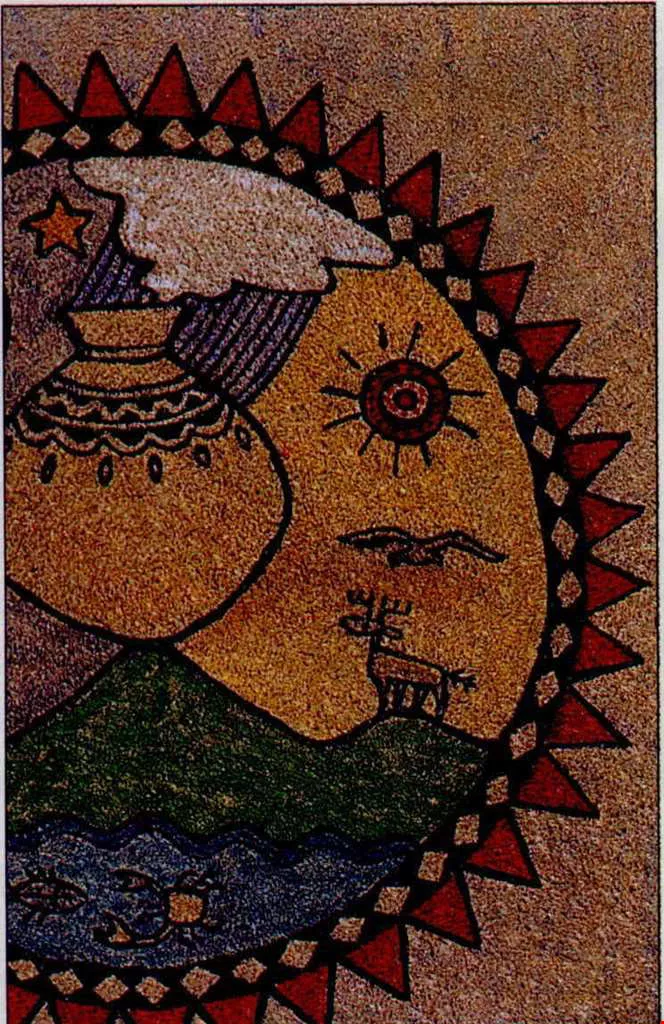
(Left) The pottery, sun and bird of prey motifs which appear in the work of sculptor Sa Ku-liu of the Paiwan tribe all have deep significance in the lives of the aboriginal peoples.
The lonely eagle: "
An eagle is circling / The wind along the high ridge inspiring its wings / Those days just before you left / You seemed evasive, restless / So like a gaunt eagle anxious to fly / . . ."- Chen Yi-chih.
Accompanying human history over thousands of years, the birds of prey have never been tamed. Their genes know no code for "obedience" or "companionship." Thus their loneliness has lent them a different symbolism, especially in the eyes of writers: the mighty eagle has become a gaunt, haggard figure, solitary and seemingly bereft, as in Cheng Chou-yu's "Another chill spring dawn / The trees sad and silent / In the misty rain an eagle shakes its wings and flies obliquely up." The lone eagle circles over the sparse wood, searching for a meaning in life.
Fan Kang-lung, a young sculptor who has become well-known for carving eagles, says that humans always see eagles alone, never in groups. "Eagles are so often just a black speck high up in the sky, you can never get very close to them. They're alone, distant and hazy, unwilling to be caught up in the troubles of everyday life, thinking that others cannot understand their passionate, burning life.'' Recently Fan Kang-lung has put aside carving eagles for a while. He says he never particularly intended to choose eagles as his subject. One art critic has said that Fan Kang-lung, whose past life was fraught with difficulties, "naturally projects the condition of his own life onto the lonely eagle."
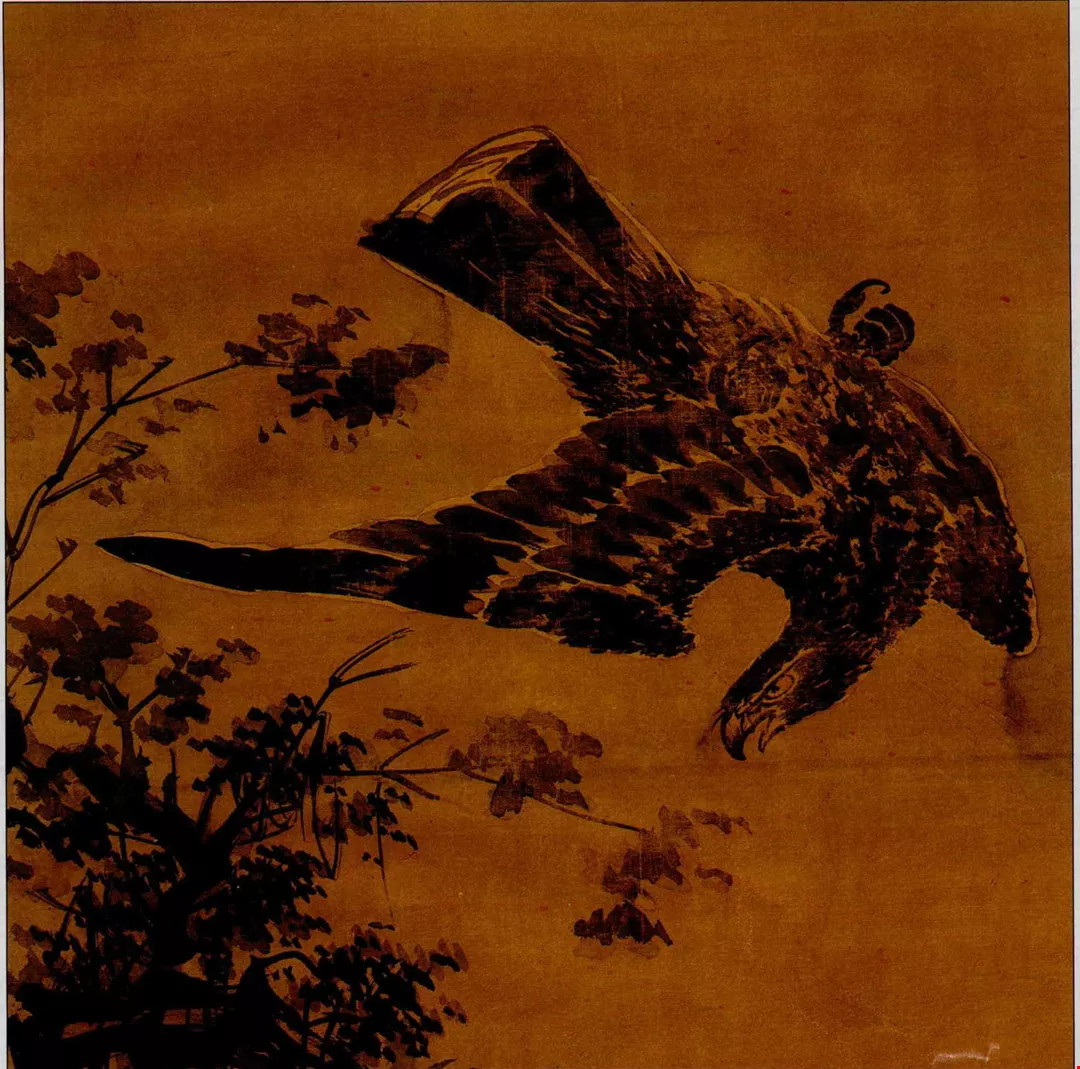
(Above) Their spirited, handsome bearing made raptors a major subject for Chinese bird and flower painters. The picture shows The Autumn Eagle by the Ming dynasty artist Lin Liang. (courtesy of the National Palace Museum)
Specimens by the cartload:
What new symbolisms do we attach to the eagle in our fast changing modern environment?
Although birds of prey bring much splendor to the world, their role as predators at the top of the food chain now puts them among those most vulnerable to environmental damage, because agricultural chemicals, heavy metals and the DDT which was formerly used in massive amounts accumulate in their bodies in high concentrations.
Today, the shells of the eggs laid by raptor species are only half as thick as in the past, so that they are often broken by the adult birds' feet before the chicks ever hatch out. Faced by such threats as loss of habitat, human disturbance of its nesting sites and high levels of poisons in the bodies of the fish on which it lives, America's national bird has almost become a bird known only to legend.
The situation in Taiwan is little different. Fifteen to twenty years ago the large-bodied, imposing gray-fatal buzzard would be bought for NT$150 each to be mounted as specimens and sold to Japan. Author Huang Chun-ming has even cited them and Peitou's restaurants as Taiwan's two main attractions for the Japanese in the 1970s. At that time stuffed gray-faced buzzards could be seen everywhere at well-known tourist spots such as Sun Moon Lake and Cheng Ching Lake, and they were the commonest of all stuffed birds of prey. Every year large numbers of them would migrate over Hengchun, and the biology lessons of many high schools consisted of busily stuffing and mounting gray-faced buzzard specimens. It is said that on the cart tracks of Hengchun, one could often see ox-arts laden with gray-fatal buzzards on their way to be stuffed.
Of course, there are a few birds of prey who have been able to adapt surprisingly well to the human environment, such as the myriad birds of prey in India which search for their food in rubbish dumps; and in many large cities, raptors have been discovered riding the air currents around tall buildings. In the future, will humans still think of birds of prey as Fan Kang-lung does, as "lonely eagles untouched by the cares of the world"?
[Picture Caption]
p.19
"Skipping effortlessly a thousand leagues over Kuanshan Mountain, nothing can equal flying." The pair of eagles flying with outstretched wings which adorn the main gate of the Chinese Air Force Academy symbolize the splendor of flight.
p.20
(Above) Sculptor Fan Kang-lung says: "Eagles are so often just a black speck in the sky. You can't get close to them." His work is filled with eagles' aloof solitude.
p.20
(Left) The pottery, sun and bird of prey motifs which appear in the work of sculptor Sa Ku-liu of the Paiwan tribe all have deep significance in the lives of the aboriginal peoples.
p.22
(Above) Their spirited, handsome bearing made raptors a major subject for Chinese bird and flower painters. The picture shows The Autumn Eagle by the Ming dynasty artist Lin Liang. (courtesy of the National Palace Museum)
p.22
(left) These precious Longshan jade artifacts from Shandong are carved with bird of prey motifs. Scholars conjecture that eagle worship may have been common along China's east coast at one time.(courtesy of the National Palace Museum)
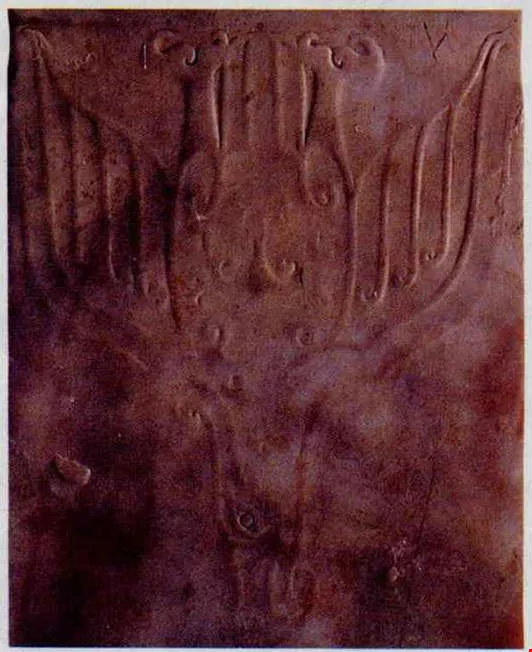
(left) These precious Longshan jade artifacts from Shandong are carved with bird of prey motifs. Scholars conjecture that eagle worship may have been common along China's east coast at one time.(courtesy of the National Palace Museum)

@List.jpg?w=522&h=410&mode=crop&format=webp&quality=80)


