The Joy of Shrimps:
Taiwan’s Prawn Fishing Culture
Esther Tseng / photos Jimmy Lin / tr. by Phil Newell
November 2025
Shrimp fishing is a Taiwanese-style recreational activity that combines fun with eating.
Taiwan has the world’s highest concentration of venues for shrimp fishing, a.k.a. prawn fishing. There are places where you can catch and eat prawns; businesses that combine shrimp fishing with diverse leisure activities including stir-fry, barbecue, and karaoke; and even 24-hour venues. The pleasure of hooking prawns, the lively socializing among friends and family, and Taiwanese-style stir-fry have made this activity into an essential recreational experience for visitors to Taiwan.
On a weekend morning, the streets of Taoyuan’s Zhongli District are tranquil. But outside Ouxiong Shrimp Fishing, by 8 a.m. there is a line of customers clutching bags and fishing tackle, and when the doors open at 8:30 they rush in like Black Friday shoppers, vying to get to the fishing pools to take the best spots.
The special municipalities of Taoyuan, Taipei, and New Taipei are shrimp fishing hotspots, with a high concentration of venues of diverse formats. To attract customers, many prawn fishing businesses offer “early bird” discounts for the first fishing session, and latecomers may arrive to find no spaces available.

A comprehensive shrimp fishing ecosystem
In 1971, the Tungkang Marine Laboratory (now the Tungkang Aquaculture Research Center of the Fisheries Research Institute under the Ministry of Agriculture), located in Donggang, Pingtung County, successfully raised larvae of Thai prawn (Macrobrachium rosenbergii, also known as giant freshwater prawn or giant river prawn), sparking the growth of a freshwater Thai prawn aquaculture industry.
Back then, Pingtung-based aquaculturists who wanted to boost sales of their prawn opened up their ponds to the public for shrimp fishing. This marked the rise of a new addition to Taiwanese culture: the practice of anglers sitting with a rod in one hand and a beer in the other, followed by staff cooking their catch to order while they relax with a drink.
Demand for prawns for shrimp fishing caused Thai prawn aquaculture to peak in 1991. In that year aquaculture farms raising Thai prawn covered 2,320 hectares of land in Taiwan, and produced 16,196 metric tons of prawns, the largest harvest in the world, accounting for 37.6% of total global output. The number of shrimp fishing venues also reached its zenith at that time, with 500‡600 across Taiwan.
Over the last 20 years, the shrimp fishing industry has undergone restructuring due to inflation and the increased costs of prawn raising. Fishing venues have upgraded their facilities and service offering and have introduced competitive activities, such as points-based prawn fishing contests. Today there are still about 300 venues in Taiwan.
Some big changes have been to install air conditioning and ban smoking, and to offer barbecuing and dining, attracting families. These moves have transformed shrimp fishing venues from centers of adult leisure as they were in the past into recreational facilities where three generations can have fun together.
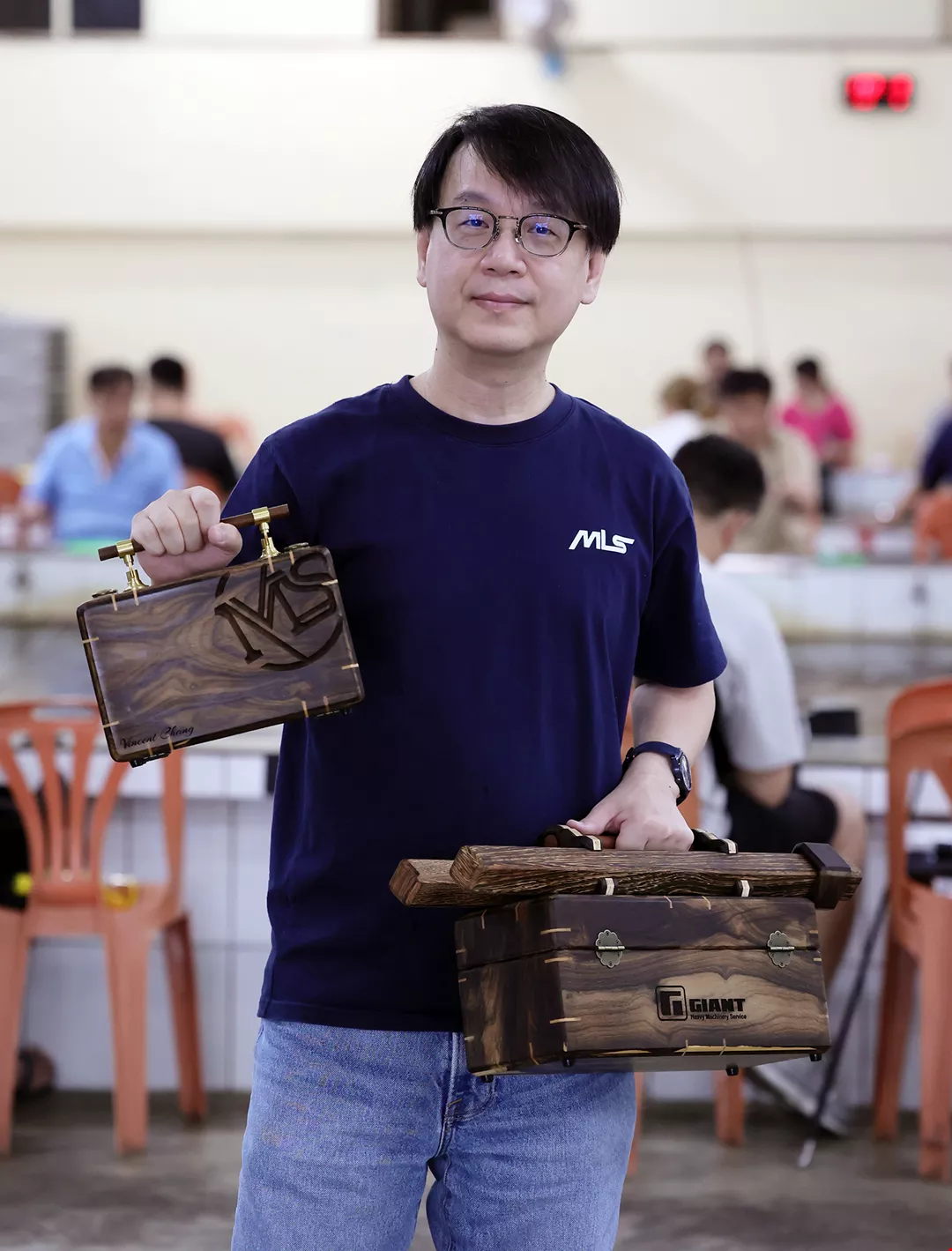
Another change has been diversification of shrimp types in fishing pools, to attract different customers. Vincent Chang, chairman of the Taiwan Shrimping Culture Development Association, which promotes shrimp fishing, notes that some customers especially enjoy catching large male prawns weighing 75 grams or more, taking particular pleasure in the “shock” of the sudden tension on fishing lines that these creatures provide. Visitors from Hong Kong especially are keen to experience the feeling of hooking a large male prawn that is unique to Taiwan.
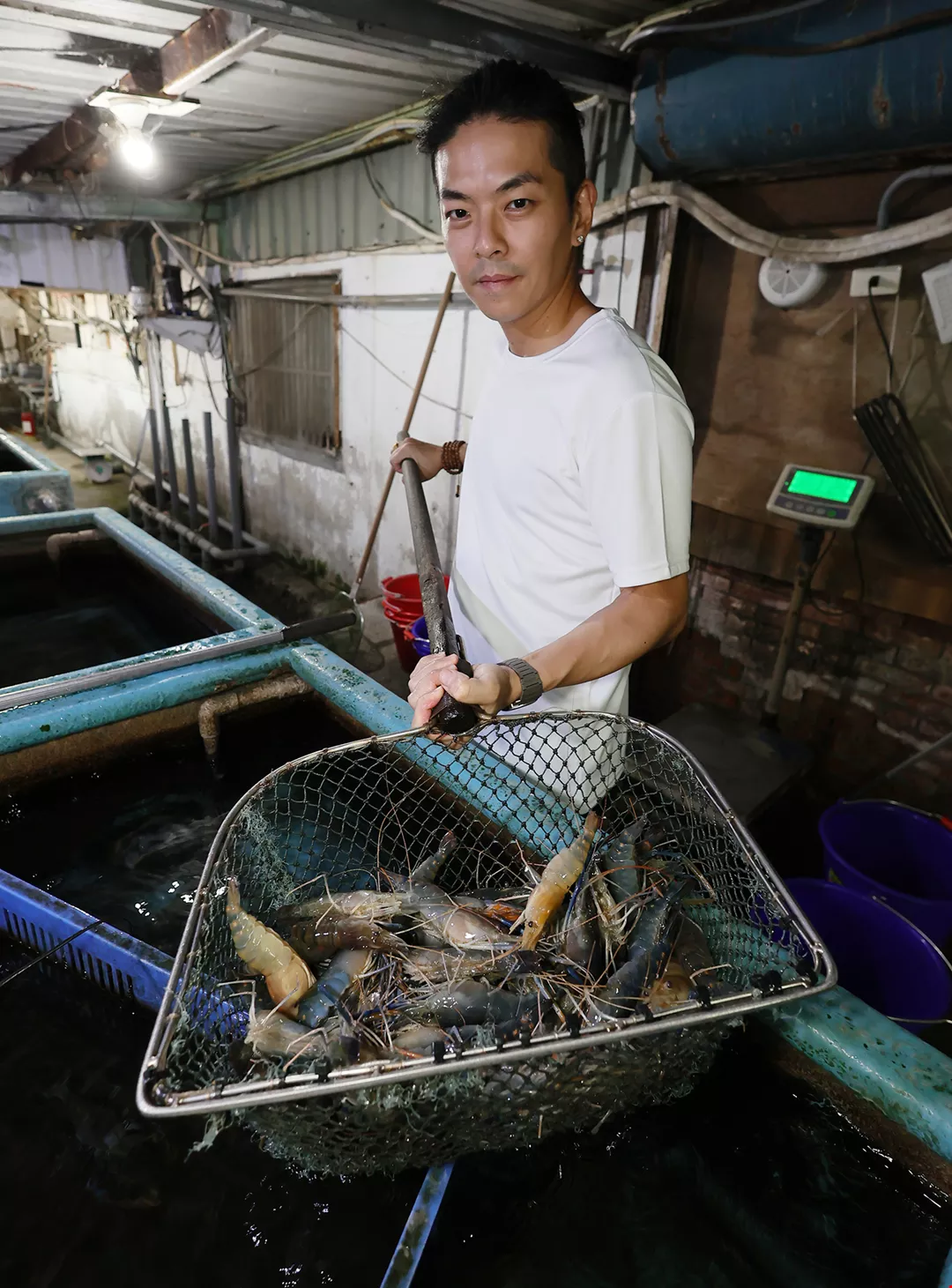
Zhan Jiaming, second-generation proprietor of Ouxiong Shrimp Fishing, says that water quality is critical to this activity. The healthier the prawns, the easier they are to hook, and livelier prawns also taste better.
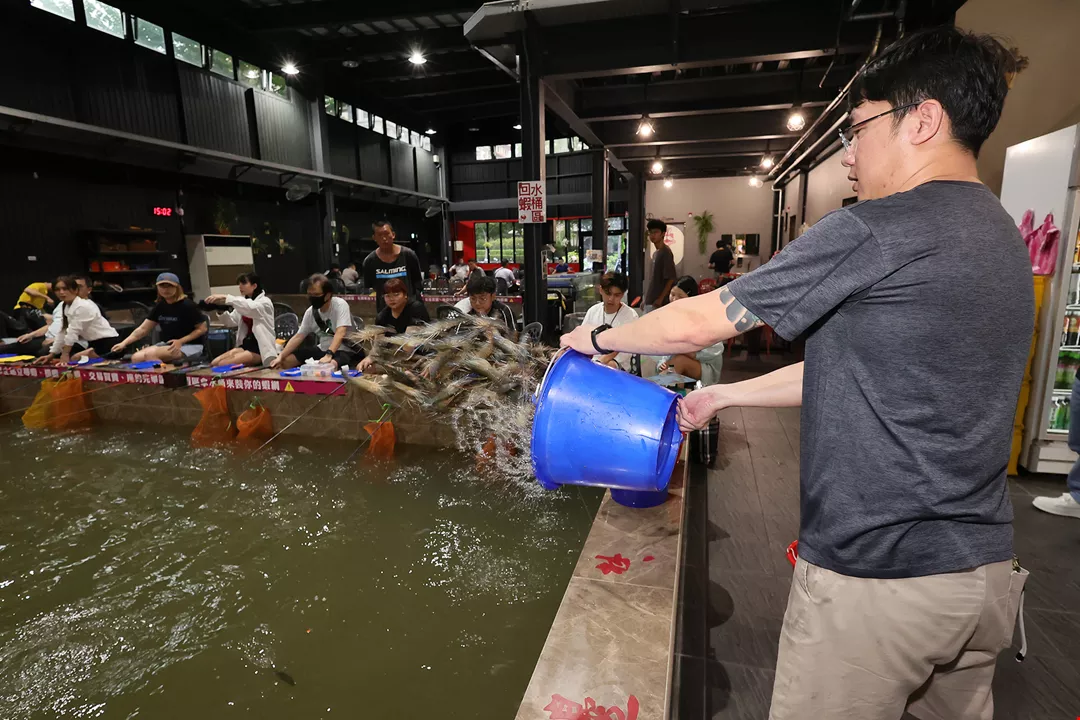
Before releasing prawn into the pool at Hongxunwang Shrimp Fishing, workers weigh the shrimp right in front of the customers to demonstrate transparency and fairness.
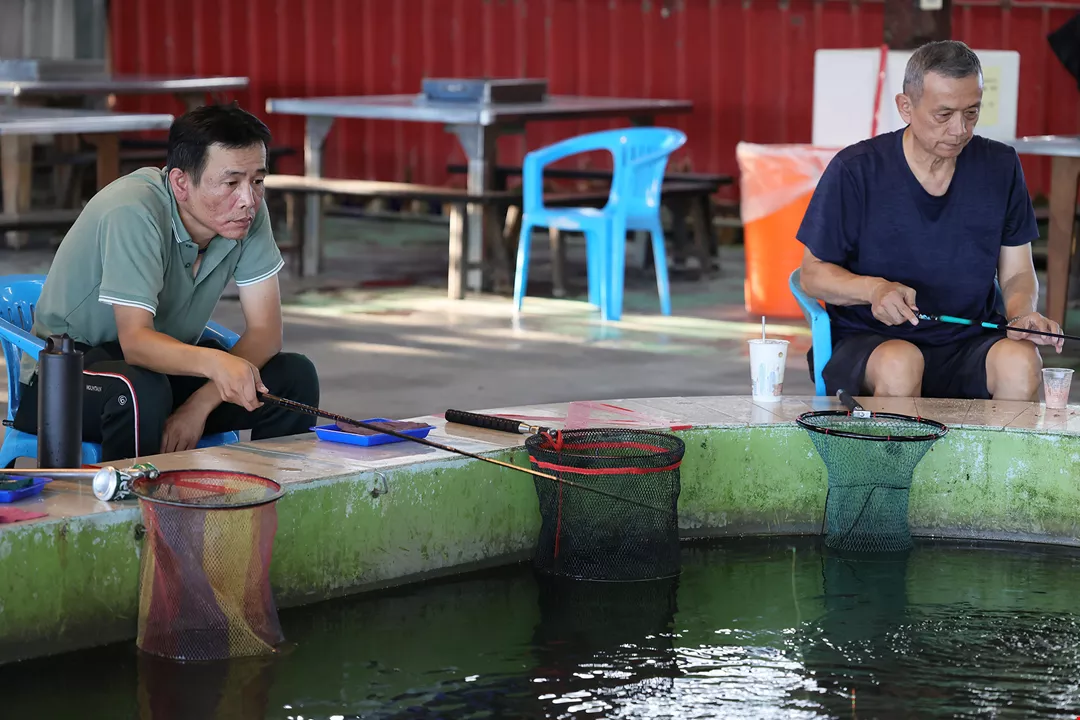
Taiwan’s shrimp fishing culture is refined and multifaceted.

Numerous marketing strategies
Besides venues that offer freshwater Thai prawn year-round, there are six shrimp fishing businesses along the coast in Yilan County’s Zhuangwei Township that offer seawater-raised shrimp. Specifically, they have grass shrimp (Penaeus monodon, a.k.a. giant tiger prawn) from July to November and kuruma shrimp (Marsupenaeus japonicus, a.k.a. striped shrimp) after mid-November.
Tsai Yu-che, second-generation operator of the Lai Lai Shrimp Fishing Store, which is one of the Yilan saltwater shrimp locations and is Taiwan’s largest shrimp fishing venue, with six pools, notes that kuruma shrimp are lively and quickly seize baited hooks. Children especially have fun with them.
Vincent Chang divides shrimp fishing venues into two types according to how they are run: “local” and “internet marketing” types. The former attract nearby customers while the latter use a variety of marketing approaches to attract people from further afield. For example, he says, some places feature “opening ceremonies” that are livestreamed when they open and release huge numbers of shrimp into their pools, hoping to attract customers at those times, while others highlight their larger “fleshy prawn” (Fenneropenaeus chinensis, a.k.a. Chinese white shrimp).
Vincent Chang reveals that there is specialized know-how involved in making the shrimp easier to catch. The most important thing is to maintain water quality. Another trick is to add granulated prawn feed to the pool, making the water more turbid, which makes the prawn less wary, so that they are easier to hook. Zhan Jiaming, second-generation proprietor of Ouxiong Shrimp Fishing, which has been in business for over 30 years, says that making the prawn easier to catch is the key to customer loyalty.

Vincent Chang, chairman of the Taiwan Shrimping Culture Development Association, assists in the development of shrimp fishing peripheral products.

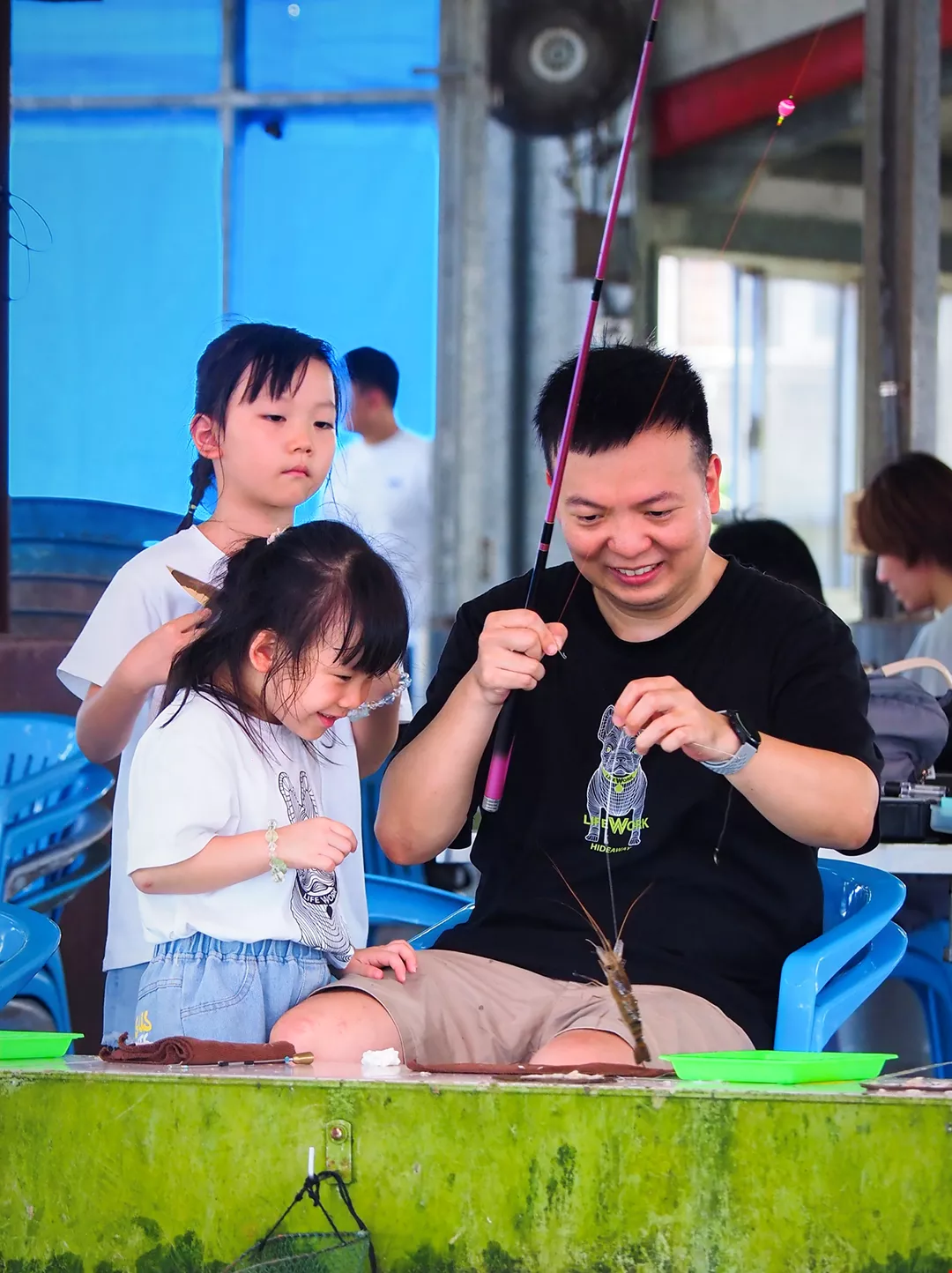
When parents take their children shrimp fishing, everyone delights in the moment when a prawn is hooked.

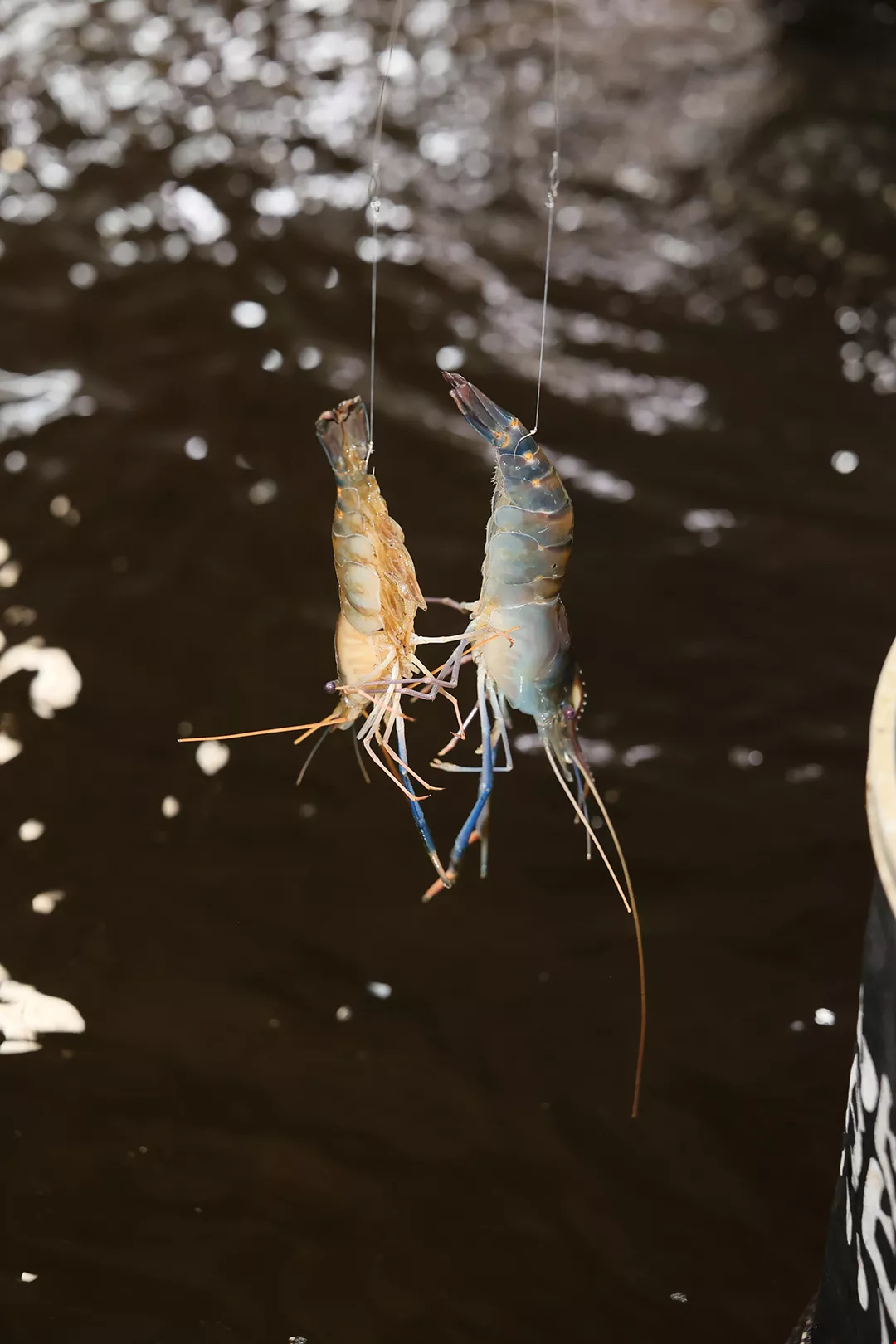
When a customer hooks two prawns at once, the venue will announce over its loudspeakers: “Congratulations! Double catch!” This lets everyone present know about it, and the venues even give away free beverages.

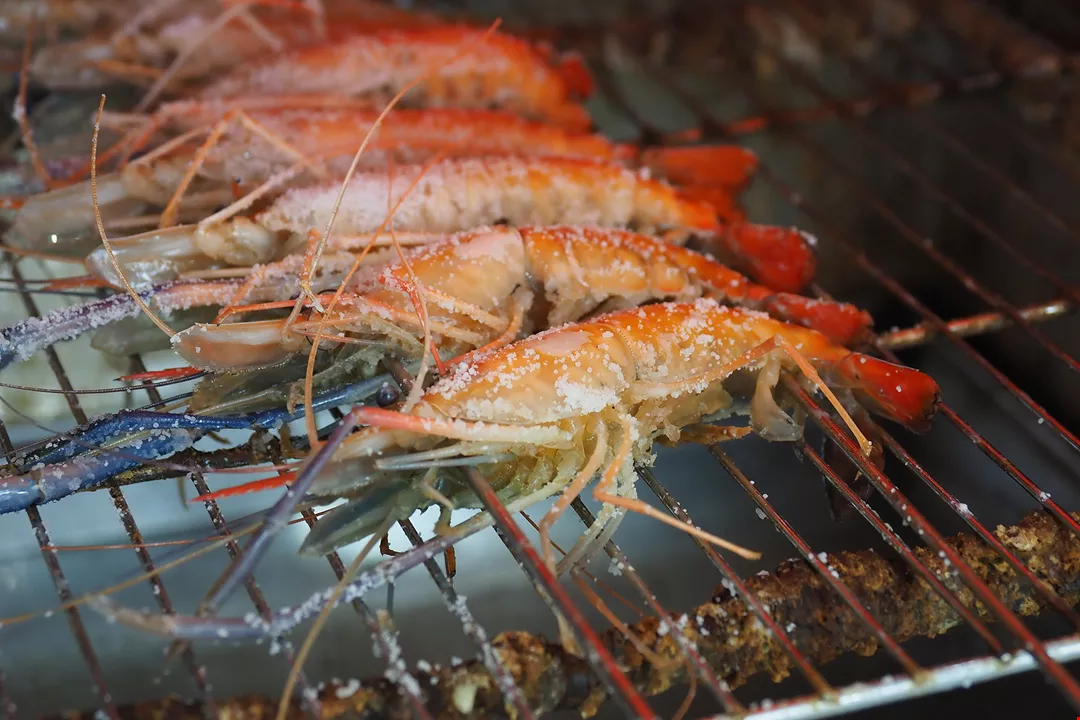
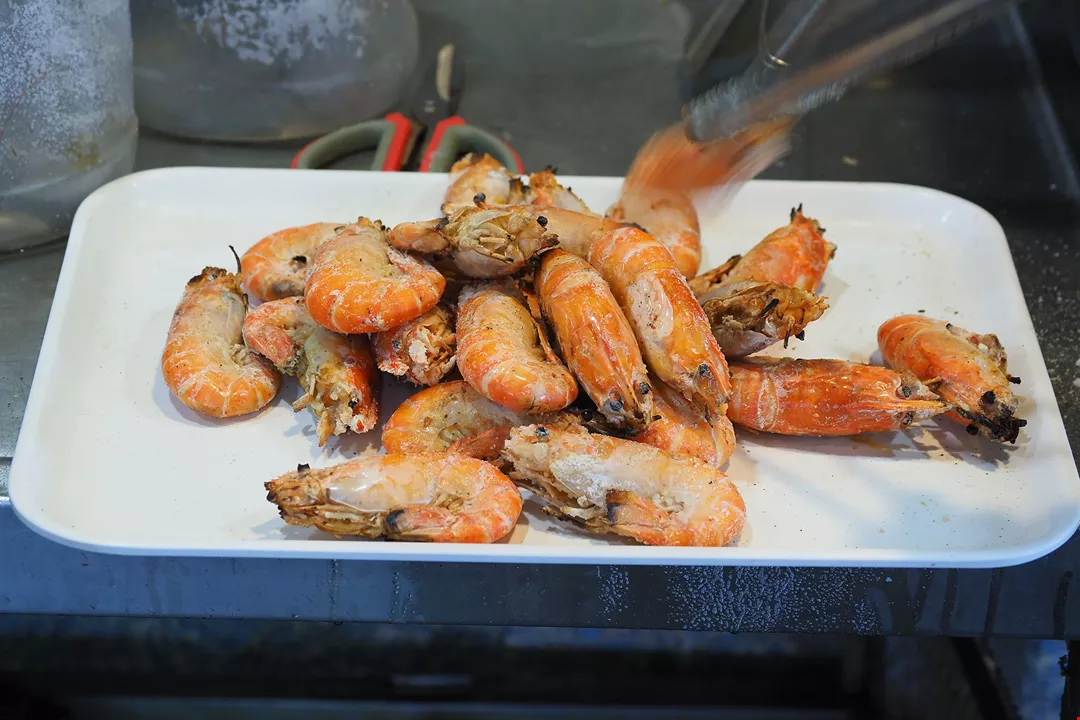
Customers can grill the shrimp they catch themselves or have staff at the fishing venue use them to prepare a meal to order.

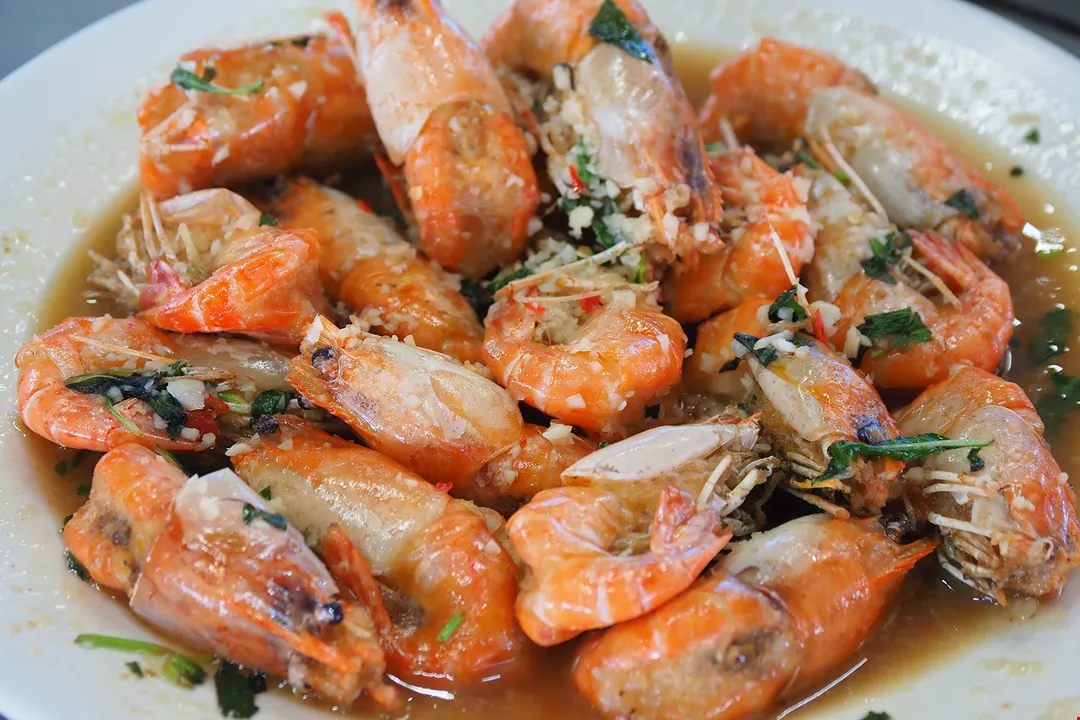
Garlic prawn.
Hooked on stir-fry
Taiwan’s diverse, refined shrimp fishing culture appeals to foreigners who want to try “Taiwanese-style recreation.” For example, the indoor shrimp fishing venues in Taipei City attract travelers from Japan, Korea, and the US. And once foreign visitors have tasted the fun of shrimp fishing, they will go elsewhere in Taiwan to try the different styles of shrimping experience in different locations. Tsai Yu-che says that while most of his foreign customers come from Hong Kong or Singapore, he has had some from as far afield as Finland and Kenya.
Vincent Chang, who has taken a two-week round-the-island shrimp fishing journey with his wife and kids, believes that Taiwan’s best stir-fry food is to be found at shrimp fishing venues. He has made an island-wide culinary map, which includes braised prawn in oil from the Longqing Shrimp Fishing Leisure Plaza in Taoyuan’s Longtan District, the prawn gratin for which the Dongming Shrimp Fishing Restaurant in Taichung’s Beitun District is famous, and the braised prawn made using a secret recipe at Jiujiujiu Shrimp Fishing in Dounan, Yunlin County.
Most shrimp fishing venues serve dishes such as grilled prawn, black pepper prawn, garlic prawn, and sesame-oil prawn. In Longtan there is a venue called Shangjiu Leisure Shrimp Fishing whose business was flagging, but after introducing an “automatic smokeless rotisserie,” now it is crowded every night.
Whether one is seeking the sensation of hooking large male prawns, enjoying a family outing, or just looking for a feast at “a stir-fry restaurant hiding inside a shrimping hall” (as one such venue calls itself), this uniquely Taiwanese-style recreation of shrimp fishing is, as Vincent Chang says, “a pleasurable experience for everyone, and the feeling of the whole family having fun together is the best manifestation of Taiwan’s shrimp fishing culture.”

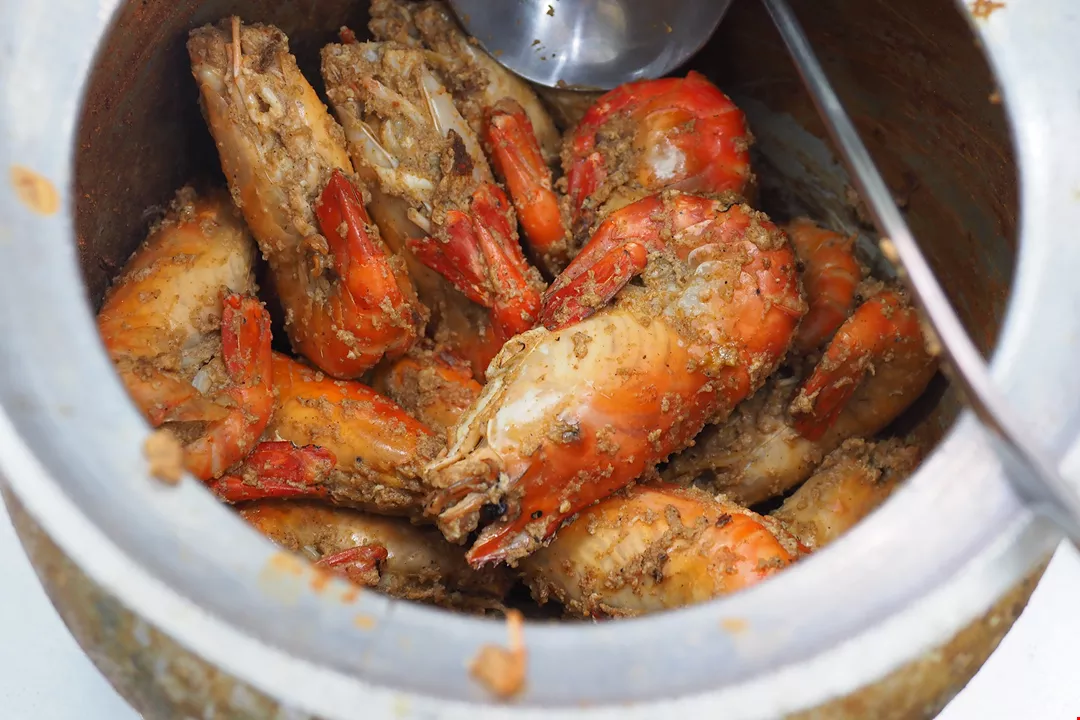
Black pepper prawn.