The Cornerstone of History in Taiwan's South--Kaohsiung High School
Jackie Chen / photos Hsueh Chi-kuang / tr. by Christopher Hughes
October 1993


When on a recent tour of Kaohsiung, President Lee Teng-hui, acting as Chairman of the Kuomintang, met Wang Chia-chi, former principal of Kaohsiung High School, the visit gave rise to some speculation.
Some people think that there must have been a very special reason for Chairman Lee to visit a high school principal for no apparent purpose. It was even linked to the provincial conflict that took place at Kaohsiung High this year--the March 14 Incident--and with the year-end elections.
Seen as the local school of Kaohsiung City and Kaohsiung County, does Kaohsiung High really have this political status? And what do the people of Kaohsiung High think of the unique local culture of southern Taiwan?
Take Lin Shou-shan, the second-generation mainlander member of the Legislative Yuan for Kaohsiung City, who wanted to withdraw from the Kuomintang but finally decided to stay inside the party to make noise; legislator Wei Yao-chien, who was punished by the Legislative Yuan for kicking the speaker's podium; Chen Hsuan-hsu, Kaohsiung City Council's chief secretary, who handed over gifts after the Kuomintang's fourteenth party congress and demanded severe punishments for representatives involved in bribery in the party elections; or ruling party general secretary Hsu Shui-teh, who is rushing all over the place to urge non-nominated candidates to withdraw from the year-end elections . . . .
These newsworthy figures all have their different roles, styles, provincial backgrounds, alignments and political points of view. Yet despite their divergent views, they all share a common period in their past histories: they are all from Kaohsiung High.
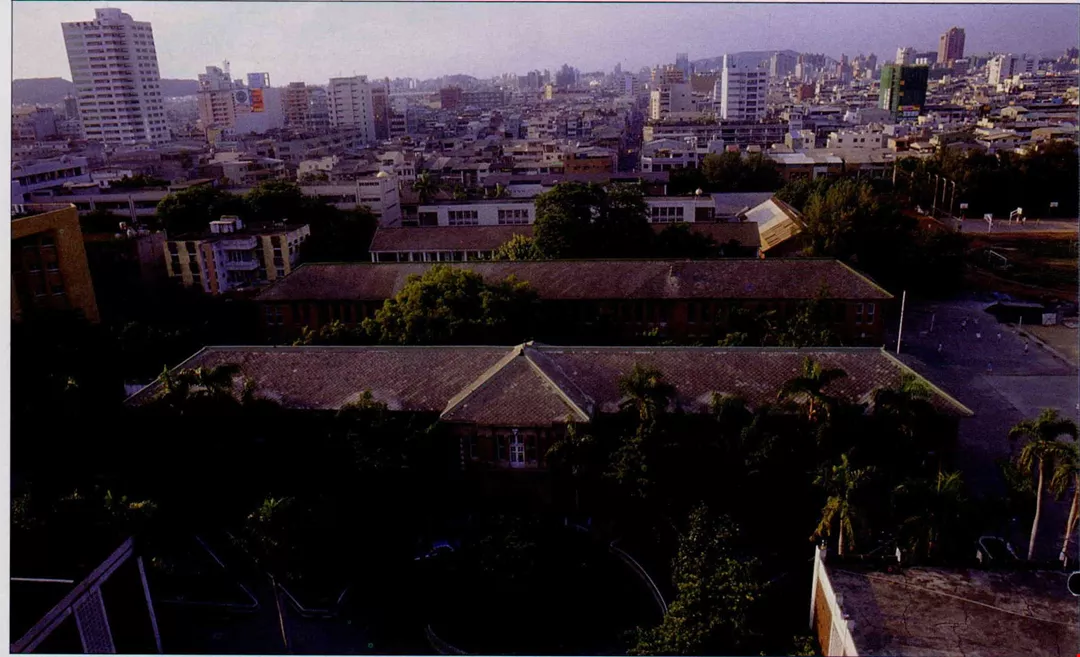
The old buildings of Kaohsiung High stand next to Kaohsiung's railway st ation, making a landmark that is hard for the city's residents to forget .
A school for "locals":
Kaohsiung High, established in 1922, is Kaohsiung City's first public school. Just as with many of Taiwan's old schools which have spanned both the period of the Japanese occupation and the period after retrocession to China, Kaohsiung High's alumni are a microcosm of Taiwan's history. "Every time there is an alumni gathering, the Japanese school song, the Mandarin school song, and the medley of Mandarin, Taiwanese and Japanese languages makes it really festive," describes Lin Shou-shan.
In the hearts of the people of Kaohsiung, there is still a special affection for Kaohsiung High, with its long history.
"If you want to talk about local schools, there is only Kaohsiung High," says Wu Chin-fa, senior reporter for the Min Chung Daily News. "National Sun Yat Sen University has only been established here for around ten years; Kaohsiung Medical School and National Kaohsiung Normal University for teachers are not all-round universities, and the people of Kaohsiung always feel that they are somewhat lacking."
"Although the medical school and teacher's university both use the name "Kaohsiung," they differ from Kaohsiung High in that their students come from all over the country. Because of this, we feel that it is the only school of the Kaohsiung people," says a taxi driver.
"Over 20 years, there has not been any great fluctuation in the numbers of students at Kaohsiung High. To date, the total number of alumni number no more than 30,000," says Pan Hui-hsiung. "If you take the Kaohsiung-Pingtung area as a base figure, the proportion taken on by Kaohsiung High is near seven percent, which makes entrance harder than the joint university entrance exam," he says.
But the special affection felt by the locals, and the expectations of
the local elite, mean that Kao-hsiung High's every move is the subject of much attention.
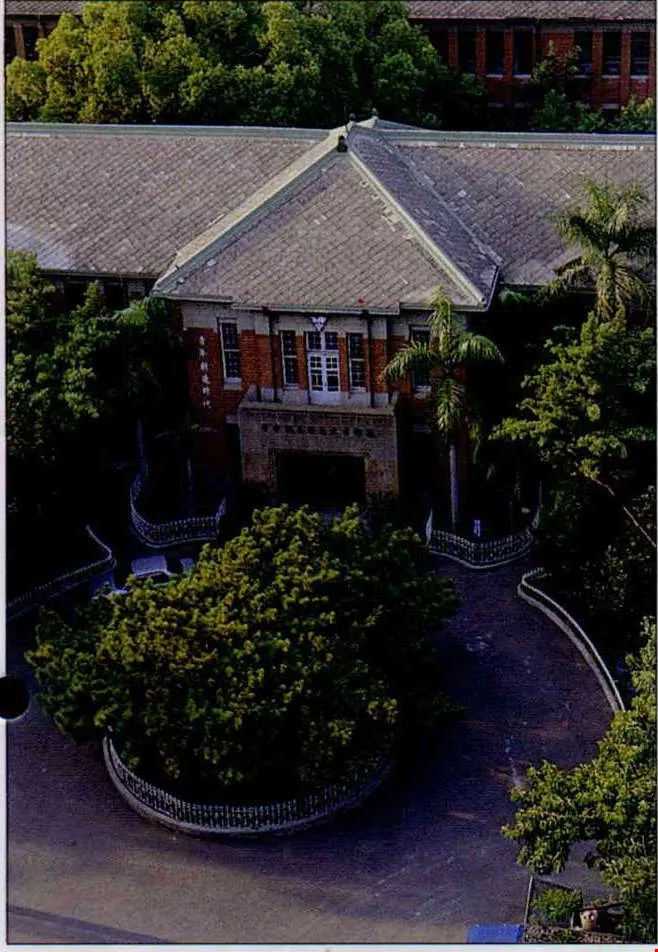
Within the campus of Kaohsiung High, the old pine tree standing in front of the red building dating from the Japanese occupation period has not changed much.(Reprinted from 1931 graduation album supplied by Chen Shui-ping)
A scene of the February 28 Incident:
What has often been talked about of late is how Kaohsiung High was one of the places stricken by the February 28 Incident in 1947.
On March 14 this year the New Kuomintang Alliance (from which the New Chinese Party was formed in August) went to Kaohsiung High to announce its political views. There ensued a heated scene with the southern locals, which is now called the "March 14 Incident." After this event, many people started to talk again about the emotional legacy at Kaohsiung High of the February 28 Incident.
As for the people of Kaohsiung High itself, cuddled claims that the Alliance's choice of venue was "a deliberate provocation to Taiwanese people, reviving memories of their wounds" have left them confused. "The true victims are those students who had to clear up the assembly hall after it was smashed up," says Haiso Chun-wen, who graduated from the school this year.
After passing through such turmoil, in all appearances the campus seems tranquil enough, as though the incident had never happened. "I think that what the students of Kaohsiung High are most concerned about is passing the university entrance examinations!" is the opinion of Curriculum Director Pan Hui-hsiung.
But when you probe deeper into the wounds of the March 14 Incident, is it not the case that it did leave some scars? Chen Ming-pin, a teacher at Kaohsiung High, points out that after the March 14 Incident there were some students from military dependents' villages who expressed dissatisfaction with the clan conflict. They wrote in their weekly reports" "When the people of Kaohsiung beat the New Kuomintang Alliance, it is just the same as if they beat us. If native Taiwanese treat people from other provinces in this way, how are we to go on?"
Chen Ming-pin always tells the students not to look at problems from either a native Taiwanese or a non-native Taiwanese angle. You should seek answers from the process of academic investigation, from history, from facts. "Do not just ask what happened; ask why it happened."
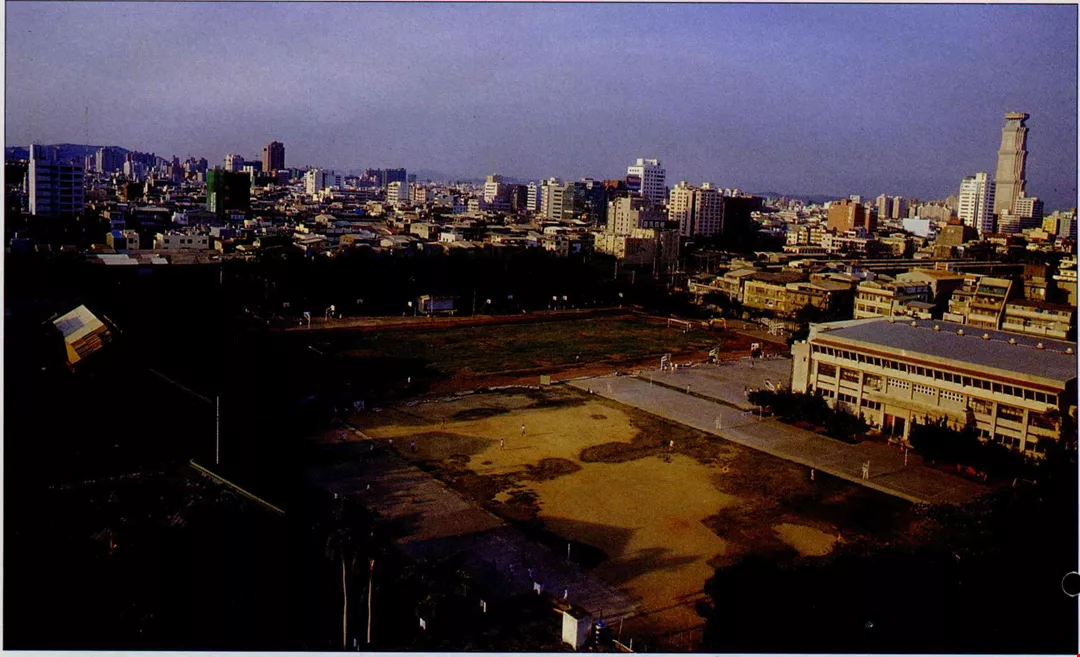
Kaohsiung High's parade ground is very large. The sports stadium, where the March 14 incident occurred, is one of the newer buildings on campus.
Make the world your own responsibility:
Take a tour round the campus of Kaohsiung High, and newspaper cuttings opposing the buying of local land by an insurance company can be seen stuck up in the boys' toilets, the characters blurred and water marked; behind a new building, stone plaques engraved with maxims from Chiang Kai-shek, such as "Make the fate of the nation as your own, put aside your individual destiny," have been covered with lines of red paint at some time; in front of the gate to the principal's office, a "Merry Christmas" sign has been sprayed over with four-letter words. Is Kaohsiung High really as the teachers describe it, a place where the students are all buried in their books and are apathetic about affairs of the world?
"As with other schools in the province, perhaps the students of Kaohsiung High can be divided into good citizens and heretics," points out Cheng Shui-ping, who graduated from Kaohsiung High in 1975. The former type make their main objectives steady progress with their courses and getting into university; the latter type react more sensitively to their environment, looking for new opportunities outside the ossified system.
At the age of 17 or 18, young people are really at a dynamic age in their thinking and views. Having the ability to examine into the prestigious Kao-hsiung High, of course there will be those among them who will have more "ingenious" thoughts.
"The overall impression is that of the good citizens, but there is also a limitless ability for heresy," says Cheng Shui-ping. He thinks that the editors of the school journal The Kaohsiunger during the 1970s can be placed in the "heretical" category.
Cheng points out that, in former years, academics such as Chiang Meng-ling and Chen Chih-fan, who combined scientific education with a passion for the humanities, were what they based their own expectations on. The school journal was not like some other rather conformist student journals, but more like the dissident organs of cultural circles, such as Wen Hsing and Tsung Ho. Subjects of heated discussion that were printed included "Pollution in the Industrial Areas," and "Why Does Kaohsiung Have No Culture? "Perhaps it was only in a city like Kaohsiung, with its lack of culture, that students could 'make the world their own' in this way," he smiles.
If the people behind The Kaohsiunger in those years had all the bold aspirations of youth, the process of growing up and maturing led them to return and contribute to society. Such is the case of Cheng Shui-ping, historian of Taiwanese art and manager of the Taiwan Art History Studio; of Lin Shuo-yen, the architect who built Kaohsiung's first 50-story super high rise; and of Tu Zi-chen of the Institute for Information Industry, who is promoting the law on parallel imports. Many figures working in academic circles also emerged from The Kao-hsiunger, such as Hsu Cheng-chang, the editor of a Taiwanese dictionary; National Taiwan University professor Wu Hung-i, who is researching ancient poetry; and historian Huang Chun-chieh, researcher into Taiwan's agriculture and history of ideas.
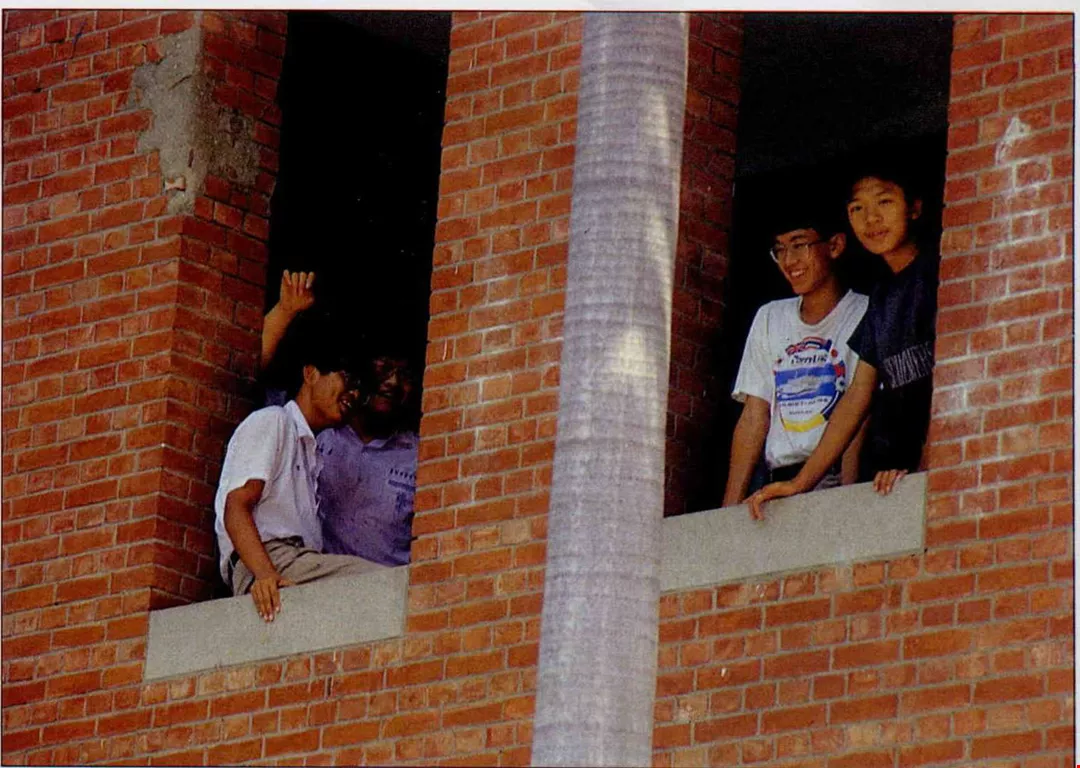
What views do the free and easy youths in front of the red building hold concerning the special problems of the south?
A beginning for integration and coexistence:
Cheng Shui-ping points out that it was from the period of the Japanese occupation that Kaohsiung High's principal and teachers began the school's style of allowing the students to understand Kaohsiung's special character and history. After Taiwan's retrocession to China. under a number of principals well-known for their righteousness and care in running the school, such as Wang Chia-chi, the ability of Kaohsiung High to uphold the good name of southern Taiwan's elite and the tradition of freedom and independence was maintained.
So what is the Kaohsiung High tradition?
"Space for freedom and independent thought," is what Wu Chin-fa remembers. In the oppressive period of the 1970s, when he went from the Pingtung countryside to the city to study, it was the first time in his life that he had faced a situation where he could argue out loud with a teacher in class.
"At one time--I do not know what it was about--a military warden was up on the platform, droning on and on, when a hissing noise rose up from all the students below. I could see the principal standing at the side, smiling, with no expression of being unhappy about the situation." Wu Chin-fa thinks that the leeway given to the students by Kao-hsiung High during the period of martial law made a lasting impact on him.
Kaohsiung High was also the first time that Wu Chin-fa, the son of a Pingtung Hakka family, was able to start learning about integration and coexistence between different provincial groups in the large city of Kaohsiung.
In Wu Chin-fa's autobiographical novel, Autumn Chrysanthemum, he very frankly records the thoughts and ideas that came with the conflict that arose when children of high leaders from the military dependents' villages came face-to-face with native Taiwanese children. The end of Autumn Chrysanthemum is a happy scene of great coming together amidst the conflict between different ethnic groups. The children from the military dependents villages used the fraternal method of financial gifts and peace mediation (in Wu Chin-fa's eyes, the children from the military dependents villages had the most resources in those years), to smooth over the conflicts between Fukienese-Taiwanese and Hakka-Taiwanese factions, and resolve a scene of bloody conflict.
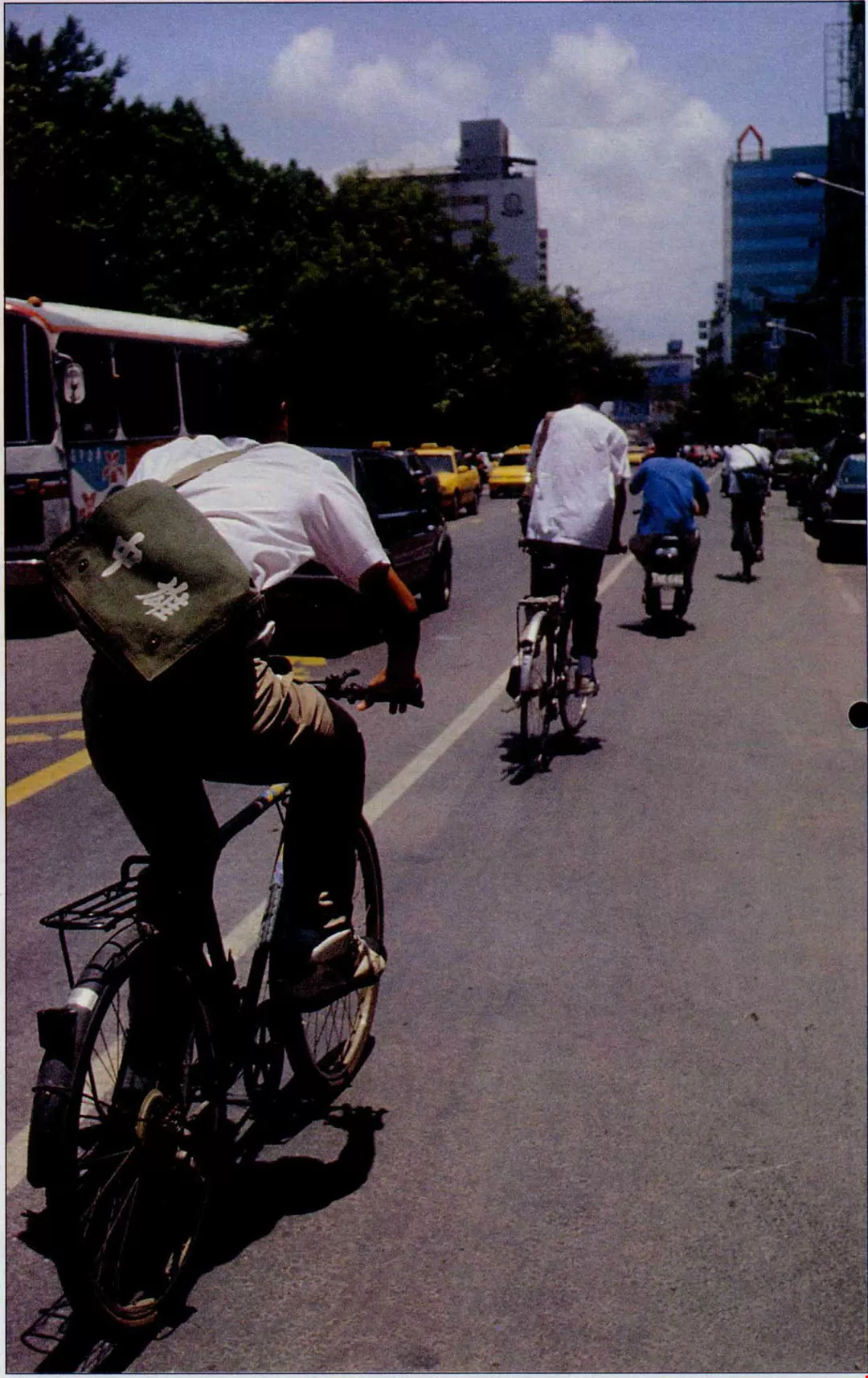
Local people have high expectations of the graduates of Kaohsiung High.
Education from life:
Originally only a boys' school, in the early days after retrocession, Kao-hsiung High had 22 classes at the high and junior-middle school levels, with a total of more than a thousand students. From the 1986 academic year on, the school began to take in girls. It now has more than 3,000 students.
Acceptance into Kaohsiung High has always been a great glory for student and family. Curriculum director at Kaohsiung High, Pan Hui-hsiung points out that over the years the composition of Kaohsiung High's students has been two-thirds from Kaohsiung City, and one third from Kaohsiung County and the Pingtung area.
The background of the students of Kaohsiung High reflects the family structure of the Kaohsiung-Pingtung area: More than 86 percent are native Taiwanese; children from worker, peasant and business families account for more than half; only ten percent are from civil-servant families.
Liberal respect among ethnic groups is what Kaohsiung High wants to teach its students, with its special integration of local cultures.
The Humanities Society, a campus club organized by the staff and students of the school, truly represents the expectations and affection held by the members of Kaohsiung High for Kaohsiung. For three years, the Humanities Society has periodically held lectures and seminars to discuss such problems as Kaohsiung's history, environment and ecology. Today it is an important cultural group for the Kaohsiung area.
"The visits paid to Kaohsiung High by local reporters seem to be more than those paid to the area's institutes of higher education, such as the Kaohsiung Medical School," says teacher Chen Ming-pin. He thinks that Kaohsiung High's liberal tradition makes the student's abilities more equal. And as for educational reform and cultural aspirations, then Kaohsiung High must take much of the responsibility here, too. Take the lively educational reform organization, the Southern Teachers Human Rights Association, which established its headquarters in Kaohsiung. From the organization's head to its general officers, 12 Kaohsiung High teachers make up the backbone of this human rights organization.
Kaohsiung High's executive units, in accordance with the school's liberal style of study, fully respect the selection of these teachers and their modes of teaching. For example, when Mandarin teacher Huang Chun-chien comes across related teaching materials, he often uses current articles and editorials to enlighten the thinking of the students. "Education from life," says Huang. "It is like the March 14 Incident. How can you expect children to have no feelings at all when the provincial complex is provoked?"
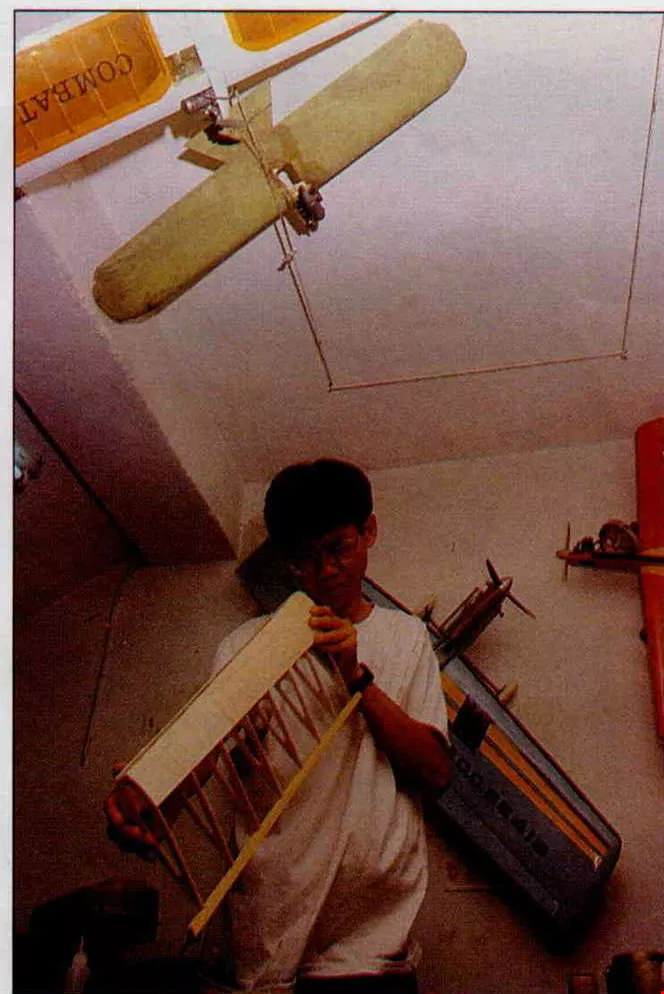
A member of the Mobile Models Society. Teachers at Kaohsiung High say that the flourishing of school clubs there is something that many high schools cannot match.
The Taipei complex?
"In our class nobody dared to admit their origins were outside the province," says Chen Chun-shih, with some exaggeration. He is a graduate of Kaohsiung High, now studying at National Cheng Kung University. In fact, what he really means is that at Kaohsiung High the barriers between native Taiwanese and nonnative Taiwanese have all but disappeared. "All are children of the south. They normally all speak Taiwanese and they are all honest, upright, and chivalrous. In fact, there is no difference," he says.
It is just that, concerning people from Taipei or the north, the natives of Kaohsiung still feel that there is some "difference." This difference lies in Taipei's crowded traffic (Kaohsiung does not have big traffic jams), its over-complicated traffic lights and the unfathomable left and right turns on its one way roads. Also, when you eat with friends from Taipei, everyone goes Dutch; this is most unlike the southerners, for whom all is give and take, with one person generously treating everyone else. These are all aspects which the Kaohsiung children feel make the difference from Taipei.
Wu Ying-ming, a Kaohsiung High graduate presently teaching at National Sun Yat-Sen University, says that perhaps it is because both are cities under the direct administration of the Executive Yuan, that the people of Kaohsiung, including the students of Kaohsiung High, do in fact have a "Taipei complex." Among the many things they due to compare with Taipei, the most obvious is the fact that although both cities are under direct government administration, their cultural stimulation and resources are very different.
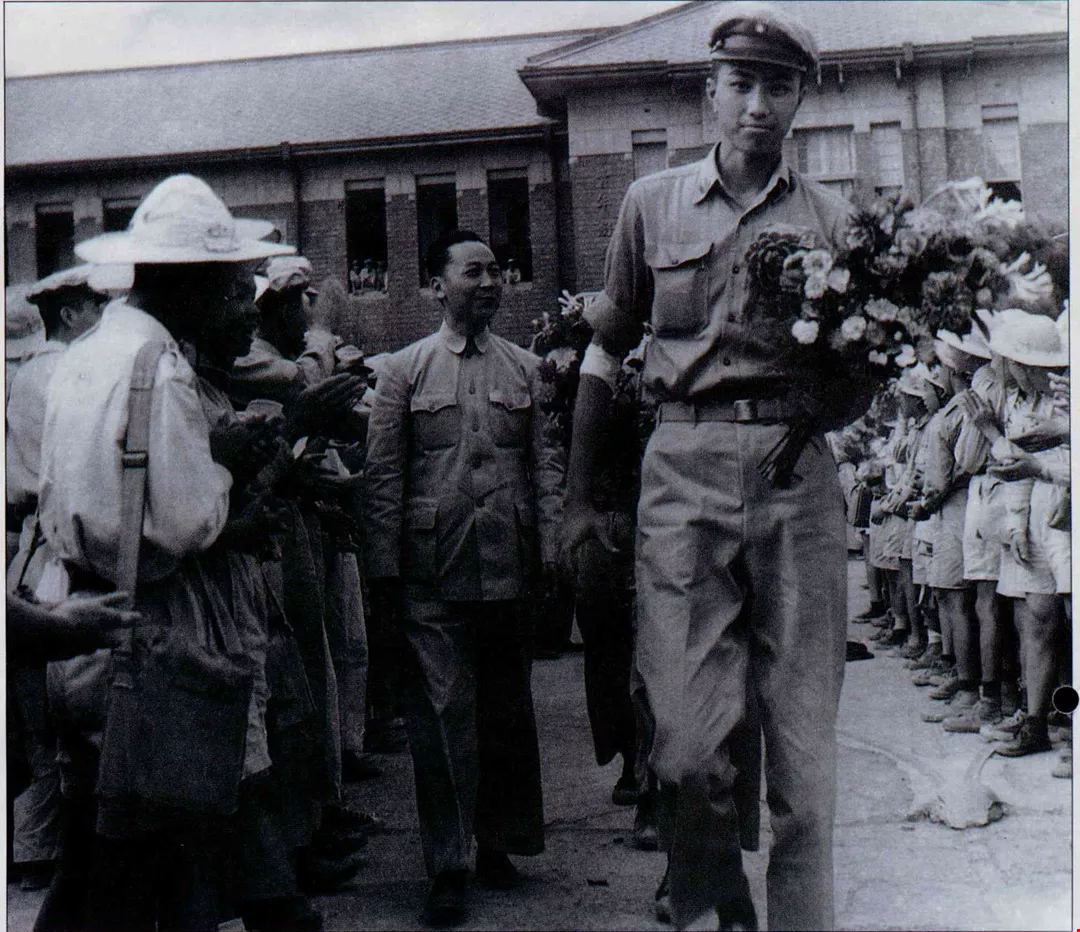
Graduation in the 1950s and 1960s. Many people think that the old principal, Wang Jia-chi, consolidated the open and free style of study.
The remote get overlooked:
Cheng Shui-ping points out that the people of Kaohsiung High particularly like to compare it with Taipei's number one school, Chienkuo High. When you emerge from the gates of Chienkuo High, you are faced by the cultural scene of an art gallery, the botanical gardens, and the Taiwan Provincial Museum. When you come out of Kaohsiung High, you enter an environment of sordid film houses and sleazy restaurants. "It is a discouraging comparison," he says.
"When the children of Kaohsiung High go to the north to study, most of them have to go through a process of acclimatization, asking themselves, 'If we all have gone through the same process of preparing for university, why is it that I have read fewer books?''' observes teacher Huang Chun-ching. It is because, "With more resources, it is easier to get information." Up to the present, the school authorities have always encouraged students to go north to university.
At Kaohsiung airport, waves of people go back and forth between north and south. The 40-minute journey from north to south actually takes less time than it does to get between two points in a Taipei traffic jam.
Wu Chin-fa thinks that the differences are actually easy to fill in, but it is hard to smooth out the psychological divide. "Southerners say, 'the remote get overlooked.' That is the kind of sentiment that prevails," he thinks. High-school students, including those of Kaohsiung High, all stress this kind of distance. They are unable to avoid carrying in their hearts an "inferiority and arrogance complex." In fact, this is the product of decades of north and south not developing in the same way.
And the future? The people of Kaohsiung, including the students of Kaohsiung High, perhaps all know that the solution lies in themselves.
The historical Kaohsiung High:
At the gates of Kaohsiung High, the Ryukyu pine that was planted during the Japanese occupation still stands straight in the afternoon breeze. The red building, rumored to have once been subjected to a hail of bullets, also still stands. Not long ago, the school's alumni actively opposed a suggestion by the city council to convert the school's sports ground into an underground car park. The reason was to preserve history.
What the people from Kaohsiung High treasure is their feelings of mutual tolerance and respect, due to the experiences of history, or perhaps the particular environment of the south. Such is the case with the graduates of Kaohsiung High, who, although they appear to be tough and never to give way to each other, when they get together as alumni unite in saying "Kaohsiung High is my pride." Their enthusiasm for working together for the good of the area is perhaps as hot as the southern sunshine.
[Picture Caption]
p.114
The old buildings of Kaohsiung High stand next to Kaohsiung's railway st ation, making a landmark that is hard for the city's residents to forget .
p.115
Within the campus of Kaohsiung High, the old pine tree standing in front of the red building dating from the Japanese occupation period has not changed much.
(Reprinted from 1931 graduation album supplied by Chen Shui-ping)
p.116
Kaohsiung High's parade ground is very large. The sports stadium, where the March 14 incident occurred, is one of the newer buildings on campus.
p.117
What views do the free and easy youths in front of the red building hold concerning the special problems of the south?
p.118
Local people have high expectations of the graduates of Kaohsiung High.
p.119
A member of the Mobile Models Society. Teachers at Kaohsiung High say that the flourishing of school clubs there is something that many high schools cannot match.
p.120
Graduation in the 1950s and 1960s. Many people think that the old principal, Wang Jia-chi, consolidated the open and free style of study.
p.121
Some people think that Kaohsiung High students today are only crazy about famous and names, electronic games, and comparing the advantages of different motorbikes: ideals have become much more insipid.
p.121
Students practiced Kendo during the period of Japanese occupation, soccer after retrocession to China, and today they are crazy about baseball. The times might change, but the spirit is the same. (Reprint from 1931 graduation album supplied by Cheng Shui-ping)

_DSC2938@List.jpg?w=522&h=410&mode=crop&format=webp&quality=80)

@List.jpg?w=522&h=410&mode=crop&format=webp&quality=80)


