Chen proposes the idea of “new nature.” This refers not to untouched primitive wilderness, but a new landscape formed through long interaction between people and nature. Taoyuan’s Pearl Coast, the venue for this year’s festival, is a case in point.
After the ancient Xindian River captured the upper reaches of the Dahan River, causing the Dahan River to change course, several beheaded streams—rivers cut off from their former headwaters—were left behind. Among them, the Nankan, Xinjie, and Laojie Rivers flow to the sea. Along the coast, local communities built stone fish weirs, set up eel-fry fishing racks, and developed a tradition of beach-seine fishing, creating a landscape in which people and nature coexist. Later, industrial development brought coastal industrial parks, ports, and energy facilities, continuing to transform the shoreline. Today, the Taoyuan coast is no longer untouched nature, but a new landscape shaped jointly by natural forces and human activity.
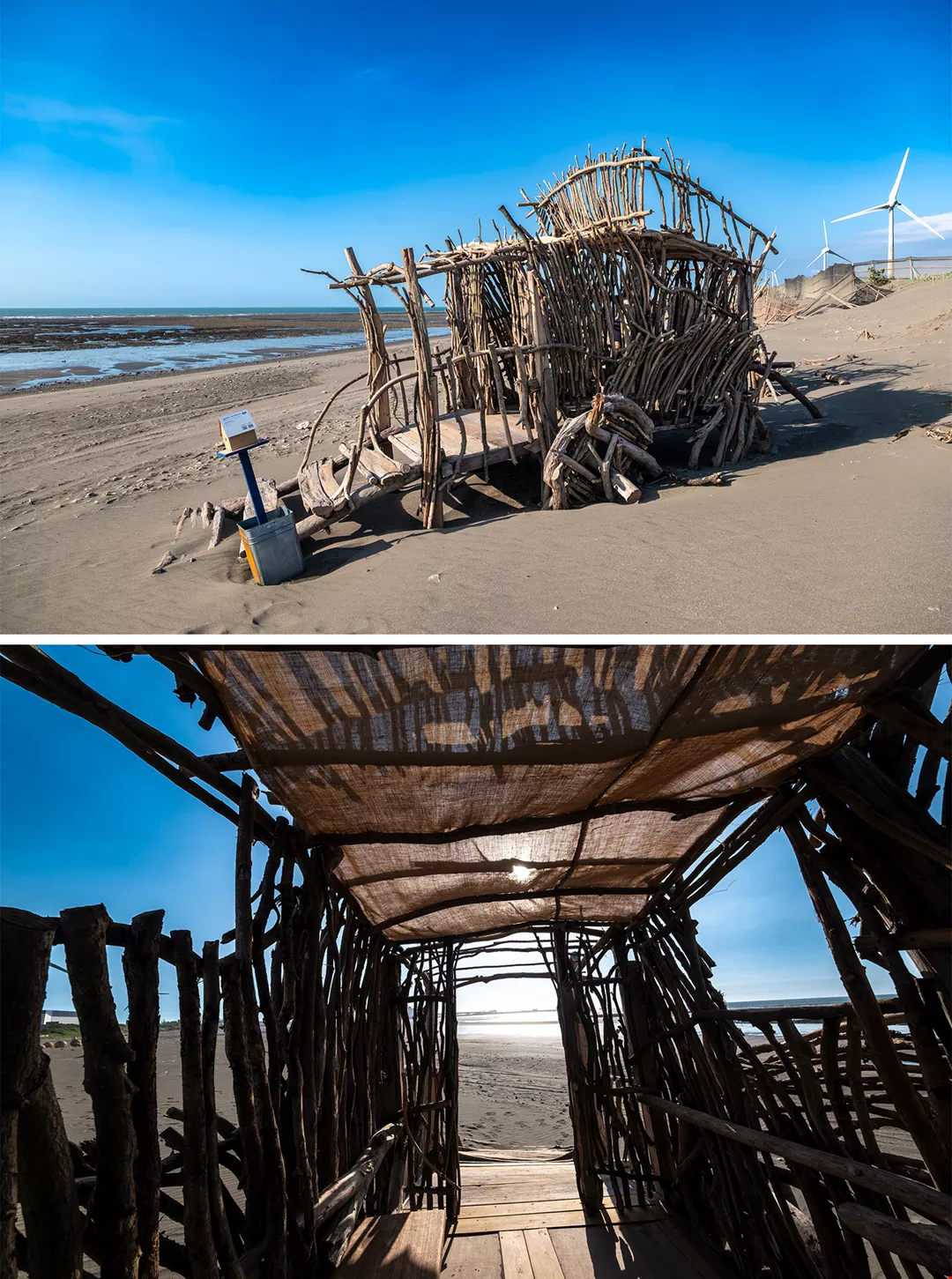
A migration vehicle made from driftwood by a Mongolian artist is a symbol of global movement amid the dunes.
Migration of Nature by Amarsaikhan Namsraijav (Mongolia)




@List.jpg?w=522&h=410&mode=crop&format=webp&quality=80)


@List.jpg?w=522&h=410&mode=crop&format=webp&quality=80)
@List.jpg?w=522&h=410&mode=crop&format=webp&quality=80)