Dabeikeng Hakka Community: Awash with the Fragrance of Tea
Chang Chiung-fang / photos Chuang Kung-ju / tr. by Geoff Hegarty and Sophia Chen
May 2015


Dabeikeng is located in Sanshui Village, Longtan District, Taoyuan City, hard by Taoyuan’s border with Hsinchu County. It’s a Hakka community where more than half the residents are surnamed Jiang—they’re nearly all related to each other in some way.
For the Dabeikeng Community, May is the season when the native tung tree blossoms, as well as being the beginning of harvest time for Oriental Beauty tea. Let’s experience the attractions of this tiny community—close to the city but without all the noise and pollution of an urban environment.
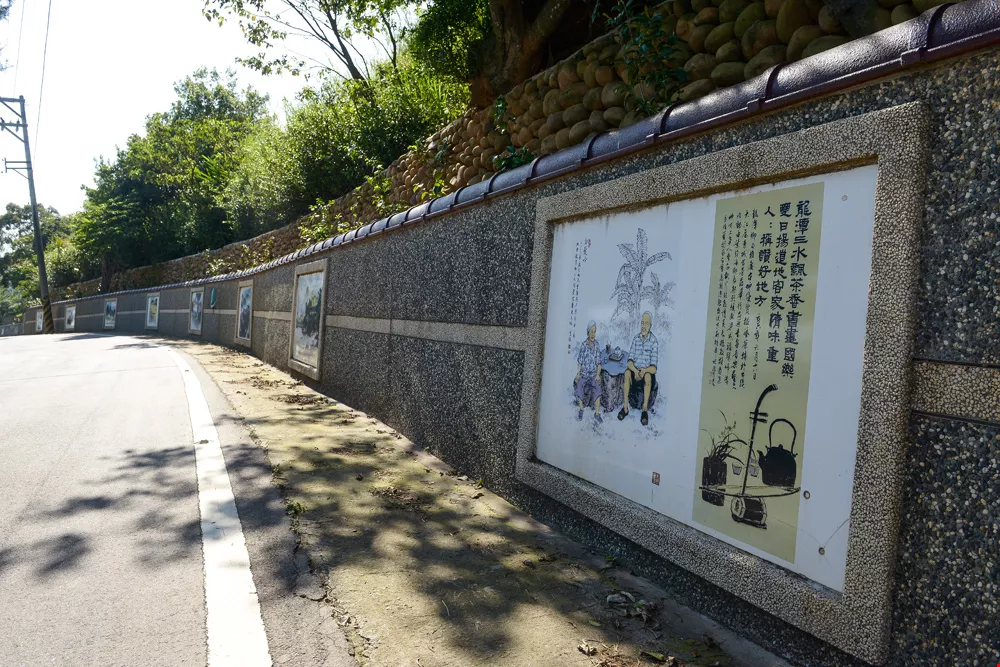
In the bright moonlight / a young girl is making tea / a young man is bringing out a bench / tea with guests
In the bright moonlight / a young man / riding a white horse / passing by the water / garlic chives growing / chives blossom / a marriage
These lines written on a wall in Dabeikeng are taken from two Hakka nursery rhymes. Read in Mandarin, they lose much of their fluency and beauty, but the Hakka feeling still shines through.
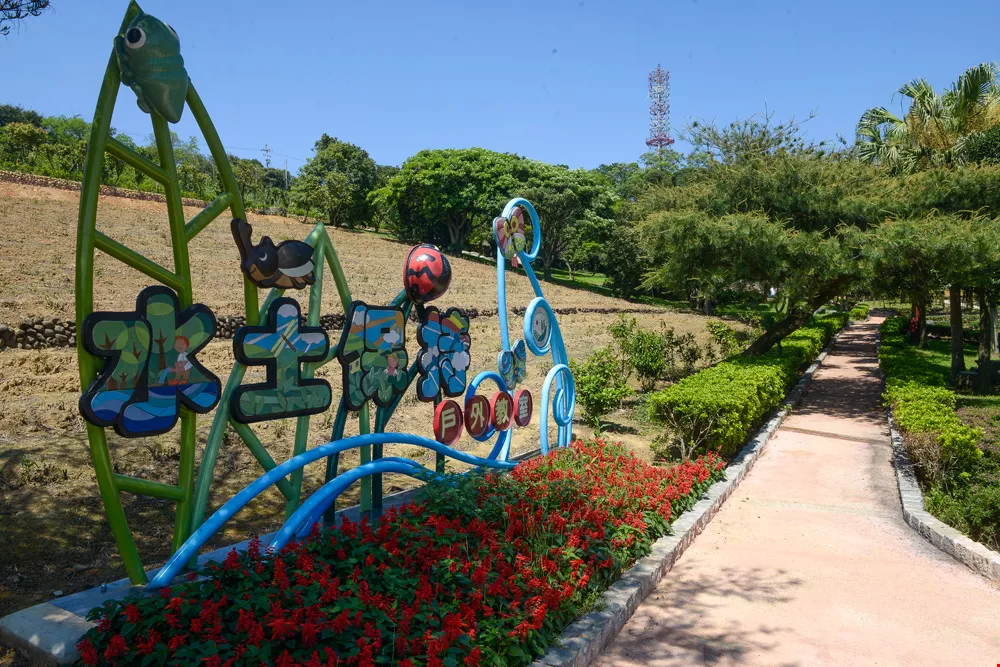
An artistic image of the tung tree in full bloom is set at the south entrance, reflecting the season of spring when the tree’s flowers are in full bloom.
There are only two restaurants within the community—Shan Shui Yuan and Da Jiang Wu. Both offer authentic Hakka cuisine, including Hakka-style chicken, Hakka stir-fry, chitterlings with shredded ginger, braised pork with pickled vegetables, pickled Chinese mustard with pork soup, and a bowl of rice mixed with chicken fat sauce. Jiang Zengping, director of the Dabeikeng Village Development Association, says that the restaurants are always packed during weekends or public holidays, and customers have to book well in advance.
As well as Hakka food, Dabeikeng has also preserved other elements of its traditional culture, like the well-maintained century-old Jiang House with its characteristic sanheyuan structure (a central building with two wings perpendicular to each side, and a courtyard in the center). The community celebrates Bo Gong (the Earth god) in different ways according to the season. Jiang tells us that they hold a ceremony before the 200-year-old shrine to thank the god for each of the seasons.
A green environment permeated by the aroma of tea, Dabeikeng is a typical Hakka community. The Bo Gong (Earth god) shrine in the middle photo, which is more than 200 years old, is central to local residents’ religious beliefs.
With a total area of about 312 hectares, Dabeikeng is located in the western corner of Longtan District and at the southern edge of the Hukou Plateau. Most of the hilly land has red acidic soil, and at an altitude of 150 to 350 meters, an environment well suited for growing tea: cool, foggy and rainy.
Dabeikeng has always produced tea for export, particularly Assam tea until the 1970s. But in 1980, the tea price slumped due to overproduction. Farmers moved into pouchong tea (a light oolong) in order to increase revenues. However, around 1990 the community was affected by the emerging popularity of mountain tea from the central and southern regions of Taiwan. The market for tea from the northern regions all but disappeared and many plantations had to shut down.
With many plantations deserted, the young people left their homeland seeking work. But Jiang refused to give up without a fight: he volunteered to lead the community in making changes that would allow them to survive. The community accepted advice from the Council of Agriculture (COA) and participated in programs such as the Integrated Hillside Village Development Plan and Splendid Villages, designed to revitalize rural communities.
In 2000, the community began to produce Oriental Beauty, a type of tea made from leaves infested by the tea green leafhopper (Jacobiasca formosana), and which develops a unique aroma reminiscent of slightly overripe fruit. The community seemed reborn, and the aromas of tea permeated Dabeikeng once again.
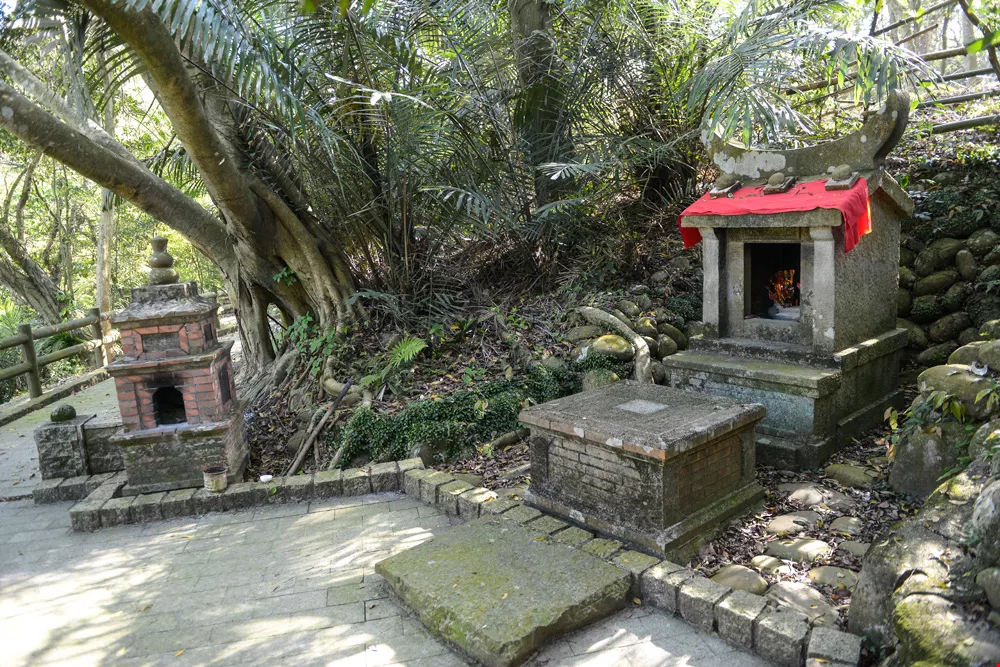
A green environment permeated by the aroma of tea, Dabeikeng is a typical Hakka community. The Bo Gong (Earth god) shrine in the middle photo, which is more than 200 years old, is central to local residents’ religious beliefs.
Soil and water conservation is a major issue for those who farm in hilly areas. As well as maintaining the strong Hakka culture of the area, Dabeikeng’s other major attraction centers around the efforts that the community has put into soil and water conservation, an effort that has been rewarded with great results. For these successes, the community is regarded as a model of good conservation.
And conservation in such an area is not a simple matter. The village is called Sanshui (“Three Waters”) because there are three streams flowing into the area, and as it sits on the edge of the Hukou Plateau, the countryside is very hilly with many steep gullies. So the geology is quite fragile, making soil and water conservation quite a challenge.
Chen Sheng-chuan, deputy director of COA’s Soil and Water Conservation Bureau (SWCB) Taipei Branch, notes that currently there are 529 revitalized rural communities in Taiwan, and Dabeikeng is one that has developed well. In times gone by, Dabeikeng was an area often affected by landslides. In 1976, the SWCB began providing assistance to communities struggling to conserve soil and water. In 1997, after many years of work, Dabeikeng officially became an “outdoor classroom” for the bureau to promote and teach soil and water conservation.
The area abounds in a variety of conservation structures including hillside ditches, intercepting ditches (which are built across flat regions to intercept the flow of surface water), hydraulic drops (a structure that creates a rapid change in the depth of a flow to reduce erosion damage to irrigation channels caused by water running down steep slopes), and farm ponds to buffer strong flows.
These facilities are often used to demonstrate key principles of conservation, but in fact they play a significant role in typhoons and floods. Jiang recounts how when Typhoon Nari struck Taiwan in 2001, the neighboring villages of Sanhe and Santian were hit hard, but Dabeikeng suffered only minor damage to some roads. This incident really brought home to the local residents how important soil and water conservation was for the entire community. They say frankly: “Luckily, we’ve done a good job!”
A green environment permeated by the aroma of tea, Dabeikeng is a typical Hakka community. The Bo Gong (Earth god) shrine in the middle photo, which is more than 200 years old, is central to local residents’ religious beliefs.
Reforestation is another pride of Dabeikeng.
“When I was a child, most of Dabeikeng was covered in tea plants, but now much of the area has become dense bush,” says Jiang. For more than a decade, a number of formerly fallow plantations have been used to grow high-economic-value trees, the area of which has reached 30-plus hectares with more than 100,000 trees planted. This change has not only increased the value of the land, promoted a greener environment, improved air quality, and improved water conservation, but has also created a new habitat for native fauna. Increasing numbers of birds have come to nest in Dabeikeng, and around the end of April and early May is Dabeikeng’s firefly season. Rhinoceros beetles appear on Griffith’s ash trees from mid-June to mid-July. So in addition to becoming an “outdoor classroom” for soil and water conservation, Dabeikeng has also created a rich ecological “classroom.”
But unfortunately, Dabeikeng has one drawback. The area appears quite lifeless in winter as most living things either wither or hibernate. To compensate for this minor shortcoming, in the last seven or eight years Jiang and other residents have planted some 5–6000 camellias. Hopefully now, from November to early April, Dabeikeng will gain yet another attraction—the blossoming of thousands of camellias.
After more than a decade of remediation and revitalization, Dabeikeng has gradually regained its vigor, and in recent years a number of people have moved back to their old homes.
Luo Guo’en, aged 63, has recently moved back to the community to restore his old house after living in the Yangmei District of Taoyuan. With support from the village revitalization program, the spread of green remediation has reached Luo’s front door, so now he takes responsibility for maintaining the trees and flowers around his home.
“Not too much has changed,” says Luo, who is excited about plans to renovate his old home. Just like Dabeikeng itself, Luo has found a “second spring.”
In May, the tung trees blossom and the aroma of tea floats through Dabeikeng. The community welcomes its many visitors with great warmth.
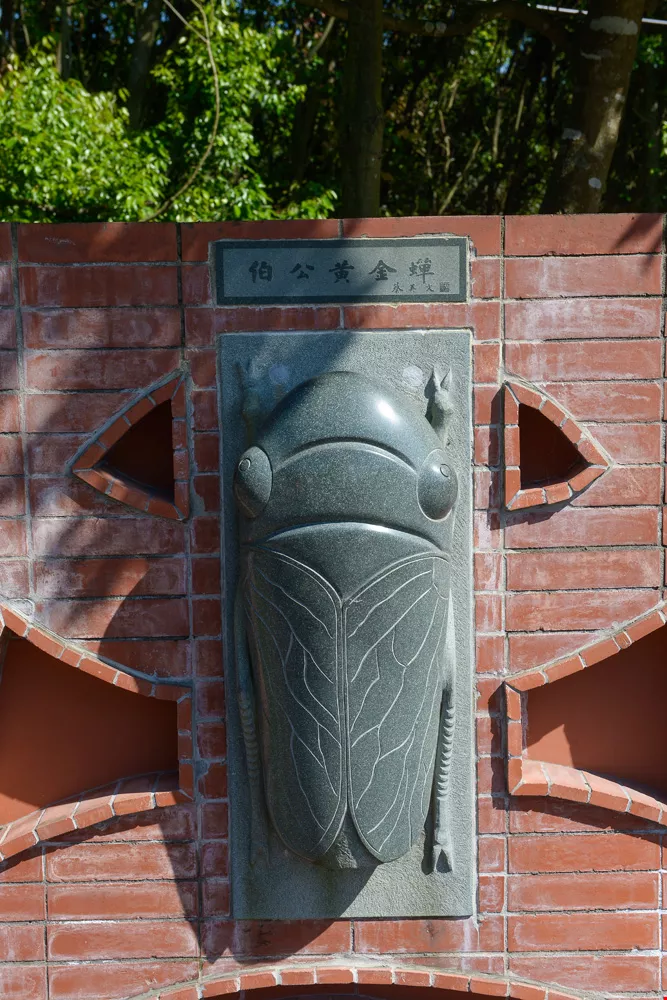
The tea green leafhopper insect has become a community hero in the production of Oriental Beauty tea, enjoying a status equal to Bo Gong. The photo shows a Bo Gong leafhopper sculpture designed by local residents.
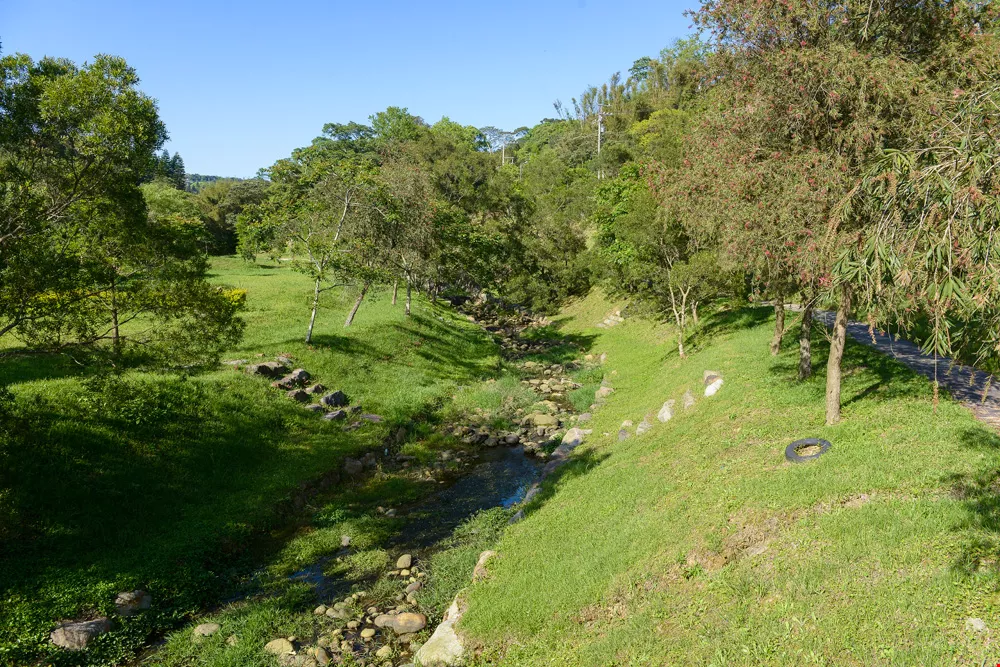
In Dabeikeng, soil and water conservation is a major issue as well as a source of community pride. The picture at right shows one of the hydraulic drops which help reduce erosion caused by water coursing down steep slopes.
In Dabeikeng, soil and water conservation is a major issue as well as a source of community pride. The picture at right shows one of the hydraulic drops which help reduce erosion caused by water coursing down steep slopes.

In Dabeikeng, soil and water conservation is a major issue as well as a source of community pride. The picture at right shows one of the hydraulic drops which help reduce erosion caused by water coursing down steep slopes.
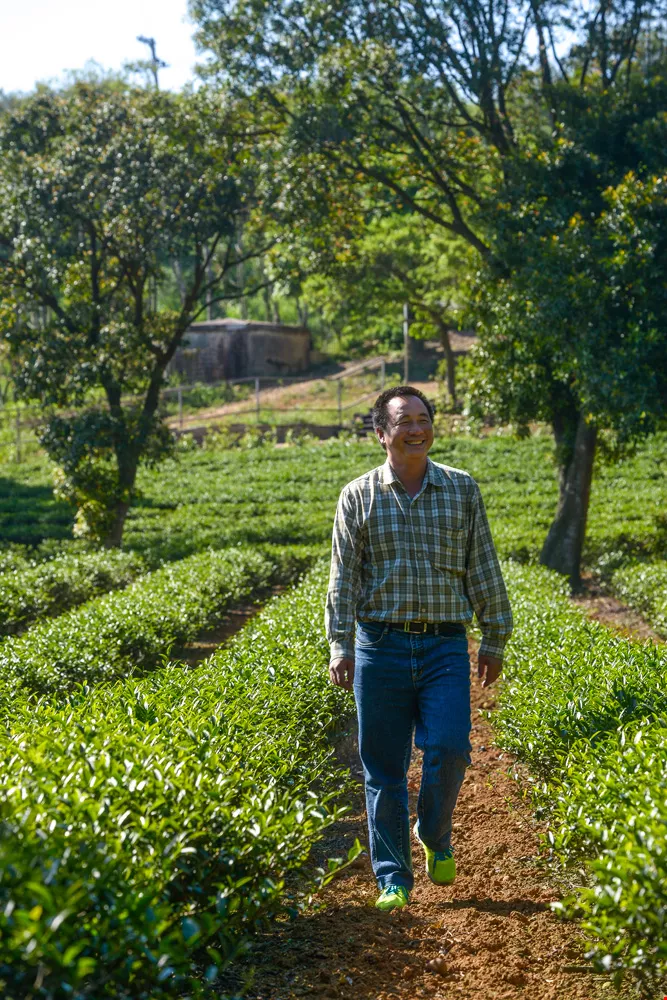
Jiang Zengping, director of the Dabeikeng Village Development Association, is a major advocate of reforestation. He is very proud of his community’s achievements.
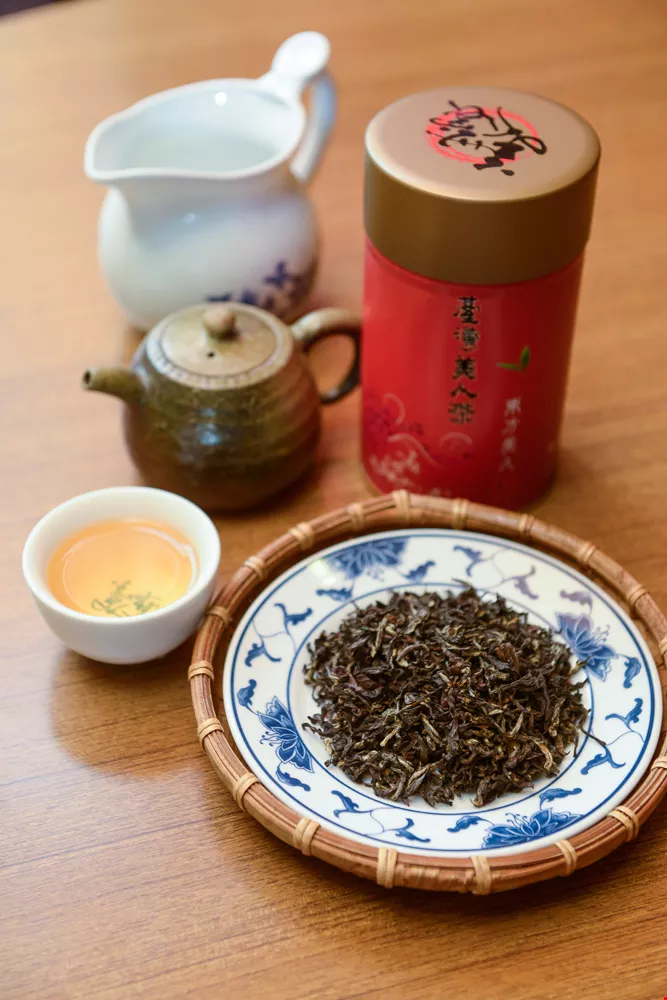
Oriental Beauty tea is made from leaves infested with an insect pest, the tea green leafhopper. As a result, the tea develops a unique aroma not unlike slightly overripe fruit.

@List.jpg?w=522&h=410&mode=crop&format=webp&quality=80)


