Heeding the Call of the Spirits—Paiwan Shaman Mamauwan
Sam Ju / photos Chuang Kung-ju / tr. by Geof Aberhart
October 2014


This year, the number of officially recognized indigenous peoples in Taiwan grew from 14 to 16. However, despite this increase, Aboriginal villages that continue the old ways are still a rarity.
In the Taitung township of Daren, though, one village is keeping the old social structure and faith alive—the Paiwan village of Tjuabal. As the rest of Taiwan celebrates Mid-Autumn Festival, in Tjuabal one woman—the village’s shaman—leads her followers through a solemn ceremony.
At the center of the ceremony are three Paiwan women.
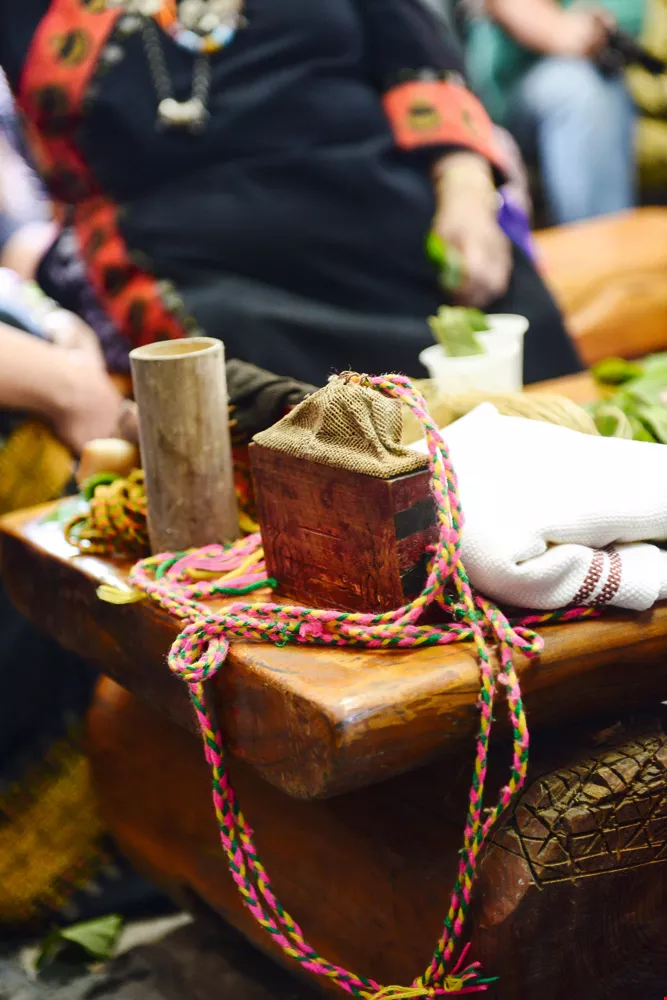
In the Paiwan tradition, a buligau and her apprentice exchange kaniputj, shaman’s boxes containing tools of the trade like pig bones, a ceremonial dagger, and a “holy bead” called a zaqu.
The first of the three is Galaikai (Chinese name Bao Xiumei), the head of Tjuabal’s leading family, the Patjaljinuk clan. With Paiwan society an aristocracy, Galaikai’s position also sees her serving as the host of the ceremony.
The second is the 81-year-old shaman Rhemerheman (Zhu Lianjin), the family’s top shaman and renowned as the most spiritually gifted shaman in Tjuabal. Her position sees her holding traditional rites, helping villagers organize weddings and funerals, providing traditional medical care, and conducting divination, all done with her team of shamans through communication with the spirits.
Finally, there is the main player—Rhemerheman’s apprentice, 42-year-old Mamauwan (Bao Huiling), who runs a children’s daycare center in Taitung City and is a graduate student of Austronesian studies at National Taitung University.
Genetically, Mamauwan is the daughter of Galaikai; by the Paiwan tradition, though, she is shaman to the chief—also her mother.
This day is Mamauwan’s “graduation,” when she is “weaned off” her teacher. After Rhemerheman has called for the guidance of the god of the shamans, the real ceremony begins. During the ceremony, a zaqu, or “holy bead” (actually a soapberry seed) is dropped from above onto a white cloth held by the potential shamans. In this case, Mamauwan is the lucky recipient.
This is the second zaqu Mamauwan has been granted, and it is for use in divination. It signifies that the shaman god has consented to Mamauwan conducting her own rites in the future.
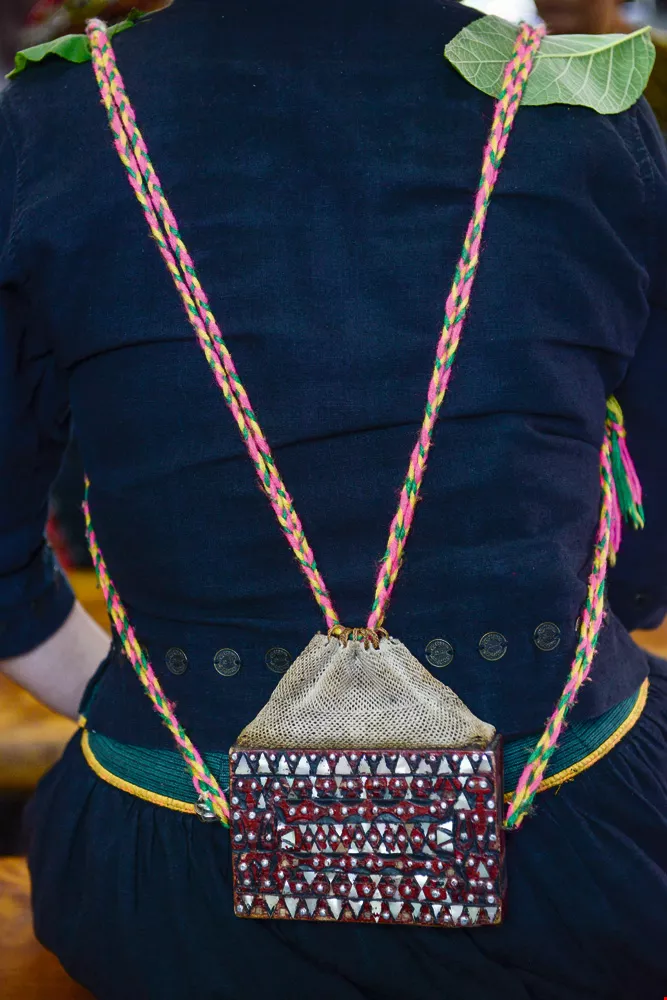
In the Paiwan tradition, a buligau and her apprentice exchange kaniputj, shaman’s boxes containing tools of the trade like pig bones, a ceremonial dagger, and a “holy bead” called a zaqu.
The Patjaljinuk clan of Tjuabal is a well-respected noble family, and so the most important ceremony on the Paiwan calendar—the five-yearly Maleveq—is led by them, as it has been for over a century.
Dauwan (Bao Chunqin), mother of current chief Galaikai, was named chief at age 14 and quickly became a near-legendary figure in local lore. Before her passing in 2001, she had led some 12 Maleveq ceremonies across six decades, and the preservation of the traditional dances associated with the ceremony is largely thanks to her.
Crucial to the preservation of these ceremonies and rites is the system by which the members of the chiefly family have assigned roles: first shaman (basalatjan), shaman (buligau), secretary (gezi geziben), high priest (balagalai), mage (balisilisi), sacrifice officiant (mulusu), and messenger (laisan).
In this system, the heaviest workload falls on the shoulders of the basalatjan and the group of buligau she leads. They being the only ones capable of channeling the spirits, virtually every rite and ceremony needs their leadership. However, current basalatjan Rhemerheman is in her twilight years, and is in urgent need of a successor.
And so, when the Daren Township Office announced a buligau training course in 2007, Galaikai decided to sign up her youngest daughter, Mamauwan, and her niece, Tjuku (Lü Meihui), despite the course being a deviation from the traditional apprenticeship.
After Christianity was introduced to the Aboriginal community, the traditional beliefs rapidly fell into decline. The Patjaljinuk clan held fast, though, fearing the loss of the tribe’s ties to their ancestors and the spirits should there no longer be a buligau leading the traditional rites.
When her mother told her she’d signed her up to the training course, Mamauwan says, she was deeply moved, as both her grandmother and great aunt had been buligau—the latter was even basalatjan to her maternal grandmother, Dauwan. “Ever since I was a little girl I would follow the buligau around everywhere!”
That lineage, though, didn’t mean she was a shoo-in. Only those chosen by the spirits can become buligau, and the first step to opening the lines of communication to the other side was learning the scriptures.
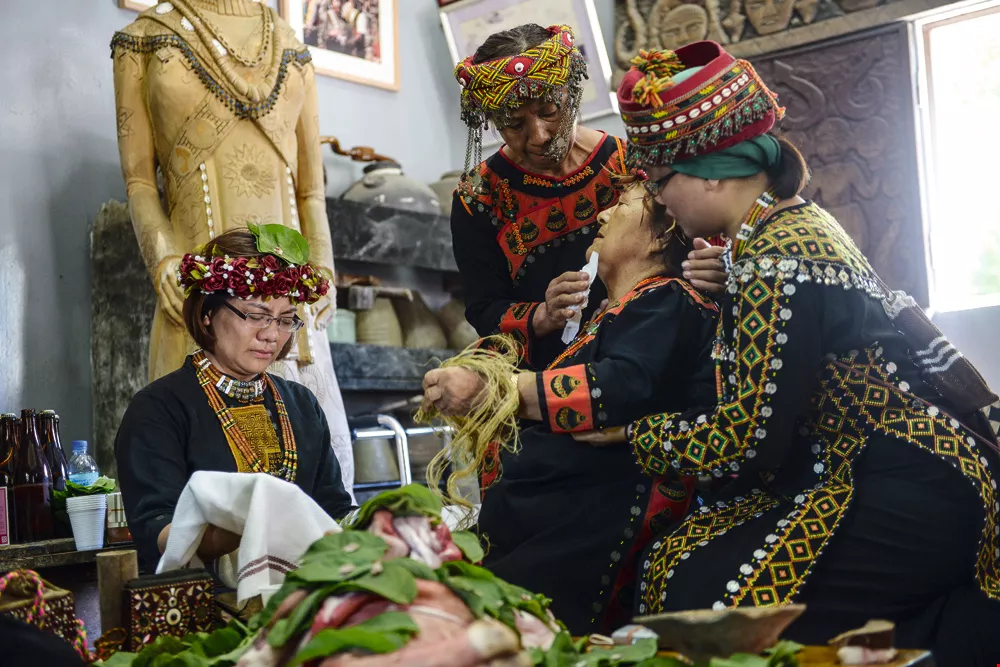
Tjuabal’s basalatjan, or “first shaman,” Rhemerheman (second right) leads a group of buligau in communications with the shaman god, who then grants Mamauwan (first left) permission to conduct rituals for the village herself in the future.
Rhemerheman was recruited to teach the nine basic scriptures, line by line, to the 20-something students.
This was complicated by Taiwan’s indigenous peoples, including the Paiwan, having oral cultures. Mamauwan notes that the scriptures are also in a more ancient form of Paiwan, practically another language, and it took her a good six months to really memorize them. A lot of the time, she had to rely on a “sixth sense” intuition of what the words actually meant.
Of the two dozen or so students that enrolled in the buligau training course, only seven successfully graduated. It was thanks to their performance being up to scratch that Mamauwan and her cousin were made buligau in August 2008.
Becoming a buligau is a major affair in Paiwan tradition. On the day of her “promotion,” the chief announced the event to the ancestors, and the mulusu held a ceremony to sacrifice a pig. Once the basalatjan had chanted her scriptures, the gods saw fit to grant Mamauwan the zaqu, signifying that she had been chosen and accepted by the shaman god, and was permitted to have her own “shaman’s box,” or kaniputj.
These kaniputj hold all the special tools of the trade, including a ceremonial dagger, pig bones, and a zaqu. Upon Mamauwan’s promotion, Rhemerheman took her kaniputj and passed it on to Mamauwan, who in turn presented Rhemerheman with a newly made one, completing the ceremony.
This is only the start of the return to the apprenticeship system, though. Rhemerheman has continued to hold ceremonies in the village and help the locals while Mamauwan accompanies her, learning more and refining her spiritual skills.
“As a buligau, a daughter of the chiefly family will certainly have an advantage in her spiritual abilities, but she will also have more duties to undertake.” As a medium helping her people communicate with the spirits, Mamauwan has quite the responsibility resting on her shoulders.
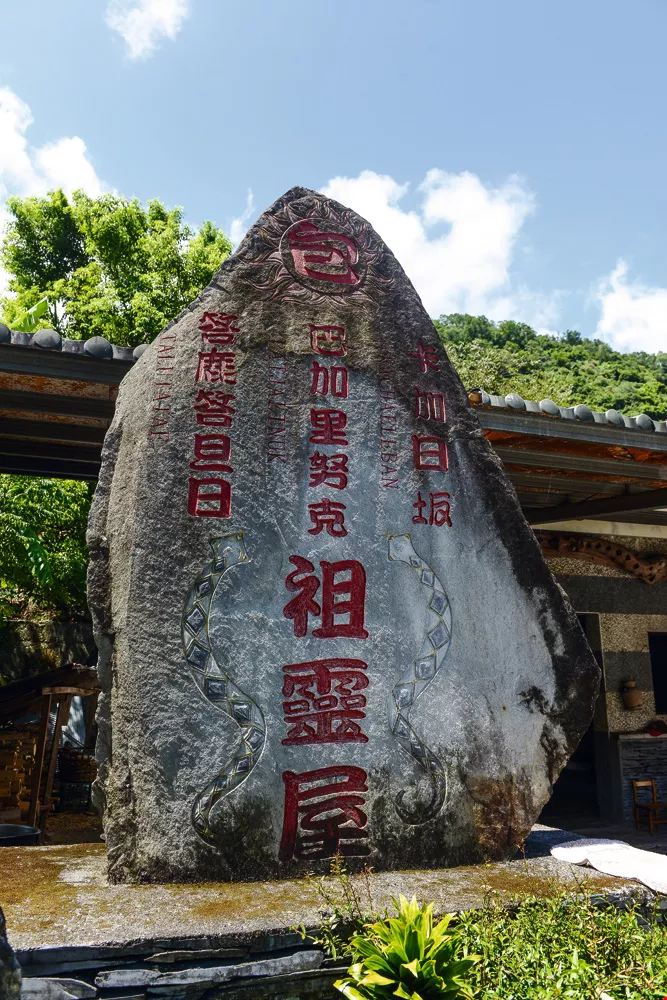
In Paiwan culture, buligau are the only people capable of communicating with the spirits. In the village of Tjuabal, village rituals are conducted in the puvuvu vuvuwan, or ancestral house.
According to Paiwan tradition, women can be buligau, while men can be balisilisi. Only the buligau can communicate with the spirits, and their spiritual abilities far outstrip those of their male counterparts. However, they aren’t viewed as being “better” or “worse,” but simply different and complementary, each with their own role to play.
Jokingly, Mamauwan remarks that the balisilisi have it easy, only having to remember a few simple one- or two-line scriptures and only being required for one part of Maleveq. Regardless, “the buligau don’t boss them around or act superior. There’s only one person who is superior, and that’s the chief. The rest of us ‘officials’ are equals.”
Traditional Paiwan beliefs hold that those who die in accidents will become evil spirits and haunt the scene of the accident. It is when trying to call to these spirits that the buligau are in particular need of the help of the village’s men.
At the site of a ritual, says Mamauwan, there may be dozens of spirits both good and bad, and should a buligau be possessed by an evil spirit, the consequences could be dire. This is why when “collecting” the spirits, the balagalai—a man—must be the one to do it.
“Men are stronger; they can keep the spirits down during the rites and protect the buligau.” Mamauwan explains that while there is a sense of the two “sides” working together in Paiwan tradition, it’s purely about the differences between the genders, and not some sense of men’s rights or women’s rights.
For example, in Maleveq—a celebration of the links between the mortal and spiritual realms—the split between the genders is clearly on display, with the important Djemuljat ritual conducted only by the balagalai, due to its historical connection with headhunting.
The spirits are watchingThat said, Mamauwan remarks, there is some degree of gender equality in traditional Paiwan culture. For example, the chieftainship is hereditary, but “the first child who sees the sun will be the future chief,” regardless of gender.
Despite being frequently praised as being just as capable as her older brother, Mamauwan will not be the next chief, and she has no complaints—such is “the will of the gods.”
“We don’t have the right to ask ‘why won’t you give it to me?’ It wouldn’t even occur to us. All I’m concerned with is doing my job, doing it well, and supporting my brother.”
“And if I ever did have any designs on his position, I’m sure the spirits would not be pleased,” says Mamauwan.
But does she have any concerns about the unequal division of labor by gender? In response, Tjuabal’s most highly educated buligau ever shakes her head and laughs; “It’s fine. No one dares slack off anyway—they know the spirits are watching.”

@List.jpg?w=522&h=410&mode=crop&format=webp&quality=80)


@List.jpg?w=522&h=410&mode=crop&format=webp&quality=80)
@List.jpg?w=522&h=410&mode=crop&format=webp&quality=80)
