Greater Taichung: Challenges and Opportunities
Coral Lee / photos Jimmy Lin / tr. by Scott Williams
March 2011


Located in central Taiwan, the new Tai-chung City is one of three new special municipalities, bringing the number of such municipalities to five. The new city, a "Greater Tai-chung" that merges the old Tai-chung City and Tai-chung County, has both an airport and a harbor, a metropolitan area 10 times that of the old Tai-chung City, and a population of 2.63 million. This new Tai-chung is fantastically positioned for development and is charged with driving growth in central Taiwan.
Mayor Jason Hu expects "Greater Tai-chung" to become a world-class city and forecasts that within 10 years it will surpass Hong Kong and Singapore as the preeminent hub for cross-strait trade and international logistics.
Some have compared city-county mergers to weddings: like couples at the altar, they are filled with expectations of good fortune and oblivious to the hard realities of life that await just ahead. One of the biggest issues is getting an urban-minded city government to think about how to best integrate the resources of the county's mountain, coastal, and rural townships' resources, and how to link up existing local industries and cultural assets. The challenge, once the honeymoon is over, is working out how to bridge different lifestyles, modes of thinking, and ways of doing things to minimize conflict.
The merger of Tai-chung City and County into the new "Greater Tai-chung" has created the second largest of the now five special municipalities in terms of area after Kao-hsiung (also newly enlarged by the merger of Kao-hsiung County into the existing municipality), and the third largest by population after New Tai-pei (the former Tai-pei County) and Kao-hsiung. Just how big is the new Tai--chung?
On a map, the 2,200 square kilometers of Tai-chung look a bit like a spoon. Most of what used to be the county consists of mountains, coastal areas, and rural villages, each with a distinctive mix of natural resources and cultural industries. The eastern part of Tai-chung, the bit that forms the spoon's handle, includes three districts located in the Central Mountain Range: He-ping, Dong-shi, and Xin-she. He-ping, the largest of these, produces temperate fruits in the area around Li-shan and alpine vegetables along the Central Cross-Island Highway. Dong-shi and Xin-she are known for their large, well-established Hakka communities. Xin-she is also home to an emerging travel and tourism industry. The land between the mountains and the coast is dominated by rural villages. In the north, there's Feng-yuan, which used to be the county's administrative headquarters, -Tanzi, an industrial district, and -Houli, which is well known for its potted plant industry. In the south, there's factory-filled -Dali and Tai-ping, and Wu-feng, home to the Provincial Consultative Council and the Lin Family Gardens. In the west, you have the coastal Da-jia, Qing-shui, -Wuqi, and Long-jing Districts, with their fishing industry and wetlands resources. (See map.)
One of the side effects of rezoning in Taichung has been the decline of the old downtown. The photo shows the area around Taichung Station.
Why isn't the well dowered Taichung County receiving any affection from its new mother-in-law?
First, the old administrative divisions-townships and cities-have been entirely replaced by "districts." Mayors and township heads that used to campaign for election at the grassroots level have been replaced by centrally appointed "district chief administrators" and village heads have become borough wardens. In short, local leaders have lost much of the power and wealth they once commanded.
Chen Ting-xiu, chief administrator of -Wuqi District, says that the former -Wuqi Township used to sponsor numerous seasonal events every year including everything from Lunar New Year's celebrations to summer concerts. The district now has to send project proposals to the city government for approval. With decision-making power in the hands of the city's Cultural Affairs and Education Bureaus, he wonders whether the events will continue.
Chen has more difficulty with the fact that Wuqi is now treated just like more profligate former townships even though its own finances were rock solid. Noting that most townships were deeply in debt, the city government determined that former township administrations were incapable of managing their finances and set limits on their spending, effectively curtailing services. Waste management is a case in point. -Wuqi's team used to work on Saturdays, providing large-item transport and recycling, as well as other services at specified locations. Citizens greatly appreciated the convenience and workers were happy to have the chance to earn a bit of overtime pay. Now that these services have been cut, residents are wondering whether they'll ever see any benefits from the merger.
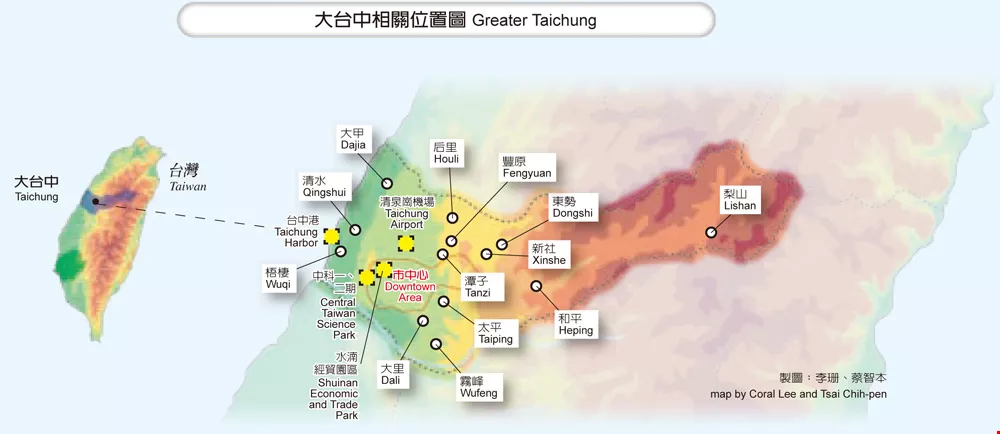
Greater Taichung
Chen also says: "City officials don't understand the county at all and don't get how it differs." He notes that the population of the urban areas is densely clustered and that it's not uncommon for several neighborhood chiefs to live within a few paces of one another in the same building. But out in the villages, a neighborhood chief might have to travel several kilometers to deliver policy announcements. Administering the townships and urban areas in the same manner is bound to result in conflicts. Chen feels it would be helpful for city officials to visit rural areas to get a handle on local differences during this transitional period. Doing so would help them make locally appropriate decisions about fee assessments and manpower allocations.
"Right now, only four of the city's 20-some highest-ranking officials are from the former county government," says Xie Zhi-zhong, a city council member from the Fengyuan-Houli electoral district. "Most of the county's senior officials have become mere deputy department chiefs." Xie says that the city and county used to have equal standing in terms of administrative ranking, so that their merger should have produced a single new government; but it now seems as if the county is being erased. With the old city government dominating the merger, officials at the grassroots level are becoming demoralized and township needs aren't being met.
Xie offers an example: the newly merged metropolis is only providing support to civilian patrols in boroughs with a population of 4,000 or more. Those with insufficient population are being told to join forces with neighboring boroughs. But very few rural boroughs (villages under the old system) currently have populations of 4,000 or more. If even those in relatively populous Fengyuan fail to meet this threshold, what are the other former townships to do? Moreover, there's no guarantee that neighboring boroughs will cooperate. Some patrols have simply disbanded, with serious implications for public safety.
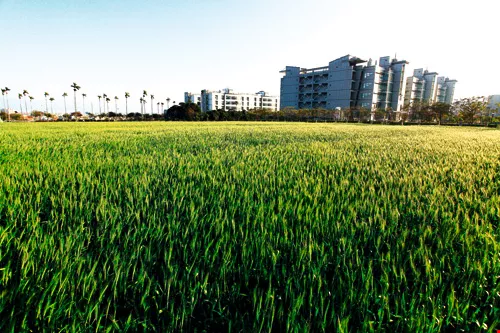
Over the last few decades, Taichung has rezoned huge tracts of agricultural land for commercial and residential use. The dominance of the development paradigm has many people worried that all of the agricultural land in the former Taichung County will someday be lost. The photo shows a plot of farmland that owners refused to sell in the Central Taiwan Science Park. CTSP factories can be seen in the background.
In addition to the chaos on the front lines, the future of many invisible-but-foundational policies and programs remains up in the air.
Yu Hui-yuan, the head of the Department of Cultural and Creative Industries at National Chin-yi University of Technology in Tai-chung's Tai-ping District, says that her department began working with the Tai-chung County Government three years ago on an oral history of Tai-chung County artists. Taichung was a center for arts and culture in the period of Japanese rule, producing artists such as Japanese-style painter Lin Zhi-zhu and oil painter Liao Ji-chun. But the historical records are thin. Yu and the National Taiwan Museum of Fine Arts agreed to undertake a systematic research program. Yu therefore went to work on an oral history in cooperation with the county Cultural Affairs Bureau's Seaport Art Center. Though the project has already unearthed valuable historical data, the new administration has given no indication that it wants to continue the work. Yu worries that the project, which had been expected to last a decade, will be cancelled and the work she's already put into it will go to waste.
The area that used to be administered by the county is physically large and possesses diverse cultural assets. Yu says that the Cultural Affairs Bureau therefore established separate arts centers in the county's three regions to oversee art-related matters in each. These centers quietly and diligently cultivated local culture with events such as the Seaport Art Center's "The Arts Come Home" program, which has run for eight years. The program includes regular tours of villages, exhibiting books and reproductions of artworks and screening documentaries at remote schools, to foster the cultural sensibilities of residents in remote townships. The art center's Napoleon exhibition and exhibition of fine pieces from the National Palace Museum set high standards, and its policies were quite liberal. Unfortunately, the merger placed the art centers under the jurisdiction of the city's Cultural Affairs Bureau, robbing them of most of their autonomy. The marginalization of the facilities is particularly apparent when the CAB uses them for exhibitions that can't be squeezed into urban exhibition spaces.
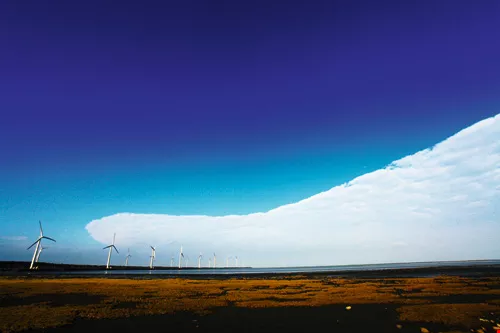
The Gaomei Wetlands in coastal Qingshui are an ecological treasure. Unfortunately, though long designated a conservation area, they have yet to be treated as such. Locals hope that the new city government will move quickly to get the preserve on track.
Most people see a bit of post-merger pain as inevitable, but think that the communication problems that exist between the urban core and the outlying districts will improve with time. Moreover, they believe that relatively inefficient district administrations will become gradually more effective following the passage of the Administrative Zoning Act, which will merge the 29 administrative districts that exist today into less than half as many. The biggest question people have now is whether the "urban-centric" thinking that's guiding the administration of Greater Tai-chung needs to change.
"Tai-chung County had such a sprawling and diverse culture and industrial base that if you take a city-centric view, the inner townships are going to be absorbed and the outer townships marginalized," argues Lee Yeh-cheng, the founding director of the Wu-feng Cultural Association and an associate professor in the Department of Cultural Heritage Conservation at National Yun-lin University of Science and Technology. Lee believes that big cities must take a multicultural approach to development, providing a variety of choices to their different communities and socioeconomic strata. While the city's recent jazz festivals and concerts by Andrea Bocelli and the Three Tenors have clearly increased Tai-chung's "international cultural cachet," there are concerns that if it continues in this direction after absorbing the 21 more rural former townships, it will squeeze out local culture and leave unaddressed the needs of the people spread across the periphery of the now much larger metropolitan area.
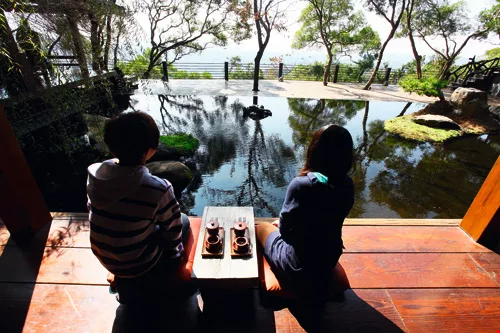
In recent years, Xinshe, in Taichung's mountainous interior, has seen its leisure and recreation industries take off. Its future is looking even brighter now that plans are afoot to build a cable-car system into the district.
In spite of concerns about post--merger chaos, many former townships have hopes that the formation of a special municipality will generate the kind of energy that drives basic development. Chen Ting-xiu says that the Tai-chung Harbor Special District (which includes -Wuqi, -Shalu, Qing-shui and Long-jing) has existed on paper for more than 30 years, but there has been so little construction in the district that its population growth has remained flat and its land has been put to only limited use. One of the first post-merger steps to improving the situation would be a comprehensive discussion about urban planning. The county government had originally intended to use a new, planned community in -Wuqi Township to drive development in the special district. This 140-hectare space, the largest commercial district in Taiwan, has already been rezoned, and residents, eagerly anticipating development by the city, are hoping that Mayor Hu will actively court businesses on their behalf.
Wu Changkun, executive director of the Niumatou Culture Foundation, a group that has long worked on ecological, cultural, and historical issues in Qing-shui, says that Qing-shui's Gao-mei Wetland is the largest coastal wetland in central Taiwan. More than 130 species of bird nest or pass through the area every year, including the endangered Saunder's gull, which visits every summer. It is also home to rare aquatic plants including Bol-bo-schoenus pla-ni-cul-mis, a wetlands grass, and Hy-gro-phila po-go-no-calyx. A conservation area for more than a decade, the county originally considered it a flagship project, but later failed to treat it as such. Though the area is blessed with rich ecological resources, it has yet to benefit from them.
Mayor Hu has stated that he places great importance on the preservation of the Gaomei Wetlands and has increased police patrols intended to prevent illegal dumping and burning of waste. He has also budgeted funds for a park, a parking lot, and a visitors center on the edges of the wetlands. Conservationists are thrilled and are hoping that the new government also approaches the Council of Agriculture for funds for operations, planning, ecological education, and surveys.
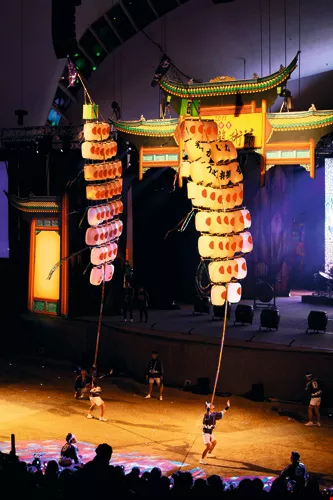
International arts festivals and cultural events can increase a city's cultural cachet. But when the majority of a city's resources are focused on its urban areas, local cultures have little room to grow. The photo shows the opening ceremony for this year's Lantern Festival at Taichung's Fulfillment Amphitheater.
Tai-chung residents have long thought of Xin-she, located deep in the mountains, as the epitome of "the middle of nowhere." In more recent years, it has developed an agricultural tourism industry. The district attracts 200,000 tourists to its "sea of flowers" festival -every November, but also enjoys a steady stream of weekend and holiday visitors to its hostels and garden cafes. With Mayor Hu now also talking about opening a cable-car system from Da-keng to Xin-she, the future looks even better.
Zhang Xue-neng, a former director of Xin-she's agricultural tourism industry development association, says that Xin-she's early hostel owners, who set up a decade ago, were retirees. Zhang himself is a case in point. A former architect, he fell in love with Xin-she's climate and quiet, and built a meticulously designed and constructed vacation home there when he retired. Later, at the urging of friends, he turned it into a hostel. Zhang now runs his hostel on a non-profit basis, utilizing at-cost pricing to gain a unique competitive advantage.
Another hostel owner, a professor of landscape design, opened his 7,000-square-meter garden to visitors and began serving food and drinks amidst its more than 100 varieties of plants. Yet another person, tired of the hectic Tai-pei lifestyle, opened a local fine dining establishment.
When media features on the area's unique hostels attracted crowds of visitors, local business people formed an industry development association, began jointly promoting tours, brought in government resources, and won the right to sponsor the "sea of flowers" event. Over the last decade, hostels and restaurants have sprung up all over the mountainside. Add in the pear and loquat orchards and the mushroom farms that have been opened to the public, and you have a place with real charm, a relaxing backyard to Tai-chung.
Zhang says that Xin-she has 80-some leisure and recreation businesses. These are high-end businesses that offer diverse options in an environment that feels far removed from the hustle and bustle of the city even though it's only 40 minutes from downtown. If the cable-car system really is built, it could revive the Da-keng scenic area (development of which has been stalled since the Encore Garden went into decline) as well, and bring prosperity to these impoverished mountains.
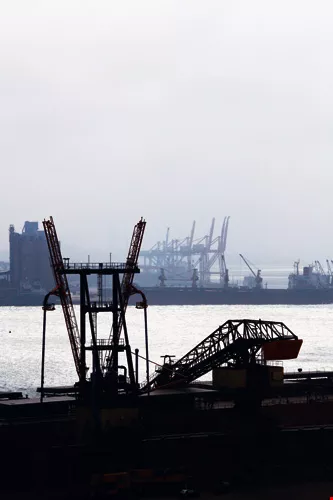
If Taichung wants to catapult itself into the ranks of the international cities, it must do more to connect its air and sea links to the manufacturers and other businesses of Greater Taichung. The photo shows a ship unloading bulk cargo at Taichung Harbor.
Residents of the former Taichung County may be filled with expectations of the merger, but residents of urban Taichung are even more fervently anticipating benefits.
Chai Jun-lin, director of the Tai-chung Hotel Association and vice chairperson of Hotel National, says that the merger has lifted a number of constraints and increased opportunities. Whereas the old Tai-chung City had only the Da-keng scenic area, the new city has myriad tourism resources at its disposal. The convenience of the city and the scenic beauty of the countryside complement one another, giving travelers from Taiwan and abroad reasons to spend time in Tai-chung after they've bought their sun cakes and pearl tea.
Convenient highways enable visitors to spend the day traveling the city's mountainous or coastal regions, bird watching, strolling through a park, riding a bicycle, or enjoying a sunset along the way. In the evening, they can make their way downtown to experience the city's vibrant nightlife.
Taichung is also rich in cultural attractions, including the Mazu pilgrimage of the Jenn Lann Temple in Da-jia. If tourists were to travel with the pilgrims as they wander the area for three to five days, they would not only experience local culture, but also bring fresh revenue to each of the city's districts. And if local cultural and religious activities could be distributed across the entire calendar, they would make an even more effective means of economic development.
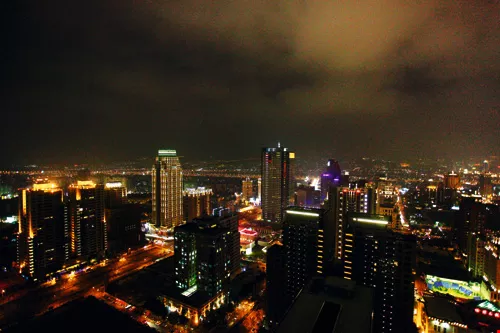
How will the new Taichung City strike a balance between sustainability and the quest for prosperity? The photo shows the bustling Seventh Redevelopment District.
It's going to take more than tourism to turn Tai-chung into an international city. The new metropolis is going to have to put nose to grindstone to develop other industries and the broader economy.
Kung Ming-hsin, vice president of the Taiwan Institute of Economic Research, says that because Tai-chung was an administrative hub during the Japanese period, it developed little in the way of hinterland or manufacturing capabilities. When the Nationalist government made Zhongxing Village in nearby Nan-tou County the administrative heart of central Taiwan as the seat of the Taiwan Provincial Government (now downsized), Tai-chung transformed into a consumer-oriented city. Tai-chung County, which had a burgeoning machine tool industry, compensated for the city's inadequate industrial base. Unfortunately, this geographic split between consumption and manufacturing resulted in missed opportunities in spite of the area's excellent location, airport, and harbor.
The Central Taiwan Science Park, established in 2003, was the first attempt to link city and county businesses. Following its construction, the optoelectronics industry became the driver of Tai-chung's machine tool industry. Businesses began to cluster and the county's small and medium-sized enterprises began to upgrade. This, in turn, caused property prices and consumer spending to soar along the city-county line. But this all happened as a result of natural business growth, not of local government programs.
Kung believes that the merger of city and county offers opportunities to the newly formed Greater Tai-chung. But taking advantage of them will require good policymaking, including policies that strengthen the industrial base and forge international ties.
First off, a truly international city must have connections to the larger world and transshipment capabilities. Right now, neither of Tai-chung's windows on the world is being put to -proper use. Taichung Harbor has few ties to local industry. Instead, it is primarily used to import raw materials such as gasoline and natural gas. Tai-chung Airport, meanwhile, carries local travelers abroad rather than bringing in foreign tourists. The airport in particular has a fantastic location (it was a Southeast Asian base for the US Air Force) and a broad hinterland to draw on. Tai-chung must find ways to connect these transportation resources to central Taiwan's industries.
Next, Tai-chung must do its utmost to convince large firms to establish operational headquarters in central Taiwan. Shui-nan Economic and Trade Park was a good choice prior to the merger, but now that the focus has shifted to Greater Tai-chung, it seems too far from the airport and harbor. The area between the airport, harbor and CTSP is a more ideal location. If central Taiwan is going to develop international economic and trade links, corporations must be persuaded to set up shop in Taichung.
Finally, we must make full use of Tai-chung's many universities and educational strengths to ensure that top-flight R&D capabilities are available throughout central Taiwan.
But with everyone looking for the new Tai-chung to create a vision of the future and build the underlying infrastructure, how is the city to balance prosperity and sustainability? This is a key issue.
For example, though the Central Tai-wan Science Park (CTSP) on the Mt. -Dadu Plateau has brought high-rise office buildings, stores, and hotels to the western part of Tai-chung City and its suburban fringe over the last decade, it has also polluted nearby agricultural lands and severely degraded air and water quality.
Zhang Feng-nian, a consultant to the Taiwan Academy of Ecology who is intimately familiar with central Taiwan's environmental issues, says that carcinogenic arsenic has been found in air samples taken from former townships near to the CTSP's phase one and two developments. Wastewater from the CTSP has also been piped directly into irrigation channels, preventing rice in nearby paddies from heading. The neighborhoods around the CTSP's phase three development in -Houli are home to the largest number of people in Taiwan with above-standard dioxin levels in their blood. The public is likely to make judgments about the new city administration based on whether local environmental offices exercise their authority to inspect businesses and prevent these discharges of pollution.
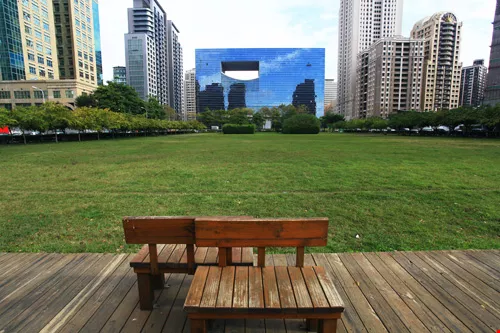
The new Taichung City is more than 10 times larger than the old one, possesses both an airport and a harbor, and is expected to lead central Taiwan into the future. The photo shows the new Taichung City Council building.
Moreover, for the last several decades Tai-chung City has been rezoning large tracts of agricultural land for residential and commercial purposes. The white-hot Seventh Redevelopment Zone, where land prices have soared and lux-ury high rises sprung up everywhere, is a recent case in point. But the city's powerlessness in the face of the decline of the train-station area has raised doubts about its strategy.
Thomas Chan, a representative of the Taiwan Rural Front, says that central and southern Taiwan have large tracts of agricultural land. Because such land is relatively inexpensive, local governments seeking to promote development always turn here first. After rezoning the land for urban use, the governments can legally seize roughly 30% for infrastructure and sell another 10-20% to generate income. Though this reduces property owners' holdings, rezoning makes their remaining parcels much more valuable. To local governments, rezoning not only means new infrastructure and saleable land, but also new tax assessments on the land itself, on the increase in the land's value, and on the residences that will be built. By selling off their patrimony these governments can fill their coffers.
Chan says that as good as rezoning looks, it creates numerous problems. Developers want to profit as much as they can as quickly as they can. They therefore choose to develop the tracts which offer the greatest profit margins after rezoning. That hurts areas such as that around Tai-chung's train station, where the high cost of land offers developers only small margins and makes them reluctant to invest. Since the current property owners have to pay taxes at the higher rezoned rate and have no money to put into development, the area is falling into neglect.
If this approach to development continues, many areas designated as agricultural and conservation zones by the county are likely to rapidly disintegrate just as they did in Taipei.
Looking down from the summit of Mt. -Dadu at sunset, we see lights twinkling all across what 20 years ago were vast tracts of agricultural land. How are we to strike a balance between prosperity and sustainability in Greater Tai-chung? With city and county merged into a single political entity, how are we to retain those things that made each unique? All five of the present special municipalities are facing these issues. Will they find opportunities amidst their difficulties? The answer will turn on the vision of their city administrators.


@List.jpg?w=522&h=410&mode=crop&format=webp&quality=80)


