The Luster of the "Native" Label
Ventine Tsai / photos Vincent Cheng / tr. by Peter Eberly
November 1990


Slender, leaden-gray legs, a small build and a red crest--are these birds genuine native Taiwan chickens or imitations?
Are you ever puzzled when you come across signs proclaiming "genuine black pig meat," "native Taiwan chicken" and "country-style" goat or duck meat? When breed-preservation personnel are trekking over hill and dale trying to find pure native Taiwan chickens, goats and black-bristled pigs, where have all these supposedly "native" farm animals come from?
Two chicken vendors in a traditional market were trying to snatch a customer from each other. "Look at how thick the claws are on his chickens, lady. And they're so dark, they're certainly not genuine Taiwan chickens." Not to be outdone, the other retorted, "Your chickens are too big, and the crowns aren't red enough. I'll bet they're imitations."
The vendors were both right. "A small body, thin leaden-gray legs and claws, and a bright red crown" are the characteristic marks of a native Taiwan chicken. "But even if it looks just right, it's not necessarily the real thing," says George L. T. Yeh, secretary of the Taiwan Livestock Research Institute.
The chicken meat sold on the market today falls into the categories of white-meat, native Taiwan and imitation native Taiwan chicken. According to the standards of the breed-preservation program, only those chickens that are completely free of outside strains can be called native Taiwan chickens, and they're very hard to find, even in remote mountain areas. Which means the "native Taiwan chickens" we eat are probably not "native" enough.
In the minds of most consumers, what makes for a native chicken is the surroundings it's kept in. Chickens that run around outside and forage for insects and grains of rice are native chickens, people feel. Since the chickens get more exercise, they have fresher, chewier meat, and since the demand for them exceeds the supply, they fetch a higher price. As for their blood lines, nobody knows much about that.
Imitation native Taiwan chickens, a popular breed that was developed right here on Taiwan, are a cross between native chickens and foreign chickens with yellow feet. In the first generation the feet are black, but yellow can show up in later generations, giving them away at a glance. Otherwise, except for the fact that their feathers and legs are rather dark, they look practically the same as the genuine article. Since imitation native chickens taste better than white-meat chickens and are less expensive and grow faster than real native chickens, they occupy as much as a two-thirds share of the market.
As living standards have improved, people on Taiwan have become willing to spend more money on foods that taste the way they like. Native chickens have always been considered particularly nutritious and fortifying, and their market price has climbed steadily since 1981. Chicken raisers have spared no efforts in further refining the imitation varieties, opening exercise yards to firm up their meat and selling them under the guise of native chickens, which has led to a surge in the number of so-called "native chickens" on the market in recent years.
What "black pig meat" actually means is the meat of black-bristled, or Taoyuan, pigs. However, "nearly a century ago, during the Japanese occupation, large numbers of pigs with white snouts, tails and legs were brought in and crossed with the native varieties, and pure native pigs haven't been seen much any more," says Lin Teh-yu, a research institute expert in charge of preserving the Taoyuan pig.
The heyday for mixed-breed Taiwan pigs didn't last long. After World War Ⅱ, white-bristled pigs with excellent meat-producing capabilities were brought in from overseas, and the meat market as a whole was dominated by chicken. Only a few farmers still raise mixed-breed black-bristled pigs to cater to customers that are fond of them, and "spotted-coat pigs" with both black and white bristles have also appeared on the market. Some vendors even scrape off the white bristles and sell them as "black-bristled pigs."
The Livestock Research Institute is cross-breeding Taoyuan pigs and Duroc pigs. Maybe black pig meat will take off in popularity someday like native chickens did.
In fact, the purity of the breed isn't important to consumers; what they pay attention to is flavor. Whether native chickens and black pig meat really do taste better than the commercial varieties is a matter of individual taste.
Just how many of the customers dining on goat meat and duck can really taste the difference between native and crossbred varieties? Today, when native varieties of livestock and poultry are in prime demand, all you have to do is slap a sticker saying native on them and the price will go up. If an imitation native chicken were labeled imitation, it could never compare in price with one labeled native even if it tasted just as good.
These days it's in to go native.
[Picture Caption]
Slender, leaden-gray legs, a small build and a red crest--are these birds genuine native Taiwan chickens or imitations?
When "black pig meat" and "white pig meat" are turned into a tasty dish like this, can you still tell the difference between them?
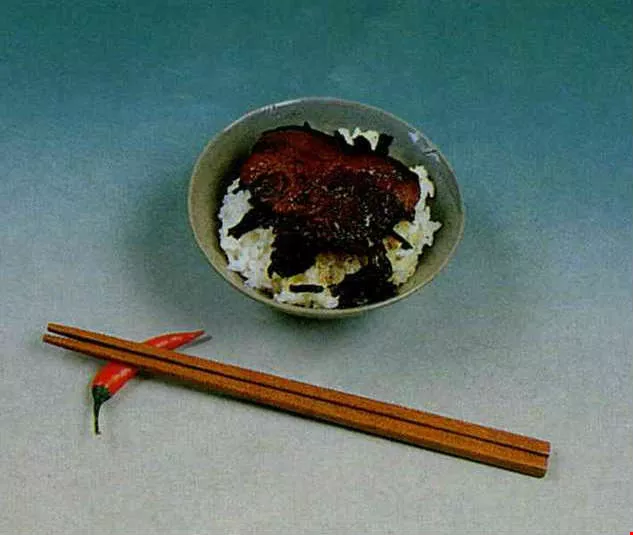
When "black pig meat" and "white pig meat" are turned into a tasty dish like this, can you still tell the difference between them?

@List.jpg?w=522&h=410&mode=crop&format=webp&quality=80)


