Chiufen: There's Gold in Them There Hills
Wei Hung-chin / photos Cheng Yuan-ching / tr. by Phil Newell
May 1994


Why should we care about Chiufen? In fact there's no right or wrong answer to this question, but perhaps we might here look at it from a slightly different point of view. We can learn from past experience, and see that we have a tendency to over-exploit resources and to display a "locust swarm" type of behavior. As a result, when something gets well-known and becomes the object of "concern" of many people, the ending of the story can be tragic. Just like the stock market.
When the same thing happens repeatedly, how could one not be worried about the next target of "opportunism''--Chiufen-and its future.
Several decades ago, when the gold rush slowed to a crawl, the town of Chiufen--which had become famous through gold mining--returned to the silence of history. This small town, built spontaneously because of the gold rush, saw its permanent resident population shrink from 30-40,000 at the peak to only about 1,000. The crazy atmosphere of the glory days waned.
Since then, Taiwan's economy has taken off, giving people greater ability to consume. It seems that everything--people, activities, places, and objects--has a price tag. As a result, due to circumstances, though Chiufen had long ceased to be a place that produced wealth, it provided people with a consumer fantasy and came back to life, generating a second spring.
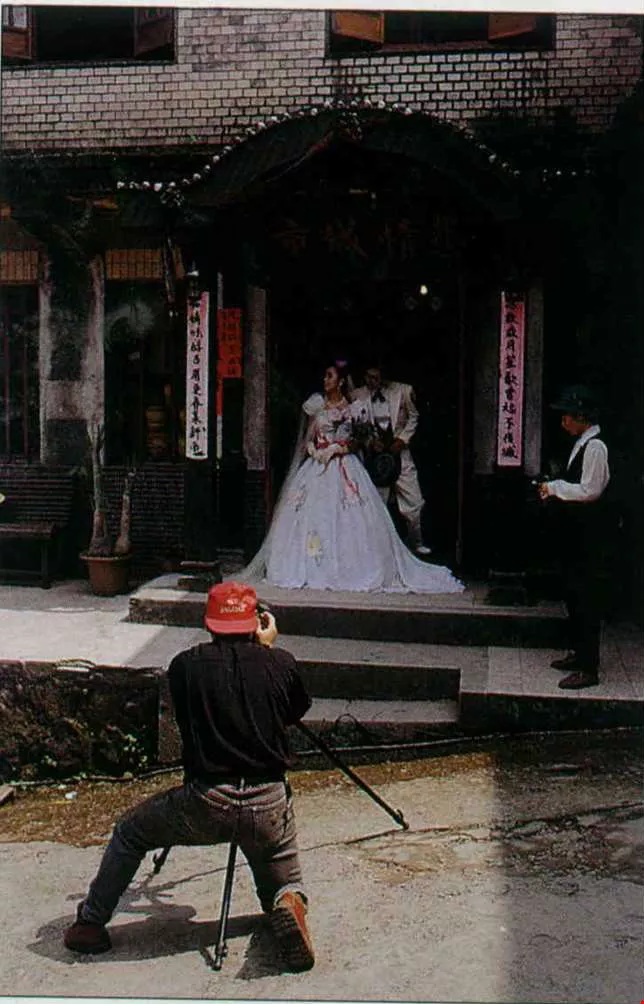
It's quite popular to come to Chiufen for wedding photos. (photo by Diago Chiu)
Romantic paradise on the TV
After the films City of Sadness and The Silent Hill were filmed in Chiufen; after the media converged to uncover and exaggerate every little detail of Chiufen; and after rumors circulated that there were still gold veins in Chiufen, the place took on a much more mysterious and exciting sense of opportunity. Incredible! Chiufen, which sat so quietly for so long, suddenly sprang back into everyone's mind as a place of dynamism and vigor.The illusion of recapturing the past gave many urbanites an excuse to flee the city for a while, which in turn created a venue for risk takers and opportunity seekers to earn a profit.
Luo Chi-kun, a young photographer who fell in love with Chiufen's peace and quiet and set down roots here, describes how different Chiufen is today from the way it was five or six years ago: "Before when I came here from noisy Taipei I would sit on the staircase and, except for the sound of the wind and the rain, the world was totally silent." But in just a few years, now that Chiufen has become famous, countless visitors come here on holidays and weekends. The tranquility that was once seen as completely natural has become aluxury item. Luo points out the second story window of his house and says, "You want to know how many people come up on holidays or weekends? I don't know myself. All I know is that when I look out this window, anything that isn't the top of a car is the top of somebody's head, and you can't even see the surface of the road."
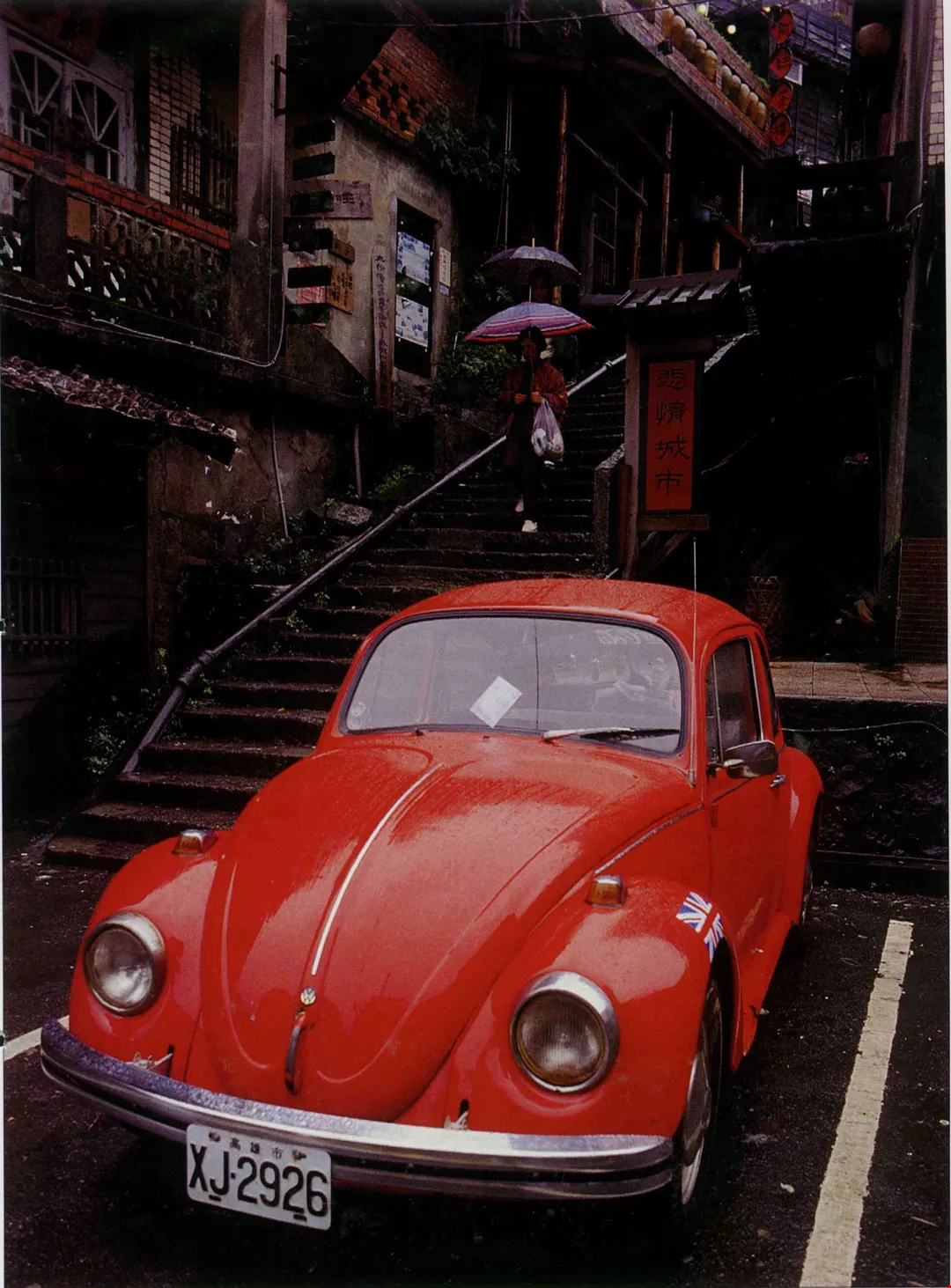
(right) The old miners would have never dreamed that you would one day be able to drive a lovely little car up the narrow pathway they called "DarkStreet.".
Ancient vs. modern
The flood of consumers has changed life in Chiufen. Chiufen never passed through a stage of "modernization," but jumped directly to the "postmodern" era. The narrow streets are lined with "nostalgia shops," coffee or tea houses, restaurants,and stores with abstract names like "City of Sadness," "The Golden Age," and so on. The old streets have become a melange of old and new. And then there are the clean and fashionably made-up faces wandering through the grimy and darkened alleys of the old gold industry. The chatting and bustle might remind one of yesteryear, but the mindset of the kids who come carrying boom boxes to seek nothing but space is very different from that of the gold miner of the past who came, shovel in hand, to try his luck.
Uncle Mao-sung is 72. Though he has been away from Chiufen for 40 years, he has never forgotten that he is a Chiufen native, and each year he comes back at Tomb Sweeping festival to look after the graves of his ancestors.
As for how his home town has become "famous" in the past few years, Mao-sung really is at a loss for an explanation: "What is beautiful about Chiufen?" He points to the mountain town, surrounded on three sides by bluffs and facing out over the northeast coast, and states, "Chiufen is just a dirt-digging town, where making money was easy. But what comes quickly goes quickly."
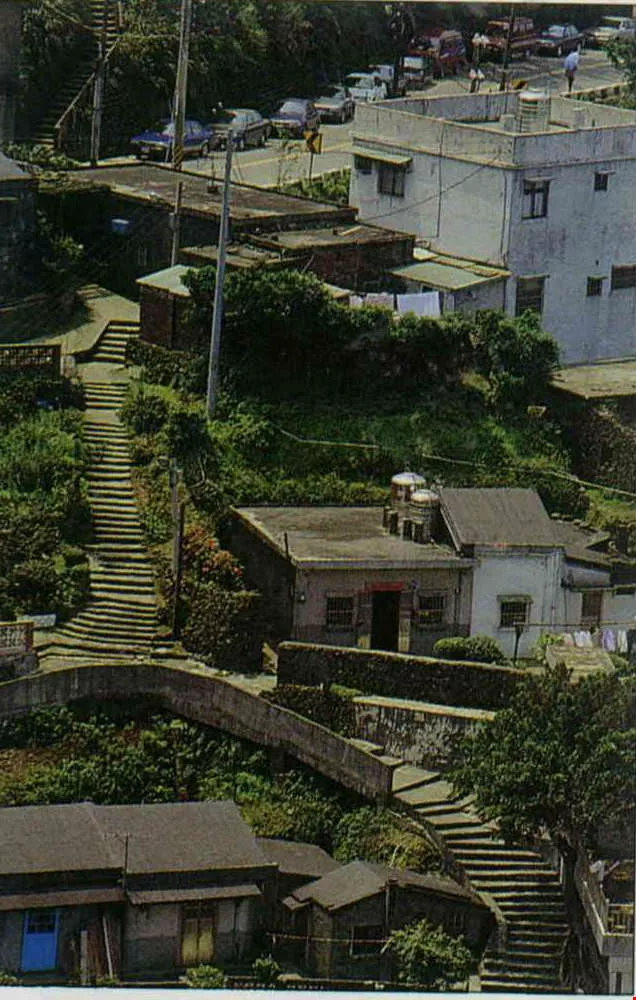
The winding staircases are one of the unique features of Chiufen.
Chiufen gains, Chiufen loses
Uncle Mao-sung was born in Keelung. He moved to Chiufen at the age of ten, and worked in the Tai Yang Company, a gold mining concern. He started out as an office gofer when he was in his early teens, and by the time he married in his twenties he was officially part of the staff. Though he himself never went into the mines, he possesses a wealth of information about the gold mining era.
"In the past when Chiufen was flourishing, there were bars and brothels and pool halls everywhere. The city never slept, and there were always people about, not much different from what it's like today on holidays." He says that in those days Chiufen workers mined gold to earn money and then spent it profligately. They would go into a tavern and order a huge pile of lobsters and abalone, eat a few bites, and then off they would go to another tavern to order the same thing. Even more extravagantly for that era when even a pedicab was considered a luxury, they would get a taxi and take it into Taipei to spend their money at the restaurants there. Mao-sung recalls, "These dirty miners were laughed at and called beggars by the Taipei dandies, but they were big spenders, and tipped with gold, so they were the favorites of the sing-song girls."
Chiufen was a risk-taker's paradise. That people came here to pan for gold really may have had something to do with its geomantic conditions! Chiufen is shaped just like the kind of basket they used to use to carry dirt out of the mines, which suggests that wealth could easily pile up in there. But in the end the treasure would just flow out the gap toward the sea. The adventurers would go to Chiufen to earn money, and there they would spend it.
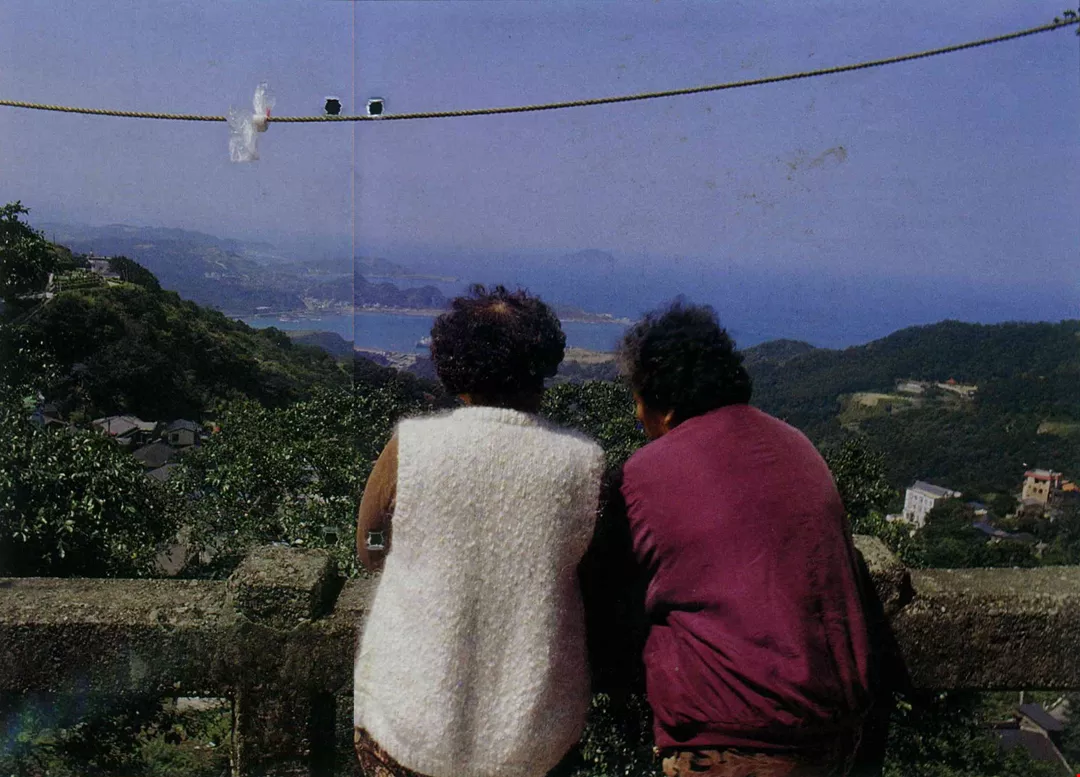
For outsider urbanites, Chiufen's scenery is really a welcome sight. (photo by Diago Chiu)
What's beautiful about Chiufen?
In only a short time, Chiufen's gold was exhausted, and the town returned to a state of tranquility, with the same mountains and the same sea.
Old Chiufen was dominated by the daily struggles--eating, drinking, sleeping, and working--and few people had the leisure to wonder whether the place where they lived was beautiful. So the old folks like Uncle Mao-sung who lived their lives in Chiufen feel at a loss when they hear that modern Taiwanese have "discovered" the beauty of Chiufen.
Uncle Mao-sung says, if you want to find something special about Chiufen, then it would have to be the rain! It hardly stops all year round. Also, due to the special way people have made their living there, "Chiufen has no mosquitoes!" The large number of gold smelting plants filled the air with so much coal dust that the mosquitoes couldn't survive.
"City people talk about how great the rain and the mist is in Chiufen, and even complain when they come and its not rainy or foggy!" exclaims Grandma Lin, who can't find anything good to say about the precipitation. For the people who live year round in this wet mountain town, about all they get out of the excessive moisture is rheumatism.
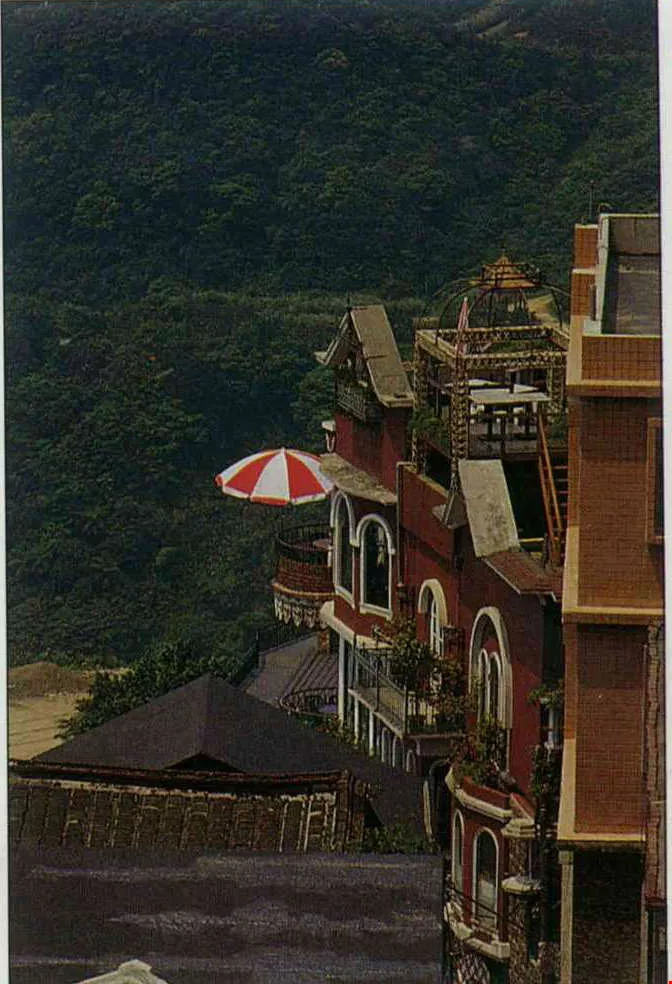
When you drive into Chiufen, the first thing you see is this European style luxury hotel.
For better or for worse
Grandma Lin is 65 this year. Originally from Chiaohsi in Ilan County, she married into Chiufen through a matchmaker when she was twenty. By the time she was 38, she and her gold miner husband had had eleven children. The family of more than ten had to stay in a small house that was barely over ten ping large (which is to say, about 360 square feet). It was only in the past couple of years that the children, who made their careers in the city, were able to put together enough capital to turn the house into the three-story villa with garden that it is today.
Even the younger generation of people who are actually residents of Chiufen have the same understanding of the town as their elders.
Wang Tien-fu is 31 this year. He calls himself an unemployed wanderer, and just hangs around the streets of Chiufen, so he has a deep sense of the changes that have come. "Looking at the way Chiufen is today, I'm really scared." The sudden influx of tourists has brought Chiufen residents prosperity, but Wang worries that people who come to Chiufen spend their tourist dollars in the wrong way, bringing ruin, and not good fortune, to the town. He says, "I remember when I was small, Chishan Street was just level after level of steps, but now its a concrete road that can take small cars." If, to adapt to the flow of visitors and for the convenience of those doing business, the stairs--which are after all the most unique thing about a mountain town--can be sacrificed, what is there that can't be sacrificed? And when the day comes that everything has been changed, will Chiufen still be Chiufen?
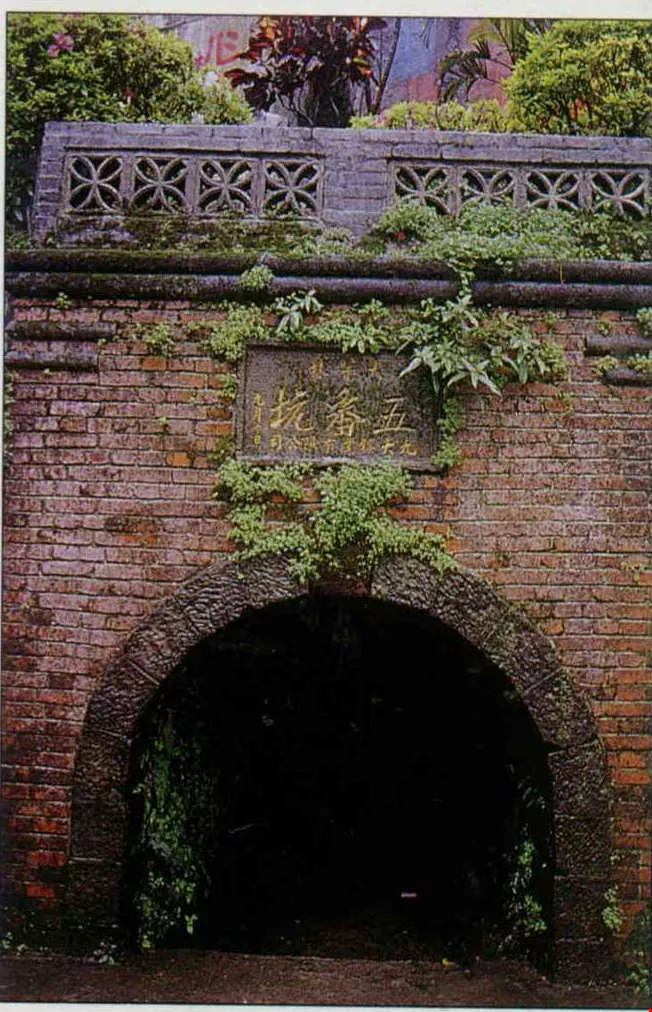
The Wufan mine was Chiufen's only remaining mine that was easily accessible to sightseers, but lately a steel fence has been put up to keep people out.
City people have money!
Uncle Tieh-ting, an old neighbor of Uncle Mao-sung, has been dead for several years now. Though his son does not work in Chiufen, he inherited the old wooden home and moved in. His wife looks over at Mao-sung's old house, which has already been converted into a two-story concrete dwelling, and says, "The owners have already changed several times. I'm not too sure who lives there now. They rarely come to stay."
The rapidity with which the house has changed hands reveals that it is of "unusual value." Uncle Mao-sung finds it hard to imagine that the land rights actually belong to the Tai Yang company and in theory the company could reclaim the land at anytime. The house, on which rent must still be paid, that cost a few hundred yuan to rent in the old days now could be sold for millions of NT dollars. "City people really have a lot of money," he concludes.
It's because city people have so much money that someone would offer a speculative price of NT$100,000 when the original price for the transfer of the rights to the dwelling was only NT$10,000.And as soon as the NT$100,000 figure was bandied about, somebody else said NT$500,000, and of course it finally got up to the level of housing in the city itself. Right now the price is NT$120,000 for only one ping (about 36 square feet).
"Rich folks" buy Chiufen houses, but they always play the role of outsiders. They only come on holidays, and usually stay in the city making money the rest of the time. As a result, that chilly urban anonymity is spreading over Chiufen, and people who live next door to each other don't know who their neighbors are.
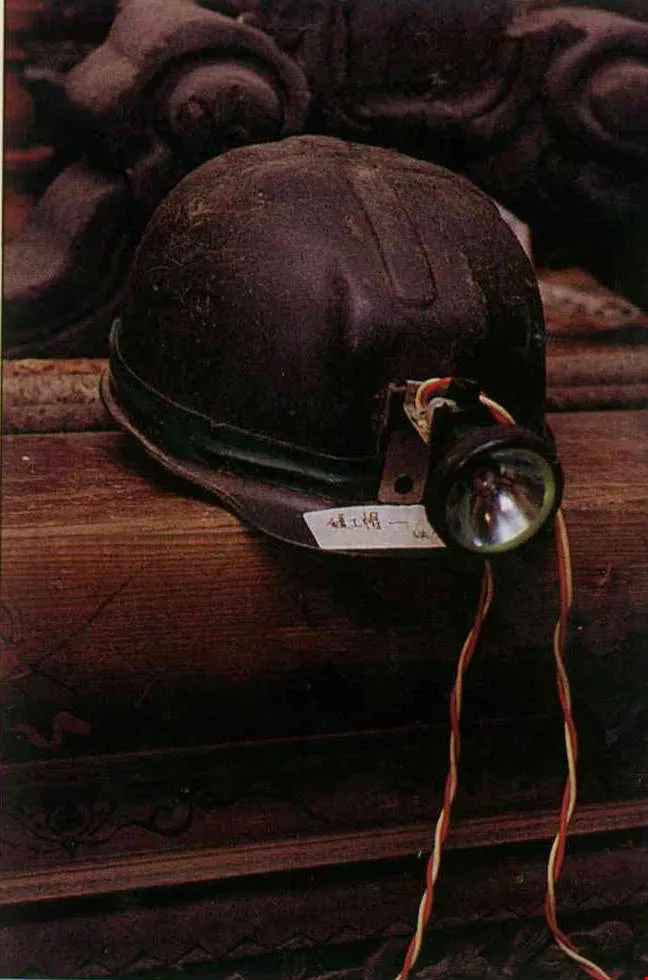
A helmet worn by miners of yesteryear.
"Welcome" to Chiufen?
It doesn't take much imagination to know what's happening in Chiufen--which was never designed for a lot of consumers and has been inundated with "concern."
On the wall outside of a house on one of the old streets there are sixteen large red pennants with characters written on them. The upshot of all the writing is this: "Welcome to Chiufen, but the noise and garbage generated by all the tourists has ruined the lives of the residents . . . ." This protest, expressed in mild and polite terms, is replete with a sense of frustration. But it seems that protests are only of limited value. Kids still throw their soda cans about, and their boom boxes are turned up full blast as they wander up and down the street showing off their "coolest" look.
A group of senior citizens sitting around chatting in the Ti Chun Temple are agitated: "If people want to come here for fun, then we welcome them. But there is no parking lot here, nor public bathroom, so it's really a problem when crowds of people jam in." The old folks say that on holidays the visitors line up to use the bathroom at the temple, and the line can stretch for tens of meters. But there's never any additional money in the temple donation box; on the contrary, there's just a lot more cleaning up for the temple to do.
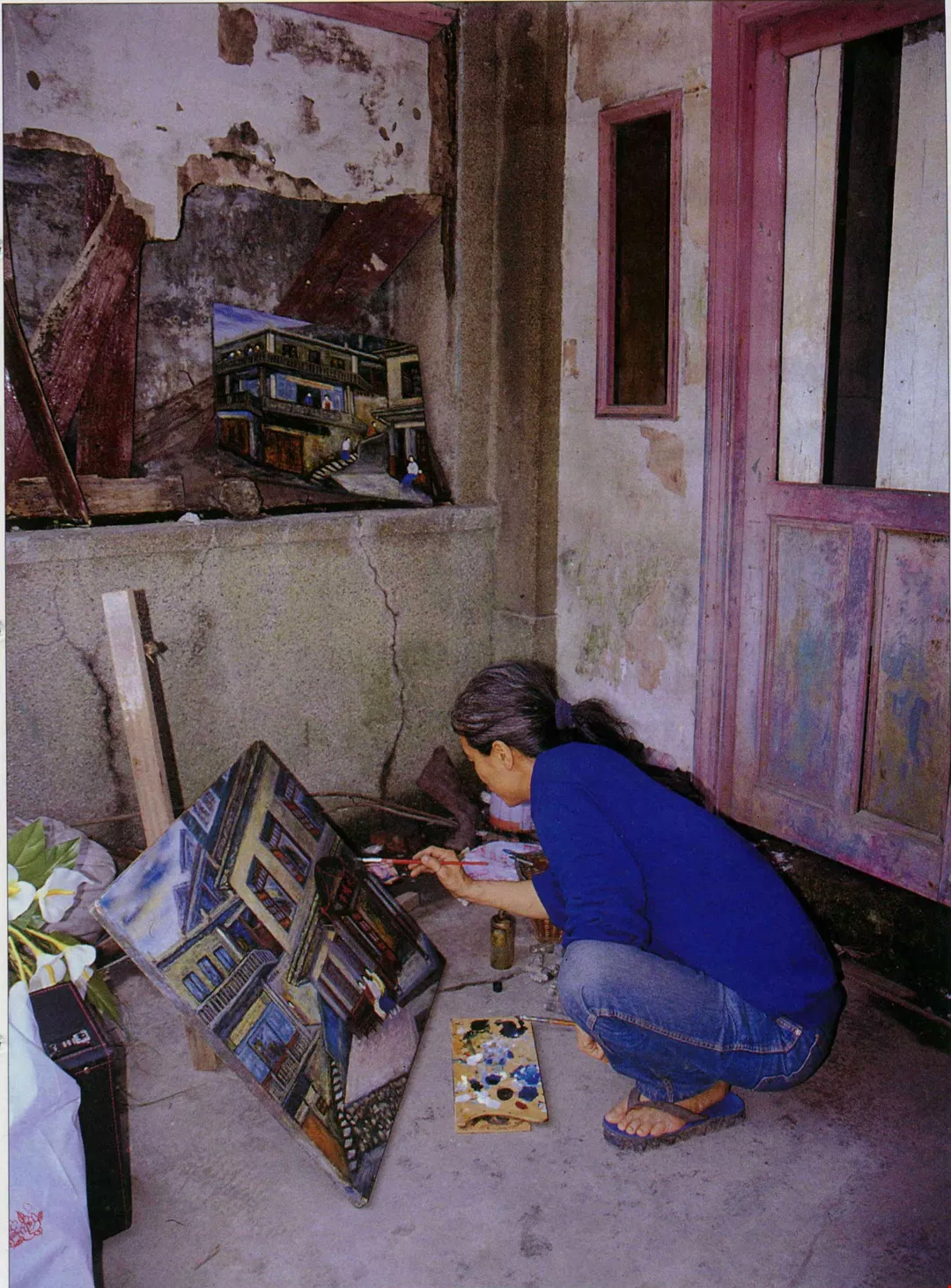
(right) Chiufen's location attracts many artists searching for inspiration. (photo by Diago Chiu)
Try to be a little more serious
If the people of Chiufen were getting some positive response for the price they are paying, they would feel a little better. But in fact it often happens that people who go to Chiufen are disappointed, because people want to see the mountains and the sea the way they come out on the movie or television screen. But in the end they see that many of the houses are spanking new, that there are piles of garbage, that there are no bath rooms, and that there is a traffic jam and a big crowd. These people and their false expectations are not only disappointed, they complain that there's too much hustle and bustle.
It's true! People complain because they want to come to Chiufen to "play," so they end up disappointed. And the people of Chiufen complain about them in return, because they never should have come to Chiufen to "play" in the first place.
Although Wang Tien-fu didn't use these exact words, his meaning was that people should be a little more serious when they come. "Who says that you should go to Chiufen to look at the ocean? You should go to Chiufen to look at history!" He opens his eyes wide and says with emotion that people should come to understand how hard it was for the miners to build this mountain city and grab a gold mine to work. Or how they risked their lives in the mines carrying nothing but a few shovels to dig a shaft. "That's where the real meaning of life in Chiufen is to be found."
When the history of Chiufen is ignored, it's just another place people flee to in order to get out of the city. People don't have any psychological or intellectual preparation, so its no wonder they are disappointed. And at the same time that they are disappointed, they are stamping out the traces of history in Chiufen.
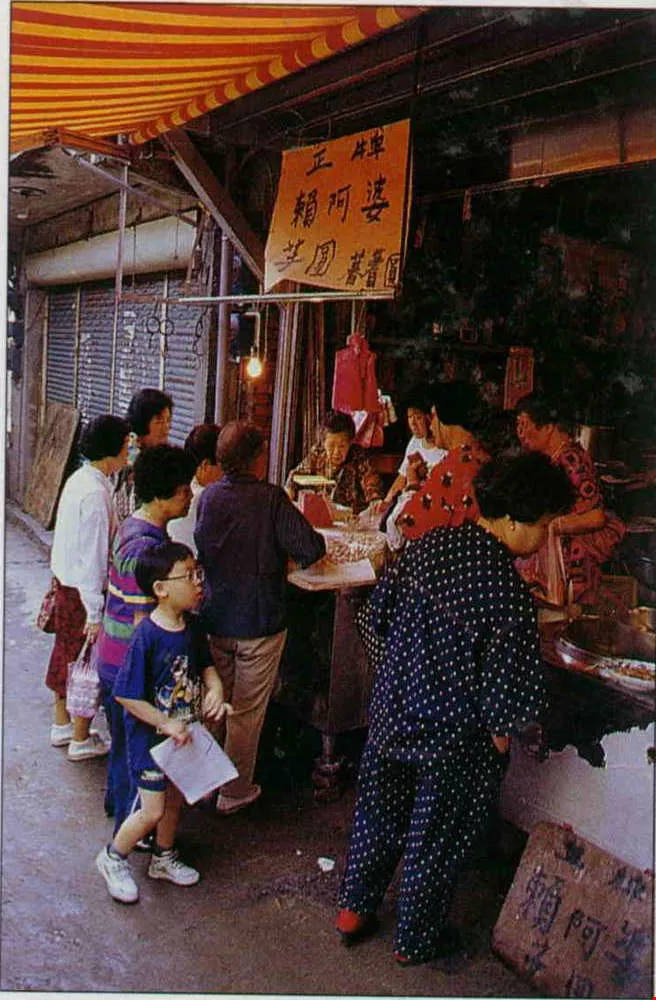
Chiufen is not a place where yams and potatoes are grown, but country-style yam and potato balls go well with the nostalgic atmosphere of the old town. (photo by Diago Chiu)
Culture can save Chiufen
Just as some people are intoning, "Chiufen is dying a second death," a group of culture workers who themselves originally came to Chiufen to "enjoy" have decided they will not sit by and watch the soul of the old town wither away like this. They have started up the "Juifang Rural Township Cultural Association," the goal of which is to appeal to the local consciousness of the people of Chiufen and to place emphasis on the cultural content of Chiufen. They hope to recover real vitality for the town.
The work done by the Association has been very practical, and there is little of the empty talk often associated with literati. They held a cleanup campaign to get the residents to sweep up the garbage. "The result was that people laughed at us and said we were crazy," says Hung Chih-sheng, a founder of the Association and also the owner of the renowned "Chiufen Tea House." They still swept the streets, and even helped the people who ridiculed them. In the end no one was laughing, and everyone picked up brooms and started sweeping. "If we can appeal to the consciousness of Chiufen people to help themselves, there is a great deal of hope for Chiufen," he says.
Hung Chih-sheng points out that Chiufen should rationally develop tourism and commerce to give residents a chance to make a living. This would be helpful to the normal growth of the town, but wouldn't make it become a "special vacation district" for the wealthy or a vulgar tourist trap. "This will only be possible if culture is the root."
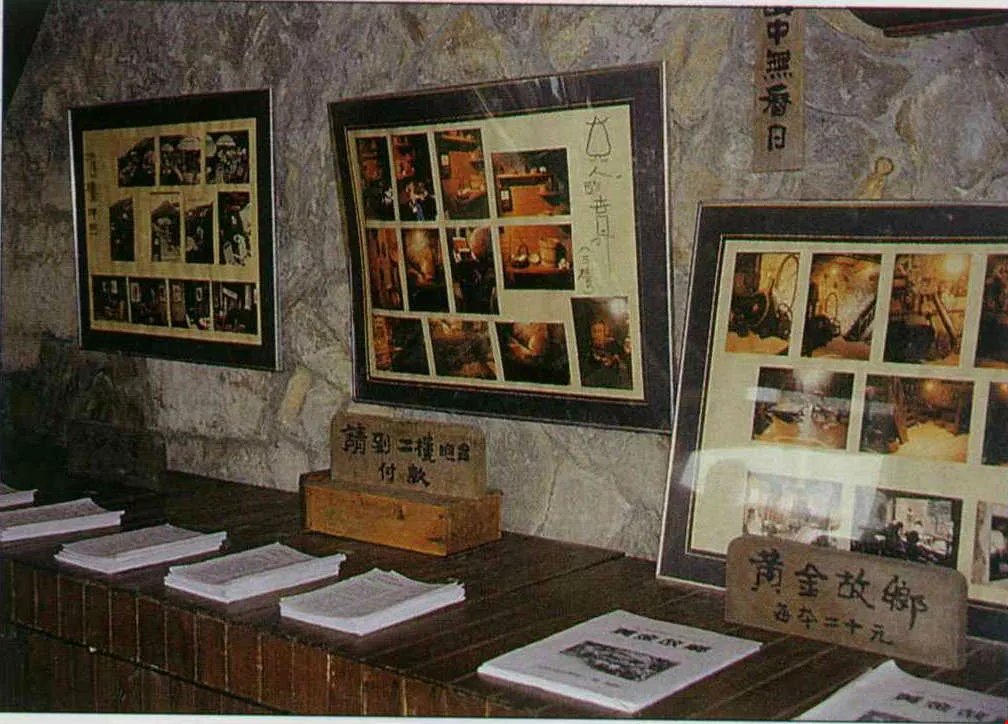
When you come to Chiufen, buy a little something to take home! (photo by Diago Chiu)
Make history into a valued product
From March 12 to 27, the special exhibition "Chiufen Past and Present" was held by the Association at the Lai Lai Department Store in Taipei City; it attracted a number of people. Many people found out from the photos, texts, and explanations that Chiufen is not just mountains and sea, and that its history is even more precious.
But should we be so optimistic about "using culture to save Chiufen"? Not necessarily, it seems.
Almost all the shops in Chiufen have a great deal of "cultural ambience." Inevitably there are historical photos or art objects adorning the walls. But it cannot be denied that the whole effect is still commercialized, and that this is the only way to suit the tastes of the consuming public. And, just as there is "counterfeit art," to be sure there are "counterfeit historical artifacts" designed purely for profit. Uncle Mao-sung points to some of the "gold mine nuggets" hanging in the shop windows and priced at hundreds or thousands of NT dollars and says that you can tell just by looking at them they are gold-colored fakes.
Hung Chih-sheng laughingly says that Chiufen residents are natural risk-takers, and they don't miss any opportunity to make some money.
Because of this some people are amused to find that video game parlors and karaoke have not yet made their appearance in Chiufen. The reason why is interesting. In fact, they did show up, but they were "warned off" by some friends of the Cultural Association, so they have closed up for the time being. "But they are still anxious to make their move," says Hung. It will take everybody working together to save Chiufen, and there won't be any effect if just a few people work at it.
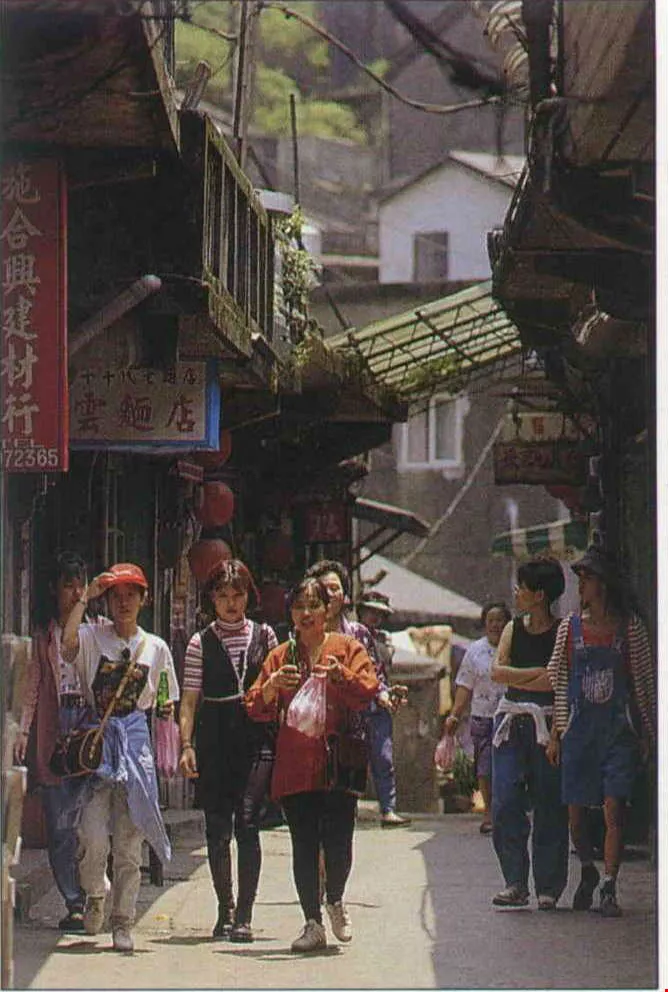
In the past pedestrians on the street were grimy miners; today they are well--dressed people of a new variety.
Local dogs and salted fish
A retired elderly gent is proudly pointing out his new puppy to some friends: "It's three months old. I bought it for NT$100,000." After "someone discovered" that local Taiwanese dogs "are worth a lot of money," the little critters that had roamed the villages of Taiwan became the playthings of the well-off. An old Chinese saying about how salted fish (a low grade item) suddenly becomes valuable certainly was played out in the case of the local Taiwanese dogs.
After reaching its peak of prosperity, the old gold mining town of Chiufen returned to the usual, low-grade status of being a "salted fish." But today it is as popular as the local dog. But will everybody just take this unexpectedly highly prized salted fish and treat it again like an ordinary salted fish?
People pay a high price for inadequate respect for history and culture. Artifacts are treated as garbage, and historic sites are turned into amusement parks. There are no real memories of the past for reflection or nostalgia. Besides earning money to realize their hopes for the future, is there anything else people can do?
Chiufen has been a salted fish, and has miraculously "flipped" over to become valued and popular. Will we protect it well? Or will we just fry it up, eat it, and forget the whole thing? This is a test not only of our cultural refinement; it can also be a symbolic indicator of the future direction of culture here in Taiwan. We are waiting expectantly.
[Picture Caption]
p.32
It's quite popular to come to Chiufen for wedding photos. (photo by Diago Chiu)
p.33
(right) The old miners would have never dreamed that you would one day be able to drive a lovely little car up the narrow pathway they called "Dark Street."
p.34
The winding staircases are one of the unique features of Chiufen.
p.34
For outsider urbanites, Chiufen's scenery is really a welcome sight. (photo by Diago Chiu)
p.35
When you drive into Chiufen, the first thing you see is this European style luxury hotel.
p.36
The Wufan mine was Chiufen's only remaining mine that was easily accessible to sightseers, but lately a steel fence has been put up to keep people out.
p.36
A helmet worn by miners of yesteryear.
p.37
(right) Chiufen's location attracts many artists searching for inspiration. (photo by Diago Chiu)
p.38
Chiufen is not a place where yams and potatoes are grown, but country-style yam and potato balls go well with the nostalgic atmosphere of the old town. (photo by Diago Chiu)
p.38
When you come to Chiufen, buy a little something to take home! (photo by Diago Chiu)
p.39
In the past pedestrians on the street were grimy miners; today they are well--dressed people of a new variety.
p.39
It's my hometown, and if I want to relax, what are you going to do about it? (photo by Diago Chiu)
p.40
"Welcome to Chiufen, but please don't disturb my peace and quiet." Chiufen residents are, in their mild way, protesting.
p.41
Misty, thinking of old Chiufen....
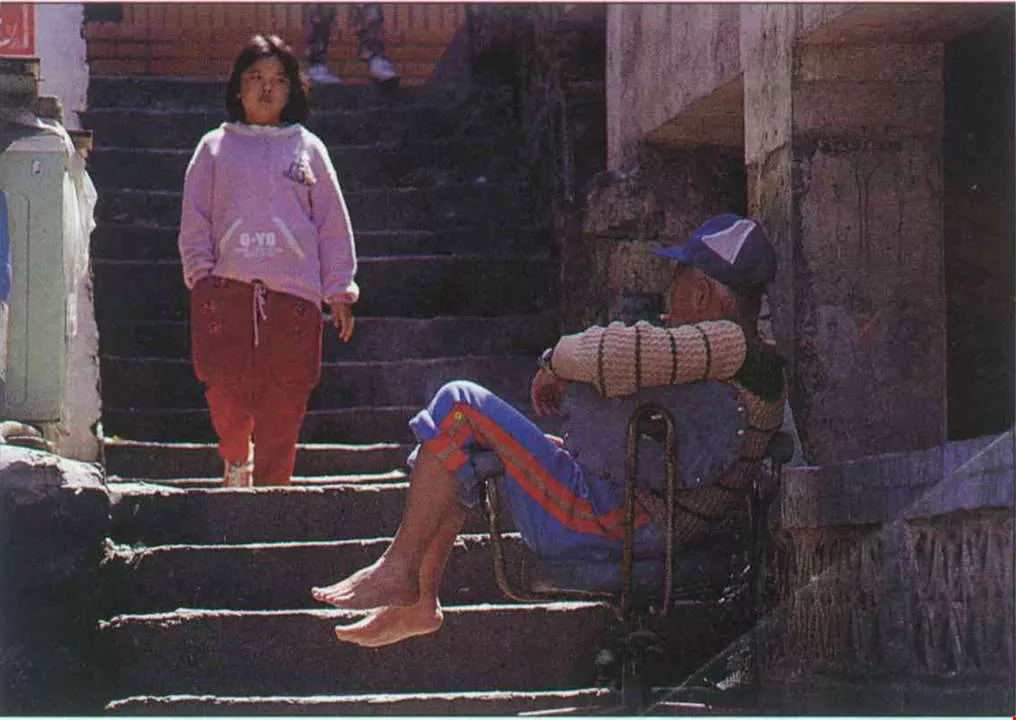
It's my hometown, and if I want to relax, what are you going to do about it? (photo by Diago Chiu)
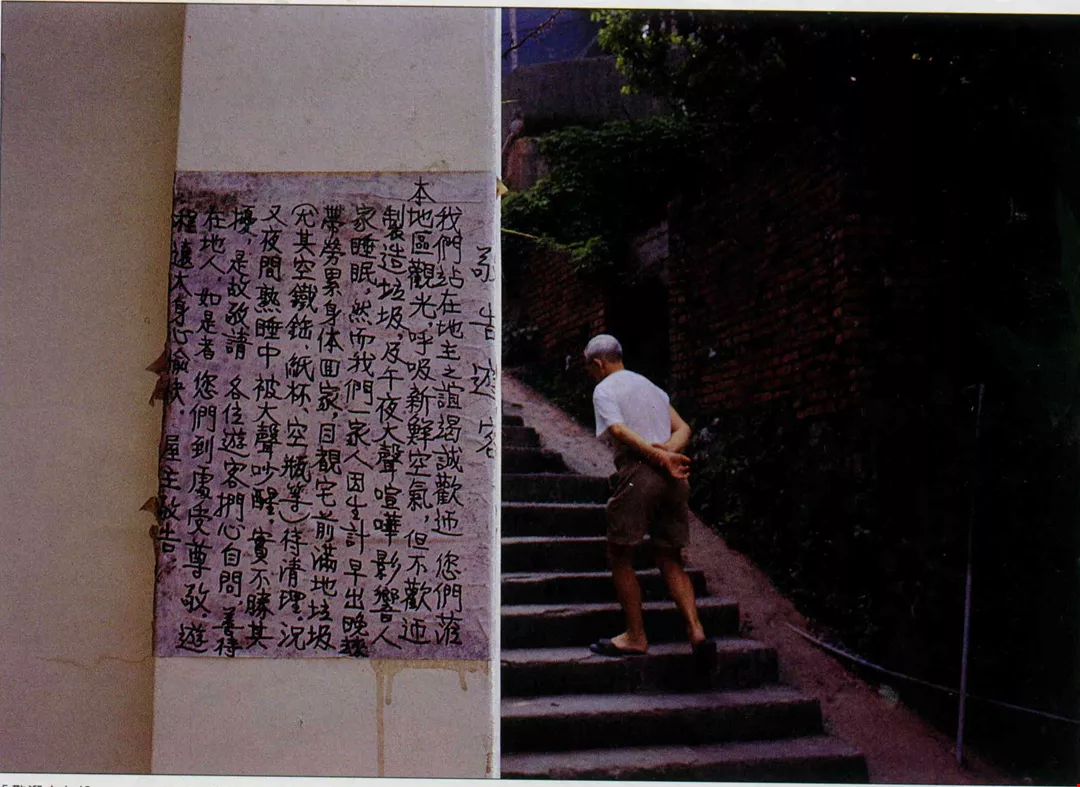
"Welcome to Chiufen, but please don't disturb my peace and quiet." Chiufen residents are, in their mild way, protesting.
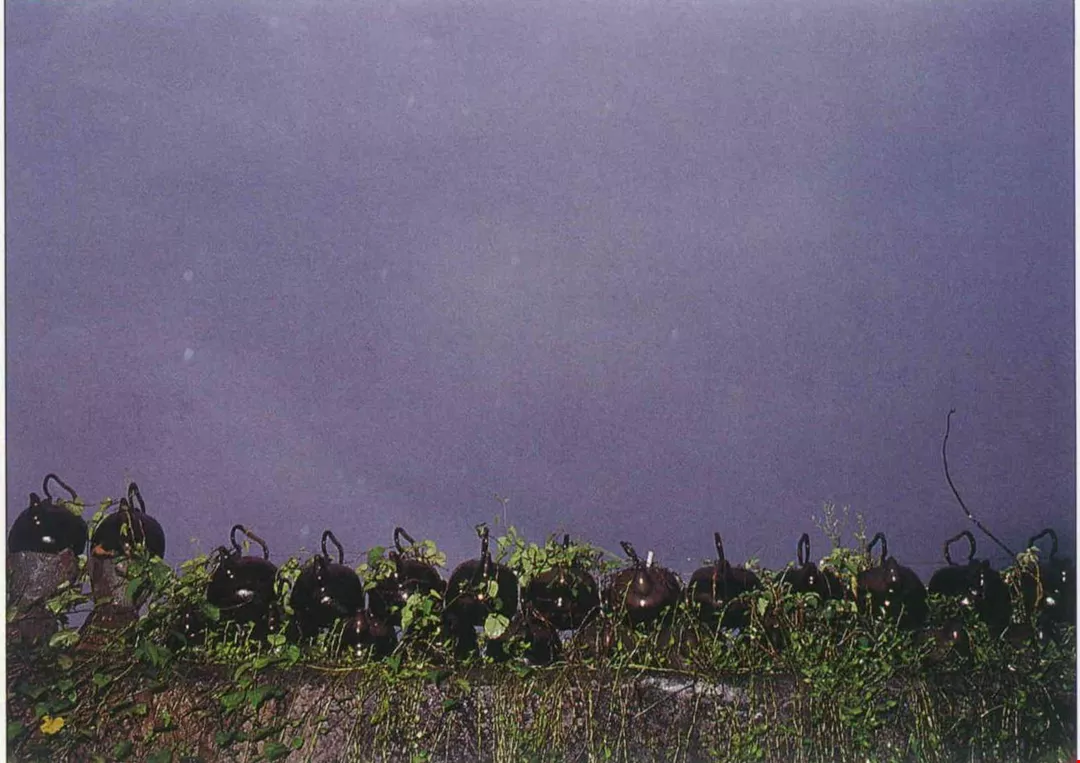
Misty, thinking of old Chiufen....

@List.jpg?w=522&h=410&mode=crop&format=webp&quality=80)


