

The Cultural Establishment Committee of the Executive Yuan recently invited two Japanese experts who specialize in maintenance and restoration of relics to deliver lectures on the techniques of renovating old artifacts and to view first-hand the ongoing restoration of Taiwan's old buildings.
While touring Taiwan, they visited the Chai Hsing Mountain Villa at Tan Tzu, near Taichung, which has the highest estimated cost of refurbishing. It also is believed to be the most exquisite and complete old building extant in the country.
However, Chai Hsing is not listed as a historical site by the Ministry of the Interior, and the house's owner, for a variety of reasons, would rather tear down and rebuild. This could erase a 100-year-old plus monument.
Chai Hsing could be called a conglomerate of Chinese architecture; the skills necessary to build it, such as painting, cementwork, etching and ceramics are evident throughout.
Architectural historian Li Kan-liang believes this shrine has endured relatively intact for two reasons. First, the inland climate is fairly mild, with less sunlight, rain and wind. Second, as the Lin family gradually declined in later generations, the property's upkeep was neglected.
The exact time of the house's construction is hard to pinpoint. According to Lin Sheng-hsiung, a 19th-generation living relative of the household, Chai Hsing had its foundation laid about 1868 and was completed about six years later.
Its area covers some 90,000 square feet including rooms & a courtyard. The mansion faces south, with two side rooms on both the left and right and a tower above the southeast gate. A low wall surrounds the entire complex, and just beyond the wall is an artificially-planted bamboo forest. Directly facing the gate is a semicircular pond, about 20 meters across and rimmed by pebbles.
All building materials for the villa were imported from the mainland. The most important woods included red wood and camphor. The engraved ceramics were made from a type of pottery baked at low temperature and molded into the shapes of flowers, grass, birds and animals, and even a human figure in the partition wall by the gate. The majority of engraved wood, stones and porcelain were etched and baked on the mainland, then brought here for painting and cementing together.
Throughout the house one can see magnificent objects and gorgeous colors. The fact that there is no place in the whole compound "without engravings, paintings or literature" has been called Chai Hsing's most outstanding feature. On the gate tower are horizontal and vertical rows of characters. The upper section beside the gate has red bricks carved into the shape of water caltrop, fans or peaches. The lower part is a solid slab featuring engravings of flowers, plants, birds and trees. The wall averages 50 or 60 centimeters thick, 100 at some points. The main door's frame is etched with the vibrant Eight Immortals. Red tiles cover the roof, with the ridge shaped like the spine of a horse. The center portion bends down and both ends arch upward, thereby forming an attractive curve. On top are sculptures of the human figure in action.
Lin Chi-chung of the 15th generation was a military officer who had directed a number of successful combat actions against the Taiping rebel forces. After the war, he was promoted and honorably returned to his hometown, where he established the villa. The family's wealth was passed down for many generations, but in later years, due to a family split and the government's "Land to the Tiller" program, the property was gradually broken up. Over time, age began to take its toll on the house itself, and Chai Hsing's beauty was marred. The gate tower and roof are both tilting abnormally, while the characters on the walls of the lobby and parlor are faded.
Since it has not been classified as a historical monument, its future is far from certain, because the old house can be managed by the current owner any way he wants. If one day it is demolished, then this exquisite, magnificent traditional dwelling will be gone with the wind.
The Ministry of the Interior should not ignore Chai Hsing's historical value.
[Picture Caption]
1. Plaque over the front entrance of Chai Hsing, dating from the time of the building's completion, 1874. 2. Two short interconnecting walls between two wings. The long narrow passage, besides being a walkway, also serves lighting and ventilating purposes. 3. A handsome view of Chai Hsing, located near Tan Tzu. The pond is in the foreground, while a bamboo forest encircles the entire structure. 4. Faded clay pottery decorations and opaque ventilator built into the wall near the roof.
1. Indigo porcelain calligraphy on a doorway beam. Note the fancy Chiao Chih ceramics. 2. Chiao Chih ceramics under the eaves, with a small window for ventilation. 3. Numerous wood carvings depicting historical events give a certain magnificence to the walls of the main room. 4. Masterfully sculptured scenes done in Chiao Chih represent selected folk tales. 5. Exposure to the elements is hard on the old relics. Over the past two years, the chipping and cracking has grown worse. 6. Gourd-shaped pendant, beam and bracket are colorfully decorated and carved.
1. Calligraphy outside the door commemorates the construction of the house. 2. Sanctuary in the main hall has been a memorial for Wang Cheng-chu and the departed of the Lin family. 3. A yawning fairy and a reminder that an outstanding and talented man must study. 4. A wall plaque, won as a prize, hanging outside the door. A tablet and door frame carved out of stone, decorated with sculptures of the Eight Immortals. 5. Chiao Chih ceramics on a wall, chipped and cracked to the point that their original form is hardly discernible. 6. Elegant tile wall and sculpture are among Taiwan's ancient treasures. 7. Heavy wooden door, more than a century old, continues its task of keeping intruders out.
1. Scroll-shaped opening atop a short wall adjacent to the inner courtyard and walkway. 2. A seldom-viewed tale of the spirits, inlaid in tiles. 3. Ornamental design of a bat, etched in brick. This is meant to symbolize luck, as the Chinese characters look and sound much alike. 4. Carving of the Eight Immortals in the side of a desk features wood of a pomegranate (the dark-colored) skillfully inlaid in boxwood. 5. This painting has faded, but people can still detect and be reminded of the splendor of Chai Hsing when it was first built. 6. Porcelain characters on a scroll above a window with stone bars in the shape of bamboo joints.
1. This stone washboard continues to be used by descendants of the Lin family. 2. Behind the copper doorknocker lies the century-long story of the aging mansion. 3. Youngsters frolic in a sideroom, oblivious to ancestors' hardships. 4. The younger generation's feeling toward the old house is already different from that of their predecessors.
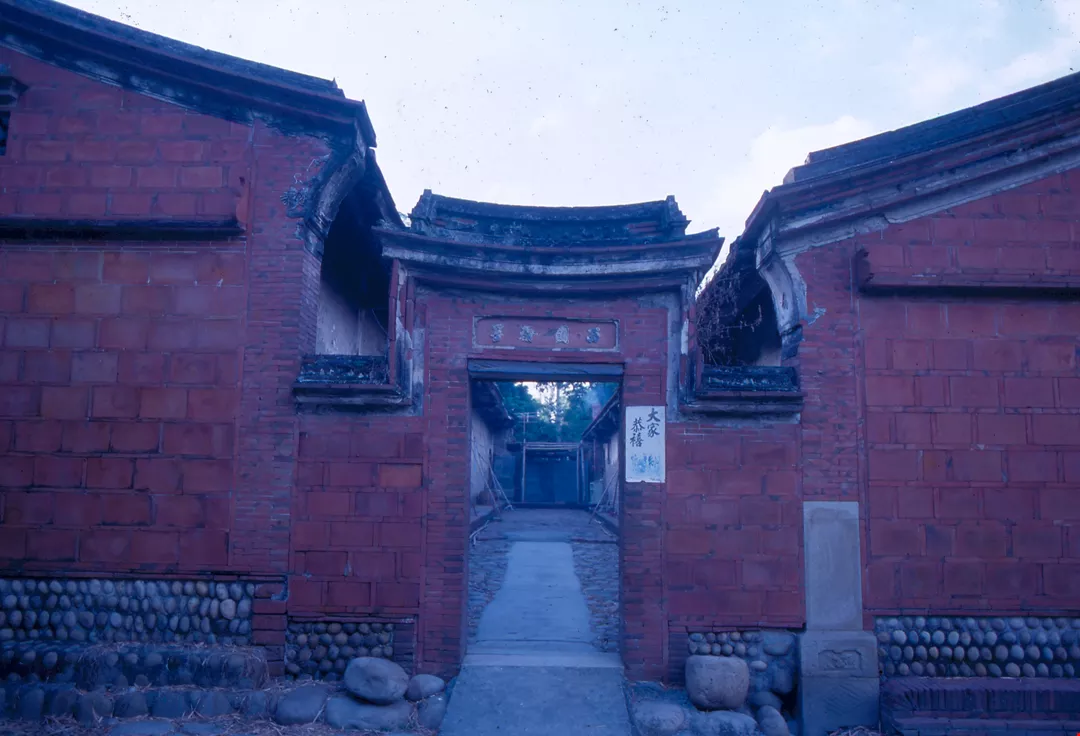
2. Two short interconnecting walls between two wings. The long narrow passage, besides being a walkway, also serves lighting and ventilating purposes.
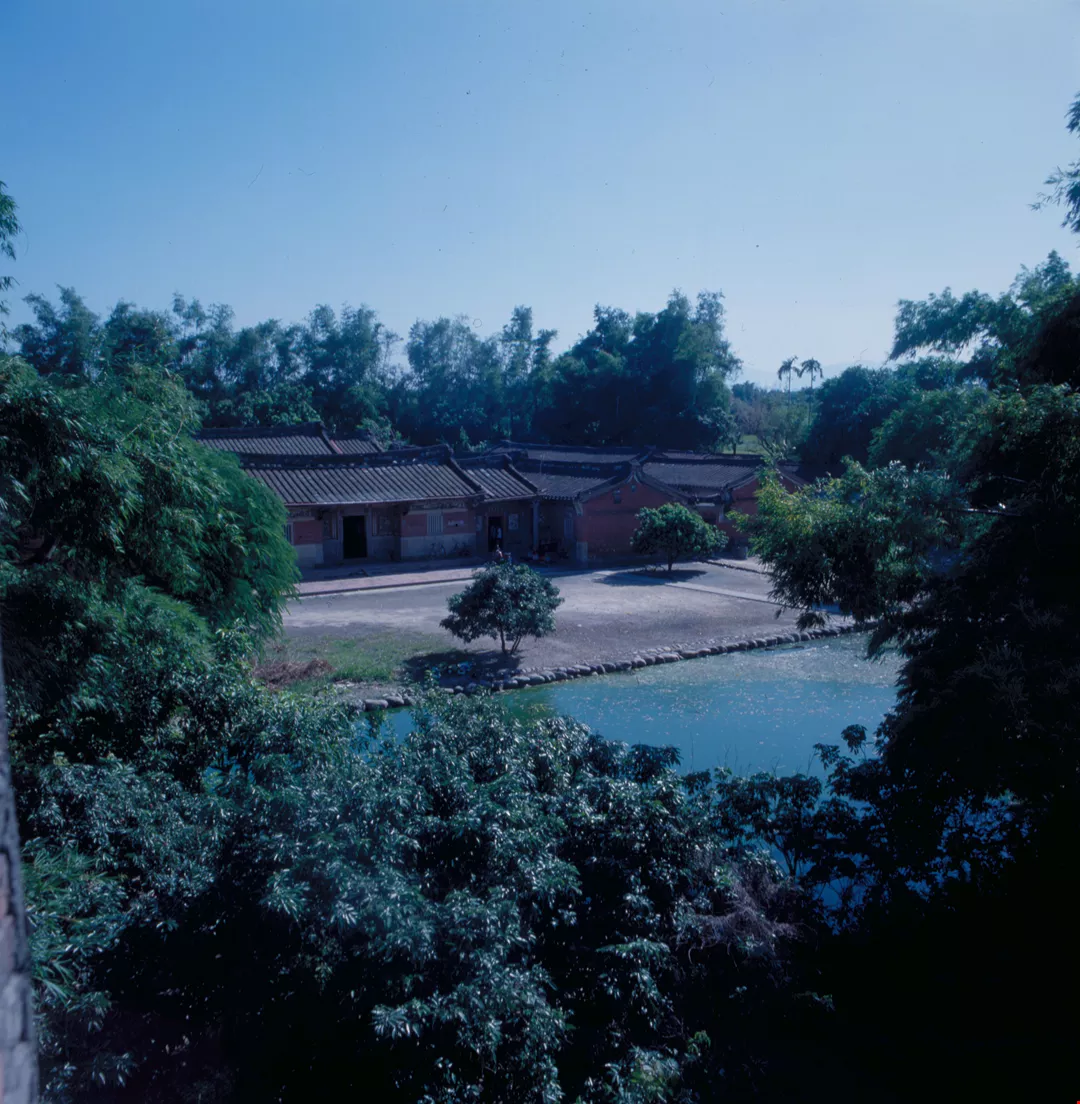
3. A handsome view of Chai Hsing, located near Tan Tzu. The pond is in the foreground, while a bamboo forest encircles the entire structure.
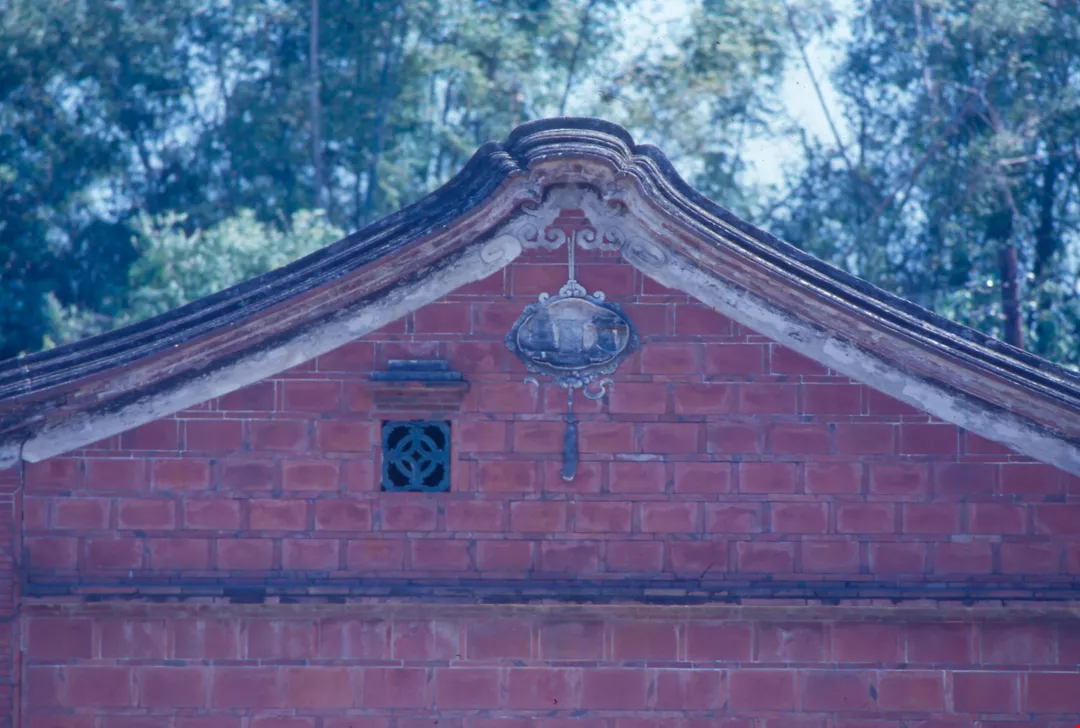
4. Faded clay pottery decorations and opaque ventilator built into the wall near the roof.
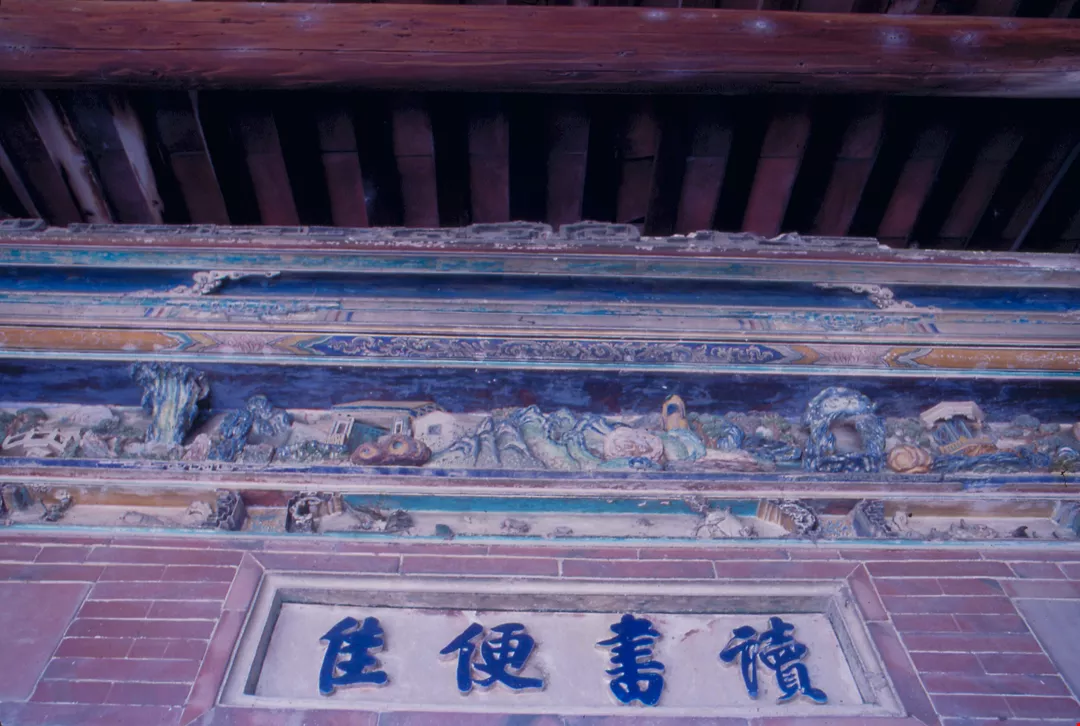
1. Indigo porcelain calligraphy on a doorway beam. Note the fancy Chiao Chih ceramics.
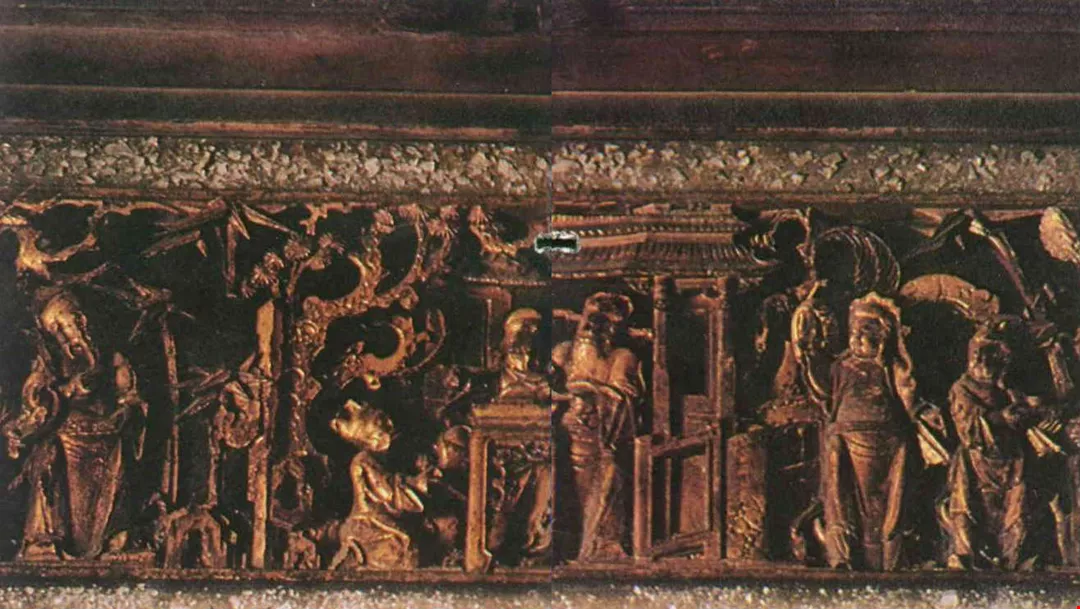
3. Numerous wood carvings depicting historical events give a certain magnificence to the walls of the main room.
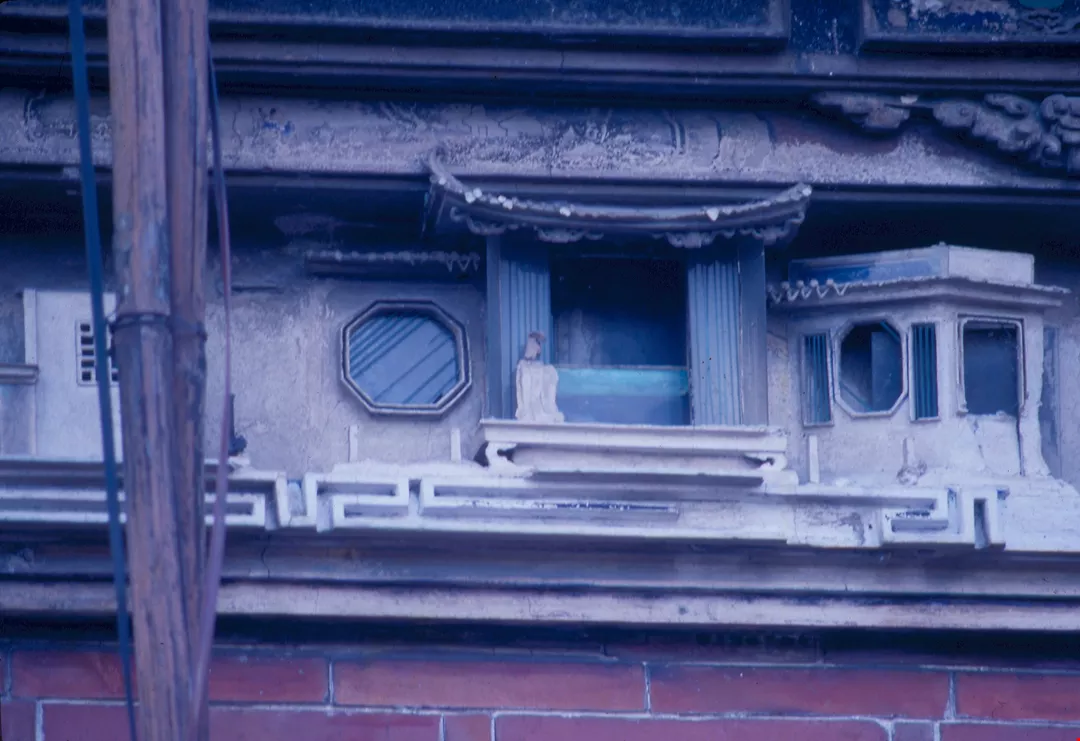
4. Masterfully sculptured scenes done in Chiao Chih represent selected folk tales.
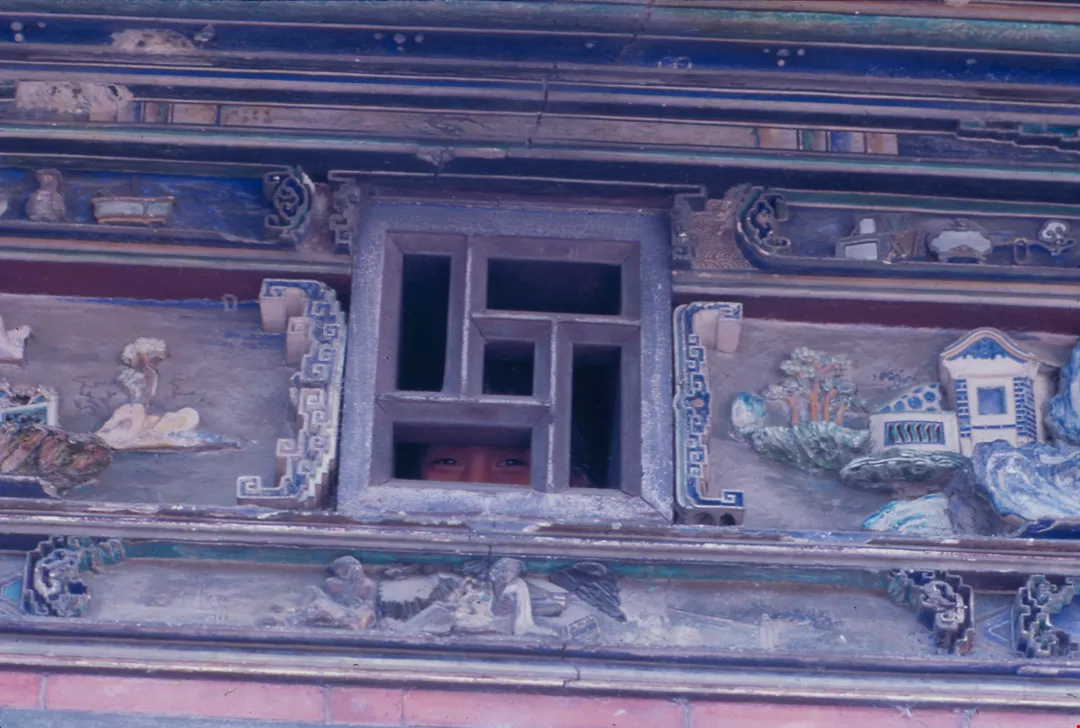
2. Chiao Chih ceramics under the eaves, with a small window for ventilation.
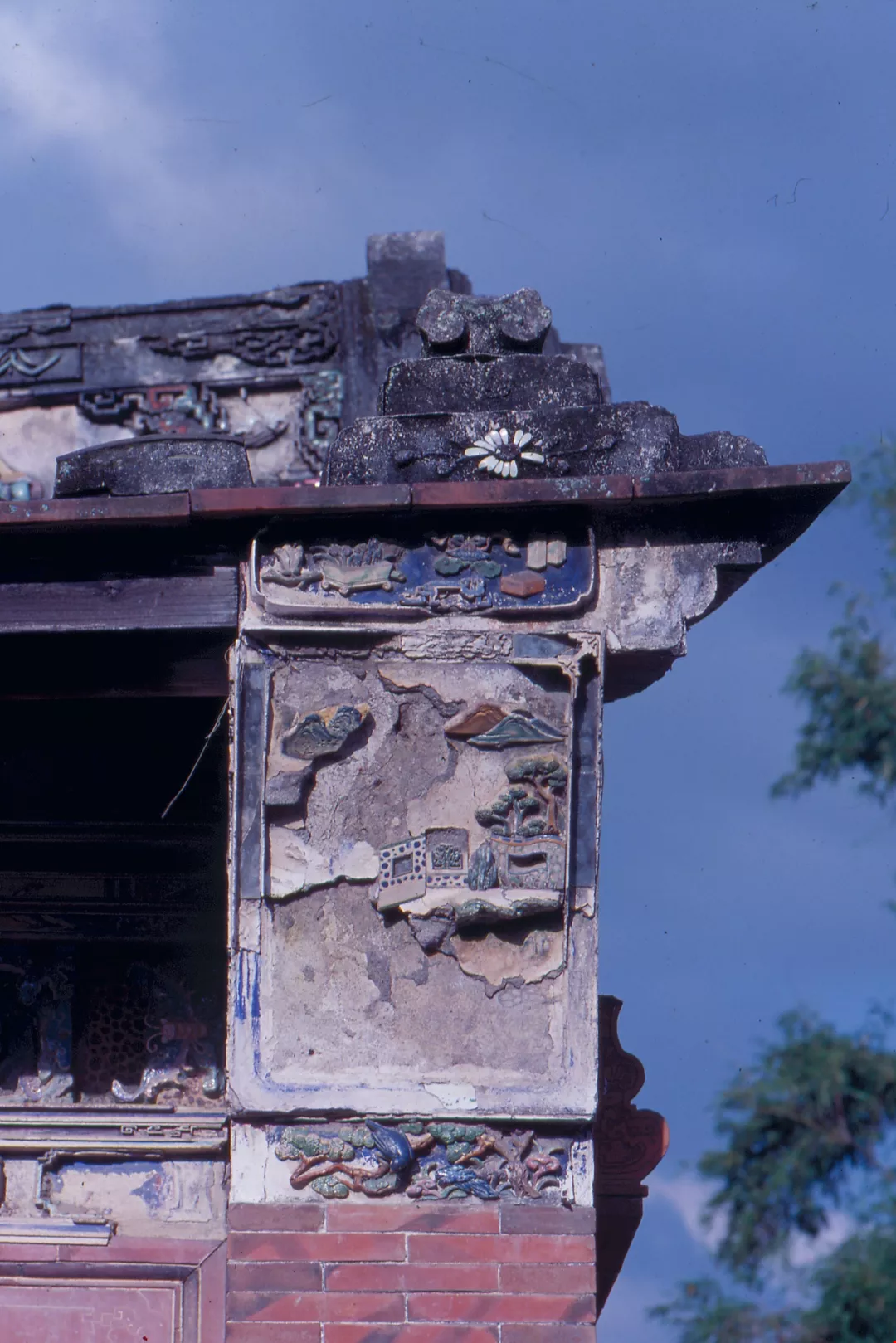
5. Exposure to the elements is hard on the old relics. Over the past two years, the chipping and cracking has grown worse.
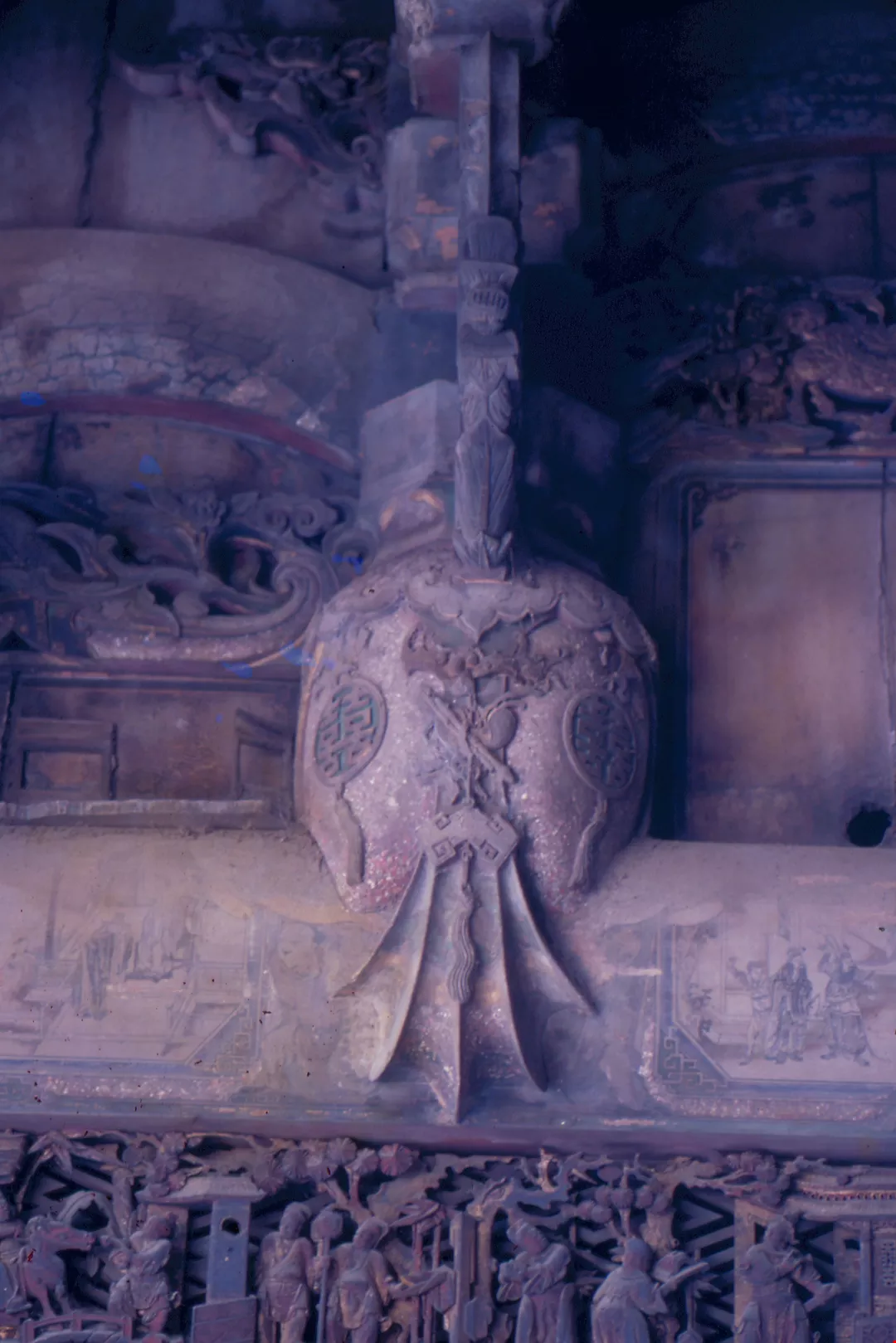
6. Gourd-shaped pendant, beam and bracket are colorfully decorated and carved.
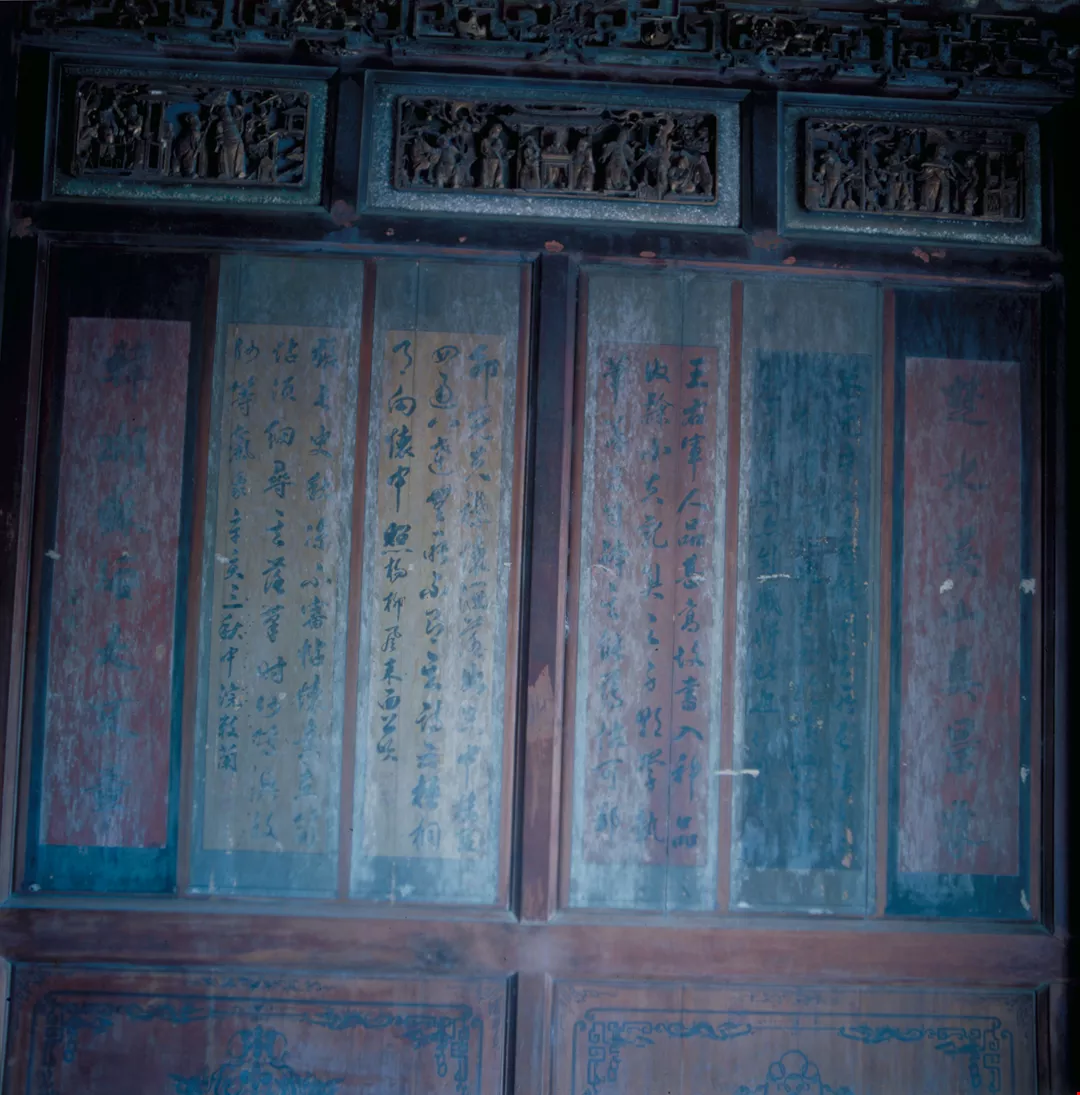
1. Calligraphy outside the door commemorates the construction of the house.
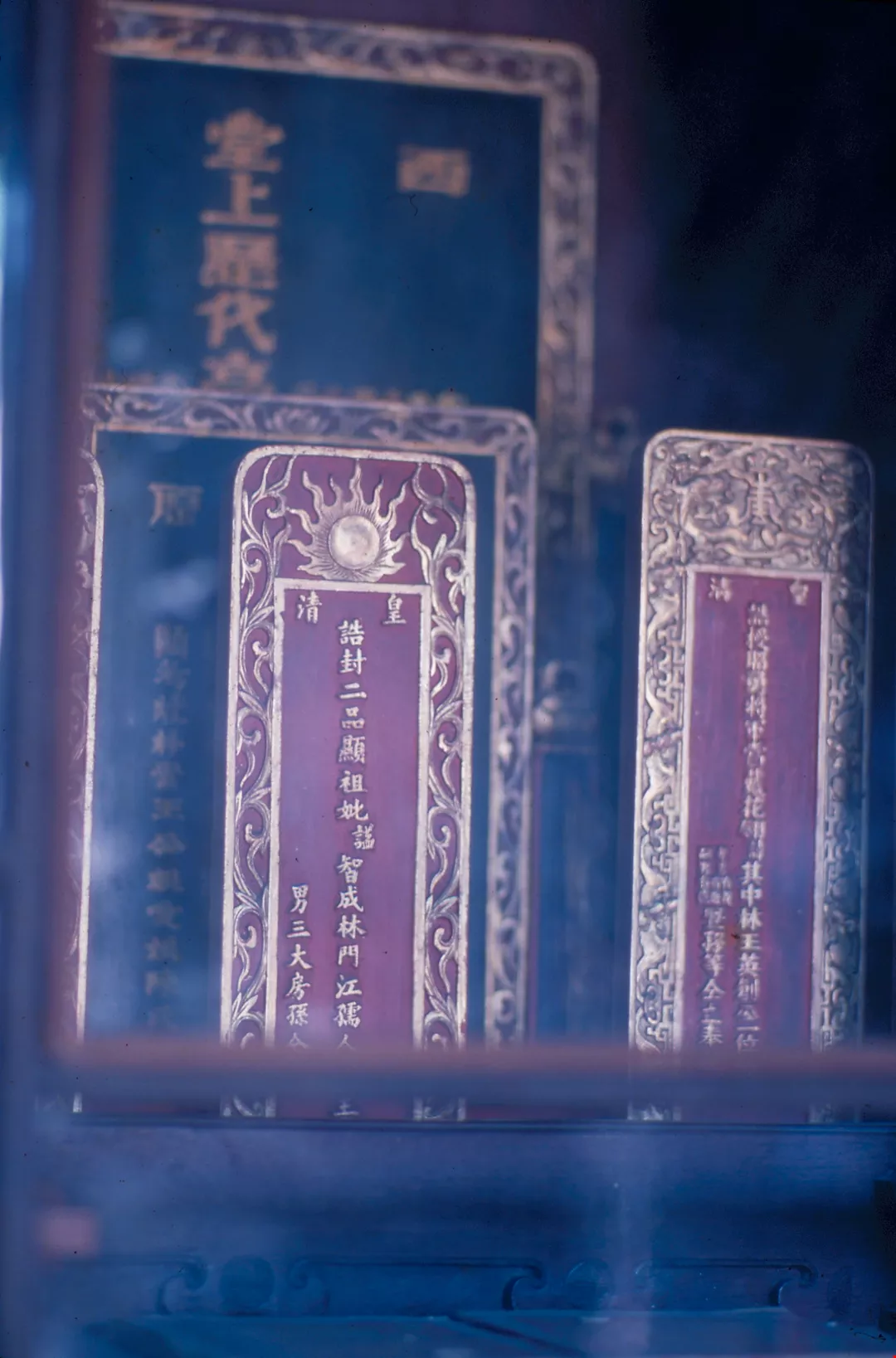
2. Sanctuary in the main hall has been a memorial for Wang Cheng-chu and the departed of the Lin family.
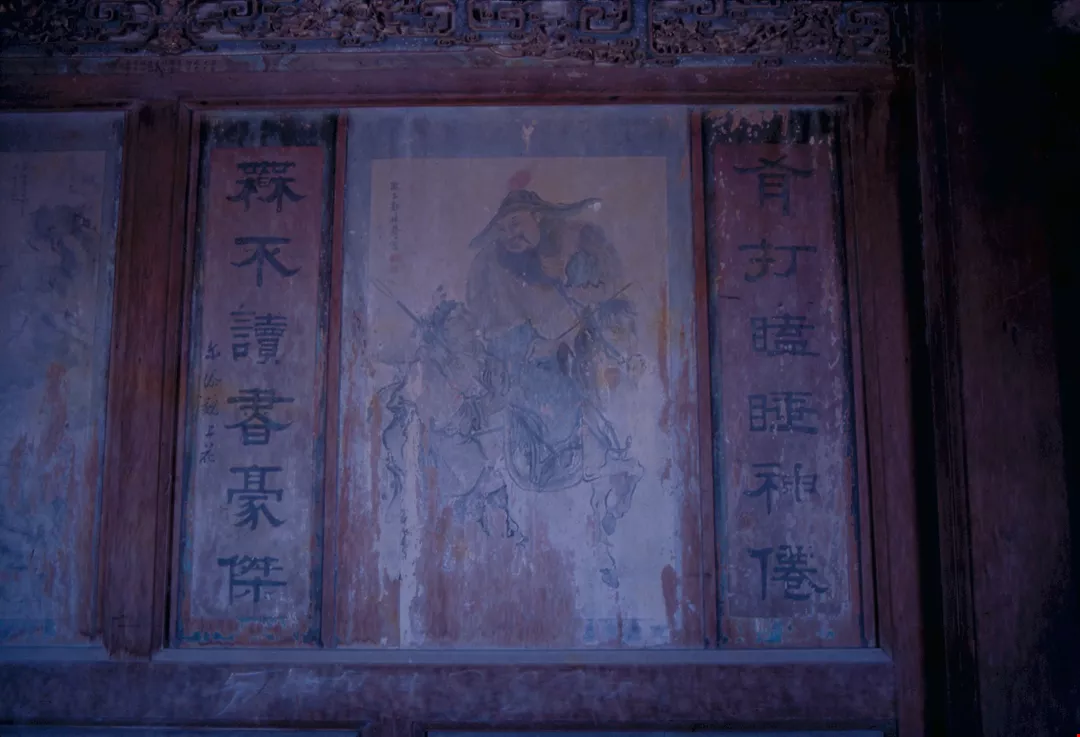
3. A yawning fairy and a reminder that an outstanding and talented man must study.
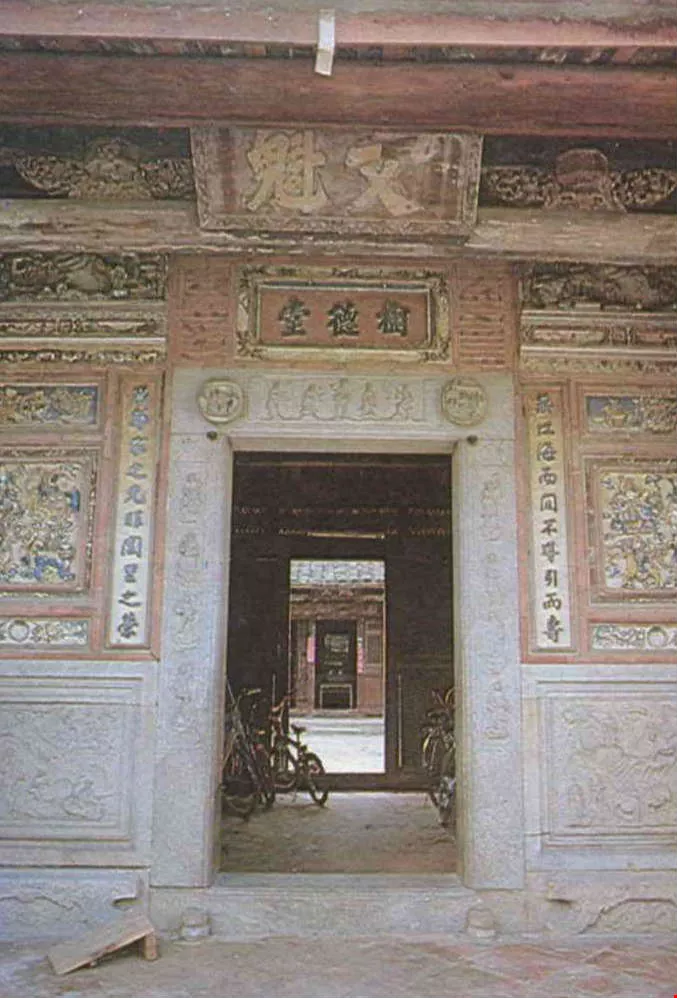
4. A wall plaque, won as a prize, hanging outside the door. A tablet and door frame carved out of stone, decorated with sculptures of the Eight Immortals.
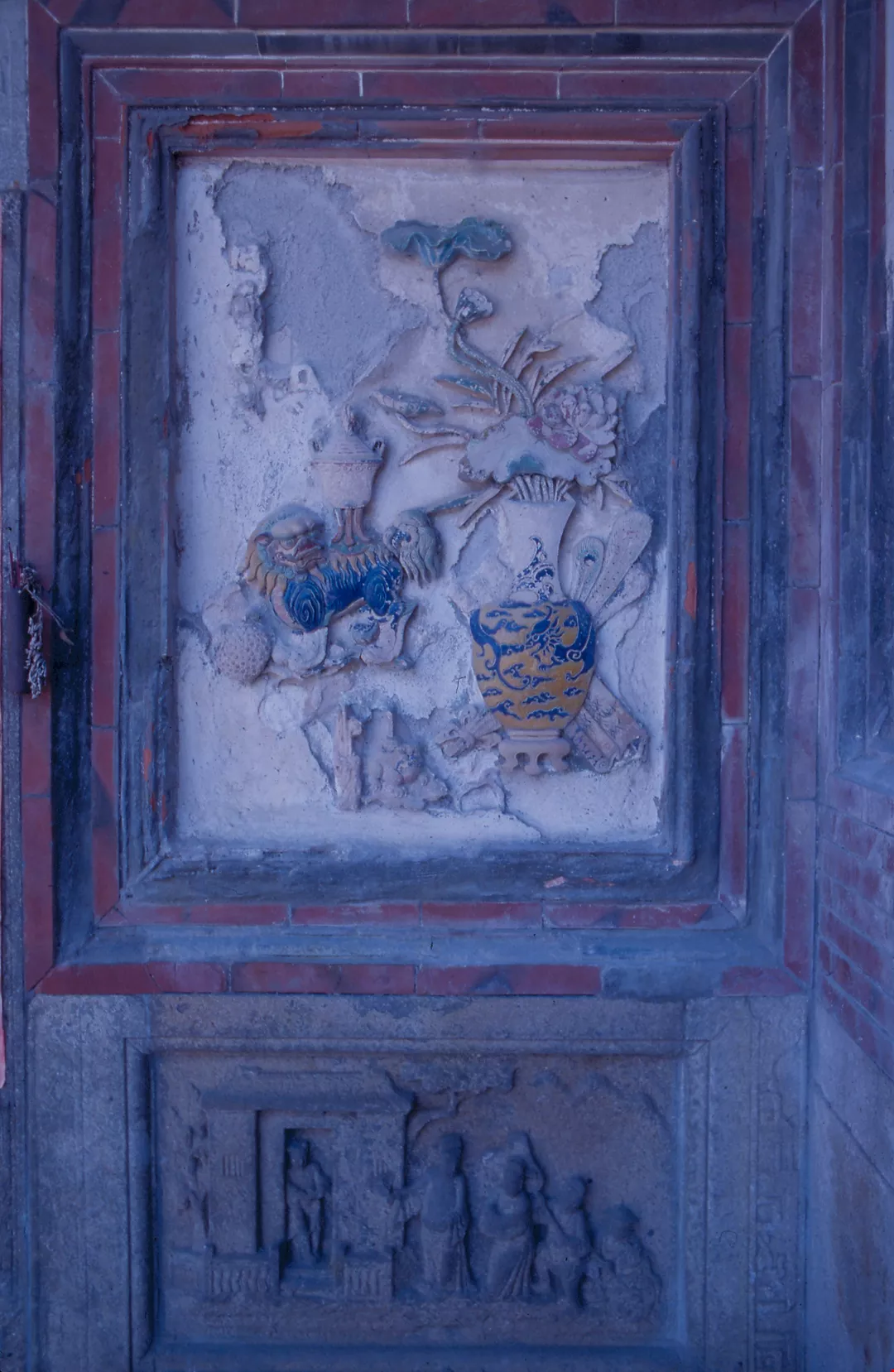
5. Chiao Chih ceramics on a wall, chipped and cracked to the point that their original form is hardly discernible.
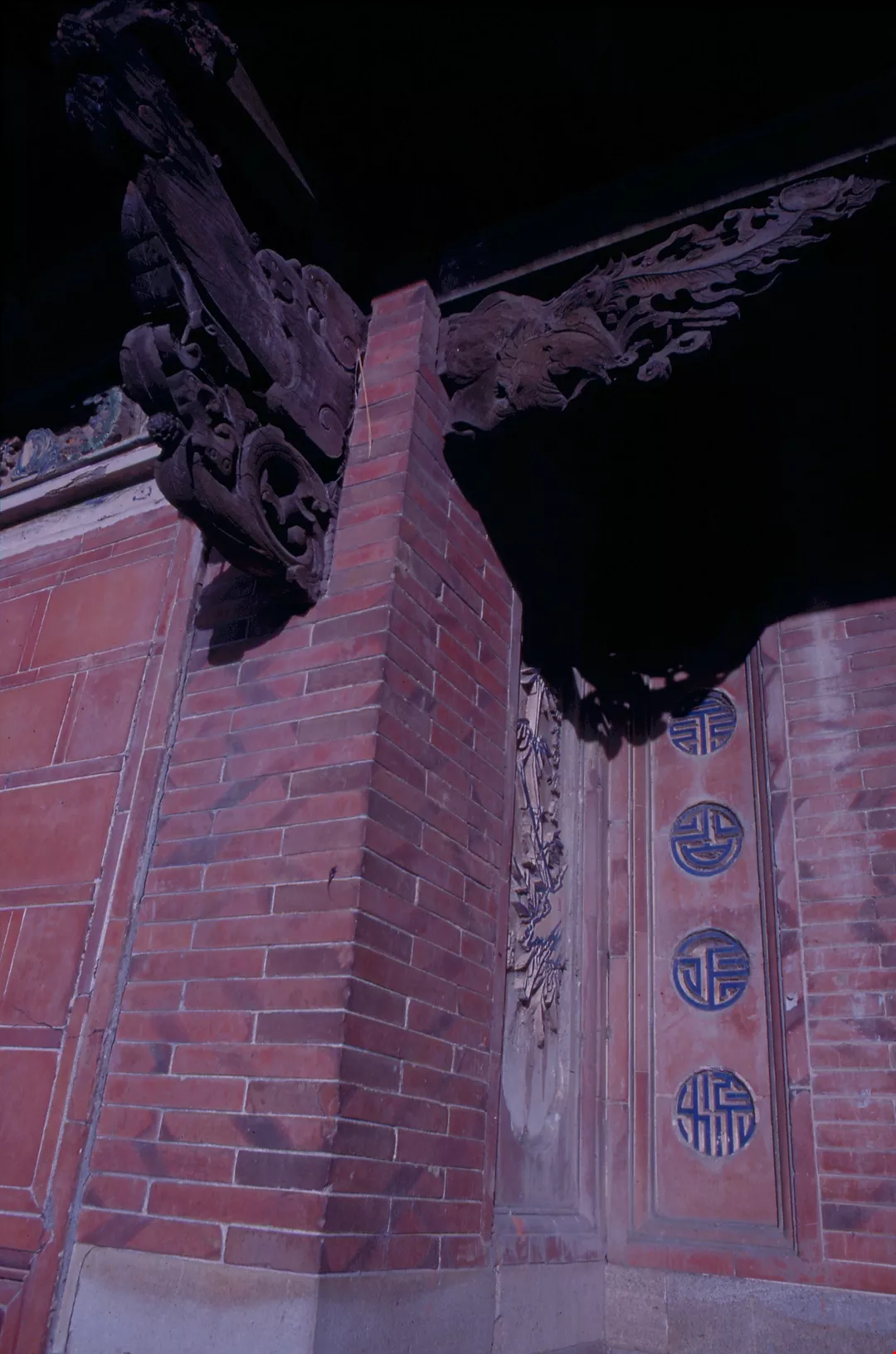
6. Elegant tile wall and sculpture are among Taiwan's ancient treasures.
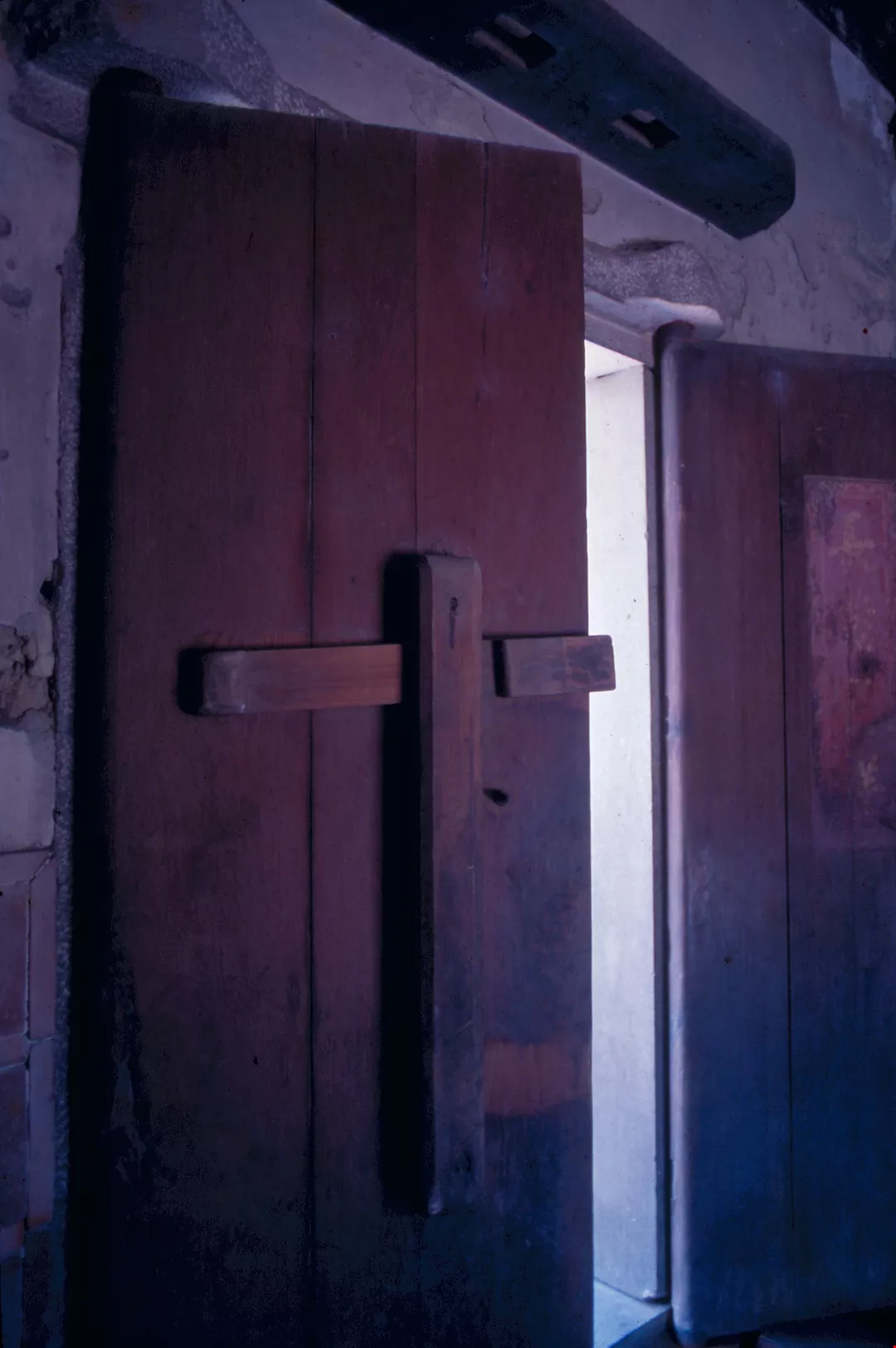
7. Heavy wooden door, more than a century old, continues its task of keeping intruders out.
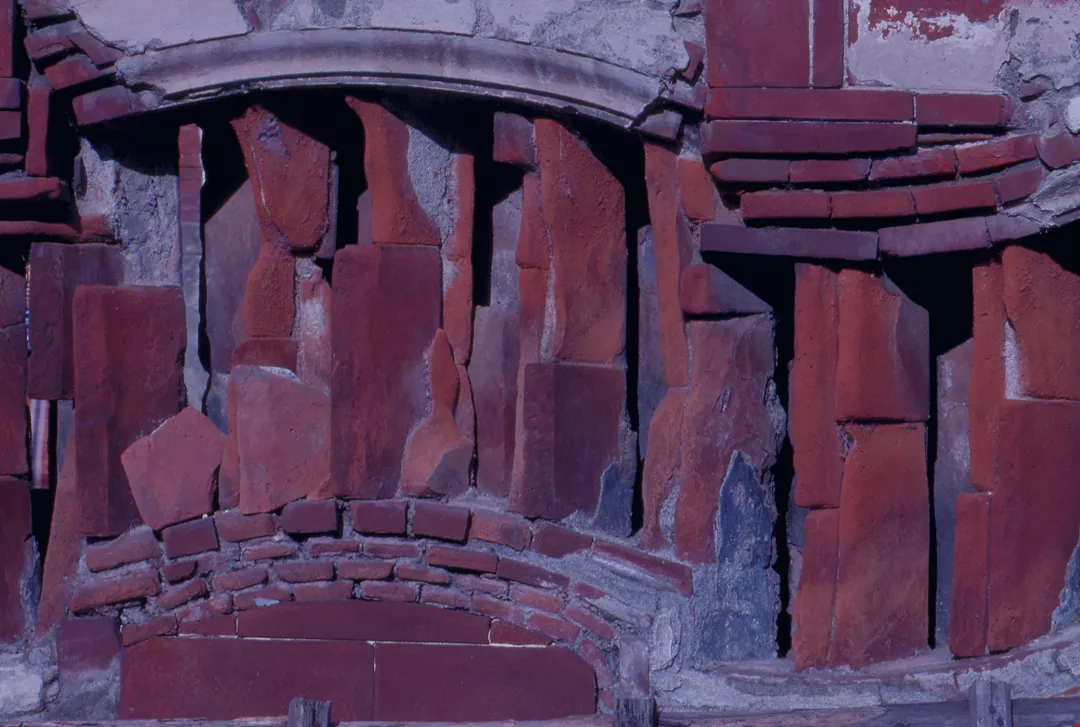
1. Scroll-shaped opening atop a short wall adjacent to the inner courtyard and walkway.
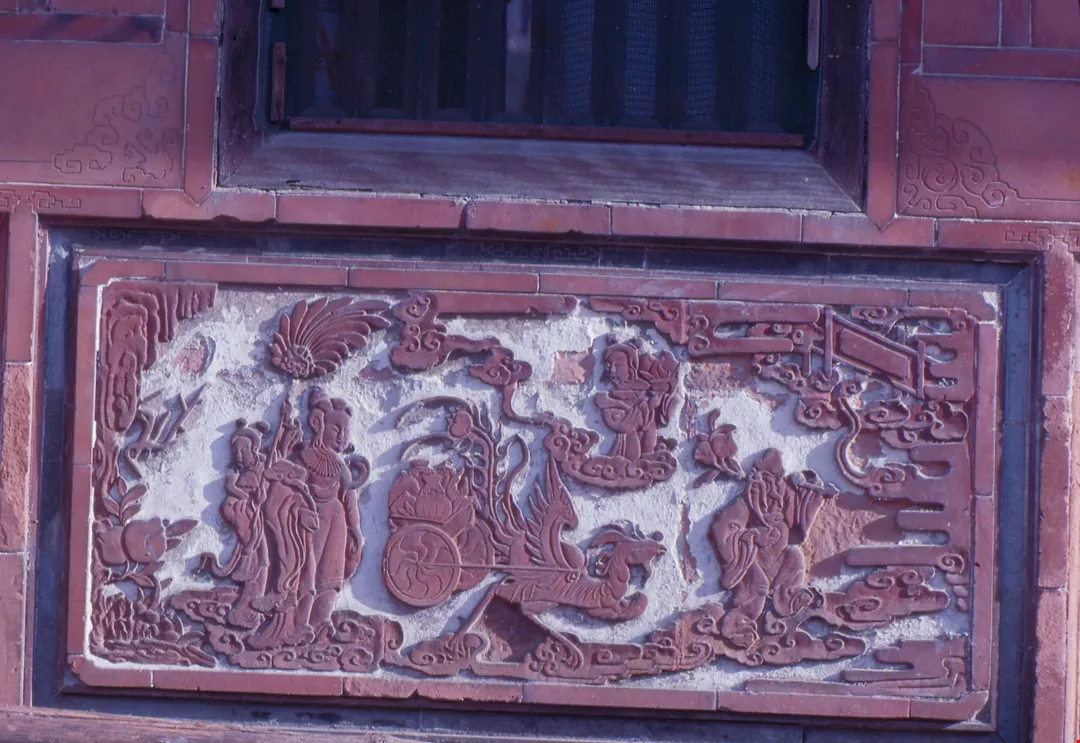
2. A seldom-viewed tale of the spirits, inlaid in tiles.
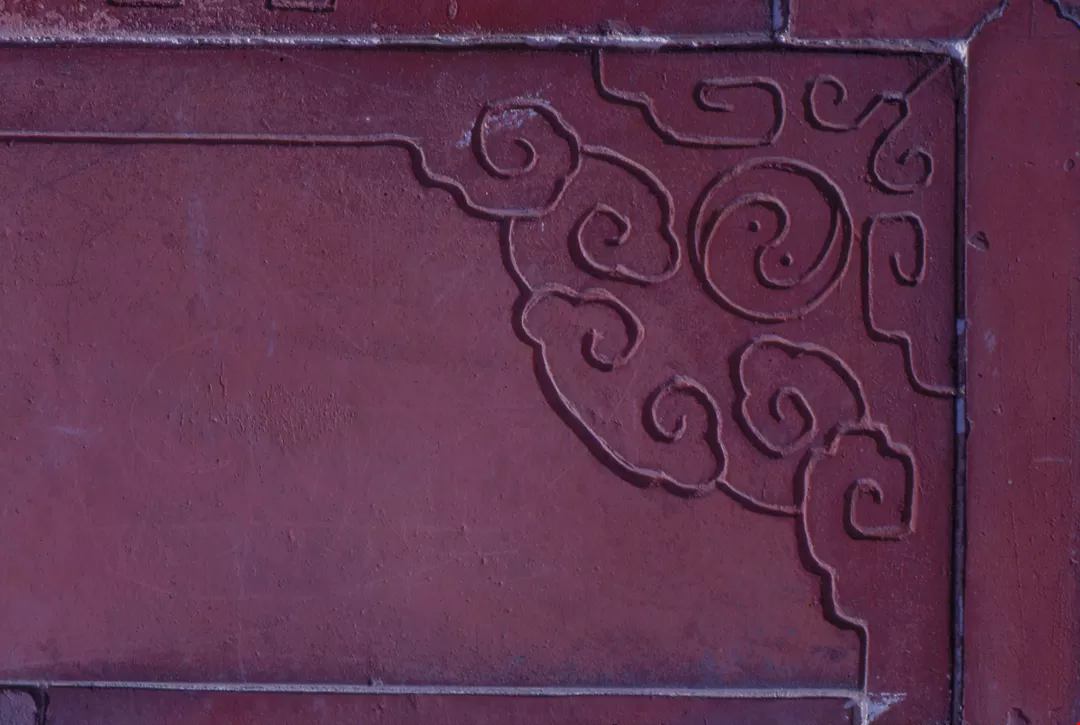
3. Ornamental design of a bat, etched in brick. This is meant to symbolize luck, as the Chinese characters look and sound much alike.
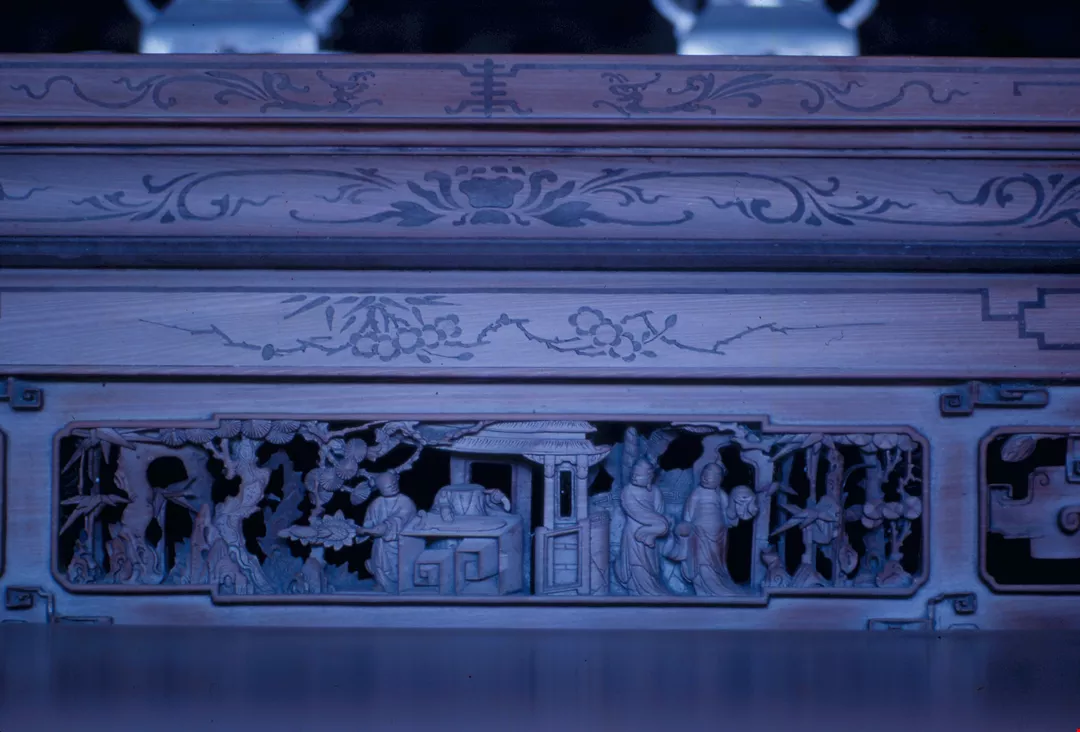
4. Carving of the Eight Immortals in the side of a desk features wood of a pomegranate (the dark-colored) skillfully inlaid in boxwood.
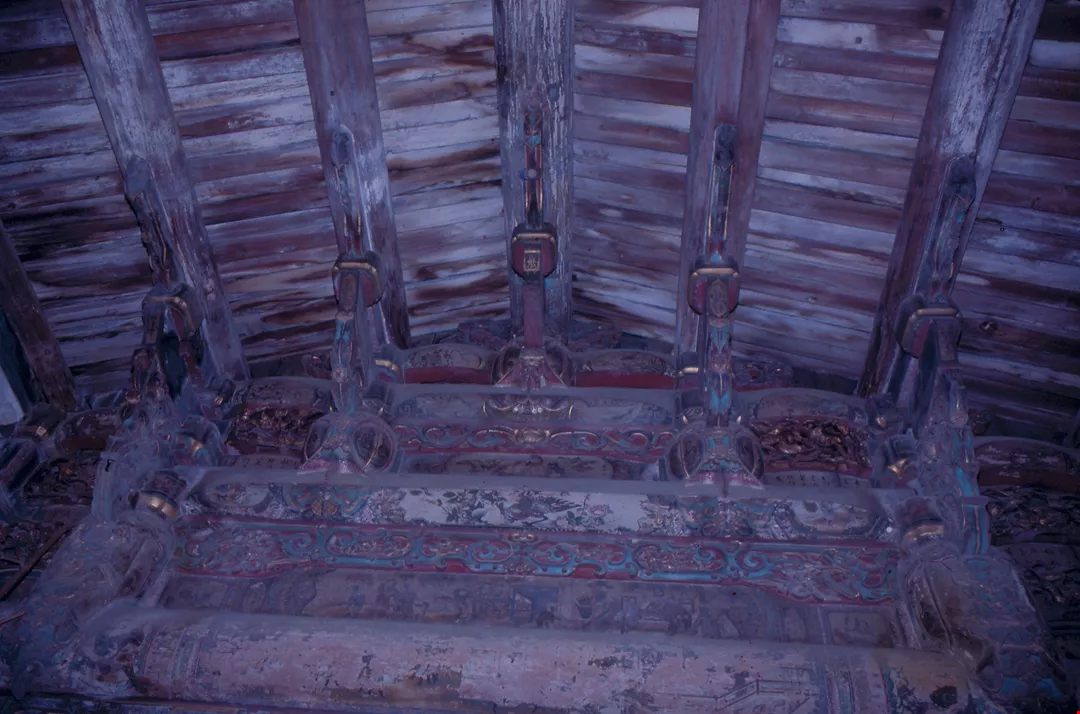
5. This painting has faded, but people can still detect and be reminded of the splendor of Chai Hsing when it was first built.
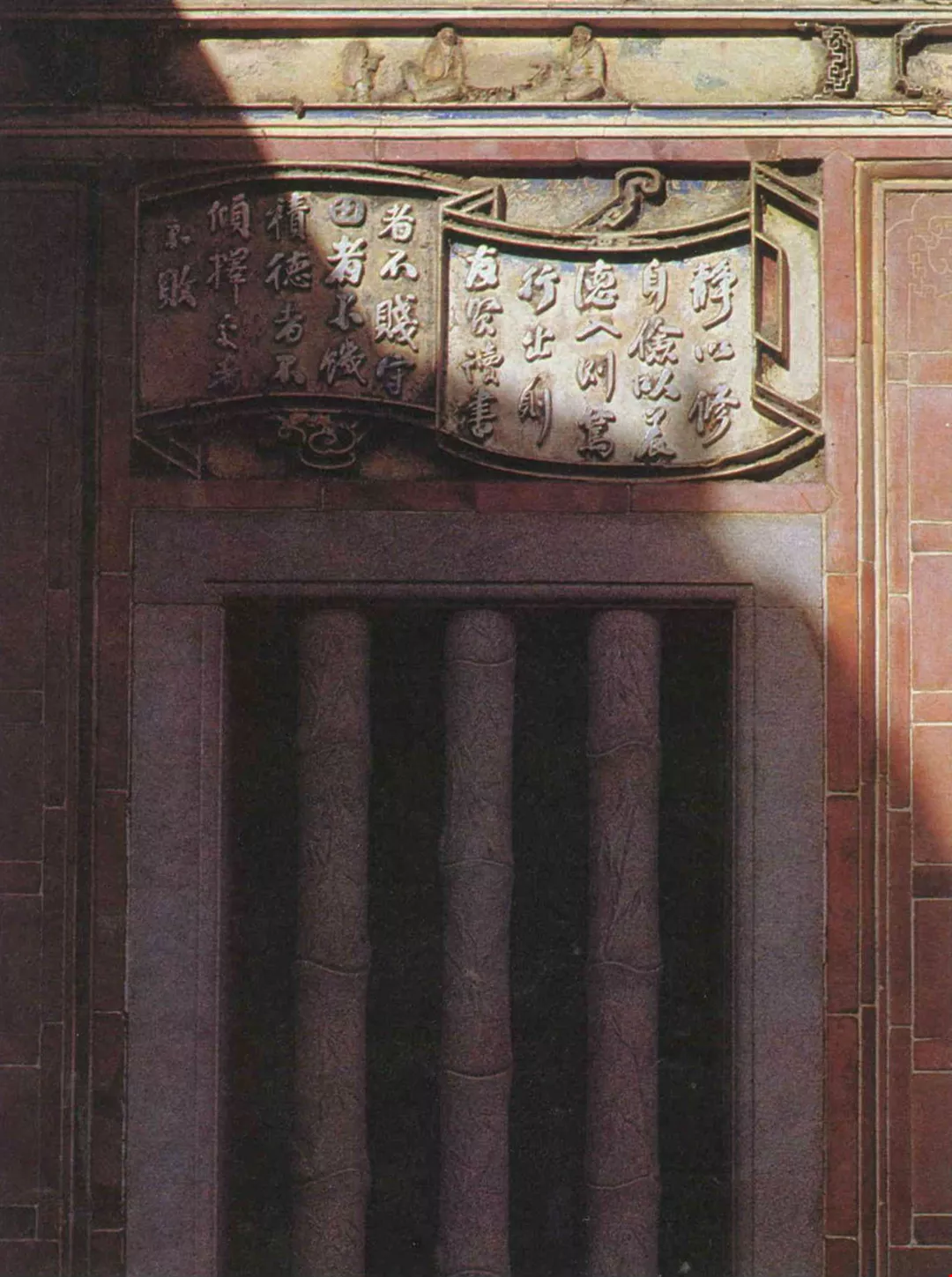
6. Porcelain characters on a scroll above a window with stone bars in the shape of bamboo joints.
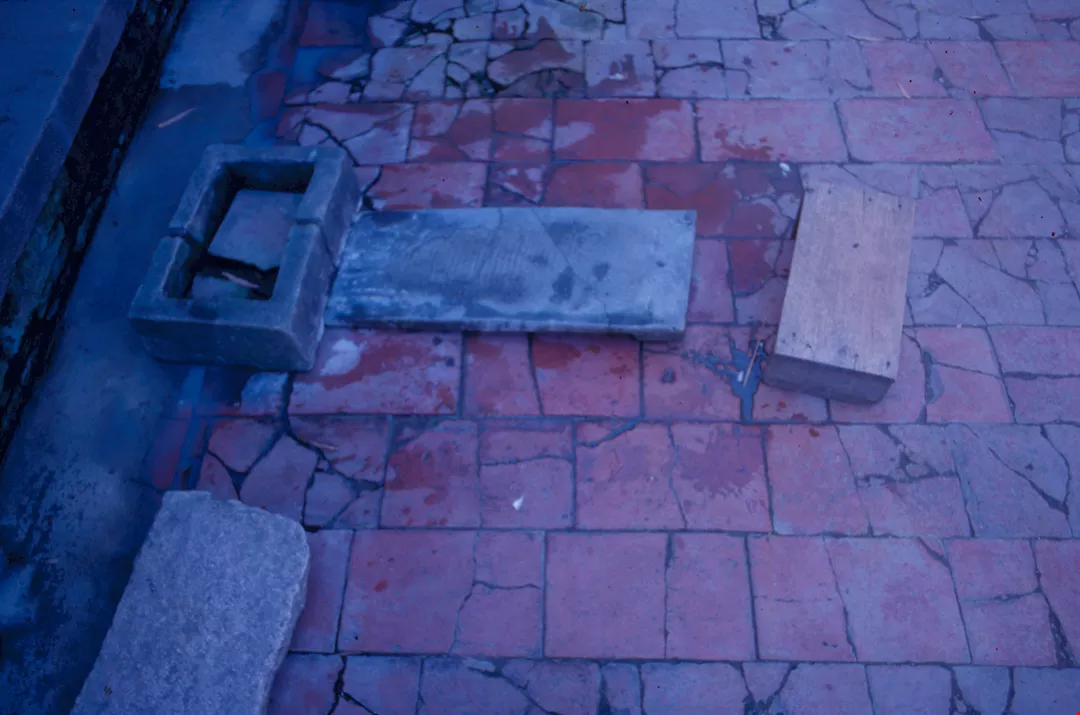
1. This stone washboard continues to be used by descendants of the Lin family.
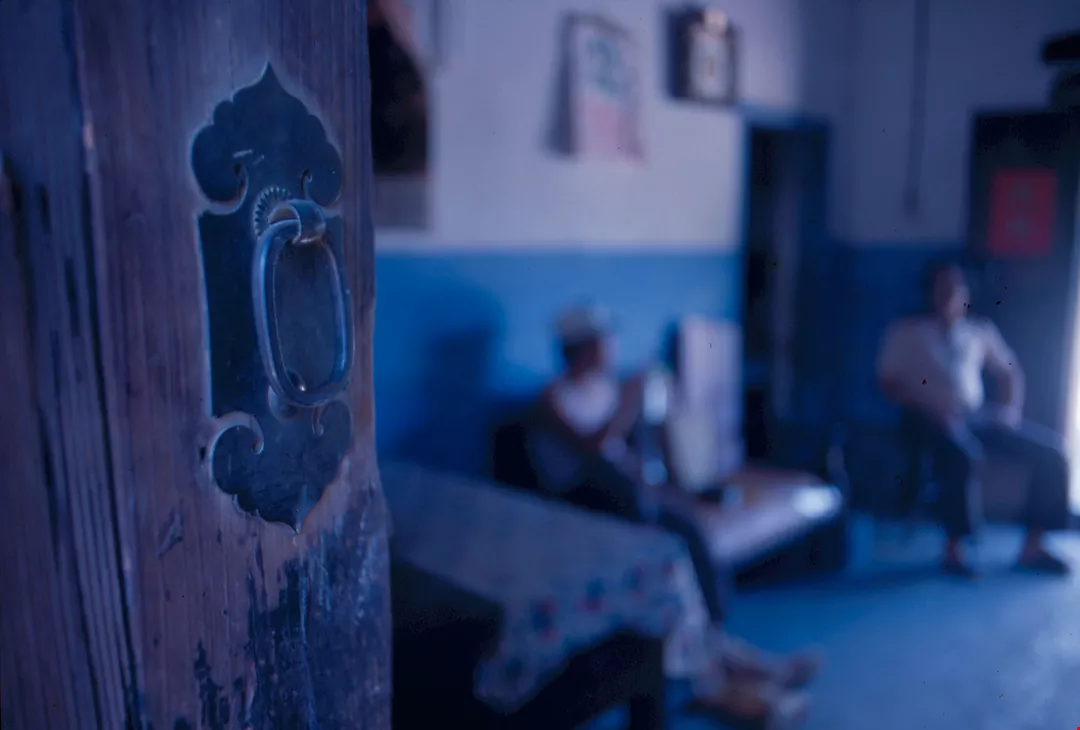
2. Behind the copper doorknocker lies the century-long story of the aging mansion.
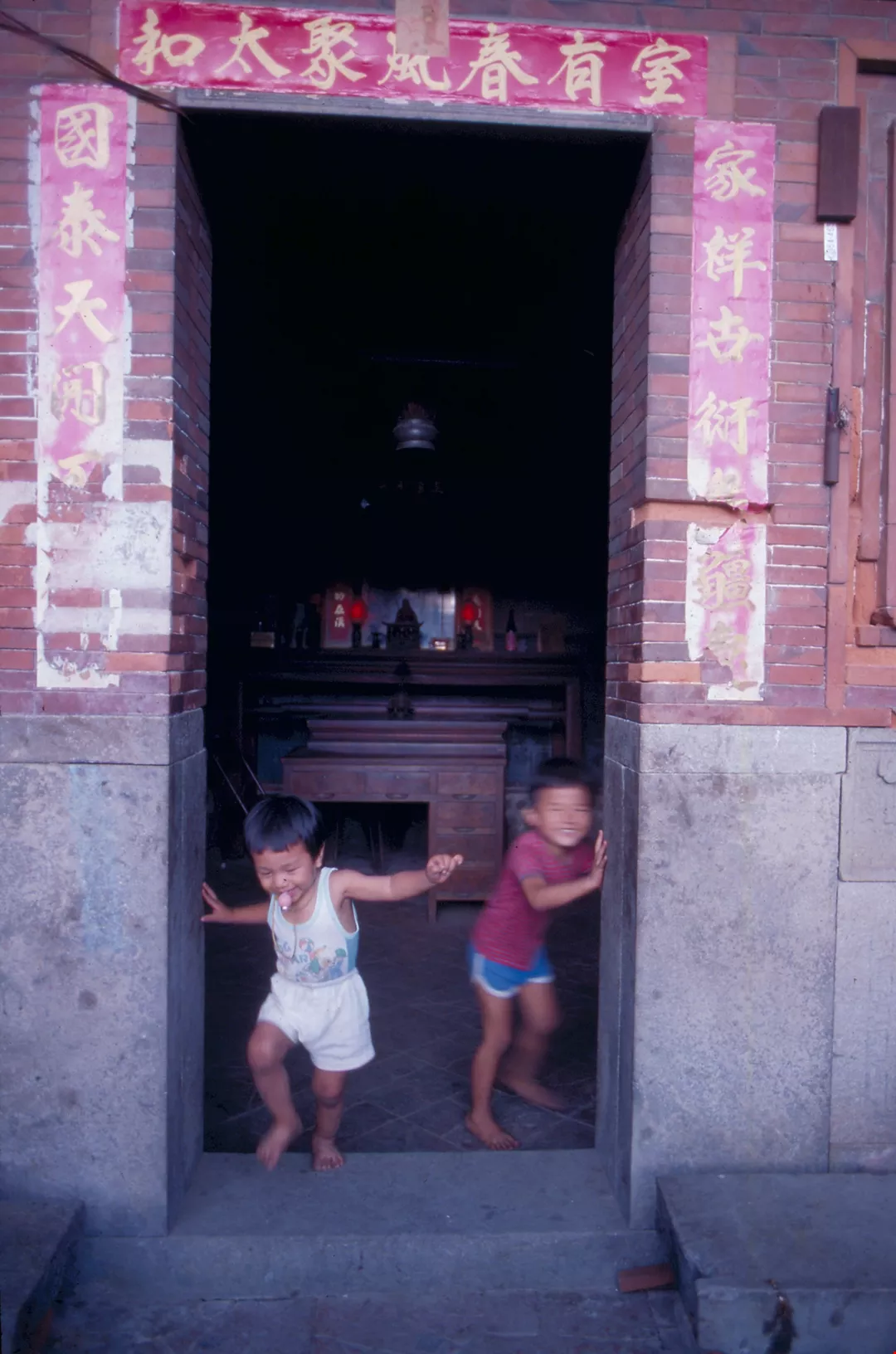
3. Youngsters frolic in a sideroom, oblivious to ancestors' hardships.
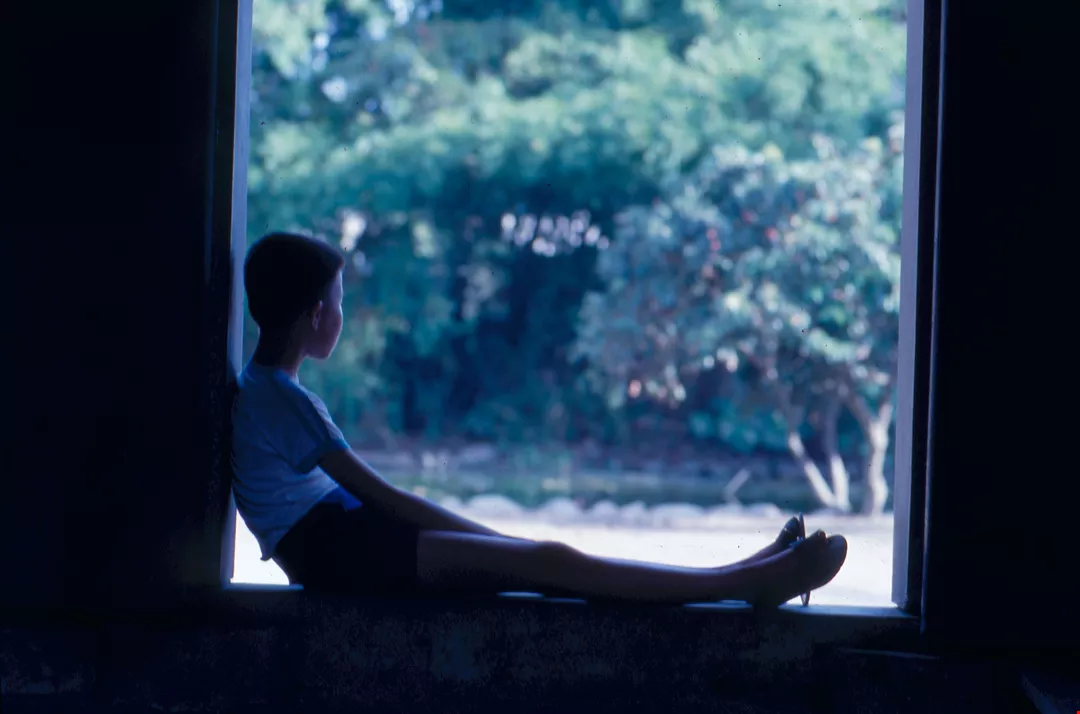
4. The younger generation's feeling toward the old house is already different from that of their predecessors.

@List.jpg?w=522&h=410&mode=crop&format=webp&quality=80)


