Walking the Safe and NarrowNew Strategic Thinking for the Defense of Taiwan
Eric Lin / photos Diago Chiu / tr. by Phil Newell
February 2000


As the first Chinese New Year of the new millenium approaches, changes are underway which are drawing attention to the long-term prospects for military and defense affairs in Taiwan. The Legislative Yuan has finally passed the long-discussed National Defense Law and Coastal Defense Law. These establish new regulations governing issues which have long been a focus of public concern, including unification of the military chain of command, alteration of the weapons procurement process, establishment of a flexible military service system, and transfer of defense responsibilities for remote offshore islands.
In addition, as the presidential election battle heats up, cross-strait security issues-especially those related to missiles and missile defense-have again come up in Taiwan, with candidates rushing to put forward their own strategic thinking. Faced with the turbulent cross-strait situation, can Taiwan's military ensure security? How should Taiwan respond to mainland China's active development of a missile attack capability? Will pro-active construction of a missile defense system raise tensions between the two sides? How can Taiwan defend itself without provoking an irrational response from mainland China?
Two national defense topics have been especially hot in this new year. One is that defense of the remote Pratas and Spratley Islands will be transferred to the Coast Guard Command.
The second is the subject of missile defense. Both Kuomintang presidential candidate Lien Chan and Democratic Progressive Party presidential candidate Chen Shui-bian have commented on the subject. Last December, at a seminar at the Armed Forces University entitled "Transmillennial National Security and Military Strategy," Lien delivered an address entitled "National Defense Strategy and Construction in the New Century." He suggested that Taiwan will have to develop long-range missiles to counter the mainland Chinese military threat. While "effective deterrence" would remain the cornerstone of strategy, it should no longer be passive, said Lien, but "pro-active." The new generation of military capability will be based, he said, on the principle of "offensive defense."
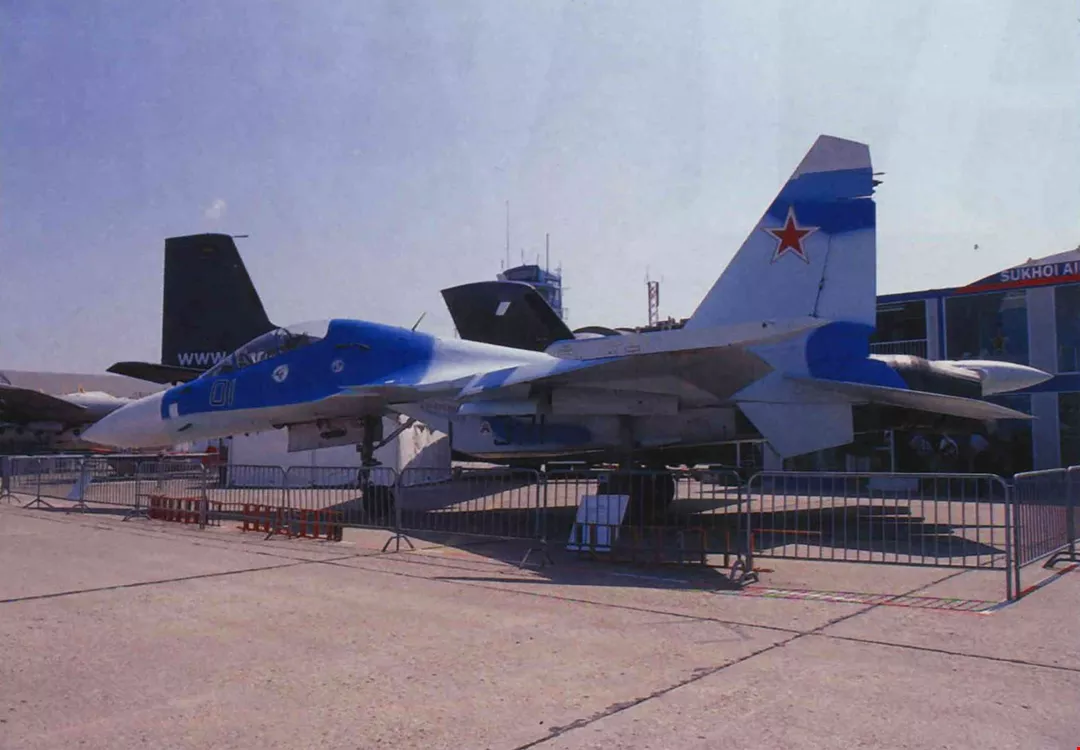
The PRC weapons that pose the biggest threat to Taiwan in the new era are Sukhoi aircraft (the photo shows an Su-30, the latest model), M-class missiles, and cruise missiles. The M-class Dongfeng 15 missile.
Chen raised a similar idea. In his "Defense Policy White Paper," he proposed developing medium- and short-range surface-to-surface missiles. Obviously, after the experience of the 1996 Taiwan Strait missile crisis, people in Taiwan have considered defending the island against mainland Chinese missile attack to be one of the foremost defense problems.
Interestingly, even as such "pro-active defense" ideas are being proposed, the Ministry of National Defense (MND) has made a seemingly contrary move: It has announced that military forces will be withdrawn from the remote offshore Pratas and Spratley islands, and that responsibility for these islands and for coastal patrolling will be transferred to the Coast Guard. The MND argues that since the military is being streamlined, in order to concentrate defense forces in Taiwan, Penghu, Kinmen, and Matsu, the defense of the Pratas and Spratley islands-which are in the South China Sea-and the protection of coastal fishing vessels and coastal security should be left to the Coast Guard.
Withdrawing from the two islands groups while moving actively to build a missile system may look like contradictory moves, but in fact they're both part of the military blueprint for the future-the abandonment of initial use of military force, but the ability to retaliate when attacked.
The military blueprint for the new century is still being drawn up. The stimulus for these new ideas has been the aggressive military deployments by mainland China aimed at Taiwan. Lin Cheng-yi, a research fellow at the Institute of European and American Affairs at the Academia Sinica, says that the successful testing by mainland China of missiles in 1996 has altered the lines of strategic thought on both sides of the strait. Guided missiles have replaced aircraft as the major threat to Taiwan. In recent years mainland China has also constructed short-range surface-to-surface missile bases along its Southeast Coast which are specifically targeted at Taiwan. According to a report in the December 22, 1999 Washington Post, in November US reconnaissance satellites discovered that the PRC had begun constructing a new air defense missile base in the Zhangzhou region along the southeast coast.
Lin Cheng-yi says that, besides rapidly building missile bases, the PRC has repeatedly stated that "there should be a timetable for resolution of the Taiwan problem." The PRC's extremely assertive deployment of armed capability opposite Taiwan is deeply felt in the ROC. If Taiwan does not respond in time, it will be forced into an increasingly passive position.
Lt. Gen. Fuh Wei-ku, commandant of the Air Command and General Staff College at the Armed Forces University, notes that for the moment Taiwan still has a slight edge in terms of air defense. However, it is widely estimated that by 2005, there will be a shift in the military capabilities of the two sides. Although this prediction is not necessarily accurate, Taiwan should work to maintain its edge so as to guarantee peace through strength.
Fuh Wei-ku offers the following analysis: Currently the PRC weapons which pose the greatest threat to Taiwan are Sukhoi aircraft, M-class missiles, and cruise missiles. Of these, the aircraft are already strategically of the second rank, but Taiwan must be alert to the missiles. The M-class weapons can pass through the stratosphere directly into Taiwan's rear areas, while cruise missiles can undertake low-level long-range attacks. "We can defend against the M-class missiles with our Patriot missile defense system, but we currently have only limited ability to intercept cruise missiles. The most important subject for the moment is to rethink air defense strategy," he says.
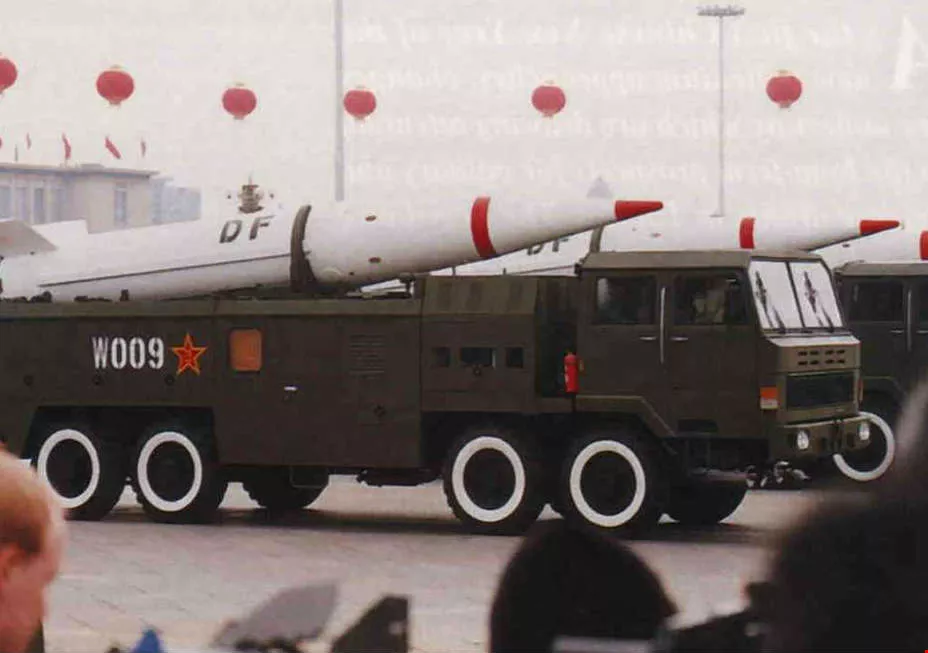
was the featured player in the missile-test drama in the Taiwan Strait in 1996. The Dongfeng 21 (bottom), the most recent model,.
Any discussion of missiles also involves many other issues, including international strategy and domestic civilian morale.
From the point of view of international strategy, the US clearly does not want Taiwan to develop its own offensive missile capability. The US responded negatively to Lien Chan's proposal to build long-range missiles. At the State Department's end-of-year press conference, US Under Secretary of State for Arms Control John Holum said that the US did not want to see Taiwan take any action which would violate the basic norms of the 1987 Missile Technology Control Regime. Thus the US would not be happy to see Taiwan develop offensive long-range missile systems.
Kuo Cheng-liang, a professor of political science at Soochow University, says that the US opposes Taiwan's development of long-range missiles because of the US's long-range strategy vis-a-vis China. The US has always been responsible for strategic deterrence, while Taiwan handles local tactical defense. If Taiwan were to develop long-range missiles, this would change Taiwan's defensive posture, and alter the Taiwan-US military division of labor.
There is another possibility for Taiwan in defending against the threat of missiles from the PRC. Besides building offensive systems, Taiwan could also join the US Theater Missile Defense (TMD) plan. But this may not be feasible, says Bih Chung-ho, editor-in-chief of the defense magazine Defense Technology Monthly. He says that if Taiwan were to join the TMD this would be a return to a situation of joint US-Taiwan defense, such as existed during the Cold War, when Taiwan was on the frontline in a chain of islands surrounding China. For the PRC, which is endeavoring to move from coastal defense to a blue-water capability, the provocation would be enormous. The United States has thus been deliberately unclear-it does not exclude Taiwan from the TMD, but it has not clearly said that Taiwan would be included.
In any case, says Lin Chong-pin, vice-chairman of the ROC's Mainland Affairs Council, potential TMD buyers still do not know where the money would come from, while the TMD producer has not yet come up with a finished product. So this is still just a political debating point, and it is too early to talk about any impact on the military situation in the Taiwan Strait.
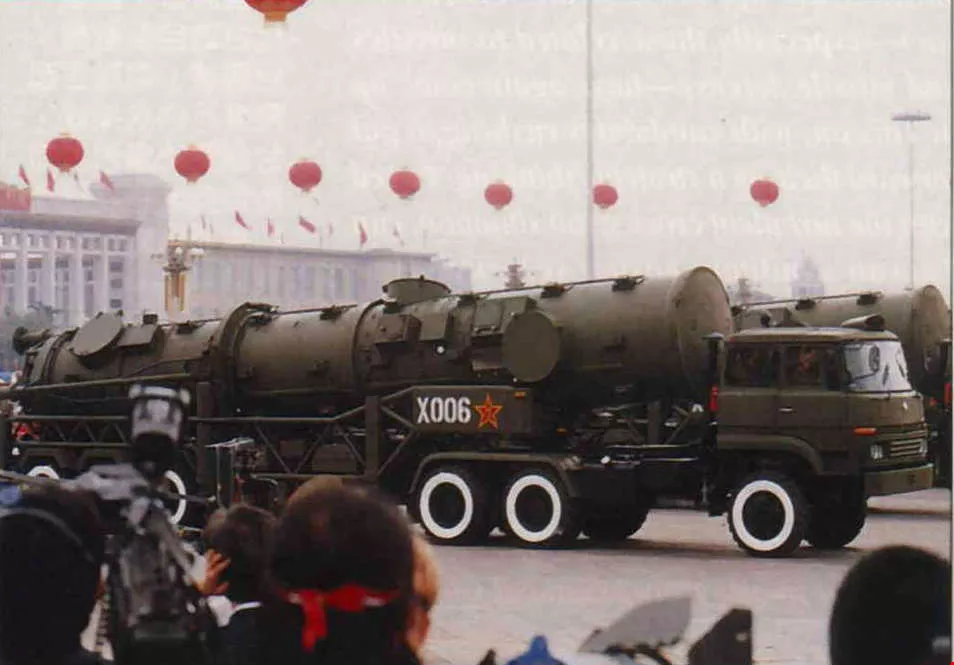
is capable of crossing the Pacific. (photo by Wang Ching-cheng)
Thus, from the international strategic angle, it still seems most practical for Taiwan to have its own missile systems. Moreover, this is also necessary from the point of view of public opinion.
In an analysis of the threat that guided missiles pose to morale in Taiwan, ROC Minister of Defense Tang Fei points out that perhaps for some countries a missile attack would have little impact. But in Taiwan, where resources are concentrated, missiles pose a serious threat to electrical power and petroleum production, to transportation (harbors, highways, airports, railroads), and to factories. More importantly, he says, the citizens of Taiwan are not psychologically prepared. There has been no war for decades now, and there are even very few usable civil defense shelters. If the PRC were to launch 200-300 guided missiles against Taiwan, although the damage to industry, power, and communications would probably not be as serious as was caused by the September 21 earthquake, citizens are not psychologically prepared for war, and the economy might not be able to withstand the assault.
Chung Chien, an expert on military affairs, says that the turbulence created in the public mind by the 1996 PRC missile tests has not abated even today. The construction of an effective missile defense system is the main military problem in bringing peace of mind to Taiwan citizens. Thus, in the presidential elections, although missile defense cannot be said to be "the beef" of campaigning, it is still an important "side dish" that many citizens are concerned about.
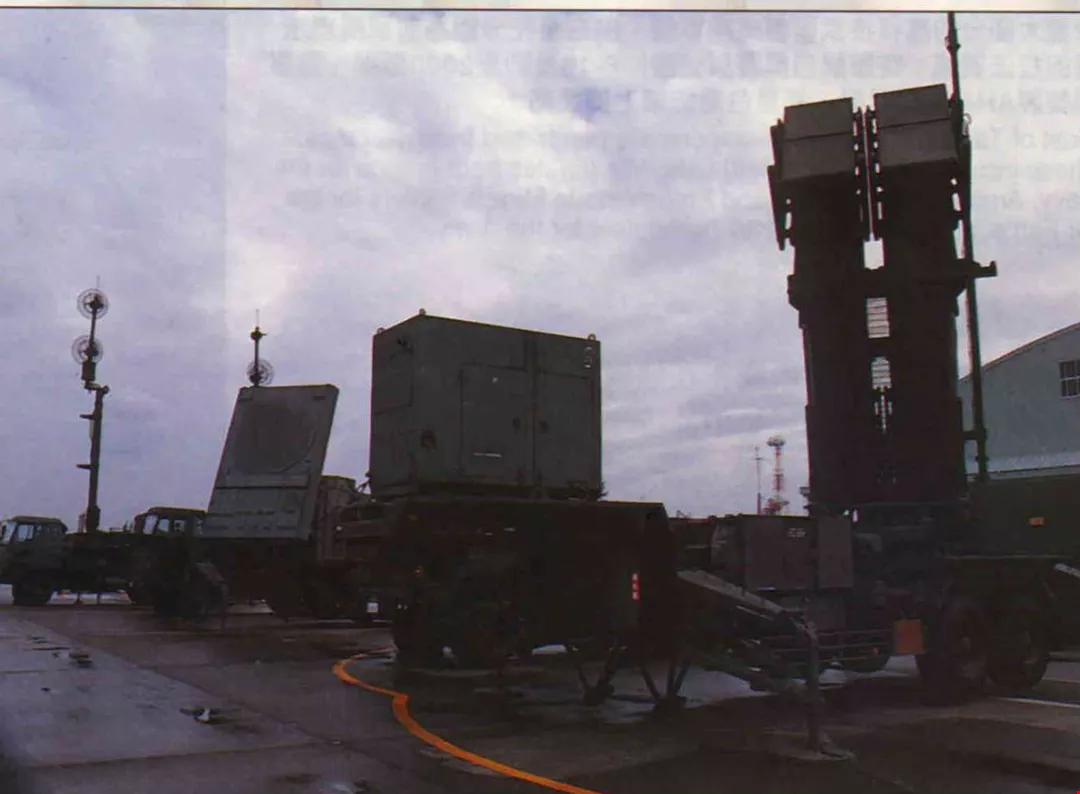
Taiwan is currently constructing an air defense system, in which the Patriot anti-missile missile (above, photo by Wang Ching-cheng) will have a critical role.
If Taiwan cannot develop long-range missiles or participate in the TMD plan, what effective strategic options are left? Fuh Wei-ku points out that Taiwan's domestically produced Sky Bow and Sky Sword missiles have defensive capability. But pure defense is not enough. Even if missile defense could be 99% effective, and only one percent of attacking missiles got through, the situation could still be a total loss. Thus, it would be more effective to build an offensive missile system to deter the enemy. Taiwan's domestically produced Hsiung Feng missiles have over-the-horizon attack capability, and could remain the main focus of future research and development.
Bih Chung-ho adds that it should be no problem, using the resources of the Chungshan Institute of Technology, to manufacture short-range surface-to-surface missiles (SSMs) without relying on purchases from overseas. Previous missile programs, including the Ching Feng and Tien Ma, all envisioned similar short-range SSMs (with a range of 500 or so kilometers).
Lin Cheng-yi says that it is indeed feasible for Taiwan's military to develop an effective retaliatory capability; development could focus on short-range SSMs and an air-to-surface attack capability, which could expand the battlefield beyond Taiwan. Lin points to other countries that have a doctrine of extending the battlefield outside national territory. For example, South Korea has developed its own SSMs, Singapore has airborne refueling capability, and Israel has a strategy of keeping the fighting outside its borders as much as possible.
Of course, different countries are in different situations, and the external threats faced by these countries are not comparable to the cross-strait situation. PRC military affairs expert Alex Kao concludes that although the idea of taking a war beyond Taiwan is worth consideration, it would only be really useful if it could be adopted into the national security structure and done in an integrated and comprehensive way.
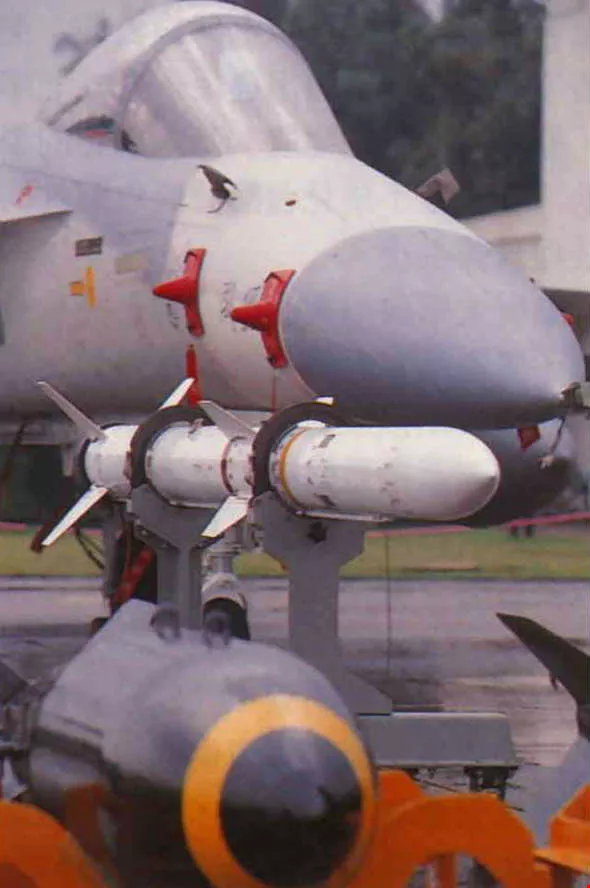
For the Air Force, the ROC-made Sky Sword air-to-air missile is an important high-tech weapon.
Although constructing a missile system is a main focus of defense thinking in Taiwan, effective use of high-tech weaponry depends on the quality of military personnel and, moreover, cannot be seen as a panacea for all defense problems.
The problem of personnel quality has in fact been a focus of serious concern in recent years. For example, over the last two years the Air Force has lost six fighter planes in accidents, revealing a serious weakness in managing high-tech weapons. Fuh Wei-ku says that the problem is not one of integrating the different types of weaponry bought from the "mini-United Nations" of sources from which Taiwan has acquired high-tech arms, because the military accounted for this problem already. Rather, the main problem is in the nation's military service system, which makes it difficult to retain soldiers long enough to cultivate expertise. Most of the problems with high-tech weapons have in fact been human error.
At the ceremony marking the commissioning of the fifth F-16 squadron held last December in Hualien, there were "more planes than pilots." This newly established 26th Fighter Squadron has 18 fighter aircraft, but less than 10 pilots. According to the Air Force, this problem is the result of the transition period to a new generation of aircraft. For pilots to qualify for the new aircraft, they must have at least 400 hours of flying experience. But Taiwan's pilots get limited time in the air, so there aren't enough qualified pilots.
Experts explain that Taiwan has limited airspace, and virtually no space for training. Moreover, it seems, virtually all of the first group of pilots who went abroad to receive training for new fighter aircraft have left the military to fly for civilian airlines, so the problem of talent outflows is severe. The same applies to other types of high-tech material.
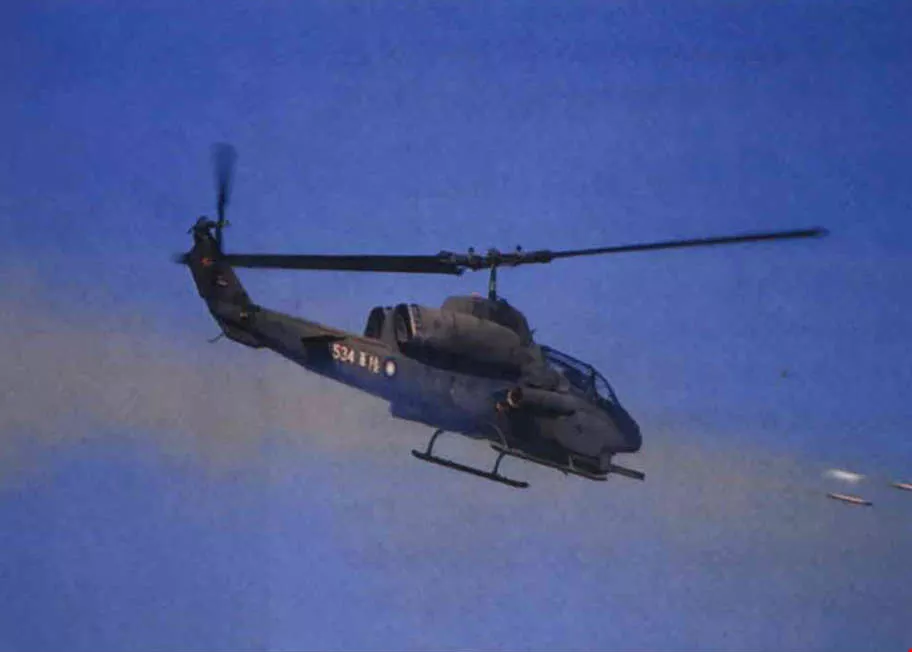
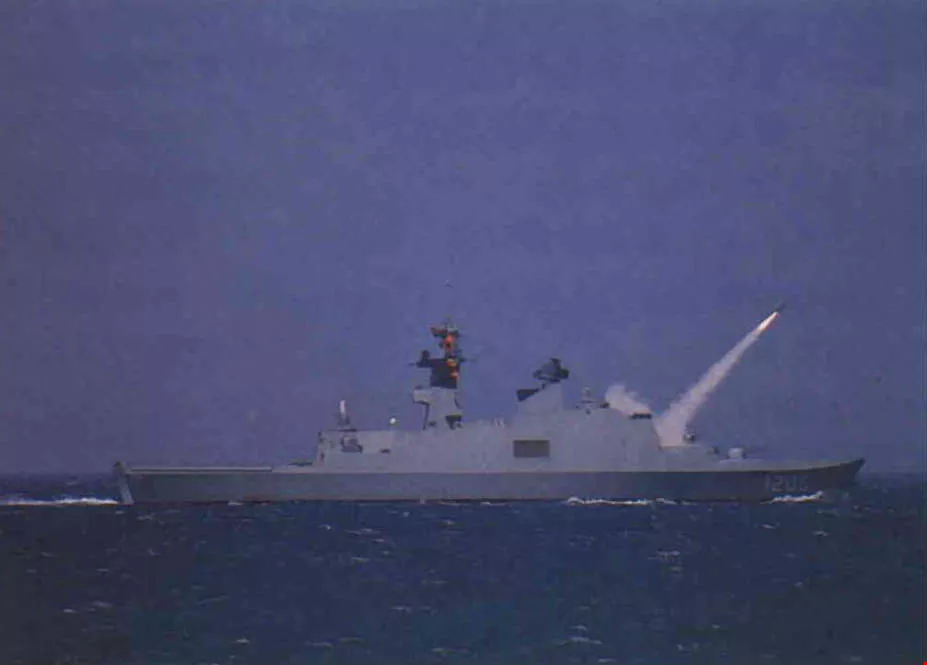
Most of Taiwan's advanced weapons are purchased from overseas. These include (from right to left) Lafayette frigates from France for the Navy, American-made F-16 and French-made Mirage fighters for the Air Force, and US-made AH1W helicopters for the Army.
It is bad enough that high-tech weapons may be rendered irrelevant by the inability to utilize them properly. Another problem is that they might be bypassed altogether by a different enemy strategy.
Alex Kao warns that currently both public commentators and the military's own research focus on the possibility that the first wave of warfare in the Taiwan Strait will be a missile attack. This ignores the evolution of land-sea-air joint operations in modern warfare. Mainland China need not choose to use high-cost, limited-quantity guided missiles, but could instead use a large number of 360-km range rockets to first attack Taiwan's air fields from the Chinese coast, thereby paralyzing Taiwan's air superiority.
Then, their navy could ferry raiders to Taiwan in less than one hour. Kao recalls that Vietnamese land forces were used to infiltrate US air fields in Vietnam and neutralize American air superiority. Particularly now that the Coastal Defense Law has been passed, and responsibility for coastal patrols will pass to the non-military Coast Guard Command, if Taiwan's military still operates under the traditional assumption of first establishing air and sea superiority followed by defense on land, this could give mainland China an opportunity to strike a death blow.
"Although this is merely a hypothesis, it points to a blind spot: the first strike will not necessarily be missiles. A solid national defense requires that no possibility be overlooked," he concludes.
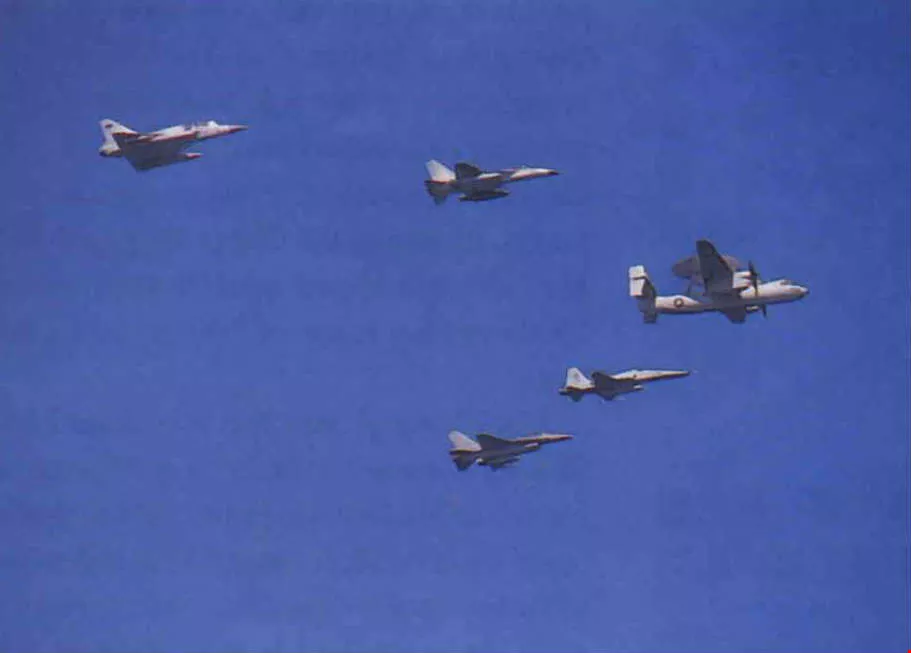
American-made F-16.
Even as discussion on missile systems continues, an unprecedented form of threat-third-wave warfare-is lurking.
Lin Chong-pin says that currently both sides are engaged in third-wave-warfare development. This type of warfare is divided into "hard kill" and "soft kill." Hard kill refers to the deployment on missile warheads of weapons with directional capability-using, for example, lasers, microwaves, electromagnetic pulse, and particle beams-which could increase the destructiveness of missiles. "Soft kill" refers to computer viruses and electronic interference to destroy the enemy's computer systems, and thereby to neutralize the enemy's military capability in a bloodless manner.
Some people see in third-wave warfare an opportunity to seize a decisive advantage in the face of a future armed threat from mainland China. To be sure, because of the domestic development of the electronics industry in Taiwan, the ROC has a certain advantage. The military is currently actively studying the construction of information war capability, and it hopes to cooperate with the private sector and utilize private-sector computer knowledge to jointly deploy an electronics defense network. This is a key area of development for the future in which Taiwan can rely on itself and need not be limited by what can be procured abroad.
Construction of a complete defense system is essential, but the highest form of military strategy is still to defeat the enemy without firing a shot. In fact, the pro-active defense Taiwan is currently studying is a way of pursuing peace. Taiwan will not provoke mainland China, nor be the first to resort to war. But nor can it allow the PRC to think that Taiwan is so weak that the PRC will be tempted to act rashly. Pro-active defense is necessary for Taiwan, but the real goal of the Taiwan side is peace. Perhaps militarily there's a standoff situation of mutual intimidation, but what Taiwan most hopes for is that the cross-strait problem can be peacefully resolved without deploying a single soldier.
French-made Mirage fighters for the Air Force.
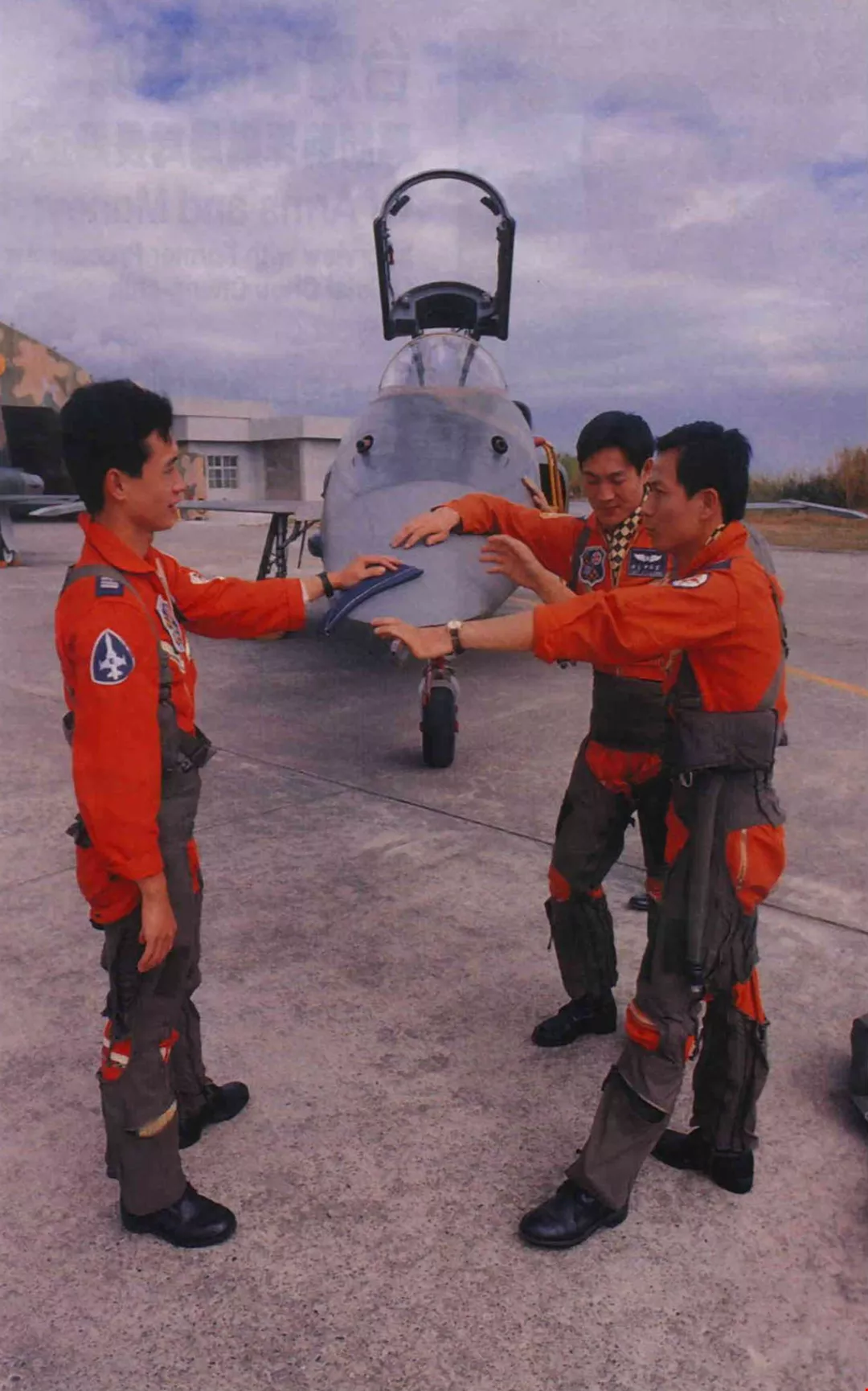
Improving the quality of military personnel is a vital task; the military must strive to overcome the problems imposed by the very limited space Taiwan has available for training.

_DSC2938@List.jpg?w=522&h=410&mode=crop&format=webp&quality=80)

@List.jpg?w=522&h=410&mode=crop&format=webp&quality=80)


