Home Is Where the Heart Is—The Modern Family in Transition
Coral Lee / photos Jimmy Lin / tr. by Scott Williams
October 2012


Do you remember “Home, Sweet Home?” In the Chinese version of the song, the lyrics depict an idealized home that is neat and clean, happy and healthy, and filled with warm parents and loving siblings.
Contemporary notions of home and family have long since diverged from the more traditional Confucian ideal of kindly parents, filial children, and mutual respect and friendship among siblings portrayed by the song.
Changes in the way our population and society are structured have resulted in changes to the number and kind of our families. People don’t necessarily have just one home, and the people who make up our households are not necessarily related by blood or marriage.
While the meaning of home and family has certainly changed, our expectation that the members of our families be close and loyal to one another hasn’t.
The Double Ninth Festival, the ninth day of the ninth month of the lunar calendar, is nearly upon us. As we venerate the elderly this October 23, we should perhaps reflect for a moment on Taiwan’s growing numbers of senior (and very senior) citizens: according to the Ministry of the Interior, Taiwan has seen a 30% increase in the number of centenarians over the last year, up from 1,489 in 2011 to 1,941 in 2012.
Longer life expectancies are a global trend. Japan, for example, counts more than 47,000 centenarians among its population of more than 100 million people. The US, with a population in excess of 300 million, has more than 72,000.
This trend has social implications, not least of all because people’s households shrink as they age. When the Directorate-General of Budget, Accounting and Statistics (DGBAS) released the results of its decadal Population and Housing Census late last year, it showed that the Taiwanese household is deconstructing.
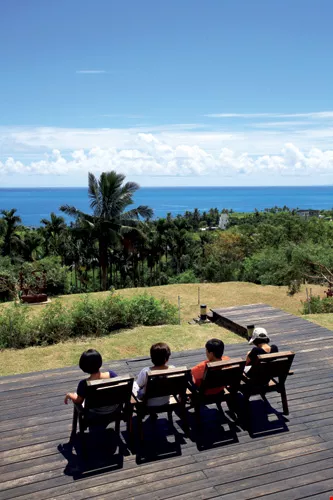
Single-person households come in many shapes and sizes. Because of her work, Ms. Huang has an apartment in Tainan and a house in Taitung, each of which she shares with a roommate. With both her parents gone and her siblings scattered to the four winds, friends have become more important to her than family. The photo shows the view from her Taitung home.
According to the DGBAS figures, there has been a 14.6% increase from 10 years ago in the number of households, up 940,000 to 7.41 million. The three most common household types are: nuclear families consisting of a father, mother, and their unmarried children, which account for 35.8% of all households, down from 41.5% 10 years ago; single individuals, who now account for 1.62 million households (22%); and married couples without children, or whose children have moved out, who account for 810,000 households (11%) and have surpassed stem families (800,000 households, 10.9%) to become the third most common type of household. (The census defines a stem family as a family in which grandparents, parents and unmarried children, or a married couple and their married children, or grandparents and their unmarried grandchildren, live in the same household.)
The number of large households is also shrinking: those with five people or more account for only 8.7% of the total, while those with six or more account for just 7.3%.
In fact, the number one trend revealed by the survey was towards smaller households. In 1990, the average Taiwanese household had four members, but that figure had fallen to 3.3 people by 2000, and just three by 2010.
Meanwhile, the number of households consisting of empty nesters or couples without children has grown by 62% over the last 10 years. Within this category, the percentage of elderly couples choosing to maintain separate households has also risen.
The MOI’s household census showed much the same thing. The percentage of seniors 65 and older living with only a spouse rose from 14% of all seniors in 1986 to 22% in 2005, before pulling back to 18.7% in 2009. Such numbers strongly suggest that traditional ideas about depending on your adult children in your old age have changed.
Academic research reveals that parents and their children feel that filial piety plays no role in the decision as to whether elderly parents live with their kids. Instead, many elderly couples choose to remain independent out of a desire to live out their later years in peace and quiet.
The types of housing available in Taiwan and their high cost also work against the maintenance of the stem family model. Most of Taiwan’s apartments are designed with small families in mind, making it difficult for even couples who would like to continue living with their parents after marrying and having children to do so.
A number of factors influence the decision many seniors make to live alone: Taiwanese thinking has transitioned away from the collectivistic to something much more individualistic; old and young live on different schedules; and people now believe that giving kids more space improves relations.
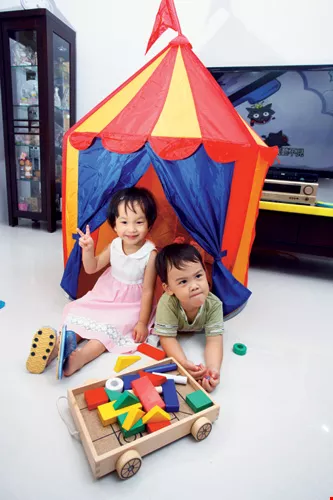
Everyone longs to have a perfect family. The secret is to put in the effort.
The second most prominent trend is the growth in the number of single-parent families.
Single-parent families currently account for only 7.6% of all households (560,000), but that proportion has grown by 50% over the last decade. The increase in single-mother families has been particularly pronounced: they account for 74% of households of this type, up from 65% a decade ago.
Lin Wan-I, a professor of social work at National Taiwan University, attributes the growth in single-mother families to modern fathers being less inclined to fight for custody of their children in the event of a divorce, and to the courts’ greater willingness to award primary custody to women who have the economic means to support their children.
The growth in single-parent families as a whole is being driven by higher divorce rates and a lower percentage of adults being married. Although the rise in divorce rates slowed over the 2001–2011 period, Taiwan currently has the highest divorce rate in Asia. Meanwhile, the percentage of adults who are married slipped over the same period, down from 58.3% to 56.1%.
Chien Chun-an, a professor in the Department of Social Work at Tunghai University (THU), says that the rise in educational levels among Taiwan’s women has increased their economic autonomy, freeing them from their dependency on marriage. In addition, morality no longer helps hold troubled marriages together. In the old days, forbearance was considered a virtue. If a husband had an affair, his wife would do her utmost to win him back. Nowadays, such behavior is regarded as conservative or even idiotic.
“The deeper, underlying factor is the rise of individualism,” says Chien. He argues that maintaining a good marriage requires setting aside your own desires and learning to swallow a bitter pill every now and again. He characterizes today’s young people as unwilling to face adversity and wanting success handed to them on a platter. In his view, this attitude extends to marriage: young people believe it will last if you get along, and won’t if you don’t.
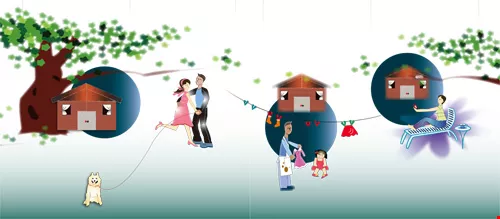
The previous generation’s many broken marriages and high rate of divorce have made today’s young people even more leery of matrimony.
This is reflected in the third major change to household structure: the growing proportion of single-person households. According to the DGBAS, 57% of individuals 25–29 years of age were unmarried in 2000. By 2010, that figure had risen to 73%. Among those 30–34 years of age, the figure was 27% in 2000 and 41% in 2010. The data clearly show that singlehood is on the rise among nearly every age cohort.
Lin notes that more than half of individuals in the marriageable stage of life are currently unmarried, and that the likelihood of them getting married declines as they get older. Women in particular see the marriage market soften as they age.
“Simply put, while the changes in Taiwan’s household structure over the last decade haven’t been revolutionary,” says Lin, “we need to keep an eye on the soaring rates of singlehood and divorce because they are very influential.”
“The trend towards not marrying, especially among women, is very hard to change,” says Lin, who explains that it echoes changes in social values, employment, and education. For example, “success” used to involve establishing a career and a family, but now it typically refers only to one’s career. In addition, where sex used to be socially acceptable only in the context of marriage, we now have 40% of university students engaging in premarital sex. Moreover, parents nowadays are less likely to condemn their children for cohabiting. All of these factors are making marriage less of a necessity.
Lin adds that the act of marriage traditionally implies a commitment to carrying on the family line. But many young people worry about their ability to raise kids and decide that they don’t want any. Given the underlying cultural logic, if they don’t want kids, why should they bother to marry?
The trend toward singlehood is a global one. In August of 2011, the UK’s Economist magazine published a cover story exploring the rejection of marriage by Asian women of marriageable age. But the trend isn’t new. In fact, the rate of singlehood has been rising in Japan, Taiwan, Singapore and Hong Kong for 30 years.
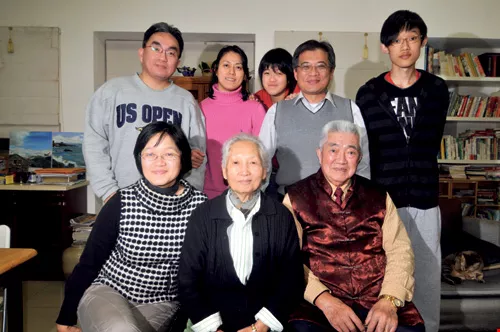
The number of stem families in Taiwan is shrinking. Mr. Li and his children live in separate apartments in the same building, allowing them to look out for one another while enjoying their own living spaces.
How should the government and individuals address the rapid growth in the number of households consisting of elderly couples, singles, and single parents?
Lin points out that caring for an ill elderly spouse is a tremendous burden. Nowadays, it’s usually a family member or foreign caregiver that takes care of such seniors. Although the government has been promoting measures such as community care and “meals on wheels,” they are taking time to implement. Taiwan’s policy of relying on foreign caregivers is overdue for an overhaul. We should be shifting the burden from families to public-sector and local resources to reduce the cost of care and to create employment opportunities for ROC nationals.
To address the likelihood of rising demand for caregivers, the Council of Labor Affairs (CLA) will next year introduce a pilot outreach-services program operated by non-profits. Members of the public need only request an appointment time. The non-profit will arrange the hiring, labor and health insurance, and housing of the foreign caregivers.
“Senior households have only two people, which places a heavy burden on individuals,” says Peng Huai-chen, a professor in THU’s Department of Social Work. “They have to learn to make use of the resources available.” Peng says that such households need to distinguish between what they can do themselves and what they need help with, or lower their expectations about their standard of living. For example, they don’t need to cook every meal for themselves if they don’t have the stamina for it. They can also “outsource” their laundry and other household chores.
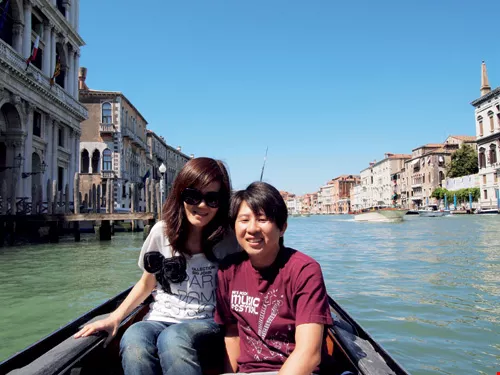
The number of households comprising just a married couple has grown 62% over the last decade.
Poor health is part and parcel of aging. Peng says that the elderly must learn to think differently about illness and to seek assistance when they are in need. But elderly Taiwanese men find it particularly hard to speak about their troubles or ask for help. This kind of conservatism can leave them in dire circumstances.
Peng says that many elderly men who have been successful in their careers often take pleasure in helping people, but don’t like to trouble others when they encounter difficulties of their own. Unwilling to seek aid when their own situations or moods turn dark, the pressure can build until they do something rash.
“Men have to adapt.” Peng urges older men who have had successful careers to learn to graciously accept help from others as they and their spouses age, to learn to ask for help when they run into difficulties, and to let society extend a helping hand.
Meanwhile, many nations have attempted to halt the trends towards singlehood and childlessness, but Lin argues that they are extremely difficult to reverse. The only thing the government could do that might turn them around is to lower the cost of having, rearing and educating children to make the prospect more feasible to young people. “Governments in Scandinavia play a positive, proactive role, so singles there are willing to have children. And while divorce rates may be high, so are remarriage rates.”
Lin says that it’s even more important that we look at marriage and childbearing separately. We need to accept the bearing of children outside of wedlock, and treat such children fairly. This isn’t a matter of encouraging children to have children. Whereas most of the 20,000 children per year currently born outside of wedlock in Taiwan are born to women who have not yet reached adulthood, in Europe it is largely mature women who are having children out of wedlock. For example, some 40% of the children born in Sweden are born to cohabiting couples. Because these children have the same rights as those born in wedlock, they grow up in stable family situations.
Taiwan needs to get over the hidebound notion that having a child out of wedlock is always and everywhere a terrible thing. We need to provide comprehensive parenting education and greater support to mature women who don’t want to marry but do want to have children.
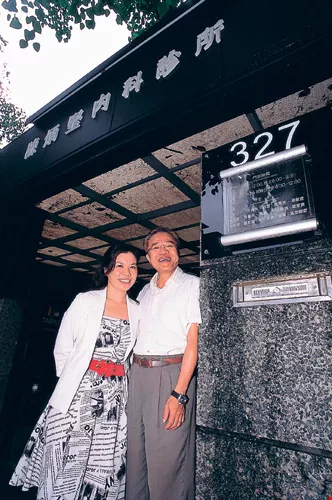
Dr. and Mrs. Chen Bingjian have been married for over 30 years. Their sons have married and left home; one has even emigrated to the US. Now living in an empty nest, they remain deeply attached to each other.
With diverse households becoming the norm, Peng, who is also executive director of the Happy Home Alliance, says that the key to familial bliss is recognizing that happiness takes work.
“The family’s capabilities are ever more constrained by hectic modern life. But what we can’t let go of is love. If we lose that, we lose the family.” Peng reminds us that it takes effort to keep familial and romantic love alive. You have to do your homework. Taking it for granted will push it to the point of collapse.
“How much time do you spend every week working on your relationships with your spouse and kids?” asks Peng, who argues that you have make time for them in your schedule rather than spending time with them when you happen to be free. With his wife currently in the US helping their son and daughter-in-law look after their grandchild, Peng has been making a point of leaving work on time to enjoy a different kind of domestic bliss: his daughter and son-in-law live nearby, so he’s been preparing dinner for the three of them every day.
Rather than call his seven siblings individually, he sends them an email and a picture every couple of weeks to update them on recent events. It’s a way for them to keep in touch now that their parents have passed away.
“Feelings are one of the pillars of family,” says Peng. “Communicating in a reasonable manner is also essential.” He believes that resolving the issues that arise between couples and between parents and children usually isn’t that complicated. But if you don’t communicate regularly, small issues can accumulate, giving rise to larger problems that are not so readily resolved.
Happiness isn’t difficult to achieve, but neither is it a given. You can’t sit around waiting for heaven to bestow it on you. If you want a happy home, you have to work at it.

_DSC2938@List.jpg?w=522&h=410&mode=crop&format=webp&quality=80)


