Reading Taiwan in a Green Shade
A Stroll Through the Taipei Botanical Garden
Esther Tseng / photos Kent Chuang / tr. by Brandon Yen
March 2026
Is there a more effective way to learn about Taiwan than visiting the Taipei Botanical Garden?
Botanist Tung Gene-sheng, who has visited some 30 botanical gardens across the world, says that the Taipei Botanical Garden boasts plants reminiscent of the Age of Discovery and preserves the legacies of the Japanese colonial era. Here Taiwan cow-tail firs (Keteleeria davidiana var. formosana) and Taiwania trees (T. cryptomerioides)—conifers that grow on Mt. Dawu at 1,500 meters above sea level—coexist with the endemic succulent Kalanchoe garambiensis, which can be found near the coast of the Hengchun Peninsula. We also come across trees and crops that serve practical purposes for Indigenous peoples and immigrant communities. The garden embraces the full spectrum of Taiwan’s diversity, encapsulating both our multicultural history and our rich geography.
Tung Gene-sheng, former director of the Taipei Botanical Garden, recommends that first-time visitors from overseas take a quick survey of plants native to Taiwan at the circular Indigenous Plant Display Area near the garden’s main entrance on Heping West Road.
The most representative is the red spider lily (Lycoris radiata), with its flaming red flowers coming out in September and October. Introduced from Matsu’s Dongyin Island, the plant is unusual in that its flowers and leaves never appear together. Here we also find many plants named after the northern port city of Keelung, including Homalomena kelungensis and Vitis kelungensis, which Japanese botanists discovered and described after landing there during the colonial era (1895‡1945).

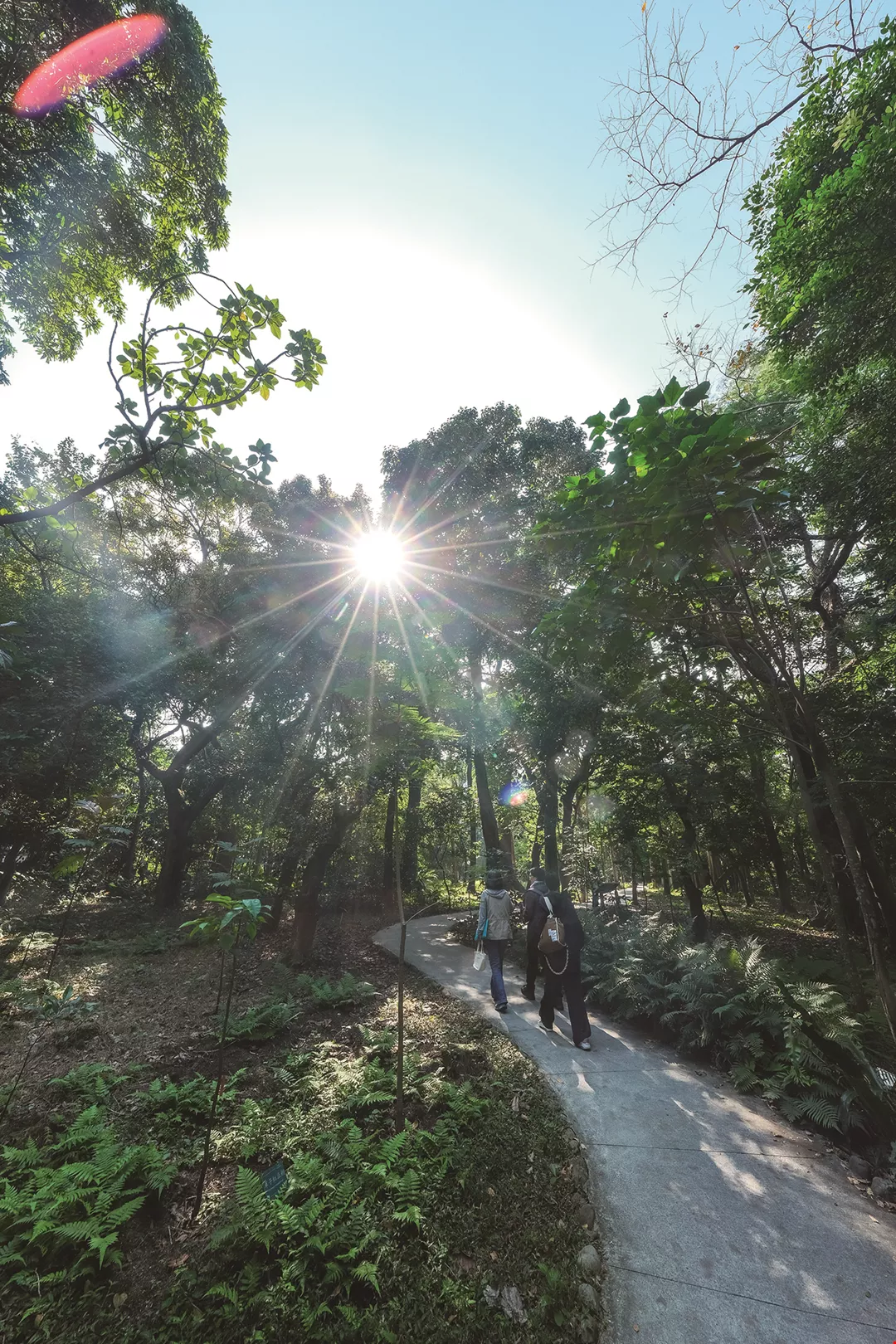
The Taipei Botanical Garden is modest in scale but boasts tremendous beauty. As well as serving research and conservation purposes, it provides a green retreat for the public.
Japanese legacies
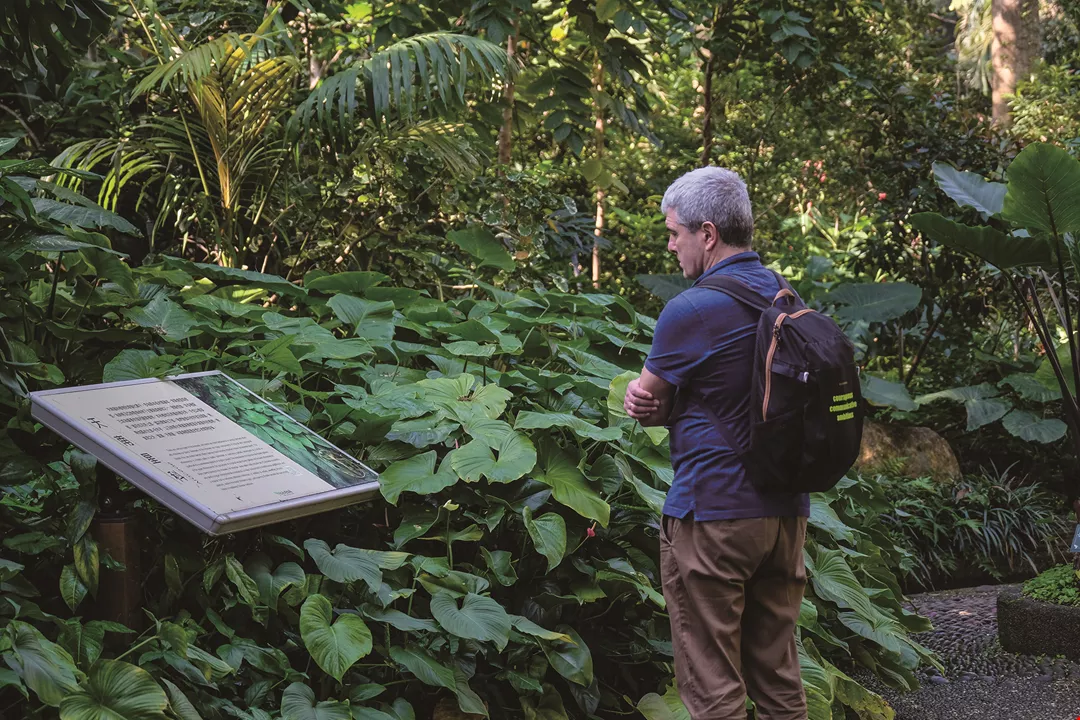
Fan Su-wei, an associate researcher in the Forest Ecology Division of the Taiwan Forestry Research Institute, tells us that over 50% of the foreign visitors here come in pairs; when you add solo visitors, the figure rises to nearly 90%. These statistics show that most of them are independent travelers.
Established during the Japanese colonial age, the garden is home to many century-old trees. In front of the Qing-Dynasty Guest House of Imperial Envoys is a row of Alexandra palms (Archontophoenix alexandrae). It is said that when these palms were planted, during the Japanese period, they were already as tall as they are now: they grow more slowly outside the tropics.
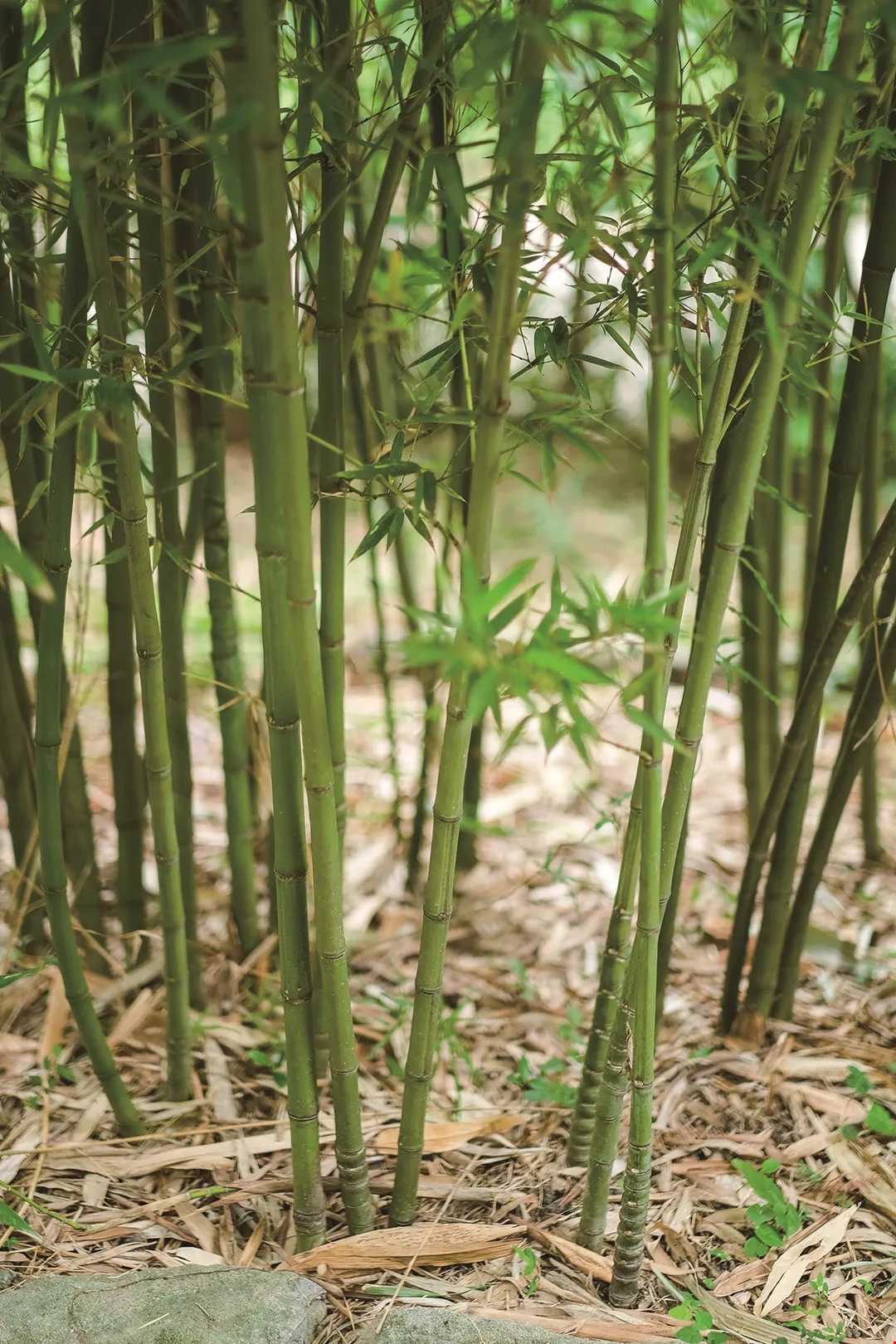
Thanks to the Japan Broadcasting Corporation’s TV drama series Ranman (2023), which celebrates the life of Tomitaro Makino (1862‡1957), Japanese tourists have visited the Taipei Botanical Garden to look at plants named by or after the Japanese botanist, such as jelly figs (Ficus pumila var. awkeotsang), Makino bamboo (Phyllostachys makinoi), and Makino’s mallow (Hibiscus makinoi). At the Makino Botanical Garden in Japan’s Kochi Prefecture there is a grove of Makino bamboo, commemorating Makino’s deep bond with Taiwan.
In any botanical garden, we come into contact not merely with flora, but also with ways to understand the world and the evolution of culture, learning in the process to reconcile with ourselves.
Resonating with Western visitors
In addition to native and endemic plants, many spots in the garden strike a chord with Western visitors.
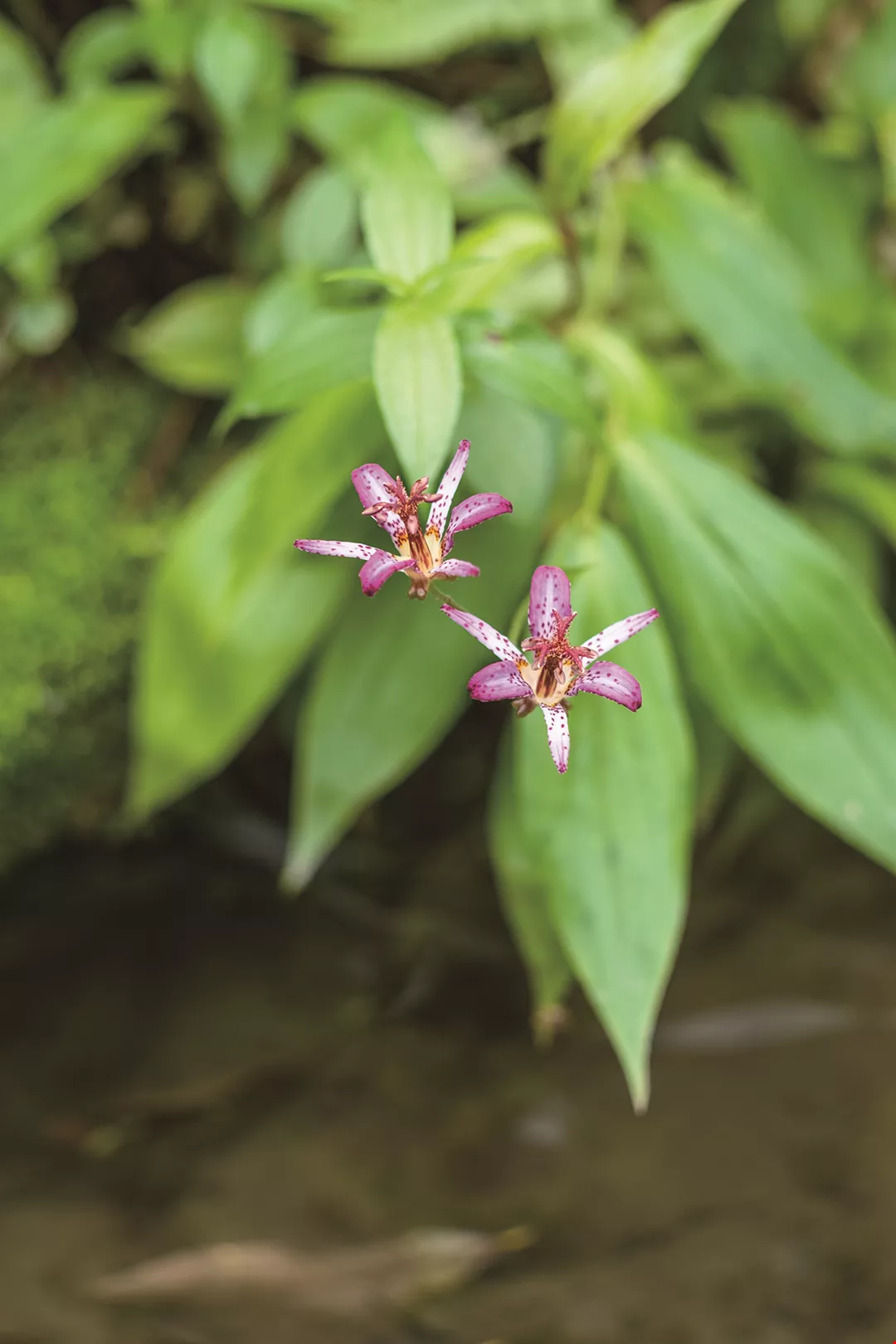
Near the fern garden is a pool that abounds with toad lilies (Tricyrtis formosana), whose purple-spotted flowers bloom in autumn and winter. British tourists find the sight familiar as it reminds them of their own gardens back home. Tung explains that toad lilies were spotted by a British plant collector in Taiwan and sent to Kew Gardens in 1864. They have since become a vital element of British horticulture, though few Britons know that these flowers are actually edible, with a subtle cucumber flavor.
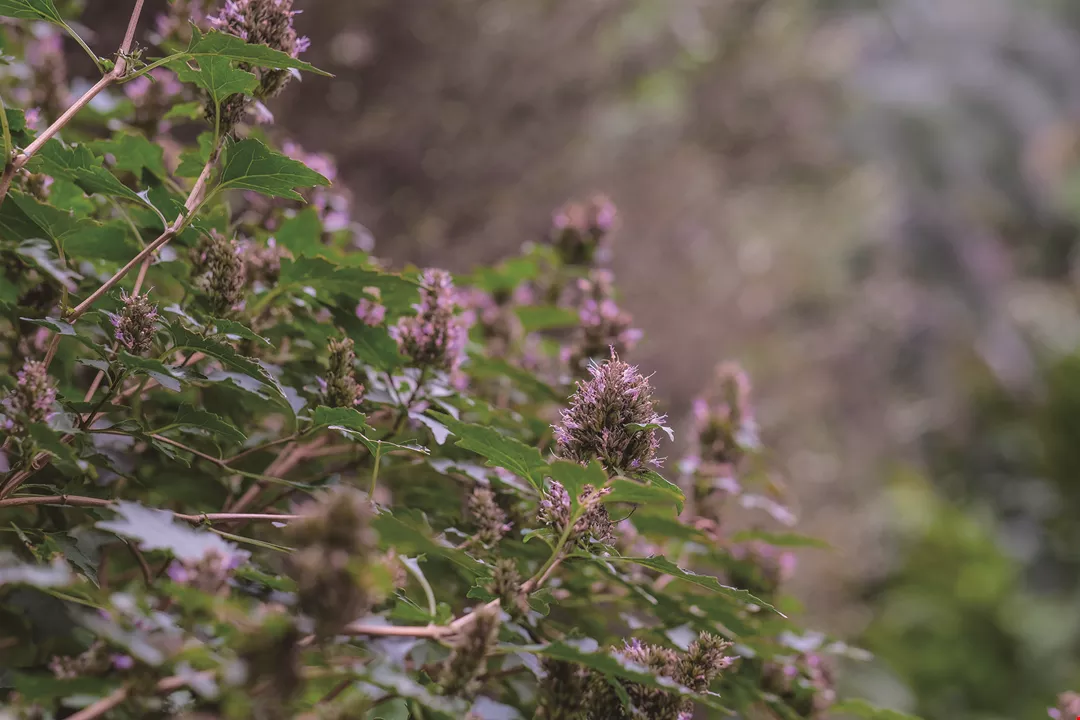
Pogostemon formosanus, an endemic herb in the mint family, comes into flower in early spring. We meet it in the Taiwan Indigenous Plant Display Area. The specific epithet formosanus displayed on the label marks its out as a native plant, but Western visitors may have a feeling of déjà vu when they run their fingers across it. The scent released this way is familiar because the herb belongs to the same genus as patchouli, which is often used to make essential oils. The Amis, one of Taiwan’s Indigenous peoples, use Pogostemon formosanus to prepare a fermentation starter for millet or glutinous rice wines.

The name of Makino bamboo (Phyllostachys makinoi) commemorates the Japanese botanist Tomitaro Makino, who was fond of this bamboo species. It is said that he planted Taiwanese Makino bamboo in his garden in Japan.
Southeast-Asian connections
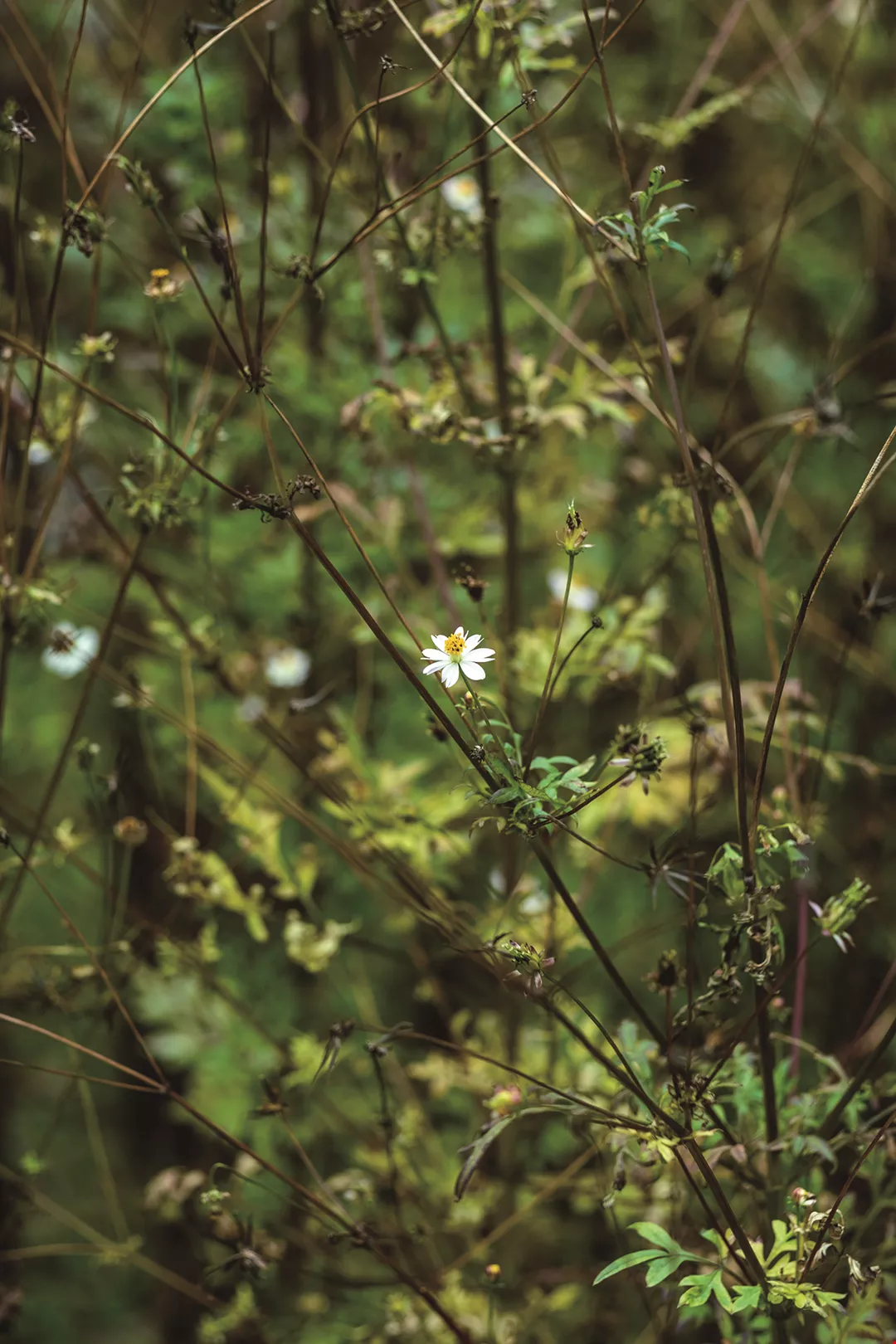
Planted near the greenhouse complex is ulam raja (Cosmos caudatus), which bears witness to the garden’s friendly exchanges with the Singapore Botanic Gardens while Tung was in post. Malay people use its leaves in salads. Its flowers carry a surprisingly pleasant flavor reminiscent of longan and green mango.
A collection of gingers, including red ginger (Alpinia purpurata) and cassumunar ginger (Zingiber cassumunar), comes from the Queen Sirikit Botanic Garden in Thailand’s Chiang Mai Province. Unlike other members of the ginger family, cassumunar ginger is valued for its cooling properties and is commonly used by Thai-style masseurs, making us feel refreshed rather than overheated after massage. Citrons, on the other hand, are used by ethnic minority communities in Chiang Mai and in Myanmar to brew tea; the scent can easily be mistaken for Earl Grey.
Be it native or introduced, every plant in the Taipei Botanical Garden offers vital clues to Taiwan’s cultural diversity.

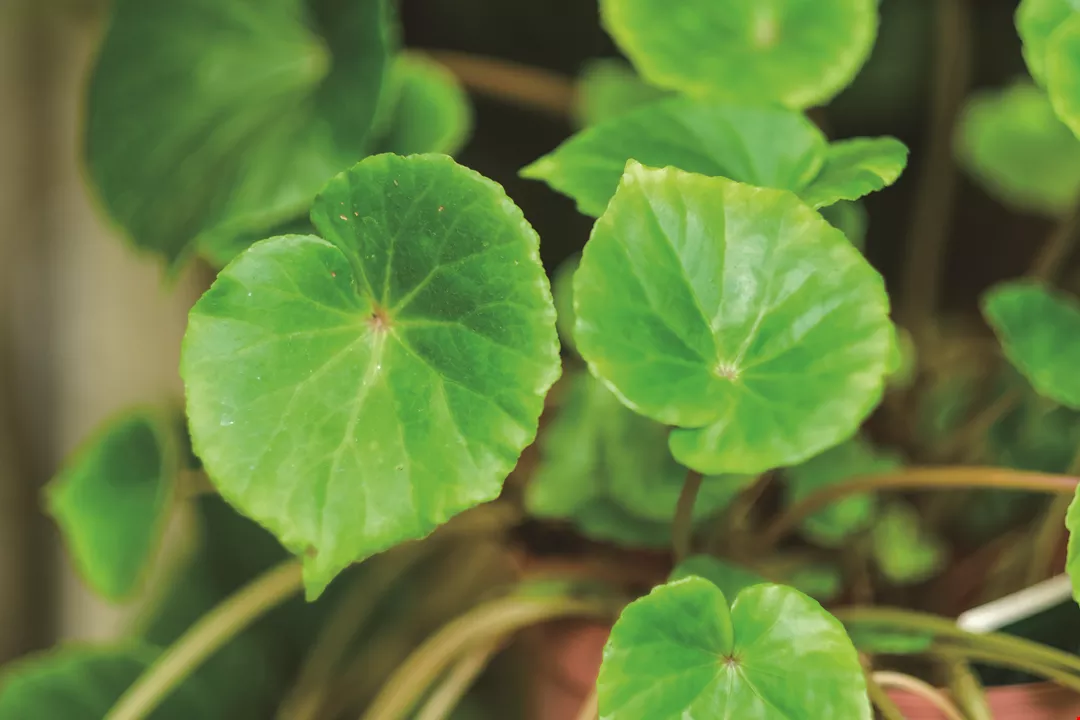
Begonia fenicis has white or pale pink flowers.
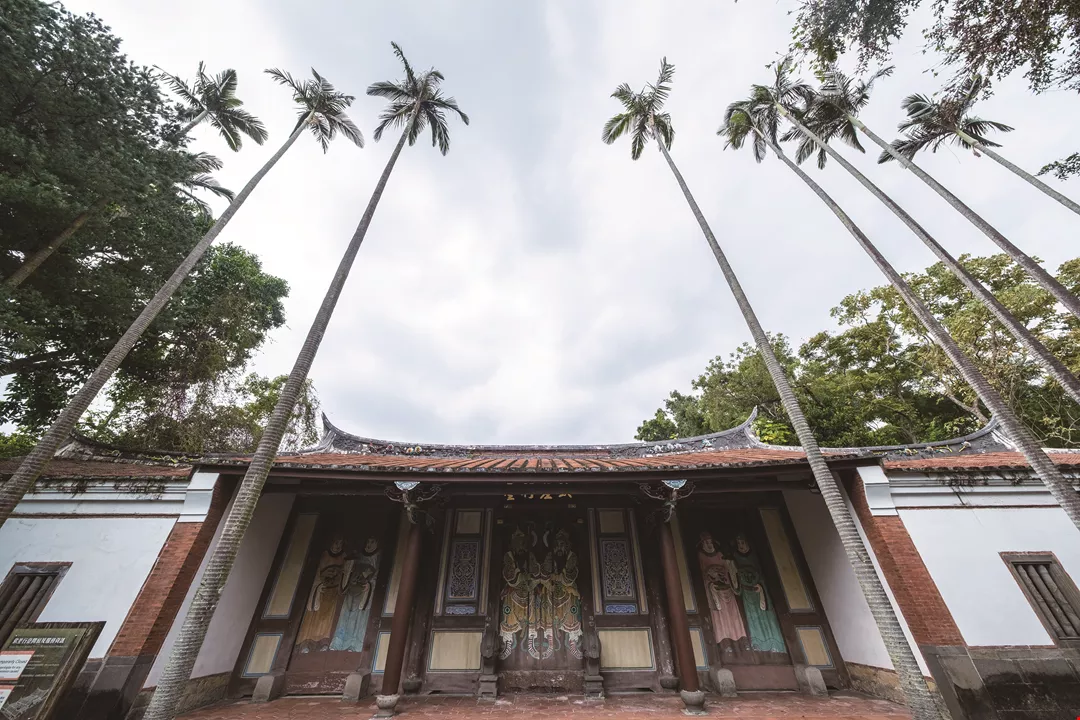
In front of the Guest House of Imperial Envoys in the Taipei Botanical Garden is a row of Alexandra palms (Archontophoenix alexandrae). The name honors Princess Alexandra of Denmark (1844–1925).


Pogostemon formosanus is an endemic Taiwanese plant in the mint family. Its subtle scent—released when we run our fingers across the plant—reminds Western visitors of patchouli, which is used to make essential oils.

Introduced to Britain in the nineteenth century, toad lilies (Tricyrtis formosana) have shaped European gardeners’ impressions of Taiwan.

The Taipei Botanical Garden engages in exchanges of plants, seeking to acquire specimens that are visually attractive, that help promote agriculture, and that have practical uses. The Singapore Botanic Gardens supplied ulam raja (Cosmos caudatus), which comes from Mexico.

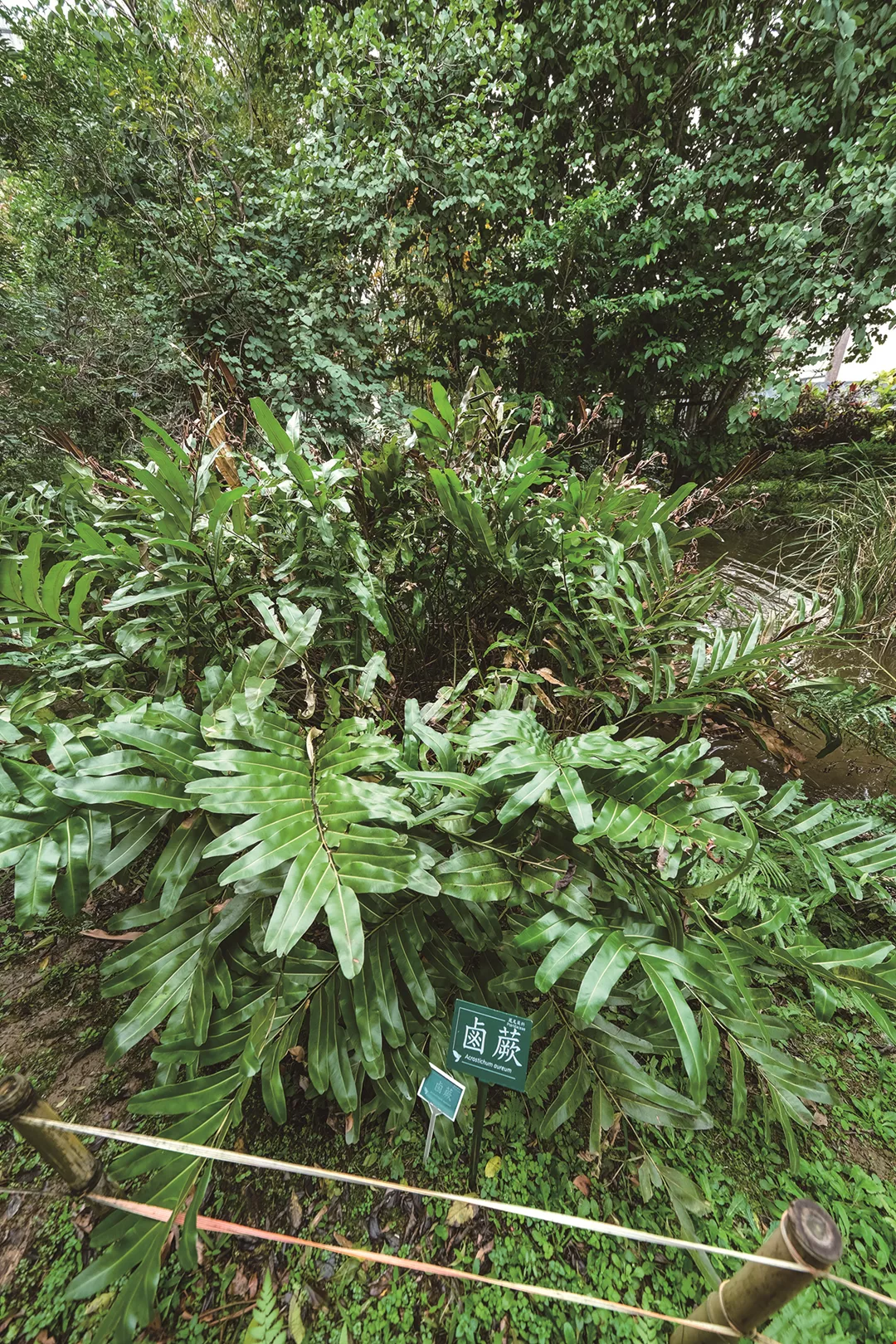
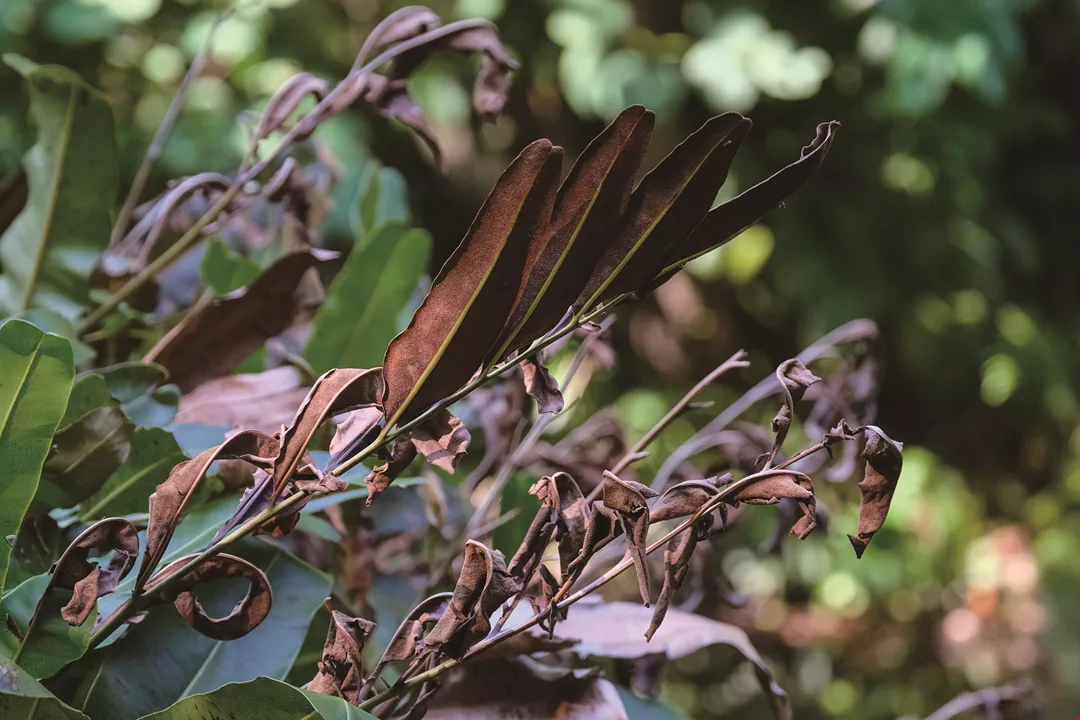
The Taipei Botanical Garden has successfully conserved the golden leather fern (Acrostichum aureum). Its deep brown sporangia look parched, but that’s actually its original color. When the spores are released, a new life cycle begins.