Hooked!
Competitive Shrimp Fishing
Esther Tseng / photos Jimmy Lin / tr. by Phil Newell
November 2025
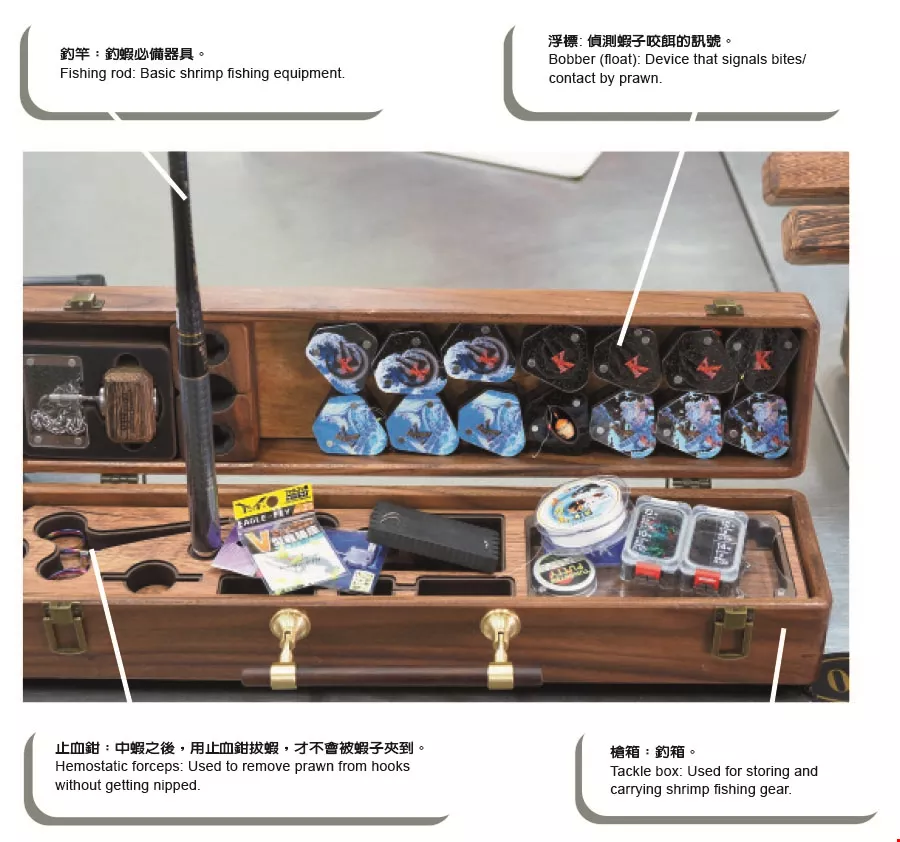
Escape kit: Containing simple, portable shrimp fishing gear, it offers workers the chance to escape from their jobs for an hour or two to go fishing. The black case is not as obvious as a tackle box.
Over the past 40-plus years, shrimp fishing and related products have grown into a leisure industry worth NT$5 billion per year in Taiwan. More recently, this activity has developed into a sport, and Taiwan competitors have demonstrated world-class skills in international tournaments.
In recent years shrimp fishing has become more sport oriented, with online shrimp fishing groups proliferating and venues holding regular competitions. In addition, some corporate employee welfare committees arrange for friendly tournaments, attracting younger people into shrimp fishing.
Major League Shrimping (MLS), a website founded by Vincent Chang, chairman of the Taiwan Shrimping Culture Development Association, has initiated many competitions. Chang took first prize in the individual category at The Greatest Showdown, a prawn fishing event in Singapore, in 2024. He says of the website’s initial aims: “As a competitor, I would hope to have all my results recorded, to remind me of key moments in my life.”
Chang established MLS in 2021, and the site became a platform for competitions organized by a wide range of shrimp fishing clubs and organizations. It offers information and rankings, based on cumulative scores, for both novice and elite competitors, and also has special tournaments for women. Because sign-ups for events are capped, registration often fills within seconds.
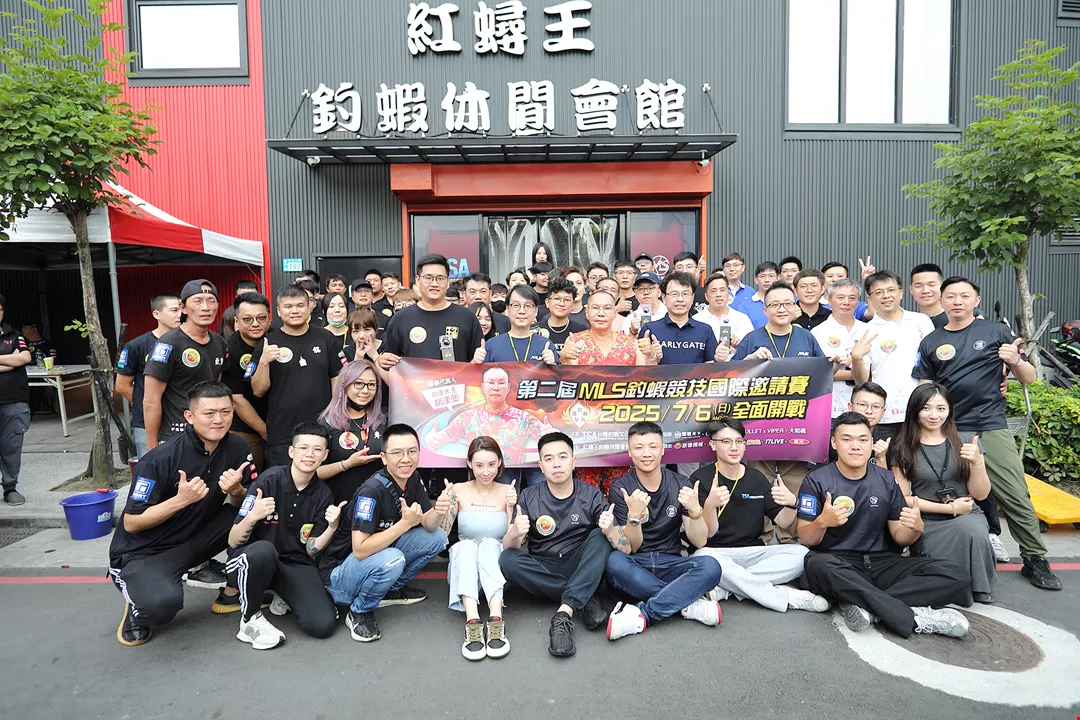
Chang organized the first MLS international invitational tournament in 2024 and held the second one in July of 2025. Competitors were invited from numerous places including Hong Kong, Singapore, Vietnam, and Malaysia.
Chang argues: “An international tournament is like a big concert”—it can generate media buzz and so attract more people to shrimp fishing. For example, for the second international invitational tournament he invited Zhubei-based “mobile crane king” Hu Hanyan to be spokesperson. Hu, who wore a big gold chain and his signature floral-patterned suit for the event, had never been shrimp fishing before, but after he acted as tournament spokesperson, the livestream and the replay hosted on the MLS website drew more than 10 million views.

From recreation to competitive sport
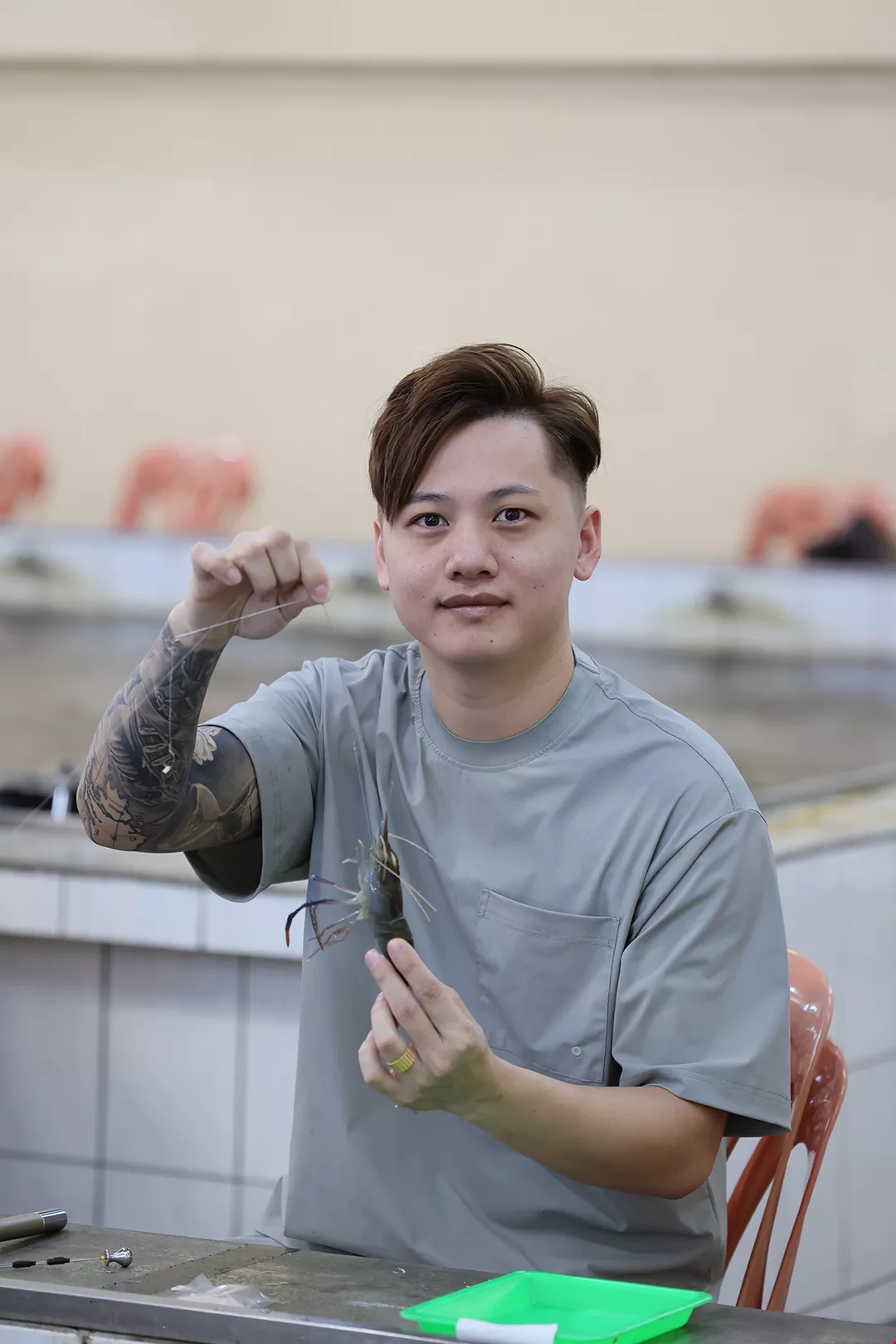
International competitions have the side effect of creating celebrities. Chang points by way of example to a competitor known as KK (Li Shihua) who makes and sells handmade bobbers (floats). After he began doing well in tournaments, his gear began selling on the strength of his reputation. KK, who was originally in the interior décor and remodeling field, turned his hobby into a business, becoming a “slashie” competitor/equipment maker.
KK explains that it’s not the fault of a shrimp fishing venue if a customer doesn’t catch many shrimp, but a matter of skill. That’s because only a fixed quantity of shrimp are released into the pools, depending on the number of fishermen. If one customer catches 60% of the shrimp in just a few hours, there are few left for others. This is a zero-sum game, in which resources are limited and one person’s gain is another’s loss. That’s why the unsuccessful can only blame themselves and endeavor to improve their own abilities.

KK believes that when it comes to shrimp fishing, practice makes perfect.

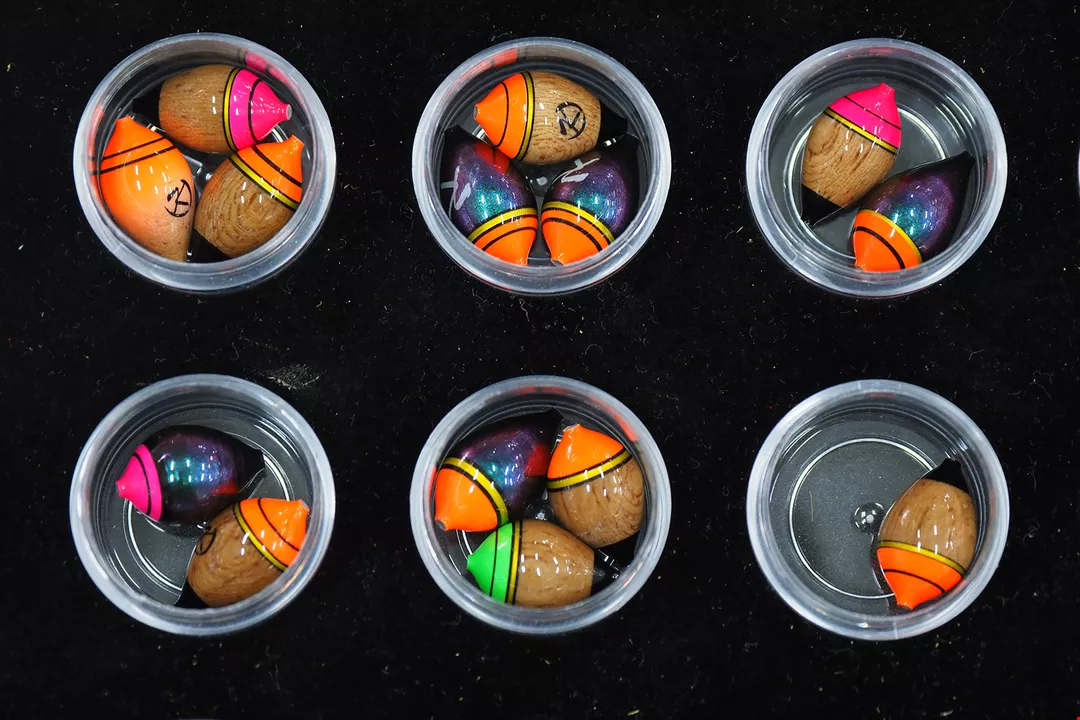
Customized bobbers come in various materials and sizes. They are cultural and creative products that can be collector’s items as well.
“Hunting” and “easing off”
Taiwan currently has at least 500 professional and amateur competitors. In order to improve their performance, these competitors demand better craftsmanship of bobbers and precise double-hook rigging. Bobbers must be light and covered with only a thin layer of paint. KK uses auto bodyshop painting techniques on his floats, applying ultrathin layers of color to keep them lightweight and responsive.
In 2024 KK finished second in an elite-level tournament with 100 contestants, catching 22 shrimp during the 50-minute event. In the same year he took first place in the individual category of Hong Kong’s largest competition, defeating more than 60 competitors by catching 34 shrimp in the allotted 50 minutes.
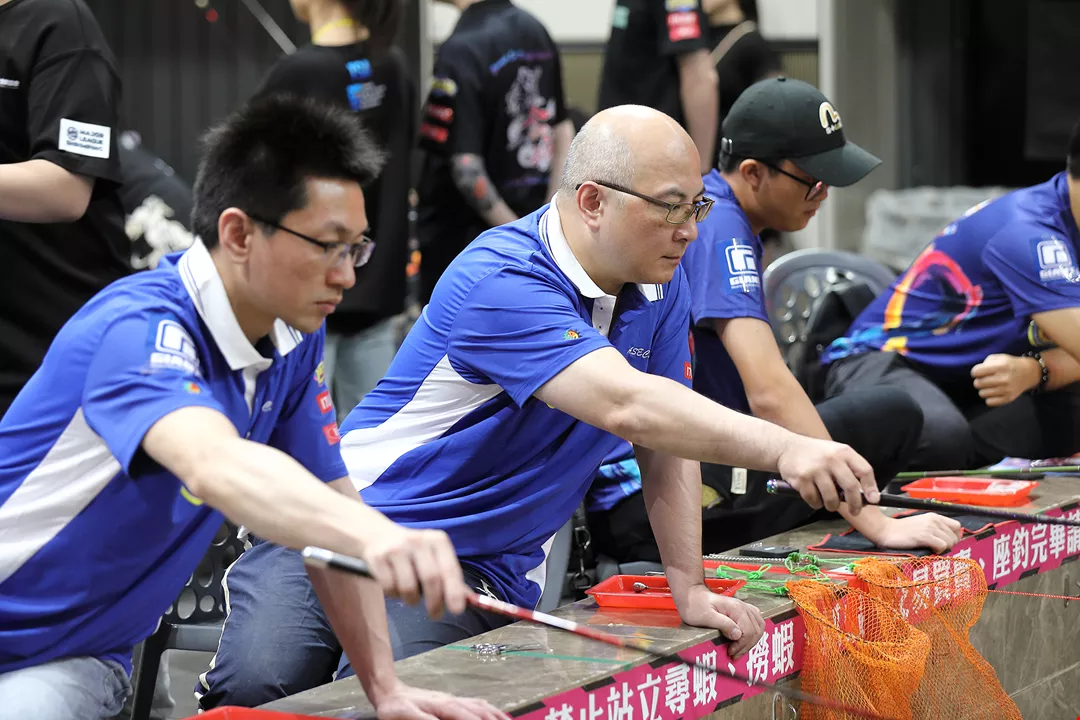
KK, who is able to catch one shrimp every two minutes on average, says frankly that whereas casual shrimp fishermen just bait their hooks and wait for the shrimp to come, competitive fishers have to proactively “hunt” the shrimp, because 70% of them will not take the hook themselves. “Hunting” the shrimp means pulling up the rod whenever the hook touches any part of the shrimp’s body, which is why there is such strong demand for accurate signals from bobbers.
Vincent Chang adds that sometimes it is necessary to “ease off” from the shrimp. If the hook merely collides with a shrimp’s claws, one should “ease off.” This is similar to the tai chi concept of “overcoming movement with stillness.” You should relax your wrist and loosen up, so that when the shrimp moves, you don’t, and when it doesn’t move, you do. If you are too insistent and want to drag it up out of the water by sheer force, it will easily slip off the hook.

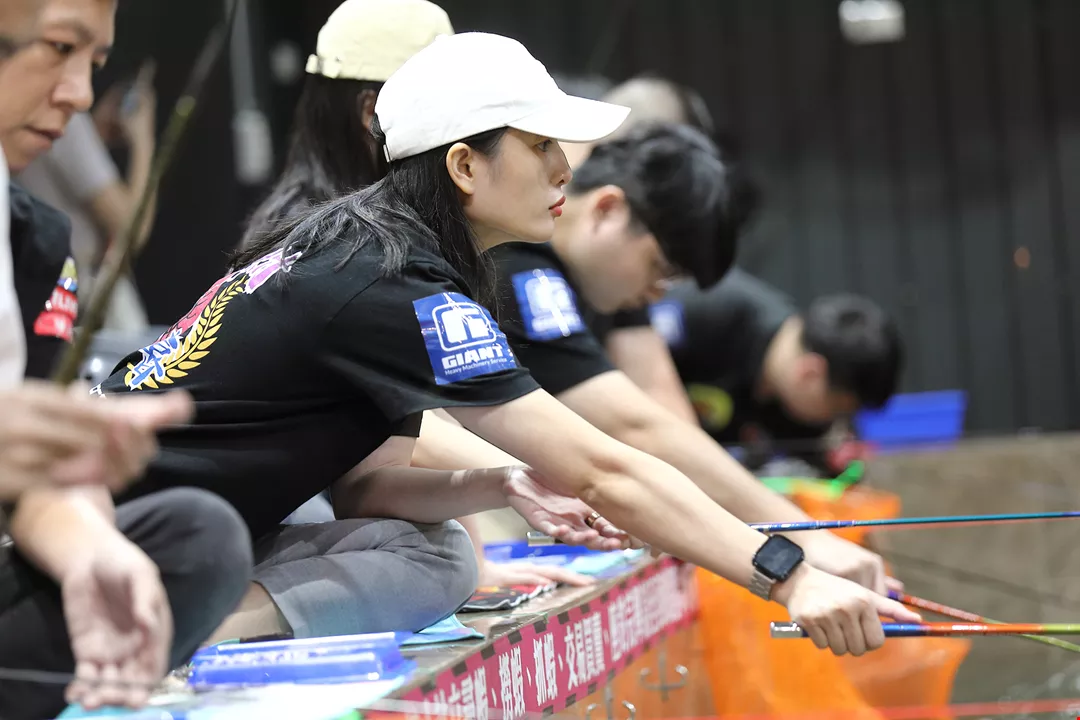
Female competitive shrimp fishers often outdo their male counterparts in terms of manual dexterity and sensitivity.
(courtesy of Vincent Chang)

Competitive shrimp fishers train themselves in body, mind, and spirit. (courtesy of Vincent Chang)