

"If it's mangoes, there's no doubt about it." The people of Yuching, usually a humble lot, are apt to get very self-confident, even proud, when the topic turns to mangoes. And not only are the mangoes from this part of the island succulent, the sugar here is especially sweet as well. Since Taiwan Sugar has 23 plants, there's bound to be variations in quality. "The sugar produced in Yuching is invariably pure and low in salt content--it always ranks near the top of our list," says Chen Jen-cheng, who handles inspections of the sugar in Yu-ching.
Yuching is located in the south-east corner of Tainan County. It lies in a natural basin below the Central Mountain Range, along the southern bank of the upper reaches of Tsengwen Stream. The stream's ample supply of fresh water provides plenty of irrigation, and the warm southern sun sustains the growth of all life in the area. The area is ideal for farming, which is why it was opened up by immigrants from the mainland as early as the Ming dynasty (1368--1644).
Formerly, the lack of public roads posed a problem. It used to take 16 hours to make the trip from Yuching to Tainan by foot. Now it can be done in 90 minutes. The facilitation of transportation has brought a new look to the town. Although small in area, Yuching has become the cultural, economic, political, and communications center of the area. Nevertheless, the townspeople live together like one big family. The houses have doors, but they are usually left open. As one woman describes it, "Most of us could find our way around town perfectly with our eyes closed."
Of the 19,000 people in the town, 68 percent rely on agriculture for a living. The major agricultural product is fruit, such as mangoes, carambolas, navel oranges, watermelons, etc.; of these, the mangoes are the most famous. We visited Yuching around the time of the Dragon Boat Festival. Ascending the Nanching Highway on our way to the town, we were met suddenly with the rich fragrance of rows upon rows of clustered mangoes--the landmark of Yuching. What is the history of this mango paradise?
In 1961, Cheng Han-chih, a resident of Tou liu, the poorest part of Yuching, under guidance of the Chiayi Agricultural Research Institute and the Yuching Agricultural Committee, became the first grower of American mangoes in Yuching. Cheng used all the money he had to buy 1,000 mango saplings, and planted them. His neighbors, friends, and relatives decided that he had a screw loose; some even made bets on his chances of failing. But it was Cheng himself who was making the biggest gamble.
The amount of money he put into the venture was naturally a cause for concern, especially considering his lack of technical knowledge and experience. Could the methods used for cultivating the Taiwan mango be used on the American variety he had invested in? Would the techniques that worked in the laboratory be successful in the field? Many such questions needed to be answered. Cheng's worst fears were soon answered. In 1963 a killer frost did away with all but four of the mango trees. After suffering this defeat, Cheng thought of giving up. But the Agricultural Research Institute, seeing the experience in growing mangoes he had accumulated, figured it would be a shame if he did; so they gave him 100 trees for free. To improve his techniques, Cheng travelled all over consulting with experts; a year later his grove produced the biggest fruit ever seen in the area.
Cheng's success was not only cause for elation among his poverty-stricken neighbors, it was also a turning point for all of Yuching. Immediately, many other inhabitants of the town began planting mangoes.
Why are Yuching's mangoes both larger and sweeter than those from other areas? Some say it is the climate, others say it is because of the air temperature. Opinion among the growers is widely divided, as it is among the experts. "Actually, the growers' ability to suffer and their refusal to accept defeat are both major factors," says Agricultural Commit tee member Chang Ping-shan.
The harvesting of the fruit is very hard work. In addition, even a bumper crop can bring losses. Five years ago 50 tons of mangoes had to be dumped into the Tsengwen Stream. As one farm worker in his fifties said angrily, "Wasting so many of nature's gifts like that made the gods angry." Sure enough, the harvest fell from 10,000 tons in 1982 to just over 2,000 tons in 1983. In 1984 it climbed to 5,000 tons, but last year fell again to 3,000 tons. Was Yuching losing its magical fertility?
The fruit growers asked the agricultural committee to find experts to come and solve the problem. One of the experts, National Taiwan University's Cheng Cheng-yung, told the growers, "The soil can't stand any more large-scale planting, so you're going to have to switch to precision cultivation." The reason for this is that the topsoil in the area is thin, with a thick layer of mudstone underneath. Many years of planting thus exhausted the nutrients in the topsoil. Cheng advised the farmers that in order to recover the original quality of the soil, they would have to regulate its organic content, balance its acidity, and control its moisture content.
To further reduce the hazards of the over-cultivation of mangoes, many people turned to planting other fruits, like carambolas, Thai guavas, and watermelons. All of them began doing quite well, an indication that the gods were not too angry at Yuching.
Despite its mountainous location, Yuching is not backward in terms of education. The parents in the town work hard to help their children with their studies. Every morning at 5 o'clock many fathers take their children to schools 50 kilometers away in Hsinying and Tainan, and in the evening bring them home again. Mayor Wang Shih-lung considers the importance Yuching's people place on their children's education to be the town's most important development capital.
"Many children here have had to struggle to get an education," says Cheng Teng-kui. The 37-year-old had a tough time himself. After taking 13 years to finish his post-high school education, he was selected to study embryonic transfer technology at Cambridge University. Two years and a lot of hard work later, he made a breakthrough in his field by producing the world's first test-tube piglet.
In athletics, the inhabitants of Yuching seem to be even a step ahead of everyone else. Eighteen years ago teams from Chiayi and Tainan won the world little league baseball championship. The fathers in town got very excited about the prospect of a team from Yuching making it to the championships. The team at Yuching Primary School, under the coaching of Wang Ching-nan, did over the years produce such future stars as Tsai Sung-huang, Wen Chin-ming, and Ye Chih-hsien. But following the decline of little league baseball around the island, the team ran into financial problems and was dissolved. Unchecked by this setback, the school turned to table tennis, and in the past six years has been making a name for itself. At the beginning of this year, both the school's men's and women's teams won the county and national table tennis championships.
Yuching was formerly called by its Japanese name, Tabani. Seventy-one years ago in this area a large-scale uprising against the Japanese took place. Chiang Lien-hui, who was only ten at the time, fled with members of his family to Tigerhead Mountain, where they hid for several days. When they returned, only a section of wall was left of their home.
Twenty-three-year-old Ye Chuan, who lived in Shatien Village, had been conscripted by the Japanese to do hard labor. One time he and some other laborers were forced to dig large pits, each large enough to hold 30 people, near the sugar plant and the school. Then they had to watch as the Japanese led people up to the edge of the pits, decapitated them with swords and kicked their bodies into the mass graves. Even today he has nightmares about the slaughter.
In memory of the martyrs to Japanese rule, a temple has been established near the primary school. In addition, a monument to one of the martyrs, Hsu Ching-fang, has been erected on the summit of Tigerhead Mountain. These two memorials are the most popular tourist sights in the area.
From the tragedy of Tabani to the mango catastrophe, the place of spiritual refuge for the inhabitants of Yuching has been Peichi Temple. The temple's statues of the god Hsuan-tien, brought over from Tangshan by Koxinga's soldiers, have a history of over 300 years. On the day for sacrifice to Hsuan-tien, over 10,000 people gather in Yuching. Many performers arrive to entertain the crowd, among them many groups of kungfu experts. Although the increasing age of the members of each group has lessened their number in recent years, their expertise has, if anything, improved. As the saying goes, "a good sword always keeps its edge."
What most bothers some of the inhabitants of Yuching is that the town's old houses and buildings are gradually being replaced by modern cement structures. For many years old wood carvings and stone sculptures have been sold off to people in the cities. In the eyes of the town's artists and architects, the area's most precious objects are being scattered about this way.
But the descendents of the Chiang family in Chuwei Village are holding on to their inheritance. More than 20 of them are still living in the family's old-style courtyard house. "It's warm in the winter, cool in the summer, bright, and well-ventilated." No wonder 82-year-old Chiang Lien-hui finds staying in his sons' modern-style houses unbearable after two or three days and has to return home.
Ye Chih-hsien, who left Yuching at age 12, has few chances to make return trips. In recent years, each time he returns home it seems that the town has gotten smaller. Is it because he has grown up and seen more of the world, or has Yuching really lost its former prosperity? Looking out at the grove full of mangoes, the laborers working happily under the hot sun, he swallows a lump in his throat. "No way," he says. "And if I could be of any use here, I would come right back."
[Picture Caption]
Out for a walk with his family, the rooster says "I'm not waiting for a bus, I'm just out for a stroll."
The nearly 100-year-old red rooftiles contrast sharply with the modern asbestos type. They give the Chiang's house a refined air.
Cheng Han-chih, the man who brought fame to Touliu-tzu with his successful mango crop, swells with emotion when he speaks of the hardships of those days.
(Left above) This group of boys, going home happily after school, got awfully serious when they saw the camera.
(Left below) The table tennis team from Yuching primary school has achieved its championship level through a lot of hard practice.
(Right) Lake Mangtzumang supplies Yu ching's irrigation water. The appearance of a group of ducks brings some vitality to the normally peaceful lake.
Although the average age of the members of the Sungchiang Kungfu Troupe from Chung- cheng Village is over forty, their performances are full of vigor.
The Peichi Temple takes in and raises turtles because, according to legend, they serve as guards to the god Hsuantien.
(Left) Two young girls looking happily out of the bus window on their way home from school.
(Right) An old man and his grandson, holding an "A-team" bag, saunter home.
(Left) Putting fragrant magnolias on her head gives this woman a young, fresh look.
(Right) Taking advantage of good weather to mend rooftiles will keep the rain out later.
(Left above) Eight-two-year-old Chiang Lien-hui points at a gun port in his wall. He can't help but get agitated when he remembers the sorrow of losing family during the war.
(Left below) A few pieces of "retired" money are now decorations for a door's lintel.
(Right) Life can be bitter or sweet, full of sorrow or joy; getting through it safe and sound, as this man has done, is luck enough.
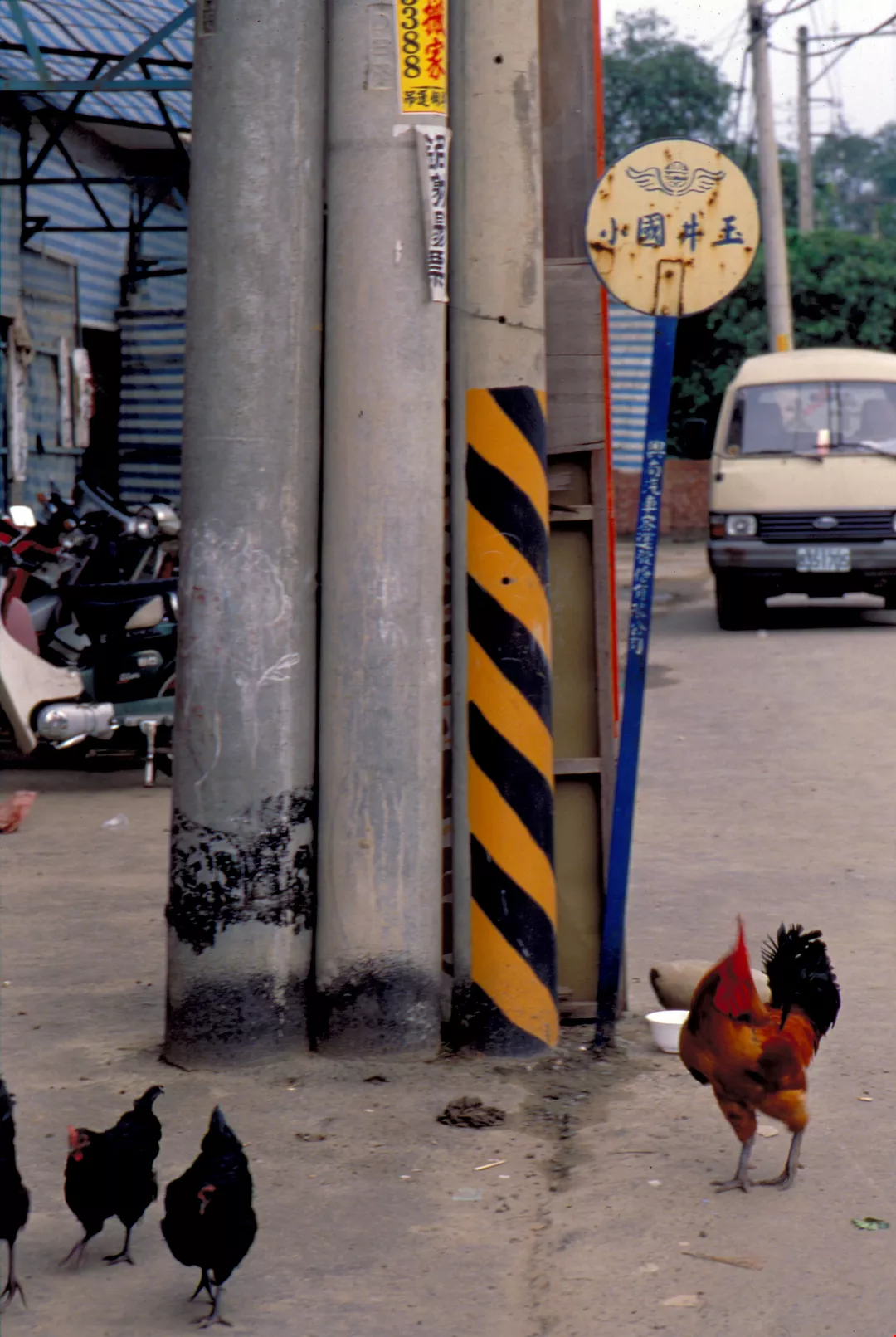
Out for a walk with his family, the rooster says "I'm not waiting for a bus, I'm just out for a stroll.".
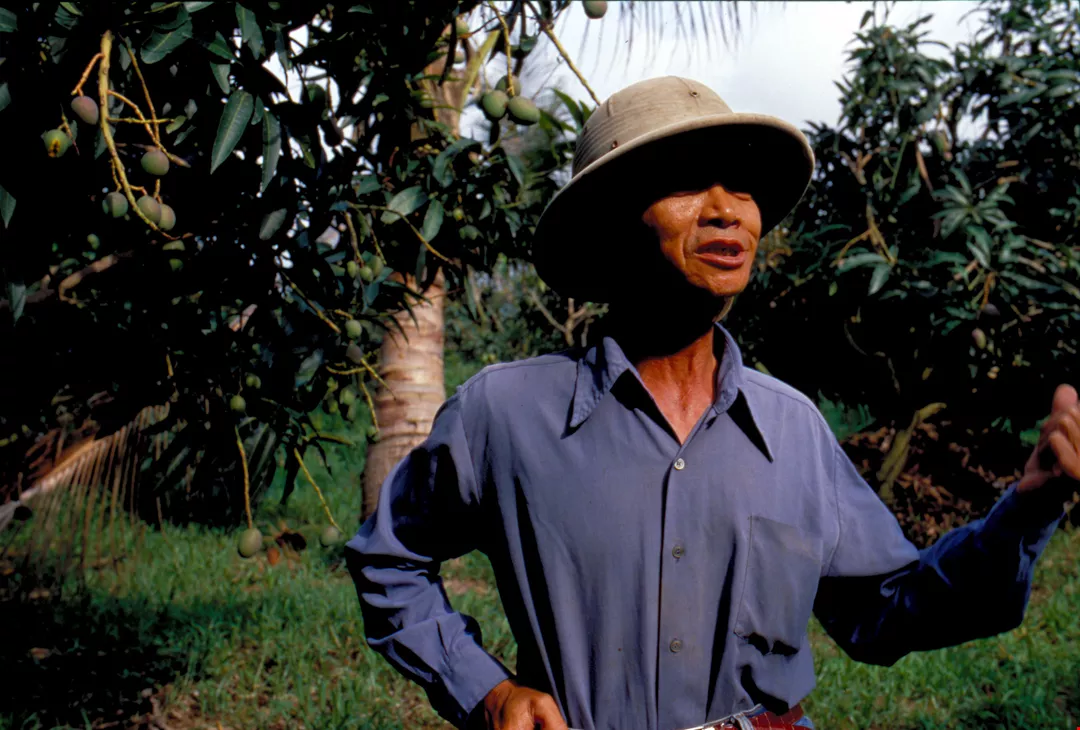
Cheng Han-chih, the man who brought fame to Touliu-tzu with his successful mango crop, swells with emotion when he speaks of the hardships of those days.
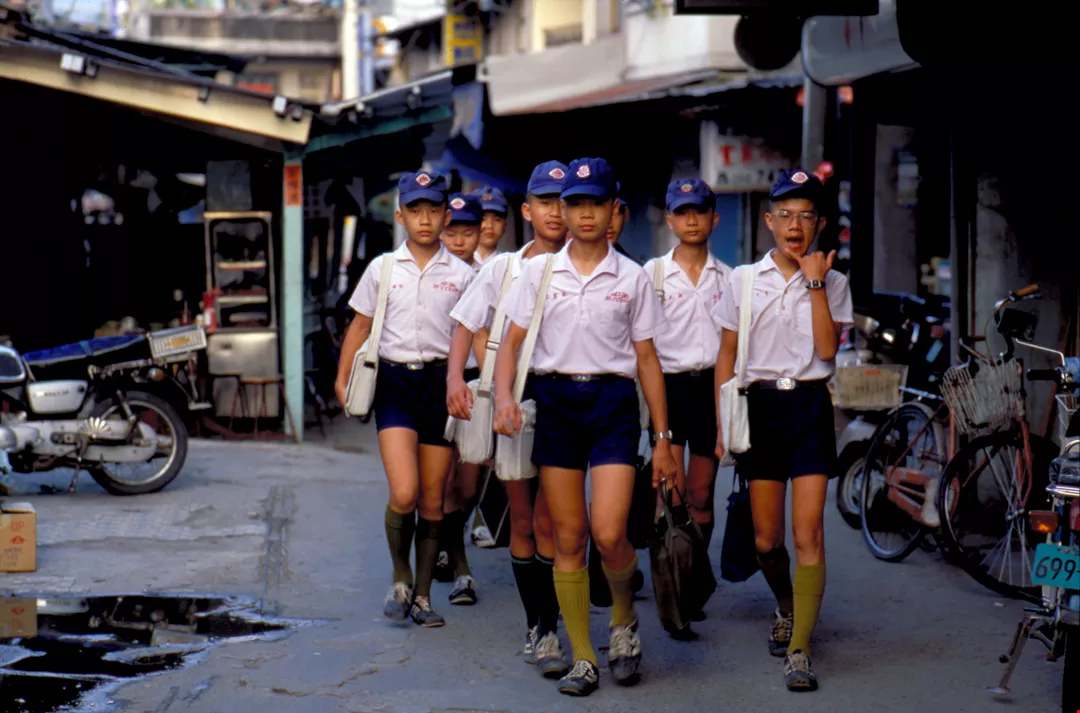
(Left above) This group of boys, going home happily after school, got awfully serious when they saw the camera.
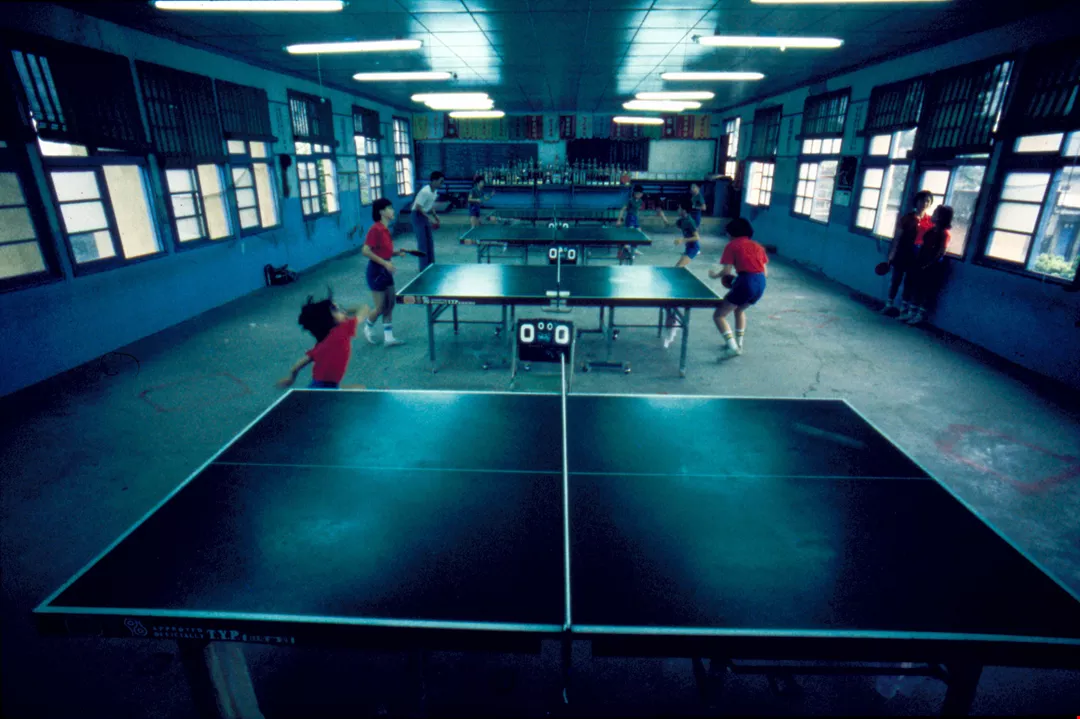
(Left below) The table tennis team from Yuching primary school has achieved its championship level through a lot of hard practice.
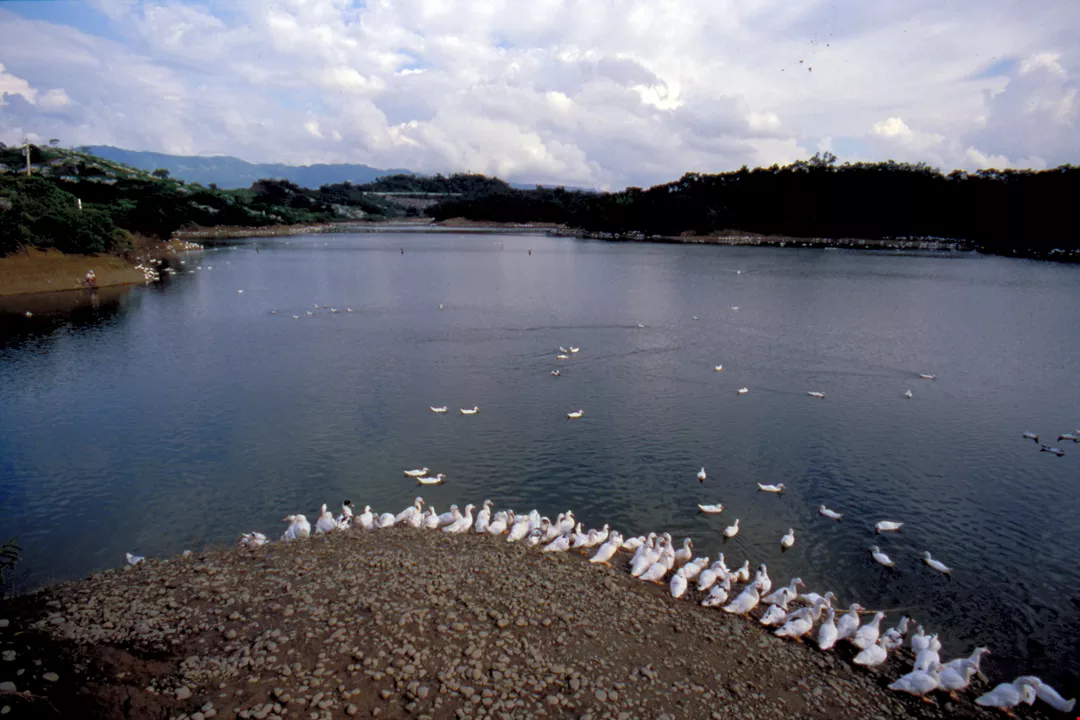
(Right) Lake Mangtzumang supplies Yu ching's irrigation water. The appearance of a group of ducks brings some vitality to the normally peaceful lake.
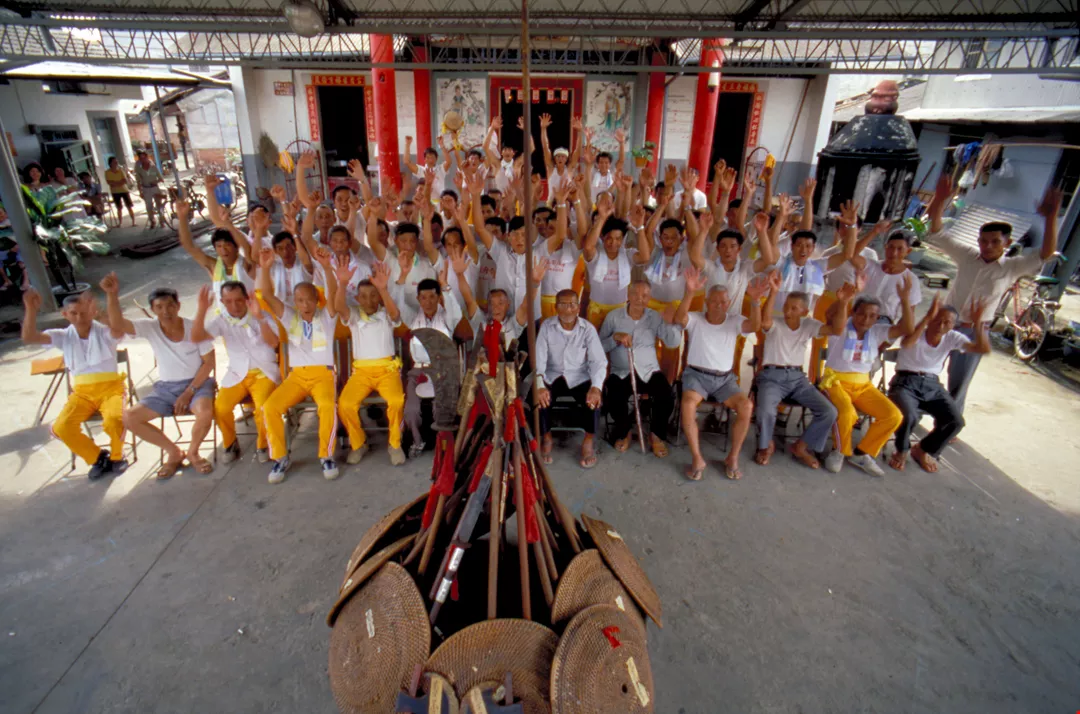
Although the average age of the members of the Sungchiang Kungfu Troupe from Chung- cheng Village is over forty, their performances are full of vigor.
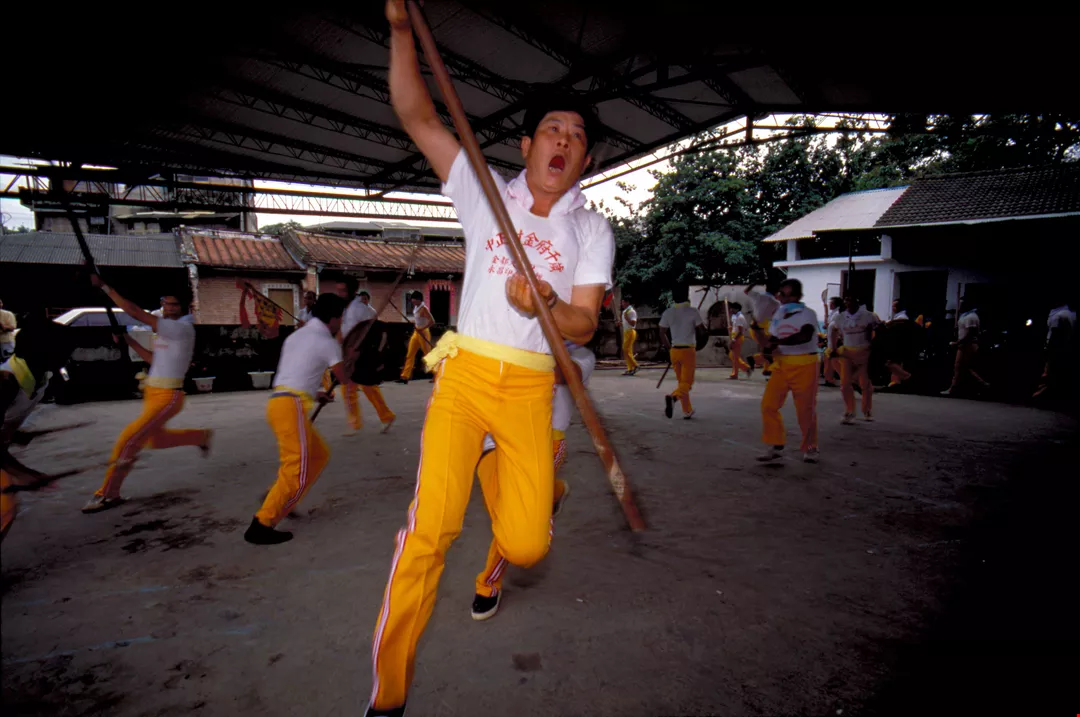
Although the average age of the members of the Sungchiang Kungfu Troupe from Chung- cheng Village is over forty, their performances are full of vigor.
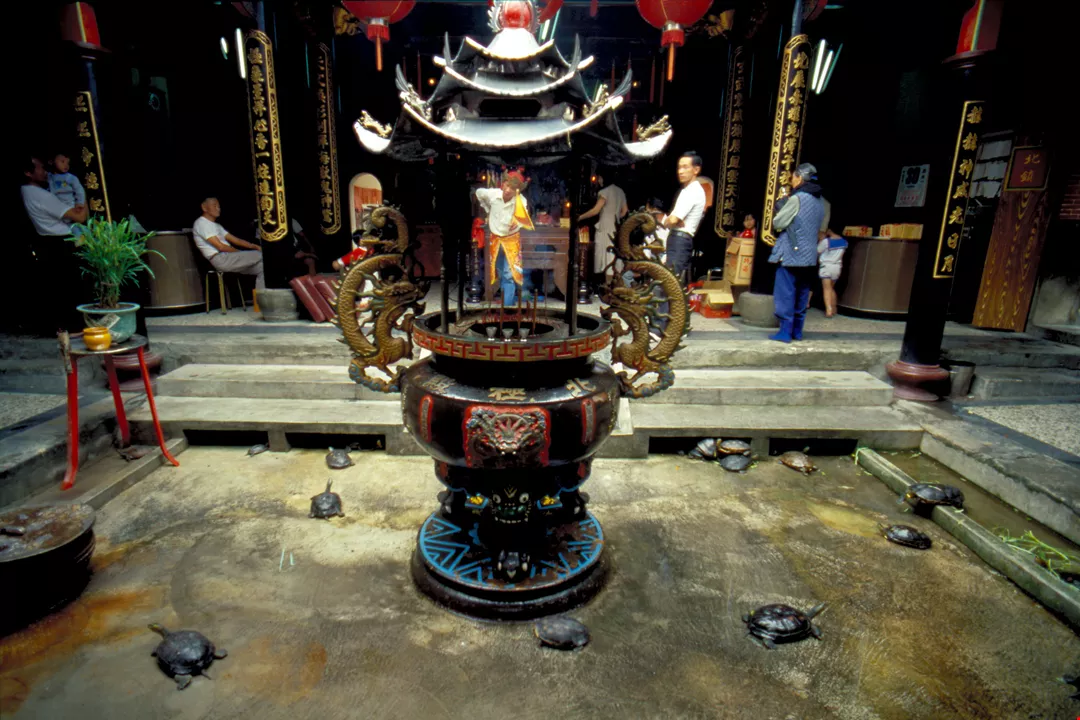
The Peichi Temple takes in and raises turtles because, according to legend, they serve as guards to the god Hsuantien.
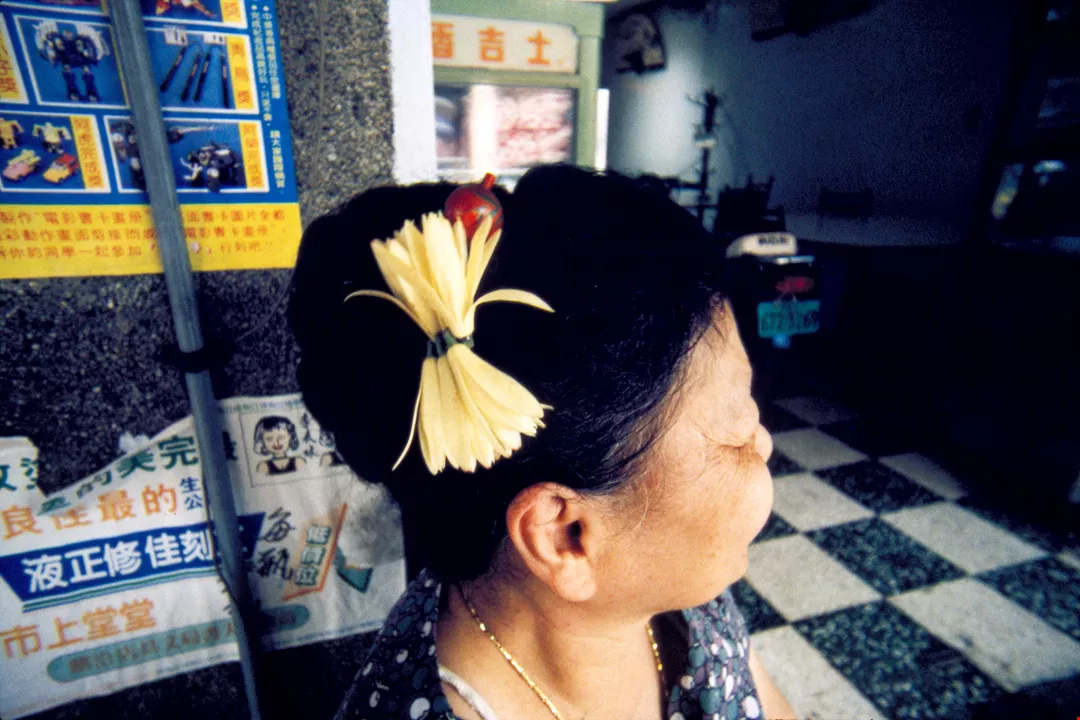
(Left) Putting fragrant magnolias on her head gives this woman a young, fresh look.
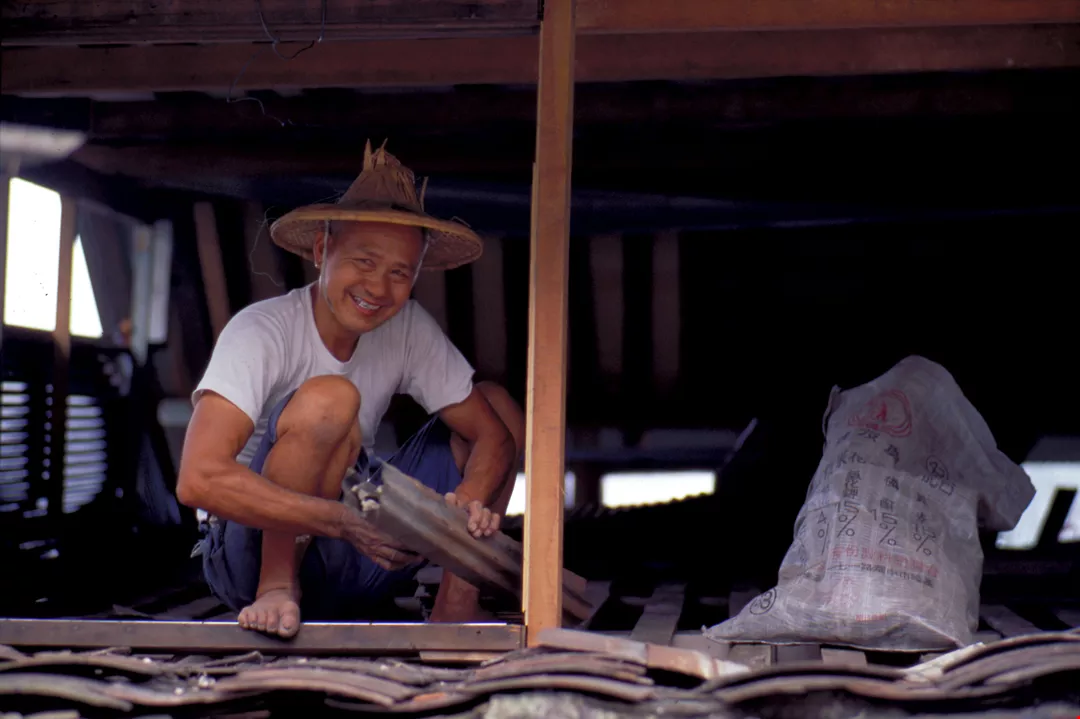
(Right) Taking advantage of good weather to mend rooftiles will keep the rain out later.
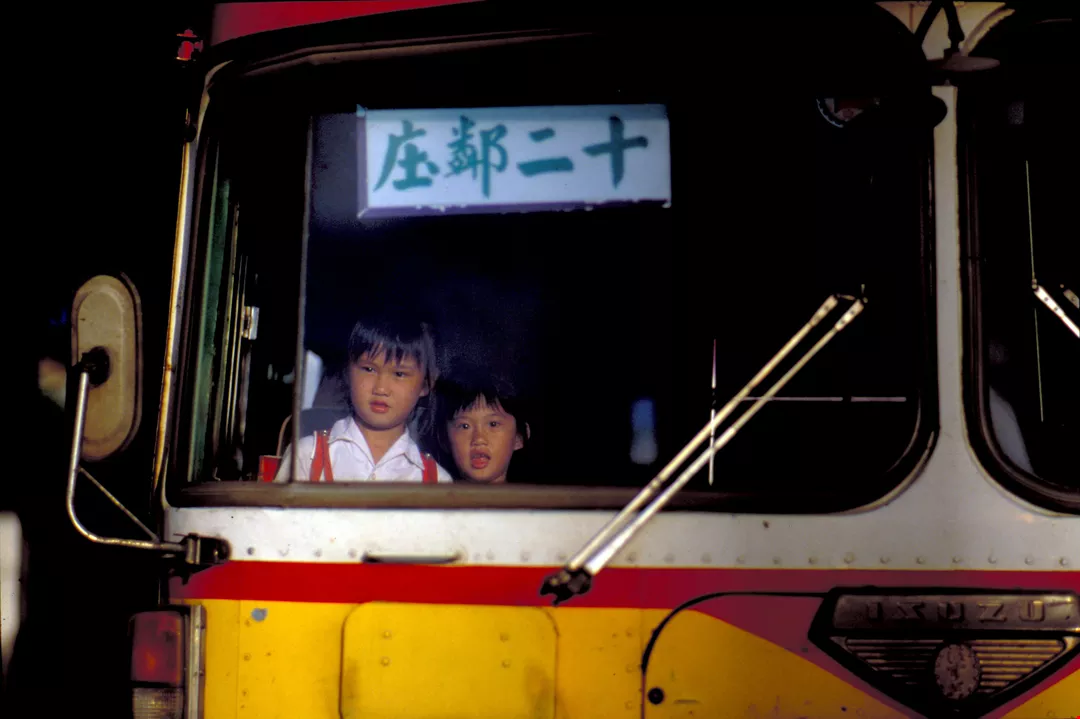
(Left) Two young girls looking happily out of the bus window on their way home from school.
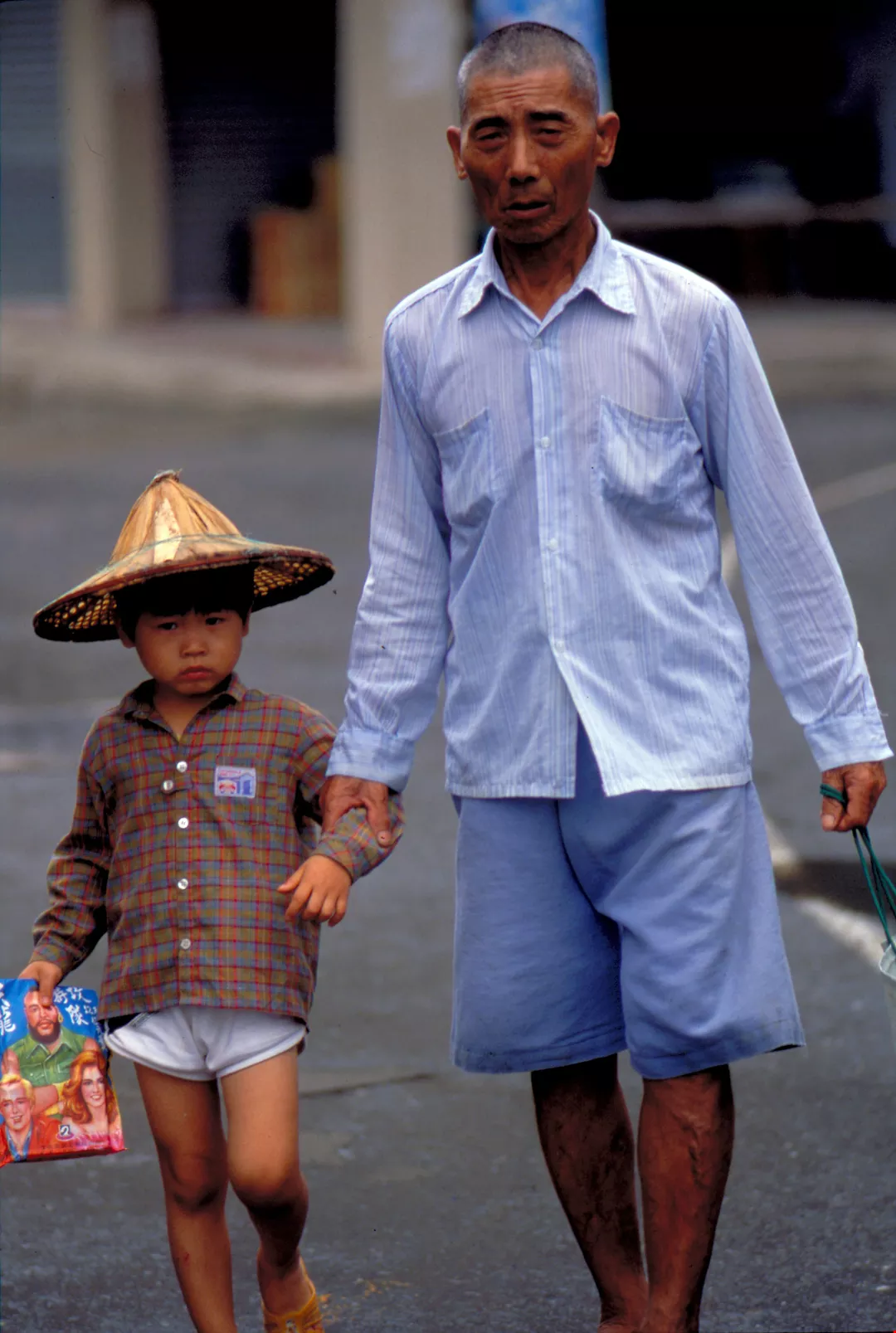
(Right) An old man and his grandson, holding an "A-team" bag, saunter home.
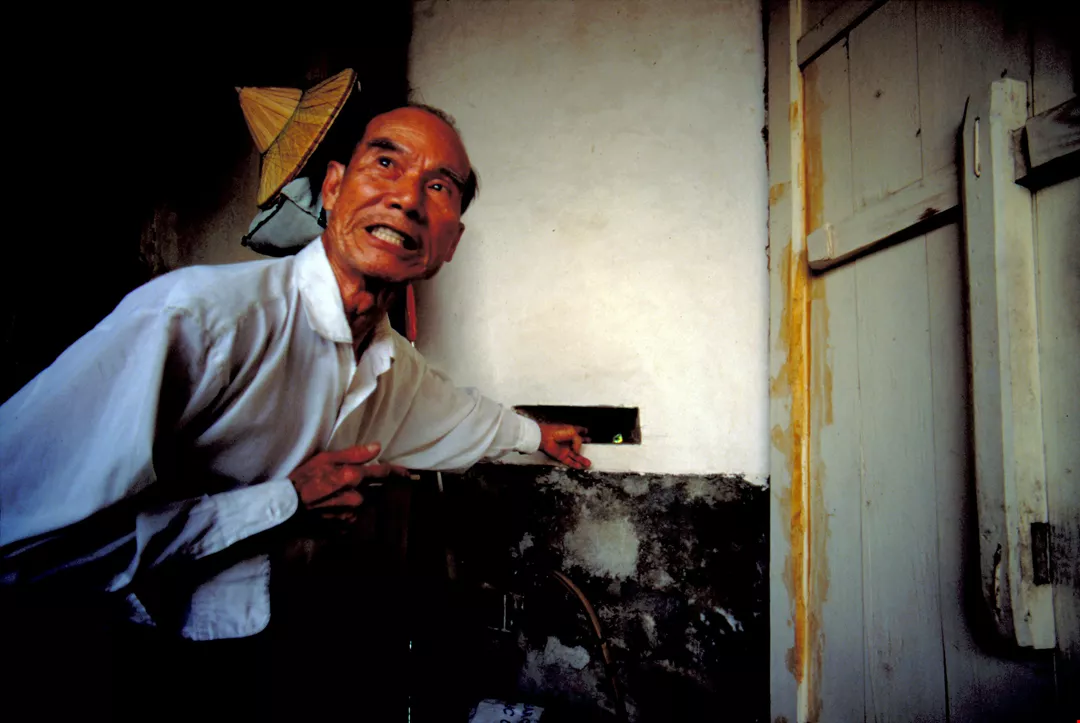
(Left above) Eight-two-year-old Chiang Lien-hui points at a gun port in his wall. He can't help but get agitated when he remembers the sorrow of losing family during the war.
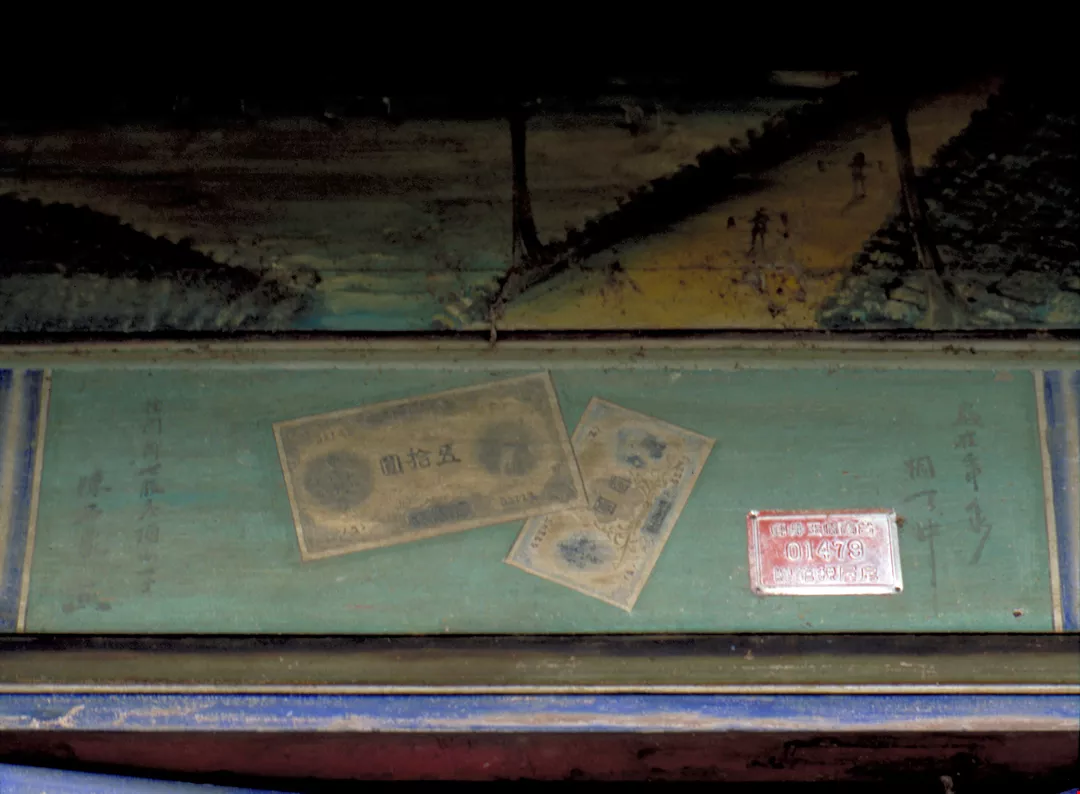
(Left below) A few pieces of "retired" money are now decorations for a door's lintel.
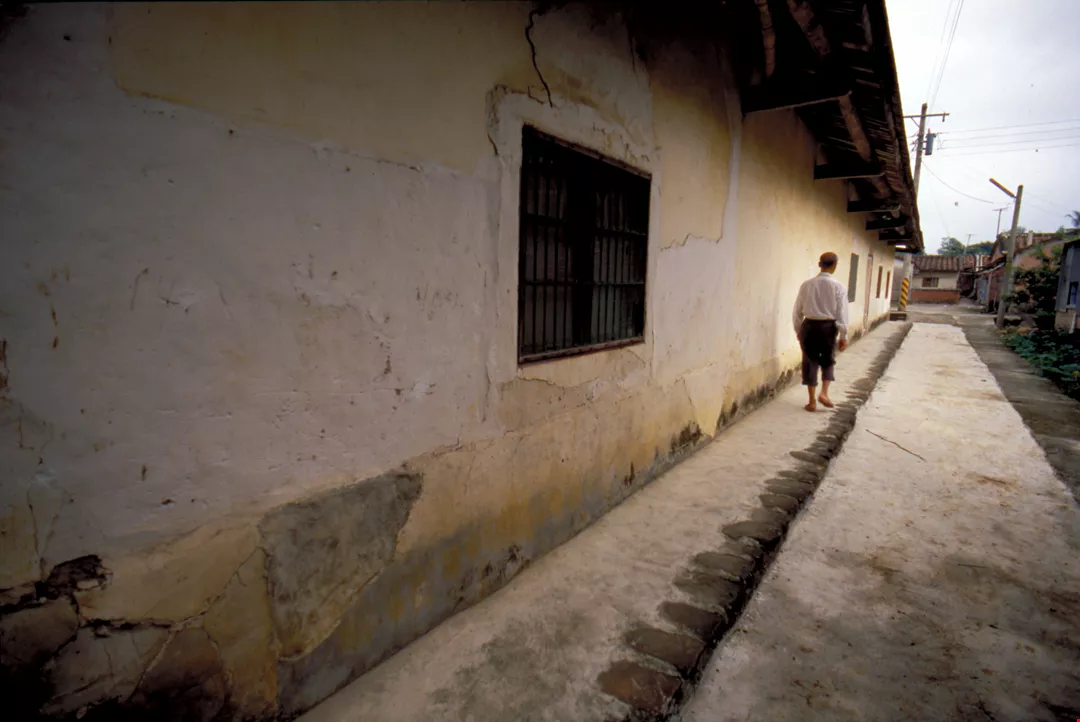
(Right) Life can be bitter or sweet, full of sorrow or joy; getting through it safe and sound, as this man has done, is luck enough.
@List.JPG?w=522&h=410&mode=crop&format=webp&quality=80)


