

There are over 190 countries in the world. Some of them have well-known characteristics, while others have yet to create their own styles. Japan is an example of the former--mention Japan and people will immediately think of its iconic flag, cherry blossoms, Mt. Fuji, or the latest electronics. Singapore brings to mind images of law-abiding citizens living in an orderly, peaceful "Garden City." But for many, the mention of Taiwan will call to mind nothing, except, perhaps, that it is the birthplace of this year's winner of the Academy Award for Best Director, Ang Lee.
In late 2005, the Government Information Office began accepting votes for symbols of Taiwan that would capture its identity and represent it abroad. In two months, more than 780,000 votes were received, with Taiwanese puppet theater, Yushan, the Taipei 101 building, Taiwanese cuisine, and the Formosan landlocked salmon taking the top five places.
Now that the five have been chosen, the event enters its second stage, and the government will begin using them as logos for Taiwan. But can they really represent Taiwan? How should they be interpreted so as to deepen their symbolism and win the approval of Taiwan's people? Every citizen's opinion counts.
"Taiwan? Where is Taiwan? You wanna tell me where's Taiwan?" Late last year Taiwanese baseball star Wang Chien-ming, who recently joined the US Major League, took time out to return to Taiwan and film an ad for the Government Information Office's "Show Taiwan to the World" campaign. In the ad, the New York taxi driver's question causes Wang to sink into a reverie--and leaves many viewers dumbfounded.
People in other countries do not understand Taiwan, and China takes every opportunity to increase their confusion. Not long ago, China issued two memorial coins. One side featured China's national crest, and the other featured Peikang's Chaotian Temple and Tainan's Fort Provintia. An uninformed foreigner might think that those two sites were within Chinese territory and under Chinese rule.
The latest outrage was in March, with the World Health Organization's listing of Taiwan as an area infected with the H5N1 avian flu virus--this despite the fact that Taiwan had been on top of the situation from the start and never had a single case of the disease. China insisted that Taiwan was part of its territory, and the WHO caved in to its demands.
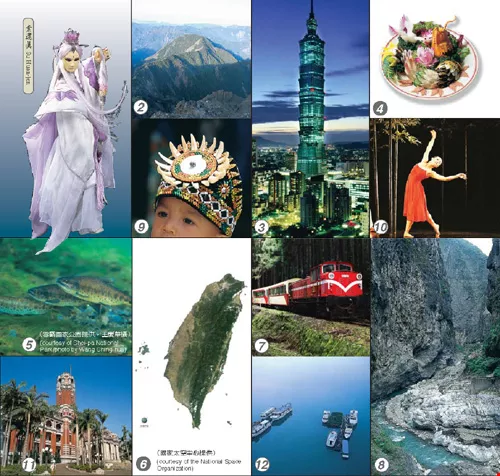
Puppet images on this page courtesy of Pili International Multimedia.
"Taiwan is really in a tight spot. We've been shut out and isolated internationally. Our voice is not heard," says the man in charge of the symbol selection process, GIO minister Cheng Wen-tsang. He explains that the event is more than just an amusing contest.
The construction of a national symbol, he says, involves linking the abstract image of the nation with what's known in marketing circles as a "corporate identity." Many nations employ symbols already on hand such as their national flags or insignia so as to elicit a sense of identity among their citizens and show their sovereignty abroad. France, for example, has its blue, white and red "tricolore" flag symbolizing "liberty, equality, fraternity." The United States has its Stars and Stripes, and Japan has its rising sun flag. Canada's flag has its iconic red maple leaf. These flags clearly delineate who's who in international sporting events, drawing cheers from their countrymen.
Taiwan's situation is different. Due to Chinese pressure, Taiwan is barred from the UN and most of the important international organizations. When statistics of various nations are made, Taiwan is often left off the list. Though the name "Republic of China," its flag, and its national insignia represent the 23 million people of Taiwan, they are rarely given the chance to be seen internationally. As for the national flower, the plum blossom, it is not native to Taiwan and has never been as widely popular here as the more cheerful cherry blossom.
Facing this problem, the GIO has decided to avoid political battles and approach it from a cultural and environmental stance. In finding a new symbol of Taiwan--ideally one that can represent Taiwan both to its own people and the outside world, and can be used to revamp the nation's image--the first priority is to make sure it is something to which all Taiwanese can relate. Professor Tai Pao-tsun of National Chengchi University's Graduate Institute of Taiwan History says that creating a national symbol or logo is a way to use the people's collective experience to form a feeling of belonging to a "community of destiny."
That's not an easy job. Even though Taiwan is small, it is multifaceted and fragmented in terms of ethnic groups, historical backgrounds, geography, and ecology. As President Chen Shui-bian said at the ceremony for announcing the results of the vote for the symbol of Taiwan, "Even the Presidential Palace building holds different meanings to different eyes." Some hate it and some love it. Some see it as a remnant of a terrible era of Japanese imperial colonialism, while others see it as a symbol of the sovereignty of a new nation.
In order to capture that common experience of all Taiwanese and consider all opinions, in the voting event the GIO allowed write-ins in addition to the 24 official choices on the ballot. Just as had been feared, each of the leading candidates had its own staunch supporters, and opinions were sharply divided. As the goal was to determine a "common experience," it was obvious that results would have to be narrowed down.
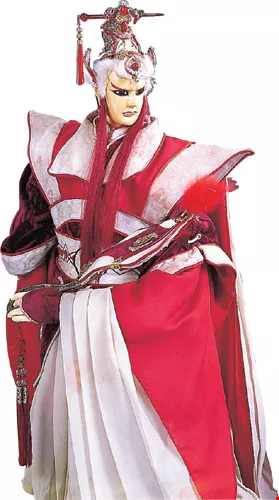
Ching Yang-zi
In the results, Taiwanese puppet theater--from the "cultural artifacts" category--took the top spot with over 130,000 votes. Close behind was Yushan, from the "scenic symbols" category. Karaoke, Taiwan's "national pastime," was submitted by the public and garnered more than 100,000 votes. In fourth place was another submission from the public--the animated "little green man" from Taiwan's crosswalk signs. Submissions from the public, however, were open to online ballot stuffing as voting for them was not subject to an identity check. As such they were only used for informational purposes by the organizers, and were not counted in the official results.
What, after all, are the defining characteristics of Taiwan? What are the most unique and beautiful things about Taiwan? GIO minister Cheng Wen-tsang says that from the start they wanted to avoid having the selection process be a top-down affair with the government making all the decisions, and stressed community involvement every step of the way. They hoped to find the "highest common denominator and the greatest overlap" which best matched public sentiment. Even if the final result is not everyone's favorite, one has to admire this inclusive process.
Tseng observes that democratic progress, technological innovation, and emphasis on a Taiwanese identity are the ideas that Taiwan, as a newly developed nation in transition, wants to get across, and the international community has already developed such an image of Taiwan. The results of the poll for a national image could fit well with these core values of the nation.
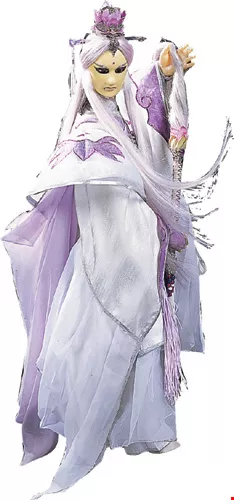
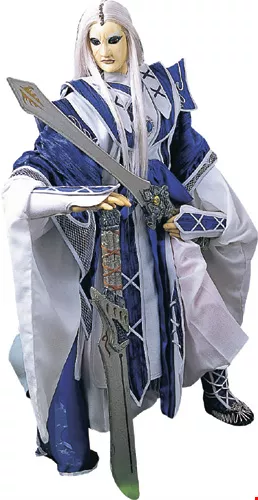
As for the top choice in the vote, Taiwanese puppet theater, Cheng says that it is an artform that is unique to Taiwan. It is performed indoors and outdoors, and on television. Lights and special effects have been incorporated into the shows, and there is a TV channel dedicated to puppet theater. There was even a film, Legend of the Sacred Stone. The artform has stood the test of time and always attracts a young audience, so it was a perfect choice for a symbol of Taiwan.
Recently, the fourth generation in the lineage of puppet master Huang Hai-tai introduced Taiwanese puppetry to American audiences with the show Wulin Warriors airing on the Cartoon Network. This was a hot topic on Internet forums, and a wave of fans voted for puppets as the national symbol. Yunlin County, the "home of Taiwanese puppetry," even encouraged its citizens to get out the vote. This was another factor in puppets' win.
"In some way, puppetry represents the awakening of a 'local culture' in the age of globalization. It also shows our confidence in and love of cultural tradition. I think we can use it to represent Taiwan," says Cheng.
Taiwanese puppet theater is performed in the Taiwanese language, however, and therefore not representative of all ethnic groups in Taiwan. Aboriginal cultures, for example, have no traditional puppetry at all. Luckily, puppet mania has swept the schools and now the artform has fans of all ethnic backgrounds. The GIO also plans to sponsor a puppetry tour abroad so as to introduce the art to international audiences and therefore strengthen the association of puppet theater with Taiwan.
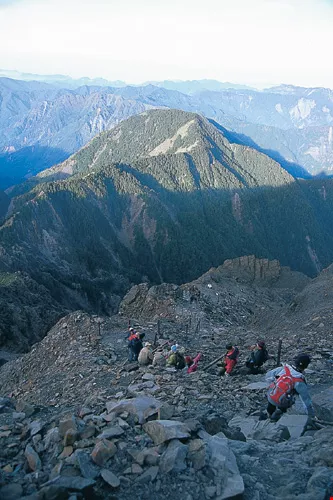
The symbolism of the second-place Yushan is even deeper. "Taiwan is such a small island, but it has more than 100 mountains with elevations of 3,000 meters or more. It also has Yushan, East Asia's highest mountain, with an elevation of 3,952 meters. It symbolizes the big ambitions of this little place," says Cheng with a smile.
Actually, during most of the voting process Yushan was in the top spot. It was only toward the end of the voting that a flood of votes for puppet theater came in. Puppet theater ended up beating out Yushan by more than ten thousand votes--a shocker to many.
To Tai Pao-tsun, who's climbed Yushan nine times and even has a photo of the mountain for his mobile phone screen wallpaper, the unexpected loss was a tough one.
He says Yushan's majestic beauty is a world-class sight, and points out that not only is it the tallest mountain in East Asia, it is also a sacred site for the Bunun people. The Japanese respectfully called it Niitakayama, "the New High Mountain," as it is even higher than Japan's Mt. Fuji. It is also the source of the larger rivers in central Taiwan. In recent years, Taiwanese artists have developed an interest in Yushan, though Taiwanese people still feel alienated from the mountains--for nearly half a century of martial law, high mountains were off-limits to civilians due to security fears.
Tai Pao-tsun says that the search for a national symbol is an exercise in displaying the self-confidence and self-awareness of the people of Taiwan. If Taiwanese identify themselves as "the children of Yushan," that would show a respect for nature and love of their native land. This way of interpreting Yushan as a symbol, he says, would be more meaningful than merely saying, "Yushan represents Taiwanese soil."
"It's a shame that the voting has already stopped and we can't go back," he opines. That may be true, but he was quite surprised to learn that the Formosan landlocked salmon--a species that has been around since the ice age and is now found only in Lishan's Chichia Creek--beat out many contenders to win fifth place.
The third-place winner, the Taipei 101 building, also has deep symbolism behind it. Currently the world's tallest building, it was conceived in the early 1990s--the glory days of Taiwan's economy. But while the building was under construction, the economy took a big hit in the Asian financial crisis of the late 1990s. The fact that it was completed is a testament to Taiwan's economic tenacity. Now it is the site of the biggest New Year's fireworks display in any Chinese-speaking territory, making it a symbol of Taipei's festiveness and Taiwan's vitality as well.
In contrast to these scholarly views of Yushan and Taipei 101 as symbols of national sovereignty and competitiveness, the New York Times' travel section recently featured a piece on Taipei which depicted Taipei 101 and the Hsinyi District around it as a youthful consumer's paradise. Taipei 101 can thus be seen as a softer, cultural symbol--it's open to interpretation.
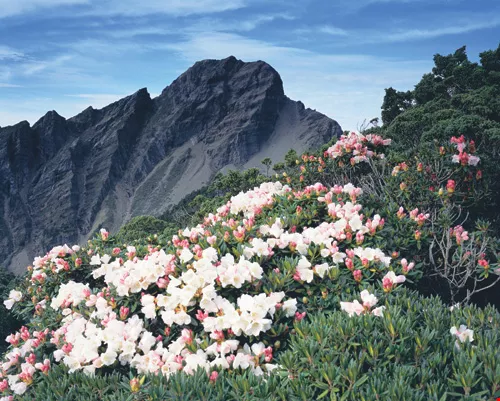
Yushan (Mt. Jade) is the highest mountain in East Asia. It is a goal of many Taiwanese to make it to the top in their lifetimes. The photo shows Yushan rhododendrons in bloom, with Yushan in the background.
The fourth-place winner, Taiwanese cuisine, is even more of a multifaceted symbol, and it, too, sparked much discussion.
Minister Cheng says that in the past there has been much political and ethnic strife in Taiwan, but "only in eating has there been no strife." Whether it's Japanese cuisine from the colonial era, the various Chinese regional cuisines brought over with the Nationalist government, or the Western styles that have taken off in recent years as globalization reaches Taiwan, they all have a place here.
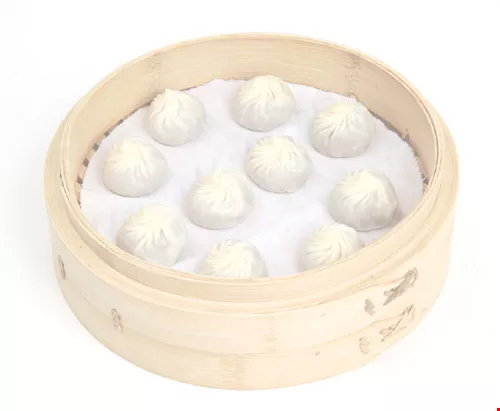
The variety of tastes shows the ability of Taiwanese to accept outside influences. After blending and reconstructing elements, Taiwan even came up with a Sichuanese dish that Sichuan doesn't have--Taiwan-style Sichuan Beef Noodles. Taiwan also has its own take on Chinese breakfast favorites youtiao (deep-fried dough sticks) and xiaolongbao (one type of filled steamed dumplings). Taiwan's cuisine has long been one of the big attractions for foreign tourists. It also is a good match with that other characteristic that impresses foreign visitors--hospitality.
Cheng says that Taiwanese cuisine's speciality is simple yet tasty snack foods. Taiwan is a bustling immigrant society full of people working day and night, and that has had an influence on the cuisine. A 24-hour food stand is never far away, and night markets only get more crowded as it gets later. The cuisine is now seen as something of value in itself. In this love for "cooking for the masses" one can also see a sort of Taiwanese populism.
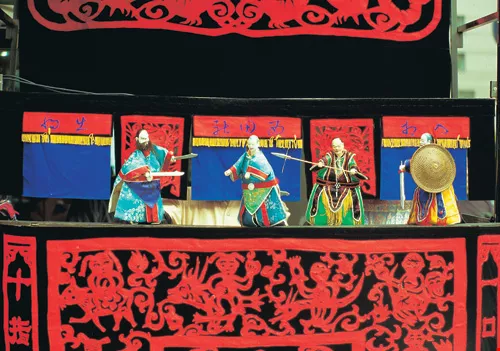
Puppet theater is Taiwan's most representative traditional art. It has a surprising number of fans even to this day.
"Hospitable, industrious, and vibrant--that's the image Taiwan wants to get across. Behind those are democracy, a high-tech economy, and a local identity," says Professor Lin Pang-soong, a leading local designer and head of the fine arts department at National Taiwan Normal University. Whether it's the cultural icon of puppet theater, the natural feature Yushan, or the city landmark Taipei 101, Lin says, any symbol should have this notion at its core.
Aside from its application as a marketing tool, Tai Pao-tsun says the search for a symbol of Taiwan is really intended to stimulate people to think about the issue and join in the discussion. It's a chance for people to think about their country and their relation to it from a broader perspective, but is also a fun exercise that promotes creativity and aesthetic values. He points to similar votes on smaller scales from recent years, where people have decided on their towns' emblematic trees, their counties' iconic sights, and their schools' mascots--it's a bottom-up process.
He gives the example of a Taiwanese version of the Chinese zodiac. An Aboriginal totem of a snake could be used for that animal in the zodiac, while the animal that best symbolizes Taiwan--the water buffalo--could take the place of the ox. The humble Taiwanese hunting dog could take the dog's place, and the indigenous clouded leopard could stand in for the tiger. In another example of successful symbol making, Changhua County--famous for the rebels it has produced--uses Mt. Pakua as its symbol. Mt. Pakua was the base for the anti-Qing and anti-Japanese resistance force the Heaven and Earth Society.
The biggest regret with the vote for a symbol has been the small response. Only around 780,000 ballots were received--that's less than 4% of the population. Perhaps that low number signifies the thorniness of the question. Many people couldn't pick a favorite, and some didn't see anything they liked among the 24 choices yet couldn't think up anything on their own to write in. Some were cynical about the entire project: "Marketing some symbol won't erase the negative images of fights in the legislature or rioting foreign laborers!" And people's confidence in Taiwan's image took another blow recently when the first Japanese couple to take advantage of Puli's efforts to attract retired people for long stay holidays complained to the media of shortcomings in the area's environment.
It's true that there is always a gap between image and reality, and we all need to work hard to reduce that gap. But just as a ballot in hand can change the nation as a whole, choosing a favorite symbol can help people understand one another and can act as a unifying force. Even more importantly, it can help Taiwan make itself known to the world, and form the basis for reconstructing the nation's image. The symbol selection process allows all Taiwanese to act as spokespeople and make their voices heard.
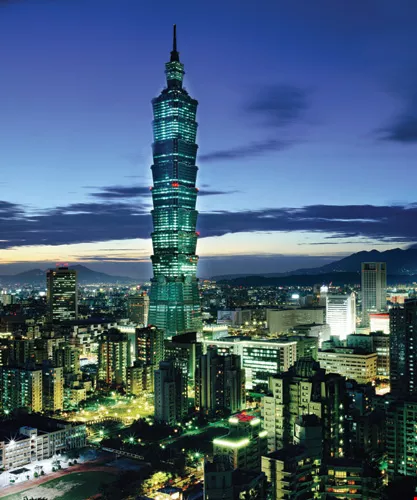
Taipei 101 towers 508 meters above the bustling Hsinyi District. The world's tallest building is the pride of Taiwan.
Puppet images on this and facing page courtesy of Pili International Multimedia.
Ye Hsiao-chai
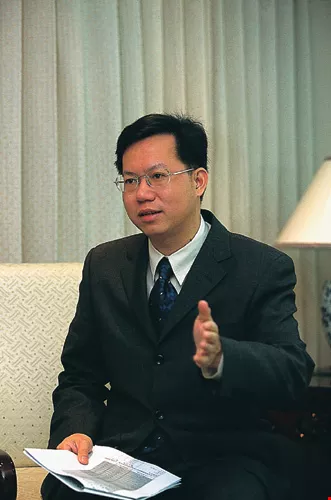
New GIO minister Cheng Wen-tsang provides insightful interpretations for all five of the selected symbols.
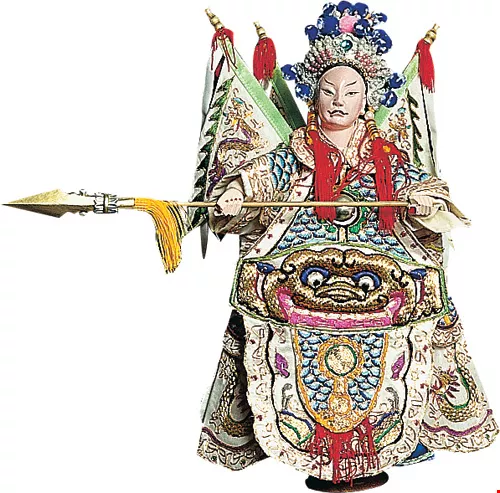
Puppet theater is Taiwan's most representative traditional art. It has a surprising number of fans even to this day.


