Modern Man in the Old Temple After the Celebrations at Erchieh's Wang Kung Temple
Jenny Hu / photos Vincent Chang / tr. by Robert Taylor
March 1994


When "modern" people get involved with an ancient temple, what kind of chemistry will result?
At the end of last year the groundbreaking ceremony for the reconstruction of Chen An Temple at Erchieh in Ilan County's Wuchieh Rural Township, along with the birthdays of the temple's three "Princes," was marked by lively celebrations and a temple fair lasting three days. The involvement of Ilan's local cultural elite in planning the rebuilding and organizing the fair, and the new ideas they applied, attracted a great deal of media attention and caused the events to be described as "a turning point in Taiwan temple culture." But in private, some say that the intellectuals and the local believers were "marching to different tunes". . ..
After the "Princes' birthday" celebrations, held late last year on the15th day of the 11th lunar month, another spell of overcast and rainy weather sets in over Ilan County. The milling crowds which came for the three-day temple fair have disappeared without trace, leaving only the flags, streamers and ceremonial arches from the groundbreaking ceremony as a reminder of the hustle and bustle: The square in front of Wang Kung Temple has returned to its accustomed tranquility.
In the temporary metal-clad sheds, old people sit in threes and fours playing chess, chatting idly or just dreaming. Now and then someone will bring up the subject of all the arguments about rebuilding the temple over the last two years and more, and how hard it was to reach agreement. Suddenly an old man points out at the rain-shrouded, deserted temple square and says: "Spending all that money just for a party, and now we've got nothing to show for it! Was it worth it?"
The temple fair for the Princes' birthday celebrations in Erchieh has long been a big event in Ilan County. The old local saying, "New Year is nothing compared with the Princes' birthday" sums up how on this big festive occasion the whole village would always set up tables and feast for all they were worth.
Erchieh's Chen An Temple is known locally as "Wang Kung Temple" ("the Princes' temple"). The temple gods were brought across the Taiwan Strait 200 years ago by one Liao Ti, an early settler from the mainland, from his old home in Zhangpu County in Fujian Province, at the time when the land of what is now Ilan County was being cleared for cultivation. The temple has long been famous among local people for its powers to heal illness (especially mental illness), drive out demons and keep evil at bay, and is one of Ilan's most important temples. In days past, every year at the temple gods' birthday on the 15th day of the 11th lunar month, all the families in Erchieh would set up tables for people to eat at, while one act after another was performed on stage, and folk from other villages would walk there from miles around to join in the fun. Ilan County chief executive You Hsi-kun and many other local personalities once squeezed their way through the crowds at the temple as children. "A lot of folk round here have been saved by the Princes," says 84-year-old Li Ah-ju, showing his admiration with a big "thumbs up."
Wang Kung Temple as it appears today is the product of several rebuildings since it was first founded as a thatched structure, but every year at the Princes' birthday, all the groups associated with the temple and believers from all the branch temples come to pay their respects, bearing their temple gods in palanquins or drawing them along in carriages. Over the years the growing crowds have become more than the temple's buildings can hold, and so two years ago it was proposed that a new and larger temple should be built.
The older generation saw this as an event of tremendous importance, because by serving the Princes one can store up merit which will be rewarded in one's next life. So the old gentlemen on the reconstruction committee enthusiastically organized an inspection team which went to look at temples all over Taiwan, and visited the mother temple in mainland China. They finally decided to model the new temple on Tashan Kung temple at Paihe Township in Tainan County.
But Chien Chin-hui, the young chairman of the temple management committee, had other ideas.
At the end of 1989 Chien Chin-hui, who at the age of 36 had just been elected chairman of Wuchieh Rural Township Council, was also elected chairman of Wang Kung Temple's management committee. Just like the virtuous and respected elders at the temple, the faith he had had in the Princes since childhood motivated him to "do the spirits' work." But what set him apart from the older generation was his youthful idealism: "We should approach temple work with a sense of its importance and of our great responsibility for the future."
Chien wished to integrate the life of the temple into modern society. After he made friends with Lin Cheng-jen, an Ilan-born sculptor who had studied in Italy, and through him got to know a number of others who over the past few years have been working to restore local culture, Chien realized that these intellectuals' "nativist dream" fitted in very well with his own ideal of bringing new life into temple affairs. So despite much disapproval from his elders, he boldly invited in these "modern" people, who had never had anything to do with temple business. Starting by overturning the older generation's plan for the new temple, they quickly reversed the aging trend among Wang Kung Temple's worshippers.
The latest temple fair, seen as "a waste of money," by some locals, was their idea.
"We wanted to show a real traditional flavor," says Chien Chin-hui, his sense of pride obvious despite his modest tone. Hoping to escape the growing vulgarization manifested in the spread of floats carrying electric organs and commercial bands playing Western music, and wanting to restore the simplicity of traditional belief, Chien Chin-hui broke away from the established way of doing things whereby everything was in the hands of the temple management committee, and instead commissioned Lin Teh-fu, director of the Ilan County Cultural Center, and Lin Mao-hsien, a scholar of folk customs, to assist in organizing the activities. The whole planning and preparation process took less than a month. With the work of sculptor Lin Cheng-jen--the soul of the movement to rebuild the temple -- on the temple's overall design and with art lecturer Lin Fu-chun of National Ilan Institute of Agriculture and Technology organizing an exhibition of the temple's artifacts, this temple fair, organized by all these university-educated intellectuals, became a focus of media attention, and also motivated Erchieh's faithful to participate in what became a splendid celebration.
At the groundbreaking ceremony, led by county chief You Hsi-kun, schoolchildren chanted eulogistic poems written by local writers, there were performances by the Lanyang Taiwanese Opera Company and the Lanyang Chinese Music Orchestra, and Hsinchuan national culture award winner LinTsan-cheng gave a puppet show depicting the dance of the ghost-catching spirit Chung Kuei. All this gave local residents, who generally very rarely participate in artistic and cultural activities, the opportunity to see the results of the brisk development in local culture over recent years.
With the painstaking efforts of these intellectuals and with "strict quality control" from the temple management led by Chien Chin-hui, the temple fair took on the dimensions of a tourist spectacle of folk customs, attracting many people from other areas, along with local-born people living outside the county, to travel here to take a look.
"Before, all the temple activities were run by people without any book learning, but this time they're all doctors and masters," say the old folk, pointing at the management temple office. "They have a different style."
What the old people call a "different style," includes attitudes, the style of activities, aesthetic tastes, and all kinds of differences they cannot put a name to. And since two years ago, when Lin Cheng-jen, hearing that the Wang Kung Temple was to be rebuilt, came there with the dream of "building a modern Taiwanese temple which will last through the ages like a European cathedral," and introduced Chien Chin-hui to the Japanese design company the "Elephant Group" which had planned Ilan County's Tungshan River project, there has been a constant battle at the temple between new ideas and old ways of thinking.
Two years ago, just when the old gentlemen of the temple management committee had set their hearts on a building in the style of Tashan Kung Temple, Lin Cheng-jen brought in the Elephant Group as architects. This aroused fears locally that they would "end up with a Japanese Shinto shrine," and brought a stream of protest from the conservative faction. So the Elephant Group presented a design proposal based on the traditional circular buildings found around Changchou, the ancestral homeland in mainland China of the people of Ilan. The temple is conceived as the "focal point" of the community, and the proposed complex includes public facilities such as an activity center, a kindergarten, a clinic, a senior citizens' club and a riverside park. The concept also includes a "street building" project, in which the public are to be encouraged to participate in creating and managing their own environment.
At first glance, this design would appear to go beyond the original "religious" function of the temple, but Chien Chin-hui points out emphatically that "in traditional society, the temple was the center of local activity."
With this in mind, Lin Cheng-jen enlisted local people of the progressive faction and departments of the county government to pressure for the chosen design to "fulfill our responsibility towards later generations." Ilan County chief You Hsi-kun also visited the temple, and his words "I hope that in the future Wang Kung Temple can become a cultural asset for Ilan County," further strengthened Chien Chin-hui's resolve.
Finally, still unable to persuade the old gentlemen of the management committee, Chien Chin-hui called a meeting of believers and villagers, and put the choice between the Elephant Group's proposal and the design based on Tashan Kung Temple to a vote. In the ballot, which Lin Cheng-jen described as "a showdown between traditionalists and modernists." the "modernists" defeated the "traditionalists" by an overwhelming majority. This brought the dispute to an end, but it left behind divisions between the local conservative and progressive factions.
From the decision on the temple design right until the groundbreaking ceremony, these young intellectuals were completely in charge of events at the temple, so that finally even the old men in their eighties were saying quite unreservedly, "our temple building plans and the temple fair are all centered around 'culture.'" The temple's old traditionalists seemed to have made an about-turn in their thinking and to be wholeheartedly behind the "new times and new methods."
But this apparently peaceful exterior conceals a sense of defeat which is hard for people who have not been personally involved to appreciate.
Li Ching-hui, who was attracted by the flourishing new cultural life in Ilan to leave her job with a Taipei newspaper and move to Ilan, and who played a key role in organizing the temple fair, has overheard some of the locals' comments about her and her colleagues: "They've come to build a temple and put on a show, they haven't come to worship our Princes." For some traditionalists and conservative believers, the motives of these intellectuals with their "unknown intentions" seem thoroughly suspicious. This gave rise to episodes like this: At a public fundraising event for the temple, one old man raised a commotion, telling people: "Don't give that lot any money!"
In past years, many believers liked to liven up the temple fair by hiring singing and dancing shows, but this time they were politely refused, which also led to protests: "We want to show respect for the Princes in our way, what's wrong with that?" At moments like this Chien Chin-hui often had to step in to mediate, explaining and smoothing ruffled feathers.
The intellectuals were concerned about preserving the essence of traditional folk culture, while what the believers were worried about was to express their faith in the temple gods. If handled inappropriately, these differing concerns could easily lead to conflicting goals.
The production of the guidebook to Wang Kung Temple is an example. When Ilan Cultural Center first took on the task, they set to enthusiastically with the aim of "raising the level of temple culture and reducing the element of superstition." They hoped to avoid some of the more purple passages in the old notes to Chen An Temple, and did their best to tone down the accounts of the Princes' deeds in such stories as "the son of the witch Fengyang was unable to hurt [a person under the Princes' protection], but instead was consumed by his own flames," or the tale of "when demons were wrecking the sugarcane fields." But this editorial policy raised worries about "local beliefs being suppressed," and attracted continuous opposition. After a few exchanges of opinion, the main part of the guide was devoted to describing the acts of the Princes and the activities of the temple, while the sections on culture and the planned new temple complex were relegated to appendices, returning things to their proper perspective.
Some people also criticized the images of the Princes on the banners designed by Lin Cheng-jen as looking "all wrong." Episodes of this kind were too numerous to mention.
Lin Mao-Hsien, director of the Lanyang Taiwanese Opera Company, who holds a doctorate in ethnology from the University of Paris and who organized the cultural activities, admits that for the believers the religious rites are the most important thing, while the intellectuals' main concern is whether the temple fair can be used as a channel through which to promote artistic performances and attitudes. "As cultural workers, we're not worried about whether people believe in the Princes, but whether cultural activities in Ilan can reach the grassroots."
By contrast, Lin Cheng-jen says that the believers believe in the Princes, but he believes in art. These two faiths have different contents, but both motivate to action, and their relationship should not be one of conflict, but should rather be complementary. For example, the motive for rebuilding the temple is religious belief, but the intellectuals can inject their ideals into the work. For instance, the old temple was lovingly constructed by sculptors and masons from the second generation of Ilan settlers. To preserve their artistic work, master craftsman Chen Heyuan, a Hsinchuan national culture award winner, has been specially commissioned to take charge of the existing temple's dismantling and reconstruction as a museum. As for the new temple, Lin Cheng-jen suggested that instead of building it in concrete, which has a life expectancy of only 50 years, the more durable granite should be used. Lin also proposed that the temple's decorations and carvings should not depict irrelevant themes such as scenes from the historical romances Tale of the Three Kingdoms or Investiture of the Gods, but should concentrate on the acts of the main temple gods, to create a place of worship which displays both religious culture and artistic aestheticism.
Lin Mao-hsien also points out that it is essential for local beliefs to be respected--things must not simply be decided according to the intellectuals' enthusiasms. Thus although he personally is not at all in favor of promoting fire-walking (for fear of accidents), in deference to local beliefs he wrote a newspaper article explaining fire-walking's purifying significance, and also explained it to the several thousand spectators present at the event. "We can promote religious ceremony as a demonstration of folk custom, thus linking it with modern life."
"Through constant communication with believers and local residents, we came to appreciate the power of religious faith, and learned to find out and respect grassroots opinion rather than working from the subjective viewpoint of 'intellectuals,'" says Li Ching-hui, who has found the whole experience highly instructive.
In fact, the believers were well aware that these people had no belief in the Princes, but "if they can come and help us make a success of temple business, then that's fine too," says temple officer Chien Huo-lu.
Nonetheless, believers do harbor mixed feelings about these highly educated literati, on the one hand relying on them but on the other viewing them with doubt. Thus it often happened that when things were going smoothly, the faithful believed this was due to "divine inspiration," but when difficulties arose, they would accuse the intellectuals of "not knowing what they are doing." But overall, the intellectuals respected the locals and the believers treated the intellectuals with courtesy, and this helped to make the temple planning process and the cultural temple fair the great overall success that they were.
But our story has an epilogue. Now that all the applause has died down, things have been none too peaceful at Wang Kung Temple just recently, for the traders and contractors who took on all kinds of work for the temple fair have been coming for their money: NT$ 160,000 for photography, over NT$ 1 million for advertising, certificates of thanks and bunting, plus the printing costs for the deluxe publicity brochures, and the expenses for all the other materials and activities intended to immortalize the name of Wang Kung Temple.
All this makes Li Yu-liang, general secretary of the temple management committee, throw up his hands in horror. He haggles over every bill, or even asks the contractors to "make a contribution to Wang Kung Temple." But when the stupefied contractors complain to the Cultural Center, which originally arranged with them to do the work, they get the reply that as the Center is not footing the bill, there is "nothing it can do."
In the past, temple activities have been paid for by contributions from believers, and those in charge were generally the main patrons. But this time the work was not in the hands of the congregation, but of artists and intellectuals who strived for "perfection" in everything. At the time, both sides were trying to do their best to "do well," and did not estimate the budget; and with the artists' and intellectuals' desire for perfection, costs naturally went up and up. But the temple management did not realize what was happening, and this led to the later disputes over the bills.
At present the problem of how to pay off these expenses has still to be resolved, but over two years of contact and communication, Lin Cheng-jen has gradually come to understand the believers' psychology, and he has thought up a scheme to raise the money to build the new temple. Just as beside each statue of the Buddha in mainland China's Dunhuang Grottoes, there are images of the benefactors who paid for them, if the new Wang Kung Temple sets aside a place for bas-relief carvings of modern benefactors, "they can be immortalized in the durable materials from which the temple will be built, and we can be sure there will be no shortage of donations." And in fact, once news of this idea got out, there was immediate interest from many local people.
The workers at the Cultural Center enjoyed their experience with Wang Kung Temple so much that they are now planning to take on the job of organizing the 50th anniversary celebrations at Ilan's Yu Tsun Kung Temple, and Lin Cheng-jen's work to rebuild Wang Kung Temple has just begun. How this group of intellectuals can use temples as the stage on which to realize their dreams, and how the old temples can best make use of their talents in order to flourish once again, are questions on which, now that the excitement over Wang Kung Temple has died down, both sides should reflect deeply.
[Picture Caption]
p.34
The risky and exciting fire-walking ceremony provides a focus which helps strengthen Erchieh people's participation in temple affairs. (photo by Jenny Hu)
p.35
Lin Cheng-jen's designs made the latest Wang Kung Temple fair a lively and colorful event with the atmosphere of a tourist spectacle. (photo by Wei Hung-chin)
p.36
Using temples as a channel through which to promote art and culture has been the ideal of many cultural workers in recent years. This picture shows elementary school children reciting poems at Wang Kung Temple fair.(photo by Wei Hung-chin)
p.37
Wang Kung Temple has 79 branch temples throughout Taiwan, which does not put it in the big league. Pictured here is Chuang Erh Chen An Temple in Ilan City.
p.38
The Princes keep the peace and protect local people. For many years, the temple has been a center of community life, where ordinary folk go for medical treatment, to settle disputes, to get guidance through difficulties, and to socialize. (photo by Wei Hung-chin)
p.38
Wang Kung Temple "safety charms" are all printed with the blood of black dogs, and are said to be especially effective at driving out evil spirits. Locals young and old rush to buy them.
p.39
When one of the Princes is asked to diagnose diseases, he uses one of the carrying poles of his palanquin to write signs on a table covered with sawdust. A medium stands by to interpret the marks.
p.40
Because local people have been moving away from Erchieh, the active congregation at Wang Kung Temple has been growing older and sparser, and the temple's prestige has declined too.
p.41
Will the intellectuals who hope to construct a model contemporary temple building and create a new temple culture see their dreams realized at Wang Kung Temple? (photo by Wei Hung-chin)
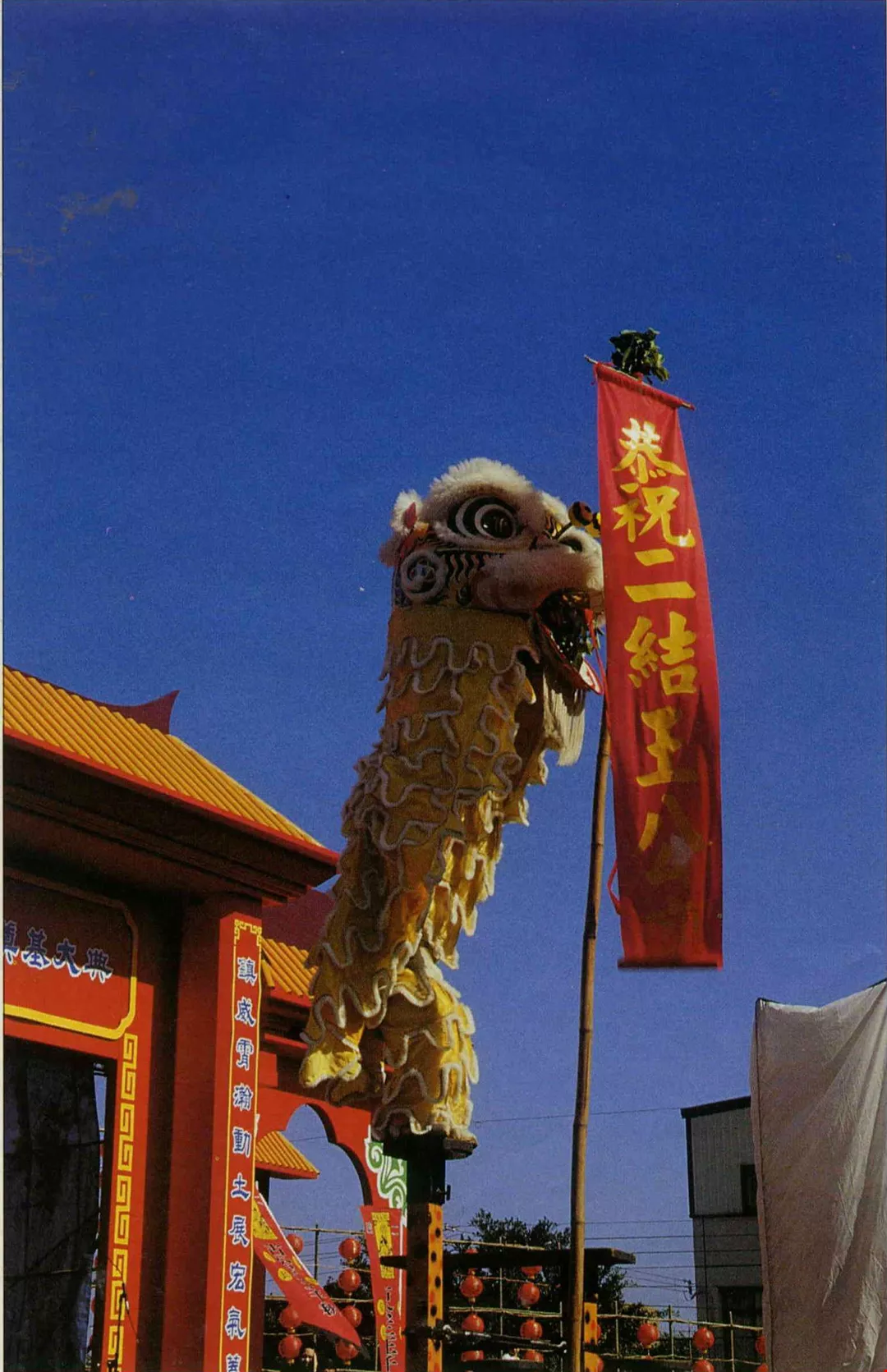
Lin Cheng-jen's designs made the latest Wang Kung Temple fair a lively and colorful event with the atmosphere of a tourist spectacle. (photo by Wei Hung-chin)
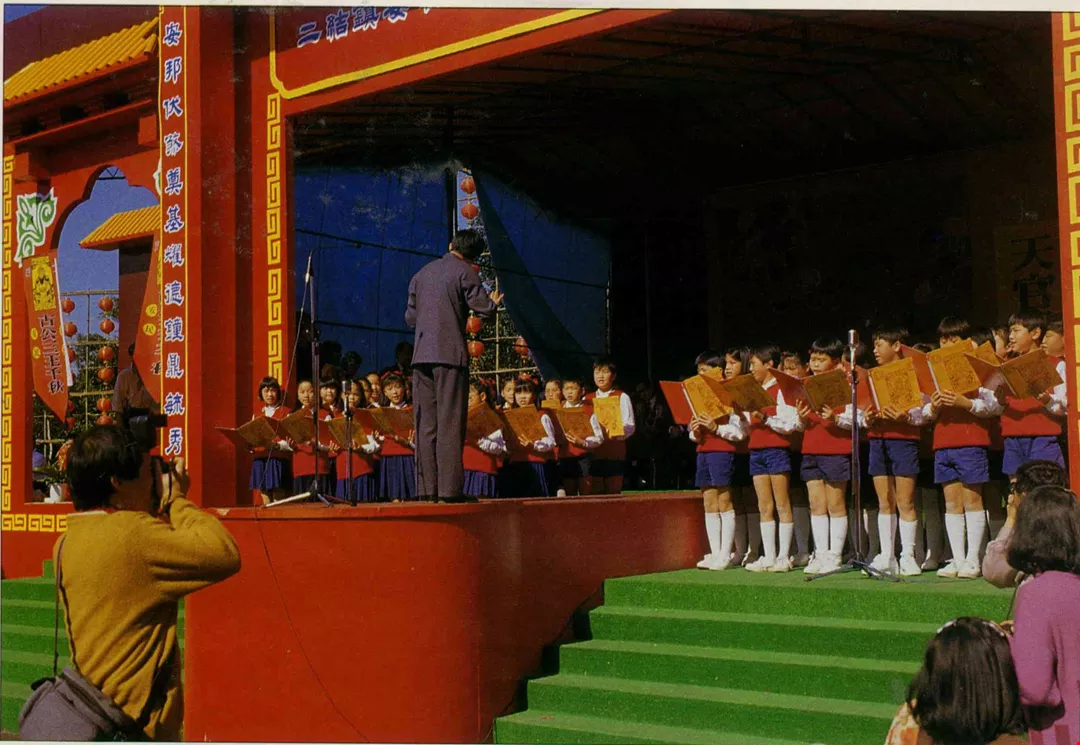
Using temples as a channel through which to promote art and culture has been the ideal of many cultural workers in recent years. This picture shows elementary school children reciting poems at Wang Kung Temple fair.(photo by Wei Hung-chin)
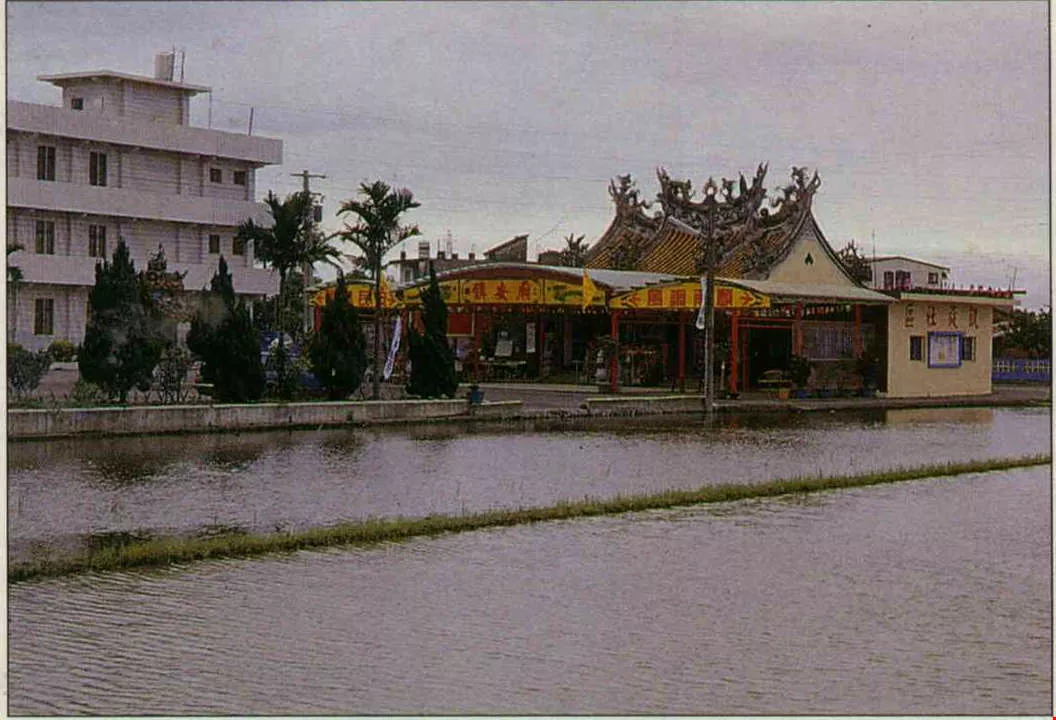
Wang Kung Temple has 79 branch temples throughout Taiwan, which does not put it in the big league. Pictured here is Chuang Erh Chen An Temple in Ilan City.
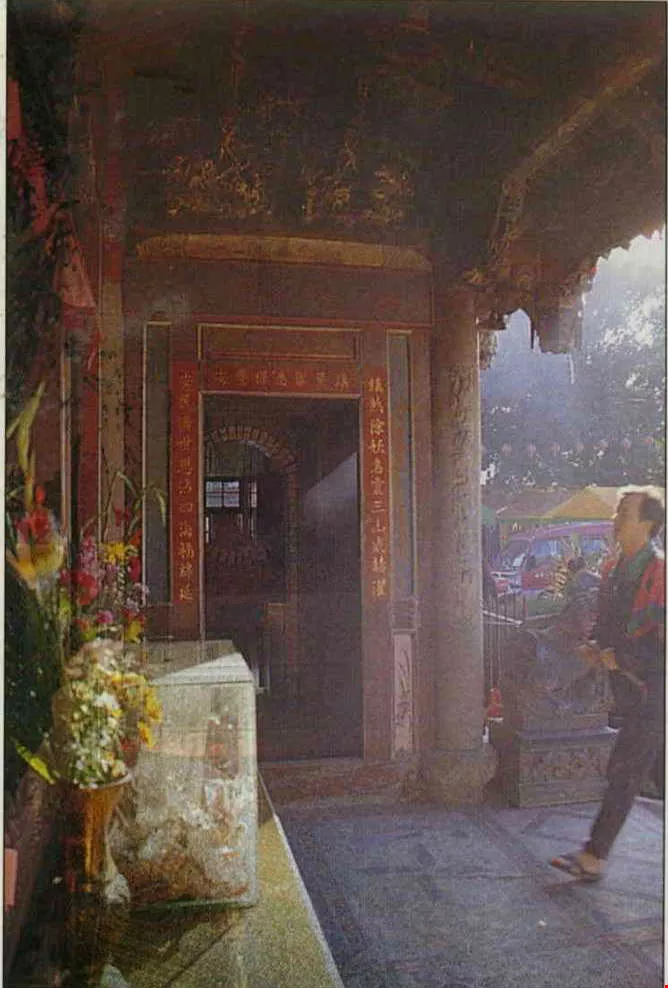
The Princes keep the peace and protect local people. For many years, the temple has been a center of community life, where ordinary folk go for medical treatment, to settle disputes, to get guidance through difficulties, and to socialize. (photo by Wei Hung-chin)
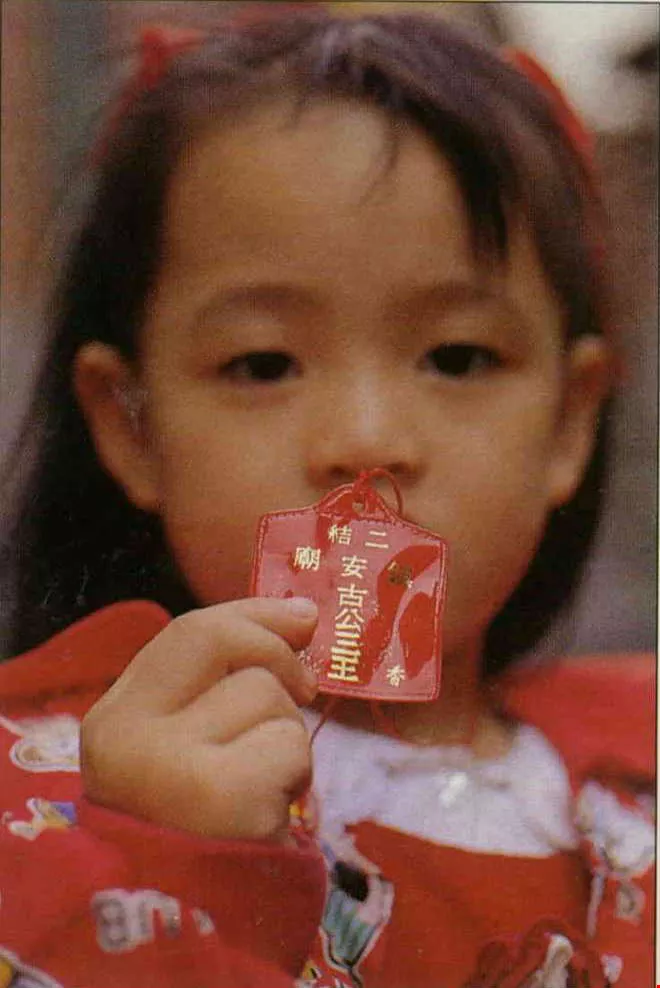
Wang Kung Temple "safety charms" are all printed with the blood of black dogs, and are said to be especially effective at driving out evil spirits. Locals young and old rush to buy them.
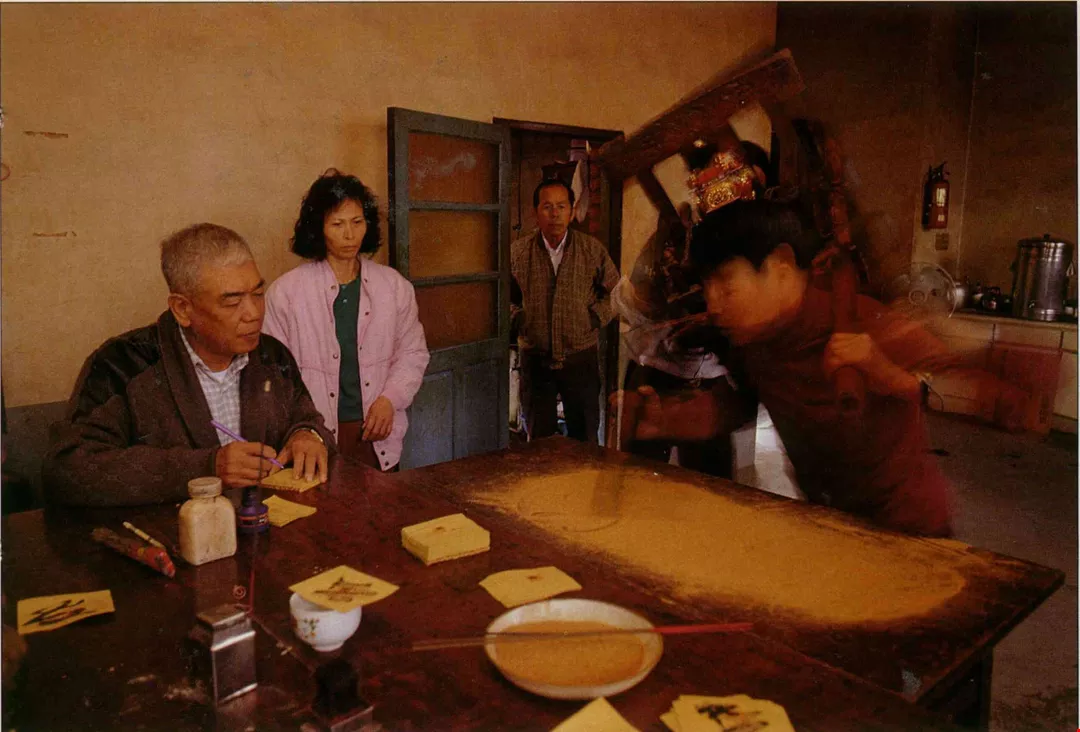
When one of the Princes is asked to diagnose diseases, he uses one of the carrying poles of his palanquin to write signs on a table covered with sawdust. A medium stands by to interpret the marks.
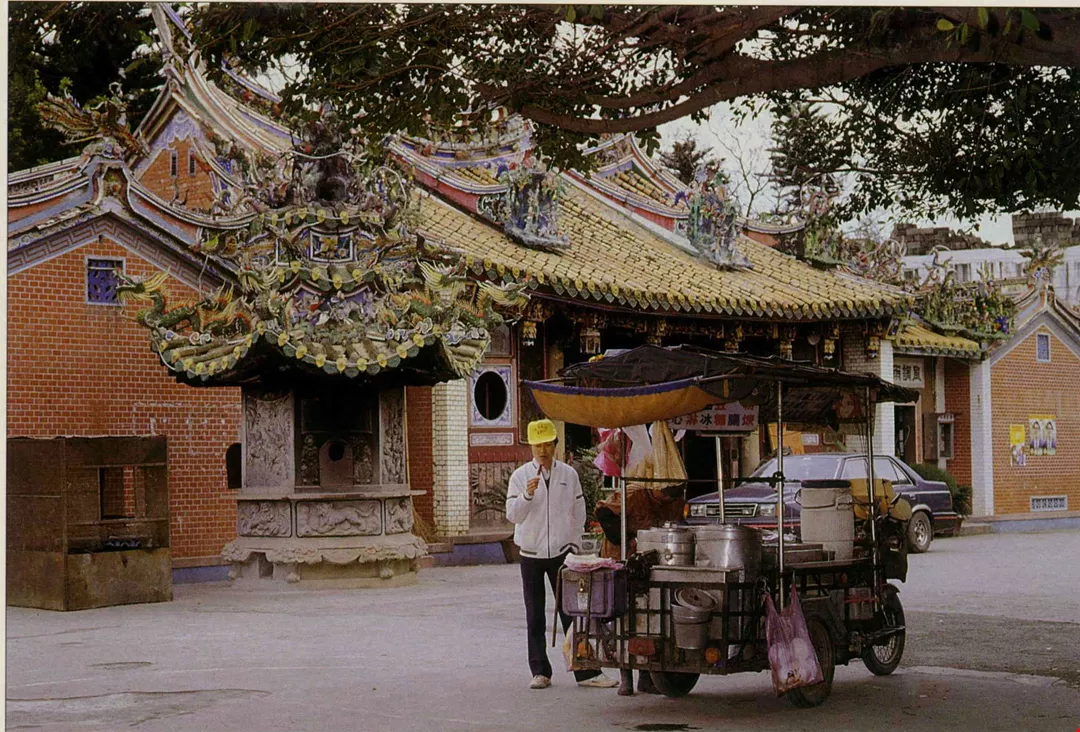
Because local people have been moving away from Erchieh, the active congregation at Wang Kung Temple has been growing older and sparser, and the temple's prestige has declined too.
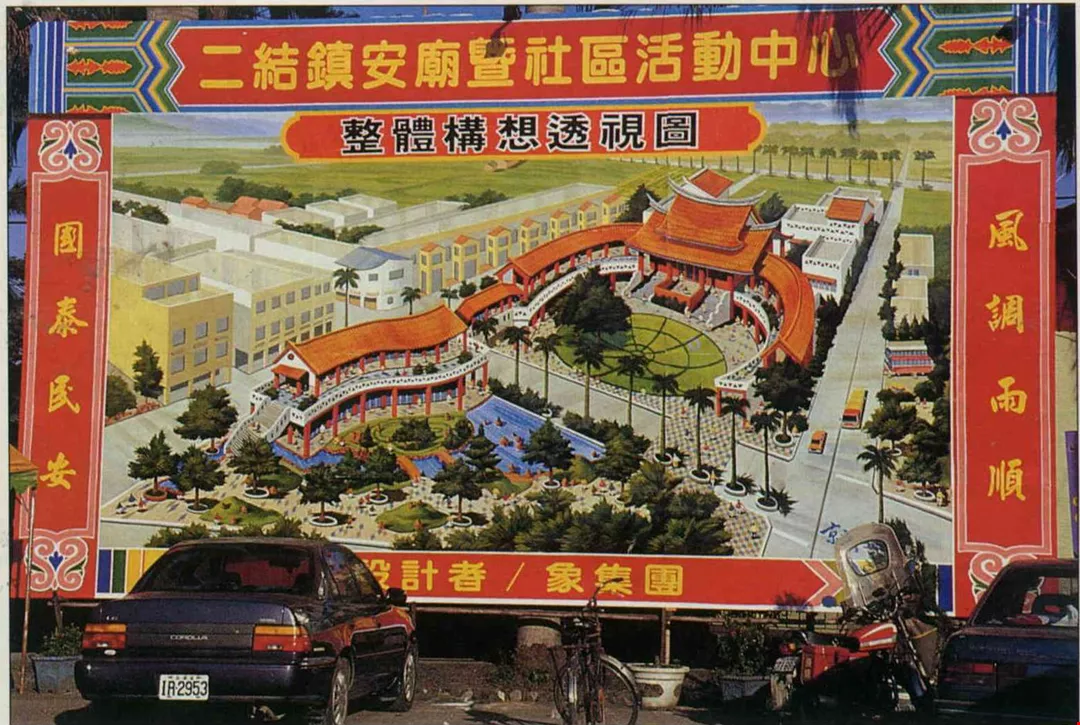
Will the intellectuals who hope to construct a model contemporary temple building and create a new temple culture see their dreams realized at Wang Kung Temple? (photo by Wei Hung-chin)


@List.jpg?w=522&h=410&mode=crop&format=webp&quality=80)


