JJ-W Hotel Sparks Surge in Cultural Tourism
Chen Hsin-yi / photos Jimmy Lin / tr. by David Smith
April 2013


A big influx of tourists from Hong Kong, Macao, and mainland China has spurred a flowering of creative little shops and “design hotels” in the city of Tainan. The pioneer in this regard—Tainan JJ-W Culture Design Hotel—cleverly incorporates elements of both the old and new in Tainan. In breaking down barriers and doing the unexpected, it has provided inspiration to a wave of travelers who like to take short but in-depth trips.
Wander from Hai’an Road, an arts street in Tainan’s West Central District, onto Zhengxing Street, and you’ll find the area buzzing with tourists even on a weekday afternoon. Lining both sides of the street is a collection of streetwear shops, ice cream shops, and British-style teashops, exuberantly interspersed amidst a welter of old-fashioned fruit stalls, clothing shops, gold and jewelry sellers, and residential buildings upwards of a century old.
Moving further eastward, an ancient tree stands next to a white seven-story building. In a scene of memorable beauty, the tree throws its green charm across irregularly patterned windows in the white wall.
This landmark building, popularly regarded as one of Tainan’s “three treasures,” is home to Tainan JJ-W Culture Design Hotel. The hotel and the other two treasures—The BluePrint on Hai’an Road, and Anping Tree House—are all the work of OU Studio, a design team headed by well-known architect Liu Kuo-chang.
Even non-guests are welcome to waltz right into the hotel lobby and hang around at the spacious counter that remains from a predecessor hotel at that same location. The massiveness of it tells a thing or two about how Tainan people approach the idea of hospitality. And off in one corner of the lobby, you’ll find a brightly patterned cheongsam and a pair of embroidered shoes on display. With a little luck, you might even have a chance to attend a lecture on Tainan’s famed hometown cuisine or perhaps some of its historic sites.
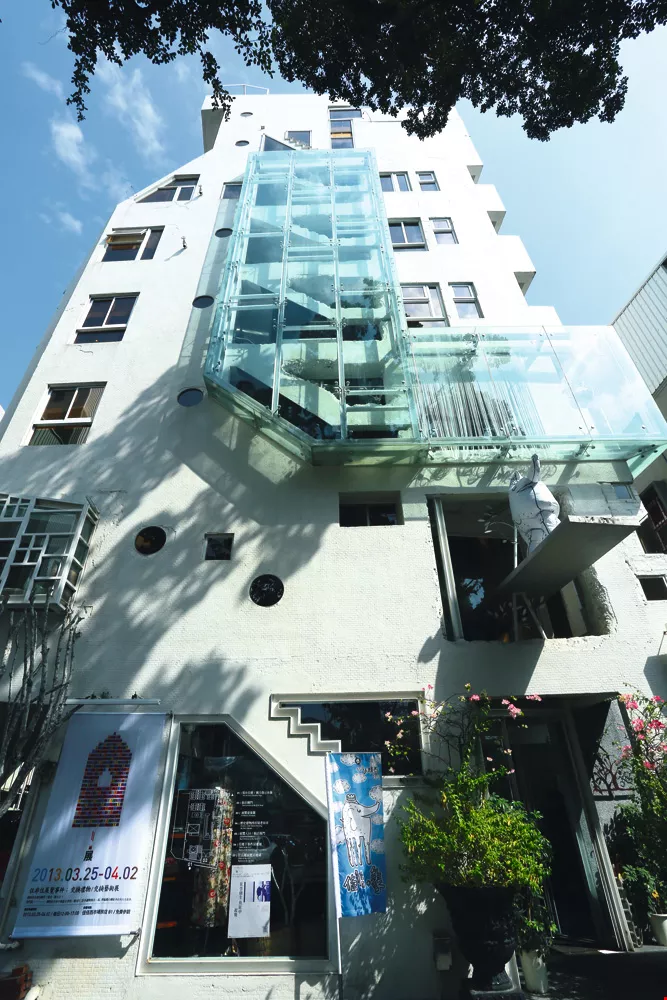
JJ-W Hotel, the refurbished successor to an older hotel on the same property, features a deft use of space that never fails to intrigue. The so-called “tree staircase” incorporated into the outside wall of the building was designed by Sou Fujimoto, winner of the international competition for Taichung’s Taiwan Tower project. It makes the building appear to be breathing.
Says Kino Tsai, CEO of JJ-Management Consulting Co. and Opening United Cultural Hotel Co.: “Many people say we’re lucky to have picked a spot with heavy tourist traffic for our hotel, but little do they know that when OU Studio bought this 40-year-old building six years ago for over NT$20 million with the idea of refurbishing it, this area was actually very down at the heels.”
The young dreamers who started up JJ-W Hotel didn’t quite end up with what they originally envisaged. They had planned to invite artists active in different fields to move in as long-term artists-in-residence. The hotel, once refurbished, was to be an artist colony. Each room would be both atelier and gallery, where the artists could work, goof off, and dream. The location in central Tainan would make it easy for the artists to wander the city and find inspiration.
Liu and Tsai, who had long found nourishment in the rich historic and cultural topsoil of Tainan, are big admirers of the many artist colonies abroad that have been set up in abandoned factories. Also, a more direct source of their ideas was the negative experience they’d had working on The BluePrint and the remaking of Hai’an Road as an arts street.
The BluePrint, as Tsai explains, had originally seen itself as a “cultural living room” and music bar, but then its popularity suddenly skyrocketed. This did inject life into a Hai’an Road that had gone moribund after a botched street widening project. But it also spurred the emergence of a dense cluster of bars and beerhouses. Today, the arts street exists in name only, having been overwhelmed by an alcohol-centered culture of excess.
Tsai laments: “After that experience, we dare not underestimate our influence. We want to strike a proper balance between our dreams and reality.”
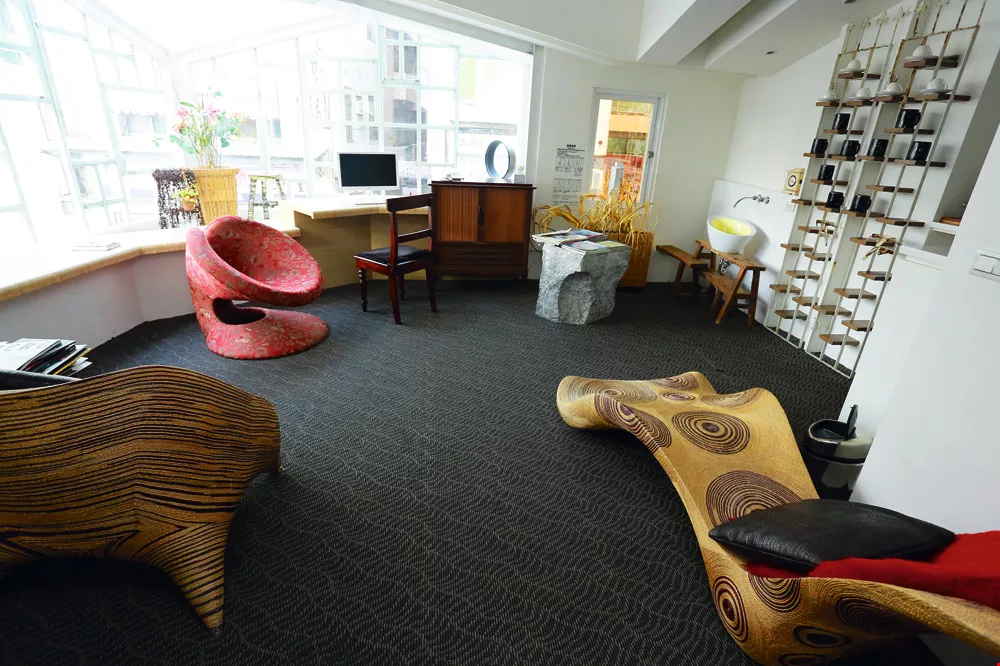
A great place to sit and enjoy a coffee, the “tree house” inside the JJ-W Hotel is a popular hangout for local artists.
But friends of Liu and Tsai were jittery about the idea for an artist colony. Steve Tseng, then a manager at a local Eslite bookstore, worried that they might be biting off too much, and setting themselves up for a business failure. So he got a couple of like-minded people to talk his friends down just a bit. One of his “lobbyists” was Wang Hao-yi, the author of a book on Tainan cuisine. The other was Patrick Su, then deputy general manager of the Landis Hotel and now an instructor at National Kaohsiung University of Hospitality and Tourism.
But in the event it was Su, formerly a Tainan resident for one year, who became infected by the ideas of the fearless young duo, though he did have an impact on their plans. He advised them to redefine the old hotel as a design hotel that doubles as an arts platform, and promised to help manage the place.
“In Patrick’s eyes,” says Tsai, “there should have been an unusual hotel like this long ago. It has neither the swank of a five-star hotel, nor the standardized business practices, but it does exude the Tainan way of treating guests like friends. That’s where this hotel excels.”
Wang Hao-yi, like Su, already had a strong career going before joining the management of JJ-W Hotel. In his view, the JJ-W fairly well oozes a rich cultural atmosphere. Firstly, he says, its predecessor, the old Jia Jia Hotel, built back in the 1970s, was designed by Wang Hsiu-lian, one of Taiwan’s first postwar female architects. It is packed with little details worthy of a close look.
Secondly, the nearby West Market is still housed in its original Japanese-style building. And thirdly, the hotel is not far from the restaurant-packed area around Hai’an and Bao’an Roads, the frozen-in-time old quarter around Shennong Street, the National Museum of Taiwanese Literature, and the Confucius Temple. All these attractions make for an excellent place to take a city walking tour.
After getting her start in interior design, Kino Tsai has since branched out to become an art exhibit curator and clothes designer. Skilled at creating juxtapositions between the old and new, she has a way of melding art naturally into everyday lives.
So it was that the four of them threw themselves headlong into the project to remake the property into a dream hotel. The renovations and redecorations, which lasted a year, cost over NT$40 million. JJ-W opened in October 2009 as a 27-room hotel.
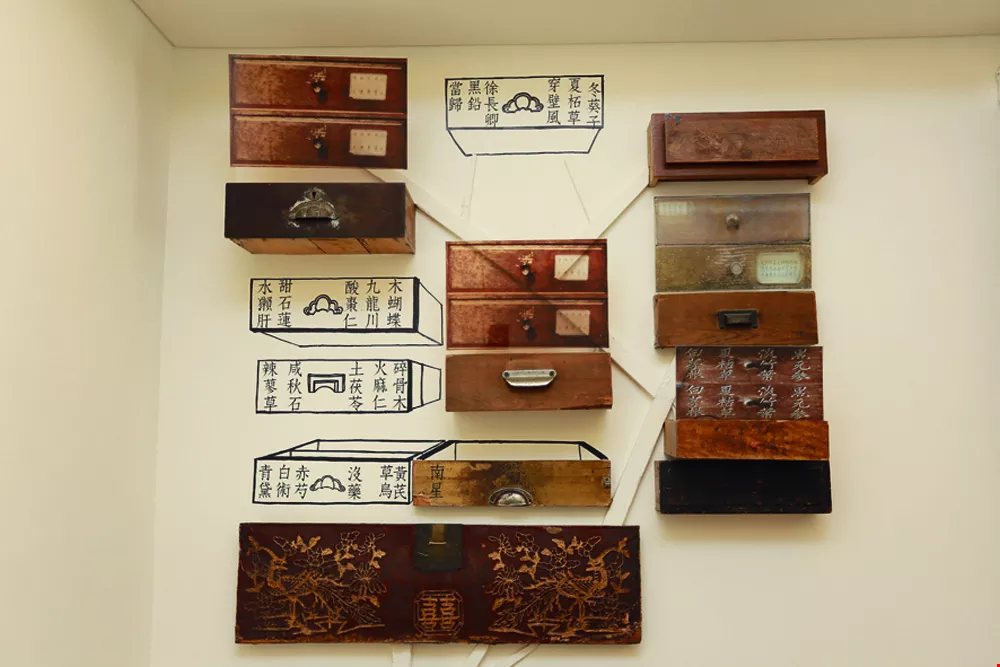
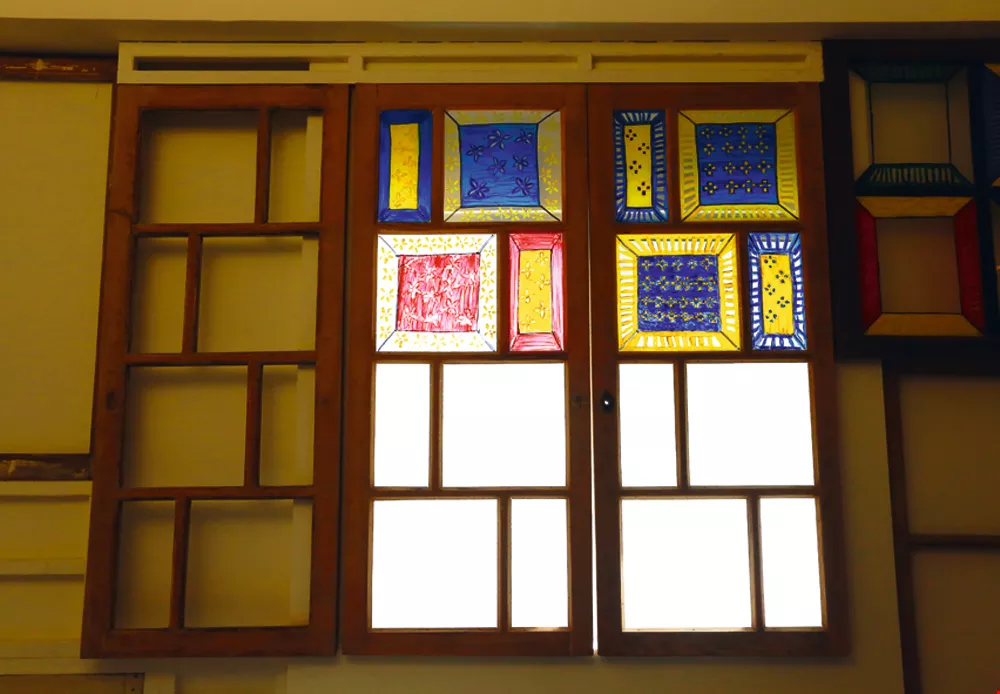
In the refurbished design hotel, a chic spatial setting is dotted everywhere with items of antique furniture and mementos of old Tainan, and each room comes with its own unique theme. For example, Room 301 (“Huai-Shan Medicine Shop”) is designed to look like an old Chinese apothecary, and features a storyline focusing on the Chinese medical ingredients in the popular “four-tonics soup.” Room 308 (“Zhinü Thread Room”) tells of Tainan’s four major temples dedicated to Yue Lao, the god of marriage. Room 305 (“Luh-Erh Window Room”) is decorated with lots of antique window frames. And Room 206 (“Shen-Nong Row House”) reproduces on its walls the look of an old lane similar in appearance to the row houses of Venice.
The rooms at JJ-W are about 16–33 square meters in size, and rent for between NT$3000 and NT$5000 per night. The rooms are thus small compared to similarly priced accommodations at other hotels, but people with a taste for the chic are big fans. About 30% of all guests have been repeat customers, and the hotel often has no vacancies on the weekends and holidays.
Hotel records show that about 30% of JJ-W guests are from mainland China, Hong Kong, or Macao, about 10% from Europe and North America, and the rest from Taiwan. In addition, lots of interior designers come just to appreciate the décor. And many artists do artwork at the hotel or give lectures there while they’re in town to exhibit.
Interestingly, the six rooms on the fifth and sixth floors at JJ-W have been set aside as exhibit space since the hotel first opened. The proprietors, after all, still wanted to do at least something toward achieving their original dream of creating an artist colony. With financial support from the National Culture and Arts Foundation, the hotel has been inviting artists from home and abroad to work at the hotel, and has held six exhibits so far. Guests won’t be allowed to stay in any of those six rooms until this May.
JJ-W gives very generous support to artists. In its “art rooms” there are lots of works on display that offer sharp social criticism, and challenge bourgeois aesthetic concepts. Art room 2 (“The Architecture of the Pavement”), designed by British art historian Julian Stallabrass, is set up to look like a street scene. The bed covers resemble pavement, the furniture takes the forms of a park bench and streetlight, and the couch pillows are sewer grates. Meanwhile, in art room 2 (“Face-to-Face”), by Dutch photographer Jan Banning, huge portraits of homeless people on the walls practically give the feeling that the viewer is out on the streets himself.
But won’t such avant-garde and provocative rooms scare guests away?
Tsai has her own take on such concerns: “When we opened Face-to-Face to visitors, there were indeed people who got out of there on the double, but we don’t want JJ-W to be a hotel where art serves only to bump up the value of space. Beyond that, we want the sparks thrown off in the interplay between hotel, artists, and guests to generate a new relationship between culture, art, and life.”
After getting her start in interior design, Kino Tsai has since branched out to become an art exhibit curator and clothes designer. Skilled at creating juxtapositions between the old and new, she has a way of melding art naturally into everyday lives.
In 2011, the JJ team embarked on a second hotel project when the buyer of an old hotel came to them seeking their design and hotel management expertise. The result was a new lease on life for a venerable guesthouse located in the commercial district near the Tainan Train Station.
Tsai clearly recalls the first time they checked out the property. She and her partners were charmed by the old sago palm tree standing next to the building, and the feel of the neighborhood. And Su noticed some special things about the hotel: its rooms were small and numerous, and the area felt secluded yet offered convenient access to the city in all directions. These features would make it perfect for young backpackers. There was just one problem—the hotel’s seedy reputation as a place for cheap trysts.
Su’s solution was to create a boutique hotel serving only female guests, or males in the company of a female. Tainan JJ-S Hotel’s Chinese name—Xiao Nan Tian (“Small Southern Sky”)—was the old name for the local neighborhood, emphasizing that the establishment’s fortunes are tied in with the area’s well-being.
Once they had zeroed in on young, independent-thinking female backpackers as their primary customer base, the small size of the rooms became a plus, since they could be rented out more cheaply. But the proprietors have not for that reason gone barebones on in-room amenities. The bathrooms, though small, all have tubs. And when the bathroom curtain is pulled back, the guest can watch TV through a window. Also, each room has transparent windows on the outer walls to let in natural light during the day and provide a view of the old trees outside.
While 60% of the guests at JJ-W are in the 28–35 age bracket and nearly 20% are aged 33–45, at JJ-S fully 90% of the guests are under 28 years of age. The hearts of young women have clearly been captured.
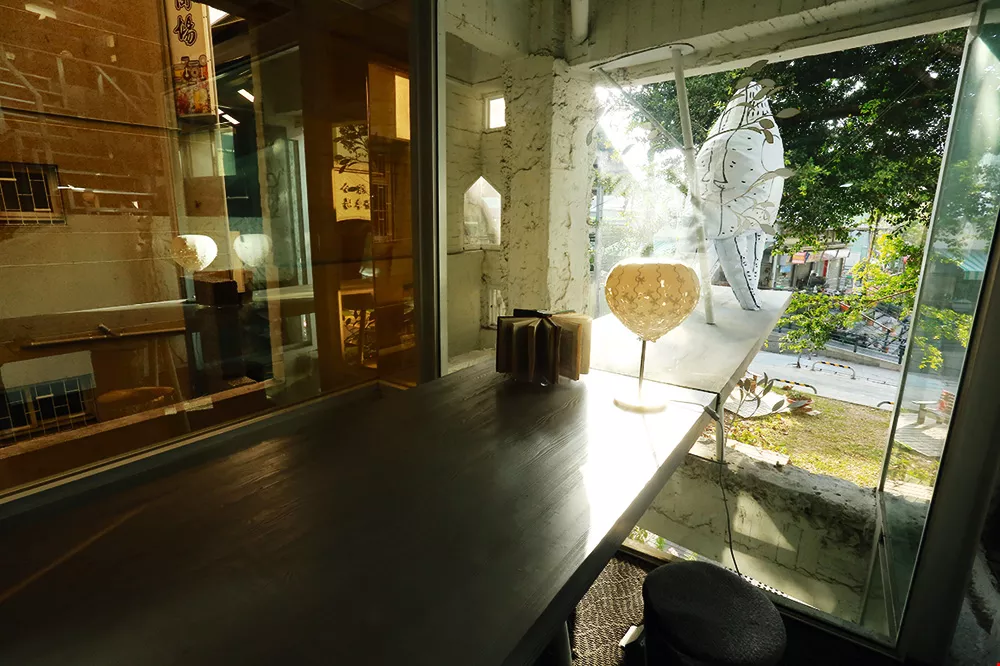
JJ-W Hotel, the refurbished successor to an older hotel on the same property, features a deft use of space that never fails to intrigue. The so-called “tree staircase” incorporated into the outside wall of the building was designed by Sou Fujimoto, winner of the international competition for Taichung’s Taiwan Tower project. It makes the building appear to be breathing.
Having built up solid expertise in design and management, OU Studio has now expanded into a group of three different companies engaged respectively in design, in management and development consulting, and in running the JJ hotels.
This coming May, OU is going to open a pair of rental apartment properties in Taipei and Tainan, and over the past year the OU team has also opened two coffee shops, a brunch shop, and a B&B guesthouse. The group now employs over 50 people.
Tsai comments: “Our experience with the JJ-W Hotel has shown us that a hotel can drive the formation of a creative cluster, and can also spur in-depth travel, so we’d like to see many points of light popping up all over the city. We want to see something special down every lane.”
Yu Chih-wei, the proprietor of L-instyle Boutique Travel Service, has been deeply involved in the movement to preserve old architecture. In his opinion, a short trip is a beginning of sorts, for it can imperceptibly change a person’s way of thinking, cultivating increased interest in community development, the passing down of culture to a younger generation, agricultural development, environmental protection, and other such issues. Says Yu: “When a person heads out onto the road, the world changes.”
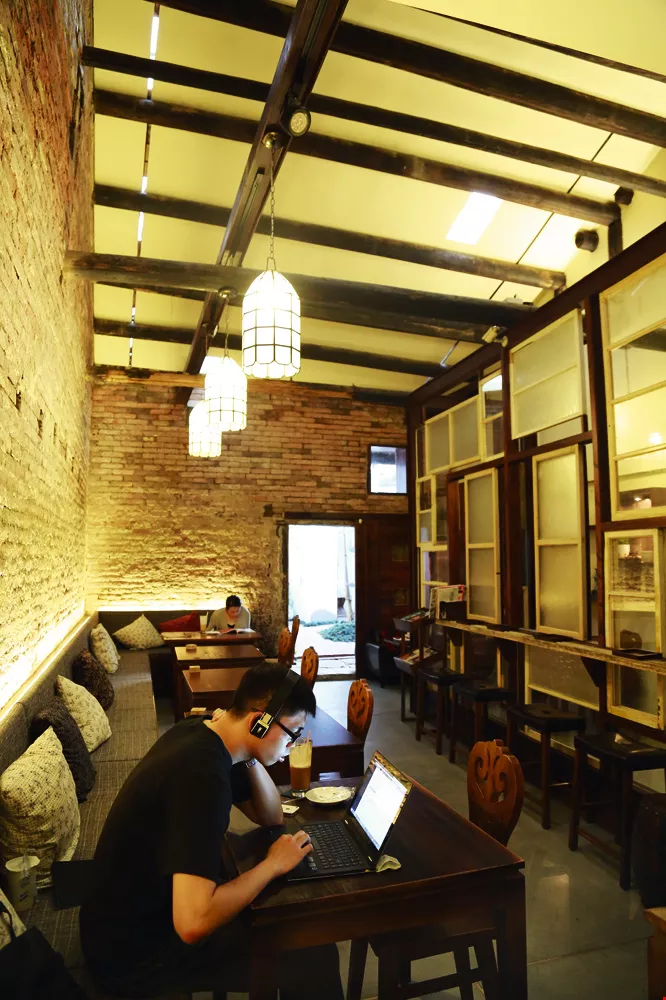
Starting with The BluePrint, an arts bar on Hai’an Road, the OU team has built up a wealth of experience in designing and running boutique businesses. The newly opened Zhengxing Cafe is yet another charming business that they built by refurbishing an older establishment.
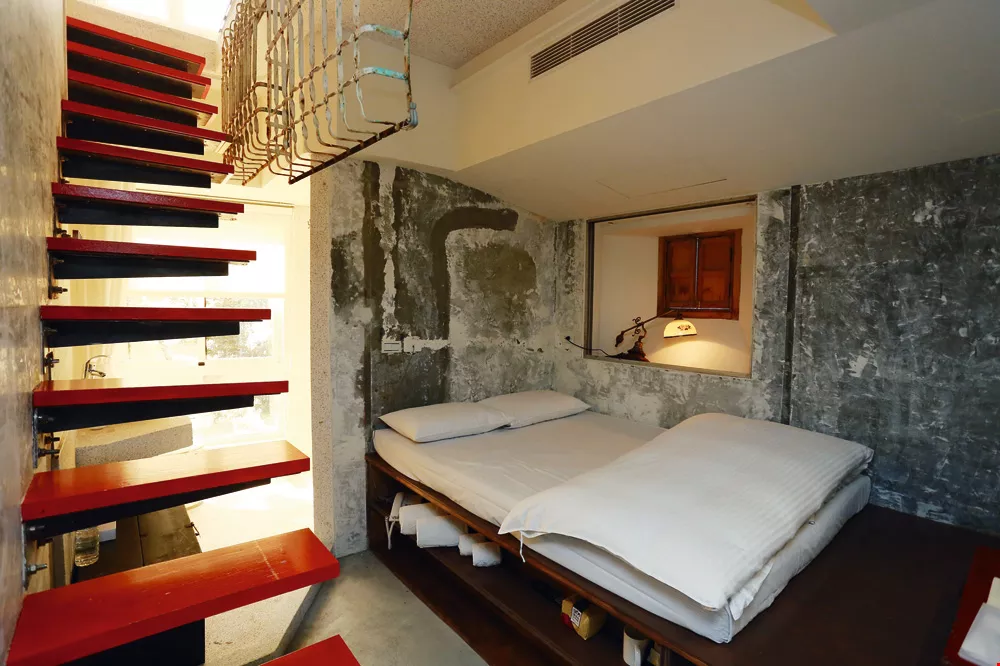
“Ming-Liang Tsai’s Room” was designed by film director Tsai Ming-liang himself. The room is very simply appointed, yet manages to have a feel of mystery about it.
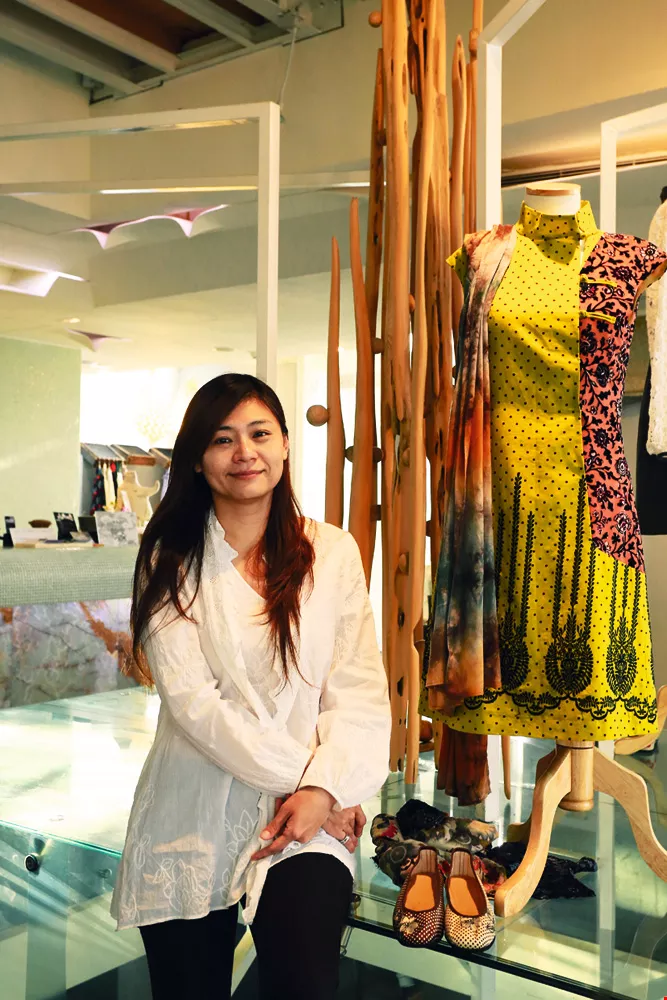
After getting her start in interior design, Kino Tsai has since branched out to become an art exhibit curator and clothes designer. Skilled at creating juxtapositions between the old and new, she has a way of melding art naturally into everyday lives.
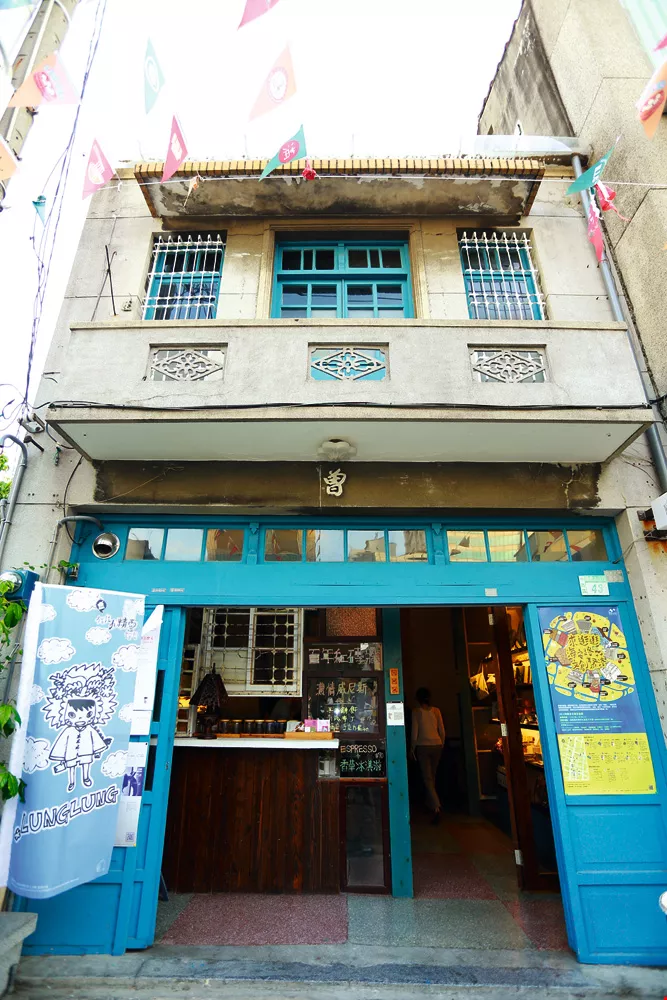
Visitors pour into Tainan, attracted by its rich history, great down-home cuisine, and slow-paced lifestyle.
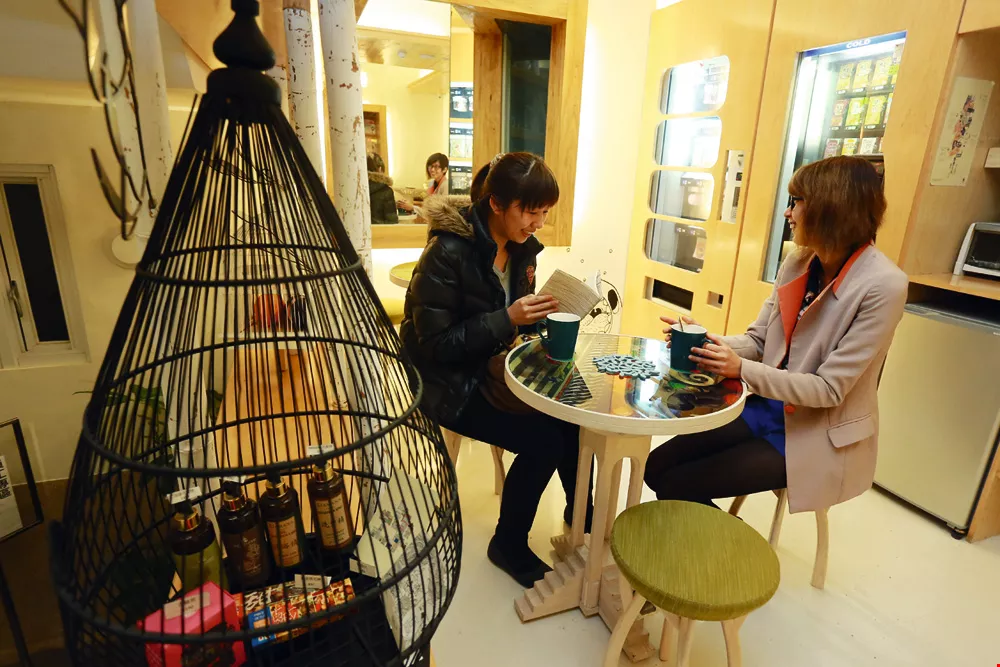
Tainan JJ-S Hotel, which caters to women guests, features a wide variety of shared facilities, including an exercise room, laundry, and yoga meditation room. Shown here is the ground-floor lobby.

_DSC2938@List.jpg?w=522&h=410&mode=crop&format=webp&quality=80)

@List.jpg?w=522&h=410&mode=crop&format=webp&quality=80)


