Growing In the New Year: Let's Talk Rooster
Sheng Chien / photos Pu Hua-chih / tr. by Jonathan Barnard
February 1993


The Chinese love to talk about the twelve animals of the Chinese zodiac. Talking about the cock in the year of the cock is both festive and appropriate. From the angle of its cultural meaning, one can't help seeing cocks and thinking people -- in light of the human characteristics ascribed to the bird. In traditional Chinese society, people projected many of their thoughts about themselves onto roosters. It's really very interesting.
Cocks are a common animal to have around one's home, and they are also a common subject for writers' ponderings. As soon as you bring up he rooster, anecdotes of the pre-Chin scholars immediately come to mind.
Chuang Tzu tells this fable involving a cock:
Chi Hsiao-tzu trained roosters for the duke.
After ten days, the question: "Is it ready?" He said, "Not yet. It's still cocky." Ten days later, to the same question: "Not yet, it still reacts to the presence of other roosters." And in another ten days: "Not yet, it's still giving other cocks the evil eye."
In still another ten days: "Just about. Though other cocks challenge him, he has no reaction. From a distance, he resembles a wooden carving of a cock. Others won't dare attack but instead run away!"
This story of the "wooden rooster" can be divided into three sections.
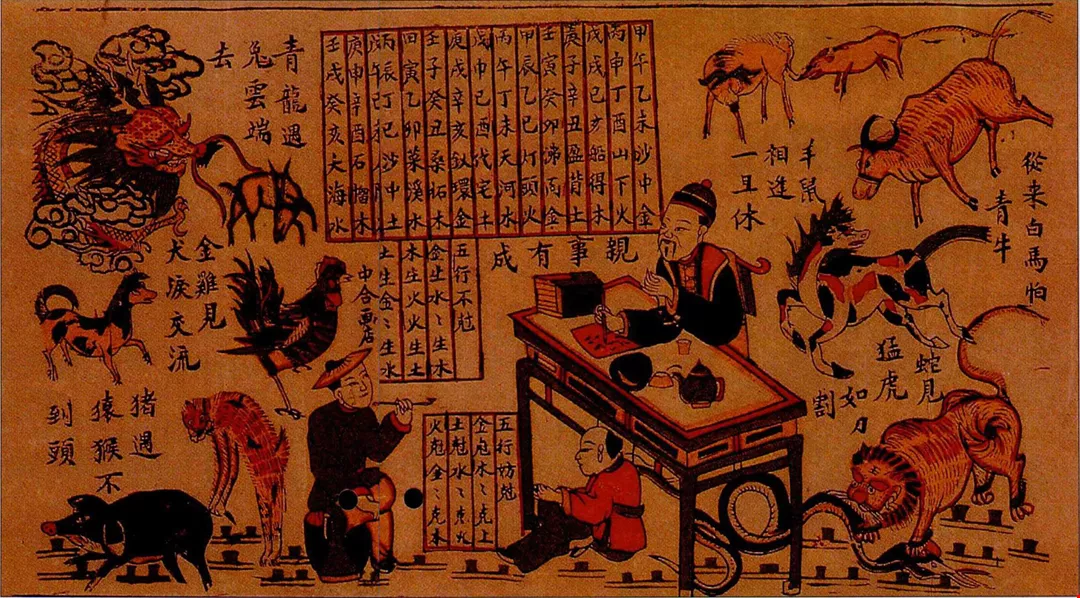
In ancient China, when men and women were being matched for marriage, it was necessary first to study the eight Chinese characters signifying the years, months, days and hours of their births. This picture shows a fortune teller in the midst of describing who would make a suitable mate for his client. The twelve signs of the zodiac all have their lucky and unlucky matches. Among them, "The gold cock weeps at the sight of the dog." rooster, one fears, may not be the best of pairings. (from Chinese Popular Prints)
A wooden rooster is best:
The first part introduces the characters and the background: Chi Hsiao-tzu, a master trainer of fighting cocks, is training a "King Cock" for the duke.
The middle section describes the training process: After ten days, the duke wants to inspect the result but he is told that the bird is too prideful and cocky--it's far too early! After ten more days, the emperor asks again, but he is told that the cock is still aggressive toward other birds in his sounds and movements and not yet ready. In another ten days, the emperor asks once more but is told that the bird still shows its animosity toward opposing birds and thus still comes up short.
In the conclusion, the emperor asks a final time, and Chi Hsiao-tzu answers, "It's just about ready. No matter how much its opponent calls out in challenge, he won't flinch and is completely indifferent. He looks like he's carved out of wood." In so keeping his composure and not being affected by the outside world, the "King Cock" is fully trained. None is his equal. As soon as other cocks see him, they'll lower their heads and run.
This sarcastic story is complete in its form. It has a simple beginning, twists of plot and a good conclusion. Besides the leading character of the cock, it also has the trainer and the anxious Duke of Chu. And each character is sharply outlined. The meaning of the fable is clear without needing explanation, and it's worth thinking about: In dealing with the world, some people often rely on aggressiveness, on being bold and combative. Raising their hackles and beating their breasts, these people are quite full of themselves, but they're really just acting like clowns. The truly superior are modest and reticent, like wooden statues, trained to perfection. The proverbs say, "A bottle of vinegar only half full makes the loudest noise when shook"; "The brave don't fight over small matters"; and "Mature stalks of rice bend downward." These all mean more or less the same thing.
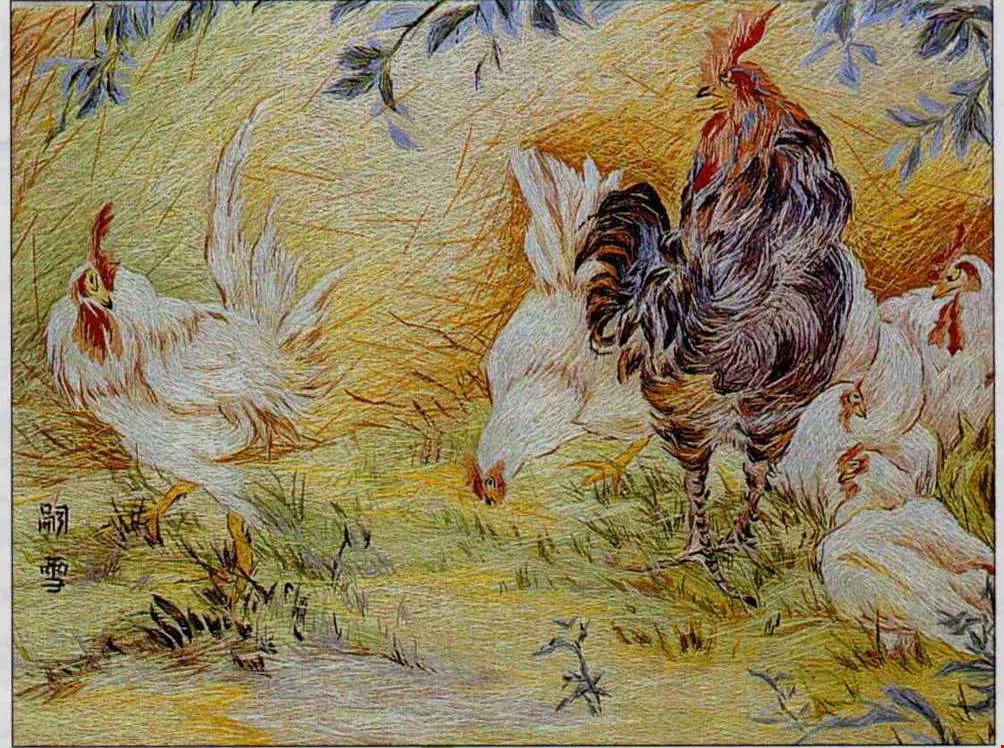
"A Group of Roosters" a work of irregular embroidery by Chen Szu-hsieh.
The cock won't crow for nothing:
Mo Tzu also wrote a famous passage about the cock-a-doodle-doo that wakes up the world:
"Heaven and earth have a myriad of beasts but never speak. The sun and the moon shine down on the world in silence. The flowers and the grass don't speak but lose none of their beauty. That the trees utter not a word does not mean they are of no use. But the frogs, the flies and the mosquitoes make noise all day. It's not only of no use--it's downright annoying. On the other hand, the cock never calls out for no reason, crowing only to announce the break of day and call people from their slumber."
And Meng Tzu said, "A person who rises with the call of the cock is a like the Great Shun."
Meng Tzu's and Mo Tzu's comments support each other and this statement from the I Ching: "The words of the fortunate are few, whereas the words of the anxious are many."
Of course, this doesn't mean that people shouldn't speak but that they shouldn't engage in idle chatter, blabbing on and on like a frog or mosquito with nothing to say. People should learn from the cock, and only open their mouths when necessary. Although you can't expect people to be completely true to their word, at the very least you can expect that they will be polite and logical and get to the point. "Clever talk leads to muddled morality." Not to mention what talk that isn't so clever leads to. Confucius said, "Being resolute and ineloquent approaches benevolence." A lot of talk leads to loss. Lots of chatter hides a scheme. By not engaging in idle chatter, one is nearer to benevolence.
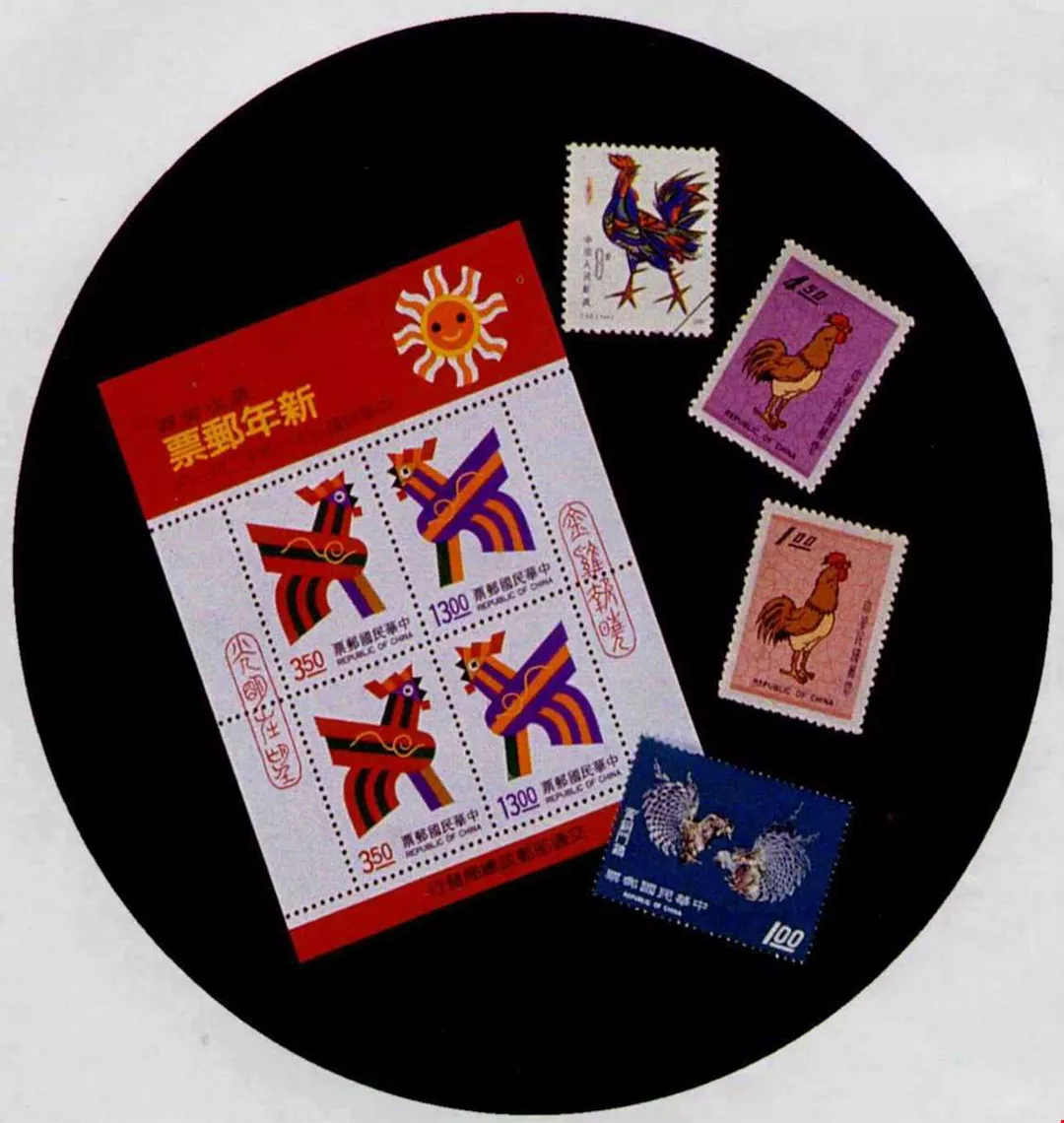
The ways of the cock:
Ancient philosophers always took the cock to symbolize man. From the special traits and manners of the cock, they described the ways of man in the world, giving people food for thought. And poets were not willing to let the philosophers get the better of them. There are numerous examples of cocks in classical Chinese poetry. Here are a few:
The feed is ample to go around, but the jealous cock bullies his enemies for fun.
--Li Shang-yin
Although there is enough food for all the roosters, and there's no need to wrangle over it, the cock is looking for a fight. Snubbing all around him, ever jealous, he is happy only as the dictator of the barnyard. The writer takes a sarcastic tone to this petty tyrant's narrow-minded and boorish antics.
Unyielding to the wind and rain! How true is the cock! Arising alone in the dark, he calls out at dawn.
--Li Pin
The cock is extremely virtuous, steady of purpose and true to his principles. He doesn't let a little rain stop him from getting up to cock-a-doodle-doo. He rises in the dark, always in time to announce for man the break of day. The lines of verse, "Through the wind and rain all looks dark. And the cocks crow without ceasing" are used to mean that gentlemen remain clear-headed when the world is in confusion, that their superior character does not yield to the chaos around them.
The storm in the mountains darkens the moon. Before dawn . . . the call of the cock.
--Tsui Tao-jung
Deep in the hills, the night is dark and the wind and rain bitter. But the call of the cock is enough to revive the writer's spirits. Because the night has passed, the wind and rain will stop. The future is bright, promising scenery of unlimited splendor. Since real scenery is being described, the writer is hinting that one's troubles are over and that a beautiful future beckons ahead.
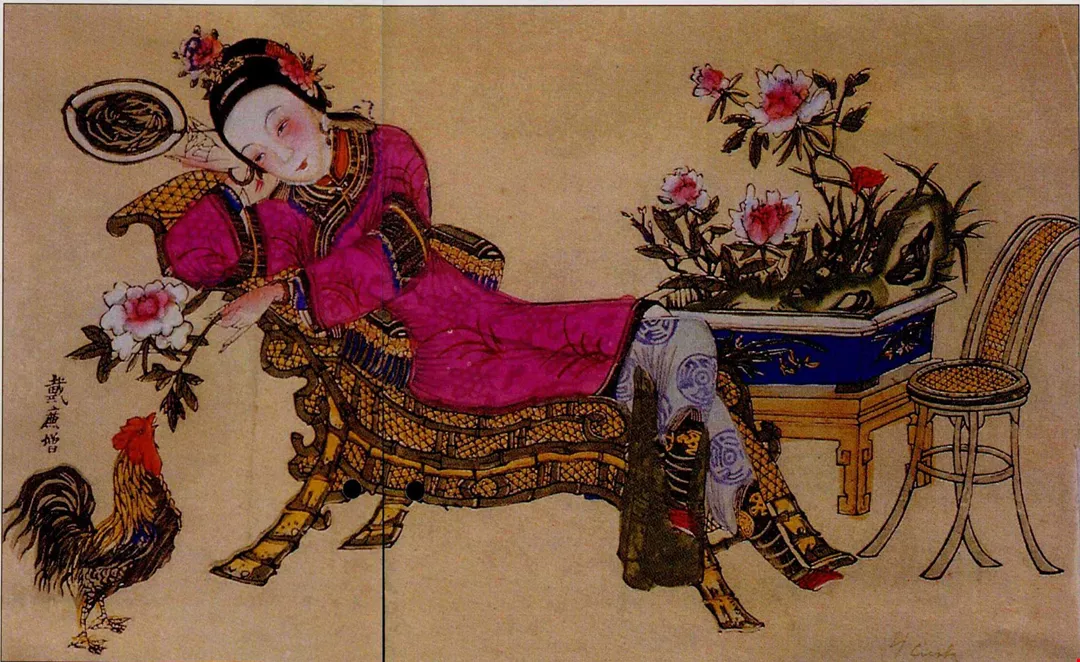
Reclining on a daybed, a young woman waves a peony playfully at a rooster in this lazy scene. In ancient times, cocks represented glory and peonies wealth. (from Chinese Popular Prints)
UP at the crack of dawn:
Yellow Chuan, Blue Chin and the red-crowned green rooster. At dawn its call brings them to their studies.
--Shen Chou
This is a poem originally written on a painting. It is composed of four phrases of five characters for a total of 20 characters. "Yellow Chuan" and "Green Chin" refer to diligent students carrying their scrolls. The four colors in the first line--yellow, blue, red and green--give the whole poem a bright feeling. The second line is very clear, bringing to mind the phrase, "Rising at the sound of the cock to practice one's swordsmanship." Whether one is studying literature or the martial arts, the rooster is a great partner to those who wish to get up and at it.
From these passages, you can see that both philosophers and poets love the cock and that several cultural ideals are projected onto him, making his character and traits live forever in the hearts and minds of Chinese.
Finally, let me speak of the moral character of roosters. The Han-shih wai-chuan (Han Ying's Illustrations of the Didactic Application of the Classic of Songs) points to the five characteristics of the cock: "Wearing a hat like a scholar, it is scholarly; with claws that pierce the flesh, it is martial; attacking when confronted by an enemy, it is bold; calling out when it finds food, it is benevolent; standing guard at night without fail, it is trustworthy." And so a cock is scholarly, martial, bold, benevolent and trustworthy. In the fresh light of the new year, these virtues not only fit in with the folklore of this festive holiday but cultivating them is our hope and duty.
[Picture Caption]
p.7
In ancient China, when men and women were being matched for marriage, it was necessary first to study the eight Chinese characters signifying the years, months, days and hours of their births. This picture shows a fortune teller in the midst of describing who would make a suitable mate for his client. The twelve signs of the zodiac all have their lucky and unlucky matches. Among them, "The gold cock weeps at the sight of the dog." The dog and the rooster, one fears, may not be the best of pairings. (from Chinese Popular Prints)
p.7
"A Group of Roosters" a work of irregular embroidery by Chen Szu-hsieh.
p.10
Darnation! It's clearly the Year of the Rooster, and there isn't a single one around.
p.10
There are sure to be a lot of them in heaven because the elections are just over.
p.10
[Note: certain candidates in the recent election sacrificed chickens to back up their vows to run a clean campaign.]
(Cartoon by Lao Chiung, United Daily News, Jan. 15, 1993)
p.11
Reclining on a daybed, a young woman waves a peony playfully at a rooster in this lazy scene. In ancient times, cocks represented glory and peonies wealth. (from Chinese Popular Prints)
p.12
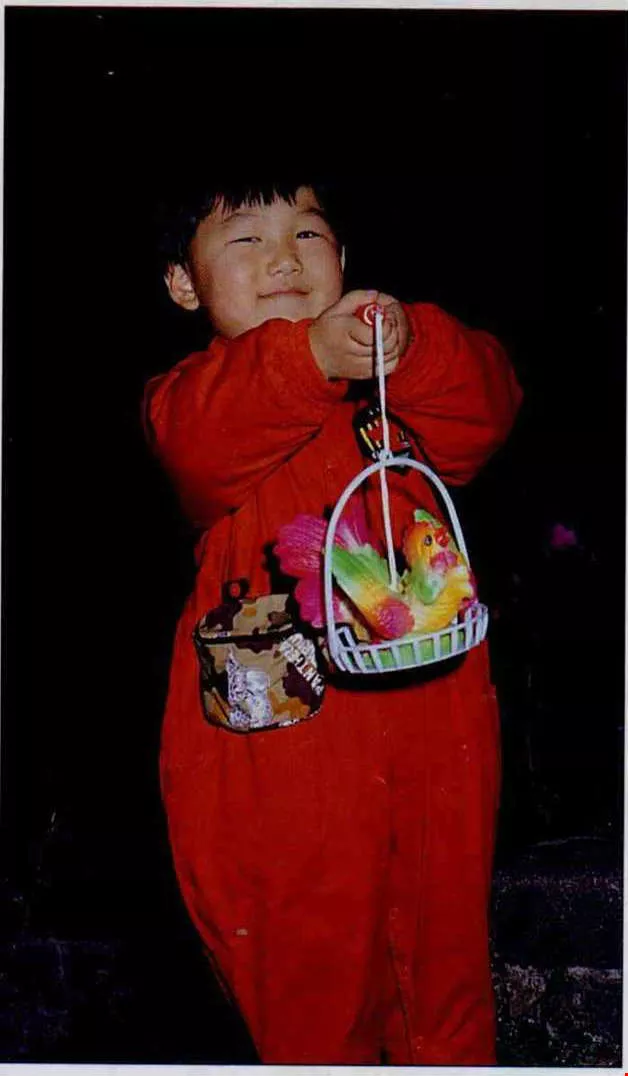
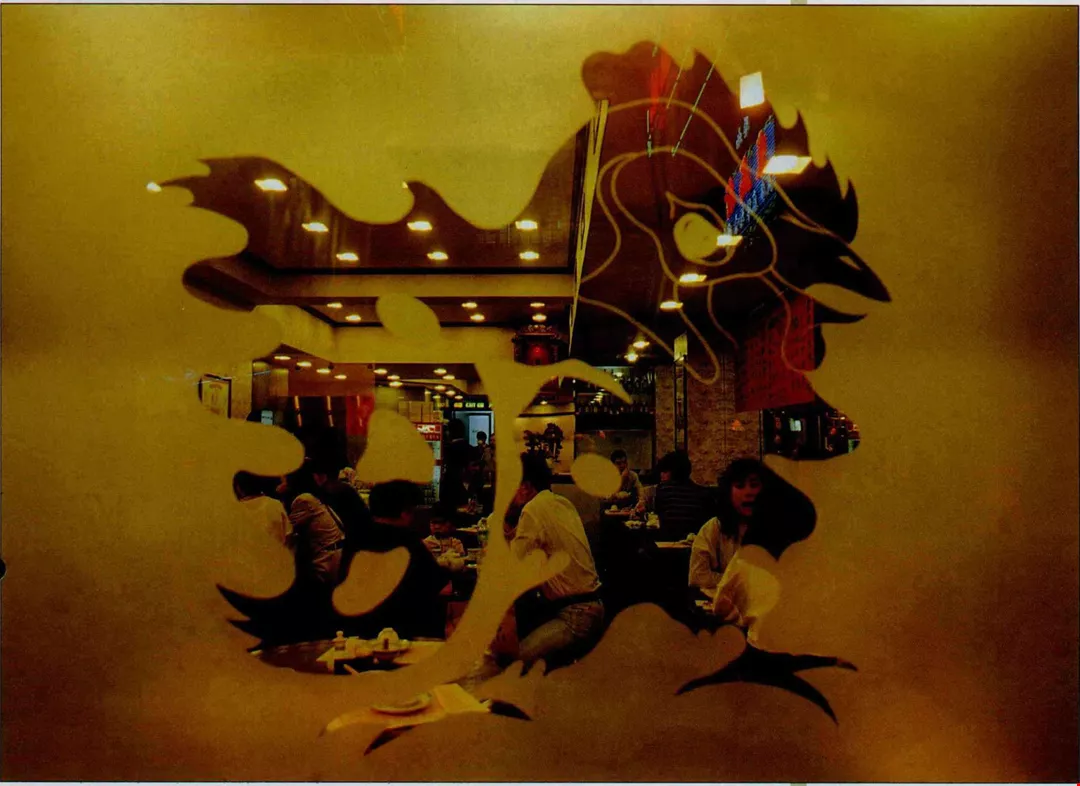
As the year of the rooster arrives, he shows up everywhere, including on windows, as toys and as lanterns.
p.12
Materials provided by Chang Chin-ju, Vincent Chang, Chen Li-chu, Ventine Tsai, and Ni Shu-yun.
p.13
(photo by Diago Chiu)
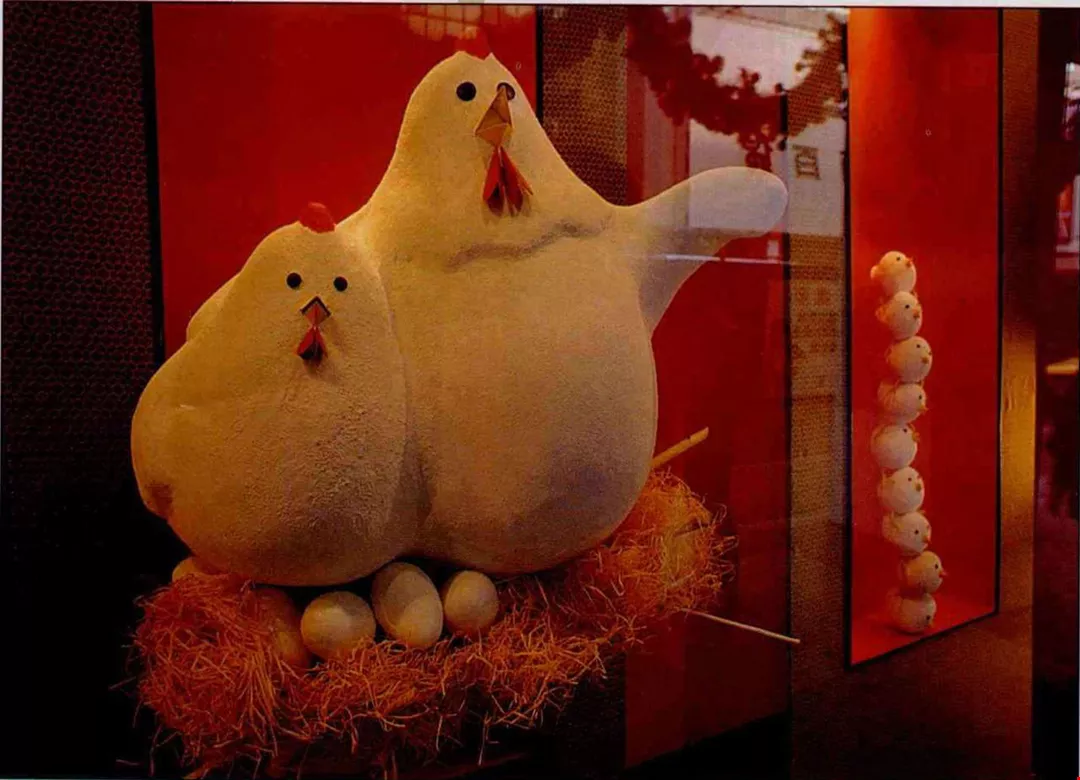
As the year of the rooster arrives, he shows up everywhere, including on windows, as toys and as lanterns.
Materials provided by Chang Chin-ju, Vincent Chang, Chen Li-chu, Ventine Tsai, and Ni Shu-yun.
(photo by Diago Chiu)

@List.jpg?w=522&h=410&mode=crop&format=webp&quality=80)


@List.jpg?w=522&h=410&mode=crop&format=webp&quality=80)
@List.jpg?w=522&h=410&mode=crop&format=webp&quality=80)
