Formosa Through the Mind's Eye--Giovanni Kuo
edited by Ventine Tsai / photos Pu Hua-chih / tr. by Phil Newell
February 1993


The work of a guide is to introduce Taiwan, so knowing Taiwan is the basic job requirement. I feel that you can only do a proper summary job of it, superficial as that may be, after possessing a deep understanding yourself. Take for example a tour to the National Palace Museum. If you've only got three hours, what categories and what works should you choose to show the cream of the collection? Take for example Yang-Shao Culture. You have to know that more than 1000 caves have been discovered in the mainland in the past 40 years, but you can't spend too much time in just that display area, and you've got to consult mainland reference materials to explain the items. As for porcelain, especially blue decorated porcelain, undoubtedly the collection at the National Palace Museum is the finest in the world in terms of both quantity and quality. Of course you should put a little effort into introducing it. Unusual and interesting holdings like the "green and white jade cabbage" carvings and the jewellry boxes are also worth recommending. For any guide the National Palace Museum it a true test of your ability, a place that takes a lifetime to master. And if you don't know your stuff, you might make a fool of yourself in front of foreign guests.
In 1983, having passed the exam given by the Tourism Bureau of the Ministry of Transportation and Communication to certify my qualifications, and after a three week training course, I began my official life as a guide. After the initial tour that I led had ended, the first thing I did was to go to the bookstores on Chungking South Road to buy A Comprehensive History of Taiwan. Although it seems that today the addendum and correction of errors is as large as the original, anyway if you don't get Taiwan's history straight, then you really have no way of knowing this place.
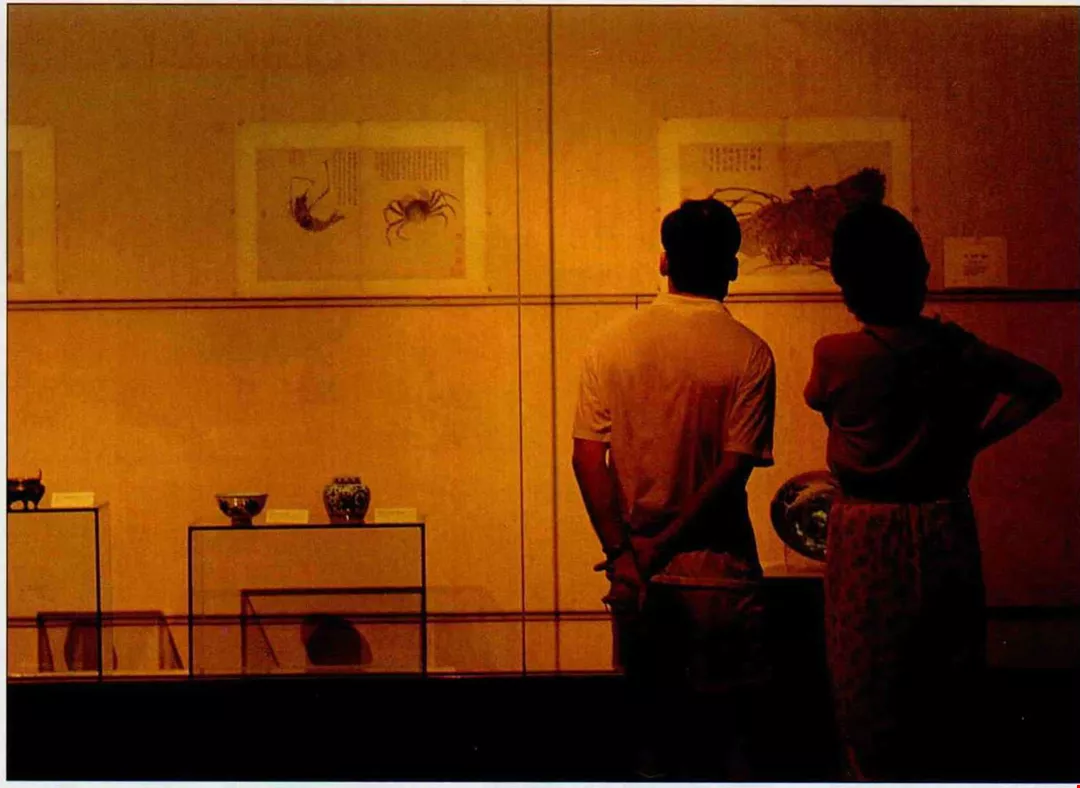
The National Palace Museum, which houses a rich variety of priceless treasures, is a can't-miss stop for foreigners and locals alike.
Nobody stands around grading you:
Most visitors have not come exclusively to visit Taiwan, and usually will also go to Hongkong or mainland China, with the stopover being no more than three to five days. In this limited time, some places that are too distant or which don't have enough by way of tourist resources are just left off the agenda. And some places are axed for very pragmatic reasons, like not having a high class tourist hotel or other facilities. What's left are only a handful of famous tourist attractions, like the National Palace Museum, the Chiang Kai-shek Memorial Hall, the Lungshan Temple, and the Wulai aboriginal village, all around Taipei, or Taroko Gorge in eastern Taiwan, Sun Moon Lake in the central part, or the Anping Dutch fortress in Tainan.
Coming to the Lungshan Temple, this is a 250-year-old temple, though it was renovated in 1920. Facing the exquisite and detailed carvings, I first explain the special features of Chinese traditional architecture, broadly divided into the roof, the pillars, and the foundation. When the tour members hear it this way, they won't just to overwhelmed by the dazzling detail, without knowing where they should look. Upon entering the main hall, they see people throwing two crescent-shaped blocks of wood, or burning paper money. From seeing how it is the Chinese people are able to understand the will of the gods using two small bits of wood, they can really comprehend what it is to have a different conception of religion. And if they ask why Lungshan Temple is so successful and crowded? Then you have to come at it from the history of the development of northern Taiwan- how the Wanhua district where the temple is located got wealthy through trade with the mainland. And with the nearest administrative center for what was then called the Tamsui District a two-day walk away in Hsinchu, with little public authority radiating from there, you explain how Lungshan Temple thus became the political, economic, and religious center for what was then Wanhua. This can all be verified from the couplets on the pillars in the rear hall.
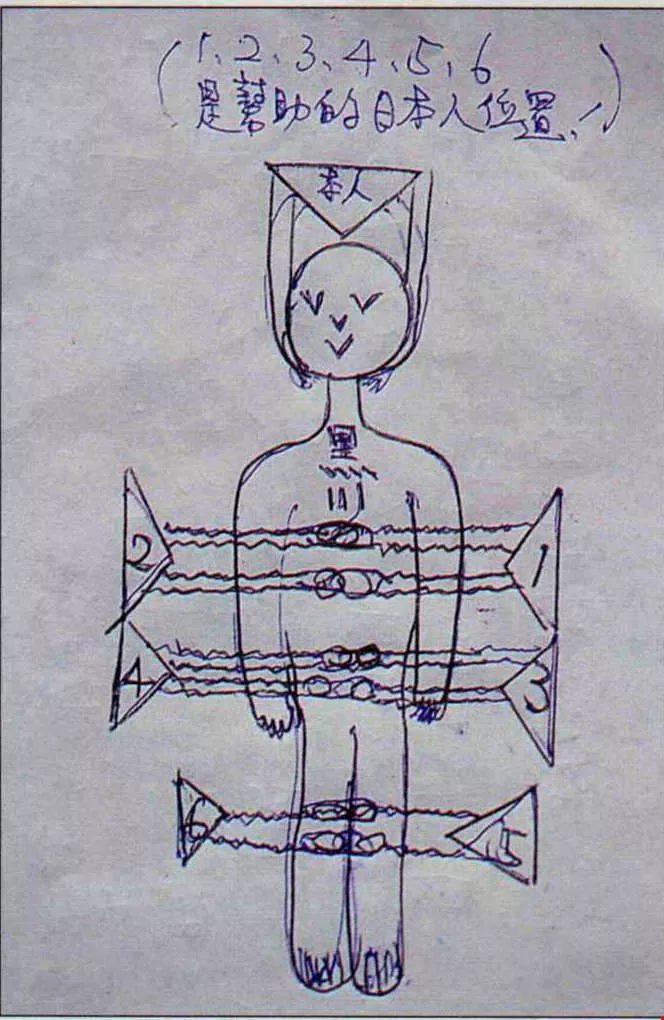
Once a Japanese tourist began bleeding profusely from a tumor, relates guide Huang Chin-jung using pictures, so six tour members got together and carried him off for emergency medical treatment, winning the gratitude of the visitor. (photo courtesy of Huang Chin-lung)
Is Sun Moon Lake really natural?
It's likely foreign guests don't know all that much about Taiwan. Because everything is a new experience, they often raise questions that we might overlook ourselves. For instance, when we get to Sun Moon Lake, when they are seduced by the mountains and the reflections off the lake, I don't hang around chattering away. After one tour of the lake was complete, one visitor asked, "How was this lake formed? Is it a man-made lake?" This question really ruined the moment for me, as Sun Moon Lake is indeed a man-made body of water. In 1936, the Japanese who then occupied Formosa built a dam and then cut through the mountains, bringing in the water from the nearby river. That's the only way Sun Moon Lake got to its current depth of 30 meters plus a 70% increase in area over the original pond there.
Further, you get all kinds of questions like: How was Taroko Gorge formed? Why is there no bathroom in the old Lin An-tai home? Why are there water tanks on the roofs of the houses? Why are all the Buddha statues roughly the same design? If a guide hasn't done his homework, it's very easy to not get a passing grade.

Famous natural scenery is fine, but festivals are even better for displaying our culture and custom. The photo is of Lantern Festival display in Taipei. (photo by Diago Chiu)
Small talk:
Though things at the tourist sights tend to be very focused, while in the bus you can talk about some more comprehensive ideas or about daily life. For example, along the central cross-island highway, when there is fog, speeds are often only 30 kilometers per hour. There's nothing on the route but mountains and more mountains. Fortunately you can look at them and talk about them at the same time.
Taiwan's area is a mere 36,000 square kilometers, and it's not very easy to find on a map of the world. Yet there are more than 200 mountains over 3,000 meters, with the highest being 3,952 meters; that's extremely impressive. Given the richness of the topography, the number of varieties of unique plant and animal species is also startling. Foreign visitors often can't help ooh-ing and aah-ing in praise when they hear. I'm really happy to use what I know to increase the understanding visitors have of the things they see. For many of the foreigners I meet, their comprehension of this place stops at "Made in Taiwan" products. In their imaginations Taiwan is just row upon row of smokestacks. When they see the beautiful scenery, they feel like the trip has been worth it.
Going past a school, they will ask about the education system. You could answer with one sentence, "the American system," or you could talk about everything from the curriculum to the examination pressures of today. When you get to Taipei, they ask why there are so many motorcycles. To be sure, of every hundred people in Taiwan 46 have motorcycles. Besides the economic capability to afford them, this is related to the facts that our winters aren't so cold that it's too chilly to ride your motorbike, that places of work are not very far from places of residence, and that it's not easy to find a parking place in the city. As for why things are so disorderly, I answer that we have the ability to buy cars but lack a car-driving culture, that for instance, drivers are rarely thoughtful enough to give way to pedestrians, and that this is a problem of viewpoint.
The itinerary is decided between the travel agency and the visitors, not made up by the tour guide. These little chats can help visitors have a more objective understanding of Taiwan, and feel what it really means to be in a different culture, rather than just leaving them to superficially search for pretty things or stay stuck in stereotypes.
To know Taiwan, head to southeast coastal China:
I suggest to travel agencies that for city tours, besides the National Palace Museum, they should include the Confucius Temple or the Lin An-tai Historic Residence. This is because most Westerners have heard of Confucius, but often assume that he is our god. When they get to the Con-Tucius Temple and are taken in, they wonder why the temple has no monks and no nuns. And from the walls where they can see photos of the mayor heading up a ceremony, from the memorial tablets of the previous generations of the Kung family [Kung being Confucius' proper Chinese surname prior to its Latinization], and from how today his 77th generation descendants still receive special treatment from the country. . . they can begin to get a feel for the importance of Confucian thinking in China. Then, adding on a comparison with the Bao An Temple, only separated from the Confucius Temple by a small alley, it is easy for visitors to see the marked difference between the respect accorded to Confucius and the prayers and supplications for divine intercession preserved for the Lord Bao Sheng.
Meanwhile the Lin An-tai Historic Residence is a private home. The highest place in the main hall is reserved for the portraits and memorial tablets of ancestors, with the height of the various halls revealing the ethical order of daily life. I think that this says a lot more than a lecture on the differences between Changchow decorative beam joints and Chuanchow decorative beam joints. I often feel that for foreign tourists, a walk through the Lin An-tai home is no less significant than the National Palace Museum. This includes a little bit of selfishness that I feel for our country. You can say that we are a country with an ancient culture, and when you get to the Lin An-tai residence, I can tell them that it has been specially preserved by the government, and that our culture isn't all in the past.
I was born in Taiwan in 1949 of parents from Kiangsu in mainland China. Right now my greatest desire is to go to the southeast coast of China to have a look around, and understand myself. If you want to know Taiwan, you have to find the source there. I would really like to know what the LungshanTemple in Anhai in Chuanchow County in Fukien Province looks like or how the people of Shang-paichiao worship the Lord Bao Sheng. Perhaps, I'll only have to sit with the local people and chat, brewing up a pot of tea, with all the same motions and the same cup, and that will be enough.
[Picture Caption]
p.110
"Arches were an important tool of indoctrination in old Chinese society, set up in prosperous city streets. This one was set up in New Park, but moved here so they could widen the road there. "Senior guide Giovanni Kuo introduces another historic item to foreign guests.
p.111
The National Palace Museum, which houses a rich variety of priceless treasures, is a can't-miss stop for foreigners and locals alike.
p.112
Once a Japanese tourist began bleeding profusely from a tumor, relates guide Huang Chin-jung using pictures, so six tour members got together and carried him off for emergency medical treatment, winning the gratitude of the visitor. (photo courtesy of Huang Chin-lung)
p.113
Famous natural scenery is fine, but festivals are even better for displaying our culture and customs. The photo is of Lantern Festival display in Taipei. (photo by Diago Chiu)
@List.JPG?w=522&h=410&mode=crop&format=webp&quality=80)


