Life in the Fast Lane:
Exploring the Taiwan High Speed Rail
Cathy Teng / photos by Jimmy Lin / tr. by Bob Dougherty
September 2025


The Taiwan High Speed Rail launched the third spatial revolution on the island of Taiwan. (courtesy of THSRC)
Get up early in the morning to scuba dive in Kenting’s tropical seas on Taiwan’s southern coast. Then in the afternoon, cross the Tropic of Cancer and don a down jacket to release a sky lantern in the mountain village of Pingxi. This kind of day trip, covering almost 400 kilometers, doesn’t require ruby slippers like Dorothy from The Wizard of Oz or Sun Wukong’s magical cloud. All it takes is the Taiwan High Speed Rail (THSR) to make this kind of adventure possible in a single day.
Riding the THSR is like opening a window. From the cities, natural scenery, and coastlines along the route, a traveler can quickly piece together a silhouette of Taiwan. Entering the Taiwan High Speed Rail Museum in the THSR Operation Management Center outside Exit 5 of the Taoyuan HSR Station is like opening a door on THSR history. From engineering blueprints and technical R&D to behind-the-scenes safety and efficiency operations, the museum gives every sign of rapid progress a meaning that can be understood and remembered.
Geospatial revolution
Upon entering the Taiwan High Speed Rail Museum, the first display depicts the spatial revolution wrought by Taiwan’s railways. That developmental history began during the Qing Dynasty when Taiwan’s first provincial governor, Liu Mingchuan (in office 1885-1891), requested permission from the Empress Dowager Cixi to build a railway. His request called for a “government managed, privately invested” project for which the private sector would raise the necessary funds, with no need for government investment. That proposal foreshadowed Taiwan’s Build-Operate-Transfer (BOT) model, the framework under which the THSR system was constructed. During the period of Japanese rule, the colonial government completed the 404.2 kilometer Western Trunk Line, which allowed passengers to travel from Taipei to Kaohsiung within around 12 hours. That was the first spatial revolution.
The second spatial revolution occurred after 1955, when the then Taiwan Railways Administration began to replace its steam locomotives with diesel-electric units. As a result, in 1966 the Guanghua Express could complete the journey from Taipei to Kaohsiung in just 4.5 hours, and beginning in 1979, with the electrification of the Western Trunk Line, the EMU100 series Tze-Chiang Express further reduced the time to four hours.
The advent of the THSR set off a third spatial revolution. Construction began in 1999 and the system entered passenger service in 2007, launching a new era of domestic railroad technology. The trains can reach speeds of up to 315 kilometers per hour, cutting the shortest travel time between Taipei and Kaohsiung to just 1 hour and 34 minutes. In 2025, the THSR’s ridership averages some 210,094 passenger journeys per day, making it an essential feature of life in Taiwan.
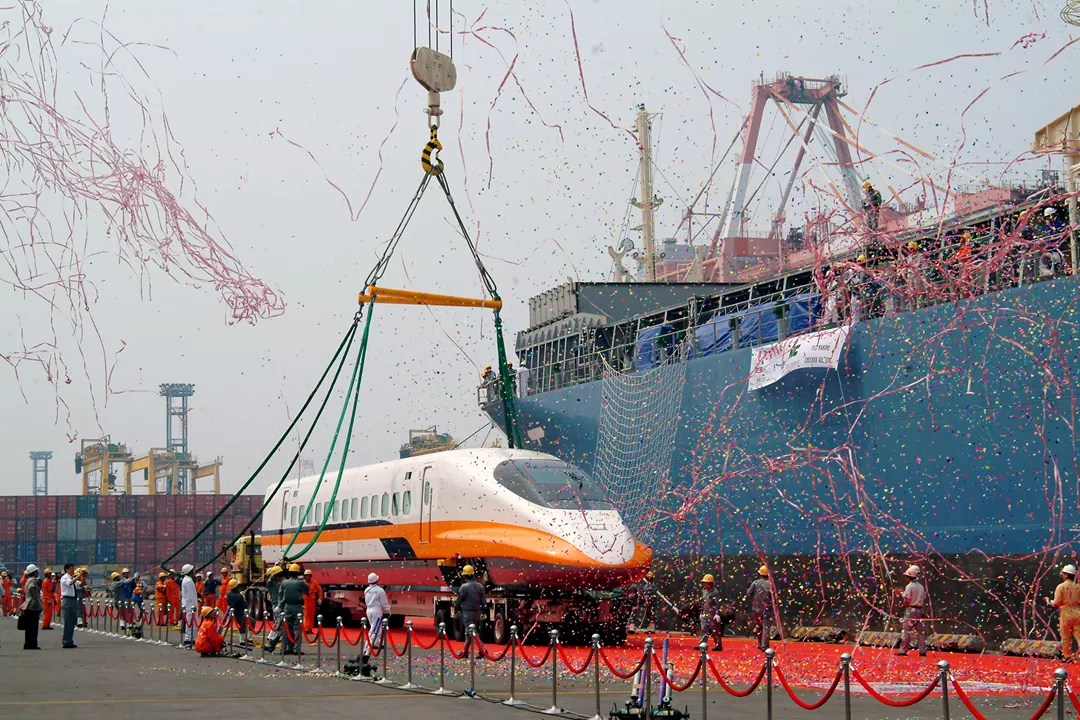
A sleek white-and-orange high-speed rail train arrives in Taiwan. THSRC selected Japan’s 700T series Shinkansen train, the first time a Japanese bullet train had been exported. (courtesy of THSRC)
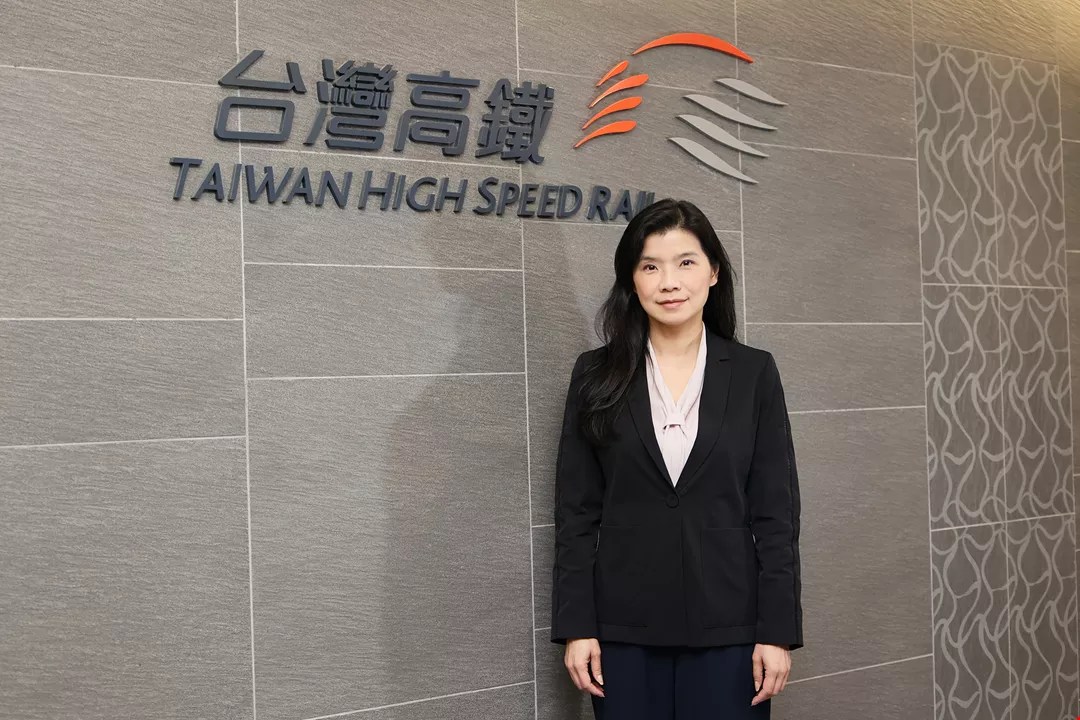
Elaine Tsou states that the Taiwan High Speed Rail’s opening has greatly expanded the one-day life circle of people in Taiwan, while facilitating more balanced development between north and south.
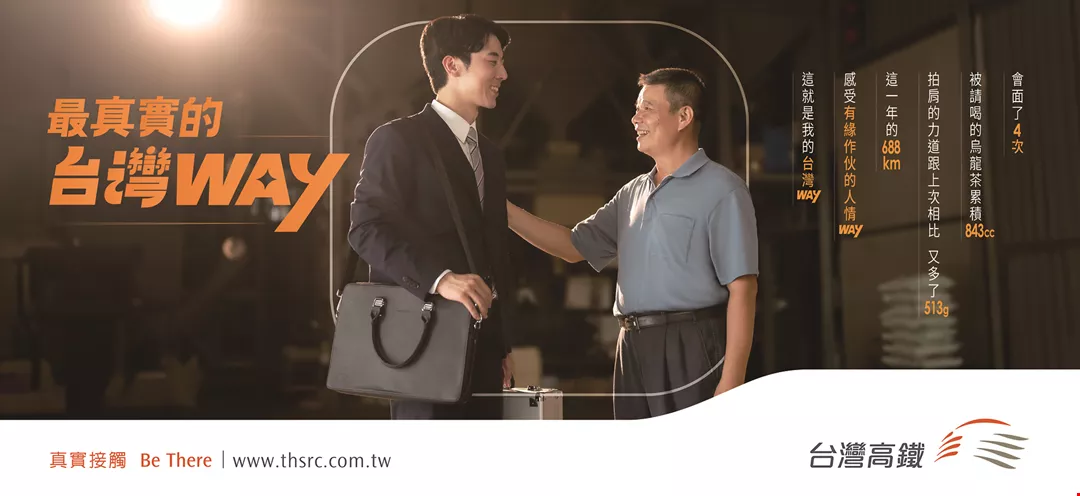
The high-speed rail system makes it convenient to explore Taiwan, “be there” in person, make real contacts, and savor the authentic taste of Taiwan. (courtesy of THSRC)
Authenticity awaits at your destination
In 2007, the “one-day living circle” of people in Western Taiwan was greatly enlarged. Elaine Tsou, THSR spokesperson and vice president of public affairs, says that the most obvious change was the expansion of convenient commuting distances. “Every TSHR station can be reached from Taipei in a day or less, and then you can return home at your leisure, using time efficiently while also making life easier.”
Speed compresses distance, and facilitates balanced development in northern and southern Taiwan.
Travel in Taiwan is now moving toward a new milestone: “high-speed slow travel.” Tsou points out that the high-speed rail’s fast connections have shortened travel times between urban and rural areas, which lets travelers experience the unique customs and atmosphere of their destination at a more relaxed pace. For international tourists, the THSR Pass is a special offer that lets them explore Taiwan in depth conveniently, and enjoy an abundance of diverse scenery from north to south in a short period of time.
This all reflects THSR’s company spirit: “Be there.”
Perhaps friends from abroad know that Taiwan’s TSMC manufactures world-renowned semiconductor chips, and have heard about the concept of “Taiwanese sensibility” that has gained popularity in recent years. But the only way to truly understand the Taiwanese character and spirit, and savor the authentic taste of Taiwan, is to “be there” through personal experience and real contacts.
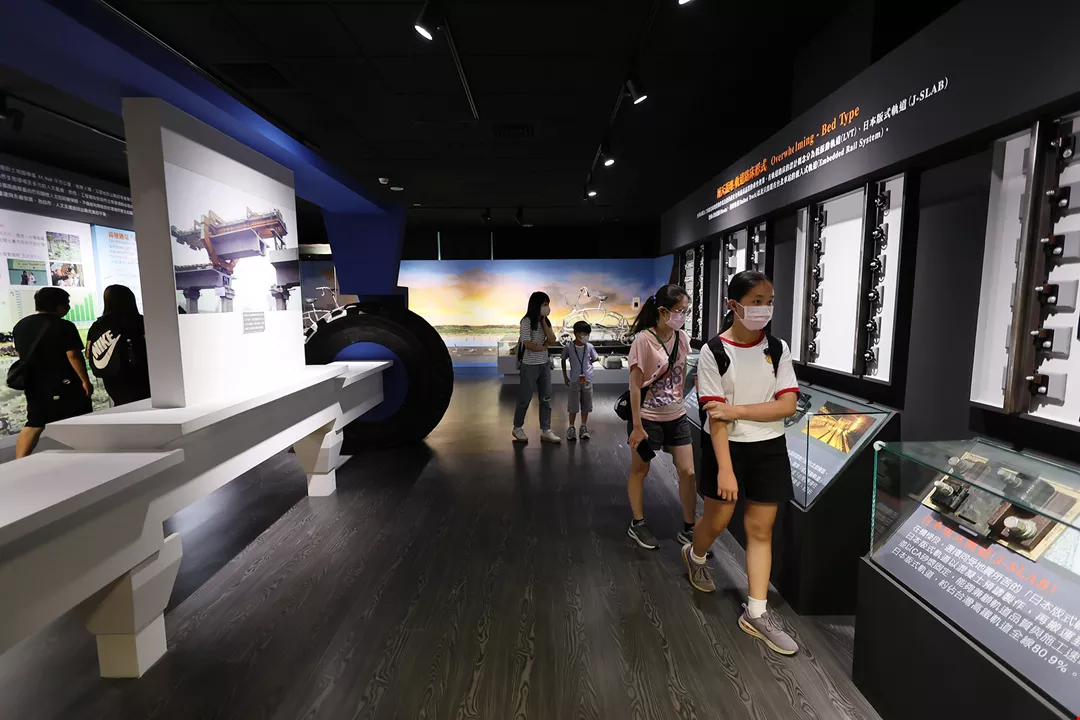
Visit the Taiwan High Speed Rail Museum to learn how the THSR was born.
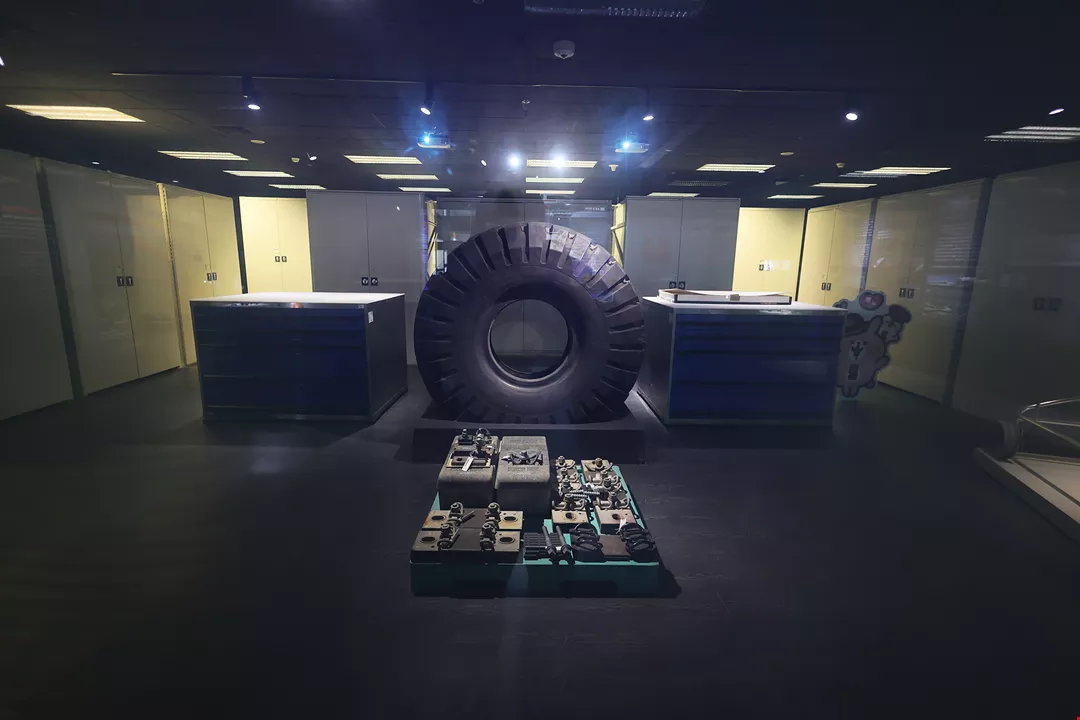
As soon as construction of the THSR began, materials related to the project were collected including track consumables and construction vehicle tires, all of which were preserved as important historical artifacts.
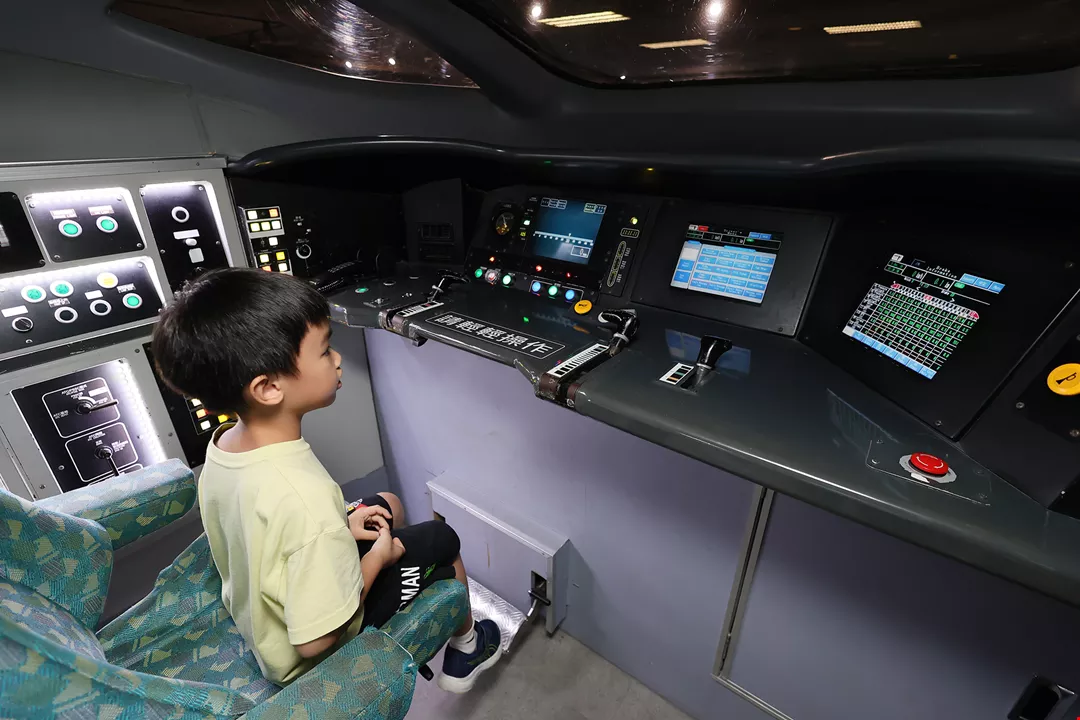
The model train in the Taiwan High Speed Rail Museum lets children experience the feeling of being a dashing train driver.
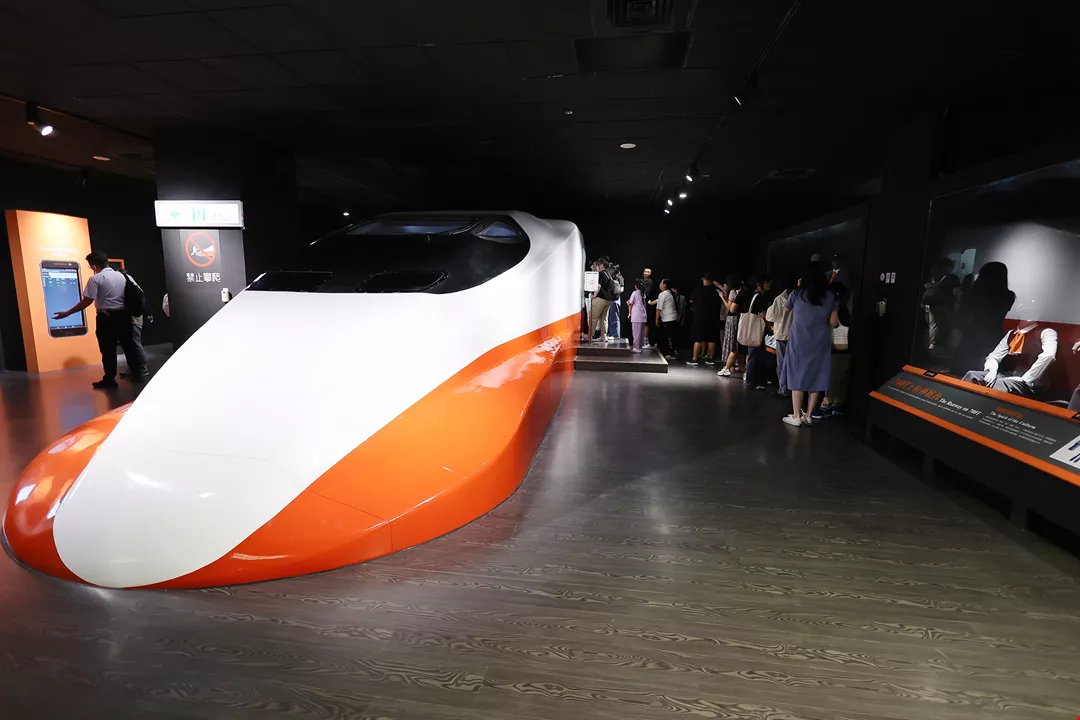
The right high-speed rail for Taiwan
Two major developers of high-speed rail systems are Japan and France, each with their own characteristics and advantages. As Tsou says, “When Taiwan first began to develop a high-speed rail system, we considered both the European and Japanese systems and adopted the most suitable features from each, creating a high-speed rail system unique to Taiwan.”
For example, the THSR adopted two-way signals from European rail systems so that a single set of tracks can handle travel in both directions, which allows trains to be operated more efficiently.
The trains selected for the THSR system were Japan’s 700T Series Shinkansen high-speed trains, which were tailor-made for Taiwan. That was also the first time that Shinkansen trains had been exported. The 700T Series is a distributed-power electric multiple unit (EMU) design in which nine of the 12 cars are powered. Each powered car has four motors, so a set of train cars is powered by 36 motors. That allows trains to accelerate quickly after leaving the station, which is appropriate for Taiwan, where the distances between stations are comparatively short.
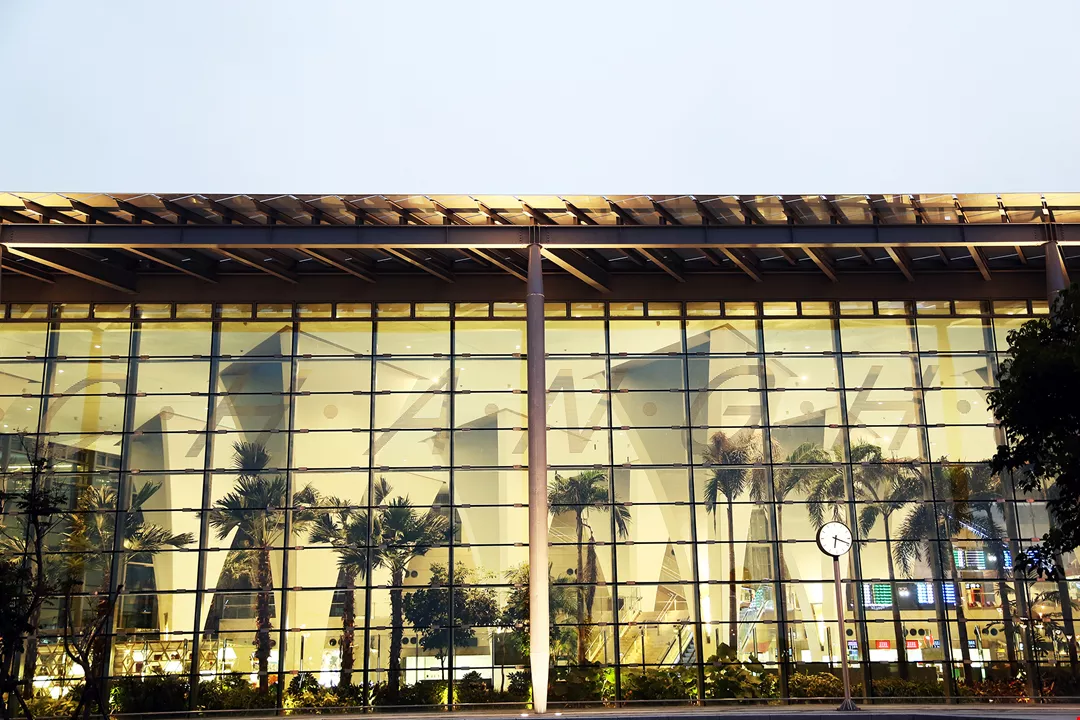
The Changhua HSR Station features columns shaped like flower petals, and a roof reminiscent of rice fields checkered with paths and swaying in the wind, reflecting Changhua’s reputation for floriculture.
Safety is the only way home
In 1998 the Taiwan High Speed Rail Corporation (THSRC) and the Ministry of Transportation and Communications signed a BOT contract to construct and operate the THSR. In 1999, however, following the 921 Earthquake, THSRC immediately adjusted the seismic safety coefficients for all of its viaducts. Since the THSR system began operations in 2007, Taiwan has experienced the 6.4 magnitude Jiaxian Earthquake in 2010, and the 6.6 magnitude Meinong Earthquake in 2016. Yet the THSR system’s civil engineering structures all remained intact, and the trains still operate at 300 kilometers per hour today.
Tsou notes that the THSR is extremely safe, employing both an automatic train control (ATC) system and a disaster warning system (DWS). When the latter detects earthquakes, high winds, torrential rain, landslides, track bed collapses, falling rocks, or flooding, it immediately sends warning signals to trains and the Operation Control Center to ensure operating safety.
Regular train maintenance includes daily inspections, monthly inspections, bogie inspections and general inspections; line maintenance includes signals, communications, power, and tracks. When night falls, the heroes of the inspection and maintenance crews work under the stars to ensure the safety of each and every trip.
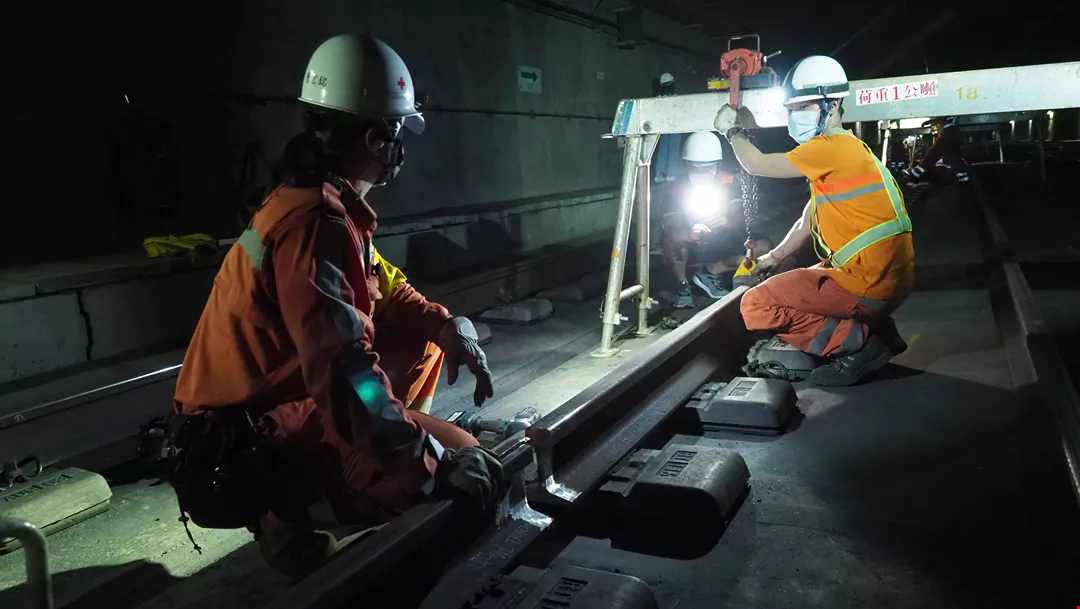
Safety is the only way home, and engineering personnel carefully carry out maintenance and inspection protocols down to the last detail to ensure the safety of each trip. (courtesy of THSRC)
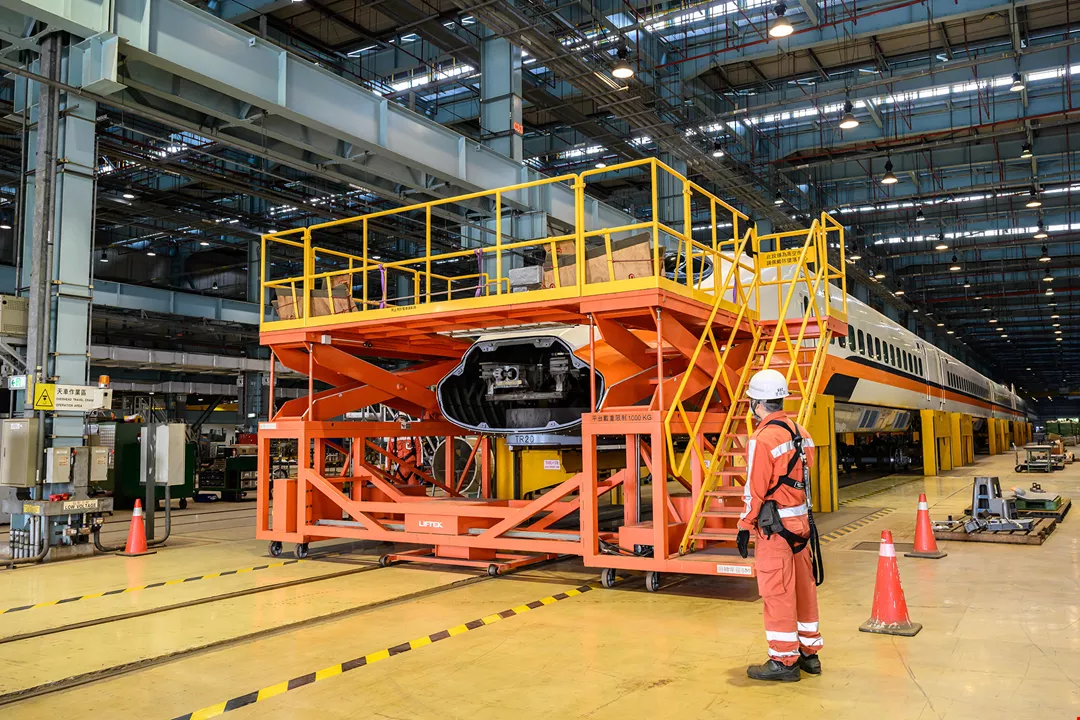
courtesy of THSRC
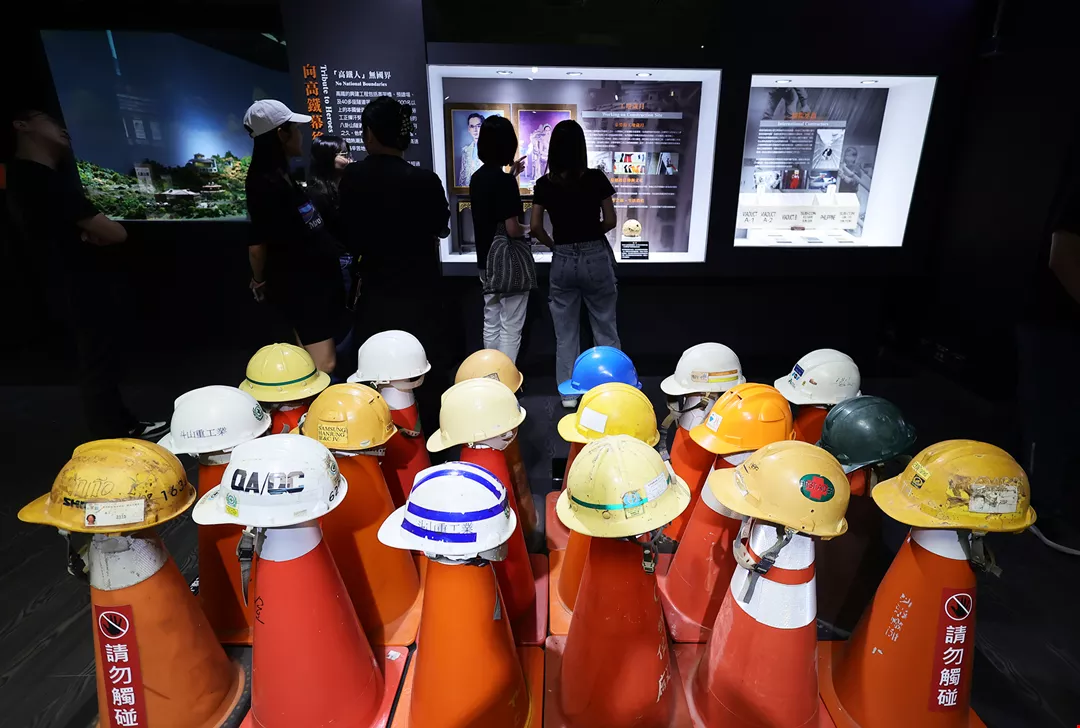
The construction of the THSR relied on the professionalism and dedication of engineering personnel from around the world. Their heroic behind-the-scenes contributions are reflected in this display of safety helmets from various countries at the THSR Museum.
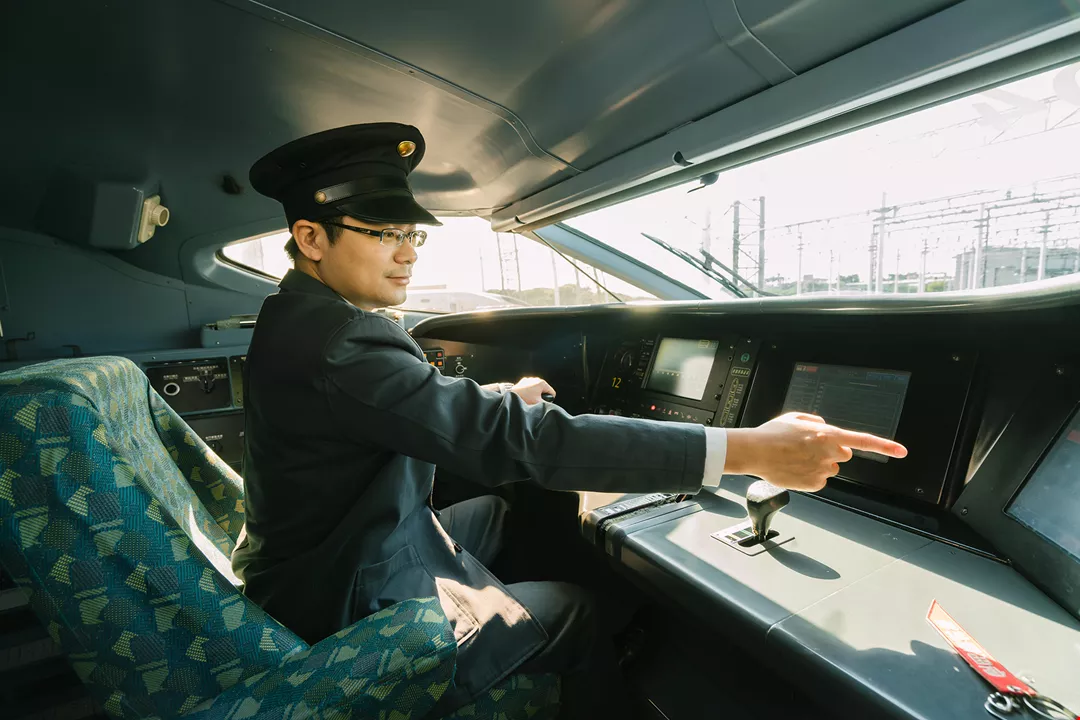
At high-speed rail sites, personnel can often be seen “pointing and calling” to confirm that it is safe to proceed, implementing the most rigorous safety protocol for trains traveling at 300 kilometers per hour.(courtesy of THSRC)
An international affair
Over 4,000 domestic and foreign contractors participated in the THSR construction project, with over 5,000 engineers engaged in engineering, design, and supervision. During the construction phase, professionals from 26 countries traveled far from home to help get the THSR up and running.
The civil engineering structures, bridges, tunnels, stations, and maintenance bases along the 350-kilometer rail line were all built in only four years and nine months. The Taiwan High Speed Rail Museum highlights the relevant engineering methods and also showcases aspects of various cultures. For example, a German company and Taiwan’s Continental Engineering Corporation, which jointly contracted construction of the Baguashan Tunnel (7,357 meters), created a shrine to St. Barbara and invoked her blessing for the project. The Japanese construction company that worked on the Linkou Tunnel project sprinkled wine and salt around the worksite to worship the mountain god, and preserved “breakthrough stones,” the rubble produced where the two sides of the tunnel met during the tunneling process.
Taiwan’s high-speed rail is very Taiwanese, but also very international. Many countries participated in the construction process, which allowed Taiwan’s construction firms to learn new technologies and engineering management concepts. The project required talent from various countries to solve problems collectively, which helped Taiwan to internationalize technologically, sharing and communicating through dialogue with the global community.
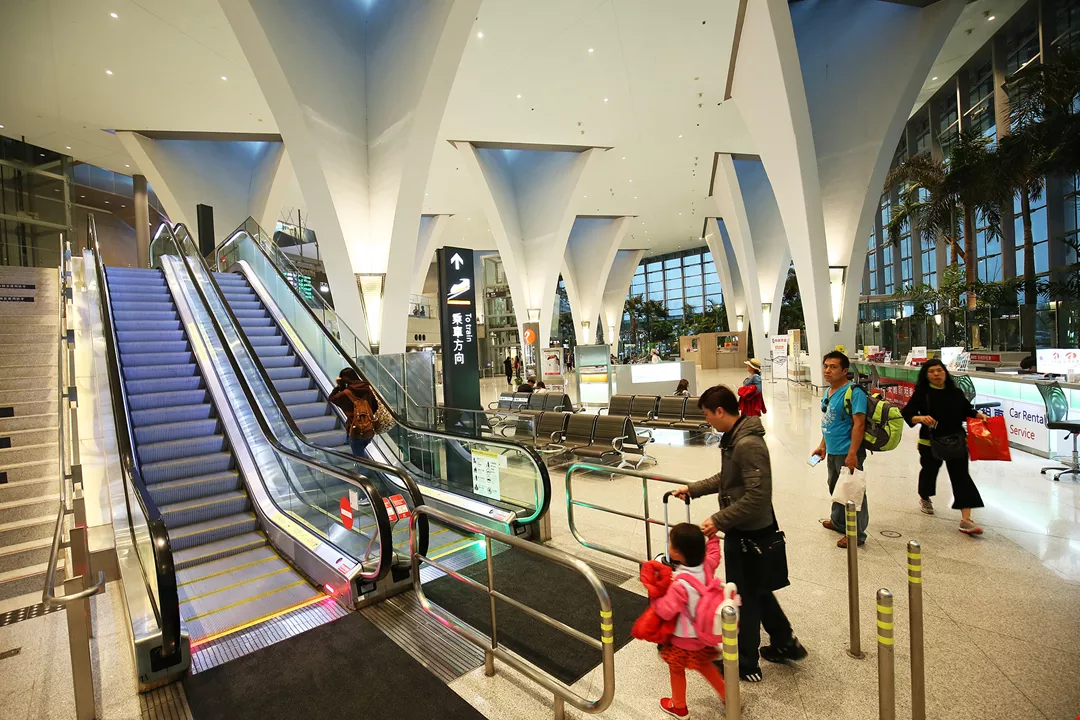
The high-speed rail system has been in operation for over 17 years, and has become an integral part of the Taiwan lifestyle.
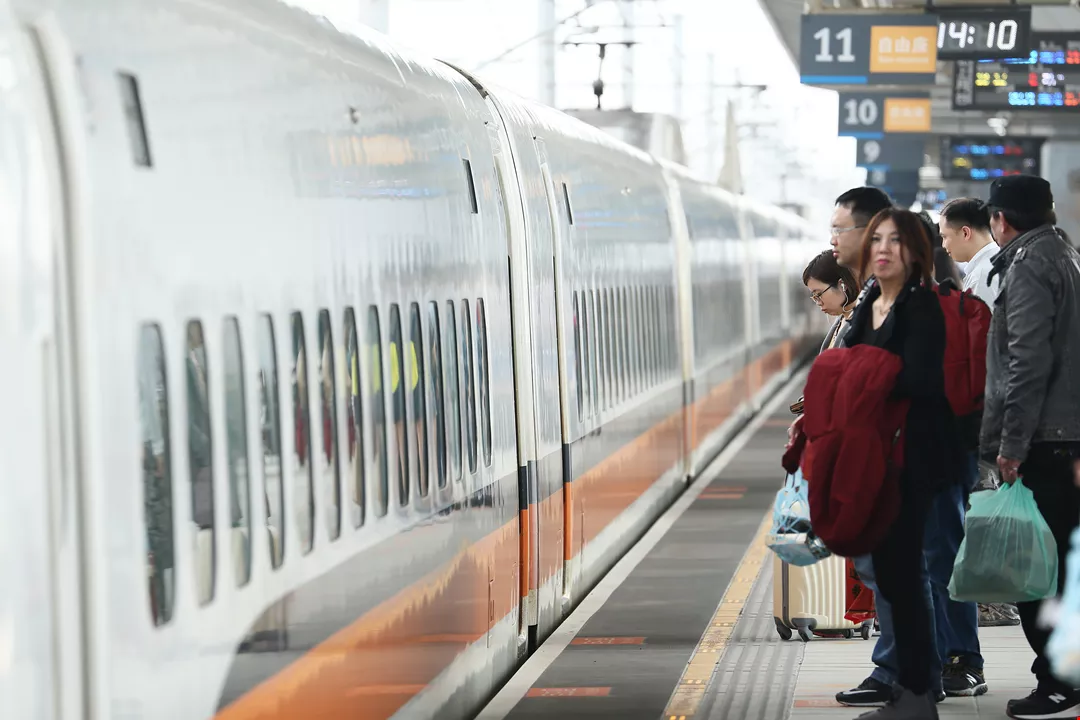
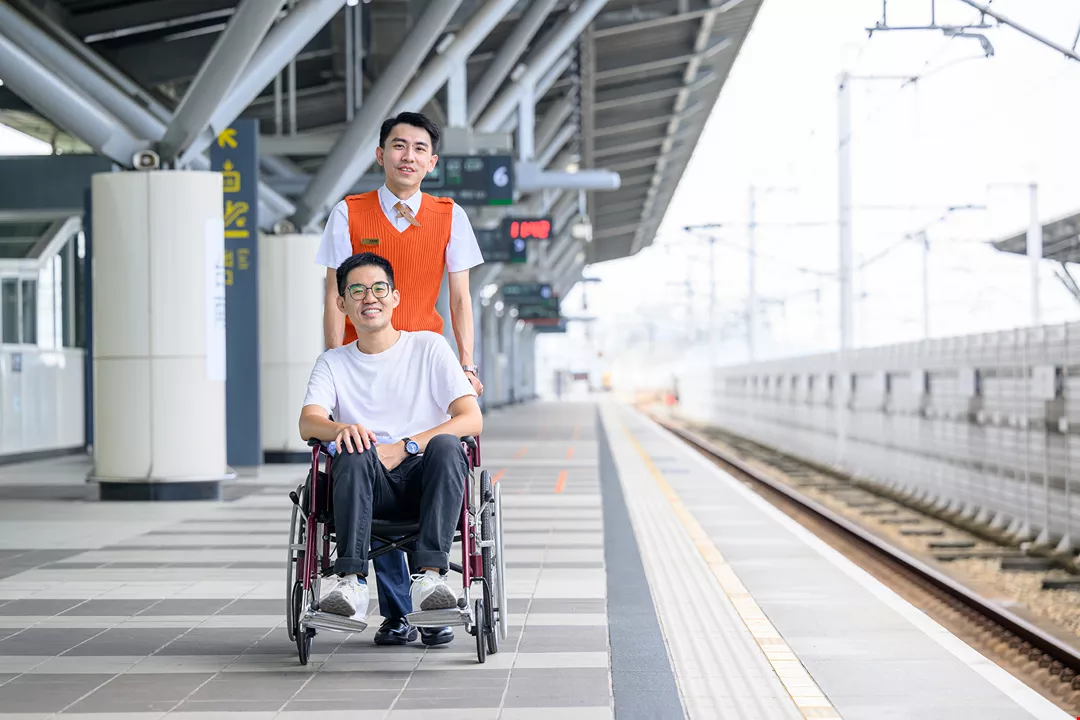
When it comes to service, THSR aims to “go the extra mile,” treating passengers like family. (courtesy of THSRC)
Going the extra mile
Taiwanese courtesy and personal warmth are a prominent feature of THSR’s service. It has led the way in providing assistance to help elderly solo travelers navigate station ticket gates. Elaine Tsou explains that that kind of service is more common for air travel, and is rare in the railroad industry. When traveling by train abroad, this service may be available for an additional fee, but THSR regards passengers as family members, and makes an extra effort to serve them.
When traveling, important items may accidentally be misplaced, and THSR helps customers find their lost items, guided by the concept of “going the extra mile.”
THSR not only cares about people, but also about protecting the environment and culture. At the Taiwan High Speed Rail Museum, you can see what THSRC’s conservation efforts have done for the pheasant-tailed jacana in Tainan’s Guantian District. After rail construction began, the company realized that the planned route would pass through the habitat of the pheasant-tailed jacana, an endemic Taiwanese bird species. That led THSRC, local government, and local bird associations to meet and discuss a solution. As a result, the Forestry Bureau provided 11 hectares of land, and THSRC invested NT$60 million to create artificial habitats. The 50 remaining pheasant-tailed jacanas at that time were thus given a completely new habitat, and today their number has soared to about 2,600. Internationally renowned primatologist Jane Goodall has visited twice and lauded the project’s conservation achievements.

The THSRC cares about the environment and culture, and has invested in restoring the habitat of the endemic pheasant-tailed jacana. (photo by Pan Tongxi)
Tracing the tracks of history
The Taiwan High Speed Rail Museum was opened in 2017 to celebrate the tenth anniversary of the railway’s official opening. Nita Ing, the first board chairperson, was always thinking about preserving high-speed rail culture, and began collecting artifacts during the construction phase. Those artifacts trace each and every step of the THSR’s development, and are now on display to give people a deeper understanding of Taiwan’s high-speed rail history.
In addition to the Taiwan High Speed Rail Museum, the Oiran Train Scenic Park at the Tainan HSR Station is not to be missed.
High-speed rail systems originated in Japan, and the “0 Series” Shinkansen was the world’s first high-speed train. There are currently only two 0 Series cars outside of Japan. One was donated by Japan to the National Railway Museum in the UK, and the other is in Taiwan. “Our car is even more special,” says Tsou. “The Japanese sent it to Taiwan during the construction of our high-speed rail system, and it was used as a ‘clearance car’ to measure the train’s kinematic envelope and to test track and structural clearances. To do that, many probes were installed inside and outside the car body, resembling the elaborate hairpins worn by Edo-period oiran (courtesans), hence the nickname “Oiran Train.” When construction was completed, the Oiran Train remained in Taiwan, and after some restoration work, it was put on display outside the Tainan HSR Station. More than just a historical artifact, it tells a tale of Japan’s special relationship with Taiwan.
In 2027, the THSR will celebrate its 20th year of operations. Elaine Tsou says, “Our new railcars are already in production in Japan, based on Japan’s latest N700S series. We expect the completed cars to arrive in Taiwan in 2026, and enter service in 2027.” A new generation of trains will thus continue their dash across Taiwan, discovering more stories along the way.
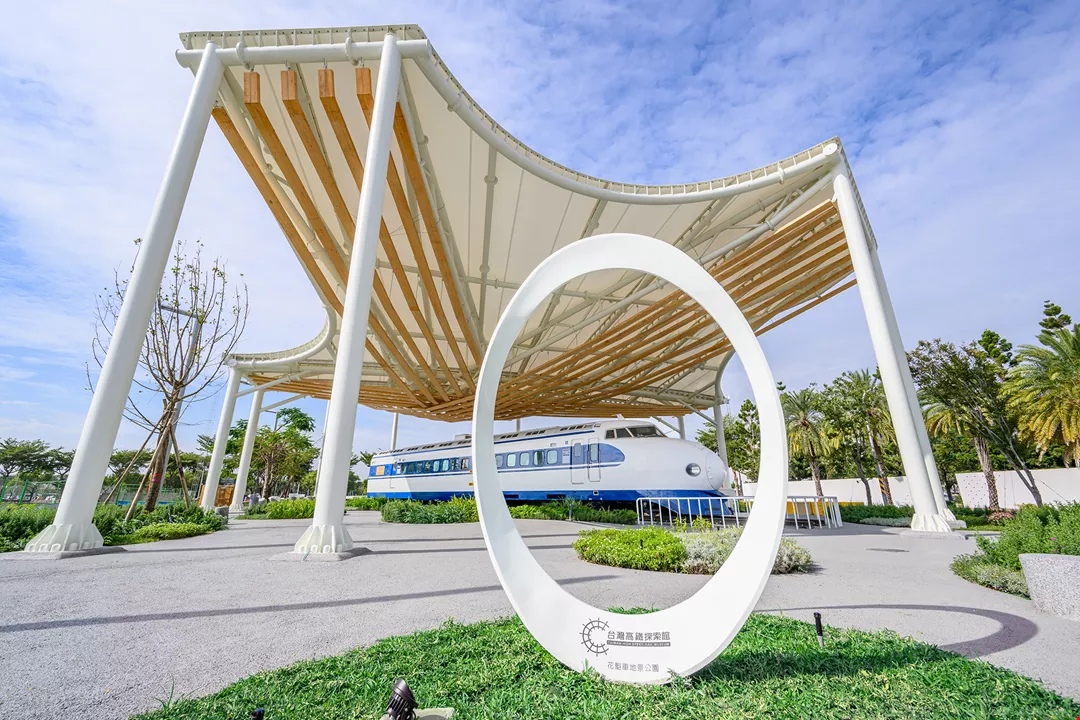
The Oiran Train Scenic Park outside the Tainan HSR Station displays the 0 Series Shinkansen train that Japan donated to Taiwan, showing the special bond between the two countries. (courtesy of THSRC)


@List.jpg?w=522&h=410&mode=crop&format=webp&quality=80)


@List.jpg?w=522&h=410&mode=crop&format=webp&quality=80)
@List.jpg?w=522&h=410&mode=crop&format=webp&quality=80)
