

Tamsui, the picturesque seaport only half an hour's drive to the north of Taipei, has a wealth of historical associations which are not apparent from the town's present sleepy and small-town atmosphere. Not only was Tamsui the first place where many early Chinese settlers first set foot in Taiwan, but it was also a landing point for many subsequent invaders. During the 15th century, Cheng Ho, a great Chinese Ming dynasty navigator visited Tamsui. In 1629, the Spanish captured Tamsui and built a fort there named San Domingo, which still stands today in its original form. One of the reasons for the building's durability is its 1.2 meter thick walls made of red brick. The fort, facing the Tamsui River and backed by green hills, was an important defense post in early times, and four cannons still stand on guard today. From its grounds, it is possible to see a beautiful sunset across the nearby estuary and into the open sea.
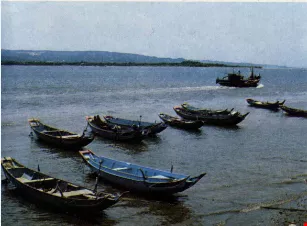
Soon after the Spanish captured Tamsui, the Dutch were busily taking over most of the rest of Taiwan. Inevitably, their adventures led them to capture the Spanish fort and at the same time gave it the Chinese name it still bears today-"Red Hair Fort"-based on the impression in Chinese eyes that all Dutchmen seemed to have red hair. The fort passed back into Chinese hands when Cheng Cheng-kung, known to the West as Koxinga, led his troops to take back the island of Taiwan for the Ming dynasty in 1683. As more and more Chinese migrated from the mainland to Tamsui, its importance grew, until during its heyday between 1862 to 1894, it was a prosperous port crowded with fast trading ships and fishing boats every day. Many foreign clippers were lured to Tamsui by its principal trading product, tea, which was in demand in all over the world. During the Franco-Chinese war (1884-85), Liu Ming-chuan, the imperial commissioner who had been sent by the Manchu regime on the mainland to fight the invaders, sank 20 boats loaded with stones in the Tamsui estuary to block the advance of the French ships. Partly because of this, and also because the river silted up, Tamsui lost its prominence as an international port as Keelung began to gain importance about the turn of the century.
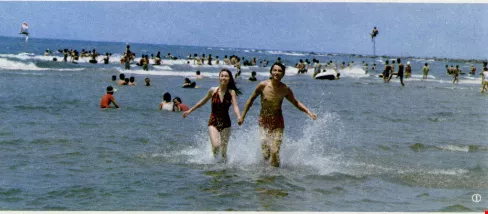
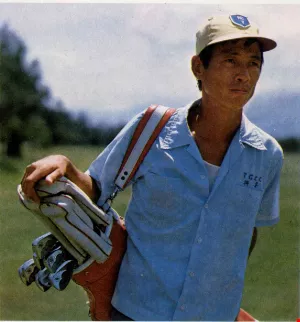
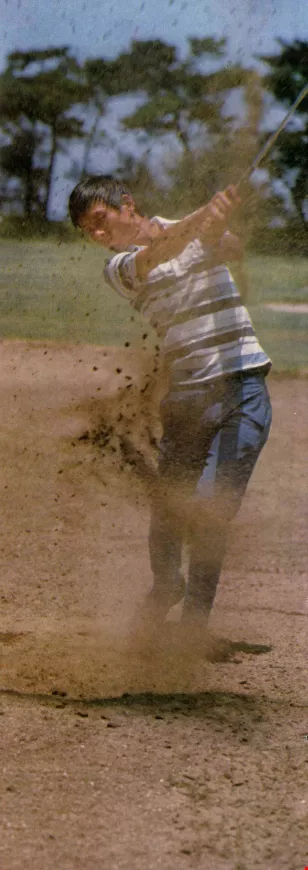
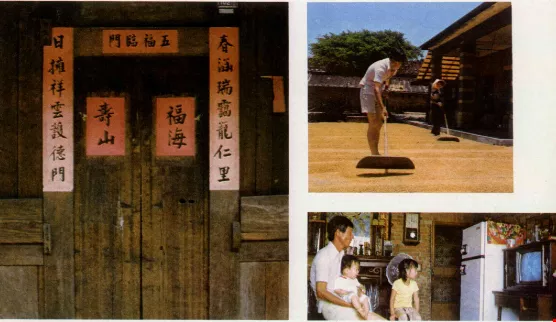
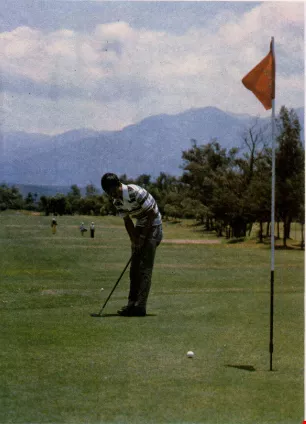
The main tourist attractions in Tamsui today are Fort San Domingo, Oxford College, Pastor Mackay's grave, Shalun beach and the Tamsui Golf and Country Club. The latter is one of Asia's finest golf courses, where many international tournaments have been held. Some of Asia's best golfers have also learned their skills while acting as ball boys and caddies at the golf course. Today, there are still about 100 children and young men on duty, a few of whom may become stars of tomorrow. Outstanding golf players such as Lu Liang-huan, Hsu Hsi-shan and Hsieh Yung-yu started off as ball collectors at the course at the age of 13 or 14, and were established in the game by their 20s. Although Hsu Hsing, seen in the accompanying pictures, is still a ball collector, earning US$14 a day at the course, he can play better golf than most of his customers. But he would never dream of trying to become a professional, since farming is his first love. His family owns a large plot of land nearby the course which has been handed down from generation to generation. Hsu helps his father to run the farm, and only works at the golf course during slack seasons. Married with three children, Hsu today lives with his family in a typical Taiwan country house-equipped with modern amenities.
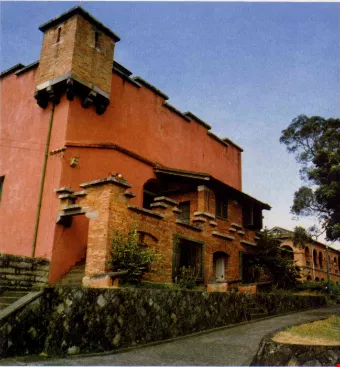
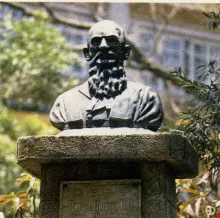
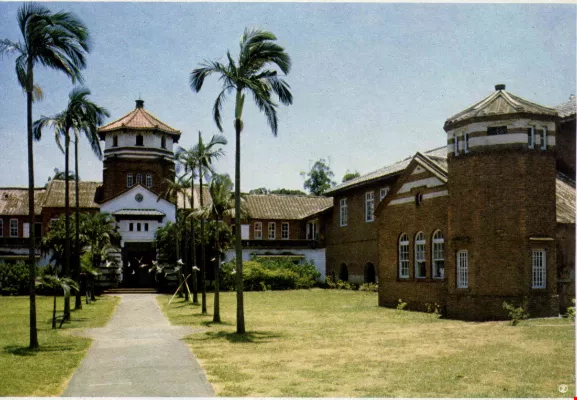
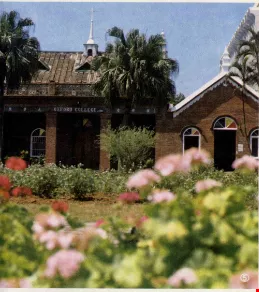
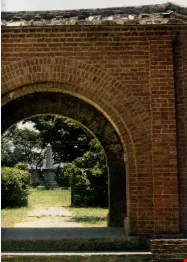
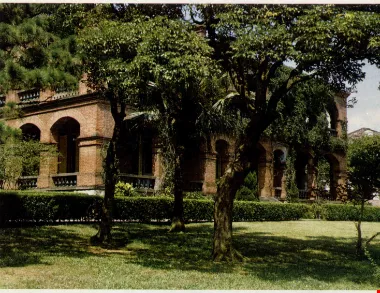
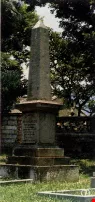
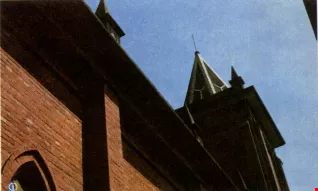
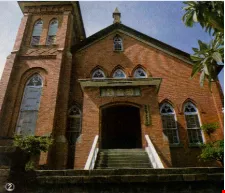
The first foreign missionary to arrive in the Tamsui area was the Rev. George Mackay, who took a Chinese wife, and spent his whole life working with the Chinese in Taiwan. When he first arrived in Tamsui in 1872, he heard a voice telling him to stay. The next day he was out spreading the Gospel and helping to establish medical services in northern Taiwan. Eight years later he went to his native Canada and persuaded Ontario's Oxford College to donate enough money to start a college also named Oxford College, which was opened in Tamsui in 1882. When he died in 1900, he was buried in the Tamkang Middle School, which he also founded. The Oxford College, built in red brick and having stained glass windows and a roof with many pagodas, is now part of the Tamsui Junior College of Industrial and Commercial Management.
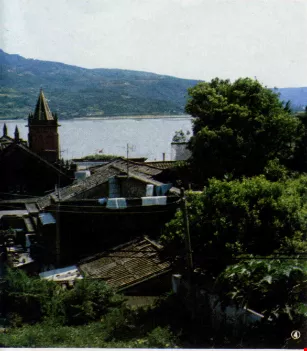
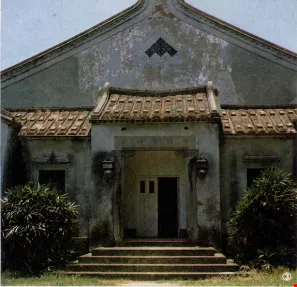
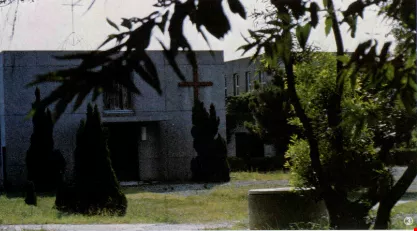
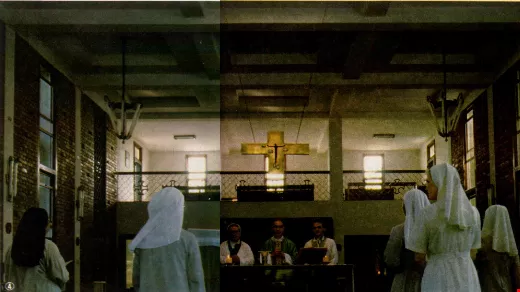
Among the interesting old buildings in Tamsui is the 100- year-old Chinese style gymnasium in the grounds of the Tamkang Middle school, which is spacious enough to accommodate a basketball and several badminton courts. In the town itself, many of the old houses are built on hills with curved and narrow stepped streets. A strange feature of these houses is that the front portions are one-story, while the rear parts are two or three stories. This is because they were formerly located in the town's business district, and the front portions were used as shops. But since the business district moved nearer the waterfront, the lower front rooms are now simply part of the residential quarters. The nearby St. Benedict Convent includes three modern and dignified buildings, a chapel, an activities center and a nuns' dormitory. The grave of the convent's founder can be found in the grounds.
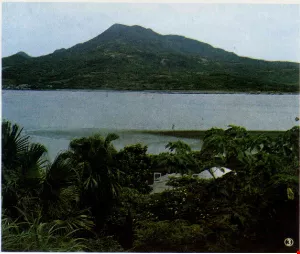
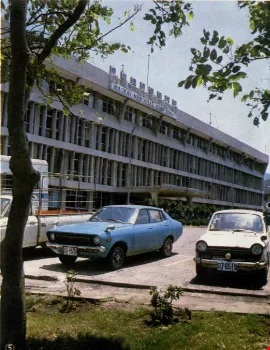
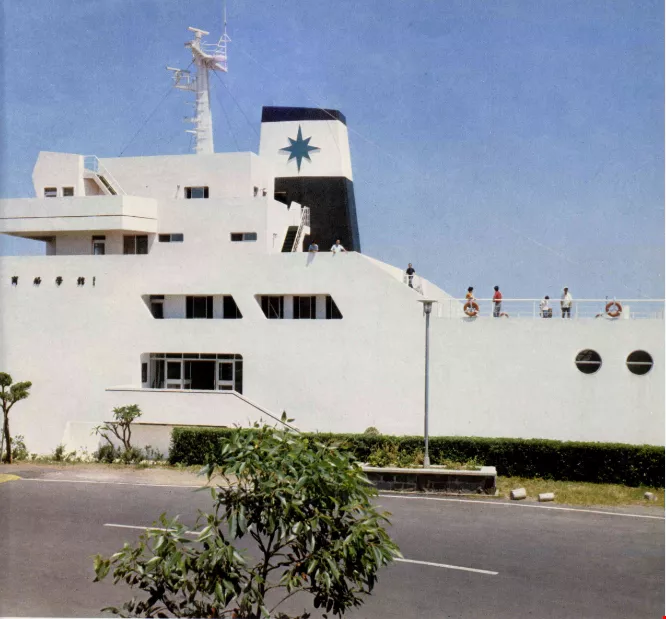
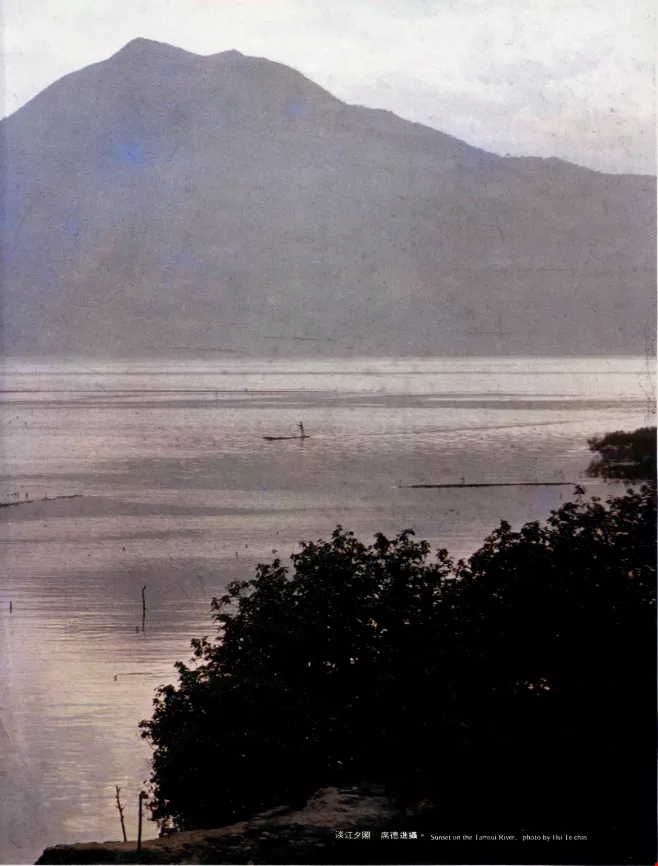
The campus of the Tamkang College of Arts and Sciences in Tamsui is wide and spacious, with many modern buildings, each with its own characteristics. The Merchant Shipping Hall (above right), for instance, is shaped like an ocean-going liner, and with its authentic shipping materials inside, makes an ideal learning environment. Standing outside a Chinese palace-style building are a line of Chinese lanterns(right) and neatly cut pines and cypress trees, which combine to give the appearance of palace. Mt. Kuanying, rising more than 2,000 feet across the Tamsui River is usually covered in mist in the morning, but is clear by noon. As the shadow of the mountain falls on the river in the evening, the whole scene looks like a Chinese painting.


@List.jpg?w=522&h=410&mode=crop&format=webp&quality=80)


