Taipei City: Sweating in the Spotlighy
Laura Li / photos Diago Chiu / tr. by Jonathan Barnard
November 2000


Recently the Taipei City Department of Urban Development announced their idea for a "Taipei Citizen's Passport." Who is their idea of a typical Taipei Citizen? The answer is an environmentally conscious, culture-loving person who has a soft spot in their heart for good causes-someone who reads several books a month, recycles, takes mass transit, donates blood, does volunteer work, plants flowers on their balcony and cleans their building's exterior walls. That's who!
This "passport," with its middle-class and decidedly Western sensibility, is just one example of how Taipei differs from other places in Taiwan. Not long after Chen Shui-bian ascended to the ROC presidency, the Office of the President began to come into sharp conflict with Taipei City Hall. They clashed over whether to build a domed stadium, over how to allocate government funds, over which romanization system should be employed to transcribe Chinese characters, and even over whether the mayor was showing the president proper respect. These conflicts have caused Taipei City to become isolated from Taiwan's other cities and counties.
What exactly is at the heart of these disputes? Is there a north-south divide between Taipei and the other counties and cities? And are the calls of "Taipei first" and of "Taiwan first" mutually reinforcing or mutually exclusive?
Taipei's wealth and high status as the capital have long been a sore spot with many people living elsewhere in Taiwan. Some argue that Taiwan ought to be divided into four counties by the Chuoshui River and the Central Mountain Range, with financial resources being equitably divided to create uniform levels of development in each. Others question whether the central government should be located at the northern tip of the island, making it difficult to reach for civil servants and regular citizens alike. Why not instead move the capital to Taichung, they suggest.
Since the Taiwan provincial government was largely disbanded two years ago, the 21 counties and cities of Taiwan have been directly under the ROC central government. With the election of Chen Shui-bian, the ROC is now under the control of the Democratic Progressive Party (DPP), as are many of Taiwan's other cities and counties, including Kaohsiung, which like Taipei enjoys special status as a "self-governing municipality." Whereas the south was Chen's principal source of votes, the blue of the KMT holds sway in Taipei, making the city a thorn in the side of the ruling DPP and threatening its privileged position.
In July the city and the central government quarreled over how much money the city would be allotted in the national budget, and the city's share was cut by NT$6 billion. Then in October the Executive Yuan lowered the population requirement for self-governing status, and Taichung City joined Taipei and Kaohsiung as a special self-administered municipality. Various other large cities and counties also hope to achieve this so as to enjoy the same status as Taipei.
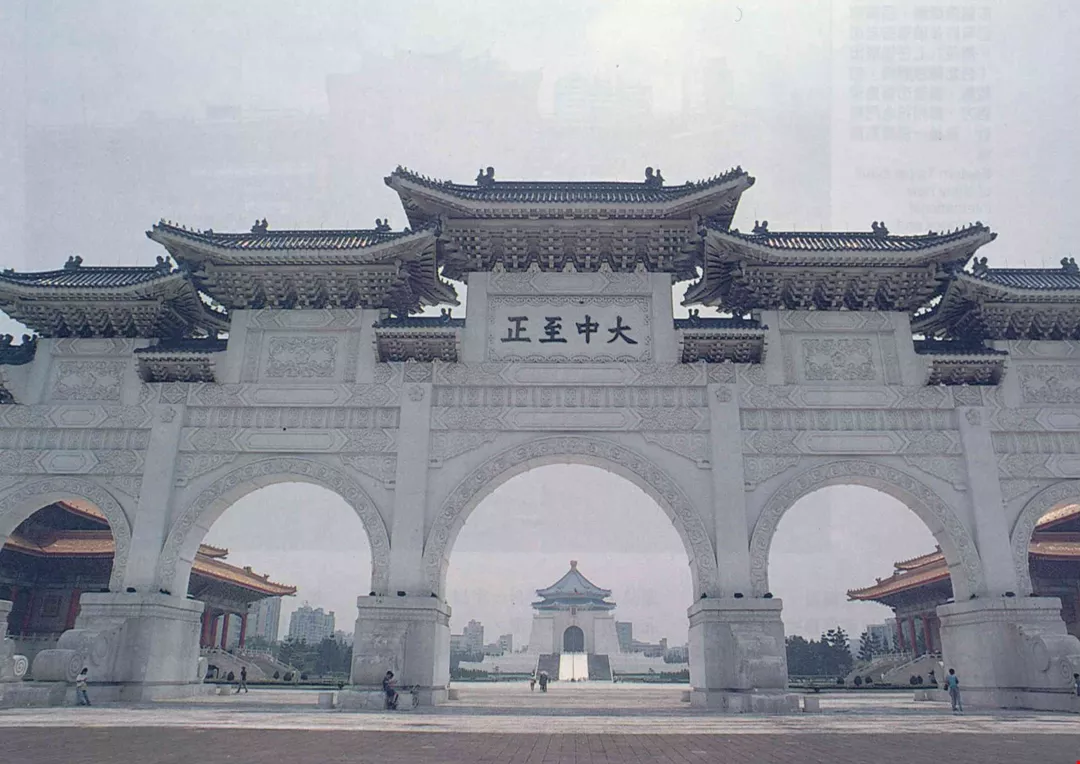
The Chiang Kai-Shek Memorial Hall in Taipei is a major tourist landmark. (photo by Pu Hua-chih)
The goose that lays the golden eggs
Is Taipei really specially blessed? Why is it the focus of so much attention, of so much envy and jealousy? Perhaps the following figures can help shed some light on this matter:
The Taipei Basin holds 12% of the island's population on only 0.8% of its land, yet it has one-sixth of the nation's high schools, one-third of its universities, and 54% of its cultural activities. At least 75% of all medium and large international conferences in Taiwan are held in Taipei. More than 90% of multinationals in Taiwan have their headquarters in Taipei. And among the 100 largest domestic companies, more than 70 are registered in the city and pay their business taxes there. Of the remaining, 10 can be found in the Hsinchu Science Park. Whereas numerous factories are spread throughout central and southern Taiwan, most are just producing for somewhere else. For these areas, a Taiwanese expression captures the situation pretty well: "The hens produce droppings but lay no eggs."
As far as the distribution of government largess is concerned, in 1998 government expenditures in Taipei City ran to about NT$176 billion-that's three times more than in Kaohsiung City and more than in Taichung City, Miaoli County, Taichung County, Changhua County, Nantou County and Yunlin County combined. Those six localities only received NT$120 billion in total. If expenditures were divided evenly among all the residents of Taipei City, each would receive NT$68,000, far above the NT$42,000 for the residents of Kaohsiung, the NT$25,000 for residents of Tainan City or the NT$17,000 for the residents of Taipei County. In light of this discrepancy, it's no wonder that the other counties and cities angrily look upon the residents of Taipei as "first-class citizens" who live in the lap of luxury, while taking everyone else for a ride.
These first-class citizens really do run through money like water. If you want to see how, you could start with Taipei's Mass Rapid Transit (MRT) system, which is the world's most expensive at NT$440 billion; the Kuandu Nature Reserve, for which Japanese experts were hired to perform wetlands restoration to the tune of NT$14 billion; the West Gate District reconstruction carried out in conjunction with the building of the MRT there, which came to more than NT$10 billion; the Mucha Zoo, which has consumed NT$30 billion since it was built in the 1970s; or the building of the Taipei Financial Center, which will stand 101 stories high, serve as an Asian landmark, and cost the city as much as NT$10 billion.
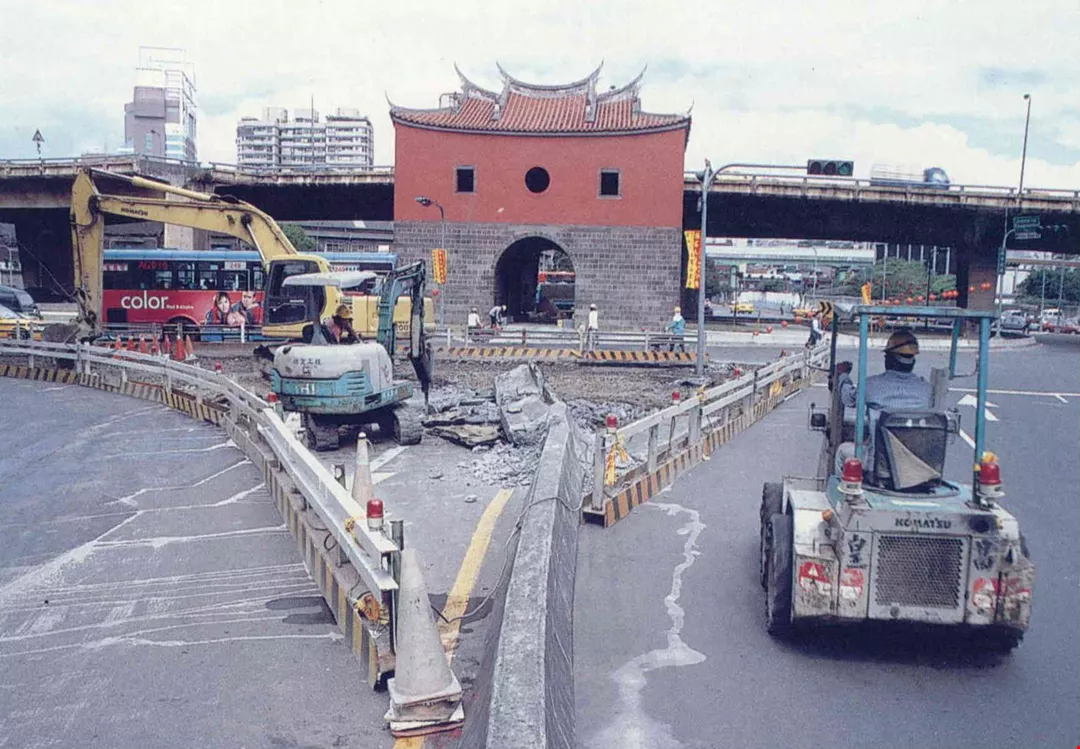
Eastern Taipei is full of shiny new international boutiques and department stores, whereas western Taipei's rundown streets have seen better days. When Ma Ying-jeou took over as mayor, he launched a campaign to breathe vitality into old neighborhoods. The area around the old North Gate is one focus for these efforts.
Two heads, north and south
This easy-come, easy-go attitude toward money has long been a characteristic of Taipei. Ever since Liu Mingchuan founded Taipei in the late Qing dynasty, rule over Taiwan has switched from nation to nation. Yet no matter who was in control, Taipei has not been shaken from its position as the island's center of government.
Nevertheless, "It has only been ten some years that Taipei has really left the others in the dust," argues Hsia Chu-joe, a professor at NTU's Graduate Institute of Building and Planning.
Hsia points out that although the Governor-General's Residence was located in Taipei during Japanese rule, in the agricultural Taiwan of that period, the Japanese colonial administration was concerned about rice and sugar production over the entire Western Plain and treated all the cities about the same. Moreover, at the end of the Japanese era, Japan began to put even more emphasis on Kaohsiung as a base for its advances into the South Pacific. This gave the impetus for Kaohsiung later developing into an "industrial port city."
When the ROC took over, government power returned to the Governor-General's Residence in Taipei, which became the Presidential Palace. Although Taipei remained the political and economic center, Kaohsiung remained as an important center of heavy industry. Export processing zones established in the 1960s in Nantzu and Chienchen attracted people from all over southern Taiwan. In the 1970s, during the era of the Ten Construction Projects, both China Shipbuilding and China Steel chose to locate in Kaohsiung. At one point, the city's port was the busiest in the world, as it sent products "Made in Taiwan" across the seven seas. It thus made a pivotal contribution to Taiwan's "economic miracle."
With the rise of industry in Kaohsiung, the agricultural counties of central and southern Taiwan began to lag behind, but at least there was a minimal kind of balance on the island as a whole with "two heads, one north and one south." And to some degree the provincial government's location in Nantou-and the resulting stream of visiting city and county bureaucrats-meant that central Taiwan wasn't all that forlorn.
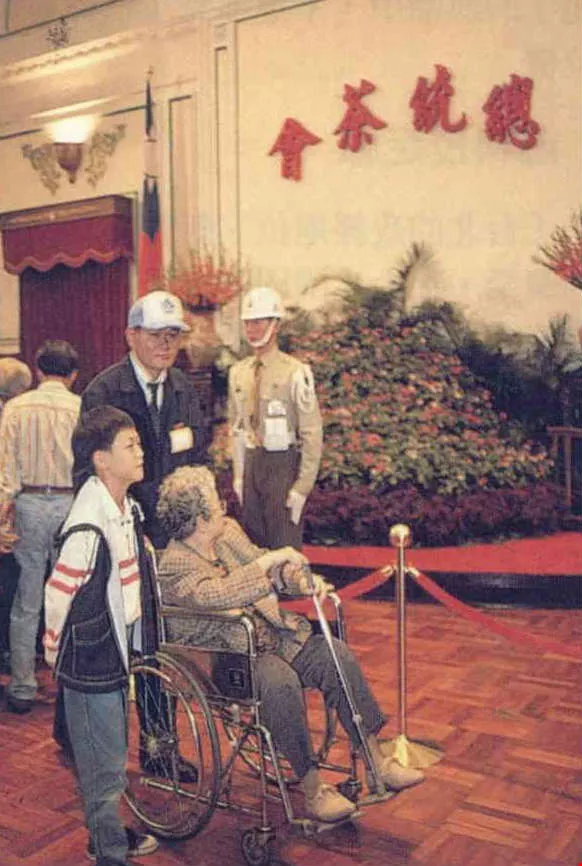
Visitors take a tour at the Presidential Palace. For the entire 20th century, Taipei was Taiwan's center of government, and this has made it a magnet for resources.
Taichung and Kaohsiung step out!
Well then, when did Taipei really start to pull ahead? And why?
Hsia Chiu-joe explains that the late 1980s were an important turning point. The rapid appreciation of the NT dollar necessitated a shift from the labor-intensive production on which the island had depended. Japanese and Western manufacturers left, and even Taiwanese companies began to pull up their stakes and move their factories to Southeast Asia and mainland China. What's more, there was a growing environmental consciousness that led the residents of central and southern Taiwan to start opposing industrial projects. Ten years ago the town of Lukang in Changhua County told Du Pont to look elsewhere, and three years ago Taichung County refused to allow Bayer to build a plant there. As a result, other multinationals planning major investment projects stopped even considering Taiwan.
"In fact, what Kaohsiung people want most of all is the 'three direct links' with mainland China," says Huang Jung-feng, the director-general of Taipei's Department of Reconstruction, who worked for the Kaohsiung City government for many years. "With regularly scheduled flights, Kaohsiung could turn itself into an international port led by its service industries."
Likewise, Lai Cheng-i, chairman of the Taiwan Province Association of Real Estate Investors, which is headquartered in Central Taiwan, recalls that ten years ago the Taichung city government drew up a new plan for the city that called for straight, broad avenues. Many businesses were privately expecting that the Port of Taichung would be able to establish direct shipping links with the mainland, and were even hoping to attract "red capital" from across the strait. They had visions of Taichung establishing important links to the Asia Pacific or even to the global community.
Much to these cities' frustration, for ten years there has been no progress on the "three direct links." Kaohsiung and Taichung have excellent ports, but they are like besieged cities with nowhere to go. Three years ago the Tuntex Building was completed in Kaohsiung. At 81 stories it is one of the tallest skyscrapers in Asia. Yet a series of rumors circling about its precarious financial status have turned it into a symbol of Kaohsiung's falling fortunes.
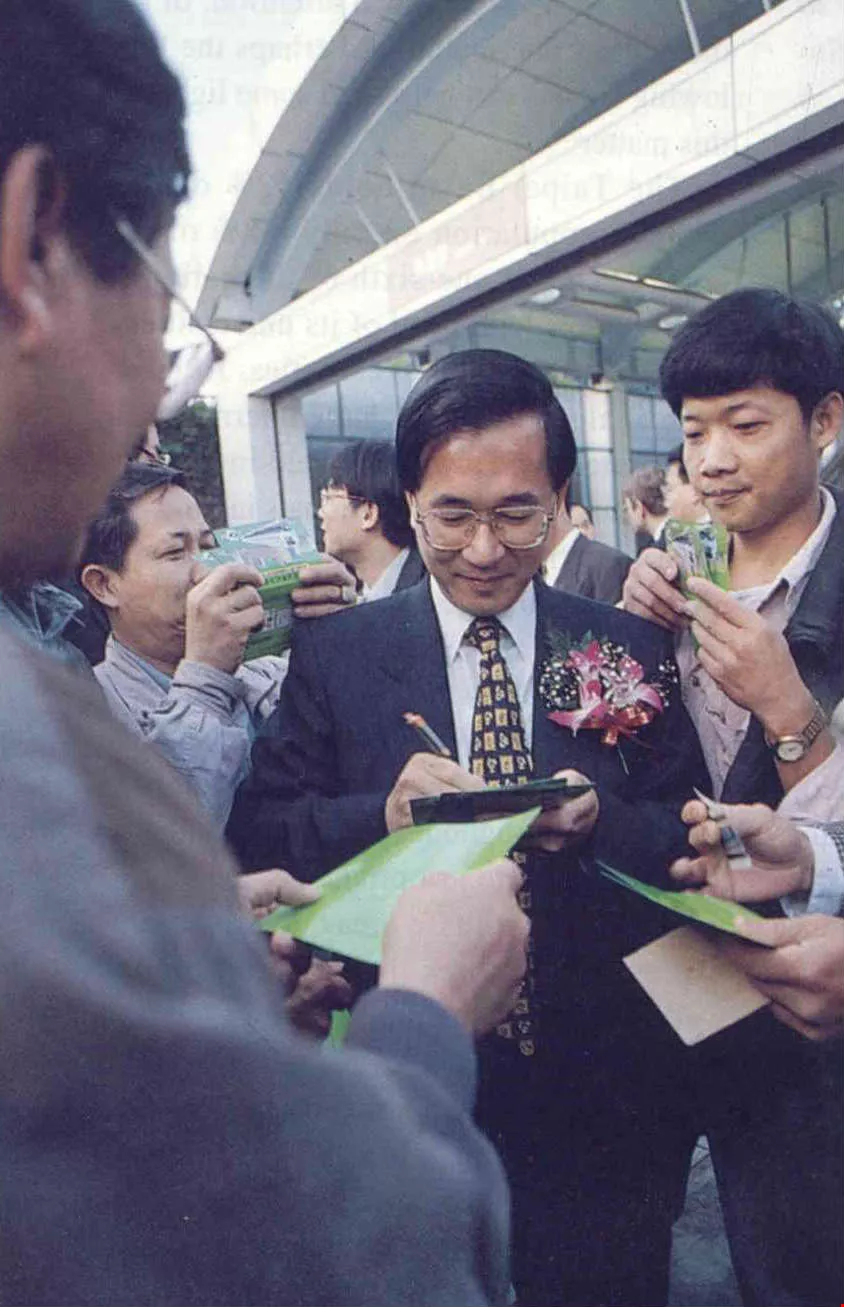
With its mass transit system up and running, Taipei has truly entered the ranks of modern international cities. When Chen Shui-bian was mayor one of his first successes was reviving the floundering Mucha Line. The photo shows him on a tour of the line. (photo by Hsueh Chi-kuang)
High-tech corridor
While southern and central Taiwan have fallen on hard times, Taipei City has taken full advantage of the 1990s trend toward globalized production.
"There is first of all Taipei's position of importance both for the economy and for government, and the thriving science park in Hsinchu," explains Hsia Chu-chiu, who is a professor of architecture and urban planning at NTU. "To these you add the international airport in Taoyuan and the construction of the second northern highway, and what you get is a 'high-tech corridor' from Taipei to Hsinchu." Hsia points out that this corridor extends overseas, eastward to California's Silicon Valley and westward to the production bases in the Pearl and Yangtze river deltas on the mainland. Taipei, however, plays a pivotal role in the middle, linking all the parts together.
"If you eat somewhere like the Agora Garden Conference Center, you'll hear people all around you saying things like, 'Have you been abroad recently?' or 'I've just come back from overseas,'" says Yang Ting-yuan, the former general manager of Winbond Electronic's semiconductor subsidiary. The outstanding performance of Northern Taiwan's high-tech corridor is driving the Taiwan economy and widening the gap between north and south.
Given this situation, where is there leverage to bring about a better balance between north and south? Any such attempt will hinge upon the central government working to redistribute wealth-to take from rich Taipei and give to its poor country cousins. How much would such action actually help? Although redirecting some of the billions appropriated for Taipei City would do little to fundamentally change the economic disparity, many experts believe that it would at least serve as a comforting gesture to the various counties and cities crying for help. But it would not get to the root of the problem.
"If you really want to help those cities and counties, then you've got to implement 'local self-rule,' so that the local governments (which are now only tertiary government units) really acquire sufficient power and money," argues Hsia Chu-joe. Otherwise, if the "southern science park" that is now being built in Tainan County is successful, perhaps it, in combination with the "three direct links" and the high-speed railway will create new opportunity for central and southern Taiwan.
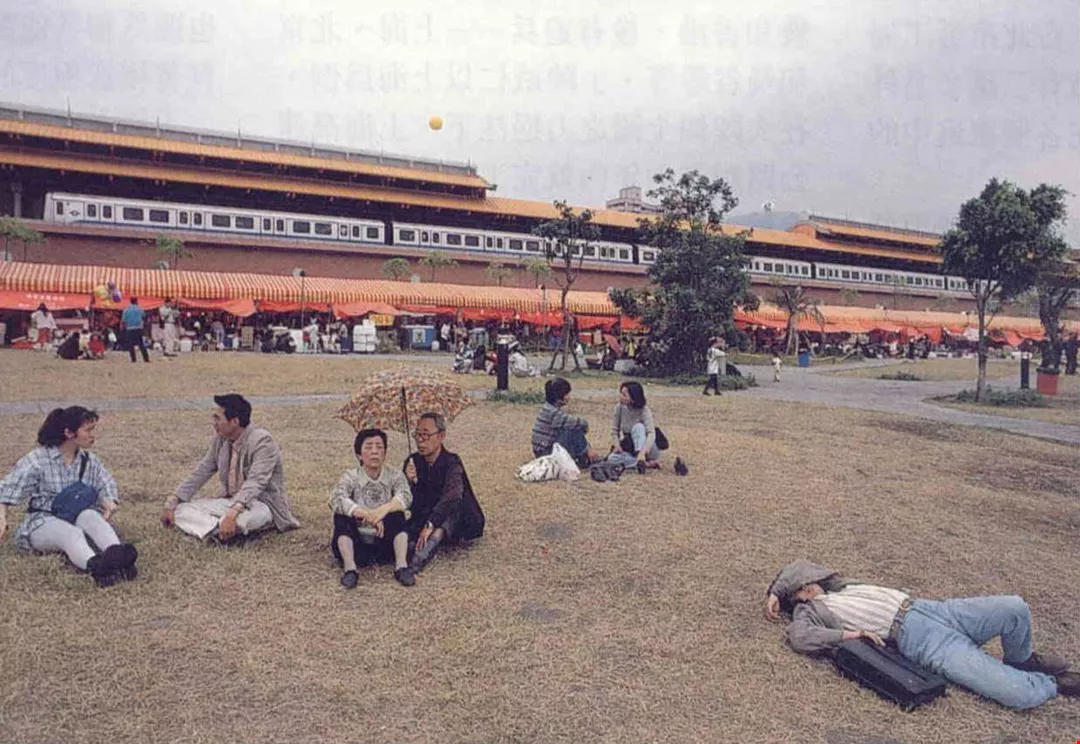
When the Hsintien, Tanshui, and Chungho lines opened one after another, it reduced commuting times within Taipei County and gave Taipei City residents greater recreational opportunities. Building a closer relationship between Taipei City and Taipei County may well be the best choice for the future. The photo shows an MRT station in Tanshui.
Knowing New York better than Hualien
A city can thrive or wilt in response to political and economic changes to a nation. These developments can even slowly and silently change its basic character. Taipei's character is much different than those of other Taiwanese cities.
"In attitude, Taipei is like a different country from central and southern Taiwan," observes Chen Tung-sheng, chairman of NTU's sociology department, and a member of the Democratic Progressive Party's brain trust.
First of all, while most counties and cities regard the central government as the boss and Taipei as the imaginary enemy, only Taipei has an "international outlook."
Chen points out that every year more than 900,000 residents of Taipei-or more than 30% of its population-travel overseas. Hsinchu comes in second at 28%. By way of comparison, only 6% of Tainan residents and 5.4% of Kaohsiung residents go abroad every year. Every winter and summer vacation Chen's kids go overseas to study English. But the Chens are just another middle-class yuppie family in Taipei.
"Taipei youth may well know more about the latest fashions in Tokyo and New York than about Yunlin or Hualien," notes Chen.
You can see one example after another of how Taipei has its eyes on the world and fingers on the global pulse. At the beginning of September, the Taipei City government broke new ground by sponsoring a gay pride festival. It even invited Michael Bronski, a leader of the gay pride movement in the United States. The event was fiercely opposed by the Presbyterian church and other groups in Taiwan, but it clearly earned points with foreigners who participated enthusiastically and saw it as an embrace of tolerance and diversity.
"The fact is that Taiwan puts a lot of effort every year into providing foreign assistance and sending the head of state overseas, but we forget that we engage in foreign relations with our everyday actions," says Cheng Tsun-chi, who is director of Taipei's Bureau of Labor Affairs. More than 30,000 foreign workers, mostly Filipino or Indonesian nannies and nurses, live in Taipei.
"About 10,000 of these foreign domestics leave every year when their contracts expire. If these 10,000 people dislike Taiwan, their opinions will get passed around by word of mouth when they return home. What hope will there then be for Taiwan's foreign relations?" Last year Cheng Tsun-chi put on a big event for foreign workers, and this year he has created an English newsletter for foreign workers. Says Cheng: "Guests from afar should be treated with respect-not only to show that Taipei is serious about becoming an international city, but also because these visitors are one of the links Taipei has to other international cities."
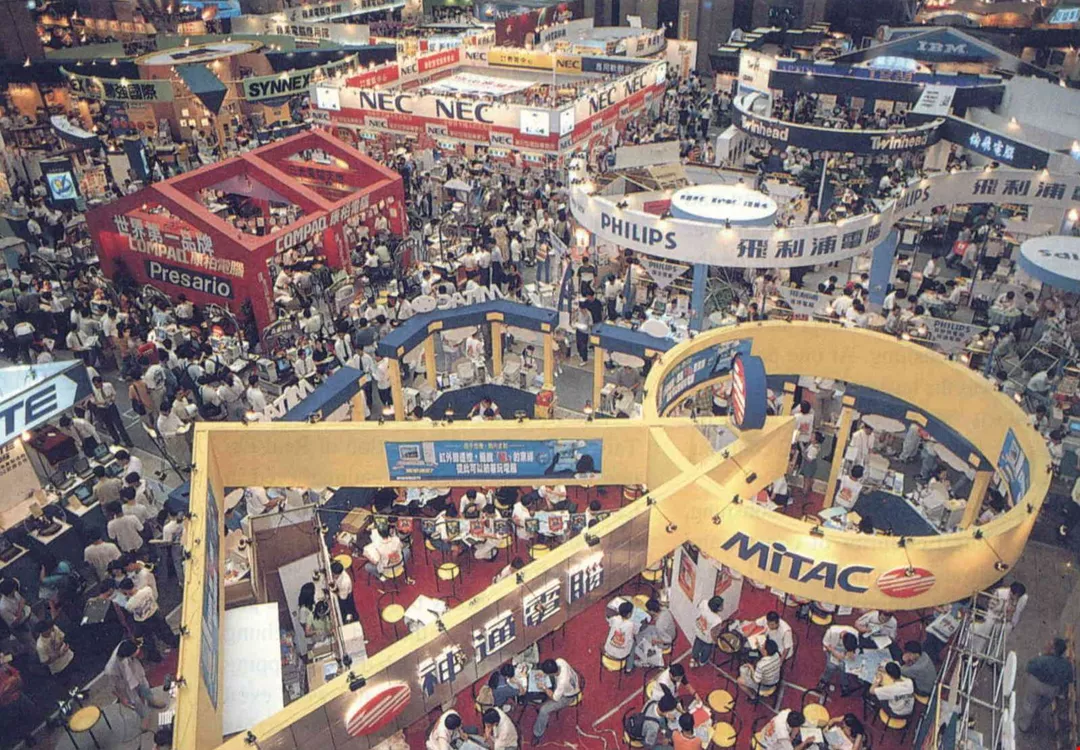
Year after year multinational corporations arrive in droves for the Taipei Electronics Show. The extent of Taipei's ties to the international community is clear from the sight of foreign buyers arriving one after another.
Not losing face for the nation
"Taipei is under a lot of pressure because it faces international competition," says William Chen, the head of Taipei's Bureau of Urban Development. When multinationals are deciding where to put their regional headquarters they make city-to-city comparisons. Last December the English-language magazine Asia Week made a list of Asian cities that put Taipei and Osaka in a tie for second place among the most livable cities in Asia, behind only Fukuoka. Taipei was up three places from the year before. Nevertheless, since the chart changes year to year, Taipei could slip in the future if it isn't careful.
"Taipei is struggling to catch up with Tokyo, Singapore and Hong Kong, and it has cities like Shanghai, Beijing, and Bangkok running fast on its heels," says Chen. Chen points out that with the PRC lavishing resources on Shanghai, the city was able to complete its highway and put its electric cables underground in just two years. It was even able to lay down an entire fiber optic network.
"In terms of quality and diversity, Taipei is ahead, but it's a step behind when it comes to bringing out the pickaxes for an infrastructure project," Chen admits. For instance, there has long been talk about installing a proper sewage treatment system in Taipei, but currently only 43% of Taipei homes are connected to it. The sewage from most Taipei homes pours out, untreated, into rivers. The capitals of the advanced Western nations would never have allowed such a situation to persist.
The residents of Taipei regard themselves as citizens of the "global village," and are confident in facing international challenges. As a result, they find it hard to accept the current government's "Taiwan-first" orientation and its focus on the "native soil." Recently, there has been a big controversy about which romanization system to use for writing Chinese characters in English. The ROC government insists on casting aside the Hanyu Pinyin system that has been used on the mainland and around the world for many years and instead adopting the Tongyong Pinyin system, which has been specially created by a Taiwanese scholar. This has raised the hackles of Lung Ying-tai, the director of the Taipei Bureau of Culture: "The new government cannot try to lock up the nation. It cannot put the elimination of pan-Chinese influences as the starting point for all its thinking!"
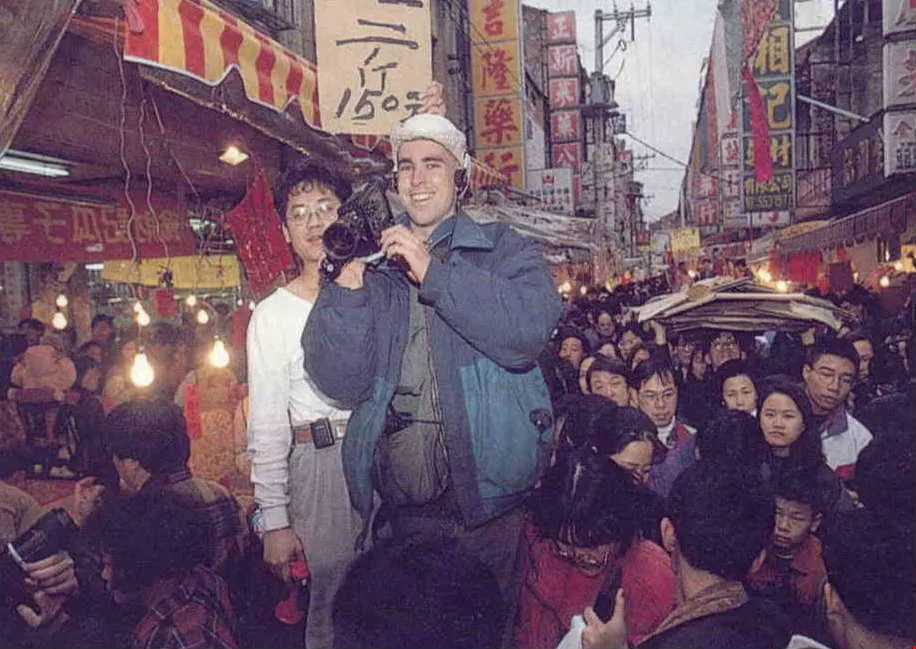
Tihua Street, with its heaping piles of Chinese medicines and other goods, is one of the few old streets left in Taipei. It is a mecca for Taipei shoppers stocking up on goods for the New Year's festival.
Not talking the talk
With its international orientation, Taipei also has a much different attitude than other counties and cities, especially southern ones, when it comes to the issue of independence versus reunification.
"Over 30% of Taipei's population is made up of mainlanders [those who fled the Chinese Communists, and their descendants]," explains Chen Tung-sheng. "This figure is much higher than the 13% average in the nation." The mainlanders have introduced the cuisines of their home provinces and a longing for the old country. Likewise, the attitudes of civil servants loyal to the KMT have also taken firm root in Taipei. What's more, a larger proportion of Hakkas live in Taipei than any place ooutside of their traditional bases in the countryside, and the city also has a large community of aborigines. With this population structure, the Taiwanese chauvinism so prevalent in southern Taiwan is rather rare in Taipei.
Oddly, as Taipei has gone out of its way to establish ties with the international community and trade with mainland China, it has, whether by intention or not, created distance between itself and the rest of Taiwan. Chen Tung-sheng, who grew up in Shalu, Taichung County and has a strong Taiwanese consciousness, remarks that you simply can't get by without speaking Taiwanese south of the Chuoshui River. Only in Taipei do people dare to "eat Taiwanese, but not speak Taiwanese." Both in terms of language and national identity, there is a clear "split between north and south."
To take the simplest example, current ROC president Chen Shui-bian had an outstanding record as mayor of Taipei. Moreover, he wore the mantle of being a "Taiwanese native son." In any other county or city, his re-election would have been a sure thing. But in the 1998 mayoral election, he lost by more than 100,000 votes to Ma Ying-jeou, whose parents came over from the mainland. The year that he lost, Chen magnanimously said, "a first-rate city is bound to be a very picky city." He did so to show that he bore no grudge, but perhaps his statement was also a harbinger of the current animosity between the President's Office and City Hall.
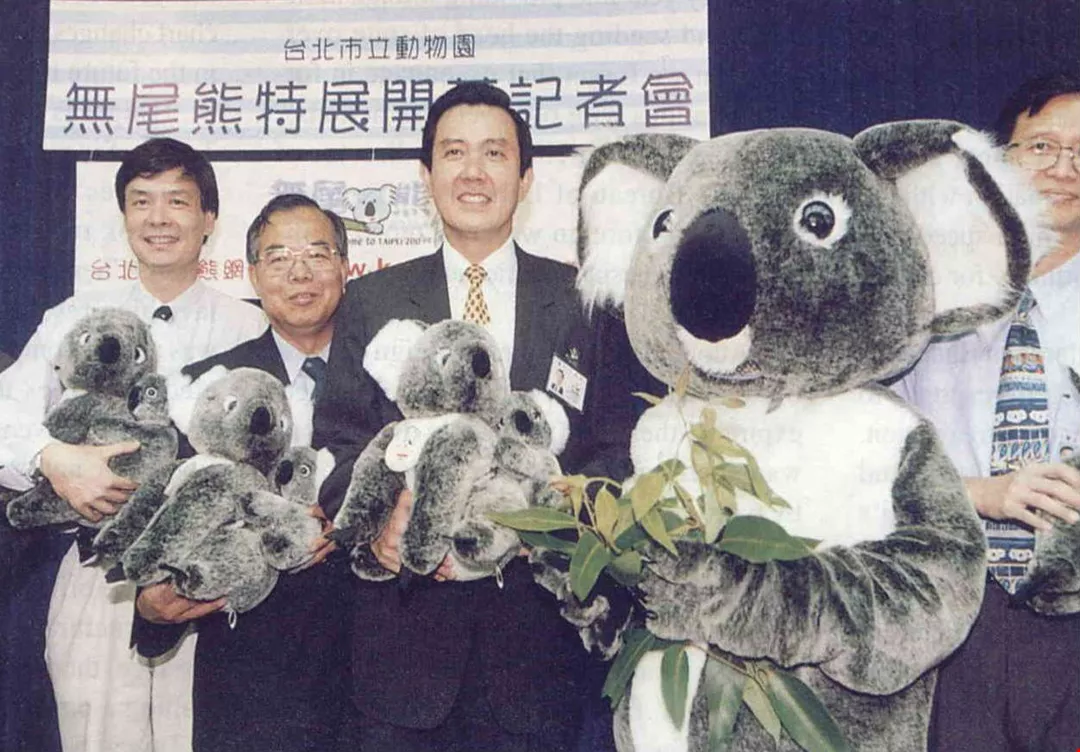
"Welcome everyone to come see koalas in Taipei!" So declares Taipei Mayor Ma Ying-jeou at a press conference. The rich variety of activities in Taipei only adds luster to its star. (courtesy of Taipei City Government Department of Information)
New hometown
In the eyes of the other counties and cities, Taipei may stand alone, but Taipei people themselves struggle with their sense of identity.
"Taipei is a classic immigrant city, whose citizens form a 'motley crew,'" says Tseng Shu-cheng, head of the Urban Reconstruction Organization and an associate professor of architecture at Tamkang University. "Its citizens may all earn their living here, but they don't share collective memories, and they lack any bonds of affection to the city or ties to personal networks here." In a survey he conducted several years ago, Tseng found that only one in five Taipei residents were born there.
"Ask somebody in Taipei where they are from, and seven out of ten will say they are mainlanders or are from Tainan, Pingtung, Penghu or wherever. They are practically always from somewhere else!" In Tseng's view the coming decade will be key to determine whether the city can transform itself from a "city of immigrants and migrants" to a "city of residents." He is currently promoting a community development plan in the hope that neighborhoods full of strangers can pull together, and people living in Taipei can begin to regard it as their "new hometown."
But does Tseng himself consider Taipei to be his "new hometown"?
"As a matter of fact, I feel very conflicted," he admits. "If I don't move back to my hometown within five years, I'll probably never return." Tseng, who strongly identifies with Tainan County as the place where he grew up, goes back every month to visit his parents. In his hometown there are 20,000 people, and only two elementary schools and one junior high school. There, if a neighbor isn't a relative, he's probably an old school chum or co-worker. You really get a hometown feeling in a place like that. But can Tainan provide him with career opportunities? Won't his children lose the educational race before it even begins? He has seen a syndrome play out there: people's parents die, and then they sell their farmland, let their family home go to ruin, pull up their stakes and move to Taipei. Because he knows that his hometown needs people like him to come back and work on its behalf, he really feels torn.
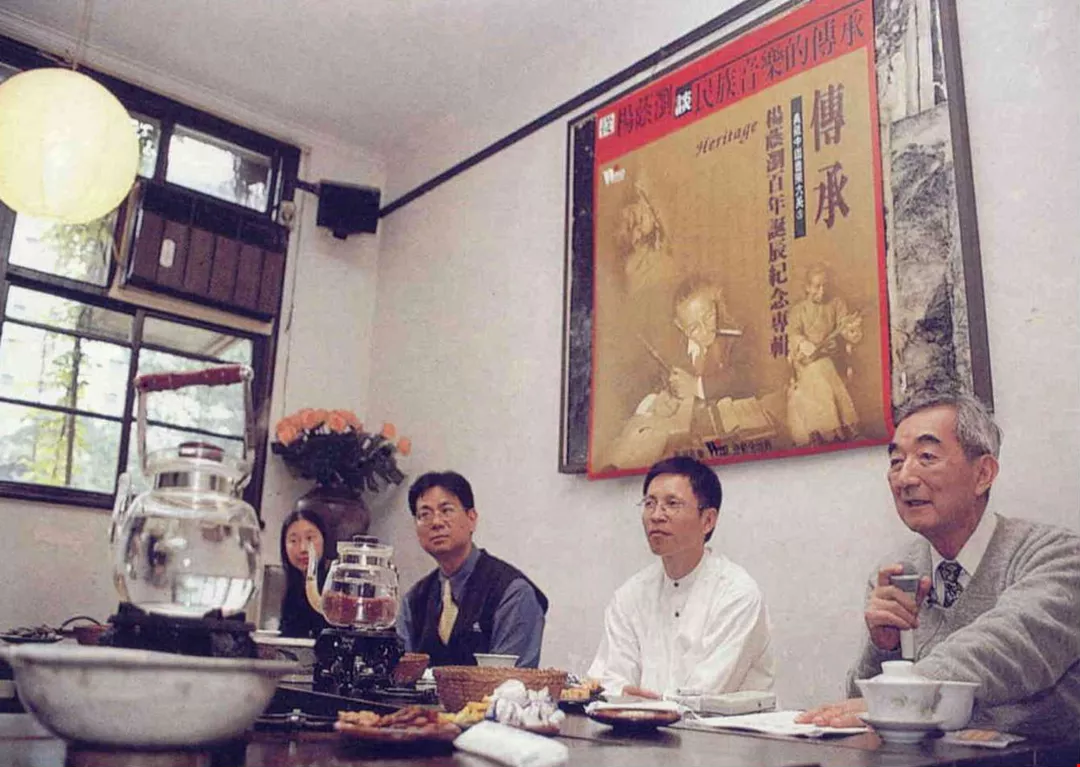
Its 100-year history of attracting the island's leading cultural and literary lights combined with the careful planning of the past few years have turned Taipei into a great walking city. You never know when you will come across a cultural gem in some out-of-the-way corner of the city. The photo shows the Wisteria Tea House, a pioneer of "salon culture" in Taipei.
Missions impossible
"While many cities and counties want to rediscover their old sense of self, Taipei wants to invent a self-identity that it never had," explains Tseng, getting at the crux of the difference.
And so, at the beginning of the year before last, Taipei City began instituting a system of "community planning masters." These unpaid volunteers selected by City Hall gather suggestions and criticisms from residents and communicate with the elected neighborhood chiefs. Then, after establishing concrete plans, they can apply to the city for financial assistance to implement them. The goal is to get the citizens involved, so that they can help create a Taipei that they feel belongs to them.
"Over the past two years, we have discovered that Taipei City is not nearly as cold and lonely as we had once imagined," says William Chen with excitement. In order to expand participation, the city's Urban Development Department this year has begun to train "seed planning masters." Two-thirds of the 48 "seed students" are professionals, including seven who have doctorates. The high quality of people in Taipei has startled Chen, who worked for a long time in the provincial government.
The people of Taipei can be proud of their high level of education and earnings and their discipline. When Chen Shui-bian was mayor he launched a major campaign against the sex industry, enforced laws against drinking and driving, and required motorcycle drivers to wear helmets. Even Taipei residents themselves were surprised at their ability to accept such high standards. Since Ma Ying-jeou has taken over as mayor the city has required its citizens to take on another duty, which was formerly regarded as a "mission impossible": recycling in conjunction with using high-priced officially approved garbage bags. Starting in July of this year, most Taipei residents, who identify themselves as being environmentally conscious, have complied and now separate their garbage.
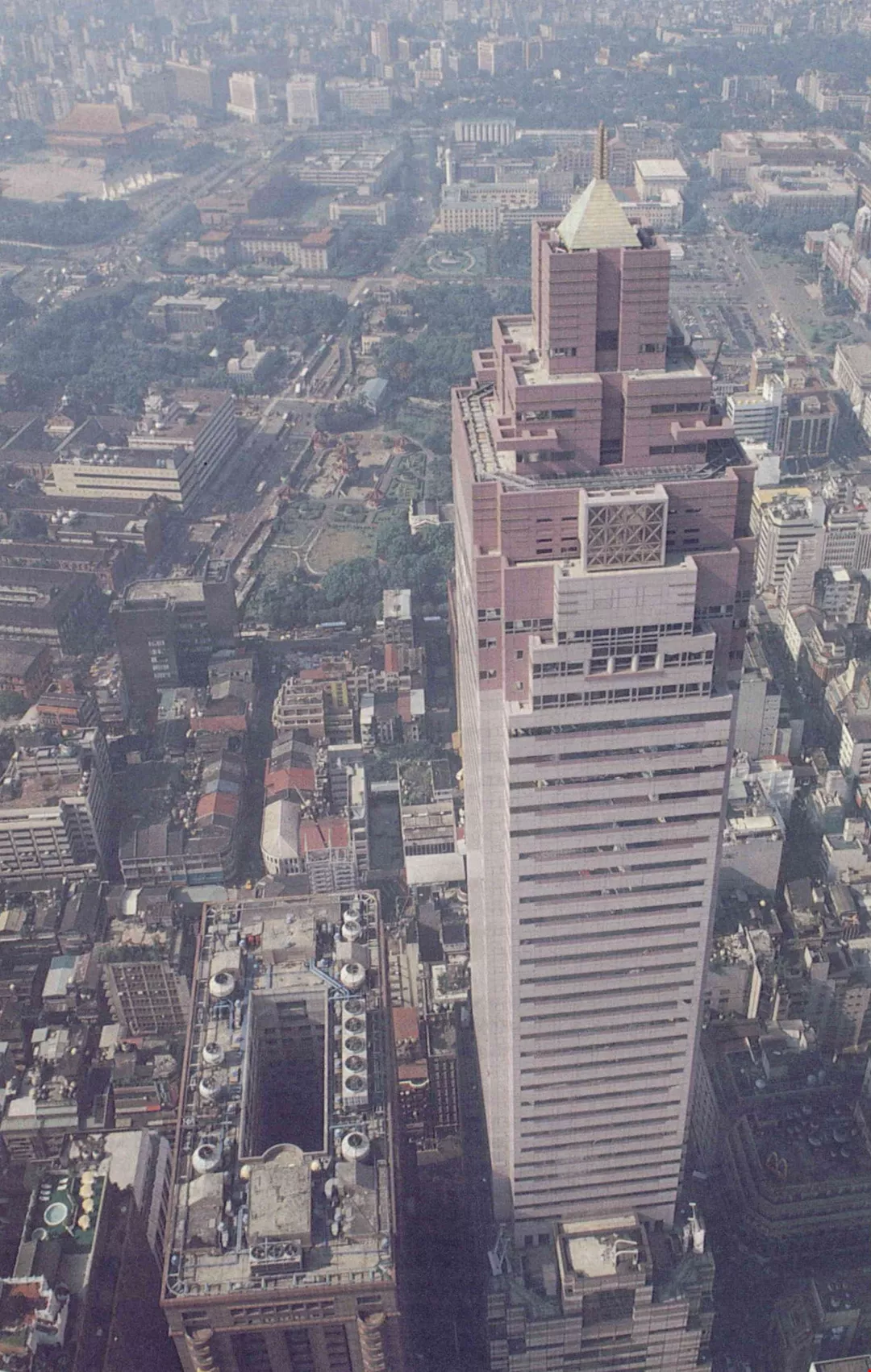
The 51-story Shin-Kong Mitsukoshi Building is a Taipei landmark, and the Po-ai District behind it is the center of ROC government power. The Presidential Palace is visible in the upper right corner of the photograph.
One big family
"Although Taipei City has excellent financial resources and special qualities, please don't exaggerate these differences," cautions Ou Chin-te, the assistant mayor for government services. "And it's even more important not to allow political or party differences to create a situation where regions clash or go their own ways." The element of the Taiwan experience that is most worthy of the nation's pride is the relatively even distribution of wealth and resources. While Taipei has National Taiwan University and National Chengchi University, distant Nantou has National Chi Nan University and Chiayi has Chung Cheng University, both of which also have first-rate faculties and curriculums.
What's more, "Though people in Ilan and Hualien may earn less money and have fewer facilities and less variety of activities, they also enjoy a lower cost of living, a more relaxed pace of life and clean air," notes Ou. Different cities serve different functions. They can't be expected to be similar in every respect.
Compared to many developing countries, where one city often stands far above the others, Taipei's advantages are really not that remarkable. Tseng Shu-cheng notes that the areas close to the train stations in Shanghai and Guangzhou are thronged with illiterates looking for work and that beggars can be found on virtually any street in Jakarta. These scenes are the result of great poverty in the countryside. Farmers have no choice but to come to the cities and struggle at the bottom for the crumbs of the wealthy. Even in Japan, an advanced industrial nation, Tokyo is 4.6 times as large as Osaka, the next biggest city.
Linking arms
The people of Taipei are not unaware of their advantages and distance from the "native soil." When Lung Ying-tai took over as head of Taipei's Cultural Affairs Bureau, her first move was to invite other local culture officials to a meeting. Lung says that Taipei very much wants to share its resources and experiences with other cities and counties. Whether holding an international cultural event or setting the city's cultural policies, she always asks for the participation or input of other cities and counties. Next year, Taipei wants to hold an "Asian City Cultural Summit." Already 21 counties and cities in Taiwan have signed on as co-sponsors.
The "Taipei experience" can be used beneficially. Yet the long-standing differences between Taipei and other localities, as well as the differences in ruling parties, get in the way. Seven southern counties and cities have formed a political league centered around Kaohsiung. Taipei, on the other hand, can't even get along with Taipei County, which completely surrounds it. Ou Chin-te admits that Taipei has hardly any high-level ties to other cities and counties. The city is like a lonely island or a proud and arrogant peacock, fated always to be alone. This is Taipei's pain, for sure. But is it not also Taiwan's loss?

@List.jpg?w=522&h=410&mode=crop&format=webp&quality=80)


@List.jpg?w=522&h=410&mode=crop&format=webp&quality=80)
@List.jpg?w=522&h=410&mode=crop&format=webp&quality=80)
