Cleaning Products--Not So Clean!
Chang Chiung-fang / photos Chuang Kung-ju / tr. by Scott Gregory
August 2007


It's no exaggeration to say it--cleansers aren't clean!
Some people have even accused bathroom soaps and household cleansers of being the greatest poisons in the modern home. The labels on these products have never been clear, and inattentive consumers put little thought into their purchases.
Cleansers may kill bacteria, but they are also hazardous to human health and to the environment. They can even cause genetic problems. In these days of ever-present cleansers, it's best to be cautious.
In June, Newsweek magazine reported that the ratio of male to female white suckerfish in Colorado's Boulder Creek was 50:50 upstream, but near a wastewater treatment plant downstream there were five females for every male and an abundance of fish that had both male and female characteristics. The reason for the changes was found to be hormones in the water.
In the same issue, a Harvard researcher was reported to have discovered that "environmental hormones" have found their way from cleansers and plastic goods into the human body, and that these hormones affect sperm counts.
The environmental and health dangers presented by cleansers have reached the point where they cannot be ignored. European and North American nations are now beginning to meet the threat with appropriate new laws.
However in Taiwan, where environmental protections are not yet firmly in place and where many consumers lack consciousness of the issue, there are still a few myths to be debunked and regulatory systems to be put in place.
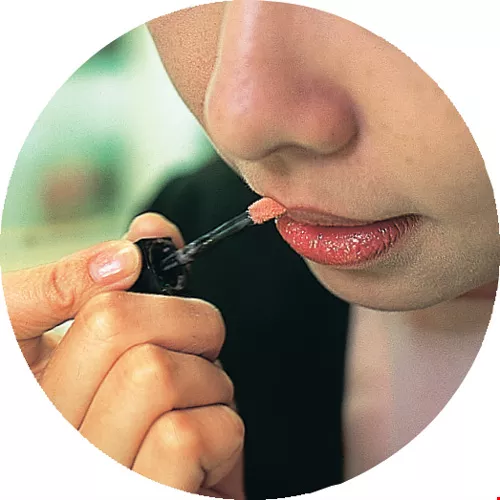
Clean as new?
There are over 100 cleaning products in common use today in Taiwan, from facial cleansers to body soaps, laundry detergent, dishwashing soap, and floor scrubbers, all advertised as being "new extra-strength" and able to "get it as clean as new." Lin Pi-hsia, a former active member of environmental protection groups such as the Homemakers' Union and Foundation, is now working to develop non-toxic cleansers. She says that Taiwan's household cleanser market is currently oriented toward "strength" and "price," so cheap but dangerous products dominate.
Even more worrying is the lack of legal requirements to list the ingredients of such products on their labels. Many companies, claiming their formulas are "trade secrets," even refuse to release details to inspectors and researchers. Few customers take the time to look into these matters themselves--they just bring these cleaning products home by the can and bottle without ever realizing that they might be hazardous to health and environment.
In April 2005, a Consumers' Foundation survey of cleaning products found that even some well-known brands of toothpaste, dishwashing liquid, moist towelettes, and other products contained triclosan. The foundation demanded that manufacturers recall the products immediately.
What is triclosan, and why is it added to cleaning products?
Consumers' Foundation board member and National Taiwan Normal University chemistry professor Gaston J. C. Wu says that triclosan is a potent antibacterial and antifungal agent. When added to water in a concentration of just 0.03 parts per million, it can kill all microbes it meets. Products surveyed had concentrations of triclosan as high as 0.3%--100,000 times more than needed to kill bacteria.
In addition to being a potent killer of bacteria, triclosan is also an environmental hormone. It can enter the body through the skin and slowly cause a hormonal imbalance. It should also be noted that there have been reports that suggest that when triclosan mixes with chlorine in tap water, poisonous chloroform is created. Chloroform can also enter the body through the skin and, with chronic exposure, cause depression, liver damage, and even cancer.

Environmental hormones are all around us. Dioxins can be found in cosmetics, PET bottles and other plastic products, the air, and seafood.
Another side to cleansers
When these cleaning products first came into use, it was not known that we might be exposed to such dangers while brushing our teeth or washing dishes. According to the 1993 book Our Stolen Future, the "chemical age" came about after World War II. By 1982 there were 350 times more synthetic chemical products than there were in 1940, and billions of pounds of man-made chemicals "pouring into the environment."
Gaston Wu says that there are currently more than 12 million synthetic materials worldwide, but the uses and properties of most of them are not yet known. Only 70-80,000 of them are used frequently, and of those several thousand can be used in cleaning formulas. But no matter whether it's for washing hair, faces, dishes or floors, most cleaning products consist of the same elements: surfactants, intensifiers, fluorescent whitening agents, enzymes, chelating agents, emulsifiers, and the like.
Chen Chin-shu of Chang Gung Biotechnology Corporation explains the terminology: surfactants are used in cleansers to separate oil from water, and as the name implies, intensifiers make the cleanser stronger. Phosphorus, for example, adds cleaning strength. Enzymes act to break apart proteins and fats, and chelating agents extract heavy metals. Emulsifiers can dissolve grease. Fluorescent whitening agents, however, don't actually clean at all--they merely use the whitening effect to make the consumer think they do.
The ever-present cleansers have so many different kinds of ingredients it is hard to tell the difference between them or to know their dangers. Some synthetic materials used might cause allergies, chemical burns, and even cancer, but the greatest threat from them is environmental hormones.
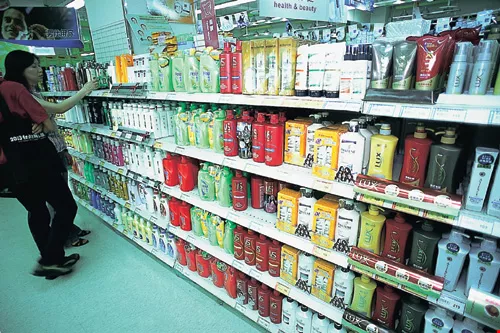
Anti-dandruff, anti-itching, moisturizing, conditioning--but which ones are healthy and environmentally friendly? It's confusing for consumers.
Down the drain
"Environmental hormones" are chemicals in the environment that can interfere with living organisms' endocrine systems. They appear to the body to be natural hormones and fool it into absorbing them. The result is that the normal transmission of signals from hormones is disrupted, much like a telephone line with static, which can lead to serious problems such as underdeveloped sex organs and deficiencies of the immune system which in turn may cause malignant tumors, infertility, and even extinction for some species.
Researchers in Europe and North America now suspect more than 70 chemicals of having hormone-like properties. Those with the strongest effects in humans mimic estrogen, androgen, thyroxine, and epinephrine.
Which of the known 60-70,000 synthetic materials are environmental hormones, then? Unfortunately, there is no way for the scientific community to determine that in advance. In the cases of the pesticide DDT that was widely used in the 1960s, the drug thalidomide that led to babies being born with missing limbs, the synthetic growth hormone DES that caused infertility and illnesses in the children of its users, PCBs that cause acne, allergies, gout, anemia, and cancer, and dioxins, which came to be called "the poison of the century," it was only after many people started to show symptoms that they came under scrutiny.
Environmental hormones are invisible, but they are all around us. They are lurking in pesticides, food additives, industrial chemical additives, and medicines. But the greatest threat is posed by the ones we are in contact with every day--the ones found in cleansers.
Take surfactants, for example. They are an important ingredient in many cleansers, but since natural ones are more expensive and scarce many manufacturers use petrochemical ones. The commonly used nonyl phenol is an environmental hormone.
When Ding Wang-hsien, professor of chemistry at National Central University, conducted a survey of dishwashing soaps and floor cleaners on the market in 2002, 41% of his 90-plus samples contained nonyl phenol.
This year, the Department of Health asked Associate Professor Tsai Shih-wei of National Taiwan University's Institute of Environmental Health to analyze and report on the amount of nonyl phenol in food and cleansers on the market and the public's exposure to it. The result was even higher--he found that of 75 products, 66% were positive.
The scary thing is, as a synthetic material, nonyl phenol's bonds do not naturally break down--no matter how many times you rinse off eating utensils after washing them or how hot the water you use, there will still be some nonyl phenol from the soap on them. Synthetics also build up. Chen Chin-shu says, "When they go down the drain, they are like plastic in the water. Not only do they pollute the environment, they also enter the atmosphere with the moisture from the water and spread far and wide."
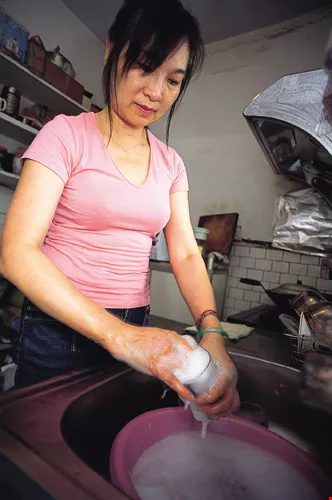
Public tabletops, counter tops, and windows as well as household dishes and glasses carry residues from cleansers.
An unbearable burden
Usually, harmful materials are tolerated as long as they are present at "safe" levels. But environmental hormones are different as they are harmful to the environment and health even in minute concentrations. And worryingly, the levels of nonyl phenol in Taiwan are much greater than just "minute."
Environmental Protection Administration statistics show that 16,000 metric tons of nonyl phenol are used in Taiwan each year. Of that amount, 70% is used in industrial manufacturing processes, and 20% is used for industrial cleaning. Industrial wastewater is recycled and processed, but 10% of the total--or around 1,600 metric tons--comes from household cleaning products that go down the drain and into the environment. A survey by Mao I-fang of National Yang Ming University's Institute of Environmental and Occupational Health Sciences showed that the average Taiwanese office worker is exposed to ten times more nonyl phenol than his or her counterpart in New Zealand.
Though the body can break down toxins, adults might accumulate them over time and only start to show symptoms when they reach a certain amount. But to those who take medications and depend on their livers to break them down, any more is an unbearable burden. Expectant mothers also need to be especially careful since the fetus depends on hormones at every stage of development. Any "bogus" hormones could cause serious disruptions.
According to Lin Pi-hsia, in countries like Germany, the Netherlands, and the UK, manufacturers have voluntarily given up the use of nonyl phenol. Also, in 2001 Norway explicitly banned the use of industrial cleansers containing nonyl phenol. Taiwan's Environmental Protection Administration is still at the stage of requesting researchers to study the issue, and it is uncertain whether a ban will be implemented.
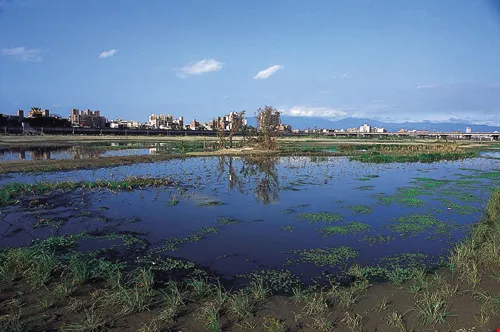
When waters become polluted or dead, it's not only the aquatic life that suffers but humans as well.
Myths about cleansers
"To the body, cleansers are always foreign matter. There are too many dangerous elements lurking in them. Consumers are best to use them in moderation when they can, and avoid using them when they can," Lin says. Seeing the shocking rise in cancer (one out of every 3.7 people dies of cancer), infertility (one out of every six couples is infertile), allergies, neurological and mental disorders, and hormonal imbalance, Lin--a founding member of the Homemakers' Union and Foundation--decided to devote herself to the development of non-toxic cleansers as CEO of Ever Growing Agriculture Bio-tech Company, Ltd.
Lin says that everyone uses cleansers every day, but due to inattention or even misleading advertisements people have many wrong ideas about them. These ideas influence their purchasing habits, and to meet consumer demand the manufacturers add all sorts of chemicals that actually have nothing to do with cleaning like foaming agents, fluorescent agents, fragrances, and fixatives. Consumers are hurting themselves with their lack of knowledge.
There are still many myths about cleansers in the Taiwanese market--for example, the association of foam with cleaning power.
"Taiwanese consumers have been brainwashed by the manufacturers into thinking that the more fine bubbles there are the more powerful the cleaning action," says Chen Jin-shu. Manufacturers add foaming agents to make their products foamier without realizing that not only have they nothing to do with cleansing power, too many bubbles may actually impair cleaning by making the surface too slippery. More water gets wasted as well.
Another wrong-headed idea is trying to wash clothes to get them "as white as new."
Ads for detergents are often based around getting clothing "as white as new," but in order to whiten old clothes, bleaches and fluorescent agents are added. Ironically, these fluorescent "whitening" agents do not assist in cleaning at all. Rather, they consist of a chemical that gives off a blue light by reflecting ultraviolet rays, making dingy old clothes fool the eye and appear whiter. It may work, but the agents that are left on the clothes can bond with proteins in the skin, causing allergies, inflammations, and pH imbalances.
Additionally, most people prefer scented detergents, soaps, and shampoos. Some will even choose products based solely on the scent.
It has become imperative for manufacturers to add scents to cleansers in order to grab consumers' attention. Natural scents are expensive, however, so they substitute artificial ones for them. To get the scents to hold, they also add fixatives.
"Scent molecules are very small, and these artificial ones disperse very quickly, so they are likely enter the body and accumulate in cells, affecting health," Lin says.

Natural cleansers
Synthetic chemical cleansers are troubling, so some environmental groups are advocating that we return to traditional cleaning methods such as using soy bean powder, soapberries, and enzymes.
These materials are not harmful to the body, but even they have an effect on the environment. The biologically active enzymes in natural detergents, for example, could interfere with the ecology. Soy bean powder contains the nutrients phosphorous and nitrogen, which find their way into lakes and rivers after going down the drain and affect water quality. (The presence of too many nutrients in water causes overgrowth of oxygen-depleting algae, which choke marine life and severely reduce water quality.) Toxic materials are created indirectly.
There is also the "physical washing" method developed by biotechnology companies: just as petroleum is turned into petroleum-based products, orange and coconut oil are turned into natural surfactants that are environmentally safer. To them are added edible minerals and trace elements, and the end product can be used as a cleanser.
Chen Jin-shu gives the example of the mineral magnesium, which can change the surface tension of water and make it easier for the surfactants to work their way into the fabric of the clothing and carry away the dirt.
However, Gaston Wu points out that in recent years Europeans have been looking at the "life cycle assessment" of products, demanding not only that the product itself is non-toxic but also the processes used to create it.
For example, activated carbon can be used in physical washing and it absorbs impurities, but on the other hand it is expensive to make pure activated carbon that isn't hazardous to the health. The processing of activated carbon could also be a waste of resources or harmful to the environment. Looking at the situation from where we are now, it seems impossible to completely escape synthetic chemical cleansers.
Cleansers free us from the danger of germs and disease, but using them too much or inappropriately carries other threats. With cleanliness on the one hand and health on the other, it is difficult to strike a balance. This is a problem we all need to be aware of.
Tips for Selecting Cleaning Products
1. Choose products with the Environmental Protection Administration's "Greenmark": Cleansers that meet the standards for the mark contain no phosphorous, fluorescent agents, or phosphates and are in the top 30% of safe products. Thus, they are safer to use.
2. Buy name-brand products: Though well-known manufacturers also have problems with safety, they use proper channels and are subject to various inspections so consumers have a certain level of assurance. Don't buy cheap cleaning products that come from unknown sources and have unclear labeling.
3. Switch brands from time to time: Ingredients vary from product to product, so by using different ones you lessen the danger of accumulating toxins over time.
4. Purchase products with clear, complete label information: Many product labels merely say the product "doesn't contain" such-and-such without plainly telling you what it does contain. For example, those who only buy products labeled "doesn't contain bleach" due to allergies should make sure to read the fine print on the labels as well.
5. Try to purchase natural, environmentally responsible products: Natural cleansers are more expensive than chemical ones, but from a health and environmental perspective they are worth the price.
6. Don't buy according to "cleaning strength": Usually the stronger the cleaning power, the more toxic the product.
Tips for Using Cleaning Products
1. Wear gloves: Surfactants in cleansers can harm the protective layer of the skin, and chemicals can easily penetrate the skin and enter the bloodstream. Gloves protect against this.
2. Avoid mixing different cleansers together: Different chemical ingredients might react together in unexpected ways and present new hazards.
3. Read the instructions carefully before use: Some cleansers are corrosive or poisonous and should be used with care.
4. Use products quickly and less frequently: Chemical cleansers kill germs but also harm humans, so the less you use them the better. Clothing, for example, doesn't need to be washed after every wearing, and you don't need to wash your hair every day. Don't soak in soapy bathwater frequently, and avoid contact with tabletops in public places that might carry cleanser residue.
5. Use products in well-ventilated areas: Avoid using cleansers in closed environments where you might inhale high concentrations of chemicals. Some cleanser ingredients are volatile and are even easier to inhale when they come into contact with hot water.
6. Use traditional cleaning methods wherever possible: For example, use vinegar to clean windows or baking soda to clean counter tops. Wash dishes in water used to boil noodles.
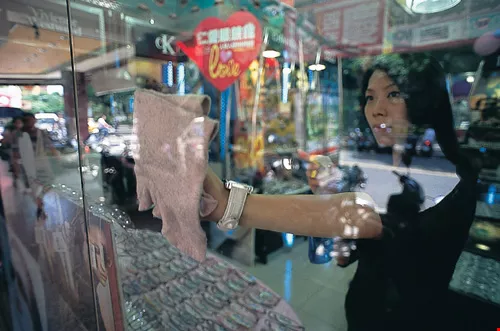
Public tabletops, counter tops, and windows as well as household dishes and glasses carry residues from cleansers.

Environmental hormones are all around us. Dioxins can be found in cosmetics, PET bottles and other plastic products, the air, and seafood.
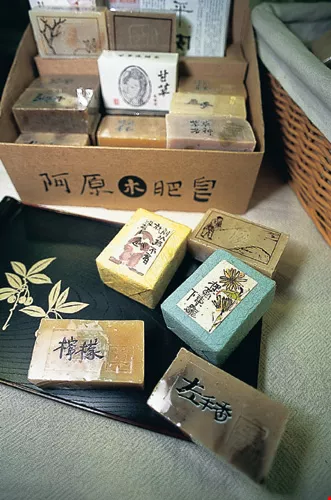
In addition to products with the Greenmark, consumers can look for natural products that are easily biodegradable--those are the best for health and the environment.
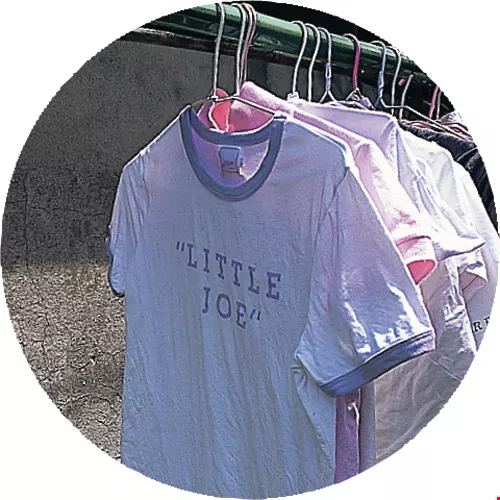
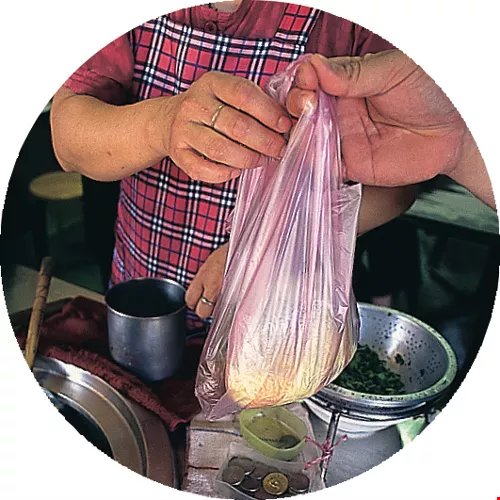
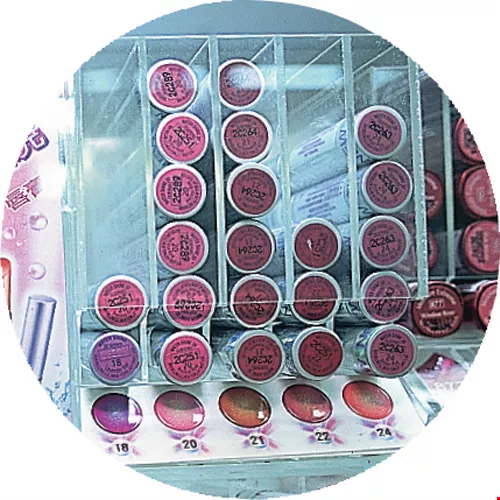
Environmental hormones are all around us. Dioxins can be found in cosmetics, PET bottles and other plastic products, the air, and seafood.



@List.jpg?w=522&h=410&mode=crop&format=webp&quality=80)


