Protecting the Wellbeing of Laboratory Animals
Sam Ju / photos Chuang Kung-ju / tr. by Scott Wiliams
May 2014


Would you dare take medications that hadn’t been tested on animals? Should you trust the accuracy of drug tests run on animals in poor health? With Taiwan now promoting biotechnology development, we must address the issue of protecting the wellbeing of laboratory animals.
The media recently shone its spotlight on the case of eight eight-year-old beagles.
The Environment and Animal Society of Taiwan called a press conference in January to try to find adoptive homes for the animals, which had just been retired from experimentation and released by the pharmaceuticals lab that owned them. EAST took advantage of the attention to also urge the government to strengthen its oversight of research institutions.
Health checks had revealed that all eight dogs suffered from pathological changes to their heart valves. While it is impossible to state with certainty that these changes resulted from the pharmaceutical testing the dogs had undergone, they do highlight the erratic nature of the care that testing organizations provide to their lab animals.
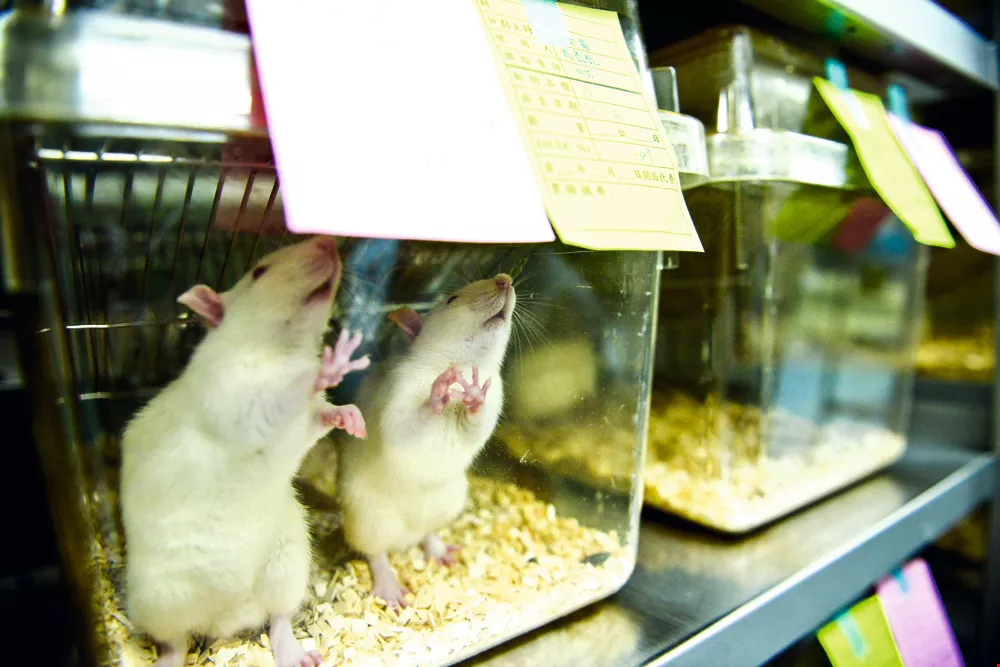
Mice, rats, and other rodents are the most commonly used lab animals.
Pharmaceutical research and medical device development rely on animal testing from their earliest stages all the way through to the preclinical studies that precede human trials. In the case of pharmaceutical studies, animals in poor health can bias the experimental data, increasing the risk to the human patients to whom the medication may later be administered. Such risks provide at least one reason for us to be concerned about the wellbeing of lab animals.
According to the Council of Agriculture, there are currently 218 organizations conducting animal experiments in Taiwan. These include universities, research institutes, hospitals, and manufacturers of pharmaceuticals and biological products.
Between 2002 and 2010, Taiwan made use of more than 10 million lab animals, nearly 80% of which were rodents—mainly rats and mice, but also including more than 200,000 rabbits. The remainder included over 10,000 sheep and goats, 7,000 cattle, 3,000 dogs, 3,000 miniature pigs, 600 monkeys, 500 cats, and 300 horses.
On average, researchers in Taiwan experiment on about 1 million animals every year.
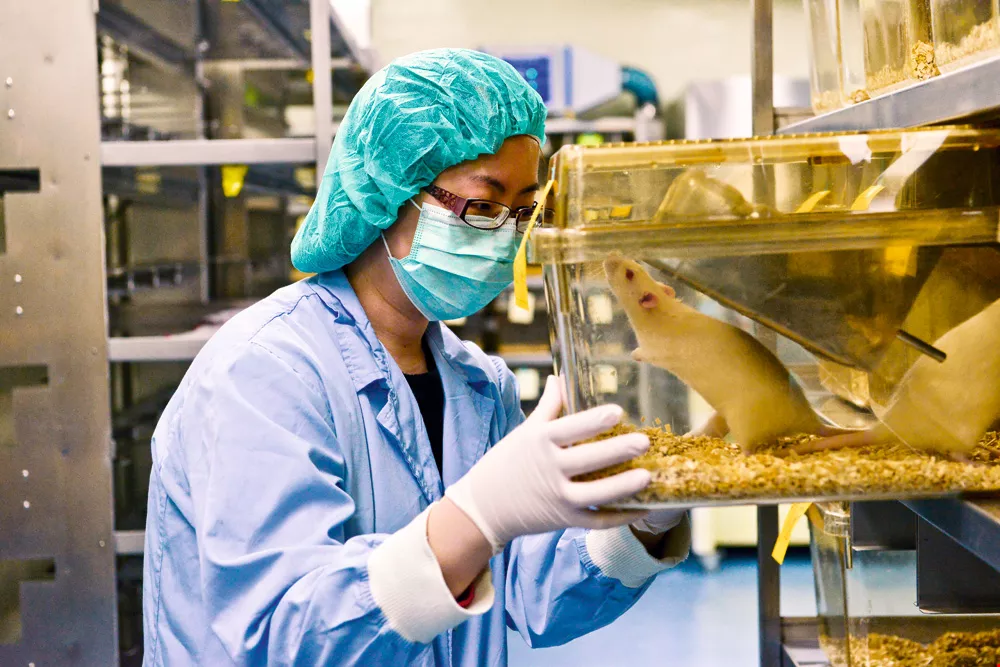
In facilities that meet standards for care, personnel give lab animals regular checkups, both physical and mental.
Animal testing involves test programs, test personnel, and research institutions. Chu Tseng-hung, director-general of EAST, says that countries that care about the wellbeing of lab animals, such as the United Kingdom, implement stringent licensing requirements at all three levels.
Taiwan promulgated the Animal Protection Act in 1998, then drew up the Regulations Governing the Establishment of Committees or Taskforces on the Protection and Use of Laboratory Animals under the APA in 2001. These regulations require institutions conducting animal experiments to form animal welfare taskforces, and represented our first step towards managing the welfare of lab animals.
But Chu notes that Taiwan, unlike the UK, has no licensing requirement. He argues that the law demands too little of these organizations, with the result that some are better than others about looking out for their animals’ welfare. Take their use of veterinarians, for example. Only 100 of the more than 200 institutions on the COA’s list employ in-house or outside veterinarians on their taskforces. Many people worry that this lack may lead to inadequate care for lab animals.
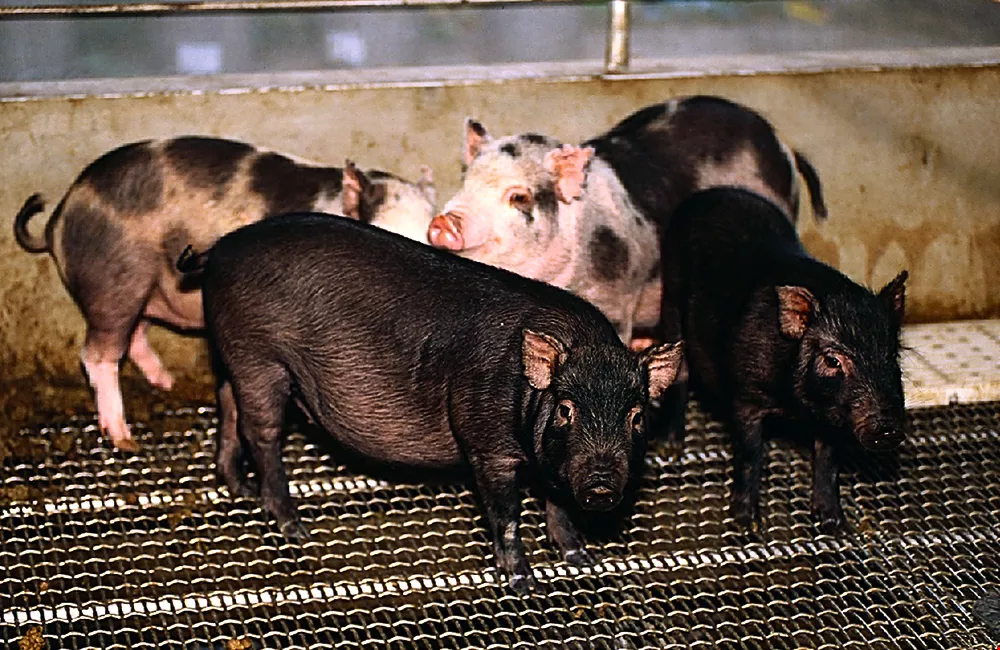
The Lanyu pigs bred by the Taitung Animal Propagation Station of the COA’s Livestock Research Institute are among Taiwan’s best biomedical research animals.
Lin Zongyi, head of the Animal Protection Section of the COA’s Department of Animal Industry, says that Taiwan’s Animal Protection Act was based on the US system. It focuses on self-management by experimental institutions and external audits by the government. Now that the government is promoting the development of Taiwan’s biotech industry, it has also begun paying greater attention to the welfare of lab animals. When the government made changes to the two mechanisms above in August 2013, it did so with input from the animal science community and animal protection groups.
The first of these changes requires taskforce members, whether veterinarians or not, to take a COA course and exam on the management of lab animals every three years.
Lin stresses that as part of the government’s efforts to enhance self-management, it is also requiring experimenters to incorporate an explicit “3R” program into their applications, and to provide program details to the animal protection taskforce for review.
The three “Rs” are replacement, reduction, and refinement. Such programs require experimenters and animal welfare taskforces to consider the following questions: Are the animal tests called for in the plan absolutely necessary, or are there other options? How can the number of animals utilized be reduced? How can the experiments be refined to lessen the animals’ suffering?
Lin says that institutions must include 3R audits in their annual reports, and provide them to the Council of Agriculture for review. These audits are taken into consideration when determining which facilities to inspect.
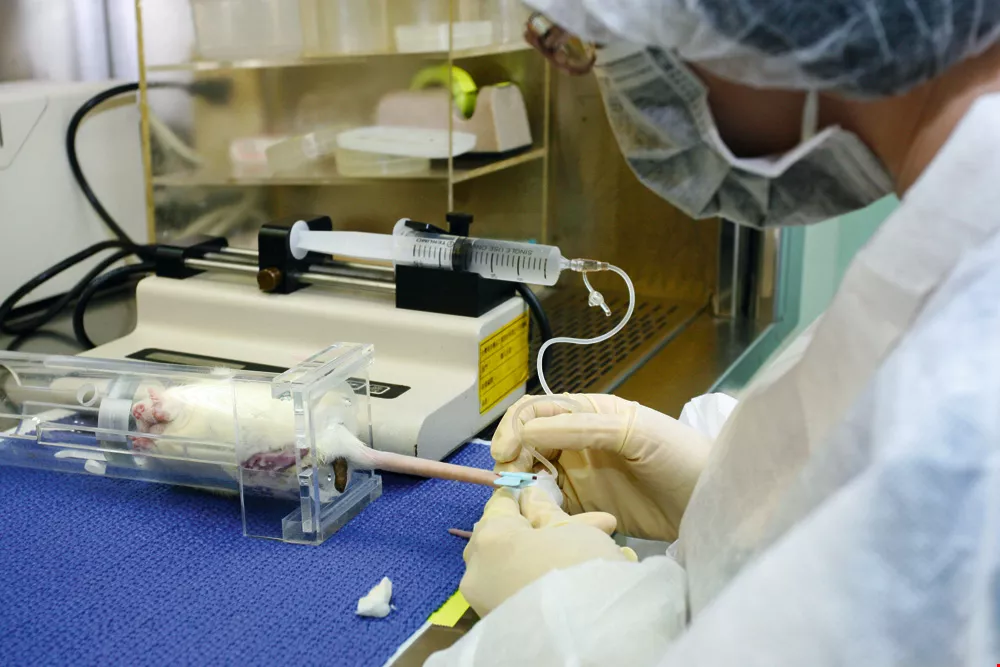
“Refinement” of experimental procedures is intended to reduce the suffering of lab animals and is crucial to protecting their wellbeing.
The Animal Protection Act charges the COA with responsibility for overseeing and managing testing institutions. Last year’s amendments made explicit that the COA is to carry out at least 40 on-site inspections every year. Lin says that inspections find about 10% of facilities to be not up to code every year, the majority of which are operated by pharmaceuticals manufacturers and small institutions.
EAST’s Chu Tseng-hung says that the animal facilities at roughly 70 of Taiwan’s more than 200 testing institutions are “unnecessary, poor quality, and a poor fit.” He argues that they should be phased out.
But because the COA doesn’t license animal facilities, substandard facilities are under no pressure to shut down. Lin says that the COA can currently only follow the investigational process, and recommend that the Ministry of Science and Technology (MOST) and the Ministry of Health and Welfare (MOHW) consider rejecting research plans and pharmaceutical product registrations from substandard institutions.
From the standpoint of the wellbeing of lab animals, the COA hopes that these institutions will cease conducting their own animal tests, and instead contract them out to other organizations.
The National Laboratory Animal Center (NLAC) and Taiwan’s contract research organizations (CROs) have been accredited by the Association for Assessment and Accreditation of Laboratory Animal Care (AAALAC) International for meeting international standards for animal wellbeing and facility personnel. Genie Chin, head of NLAC’s Planning and Promotion Division, points out that this accreditation is very attractive to pharmaceuticals manufacturers and biotech firms considering outsourcing animal testing.
But the high cost of contracting out the work can make some would-be outsourcers hesitate. For example, NLAC charges NT$30 per day to care for lab rats, a figure far higher than the NT$0–15 per day charged by university animal facilities. The rates are even higher at profit-oriented CROs with Good Laboratory Practice (GLP) accreditations.
Chin believes that the ministries and agencies associated with animal testing need to work together to encourage substandard testing facilities to exit the market. “If the COA finds animal facilities falling short of standards, the MOST should reject those facilities’ research applications, and the MOHW should refuse to accept their experimental data. Everybody needs to be on the same page. It’s hard to make measures stick if someone is letting things slide.”
Animal welfare groups also recommend grading animal testing institutions and using these scores to establish the frequency of inspections: targeting those with low scores for intensive investigations while giving those with high scores greater autonomy.
In fact, Taiwan’s top biomedical research institutions have already established management mechanisms for their animal facilities that enable them to meet the demands of scientific experimentation while also caring for their animals’ wellbeing.
Academia SinicaTake the Academia Sinica, for example. Following the passage of the Animal Protection Act, Academia Sinica established the Institutional Animal Care and Utilization Committee (IACUC), which reviews all internal applications to carry out animal testing programs and oversees ten animal facilities at other research organizations. Each of these ten facilities has also established its own care committee and keeps a veterinarian on staff.
Liu Fuhua, executive secretary of the IACUC, says that Academia Sinica receives an average of 100–150 animal testing applications per year. IACUC’s review process requires applicants to answer 3R-related questions such as why they need a particular type of animal and whether they have looked at means of using fewer animals. The committee only approves applications that meet 3R requirements.
“Once a program has been approved, the researchers must submit periodic online reports indicating how many animals they are using every day, every week, and every month,” says Liu. “These are provided to IACUC for tracking and auditing purposes.”
According to Academia Sinica, researchers primarily use rats, mice, hamsters, guinea pigs, and zebrafish. Rabbits are the only larger research animal the institute uses, although it once imported a small number of ferrets for a study on influenza viruses.
Liu says that in an effort to implement the third “R” (“refinement”), the institute began offering animal testing training courses in 2012, hiring a lecturer with 30 years of experience in animal testing to train research assistants in how to minimize their animals’ discomfort.
National Defense Medical CenterThe National Defense Medical Center’s Laboratory Animal Center (LAC) was the first educational and research institution in Taiwan to receive AAALAC accreditation, which adds another layer of quality control on top of the COA checks. After the National Defense Medial Center reviews animal research applications, it has experimenters take training courses on animal procedures, animal care, and the Animal Protection Act before permitting them to use its animal facilities.
In addition to the usual small rodents and rabbits, the LAC raises beagles and miniature pigs for experimental purposes, as well as Formosan rock macaques, which the COA has approved for scientific research. All its animals live together with others of their species, and each species is housed in its own climate-controlled room.
Fang Mei-cho, director of the LAC, says that animals shouldn’t be kept apart from their own kind unless there is a compelling reason. Keeping them together satisfies their need for interaction with companions, and helps minimize the physical, psychological and behavioral abnormalities that can arise in isolation.
The LAC’s animals are sometimes better cared for than pets. Its rabbits have platforms to rest on, toys to play with, and sterile sticks to chew on; its beagles get half an hour of exercise and play time every morning and evening; and the macaques are provided with a variety of safe toys and an hour of morning music and television to spice up their lives.
To ensure that they remain in good health, the rabbits, beagles, miniature pigs, and macaques undergo a stool test and a physical exam every six months. The macaques also get an annual tuberculosis test and full-body ultrasound examination.
“We want to be certain that the animals receive outstanding healthcare both in their everyday lives and during experiments,” says Fang.
Caring for ourselvesThe COA’s Lin Zongyi says that although Taiwan is approaching the care and management of lab animals in a systematic fashion, there remains room for improvement, especially in the area of institutional self-management.
This year, the government has begun using research fees and audits to encourage animal testing institutions to strengthen their internal controls.
With pharmaceuticals research utterly dependent on animal testing, responsible experimenters and institutions must recognize that protecting the wellbeing of lab animals is essential to the wellbeing of human beings.
@List.JPG?w=522&h=410&mode=crop&format=webp&quality=80)


