Wanjin's Madonna Procession
An Integrated Religious-Cultural Event
Chen Hsin-yi / photos Chuang Kung-ju / tr. by Scott Williams
May 2019


Celebrations and processions honoring the birth of the goddess Mazu sweep across Taiwan during the third lunar month of every year. But Mazu is not the only divine figure feted in Taiwan. In fact, local Catholics also hold an annual deity procession in honor of the Virgin Mary, a custom that originated more than a century ago at the Basilica of the Immaculate Conception in Wanjin Village, Wanluan Township, Pingtung County.
The basilica has organized two processions around the whole of Taiwan in recent years, and last year went so far as to arrange an event in conjunction with Mazu celebrations at a nearby Taoist temple. That energetic “meeting of Western and Eastern divine mothers” was yet further evidence of the diversity and inclusiveness of Taiwanese society.
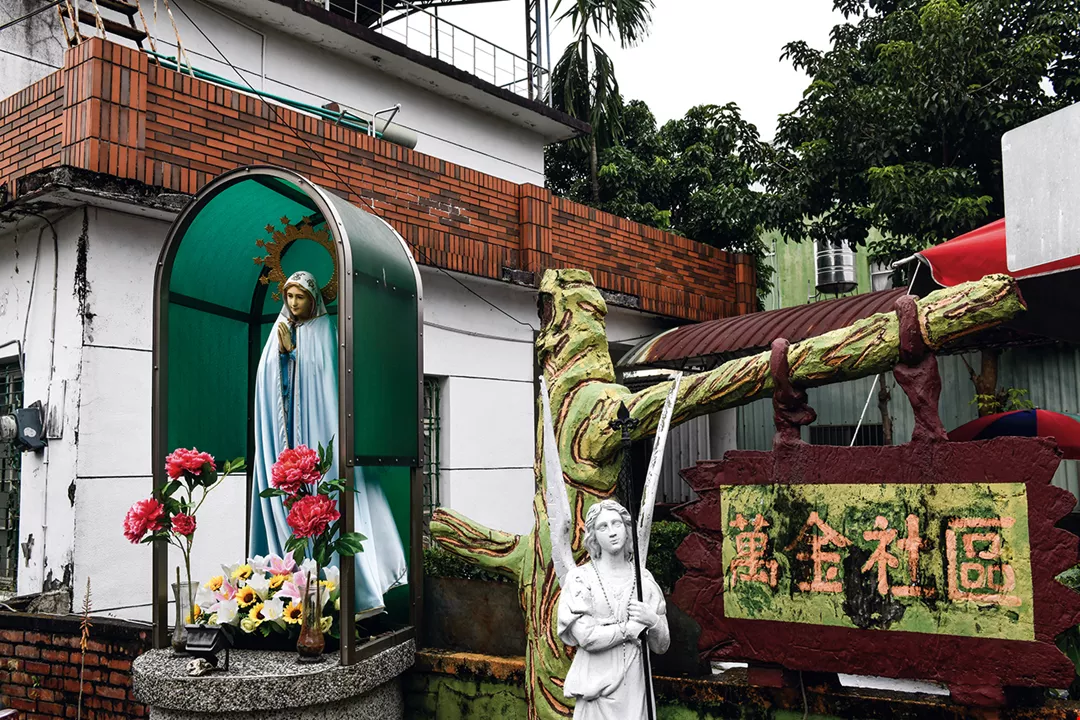
Wanjin Village in Pingtung’s Wanluan Township is home to one of Taiwan’s first Catholic missions. Even today, religion continues to play an important part in the village’s life and look.
Taiwan’s most Catholic village
Looking to experience the Basilica of the Immaculate Conception for myself, I visited it last December. Located in Pingtung County’s Wanluan Township, Wanjin sits to the west of the Dawu Mountains, which overlook it like a reclining giant protecting the peaceful village. Sunlight splashes down, filling the air with the scent of harvested hay in spite of the lack of summer heat.
My first impression of the village is that it resembles a large Catholic diorama: each corner and alley is decorated with a large Biblically themed painting, sculpture or installation, some painted into the local landscape, others executed more in a comic-book style. In the evening, residents hang lanterns from many of the installations.
According to the Wanluan Township Office, Wanjin is the most populous of the township’s 14 villages, with a registered population of more than 3,000 people and 2,000-some actual residents. The village’s population used to be 90% Catholic. Many of its children were baptized immediately after their birth, and grew up participating in Sunday school and other church activities. In more recent years, social changes and outward migration have lowered the proportion of Catholics in the village to 55%, though it remains Taiwan’s most densely Catholic community.
A Spanish priest named Fernando Sainz built the church in 1870 and named the Virgin Mary as its patron saint. Since then, the church has celebrated the anniversary of its construction with an early December procession honoring the Virgin Mary, one which has turned it into a place of pilgrimage for Taiwanese Catholics, and tourists from around the world.
“Parishioners who have lived here for generations mark their calendars with church celebrations,” says Chen Yu-shin, a Wanjin native who operates the village’s only hostel. December is packed with events, from the Nativity of Mary early in the month to Christmas at the end, that keep locals busy and fill them with gratitude. The village even has its own hymn to Mary, one originally adapted from a Chinese folk tune by Spanish Dominican missionaries working in Xiamen and other parts of Fujian more than 200 years ago.
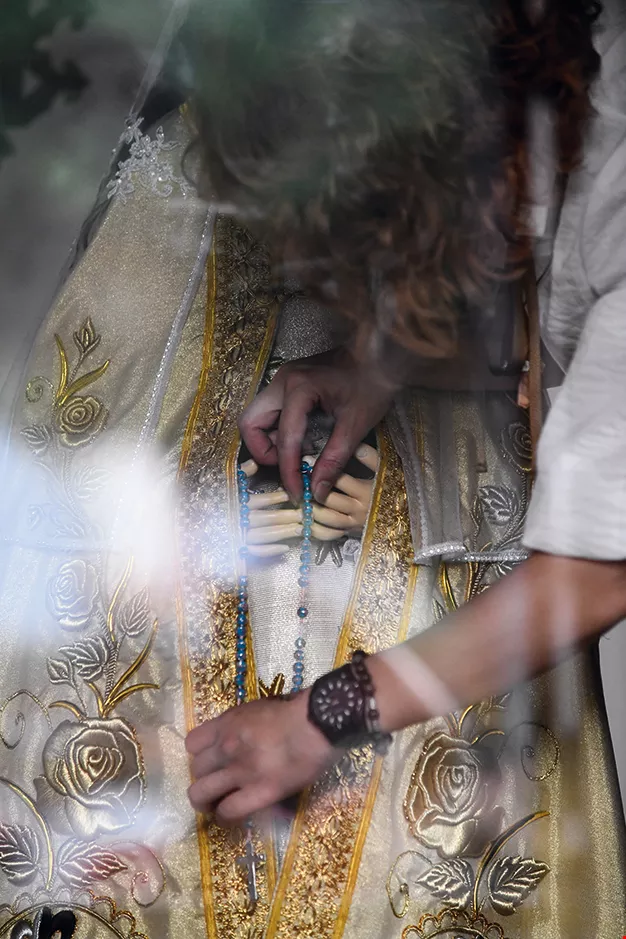
Parishioners reverently arrange the Virgin Mary’s clothing for the Basilica of the Immaculate Conception’s annual Madonna procession.
An annual gathering
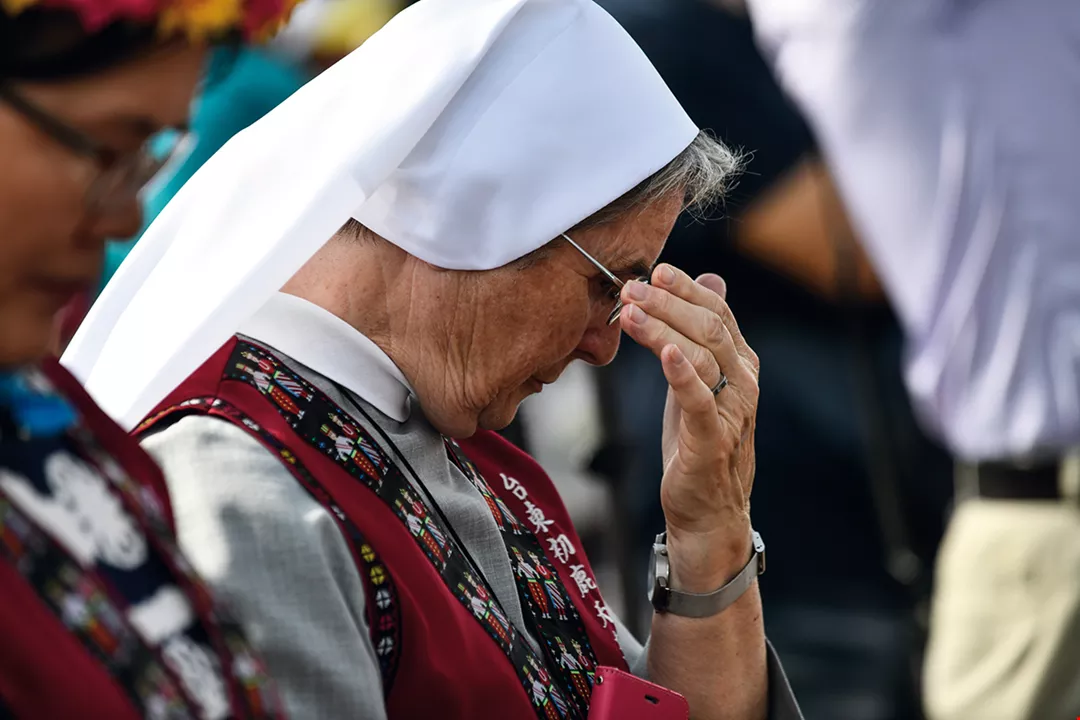
European pilgrimage routes follow in the footsteps of saints and link churches. Pilgrims walking these paths elevate their spirituality through self-examination and sincere repentance. In Taiwan, Catholics come to Wanjin’s Basilica of the Immaculate Conception to participate in church celebrations, reflect on their failings in the previous year, repent, and pray for blessings.
According to the church, roughly 8,000 people attended last year’s celebration of the Nativity of Mary, including 5,600 from outside the village. In some years, attendance has exceeded 10,000 people.
I experienced the whole of last year’s festivities. When the bell began to strike at 10 a.m., it sounded as if it were announcing the arrival of an angel. Instead, Archbishop Peter Cheng-chung Liu, prelate of the Roman Catholic Diocese of Kaohsiung, entered the plaza at the head of a line of priests from various parishes. The celebrations included both the reading of the mass and musical performances by the Wanchin Basilica Choir and the Kaohsiung Holy Rosary Cathedral’s Western music ensemble that inspired feelings of veneration.
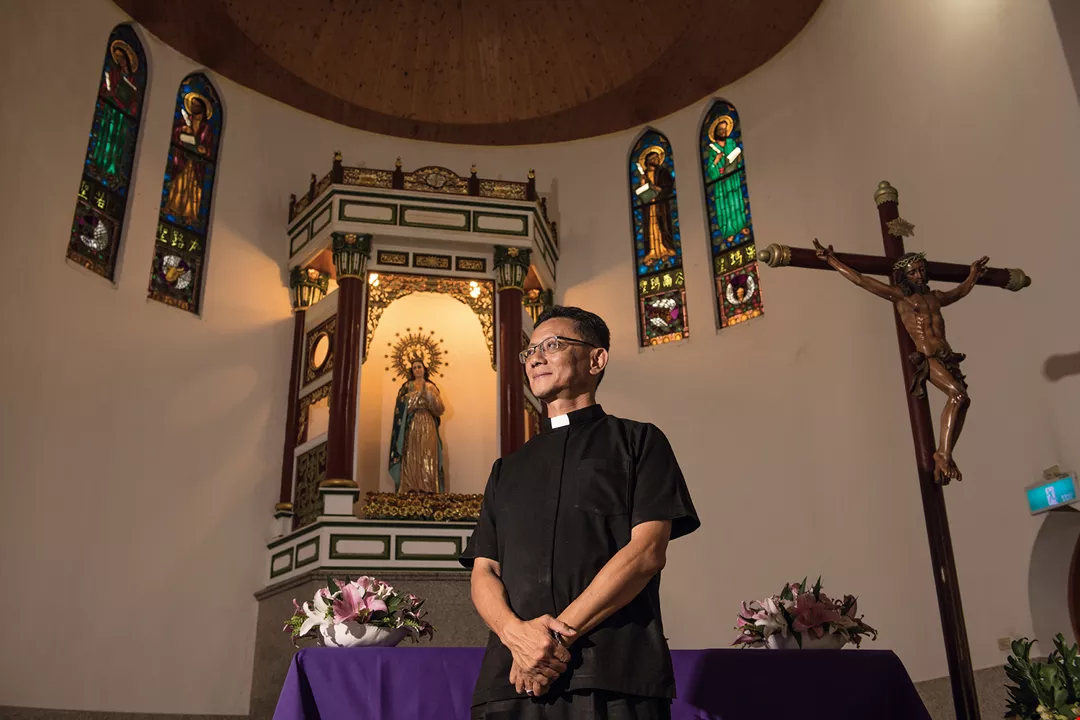
Father Li Hanmin explains that the faithful hold Mary in particular esteem because she was the mother of Christ.
A carnivalesque procession
The afternoon Madonna procession starts at the church. An image of Christ on the cross leads the way, followed by groups from each of the parishes. The Wanjin Basilica’s Madonna palanquin, clergy, and parishioners bring up the rear, all of them praying and singing hymns as the procession wends through Wanjin and the nearby Chishan Village. Crowds line the streets along the way, their cries of “God bless!” filling the air.
The most eye-catching part of the procession is the palanquin itself. Five rotating teams of eight people carry it, advancing, retreating and turning in perfect synchrony. The march climaxes in the return to the basilica, with the bearers lifting the palanquin above their heads and rushing into the church as fireworks explode and the atmosphere rises to fever pitch.
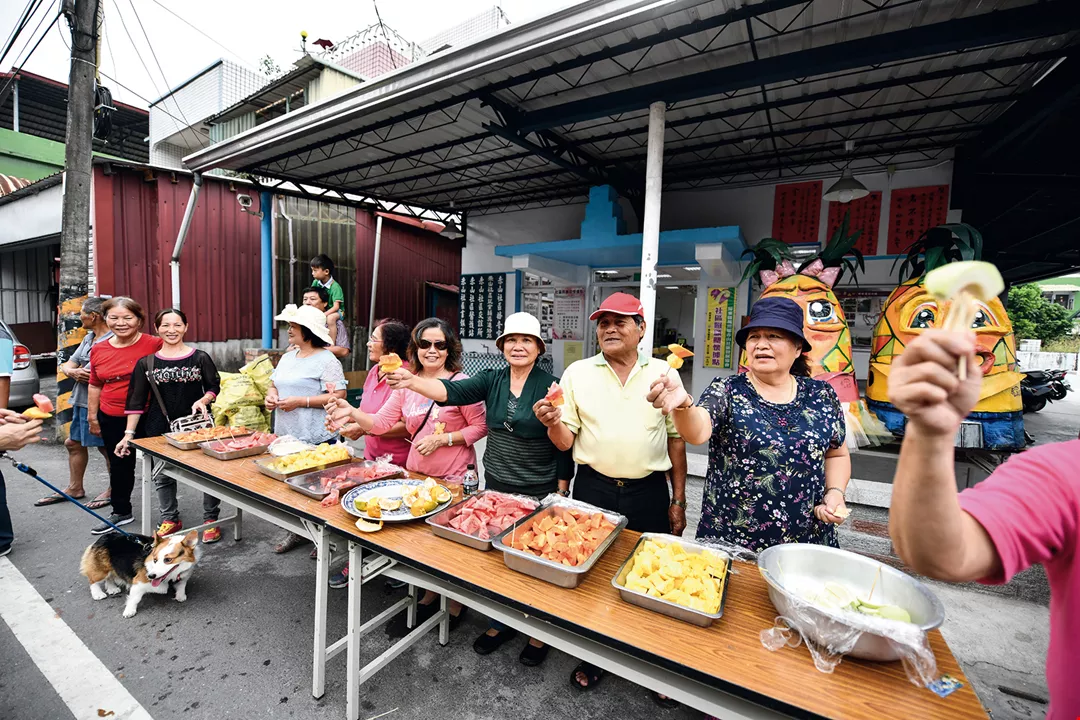
Wanjin’s Madonna procession draws from Taiwan’s deity-procession tradition and pays respect to other religions. Villagers set out tables laden with food at noon, heightening the festive atmosphere.
One in a million
Wanjin’s status as a pilgrimage site for Taiwan’s Catholics stems from its place in the history of the Catholic mission in Taiwan.
Spanish Dominicans first came to Taiwan in 1622. They stayed briefly in the north, and built a church at Cape Santiago (since destroyed). The Dominicans came to Taiwan a second time in 1859, arriving in Takao (present-day Kaohsiung) from Xiamen. They built an adobe church there the following year and began to missionize. In 1861, Fernando Sainz and a missionary named Yang Du (“Brother Du”) trekked the more than 60 kilometers from Takao to Wanjin, where they established a missionary outpost.
Why did they choose Wanjin? Father Li Hanmin says that Wanjin had a vast hinterland, and the nearby Wugou River provided plenty of water with which to irrigate its fertile soil. In addition, the Aborigines who were already settled here provided the missionaries with a sizable population to convert. “Father Sainz had probably also received divine inspiration in his prayers, and therefore decided that this was the place.”
Father Sainz bought the land behind the present-day church in 1863, constructed a church of earth and stone, and quickly baptized more than 40 people. But the parish’s development was far from smooth over the next few years. Conflicts between ethnic Chinese and Aborigines generated ill feelings towards the church, which led to it being looted and burned. When the building was subsequently destroyed by an earthquake, the foreign missionaries soldiered on with their work in the parish. In 1869, Father Francisco Herce purchased the site of the present-day basilica to build a new church, as well as another tract of land that he then leased to parishioners at a low cost. This enabled them to farm, build homes, and improve their lives.
Now a county-level designated historic site, the basilica is built in a Spanish style, rectangular and white-walled. It has a central chapel flanked by two towers on its west-facing front, and an apse at the eastern end. Roughly eight meters tall, the basilica is about 15 meters wide and 39 meters long. Although the exterior has been renovated several times, the church’s basic structure remains unchanged.
Church records show the primary building material used was an amalgam of locally sourced crushed stone, lime, brown sugar, honey, kapok, and bricks. The builders also used wood and brick that was shipped from Fuzhou to Donggang, then transported to Wanjin by oxcart. Most of the skilled craftsmen who worked on it came from Fuzhou, Xiamen, and Penghu. The parishioners themselves provided additional volunteer labor. The church took one year to complete, and was formally put into use at the Nativity of Mary (December 18) in 1870.
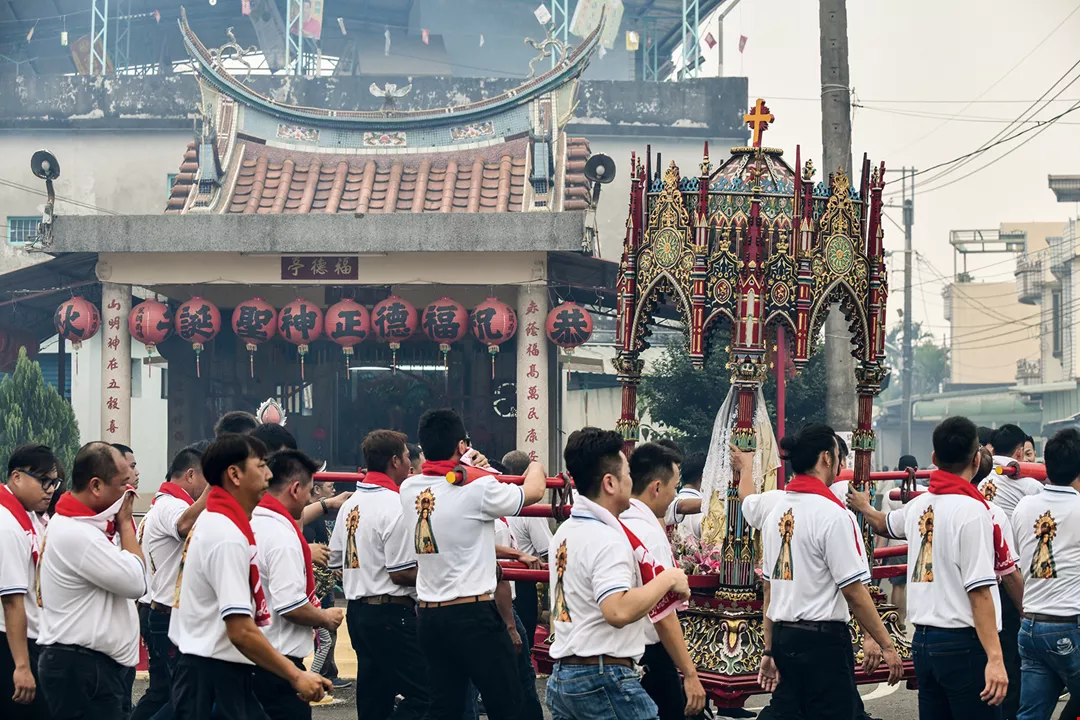
Wanjin’s Madonna procession draws from Taiwan’s deity-procession tradition and pays respect to other religions. Villagers set out tables laden with food at noon, heightening the festive atmosphere.
Carrying on a tradition
The church’s fame as a pilgrimage site is well deserved.
In 1874, the Qing minister Shen Baozhen was ordered to review progress on opening up the mountainous parts of southern Taiwan. Passing through Wanjin, he was amazed by its remarkable church. After making inquiries, he determined that the church had the potential to help assimilate the Aborigines and pass on the “right” customs, and recommended that the imperial court support the missionaries. The next year, he personally delivered two granite plaques gifted by Emperor Tongzhi to the church, one engraved “Imperial Decree,” and the other “Catholic Church,” that were subsequently installed into the wall above the main entrance. Thereafter, military personnel passing the church were required to dismount to show their respect. The plaques are still visible in the wall today.
When the Japanese military used the church as a command center during World War II, the priest held services in parishioners’ homes. Fortunately, the church made it through the war intact.
In 1984, Pope John Paul II made the Wanjin church a basilica, giving it precedence over other churches and attracting still greater numbers of pilgrims from abroad. In 2011, the Dominican Order transferred Wanjin Parish to the General Vicariate of Taiwan.
In 2012, Wanjin’s Madonna procession was designated a cultural asset under the Cultural Heritage Preservation Act, in the religion subcategory of “Traditional Arts, Folk Customs and Related Cultural Artifacts.” The designation described the procession as “an activity that integrates Western religion and local folk customs and culture, one with historical, traditional, local, cultural, and exemplary characteristics.” It stated further, “It is the largest Catholic activity in Taiwan, and offers evidence of the historical development of the local community.”
Some 161 years after the introduction of Catholicism to Taiwan, Wanjin’s Basilica of the Immaculate Conception has become the spiritual home of Taiwan’s Catholics, an important pilgrimage destination, and a fascinating cultural experience even for non-Catholics.
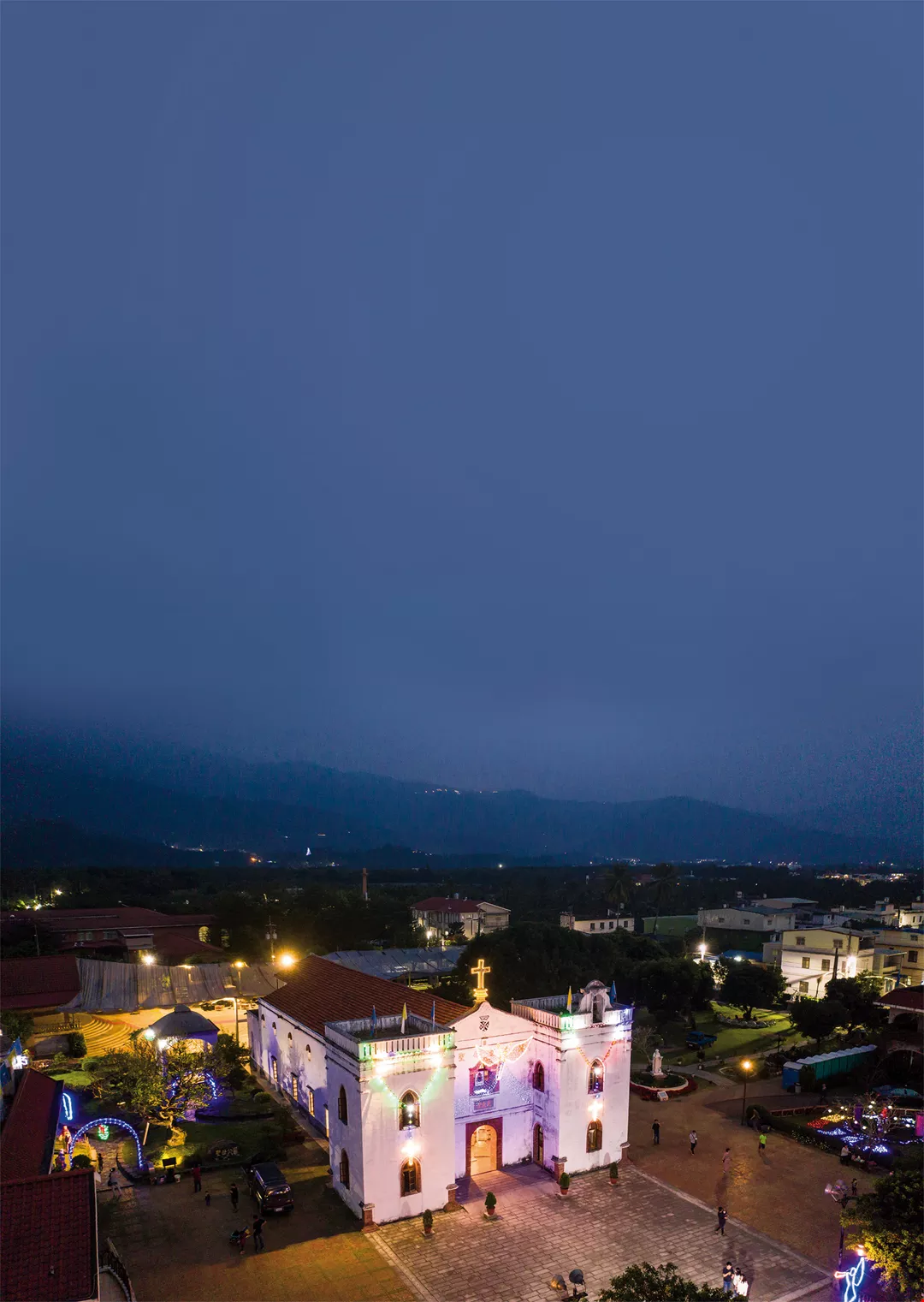
The Wanjin Basilica looks like an old Spanish castle. The 150-year-old building’s two towers are a distinctive feature of its front. (photo by Chuang Kung-ju)
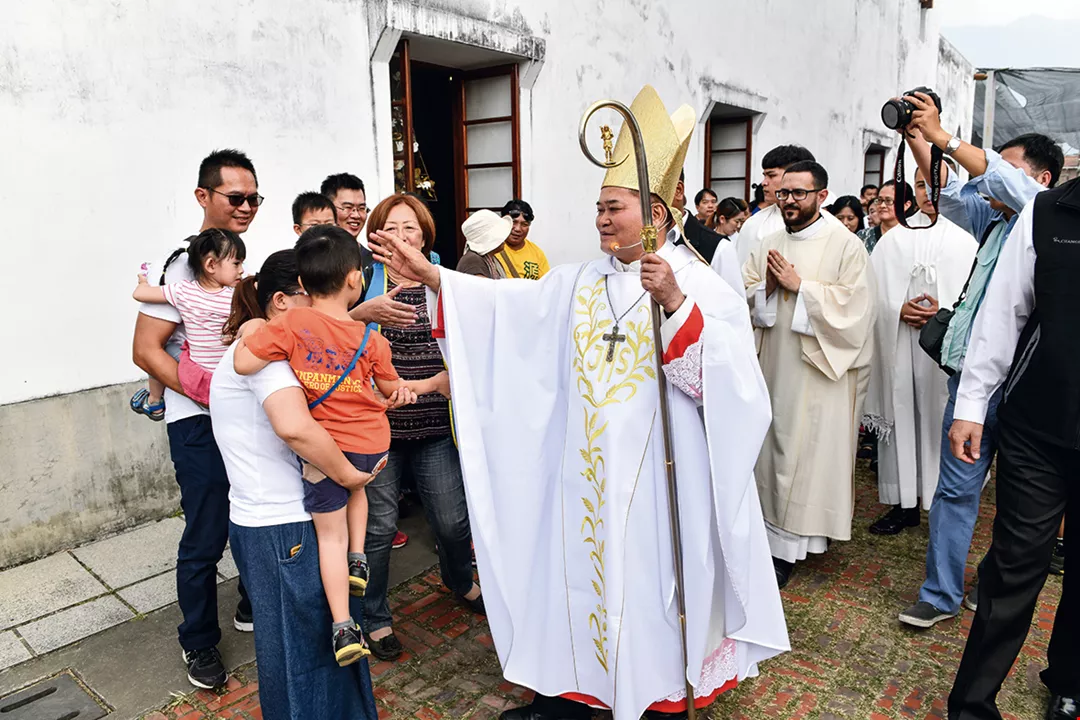
Archbishop Peter Cheng-chung Liu (center), the prelate of the Roman Catholic Diocese of Kaohsiung, led the basilica’s 2018 anniversary mass, which was attended by clergy and laity from all over Taiwan.
Archbishop Peter Cheng-chung Liu (center), the prelate of the Roman Catholic Diocese of Kaohsiung, led the basilica’s 2018 anniversary mass, which was attended by clergy and laity from all over Taiwan.
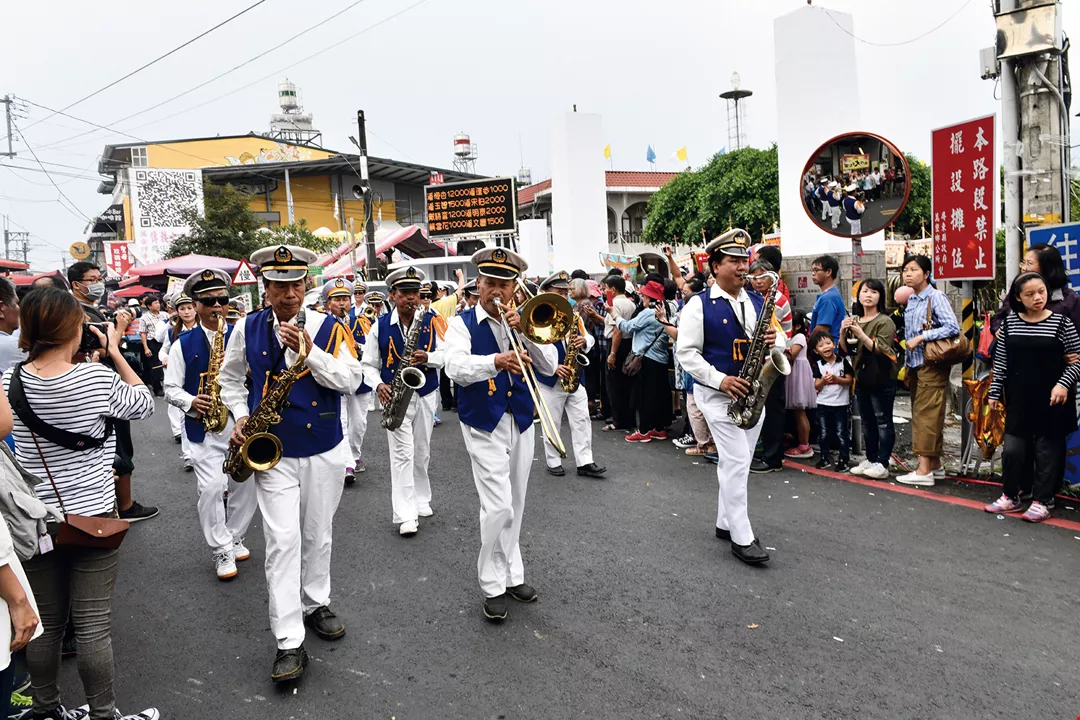
Parishioners line the streets for the Madonna procession, praying and singing hymns. There is even a marching band.
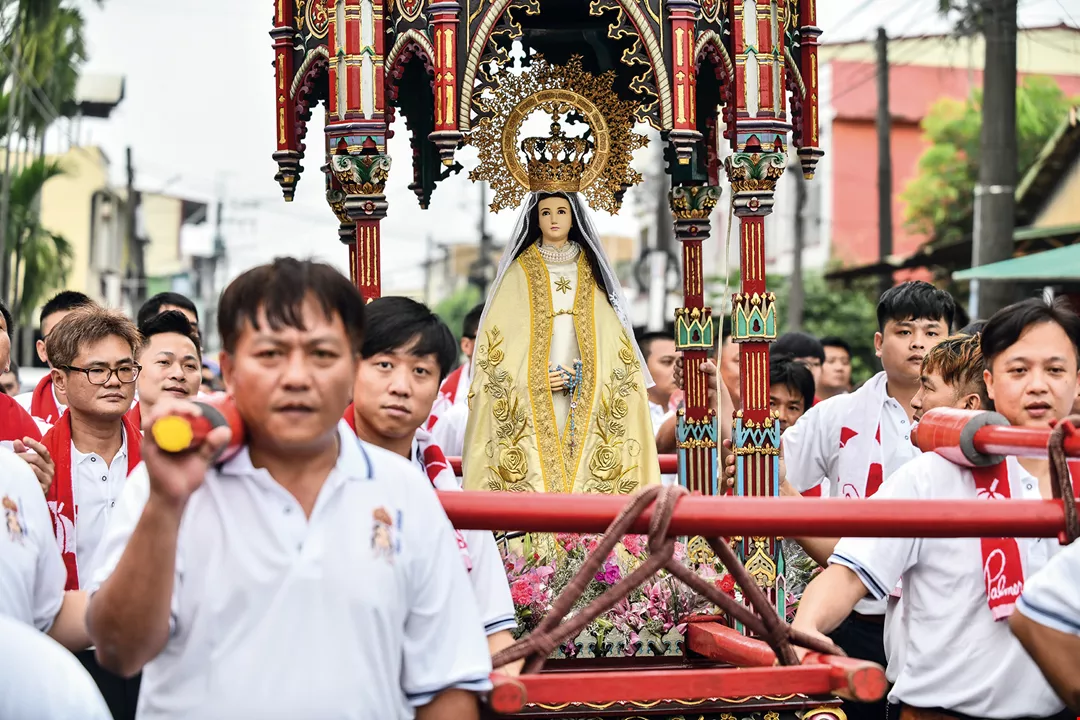
Weighing nearly 300 kilograms, the Madonna palanquin takes eight people to lift. Teams of bearers take turns, swapping out at every third lamppost.
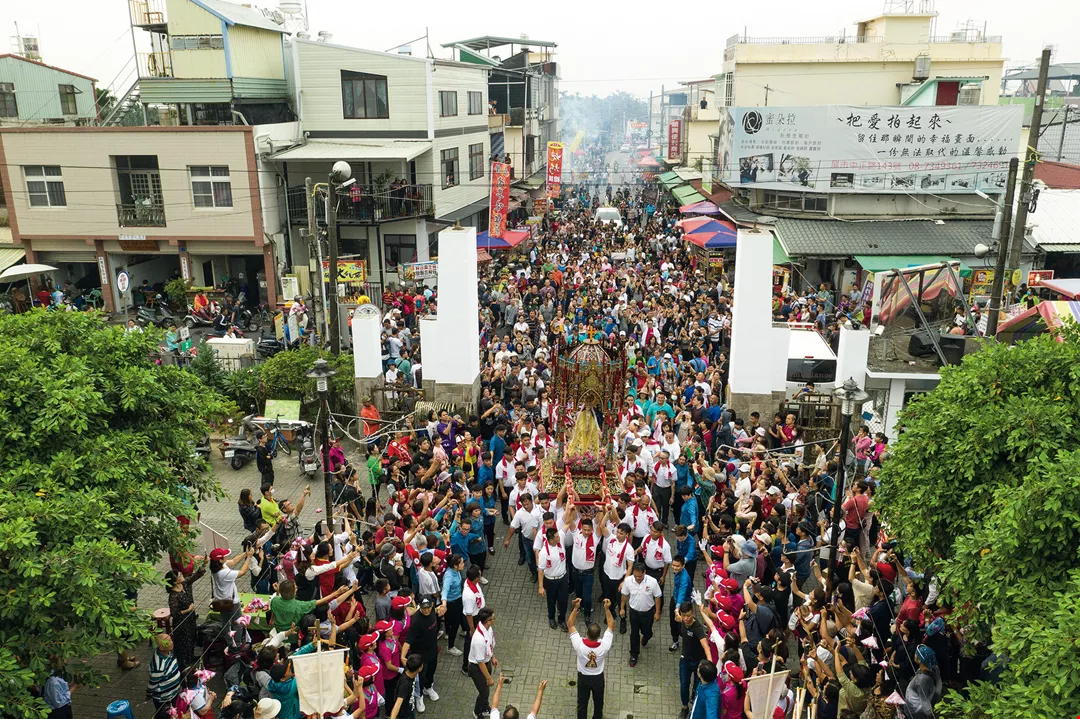
The procession reaches its climax as the palanquin returns to the basilica, when the bearers raise it above their heads and rush inside. (photo by Chuang Kung-ju)


@List.jpg?w=522&h=410&mode=crop&format=webp&quality=80)


