Saying Goodbye to Famine and Poverty:The AVRDC and the FFTC
Anna Wang / tr. by T.H. Reeguys
August 2002


At the beginning of July, President Chen Shui-bian made diplomatic visits to African nations, calling for "humanitarian diplomacy." For Taiwan, which in bygone years received large amounts of international aid, this indicates the desire to give something back now that it has the means to help others in international society.
As a result of its exclusion from the United Nations 30 years ago, the ROC has vanished from the network of international political organizations. However, in actuality, Taiwan has continued to quietly fulfill its responsibility towards other nations.
Perhaps many people are unaware of the fact that 30 years ago, precisely at the time Taiwan was expelled from the UN in the early 1970s, two international organizations formed by Asia-Pacific nations-the Asian Vegetable Research and Development Center (AVRDC) and the Food and Fertilizer Technology Center (FFTC)-simultaneously decided upon Taiwan as their base of operations. The two organizations have played an enormous and laudable role in the development and improvement of the food and vegetables necessary to mankind's survival, and have also been instrumental in raising the standards of nutrition and the quality of life for farmers in the Asia-Pacific region. Their contribution is truly noteworthy.
In May of 2002, the Asian Vegetable Research and Development Center (AVRDC), situated in Shanhua in Tainan County, held an "open house," the first such event in the 29 years that it has been in Taiwan. Council of Agriculture (COA) chairman Fan Cheng-chung, Tainan County executive Su Huan-chih, the World Bank overseas representative in Vietnam, and nearly 100 other guests from 20 countries attended the event.
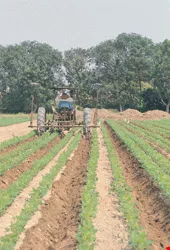
The Food and Fertilizer Technology Center (FFTC) has served countless farmers in Asia, so that we are no longer threatened by shortages of staple foods as we were 30 years ago.
AVRDC director Samson C.S. Tsou points out that in nearly 30 years in Taiwan, the center's accomplishments include raising both the quality and yields of a wide variety of tropical vegetables, including tropical tomatoes, vegetable soybeans, and crucifers. Its staff have also worked to improve the nutritional status and incomes of people in developing countries around Asia. Taiwan has been the primary source of financial support, accounting for nearly 60% of the center's US$10 million budget. Its personnel and programs have made an outstanding contribution, earning the title "the quiet achievers." The low-profile AVDRC specially organized the open day to express gratitude for the tremendous support that the host nation has provided. In addition, the center also hopes to use media coverage to demonstrate to Taiwan's citizens their nation's critical contribution to bettering the lives of people throughout Asia.
COA chairman Fan Cheng-chung said that as a child of a farming family, he had fond memories of the land and of plants. Therefore he fully understands the impact that the green revolution has had on farmers' lives and on Taiwan's development as a whole. In its years in Taiwan, the AVDRC has had first-rate agricultural experts from both Taiwan and abroad. Moreover, it has also benefited from close collaboration with Taiwan's academia and industry, producing stellar results in areas such as information collection and dissemination, germplasm collections, disease-resistant plants, pest control, yields, and taste.
Taiwan was built on a foundation of agriculture, Fan said, and the AVRDC has contributed immensely by improving vegetable quality, which has had great economic value. What is especially admirable is that they have labored away without regard to public recognition. For example, many of Taiwan's prized vegetables, including the golden tomato, which has recently created quite a stir for its value to dieters, are varieties developed by the AVRDC, but they have never made a big deal out of it. They don't even assign names to the varieties they produce, just numbers.
The new Tainan County executive Su Huan-chih, a guest of honor at this first open day, expressed his gratitude for all the help that the AVDRC has given the people of Tainan County over these many years. He hopes that the AVRDC, building on its many assets-its status as an international organization, its foundation in international cooperation, and its strong research results-can cooperate with Tainan's Nankan Science-Based Industrial Park to develop the agricultural biotechnology industry and attract more multinational enterprises to move in.
In fact, although the AVRDC has always kept a low profile, it is still the most famous of Taiwan's international organizations. The main reason is that it has a world-famous seed bank-the vegetable germplasm collection. It has a collection of more than 48,000 varieties of vegetables and a complete database of related information, including data on the origins, soil, and growth of each variety, as well as on where it has been sent and promoted. Preserving germplasm is not only helpful for propagation and disease resistance, but is also beneficial for research into natural genetic diversity and distinctiveness. An estimated 800 different plant species are grown as vegetables worldwide; the AVRDC has a collection of more than 200 of these.
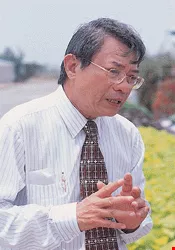
Dr. Samson Tsou, who has been working at the AVRDC for nearly 30 years and will this year lay down the heavy responsibilities of being director, has a grand vision for the future of vegetable cultivation and promotion.
But although the center is quite famous, few people know much about its organization, membership, research methods, concrete contributions, or future direction.
Samson Tsou, who was "headhunted" into the AVRDC by the first director general, has worked his way up from researcher to become director-general himself, so he knows the organization thoroughly. He says that while the AVRDC is not very big compared to others of the world's ten or so international agricultural bodies, it is the only one that researches a wide range of vegetables. It now has more nearly 30 agricultural economists from 12 nations, with some 250 researchers, technicians, and administrative personnel from the host country, Taiwan.
Early on, the AVRDC was placed in Taiwan for reasons of geography and local conditions. Disease and insect infestation are most serious in tropical and sub-tropical areas, and most countries in these regions were developing nations. Their people's inadequate intake of vegetables and the resulting lack of micronutrients (vitamins and minerals) had a severe impact on health. Taiwan is a subtropical area. It also boasted a hard-working population, a superior economic environment to that in Southeast Asia, small farms, and encouragement from the government as a matter of policy. Thus Taiwan was deemed suitable for hosting a vegetable research center, and it was also hoped that it could fully support the center's efforts to use its research results to help other developing countries. Currently the AVRDC sends about 20,000 packs of seeds to more than 190 countries worldwide each year. It also publishes various publications and provides the latest information on vegetable research to cooperative partners and researchers in 151 nations.
Dr. Tsou says that the mission of the AVRDC has evolved over time and is constantly changing. In the early days emphasis was placed on crops with high yields, short growing seasons, and resistance to diseases and pests. In recent years, in addition to the original functions, special emphasis has been placed on environmental protection, sustainable management, and improving the quality of life. An example is the recent effort to promote suburban cultivation of vegetables to better meet the needs of modern urban dwellers.
In the interests of environmental protection and sustainability, the AVRDC has improved cultural practices and management systems, making use of grafting, simple hydroponics, slow-release fertilizers, protective culture and growth regulators, in order to reduce the risk of environmental pollution and harm to human health from chemical fertilizers and pesticide residues.
In recent years, the AVRDC has also stepped up the economic evaluation of its projects, to assess the socio-economic benefits of improved vegetable varieties and growing methods. One of the major reasons for setting up the AVRDC was the hope that it could promote the cultivation of vegetables of a high nutritional value, to improve the nutritional status and quality of life for the people of many developing countries, and promote those countries' overall national development. Over nearly 30 years, many pest- and disease-resistant and heat-tolerant vegetable varieties developed by the AVRDC have been widely grown in Southeast and South Asia and Africa, so that systematic and valid assessments can now be made of them, as a basis for future planning.
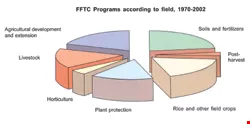
The FFTC has long been involved in providing information and guidance to the livestock industry.
Finally, Tsou emphasizes that today, amid the rush to globalization, the AVRDC must collaborate with commercial enterprises to disseminate its research and development results, and persuade enterprises to regard the small farmers of developing countries as an important market, so that all rural areas can benefit from its improved vegetable varieties. It must also enhance small farmers' professional skills, and promote low-pollution vegetables that are adapted to local conditions, to improve people's nutrition and health. It should combine R&D, promotion and economics into an integrated whole.
"In other words, from R&D to promotion and then application of agricultural technology, agriculture is part of the knowledge economy, and innovation in agricultural technology is a driving force of agricultural development. The future challenge for the AVRDC is to acquire information and technologies that can be standardized, and continuously innovate, so as to enable less advantaged countries and farmers not to drown in the tide of globalization but to benefit from it, and also to alleviate poverty and hunger as quickly as possible." Samson Tsou believes there is still plenty for the center to do.
Although he has this long-term vision in view, Tsou, who has worked at the AVRDC since its inception, is now preparing to retire. Everyone at the center will be very sad to see him go. When plant pathologist Dr. Sylvia Green, who has been working at the AVRDC for 21 years and regards Taiwan as her second home, speaks of Dr. Tsou's impending retirement, her eyes brim with tears and she says: "He understands all our problems and does everything he can to resolve them. I don't know how we'll manage without him!"
But Samson Tsou says that all good things come to an end, and believes that precisely because he has been involved with the AVRDC since the beginning and nobody is more familiar than he is with every aspect of the center's work, perhaps his departure will be "a good thing," for it will leave greater scope for the other staff to grow. Furthermore, the new director Dr. Thomas Lumpkin has a US academic background, and he may be able to initiate even closer international collaboration.
As for Samson Tsou, with his incomparably rich academic and professional background and experience of international agricultural practice, he intends to move into teaching and research, and hopes also to be able to make a contribution to the development of international businesses in the field of vegetable farming, and thus achieve an ideal that is also in AVDRC's future agenda.
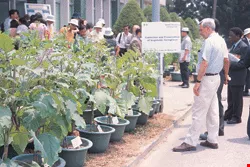
The germplasm bank at the AVRDC is world famous. It has information about and seeds for 48,000 varieties; visitors won't want to miss this spot.
Another international organization based in Taiwan that is devoted to eliminating poverty and hunger is the Food and Fertilizer Technology Center for the Asian and Pacific Region (FFTC), which was set up even earlier than the AVDRC. But because FFTC's main mission is to collect and disseminate information on agricultural technology, it has a smaller staff than the AVDRC and does not have its own experimental farm or research personnel. Hence even fewer people outside the field of agriculture are aware of its existence.
The scholarly and cultured director of the FFTC, Dr. Wu Torng-chuang, previously worked for many years at the Sino-American Joint Commission for Rural Reconstrucion and at the Council of Agriculture, and has devoted his life to agriculture and to soil fertility improvement. Like most people working in agriculture, he has an unassuming and straightforward personality. He knows all there is to know about the background to the establishment of the FFTC, and the valuable work it has done over many years.
Amid the material prosperity of today, it really is hard to imagine that only 30 or 40 years ago in the 1960s, food shortages were a matter of grave concern in countries around the world, particularly in the many developing nations of Asia, Africa and Latin America.
In Asia, the main reason for inadequate production of staple foods (most importantly rice) was backward farming techniques and insufficient fertilizers. Because of this, in 1968 the Asian and Pacific Council (ASPAC), a regional forum of foreign ministers, began to discuss solutions, and decided to set up the FFTC. Because Taiwan was a relatively advanced subtropical country, it was decided to locate the center in Taipei.
In February 1969, ASPAC convened a preparatory conference in Taipei, attended by experts from various countries, to examine the technical feasibility of setting up the center. The conference passed a resolution recommending its establishment, and the following year the FFTC was formally set up in Taipei, with nine countries as its founder members: Japan, South Korea, the Republic of China, the Philippines, Vietnam, Malaysia, Thailand, Australia and New Zealand.
From the center's inception, its orientation and mission were extremely clear-to collect and disseminate information on agricultural technology, mainly for the benefit of small farmers in the Asia-Pacific region, with the aim of assisting them in increasing their production of staple foods, mainly rice. Therefore, in the first decade of the FFTC's existence, its programs were focused on soil and fertilizer management, the nutrient requirements of rice plants, and control of major rice pests. It was the first international center to specialize in control of rice brown plant hopper, which became much more destructive after the introduction of short-term high-yielding rice varieties and chemical pesticides. Many people may still remember that in those days the plant pathology department at National Taiwan University was very popular, with many talented young people going into research into crop pests and diseases.
In the 1980s, production of rice and other crops increased, and the threat of major famines receded. Economies in the Asia-Pacific region began growing rapidly. Thus the FFTC shifted its focus to crop diversification, high-value crops, satisfying demand from urban consumers, and improving farmers' ability to respond to market forces. The center's information services now also covered horticultural crops and livestock production.
In its third decade, like the AVRDC the FFTC is seeking to address the issue of environmental degradation resulting from overdevelopment, by pursuing sustainability in agricultural production.
The FFTC is shifting away from old strategies which gave top priority to yields and increasing farmers' incomes. It is now devoting more attention to common worldwide problems of agriculture like soil exhaustion, pollution of groundwater, overdevelopment of slopeland, and destruction of biodiversity. It is resorting to new agricultural technologies and placing more emphasis on things like environmental regeneration, restoring soil fertility, and better management of fertilizer use. New methods are also being applied to the marketing side, establishing sales channels, pre-sale inspection, and after-sales service. Every effort is being made to apply local technology and to leave behind a planet on which future generations can survive.
In the last three decades, because of changes in the international political situation, the number of member countries has fallen from nine to five: Japan, Korea, Taiwan, the Philippines, and Vietnam. Yet the scope of the FFTC's activities has constantly expanded. It cooperates with more than ten international bodies including the AVRDC, the Food and Agriculture Organization, the Asian Productivity Center, and the Asia-Africa Agriculture Development Organization. It also shares information with more than ten Asia-Pacific countries (including Australia and New Zealand) through seminars, training classes, field demonstrations, surveys, and both regular and occasional publications.
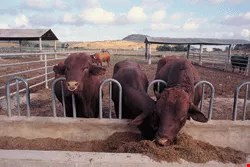
The FFTC has long been involved in providing information and guidance to the livestock industry.
Looking to the future, Wu Torng-chuang says that most countries face similar problems: They must reduce reliance on price and export subsidies, and fall in with the logic of reducing barriers to imports. They must invest in basic infrastructure, specialized research, rural social services, and environmental protection. They may even need to restructure their entire agricultural sectors to meet changes in demand in the world market. Sustainable development will depend on taking into consideration what Wu calls the "three sheng": shengchan (production), shenghuo (quality of life), and shengtai (the environment).
The core technologies promoted by the FFTC have kept up with the times. They place equal emphasis on new biotechnology and traditional technology, promote mechanization of agriculture, and urge the widespread availability of information. Looking at the overall situation in the Asia-Pacific region, Wu has especially high praise for the government and people of Korea. "Information technology is widely available in the agricultural sector in Korea. They have computers even in rural villages where they can access the latest information. This is really an example we can learn from."
Over the many years that the AVRDC and the FFTC have been in Taiwan, they have brought much valuable information and many first-rate experts to the island. These institutions have also provided many opportunities for Taiwan's home-grown talent to learn and develop. Over the years, Taiwan agricultural technical teams have worked in Asia, Africa, and Latin America helping agriculture in developing nations and improving the lives of countless people. As the host country, Taiwan has unstintingly supported these institutions. Right now the main global issue is sustainability. Addressing this problem is the next challenge for these institutions that have been working quietly but effectively for so many years.


@List.jpg?w=522&h=410&mode=crop&format=webp&quality=80)


