For Better or VersePoems by Guest Workers in Taiwan
Eric Lin / photos Hsueh Chi-kuang / tr. by Bruce Humes
July 2002


The 1960s American duo Simon and Garfunkel once expressed in song the thoughts of the disaffected young: "I am a rock, I am an island / I have my books and my poetry to protect me."
Poetry is a calming force. Cleansed by it, we can unburden ourselves and become more optimistic.
Thanks to the emergence of poetry clubs organized on their own by foreign workers, as well as the energetic support of the Taipei City government, Taiwan has now become not just the leading national "producer" of poetry written by overseas laborers-it is also benefiting from an added sense of "poetry" in the relations between those foreign workers and the land and people of Taiwan.
It is June 8th. Taipei's Filipino workers are not only gathered as usual for mass at St. Christopher's Church on Chungshan North Road, but since it is the Philippines National Day, Jihhsin Elementary School on Chengte Road is also hosting a lively celebration in its auditorium. More than a thousand people are gathered there, the fruits of labor of various community groups are displayed everywhere, and tables are stacked with Filipino dishes to allay homesickness.
On the stage, besides performances of traditional Filipino songs and dances, members of the SMT Poetry Society for overseas Filipino workers are reciting their poems in short skits. They use lovely, rhyming Tagalog to describe a typical encounter with a government official, and laughter breaks out among the audience in rhythm with the poetry.
As you walk outside Jihhsin Elementary School, the big campus envelops the merry laughter of the auditorium in a silent embrace, while on Chengte Road's tree-shaded sidewalk quiet conversation continues as usual on this Sunday afternoon, and a refreshing light summer breeze brushes by. Passersby are too far removed to hear the sound of poetry translated from a life-force deep inside as it leaves the auditorium stage and winds throughout the lower levels of the city.
In order to relieve feelings of homesickness among overseas workers, in recent years the government has organized events such as a Thai-style Water Festival, an Indonesian Breaking the Fast Festival, and a Filipino Culture Festival. For the great majority of Taiwanese, these events are simply a news item. It is only now that the voice of foreign workers has been transformed into lines of poetry, and begun to wind throughout the web of Taipei's Rapid Transit System beneath the city, that people are taking notice.
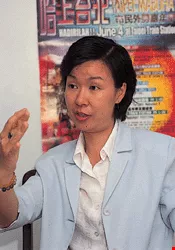
After Lorna Kung, director of the Taipei Foreign Workers Counseling Center, heard the poem "Old Maid" by chance, close ties developed between the center and the SMT poetry society.
The winning entries in the foreign workers' poetry competition "Taipei, Listen to Me!" organized last year by the Taipei Bureau of Labor, are displayed in the cars of the Taipei Rapid Transit System. Using simple but moving language, workers from the Philippines, Indonesia, Vietnam, Thailand and elsewhere wrote poems expressing their sentiments in their struggle as foreign visitors to Taipei. Displayed in two languages, the poems help people of different cultures to avoid feeling distant from one another while being crowded into a subway car.
"Before, I always had a bad impression of foreign workers because lots of them loitered around Taipei Train Station during the holidays," explained a student at National Taipei University. "But the poems on the MRT, particularly one called 'Migrant's Cry,' actually brought tears to my eyes when I recalled how I abandoned my home for studies in Taipei, and how my own blue-collar parents work so hard down south." The poetry made her see the heart which beats inside each overseas worker.
Actually, Thailand, Indonesia, the Philippines and Vietnam all have their own deep-rooted culture of poetry, according to Lorna Kung, director of the Taipei City Foreign Workers Counseling Center. Additionally, in Thailand each province has its own provincial poetry, and the governor writes poems for the children of his province.
Priska Rahayu, a nursing supervisor from Indonesia, says that in her country most literary prizes are awarded by means of an official "Call for Poetry." Conversations and correspondence between friends are typically carried out via poetry. Now that she is separated from her husband, many of the letters she writes to those back home are love poems for him. Poetry is rooted in the life of each Indonesian, and therefore since coming to Taiwan Priska Rahayu's poetic output has continued without interruption.
As regards the Philippines, because English and Tagalog are both in use, Filipino poetry exhibits a unique fusion of East and West. Actually, Filipino workers overseas have been writing poetry ever since the Philippines began exporting labor many years ago.
Taiwan's SMT Poetry Society is part of an international organization with branches in Saipan and Hong Kong. Founded in April, 1999, the Taipei branch meets once monthly. Although foreign workers come and go, it has grown from five members to more than 30. In fact, it was through them that Lorna Kung learned how sophisticated their poetry was, and then came up with the idea of organizing a poetry competition for overseas workers.
"Thanks to electronic and print media, we received 216 entries. First we divided them by country, and the initial selection was carried out by experts speaking those languages," says Lorna Kung. "The poems were translated into Chinese and the final selection was made by well known Taiwan-based poets such as Chang Hsiang-hua, Yang Tu and Chung Chiao. The judges were surprised by the level of writing by the foreign workers, finding many of the poems to be quite moving," she adds.
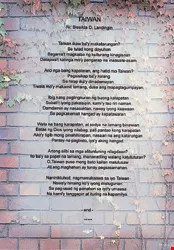
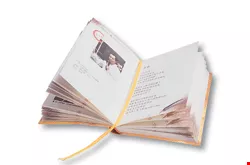
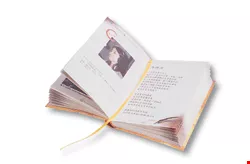
Transforming feeling into poetry, and making it into a force for life: The poetry of Taiwan's foreign workers represents a revolution in both form and content.
In terms of content, poetry by foreign workers revolves around the two key motifs of "labor" and "living in a foreign land." But the unique aspect of the poems of each country are expressed within a similar form. According to Taiwan poet and competition judge Yang Tu, Filipino workers have good English ability, and rhyming techniques seen in their poetry would be the envy of many a Taiwanese grad student; meanwhile, poems by Indonesians are strong on metaphor, Vietnamese poems are tender, and those by Thais serene. Each exhibits a different cultural content.
Chung Chiao, head of a drama company and also a judge for the poetry competition, analyzes the poems in terms of content: The Filipino poems subtly reveal the fervent culture of a tropical island colonized by the Spanish, a poetry filled with love of life and more socially conscious, because of the Filipino tradition of fighting for their rights; Indonesian works tend to emphasize the micro details of human relationships, while the Vietnamese and Thai poems contain more advice and aphorisms.
Lorna Kung points out that poems solicited for the competition must be translated. A specialist recites each poem in its original to ensure that each judge comprehends the usage of sound and rhyme. The translation process is very challenging and some distortion is inevitable.
Nonetheless, the results from the first year of the competition were better than expected. Not only did the people of Taipei react warmly, but when the cut-off date for soliciting poems for the second year had expired, some 2000 foreign workers had entered the competition-a ten-fold increase!
This is the first time worldwide that a government has ever actively encouraged its resident foreign workers to write poetry, notes Lorna Kung. And Taiwan's action will help preserve the culture of these overseas workers who, like birds in migration, are making their nests throughout Asia.
Overseas workers are a new and unique emigration phenomenon in Asia over the past few years. This group is neither one of immigrants or refugees, and its cultural significance-also newly emerging-is difficult to define. The unique literary form born of them is also an emerging one, also difficult to capture. It is neither literature in the Marxist left-wing vein, nor does it qualify as rootless, emigre literature. If one must classify the writings of these foreign workers, they belong to a sort of "people's poetry" a la Pablo Neruda, the Chilean poet: Poetry based on the lives and circumstances of the author. In fact, this is also very much in the tradition of China's ancient Book of Odes.
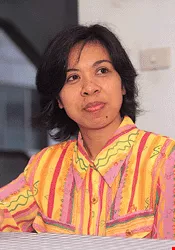
Indonesia's Priska Rahayu: Performing poetry has become a means for deciphering the meaning of life.
Britain's Marxist literary master Terry Eagleton once pointed out: "Understanding literature means understanding the total social process." We too can see the various questions of life and society faced by foreign workers through their poetry.
First among them: Separation. Separation forces one to grow up. Take for example "Song of Love" by 25-year-old Filipino worker Estelito J. Dulya Jr.:
Must remember mother's song / Mother's song full of emotion / Mother's song full of warmth / Full of guidance for her child / Asleep last night I just longed to hear mother's song / In my heart I will always remember how to show my gratitude to you / You brought me onto this earth / Don't forget me / Even when you are old I will still look after you.
Dulya began his writing career only after coming to Taiwan. Leaving his hometown to seek a living abroad has made it especially easy for him to recollect the instructions of his mother when he was young, he says. Ironically, the distance between them has brought them closer.
Homesickness is also a major motif. In her award-winning poem "Hope," Priska Rahayu writes:
If I could go home now / I would like to tell a story / About happiness, difficulty and sorrow / That would help to lessen the solitude in my heart / In the end everything will disappear / All the happiness, difficulty and sorrow / In the end I was victorious / With the happiness I long for / Hope / Now is the time / I suffered sorrow and pain / And the fruit of a hurt heart / Ended / All the tense episodes have ended / Now. . . I return to my own country / My most beloved and longed for country / Indonesia-I wish I had already returned there / Adieu, Taiwan.
Many of the foreign workers are highly educated people who have come to Taiwan to earn a bit more, but "labor" puts their self-respect and willpower to the test. In her poem "Migrant's Cry" which won second place for her in the poetry contest, 26-year-old Estrella DeCastro, a Filipina supervisor, writes:
Final verdict comes guilty / Which officially directed me / To cell 1st F, 39-B / Shared with an inmate / My helpless ward indeed / That often receives a visit even in my time of sleep / In my lonely cell, it's lifeless undeniably / Language unspoken, no phones from family / Privacy invaded / Sound of silence is what was heard / Depression, anxiety and fears made my life disappear at an alarming rate. (tr. by Lorna Kung)
But there are also relations between employer and employee which engender deep emotion, and foreign workers who treat their employers as "family" and grow sad when they realize their contract will soon end. Nguyen Thi Cuc, the Vietnamese author of "Granny and Baby" writes:
Lived in Taiwan eight months / Feel a true warmth from others / Elderly and young are respected / Just like we Vietnamese / Looking after darling baby just a year old and a bit / Baby watches my eyes just like those of her mother / I take one step, and he takes one too / Looks to me whether hungry or sated / Always calls me before sleep / To kiss his neck three times / I treat Granny and little darling / Just like family / If Granny or baby grow sick / I am worried and cannot eat / When granny and baby are healthy / I am happy and joyful / Thinking of the day when my contract expires / I long to stay behind, and my heart aches silently.
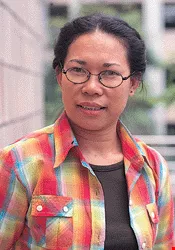
"Old Maid," a poem by Ni Alma Bucayani of the Philippines, has opened new horizons for Taiwan's "Literature of the Foreign Worker."
In Taiwan for better or worse, overseas workers from each country have their own places where they congregate. For Filipinos, it's the Catholic church; for Thais, most go to the train station, while the Vietnamese and Indonesian nannies gather in parks near their residences. A new life means a new start to human relationships, and life itself is good material for poetry.
Ni Alma Bucayani, a 40-year-old Filipina, says that not only her employer and her employers' friends, but also friends who are from the Philippines are curious as to why she is 40 yet unmarried. "Just explaining this is enough to exhaust you," she says. So she wrote a poem, "Old Maid":
Old maid / How that label stings the ears / It expresses the truth / And expresses the pain in my heart / You can clearly read it on my face / That's right, I'm old / The beautiful countenance of yesteryear is no more / My heart has become very delicate / Please help me out / Call me "Sister," not "Grandma" / Had I a partner I might still not be blessed / Were I married I might not have a good husband / A sudden addition of worry and pain / That sort of marriage / Better none at all than one of that ilk / Only want to live happily / A single lady / Carefree and content.
Most foreign workers come on their own, though many are married. But because they are far from home in an alien land, it is that much easier for them to succumb to affection for another who has come from the same region back home. This is particularly prevalent among workers from the Philippines, because both sexes are in Taiwan, giving birth to a mode of romance dubbed "Only in Taiwan." Resisting such affection from a random meeting can be very difficult.
"Deep in my Heart" by Filipina Ni Janet Lauron expresses the dilemma of to love or not to love:
Unintentional encounter / By God's unintentional arrangement / You were there and yet not / By my side / Seduced into a trap, I fell for you / But you have a wife and I a husband / Oh, no / That kind of romance / Will hurt the innocent / True love is pure and sincere / True love is courageous sacrifice / I know I cannot possess you / I can only hide my love / Deep in my heart.
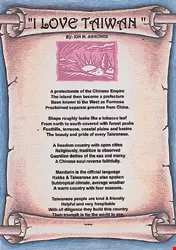
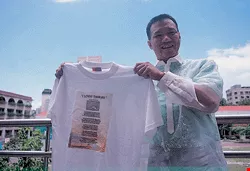
Love for someone from another country occasionally occurs in a quiet sort of way, and this cultural fusion enriches one's vision and heart. One of the founders of the SMT Poetry Society, Jun M. Sanchez, met his wife while working as an airline cook for TransAsia Airways. After their marriage, they settled in Taiwan. He has written a series of thought-provoking poems on Taiwan, peace and other motifs. In "Peace," he writes:
Love our neighbor as ourselves / Respect each other, forgive our enemies / Let's learn to get closer to one another / We need to reconcile to God our maker.
Several tens of thousands of years ago, speakers of Austronesian languages used Taiwan as a stepping stone, moving from the Asian mainland to flower throughout the Pacific Ocean region. They left behind them a dozen or so native peoples who, because of the beauty of the island-and despite their different races and tongues -lingered here and co-existed peacefully. Over the centuries peoples of different clans have crossed the strait from China to Taiwan, at times for its renowned fertile and lovely land, at times to seek refuge from war. And the island has exercised its greatest tolerance to support the dreams of those immigrants who came in waves over time.
In the past due to Taiwan's unique diplomatic impasse, mutual understanding of its neighbors and each others' cultures has not been sufficiently deep. Since the arrival of the foreign workers in Taiwan and misunderstandings bred by an initial spate of crime and the unrest at the sixth naphtha cracker, Taiwan has now begun to encourage the creation of poetry to further mutual understanding and forgiveness.
Blessed are the meek, for they shall inherit the earth. Blessed are the peacemakers, for they shall be called the children of God.
From ancient times Taiwan has been a most tolerant land, quite small, but capable of nurturing the countless dreams of countless souls.
Transforming feeling into poetry, and making it into a force for life: The poetry of Taiwan's foreign workers represents a revolution in both form and content.
"Old Maid," a poem by Ni Alma Bucayani of the Philippines, has opened new horizons for Taiwan's "Literature of the Foreign Worker."
Indonesia's Priska Rahayu: Performing poetry has become a means for deciphering the meaning of life.
SMT Poetry Society, founded by workers from the Philippines, was the inspiration behind the Taipei government's decision to organize a poetry competition for foreign workers. The photo features members of the poetry society in traditional garb at the Philippines National Day celebration held in Taipei.
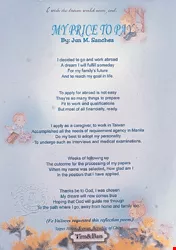
Transforming feeling into poetry, and making it into a force for life: The poetry of Taiwan's foreign workers represents a revolution in both form and content.
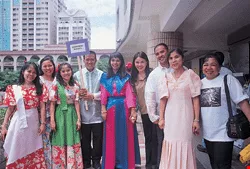
SMT Poetry Society, founded by workers from the Philippines, was the inspiration behind the Taipei government's decision to organize a poetry competition for foreign workers. The photo features members of the poetry society in traditional garb at the Philippines National Day celebration held in Taipei.
@List.JPG?w=522&h=410&mode=crop&format=webp&quality=80)


