Taiwan: Afforestation's "Technological Fouls"
Gypsy Chang / photos Arthur Jeng / tr. by Peter Eberly
December 1986


"Twenty years ago, the water in Niutou Stream wouldn't muddy up until a full three days after a big rain on Ali Mountain. In the 1970s, it took five hours. Now it's down to just a couple. . . ." So states the 1982 prize-winning book We Have Only One Earth.
Despite Niutou Stream's new-found muddiness, Taiwan's forest cover over the past 30 years has actually only decreased from 64 to 52 percent. This figure is still well above those of most other countries and exceeds the 30 percent that experts say is required for adequate climate moderation and soil and water conservation.
So why is the stream having a problem?
One reason is the nature of the island itself. The facts that Taiwan is highly mountainous, consists chiefly of weak sandstone shale, is located in an earthquake belt and in the path of typhoons, and receives three times as much rainfall as the world average--all increase the amount of forests it requires for adequate soil and water conservation.
Another reason is that while Taiwan's forests over the past 30 years have undergone limited change quantitatively, they have changed in "quality."
Historical records commonly describe Taiwan's original appearance as "covered with mountain forests." And the trees in those forests were largely ancient conifers with high-quality timber, such as Taiwan red and yellow cypress.
These valuable trees were felled in massive numbers during the half century of the Japanese Occupation. In Japan today, in fact, the pillars in many Shinto shrines are said to be made of Taiwan red cypress.
After Retrocession in 1945, the 1.6 million hectares of publicly owned forests on the island came under the stewardship of the Taiwan Forestry Bureau, which has continued exploitation of the remaining cypresses to balance logging with reforestation, the Japanese firs with which it has replaced the cypresses are far less effective in preventing erosion and in maintaining soil and water resources.
Another "qualitative" change in the forests has been their replacement by orchards. Fruit trees, with their smaller size and shallower roots, are even less able to provide flood or landslide control.
The problem is most serious around Lishan, where orchards were originally developed as grants to the military veterans who had engaged in building the Cross-Island Highway. The area proved well suited to growing temperate-zone fruits and when farmers and businessmen saw that there was money to be made, they rented or appropriated forest lands for themselves and planted fruit trees, which spread to ever steeper slopes. As t forest was replaced by orchards, large quantities of soil were washed down the Tachia Stream, silting up the Techi Reservoir downstream and shortening its lifespan by an estimated 50 years.
"From the standpoint of social costs, each apple from Lishan runs around NT$200 or NT$300," a National Taiwan University professor says. "Looked at in this way, they're 'golden' apples indeed."
Even worse than orchards in respect to hillside and watershed stabilization are the vegetable farms that in recent years have been opened up in the mountains to supply increasingly popular cold-weather vegetables to urban markets.
Between deforestation and replanting, the forests at altitudes above 1,000 meters have changed little in size over the past 30 years; what is growing scarcer and scarcer are the trees down the mountain.
To facilitate agricultural development, the government in 1961 decided to rent out public forest lands with better quality and less easily erodable soil to farmers for cultivation. Although stipulations were placed in the rental agreements on drainage and erosion measures to be adopted by the farmers, they have rarely been enforced.
An even more serious problem than agriculture is the spread of the cities. There is nothing wrong with urban growth in itself, but unless adequate steps are taken at the same time to maintain soil and water conservation, the consequences may not only be muddied river water but a threat to the public's safety. For those who live on improperly developed hillsides, the typhoon months of July and August are particularly anxiety-laden.
In July 1983 the Construction and Planning Administration stipulated that complete plans for soil and water conservation would be required in order to obtain a building permit for hillside property. But many construction companies got wind of the change in advance and obtained permits before the regulations went into effect.
The Taiwan Forestry Bureau has also taken steps toward a more wide-scale solution to the problem. At the bureau's request, a group of overseas scholars and experts from the ROC's Council of Agriculture and other agencies examined the state of Taiwan's forests resources and drew up a plan that would preserve the island's forest reserves forever while still allowing for a rational harvesting of 1.5 million cubic meters of timber a year.
In fact, the demand for lumber on Taiwan has continued to decline with the advance in its industries and the development of wood substitutes, and six-sevenths of its lumber needs are currently supplied by Southeast Asia. In addition, the Forestry Bureau has decided to prohibit the importation of Japanese firs and to stress reforestation with native trees species instead. Reforestation and diversification are the bureau's new watchwords.
According to one researcher, a hillside with adequate soil and water conservation is 15,000 times less susceptible to landsliding than one without; that is, an adequately protected hillside rained on 15,000 times is the equivalent of an unprotected hillside that is rained on just once.
"And the best way to maintain soil and water conservation is to plant trees," a forestry professor observes.
"Land means money," runs the Chinese proverb. But to have land--good land, you first needs trees; and if you want to keep on making money, you'd better look after them.
[Picture Caption]
Taiwan Island Forest Overview
(Sinorama files)
Forests are Taiwan's lifeblood; overworking them would truly be "killing the goose."
A mountainous topography like Taiwan's is susceptible to erosion to begin with--even without reckless exploitation like this.
Improper development can lead to the silting up of reservoirs, shortening their lifespans.
(Left) Proper soil and water conservation measures are a prerequisite for building on mountainsides.
(Right) The elevation and slope of this orchard at Lishan exceed the limit for proper erosion control.
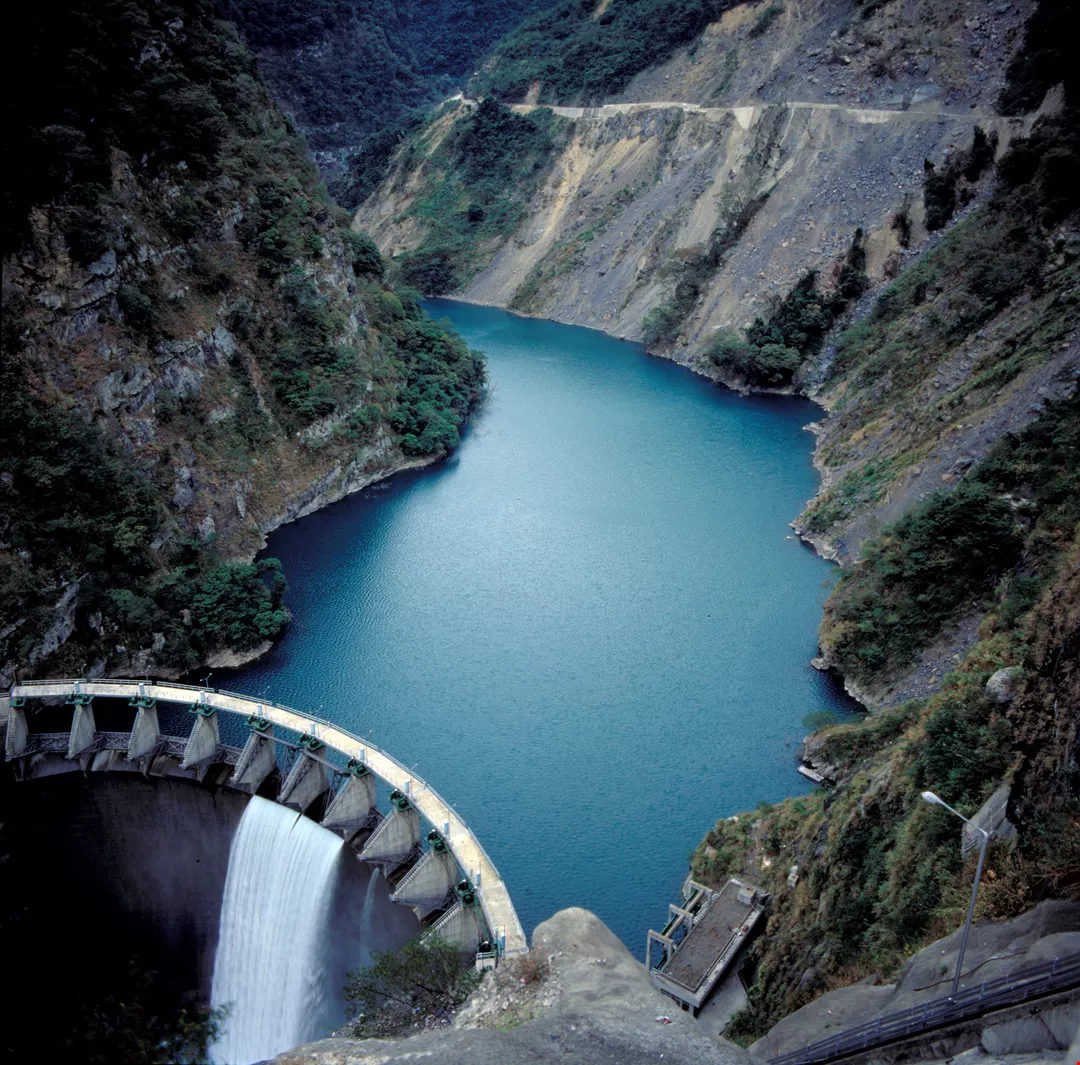
Improper development can lead to the silting up of reservoirs, shortening their lifespans.
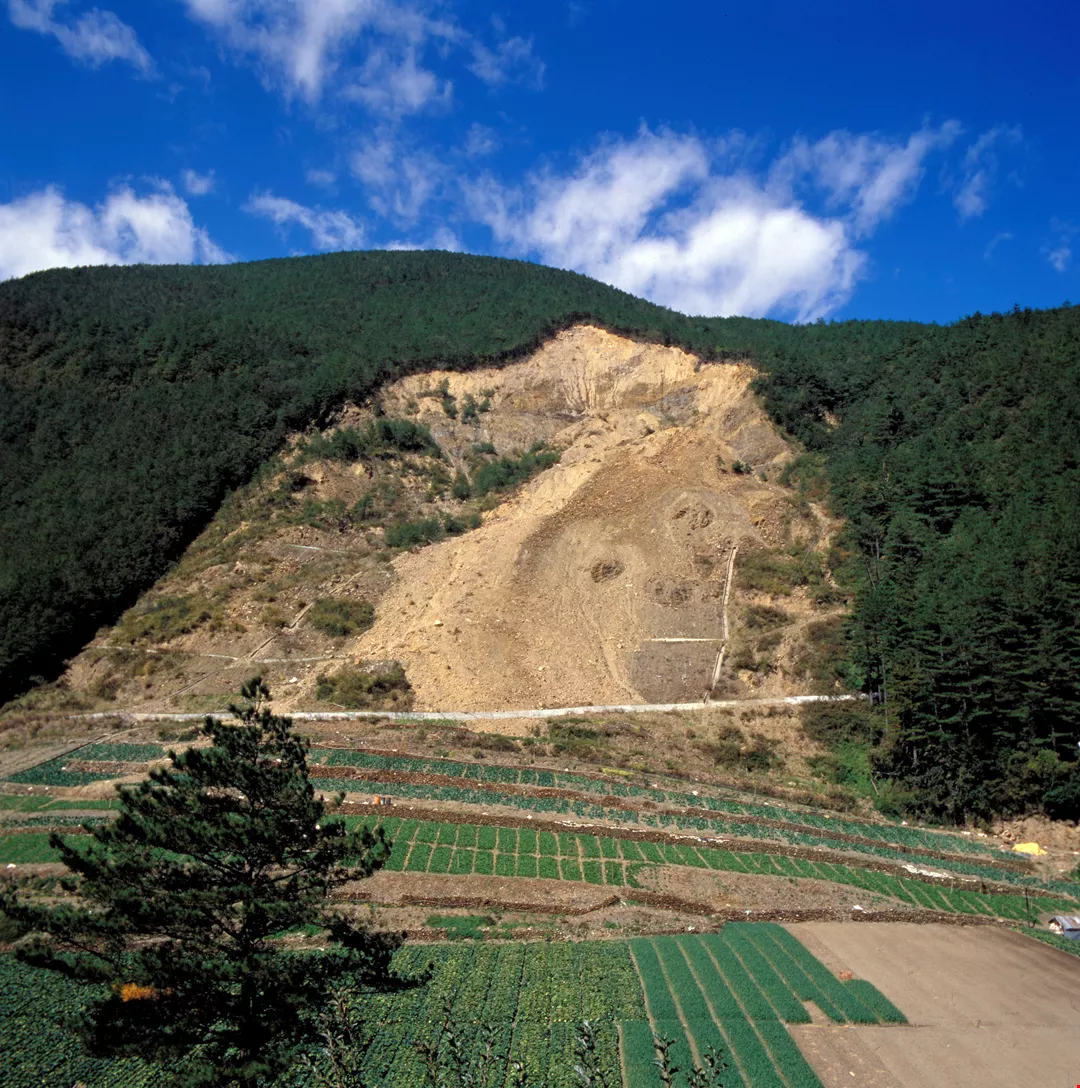
A mountainous topography like Taiwan's is susceptible to erosion to begin with--even without reckless exploitation like this.
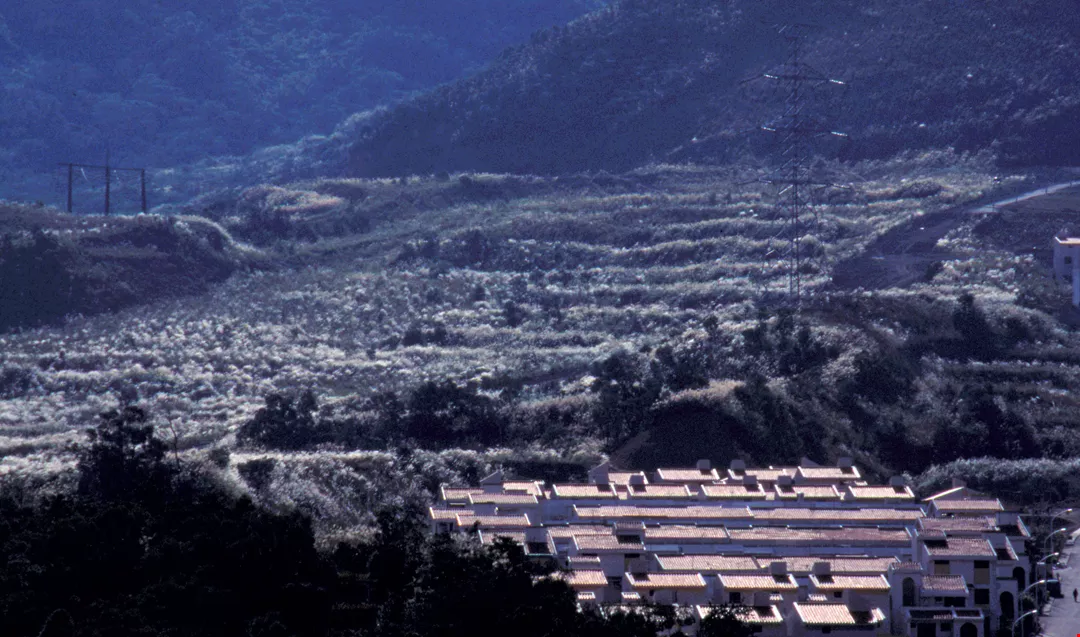
(Left) Proper soil and water conservation measures are a prerequisite for building on mountainsides.
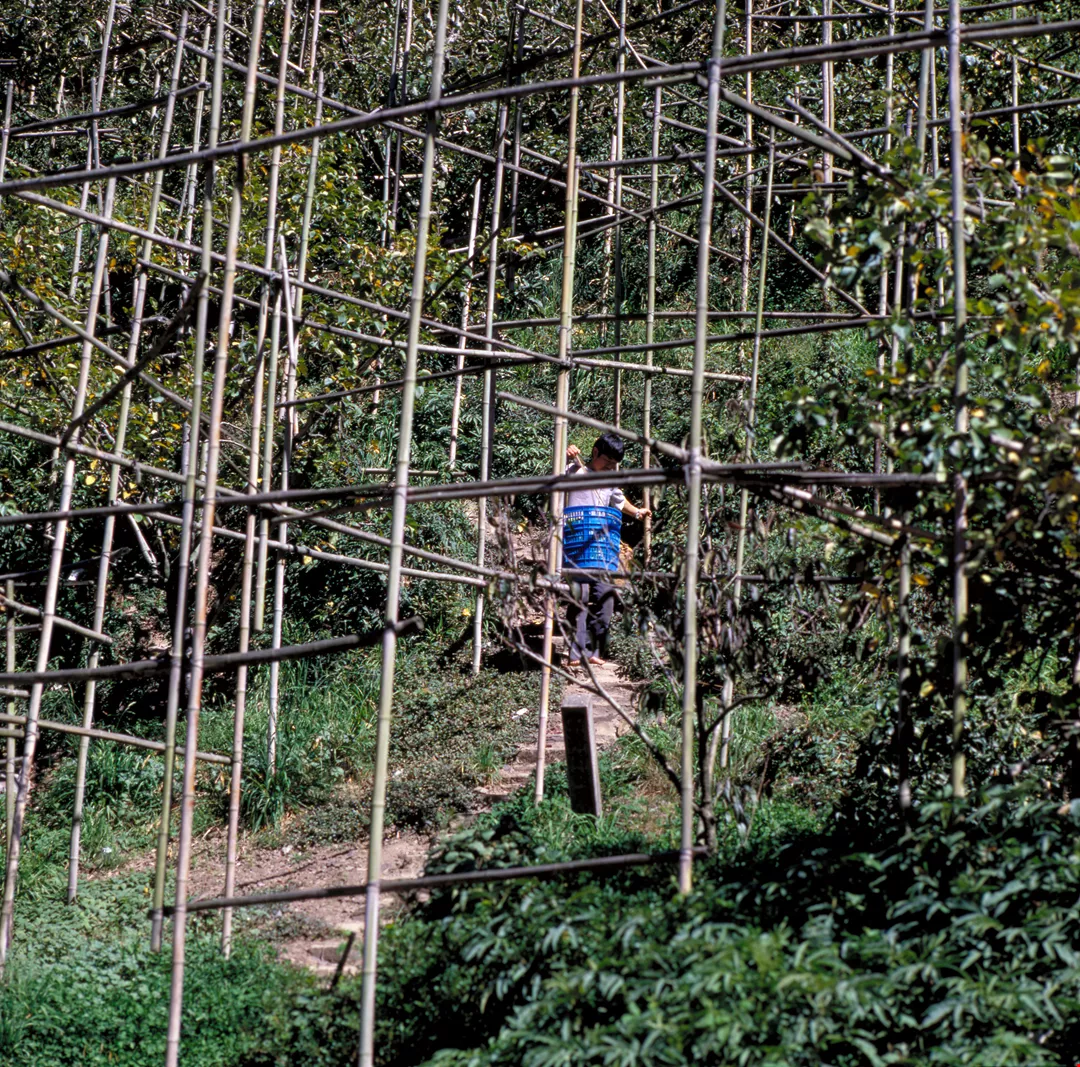
(Right) The elevation and slope of this orchard at Lishan exceed the limit for proper erosion control.


@List.jpg?w=522&h=410&mode=crop&format=webp&quality=80)


