

Four years have passed since this story began and in the wake of various exposes of environmental pollution, and with increasing public awareness, the movement to protect the environment is gaining ground. The following story is no longer an isolated example. And with the foundations established, the question is now what is the current state and future direction of environmental protection in the Republic of China?
Even though the idea that protection of the environment is not solely the government's concern but is everybody's is now no longer new, one would have hardly expected that the story to change this all begin with five hundred elementary school students.
This movement began in the middle of Taiwan in Nantou County in the peaceful village of Luku. There Ch'ingshuikou creek, a small tributary of the Choshui River, passes a brief 13 kilometers through the villages of Yunglung, Hsiu-feng, Ch'ingshui, and Juit'ien. Farming is the people's livelihood and no industry exists, let alone the threat of industrial pollution. So how exactly does an environmental protection movement fit into the picture?
The story begins with the arrival of a visiting fisherman who came to spend a lazy day by the creek. His name is Lo Chao-ling, a teacher at the Chushan elementary school. He had heard that the fishing was good in Luku and decided it was worth a half-hour motorcycle trip. But a pleasant day fishing was soon marred by Lo's discovery of a man using electricity to fish and, later, evidence of people using poison.
"When people fish with an electric current, fishes of all sizes are indiscriminately killed. It's much the same with poison, which is simply dumped into the water. But the range is much larger since it's dispersed with the current," Lo said worriedly. Generally fish killed with poison are cut open and then simply washed with salt and water. What are the health consequences? Usually fishermen eat what they catch; are they aware of the dangers? The more he thought about it the more worried Lo became. He remembered a similar river where he used to play as a child. What about the children nearby?
"I thought I had to take some course of action," Lo continued. He decided to get together with his old classmate Lin Chin-ho, who also happened to be principal of the nearby Hsiufeng elementary school. The two fifty-year-olds discussed the various ways to pass their concerns onto the young students at the Hsiufeng elementary school.
"Children, with their innocence, can easily sympathize," Lo Chao-ling said. "I thought why not invoke the kindness of children to help protect the fish. Perhaps children can influence adults, who are, after all, the ones using electricity and poison to fish". But Lo went a step further and got the children to buy baby fish so that they could release them into the stream.
"This way the children are personally involved, concerned about 'their fish'," Lo said.
Lo, who teaches arts and crafts, also wrote childrens' poems and drew accompanying illustrations to publicize the undertaking, and to get others involved. People gladly gave to the children. In the end the students collected enough money to buy over 10,000 baby fish.
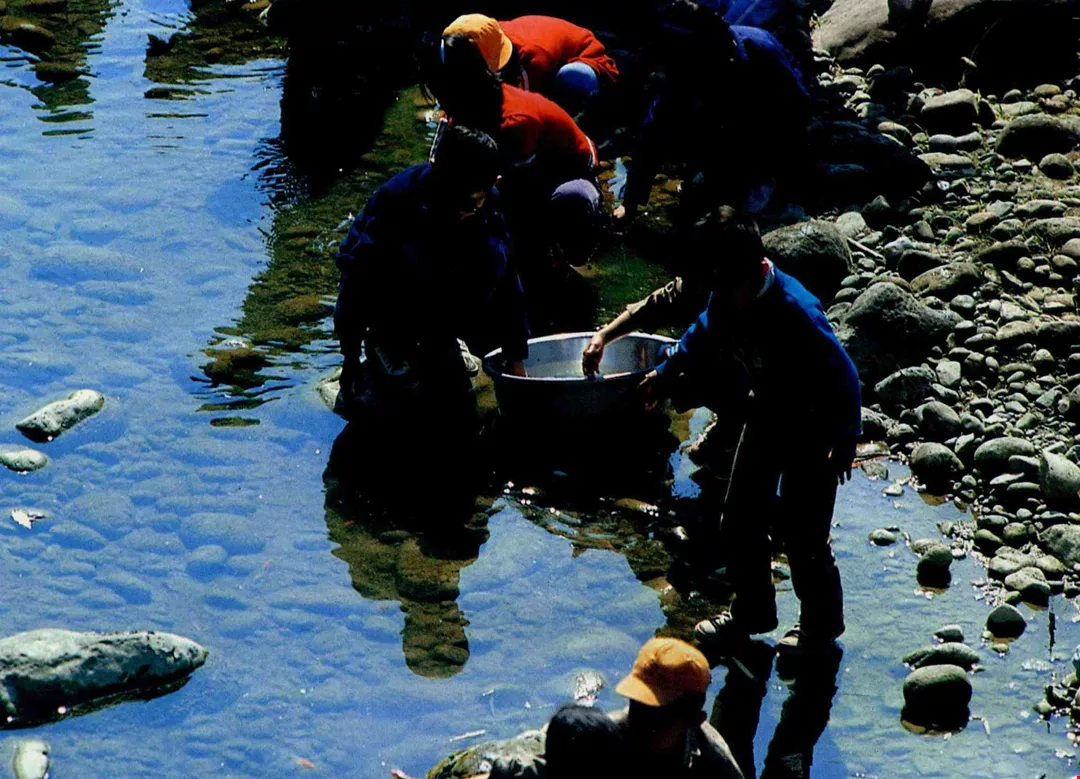
Finally, on the morning of January 19, 1982, the stage had been set to release the fish into the stream. All the children gathered about noisily with cans, cups, and every kind of container filled with their prized possessions.
"It was a lot of fun", exclaimed elementary school student Ch'en Chin-huang. "You had to be really careful. They were so small I was afraid of killing them". Adults also came out and, wherever they could, lent a helping hand.
Before long Lo became a popular figure and made use of this to publicize the need for protecting the rivers and fish. It worked, for villagers got together and applied to the local village government to make the Ch'ingshuikou creek protected area. In three months it was established, thereby making it illegal to fish with electricity, poison, or explosives.
In the heat of the publicity concerning Lo Chao-ling and his initiative, a tanned and vigorous man of 30 by the name of Li Ta-p'eng took leave of his job at a magazine in Taipei to become a teacher at a nearby middle school. Li was familiar with Nant'ou as he was an avid hiker. He arrived in Hsiufeng just as the children were making preparations to release their fish. Li recorded the event with pictures and notes. Moreover, he told his friends in the media about it. In no time the Ch'ing-shuikou protection movement became a hot news item. A well-known director by the name of Ch'en K'un-hou even made a film on the subject.
In the midst of all this publicity those who used electricity and poison to fish hardly dared to show their faces. But once the reporters left and the excitement subsided, the fishermen returned to their old ways. As one villager explained, "Those fishermen resent the interference in their lives. And since we're all neighbors, other villagers are embarrassed to tell them to stop."
"As soon as the media coverage diminished, so did people's courage and interest. The whole idea of an environmental protection area gradually faded from people's memories," Lo lamented.
And what about the small children involved? Most of them left the village to go to middle school. They have a lot of homework and have to help in the fields. They seldom visit the river anymore. Lo Chao-ling occasionally goes and reproves the villagers, but to no avail. Exhaustedfrom trying, he is at his wits' end.
Li Ta-p'eng is not quite sure how he got involved in all of this. For the past three years Li has been the dean of students at Juifeng middle school in Nantou. He occupies himself with business at school and in his spare time hikes and to observes nature. He sympathizes with Lo Chao-ling and his desire preserve the pristine quality of the environment. He met with Ts'eng Hsin-chang and others to discuss how they could develop a concrete plan to increase awareness of the environment and the factors that threaten it.
Although their plan never came to fruition, the concern they showed convinced the county magistrate, Wu Tun-yi, to allocate US$200,000 to give the Ch'ingshuikou creek a health check-up. The results of this check-up were that the pollutants in the stream were below the danger level. And to protect against pollution in the future, plans were made for public facilities to handle refuse left by visitors drawn to the area for its scenery. With these plans in mind, the teachers were busy again.
From 1981 on, tea had become Luku's most important crop. On the banks of the Ch'ingshuikou and surrounding mountain sides, land had been cleared to cultivate tea, especially the Oolong variety. But the increase in cultivation means an increase in soil run-off, garbage, notably non-biodegradable plastics, and an increased use of pesticides. Indeed, empty pesticide containers were more often than not thrown into the river. The problem of protecting the river seems to be moving towards dealing with chemical pollutants, rather than the problems of illegal fishing methods and visible refuse. Yet it was these problems that had more or less been overcome. The task of protecting the Ch'ingshuikou can be seen as a relay race--a race run in segments and by differing individuals, but resulting in an overall victory.
This year the elementary school has a new principal, Ho Shao-hua, who is interested in the efforts to protect the stream. She proposed that the teachers draft up a plan for investigating the effects of pollution and some possible solutions. Others, besides teachers, agree on the importance of the situation. Biology teacher Tseng P'ing-wu investigates the various types of birds and helps to collect samples of aquatic life and insects. Chemistry teacher Ye Hsi-ch'ung analyzes water samples. . . .An effort is being made to help the residents understand the environment around them, and their effect on it.
Fortunately, the move to protect the Ch'ingshuikou is now exemplary of the increasing number of people on Taiwan who are concerned about the environment and are taking steps to help preserve it. For those involved it is hoped that it is only the beginning.
[Picture Caption]
Children playing in the Ch'ingshuikou. A bit dirty but they don't seem to mind. (photo by Li Ta-p'eng)
It was here at the tranquil and beautiful Ch'ingshui kou that the first nongovernmental movement to protect the environment began.
Fishing secretly at night an "electric fisher man" carries a battery pack.
In order to cultivate tea, farmers have cleared large tracts of forest thereby creating soil erosion problems.
(Above) Farmers build ladder-style dams with rocks for irrigation, but the fish can still swim about freely.
(Below) Bumping into pesticide bottles like these makes fish very unhappy.
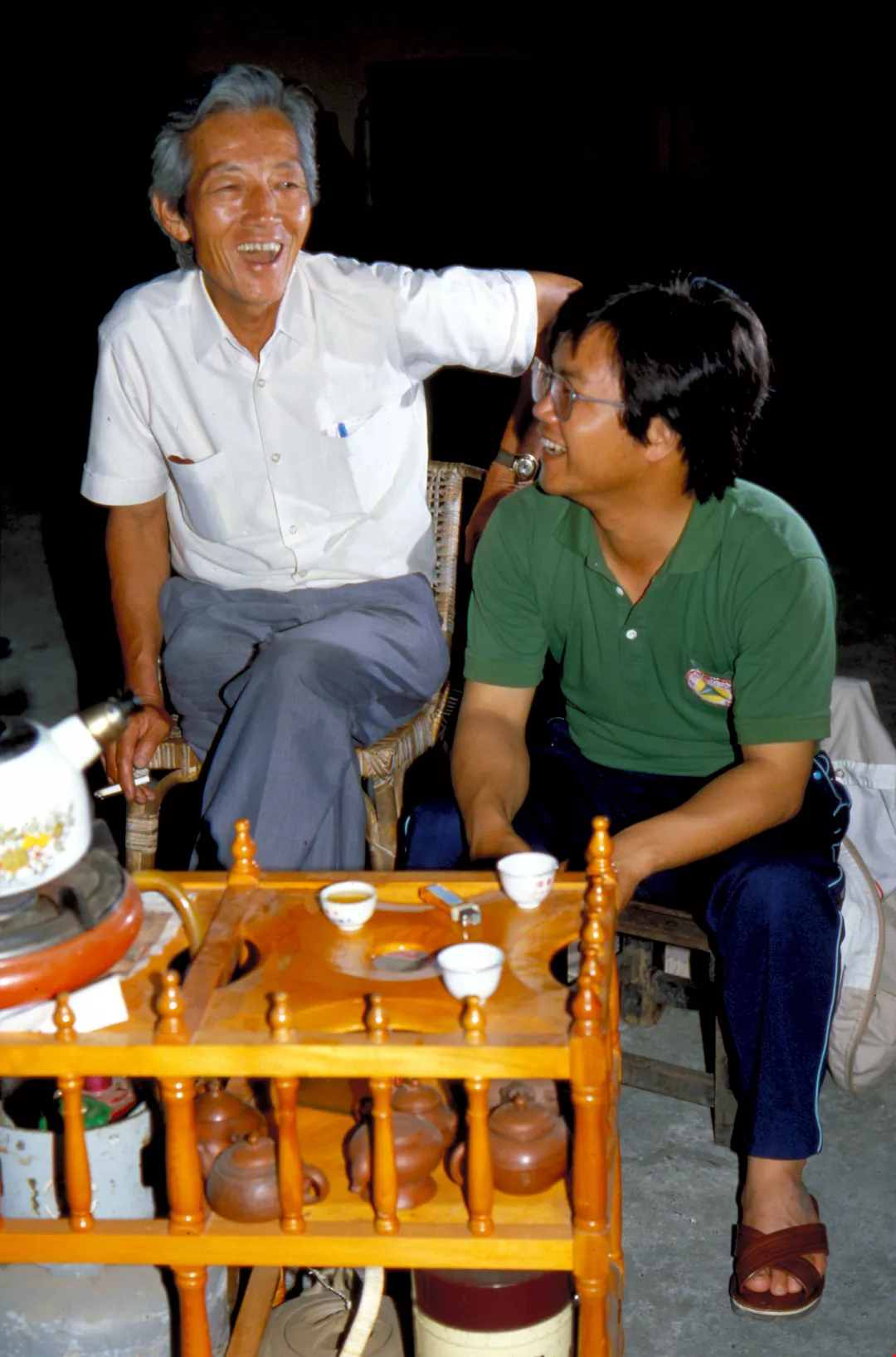
The founder of the first nongovernmental environmental protection movement Lo Chao-ling (left), and cohort Li Ta-p'eng.
Elementary school students releasing fish into the Ch'ingshuikou four years ago. Do they still remember? (photo by Li Ta-p'eng)
"This is awful. How can a river have so many colors?" "But that's how it looked!"(山巴繪)
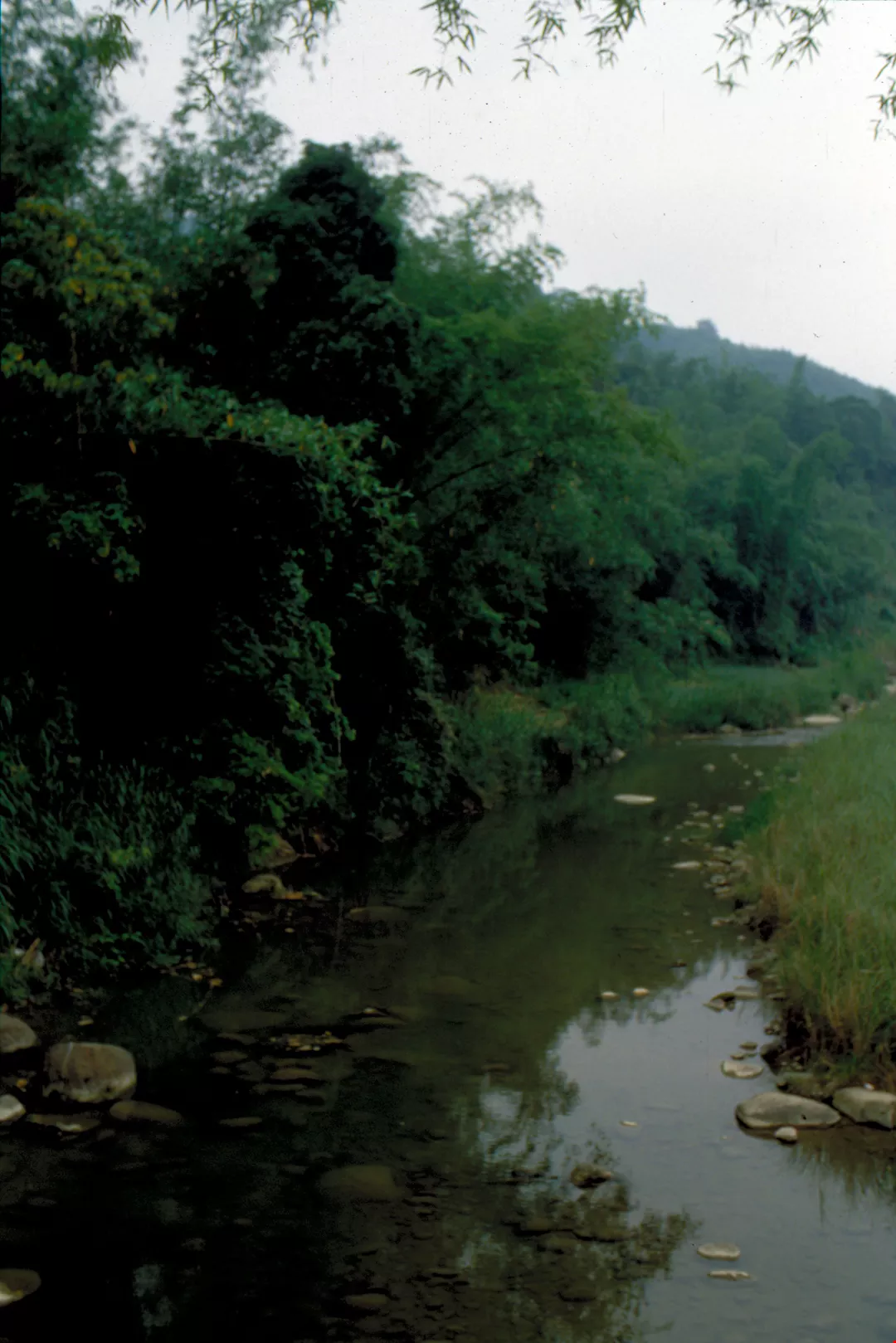
It was here at the tranquil and beautiful Ch'ingshui kou that the first nongovernmental movement to protect the environment began.
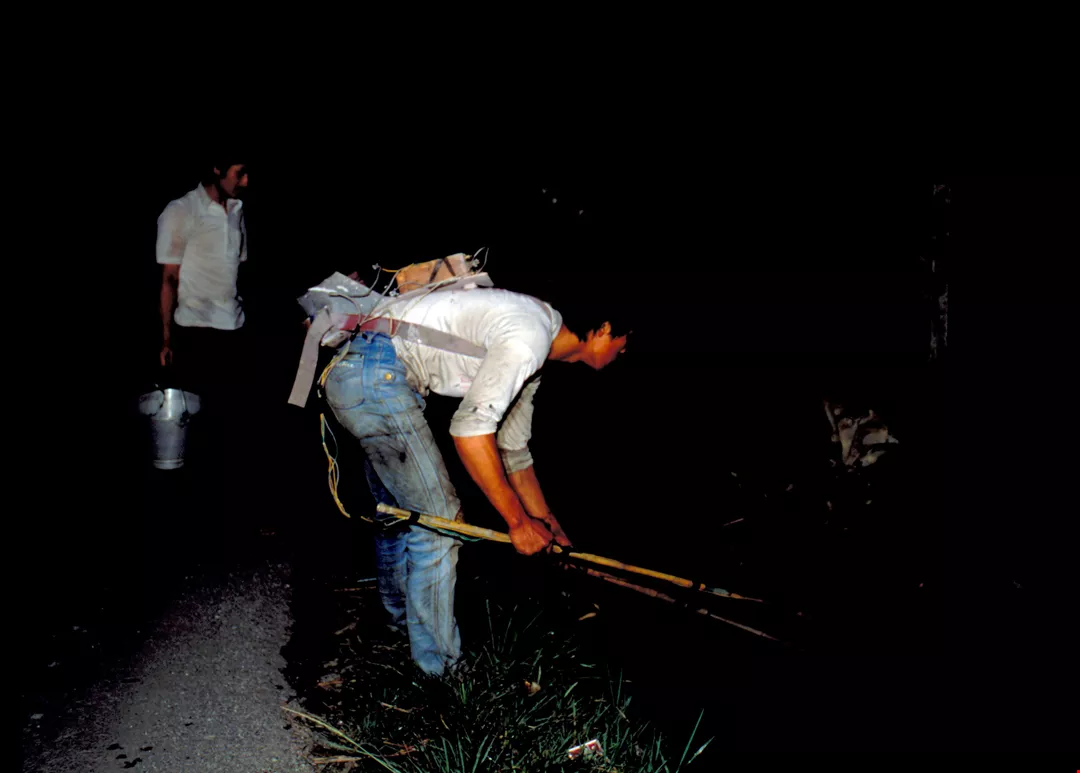
Fishing secretly at night an "electric fisher man" carries a battery pack.
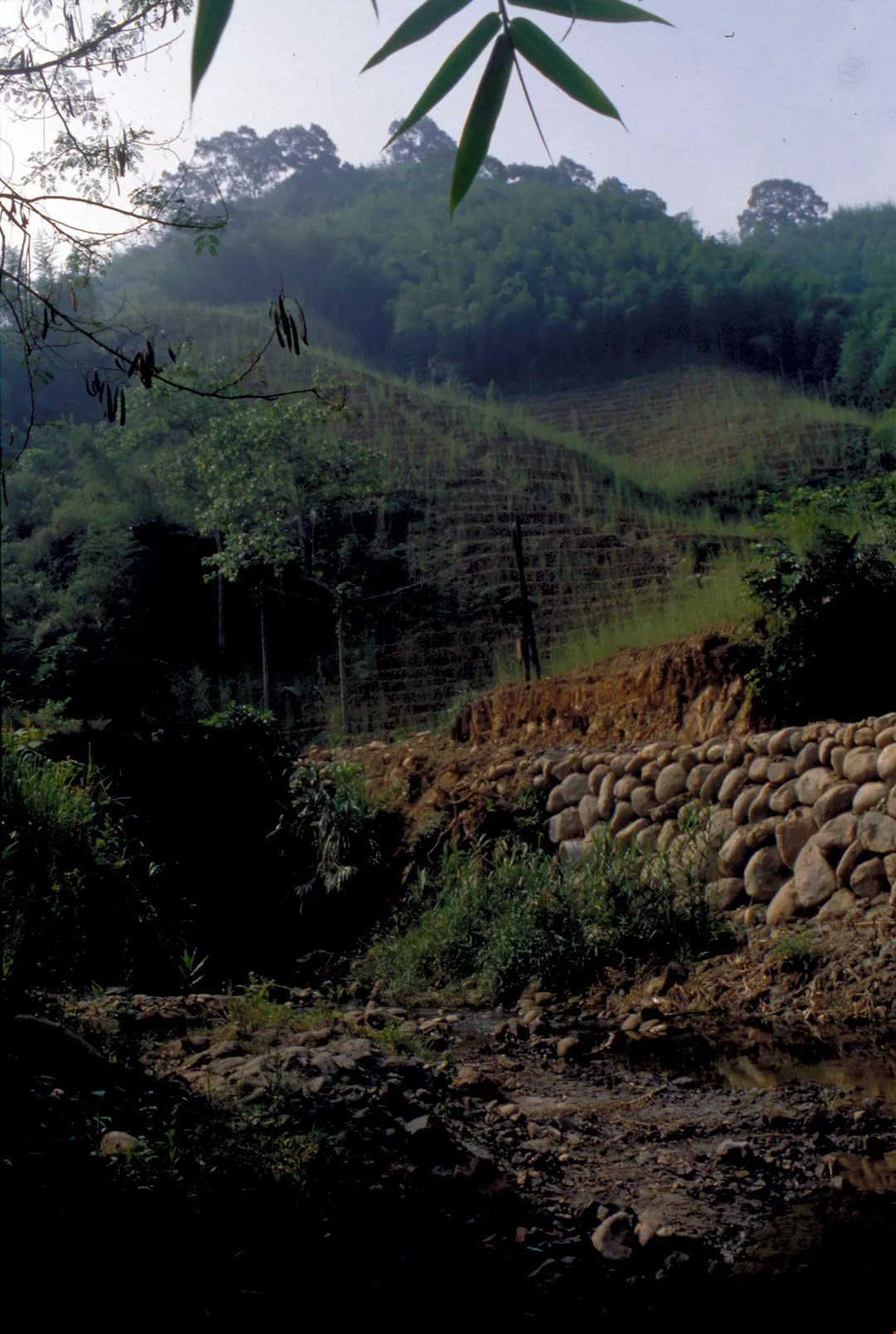
In order to cultivate tea, farmers have cleared large tracts of forest thereby creating soil erosion problems.
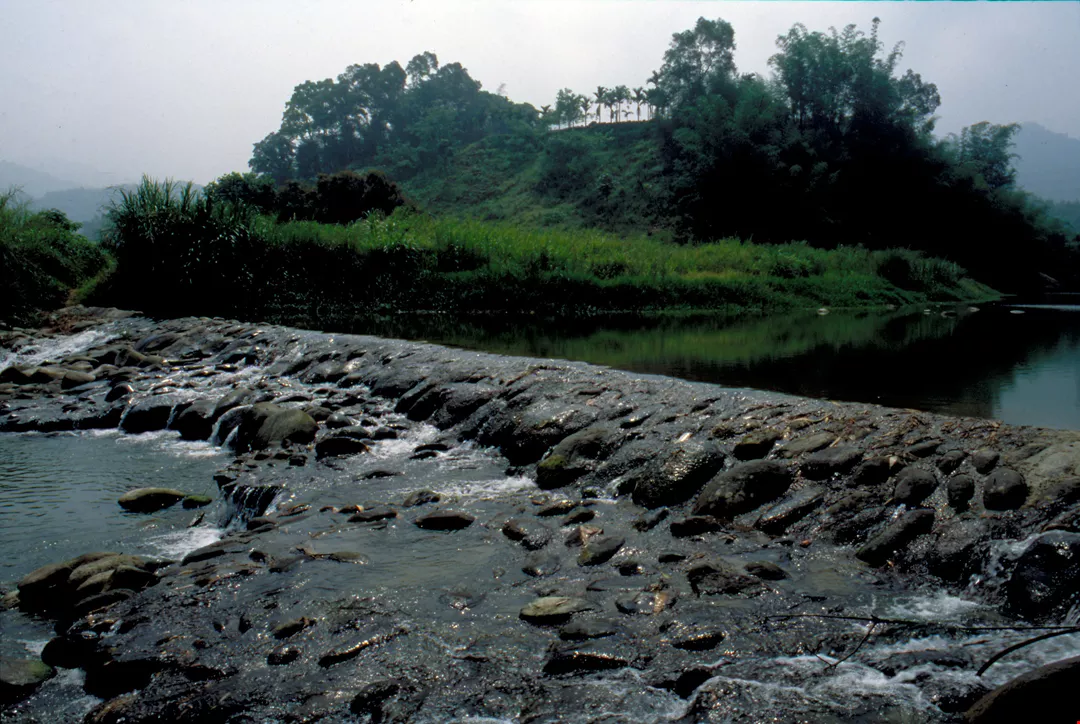
(Above) Farmers build ladder-style dams with rocks for irrigation, but the fish can still swim about freely.
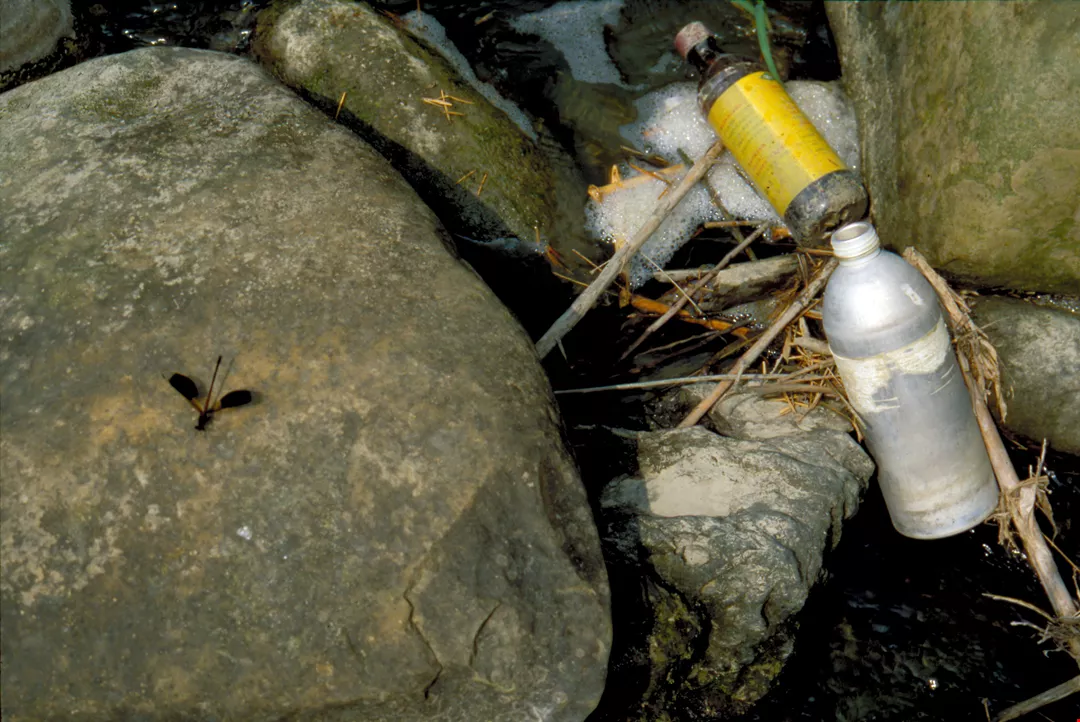
(Below) Bumping into pesticide bottles like these makes fish very unhappy.
The founder of the first nongovernmental environmental protection movement Lo Chao-ling (left), and cohort Li Ta-p'eng.
Elementary school students releasing fish into the Ch'ingshuikou four years ago. Do they still remember? (photo by Li Ta-p'eng)
@List.JPG?w=522&h=410&mode=crop&format=webp&quality=80)


