Taiwan Taoyuan International Airport’s World Class Service
Chang Chiung-fang / photos Chuang Kung-ju / tr. by Geof Aberhart
May 2015


Taiwan Taoyuan International Airport is making a big splash! In spring 2015, the airport won recognition in 11 award categories from British airline and airport review agency Skytrax, including beating out international airports in Incheon and Tokyo to win both the Asia and global Best Airport Staff awards.
Taoyuan International Airport Corporation (TIAC) CEO David Fei accepted the awards at the 2015 World Airport Awards in Paris on March 11. In addition to the Best Airport Staff gongs, Taoyuan International Airport also ranked in the top ten in Best Airport Shopping, Best Airport Security, Best Airport Immigration, Best International Transit Airport, Best Airport Leisure Amenities, Best Airport Baggage Delivery, Best Airport in Asia, and Best Airports: 30–40 million pax per year.
Skytrax began its awards in 1999, and this year evaluated 410 airports in 110 countries using surveys of almost 12.9 million passengers. The objectivity of their results has earned Skytrax a reputation as “the traveler’s choice.”
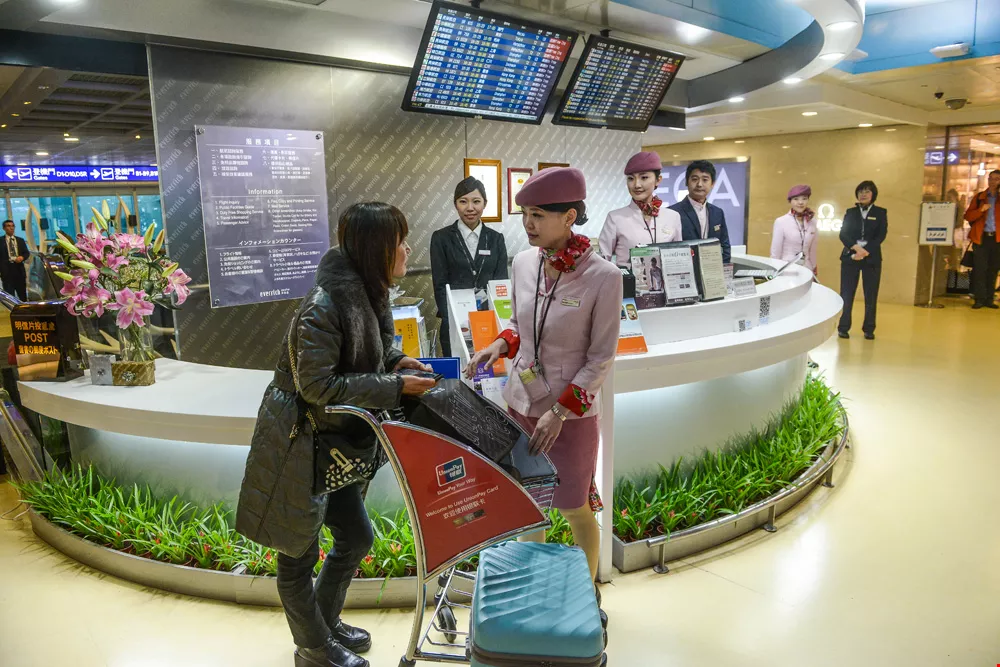
Friendly service is one of the most commendable aspects of Taiwan’s soft power.
TIAC senior vice president Wen Yung-sung notes that the airport saw an increase in passenger traffic of 11.2% in 2014, making it the fastest-growing airport in the world; cargo traffic also grew by 6% in the same period, similarly placing the airport at the top.
Today’s throughput is far beyond what Taoyuan International saw when its first terminal opened in 1979. What plans are there to handle these growing numbers into the future?
Wen explains that Terminals 1 and 2 are designed for an annual capacity of 32 million passengers, but 2014 saw the airport handle 35.8 million visitors. TIAC has already unveiled its plans for a third terminal, part of the airport’s move toward becoming a major hub for the East Asian region. After Terminal 3 is complete in 2021, Taoyuan International will be capable of handling 45 million passengers a year, a level of traffic that is expected to materialize around 2042. On top of this, efforts are underway to make the airport a “smart airport,” taking its services to a new level with conveniences like self-service check-in counters and smart inspection systems.
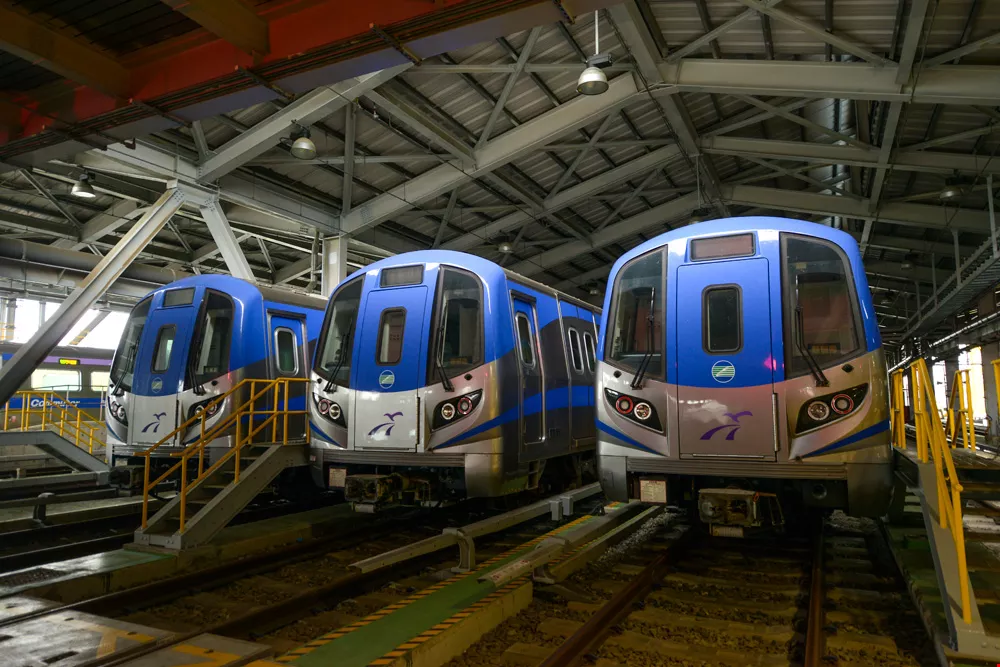
The Taoyuan Airport MRT, which will link the airport to the cities of Taoyuan, New Taipei, and Taipei, is currently undergoing testing, and should commence operation by the end of the year.
An airport’s connections to the outside world are key in how convenient it is for travelers and cargo alike.
The Taoyuan International Airport Mass Rapid Transit (MRT) system, planning for which began in 2004 and which has been constructed at a cost of NT$127.65 billion, is currently undergoing system stability tests, says the director general of the Bureau of High Speed Rail, Allen Hu. Hu adds that the system is on track to begin service by the end of this year.
The Airport MRT will join the airport with Taipei City via Taoyuan’s Guishan District and New Taipei City’s Xinzhuang, Taishan, and Sanchong Districts. It will connect to not only the main railway network and the high-speed rail system, but also to various lines of the Taipei Metro, making a quick and comprehensive connection to Taipei and the rest of Taiwan.
Once completed, the Airport MRT will comprise 23 stops along 51.03 kilometers. Express trains will take 35 minutes to make the journey from Taipei Main Station to the airport, while regular trains will take 70 minutes. Also worth noting is that once the Airport MRT system is operational, travelers will be able to check in at Taipei Main Station, including checking their luggage, meaning less hauling around heavy bags. The head of the Bureau of High Speed Rail’s MRT Engineering Office, Zhang Wencheng, says that this kind of interconnected transportation service should help reduce the amount of traffic at the airport, as well as increasing the amount of time travelers can spend around the city, whether for leisure or for business.
With this expanded combination of soft power and physical infrastructure, the future is looking bright for Taoyuan International Airport.
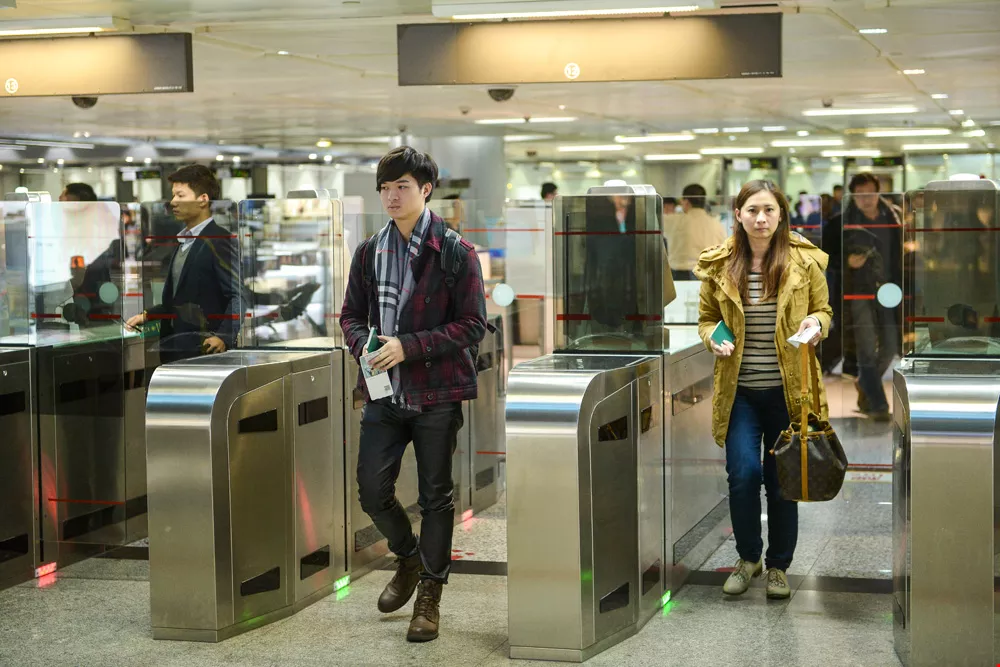
Smart immigration clearance systems have greatly improved the efficiency of Taoyuan International’s services.
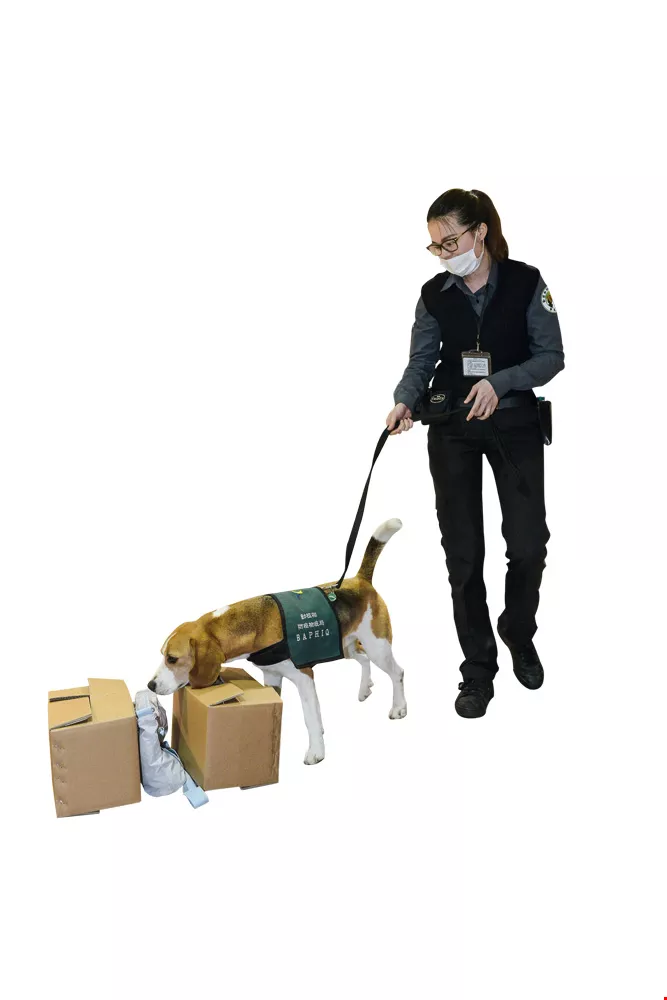
Trained sniffer dogs are key players in the airport’s security setup.

@List.jpg?w=522&h=410&mode=crop&format=webp&quality=80)


